
The Matières Fécales Fall 2026 collection opened inside the Palais Brongniart, Napoleon’s former Paris stock exchange, a venue that spoke volumes before a single garment appeared on the runway. Hannah Rose Dalton and Steven Raj Bhaskaran have never been subtle about their targets, but this season, they came closer than ever to naming names.
| 📌 Key Facts |
|---|
| 🧵 The collection examines the culture and influence of the ultra-wealthy. 🏛 Presented at the Palais Brongniart, Paris’s former stock exchange. 🎭 Caricature looks included dollar-bill masks, red opera gloves and surgical bandages. ✂️ Under the theatrics, garments rely on precise tailoring and complex patternmaking. 👥 Guests such as Michèle Lamy, Daphne Guinness and Bryan Johnson reinforced the show’s themes. 🧠 The designers ask whether luxury fashion can remain silent about power. |
Their third collection focused on the ultra-wealthy: that rare stratum of billionaires and power brokers whose influence extends far beyond finance. The English historian Lord Acton once warned that power tends to corrupt, and absolute power corrupts absolutely. Dalton and Bhaskaran seem to have taken that warning personally.
The designers grew up in vastly different social circumstances, and that gap has shaped everything they create. This season, they drew specifically from Dalton’s more privileged background to explore what happens when money becomes both armor and obsession. The result was a show organized around three distinct groups: the openly flamboyant rich, a shadowy cult of followers, and a final section of old-money restraint.
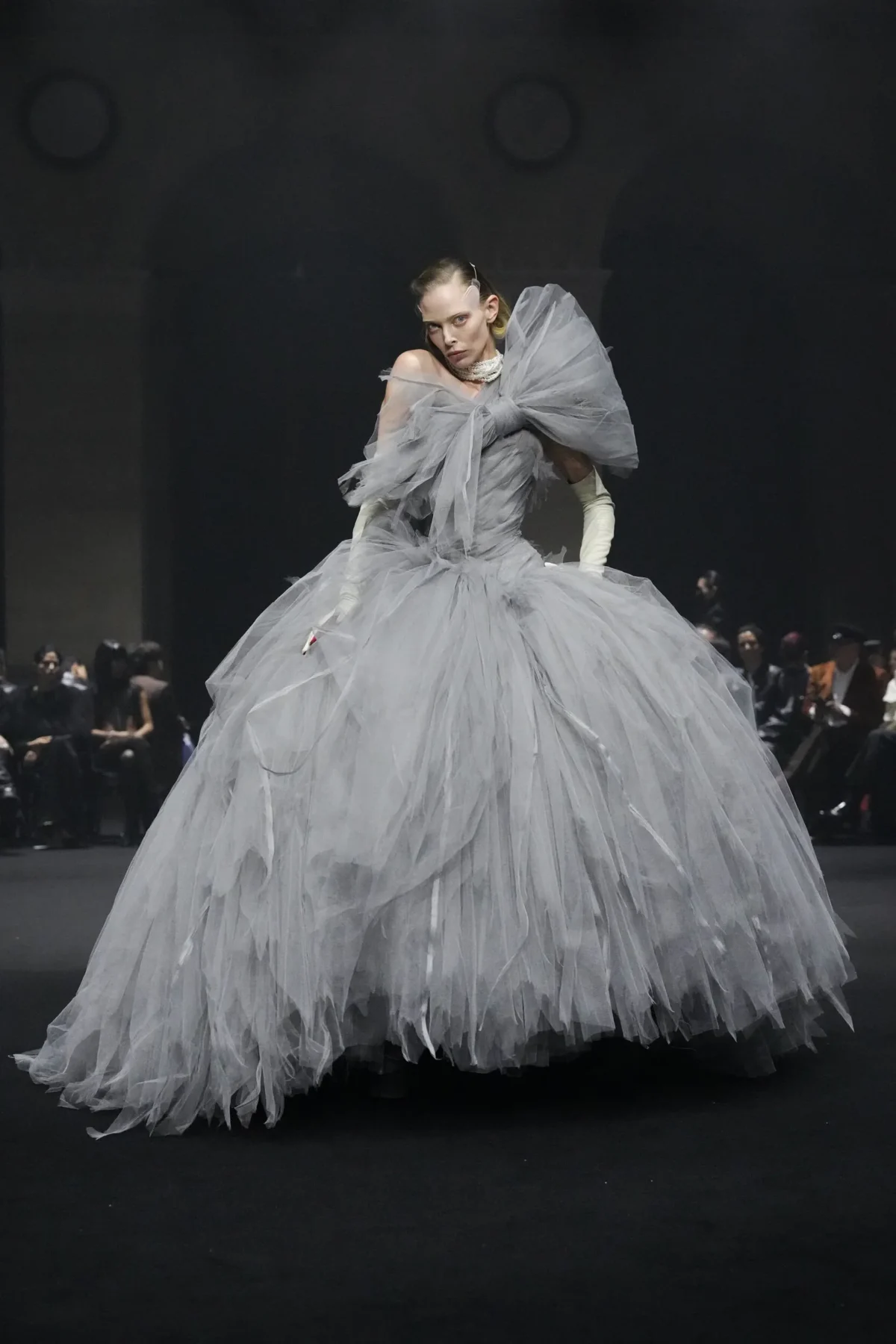
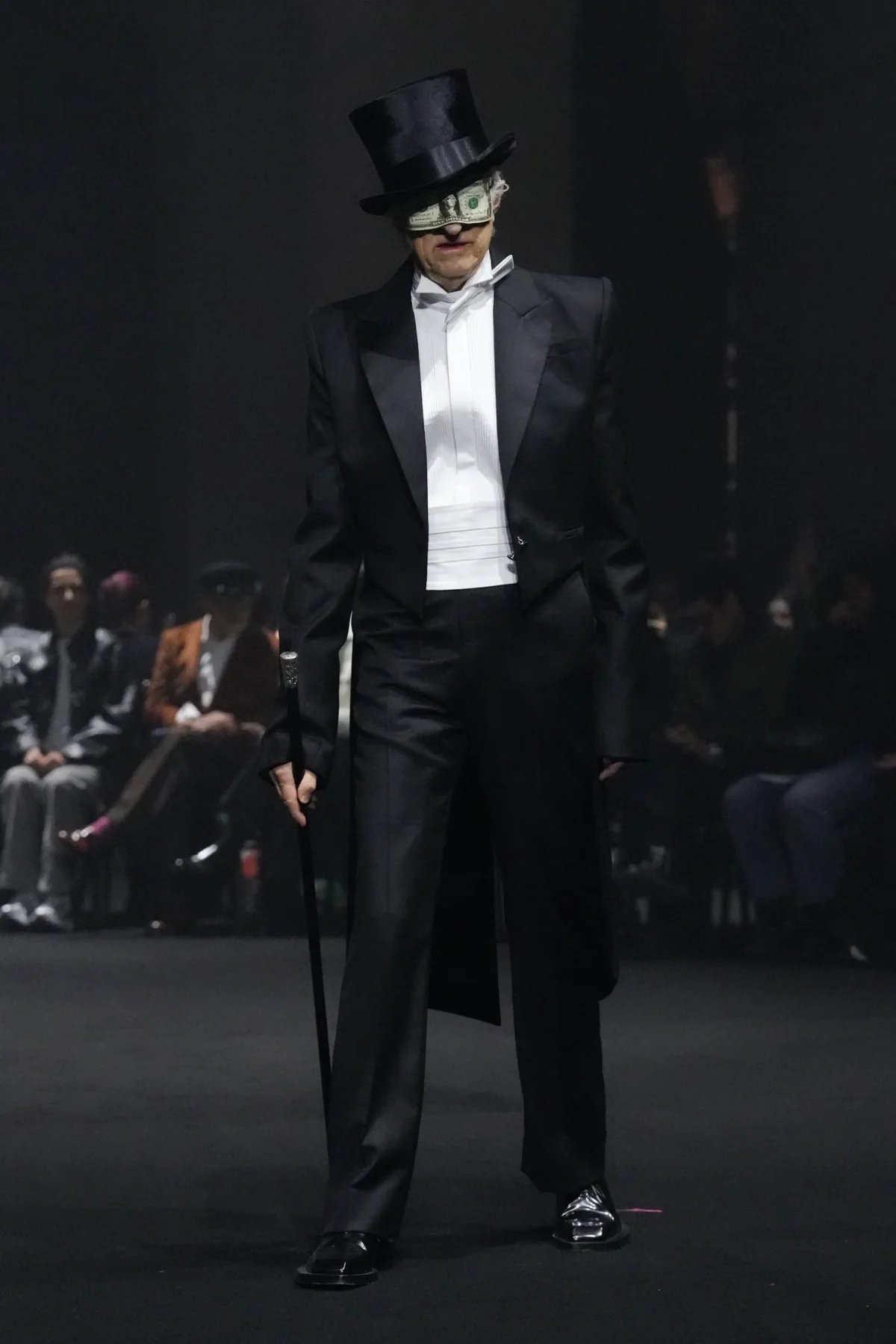
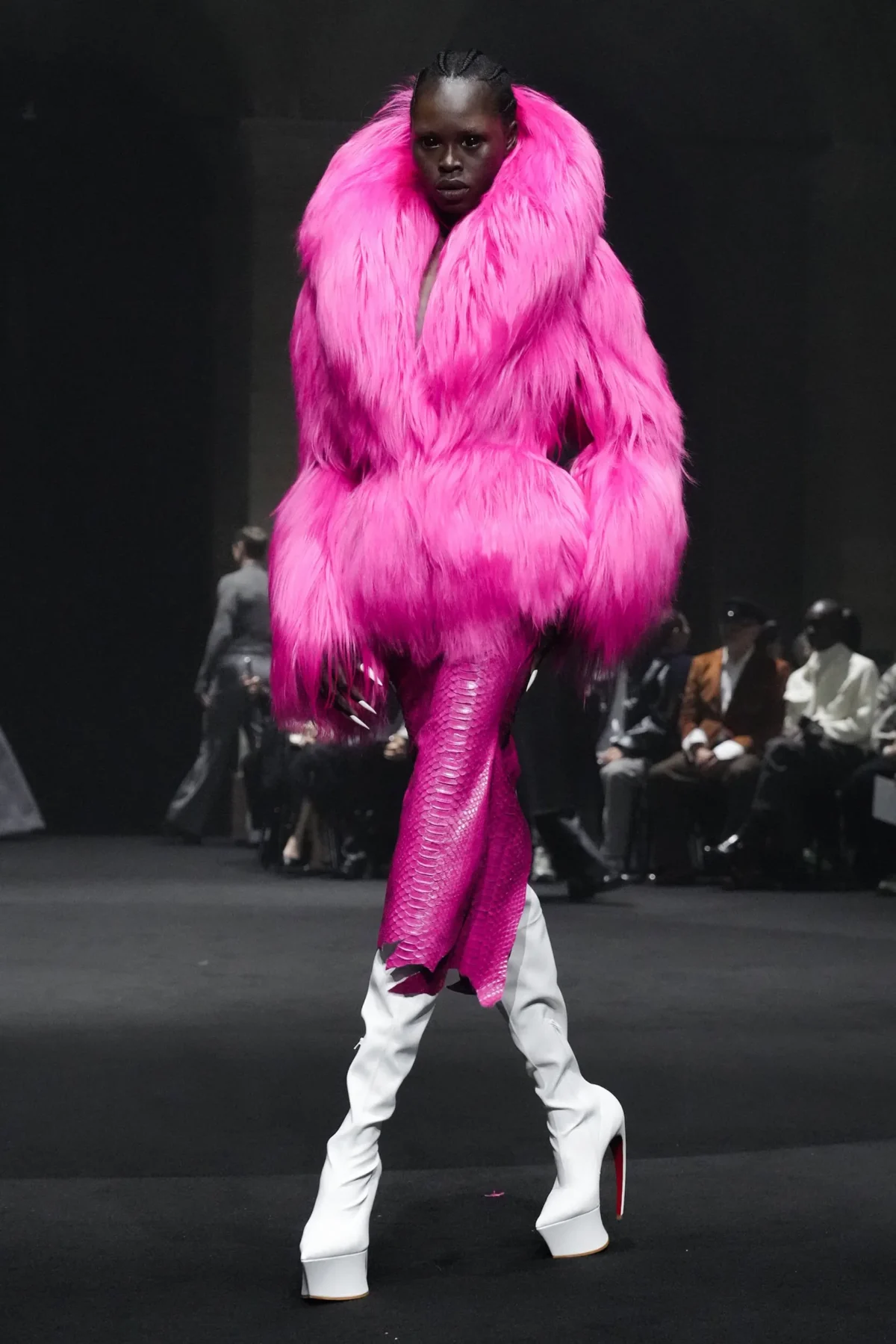
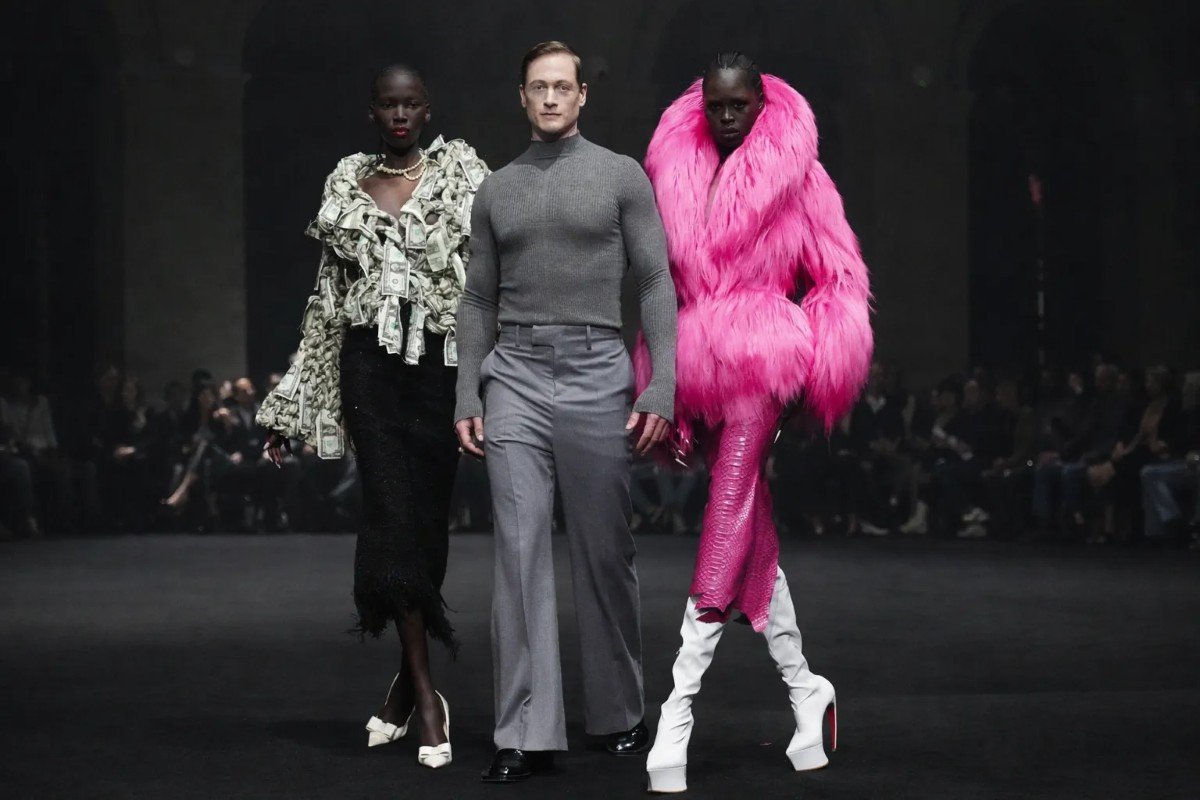
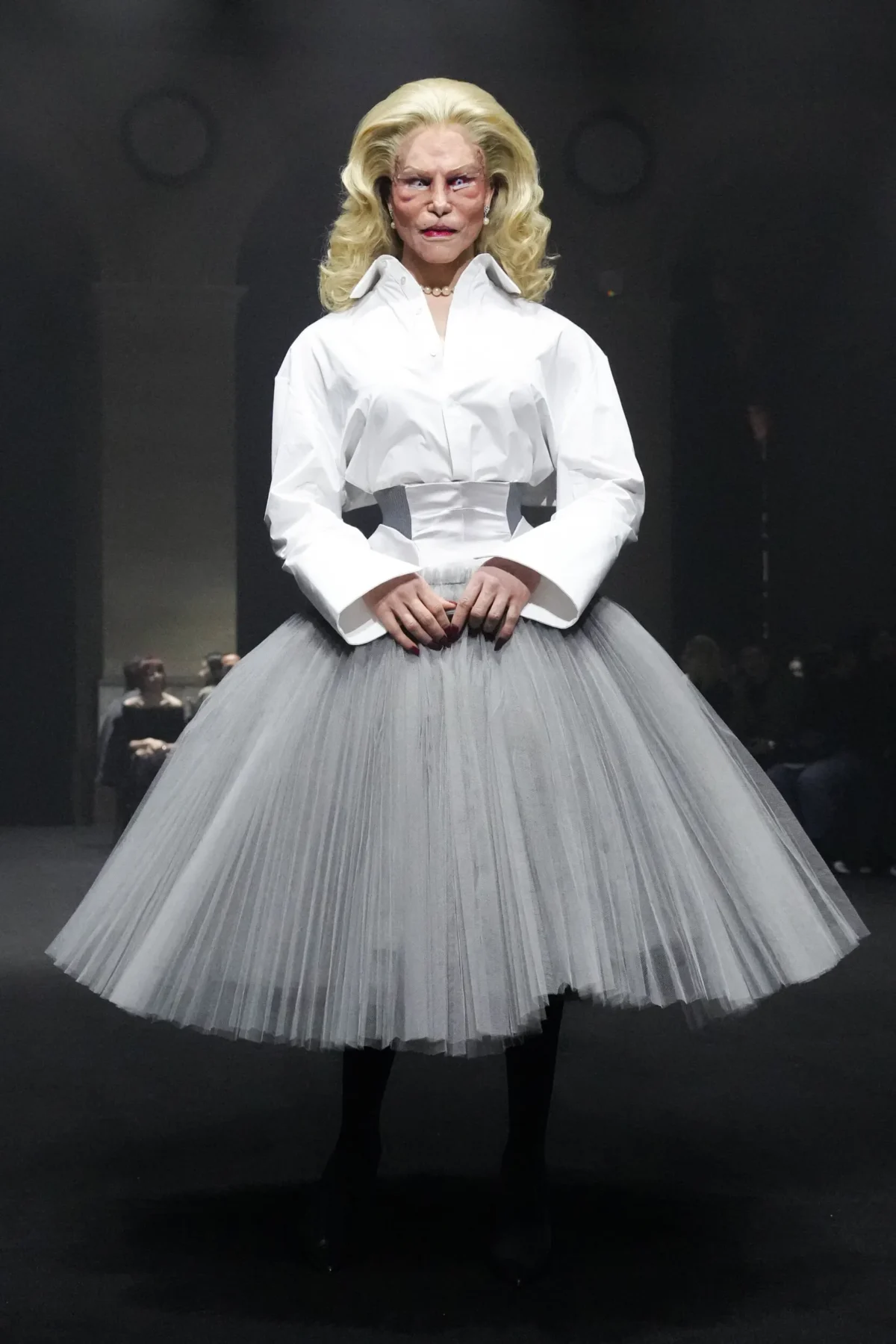
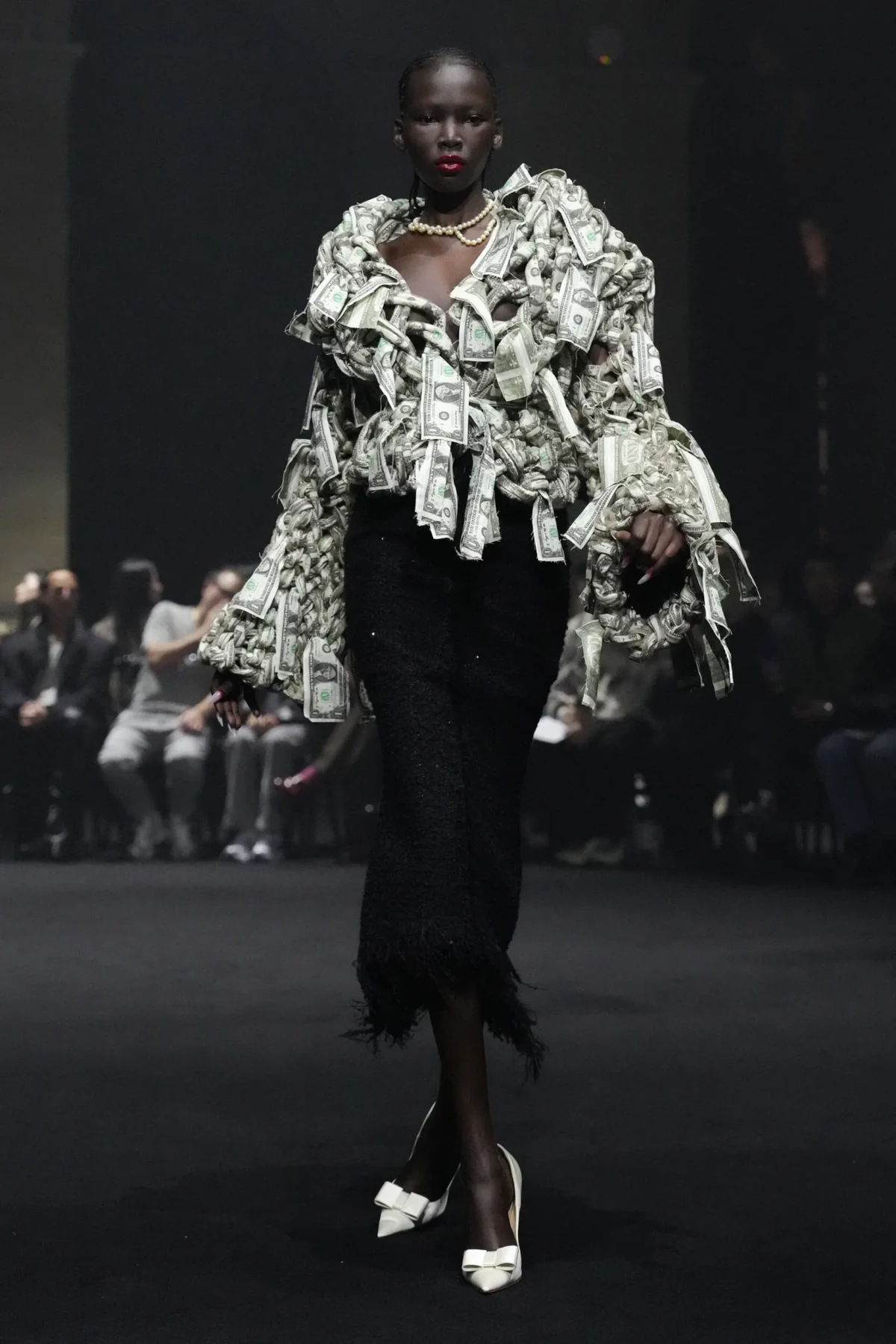
The opening section leaned into caricature, deliberately so. Figures wearing blood-red opera gloves, masks resembling dollar bills, and post-surgical bandages moved through the space with the studied confidence of people who have never been told “no.” References to Mr. Monopoly appeared in the evening wear. The silhouettes recalled Galliano-era Dior and Alexander McQueen’s more theatrical designs. None of this was accidental. Bhaskaran and Dalton are students of fashion history, and they wielded those references with precision. They applied a shredded, frayed finish that undercut the grandeur at every turn.
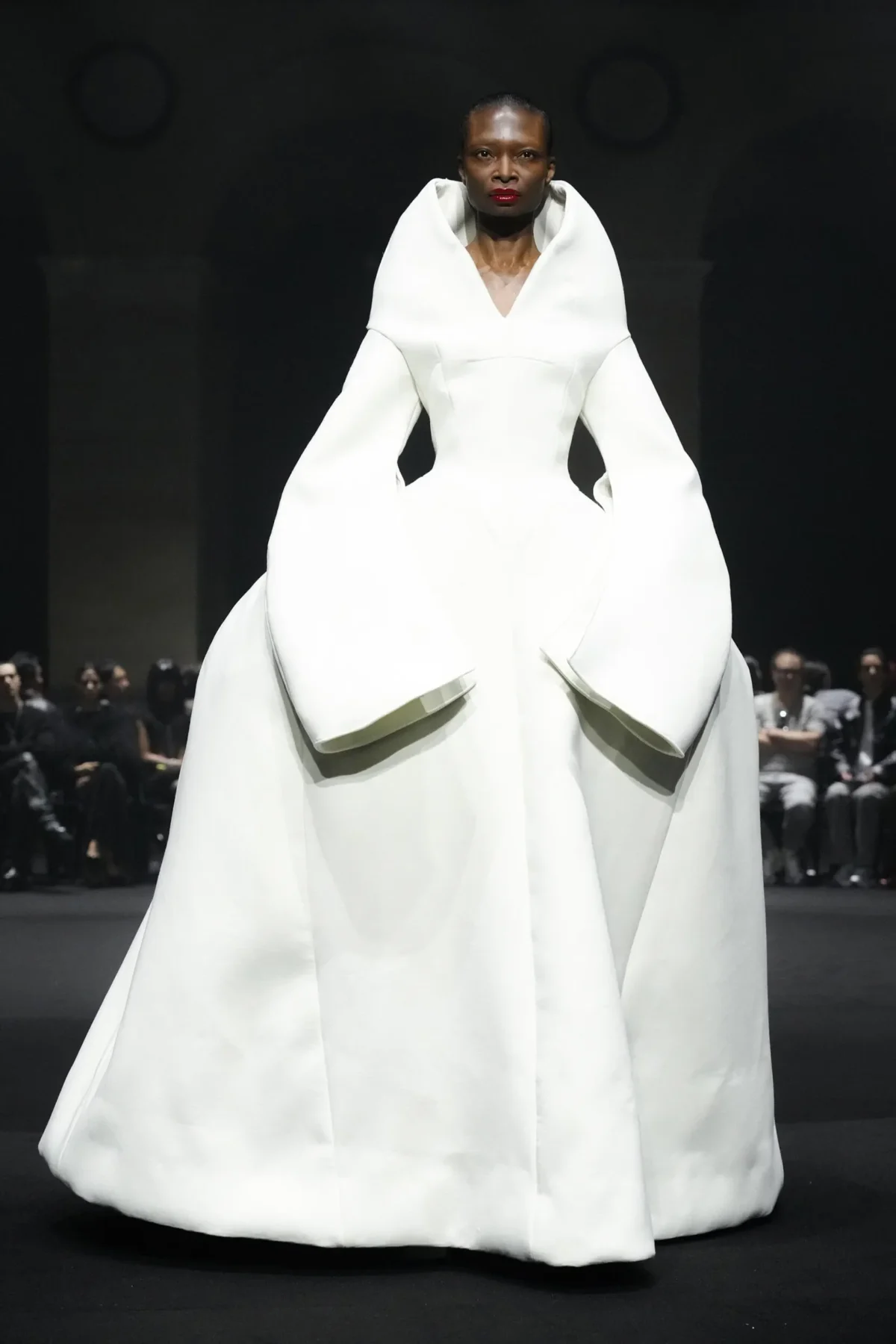
What elevated the collection above mere costumes was the construction underneath. A visit to the showroom revealed the true craftsmanship: a comfortable waistband discreetly incorporated into an otherwise severe skirt; hand-shredded tweeds requiring patience and skill; and a cardigan that appeared modest on the hanger but was designed like a small architectural project. Dalton and Bhaskaran both trained in patternmaking, and that training shows. The theatrical proportions – jackets swelling into cocoons and gowns appearing to be constructed from metal feathers — held their shape because the foundations were sound.
Follow all the latest news from Fashionotography on Flipboard, or receive it directly in your inbox with Feeder.
You may also read

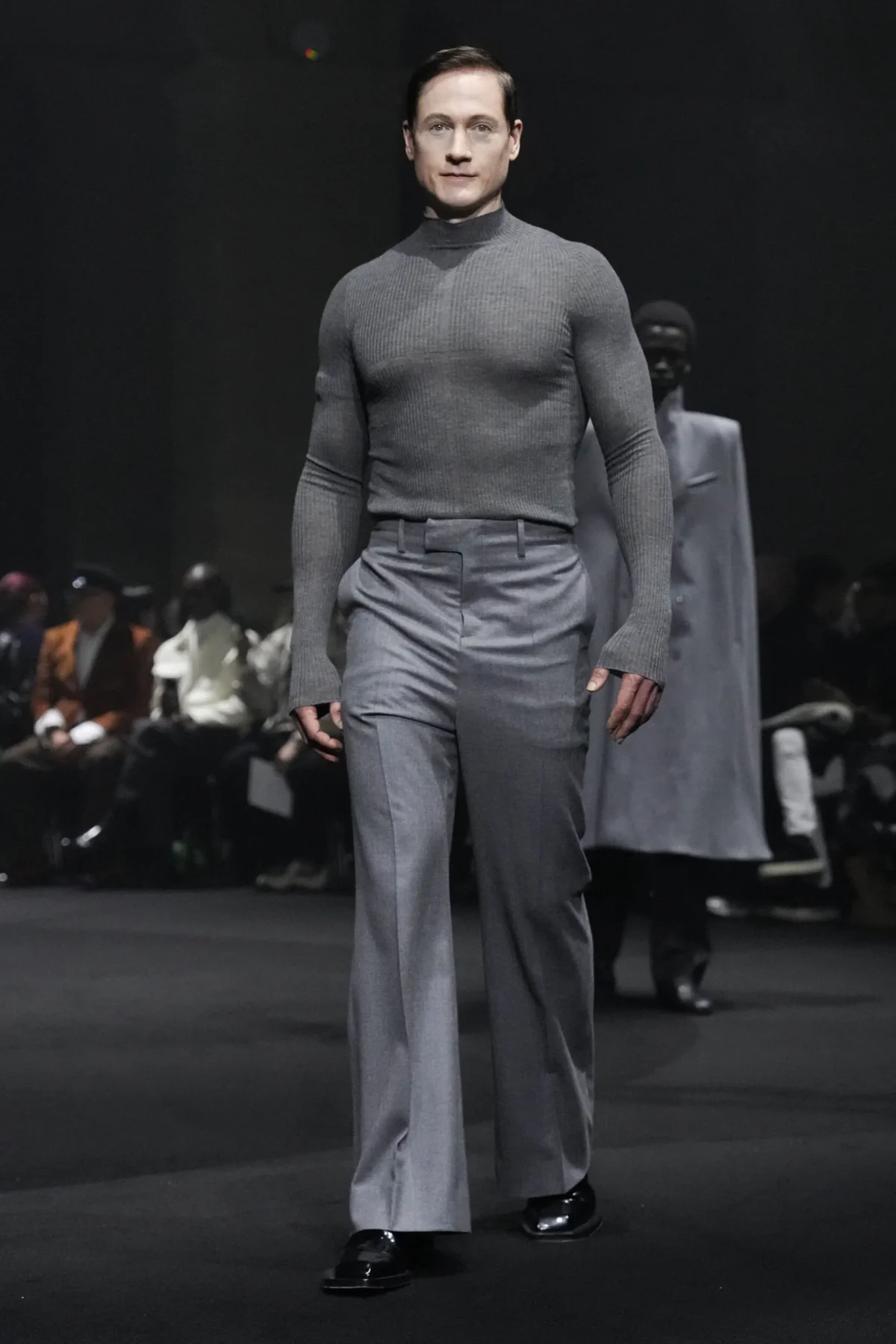
The casting underscored the show’s themes without requiring explanation. Michèle Lamy attended in a shaggy-sleeved knit dress. Daphne Guinness wore a narrow, metallic gown so long and unwieldy that audience members helped her navigate the runway. Bryan Johnson, the American tech entrepreneur who has spent millions pursuing radical life extension, appeared in a fitted rib knit and slacks. His presence was a wry commentary on the ultra-wealthy’s fixation on outliving the rest of us. He had been invited, not simply observed.
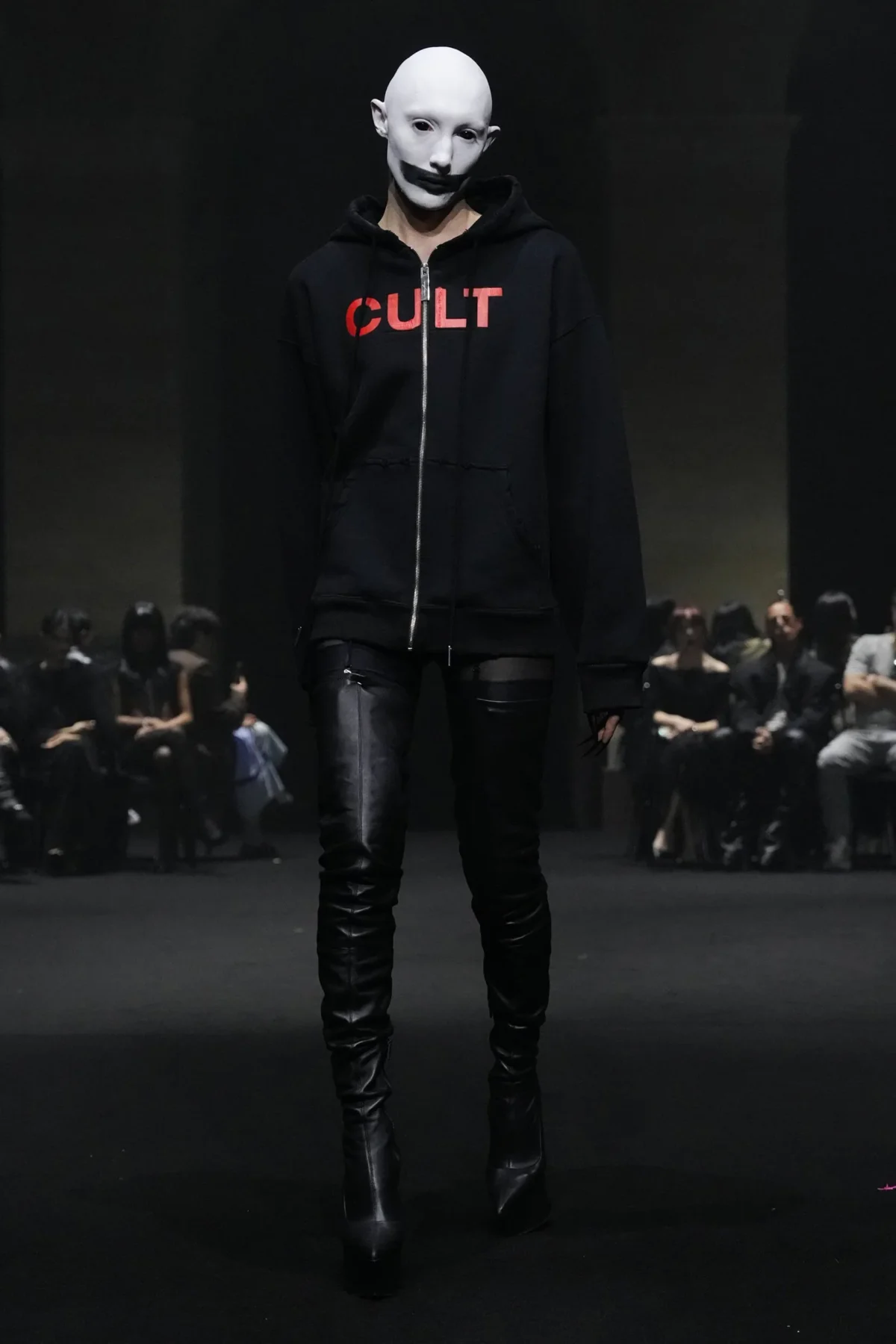
The middle section of the show transitioned from grotesque comedy to something more ambiguous. Models wearing hooded robes and bomber jackets bearing the brand’s stitched crucifix motif gathered in formation before turning to face the photographers. Whether this group represented resistance or complicity was deliberately left unclear. The garments were more accessible than the opening looks, offering a lower-risk entry point for those drawn to the brand’s identity but not ready for its most extreme pieces.
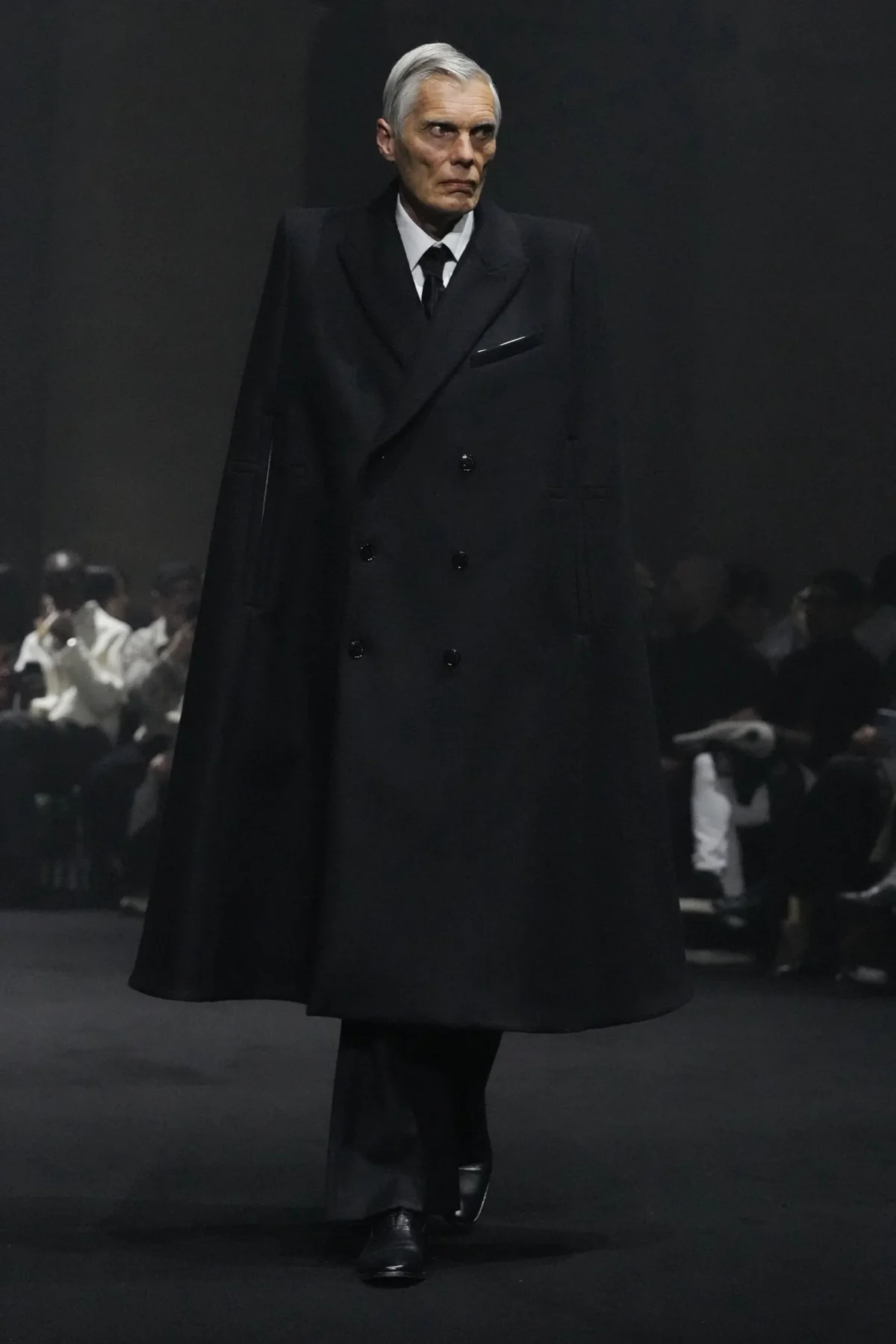
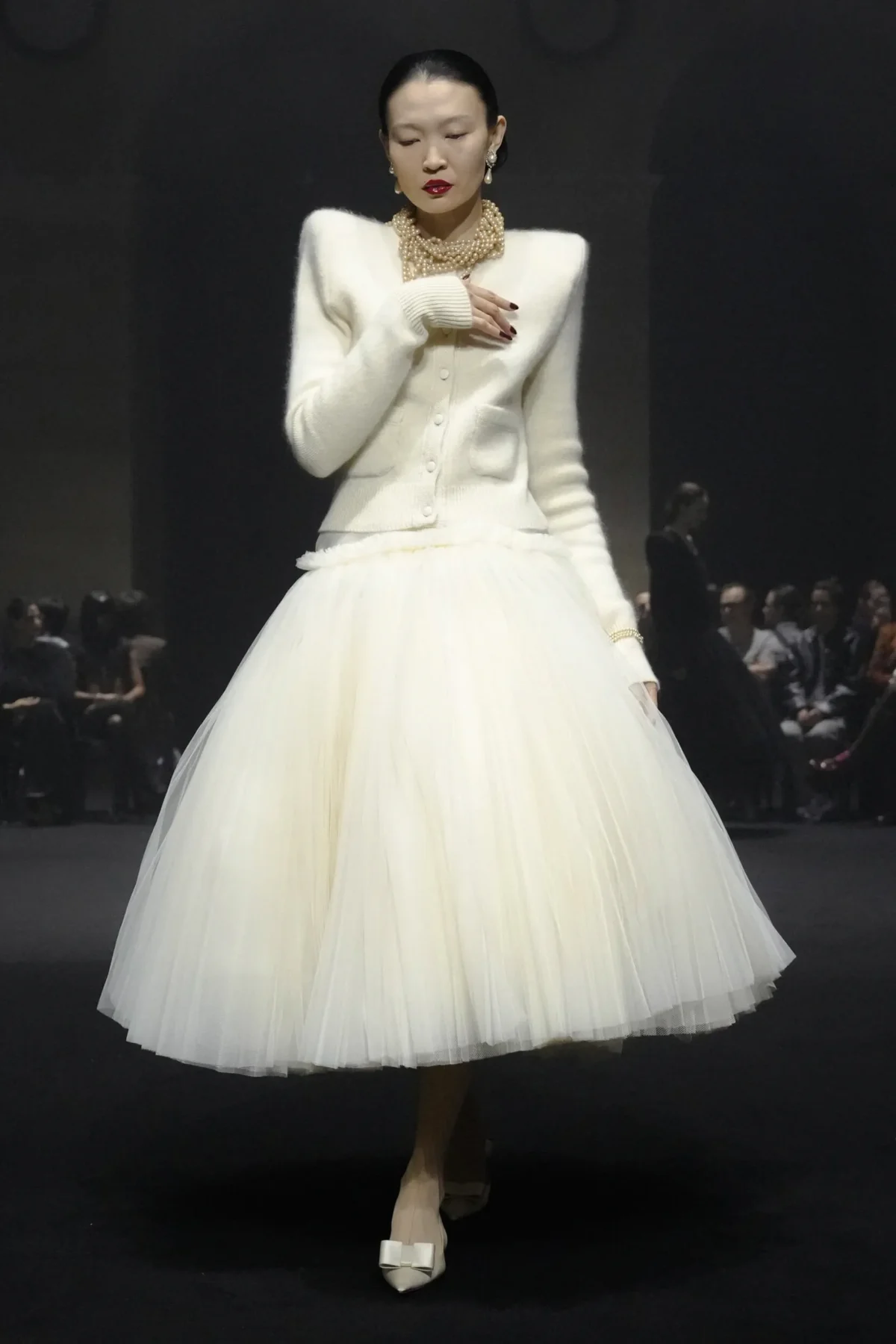
The show closed with precision-darted wool dresses and Elizabethan-silhouette tailoring that appeared genuinely refined. After all the spectacle, the ending felt almost calm. Old money, the designers seemed to suggest, doesn’t need to announce itself.
Bhaskaran has made it clear that the goal is not to condemn the people being depicted. The point is to start a conversation about power, what luxury signifies, and whether silence and complicity can appear as good taste. Dalton put it plainly: They want luxury that says something. She noted that a lot of it does not.