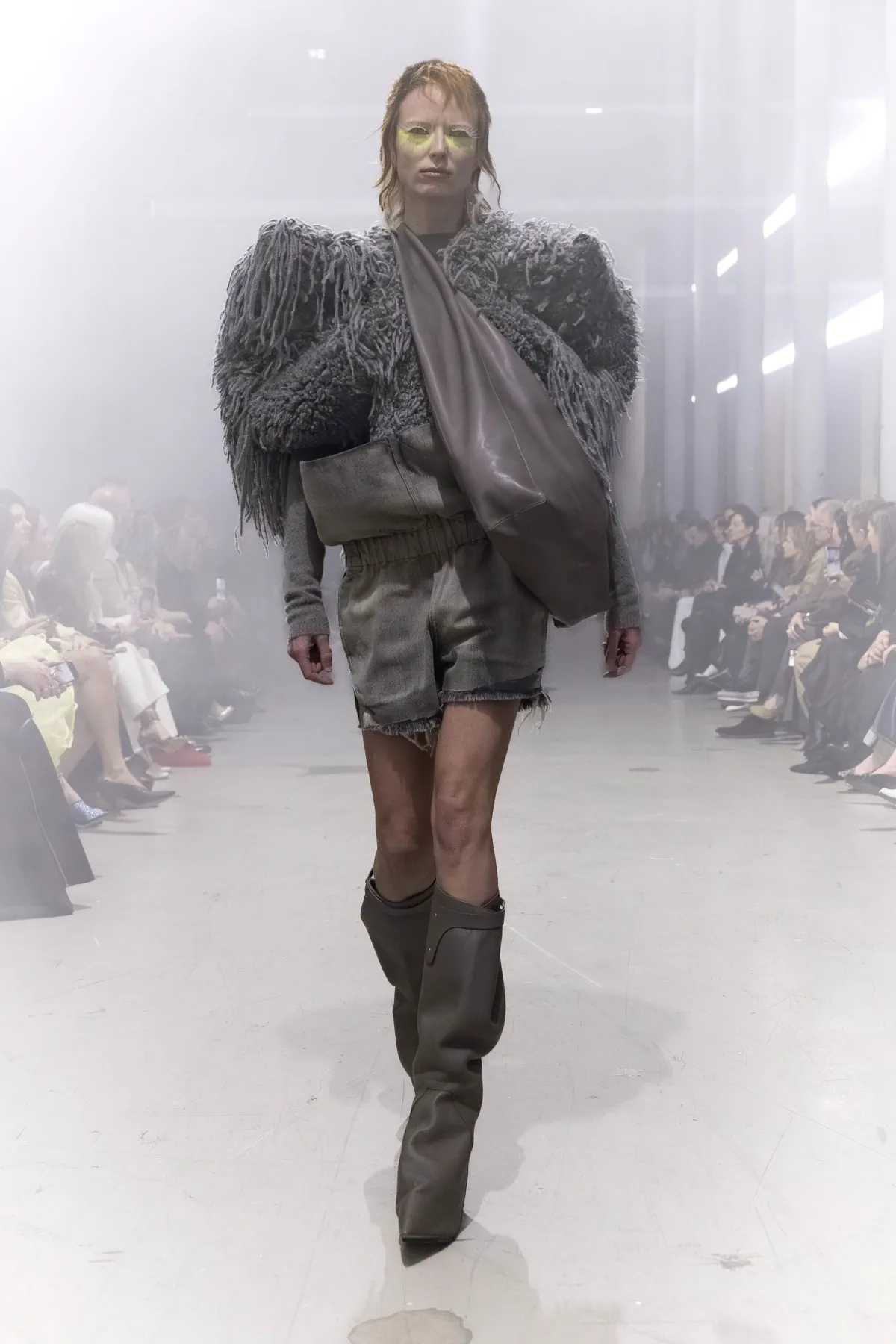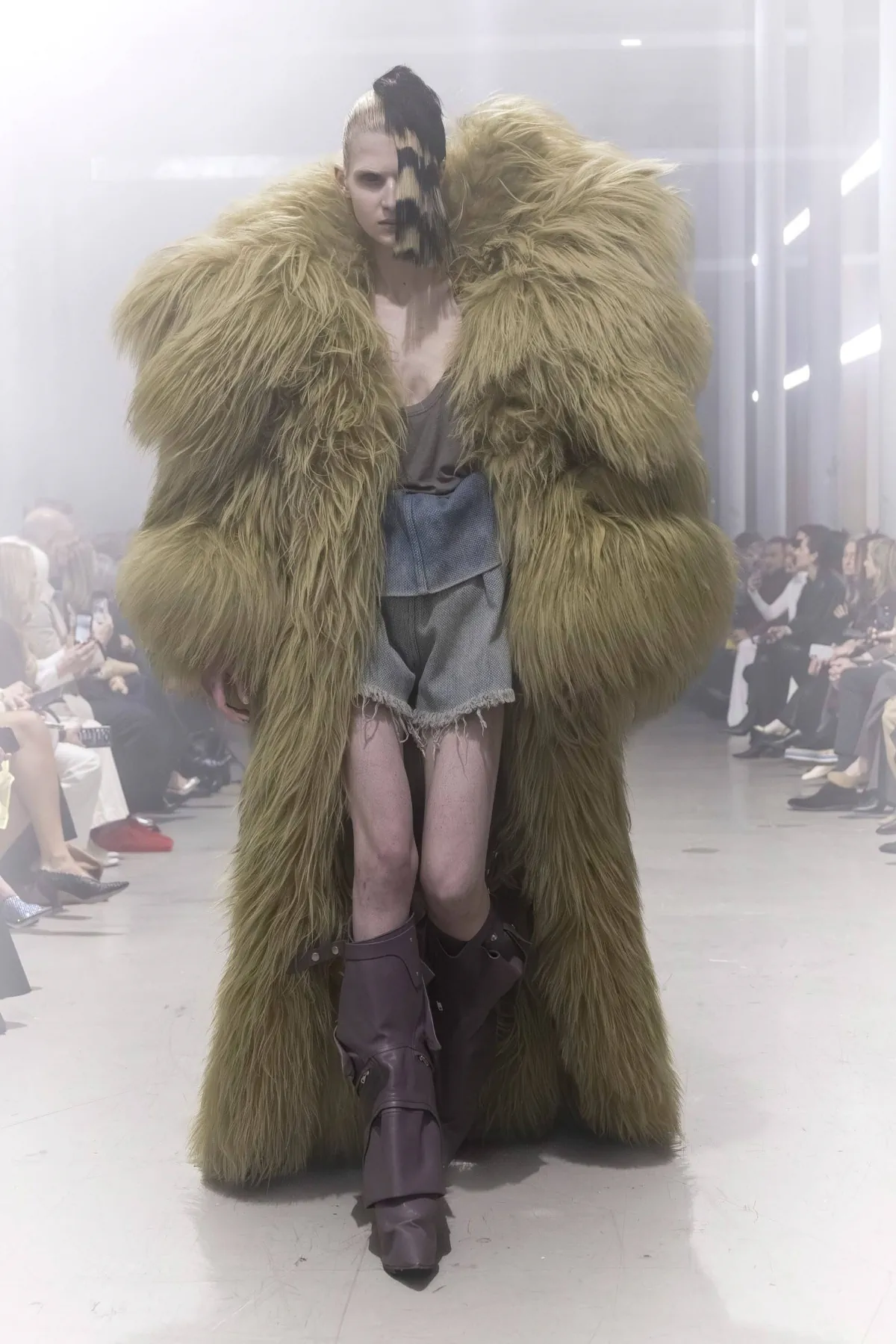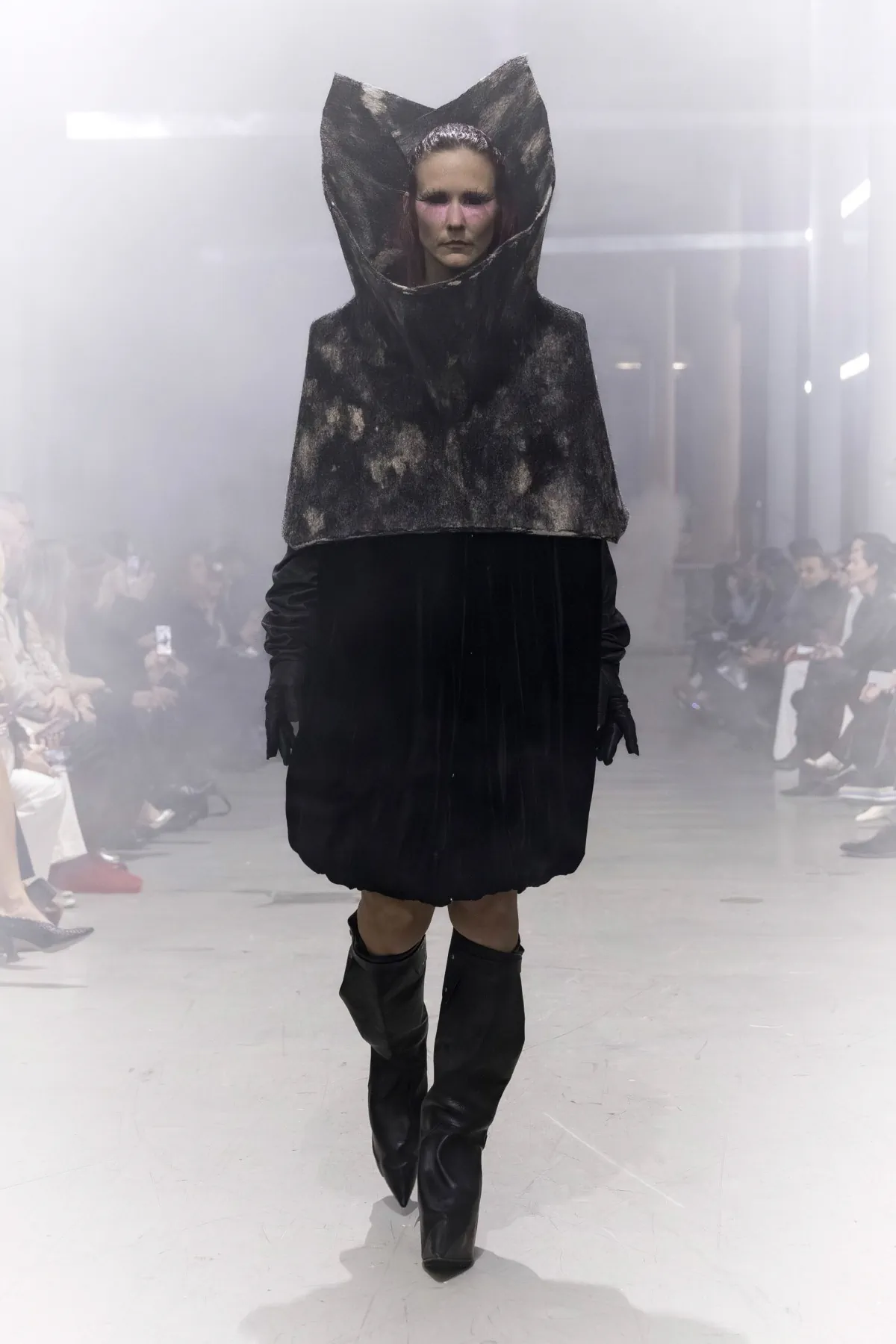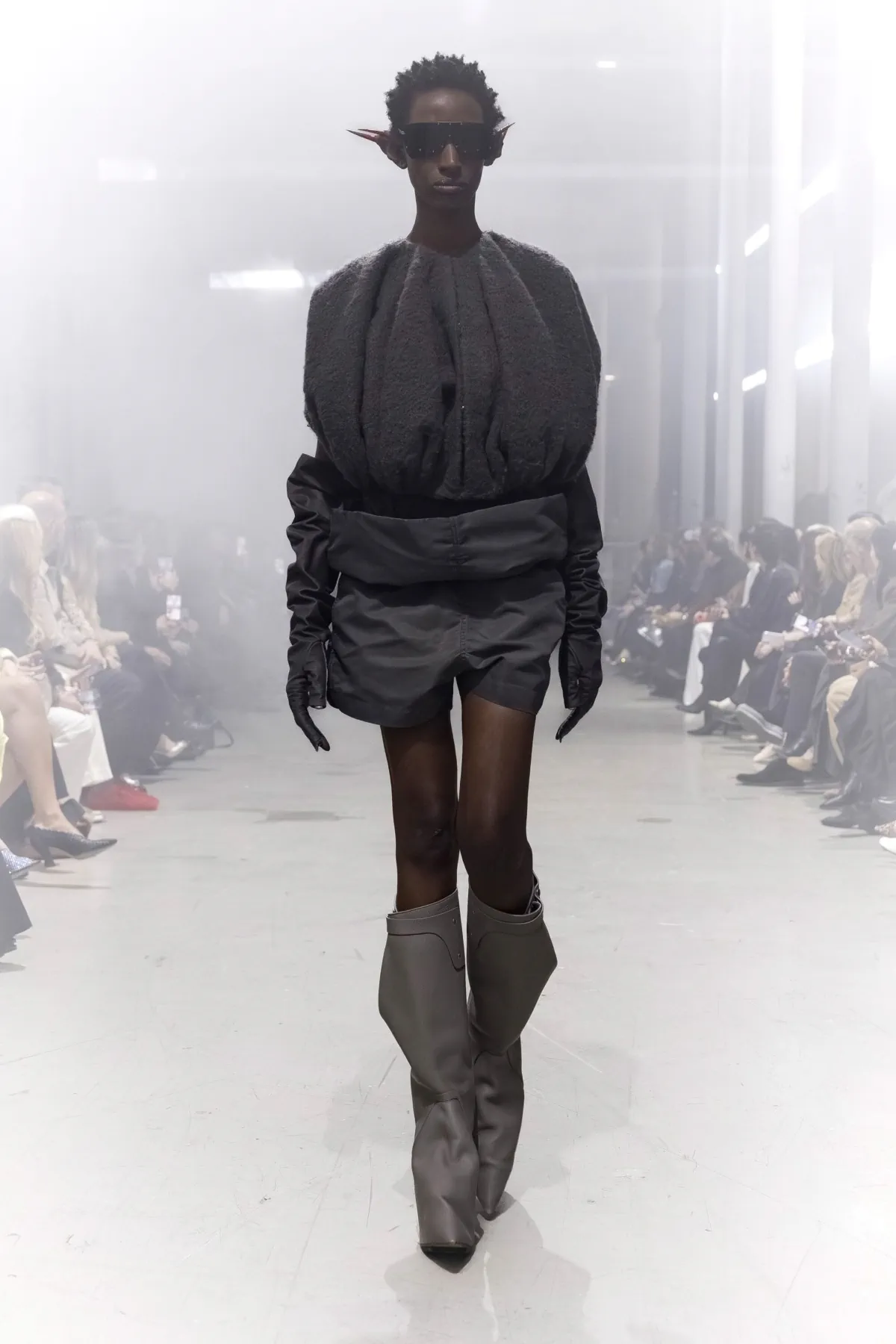

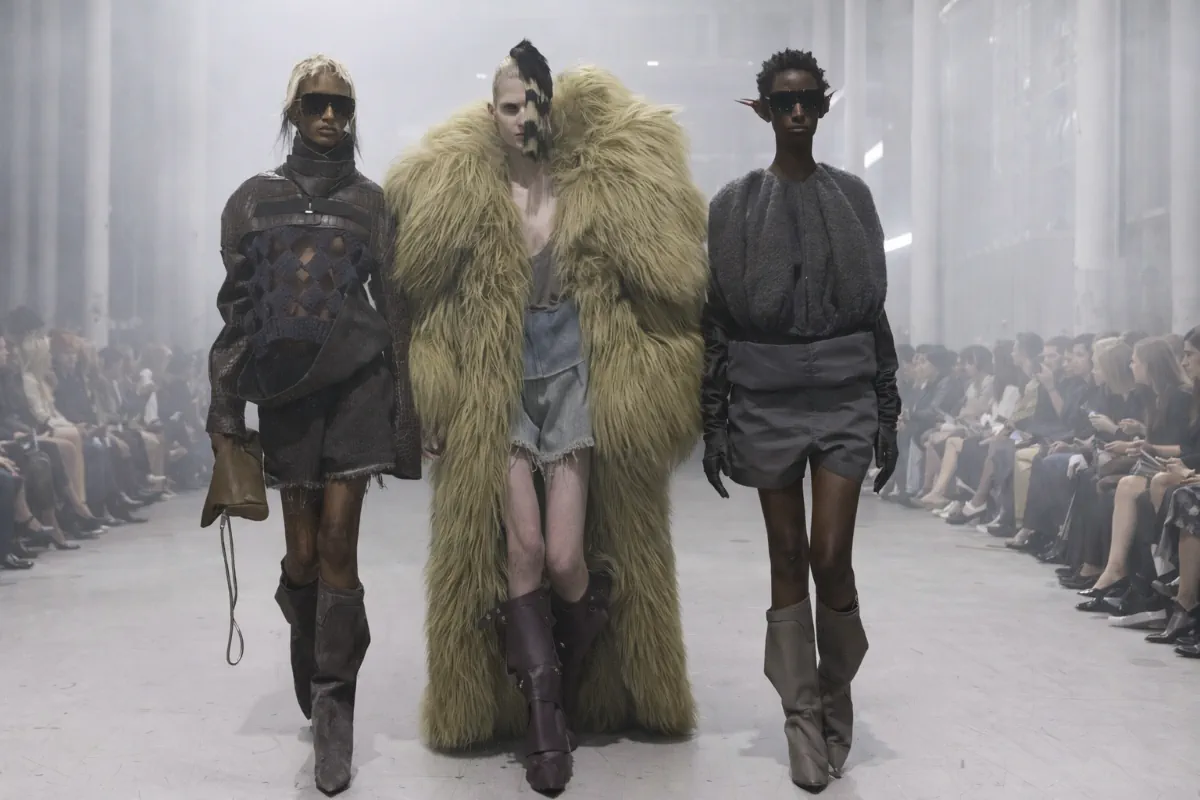
When a designer embraces the world’s disorder rather than avoiding it, the result can be extraordinary. Rick Owens did exactly that at the Palais de Tokyo, and his Fall 2026 collection that emerged was one of the most emotionally charged you will see this season.
| 📌 Key Facts |
|---|
| 🎭 Rick Owens built the Fall 2026 collection around the life and legacy of Marlene Dietrich. 🧥 Monumental goat-hair coats inspired by Dietrich’s iconic swansdown coat. 🛡 Kevlar gowns introduced the aesthetics of protection into couture silhouettes. 🌍 The collection explores fashion as a response to instability and global tension. 🎨 Earth tones – ochre, dun, and soil brown – dominated the runway. 🧵 Thick marbled felt made from Himalayan wool in Rajasthan created sculptural outerwear. |
Owens opened his collection with a clear-eyed sense of purpose. The world is unsettled; conflict, displacement, and a general atmosphere of threat have become the backdrop of daily life. Owens made no effort to pretend otherwise. While many designers retreat into comfort or escapism when the news turns grim, Owens leaned forward. He had been thinking about how people respond to threats and how those responses reveal character. This conviction was evident in every piece that came down the runway.
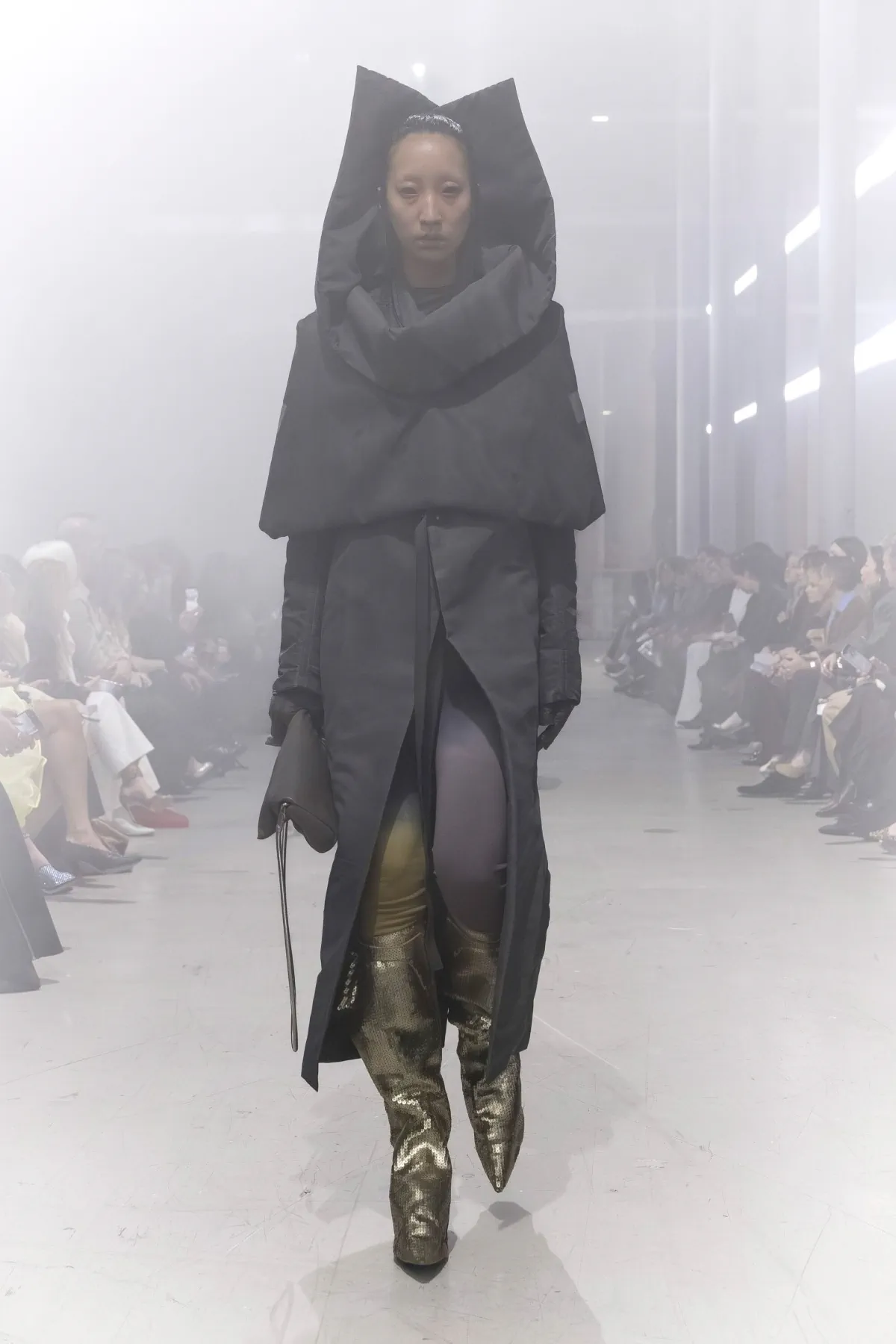
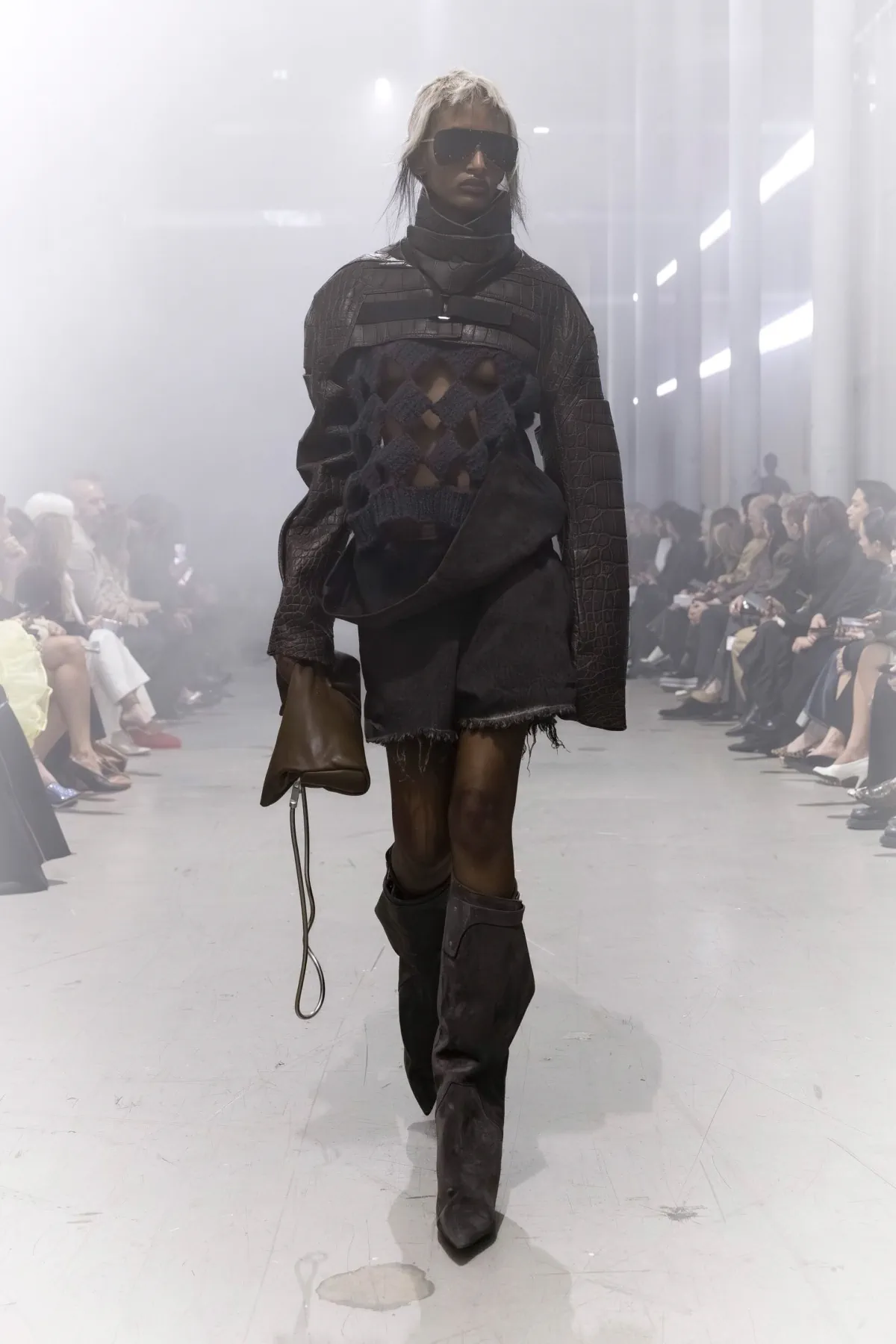
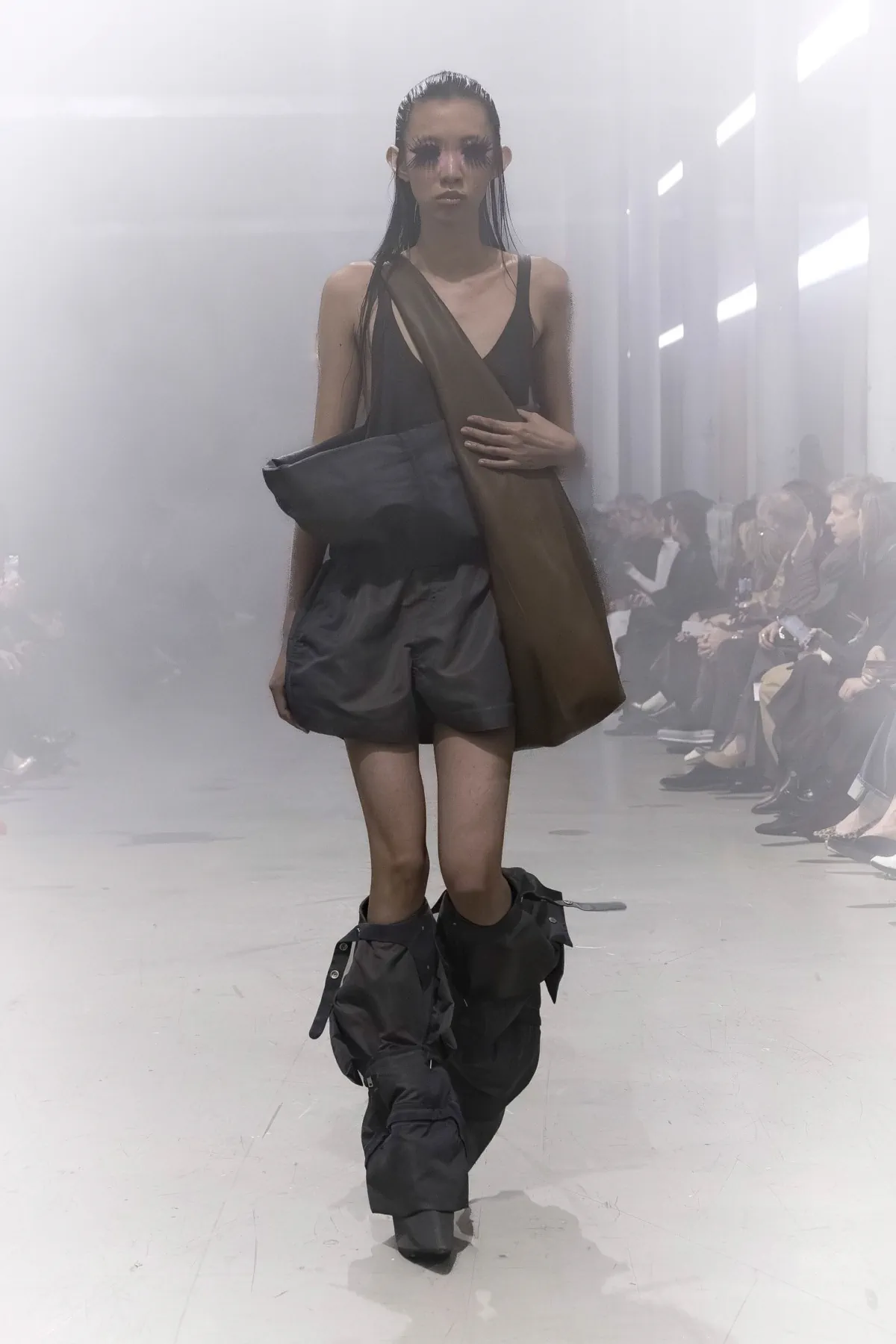
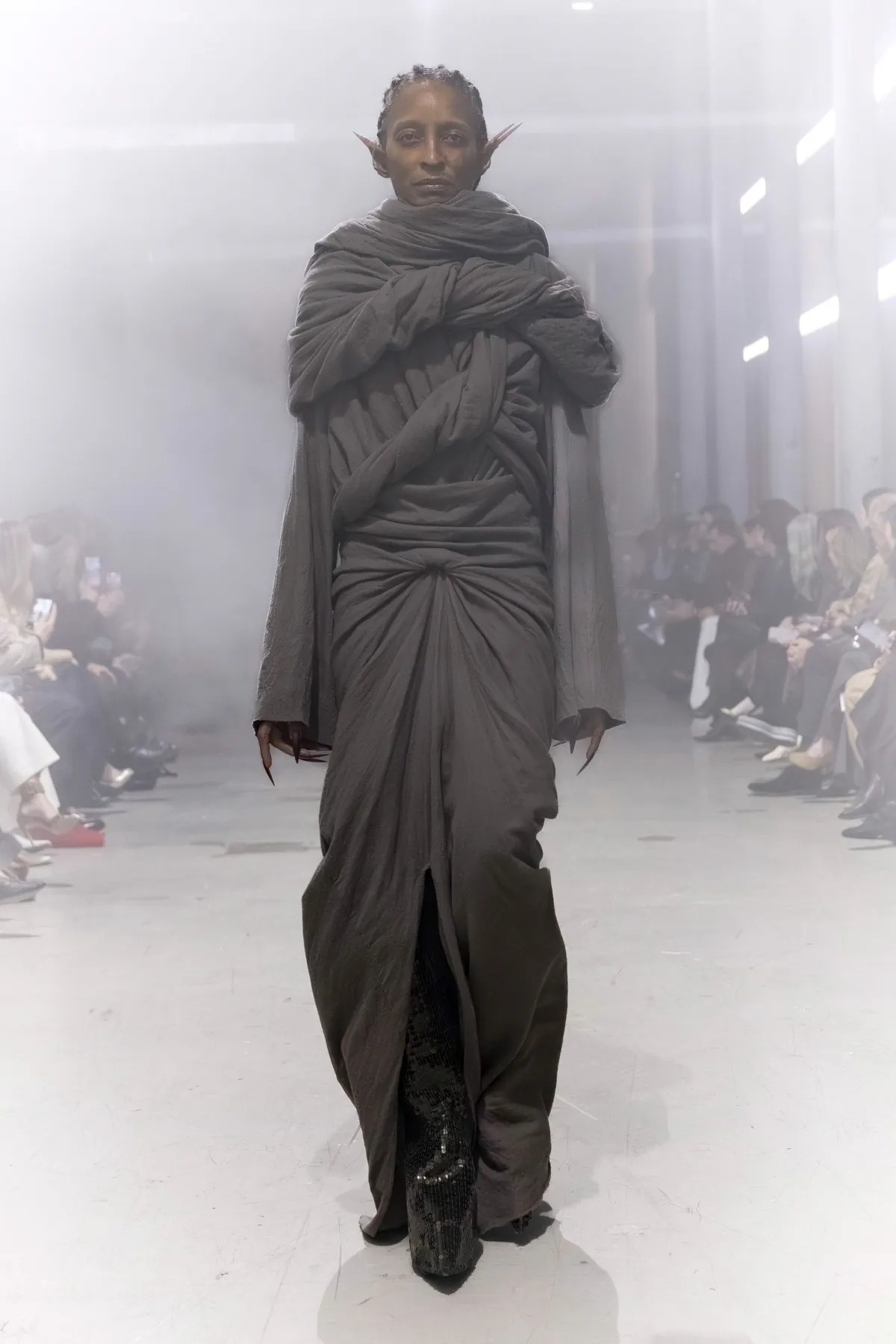
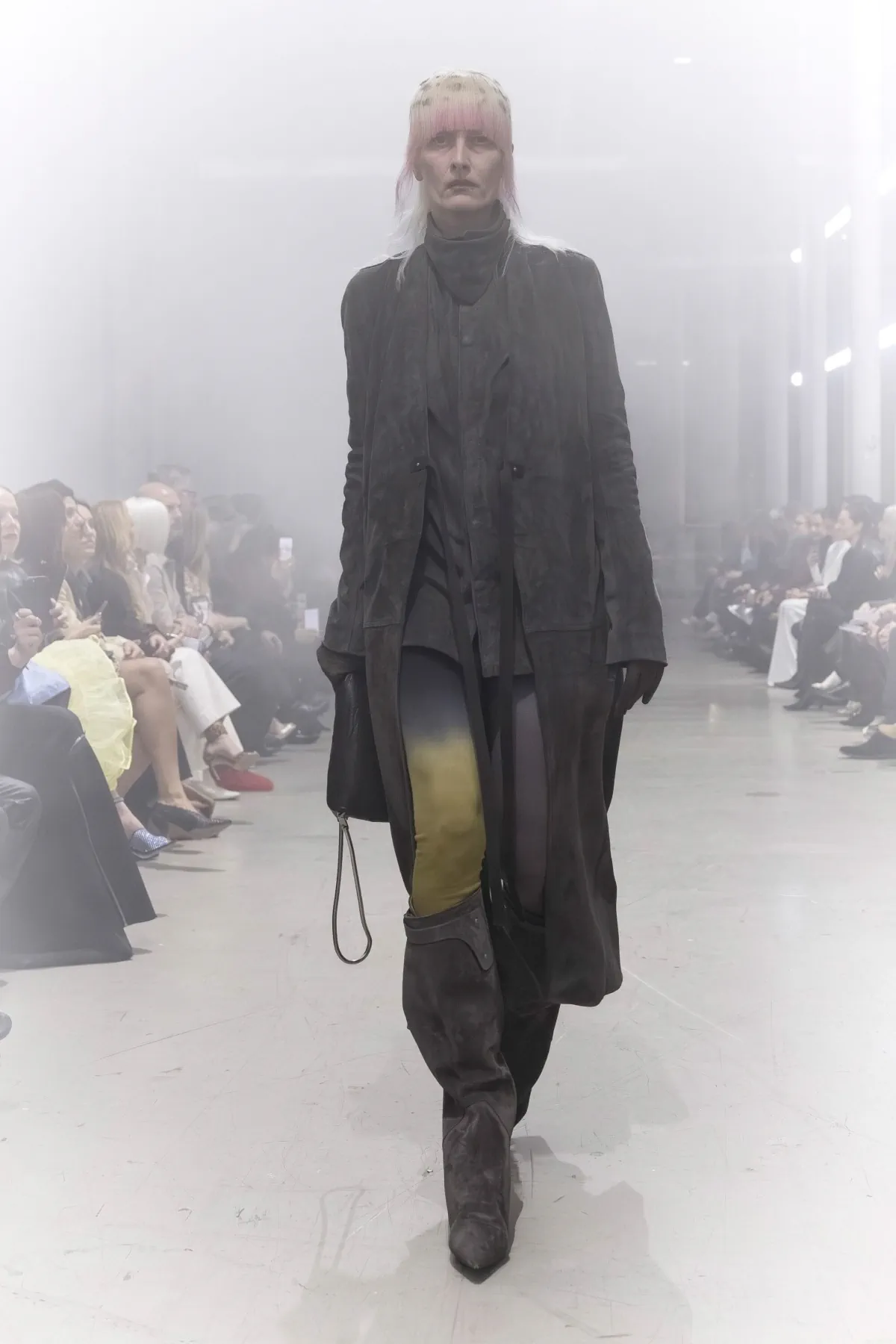
The women who walked the Palais de Tokyo looked like survivors of something large and not entirely named. Their clothes carried the muddy, earthbound palette of people who have learned to work with what the land gives them: ochres, duns, and the deep brown of turned soil. The silhouettes were enveloping rather than sharp, built for protection more than display. Where another designer might have put a miniskirt, there were shorts; where another designer might have put a fitted coat, there were coats so large they seemed to absorb the wearer whole. The tall boots, fitted with snaps and extra pockets, had a utilitarian air until you noticed the extravagant heels.
Marlene Dietrich loomed over the collection. Owens has long admired the German star, but this season, her influence shifted from a reference point to a foundation. He was drawn to the full arc of her life: the provocateur; the wartime volunteer who traveled to North Africa and across Europe to perform for Allied troops; and finally, the controlled precision of her late cabaret work. Dietrich’s famous swansdown coat, designed by Jean Louis, inspired Owens’s most spectacular pieces of the season: long, engulfing coats made from goat hair that were outsized in proportion and impossible to ignore. Among a season already crowded with statement coats, his were in a category of their own.
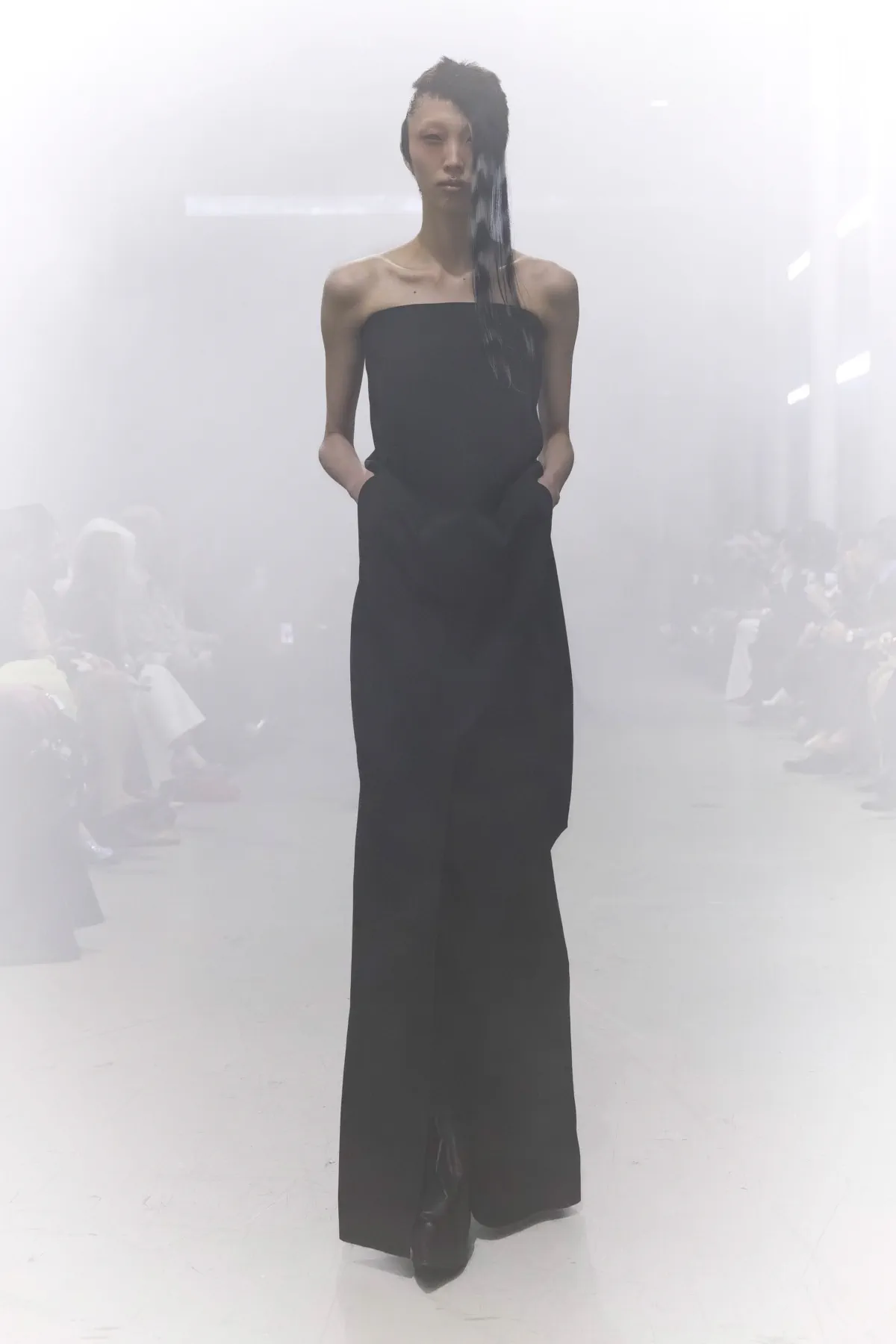
Owens has never been timid about the materials he uses, and the Fall 2026 collection confirmed that this curiosity has not dimmed. Strapless column dresses were constructed from Kevlar, a material associated with bulletproof vests. This gave them a strange authority that synthetic fabrics simply cannot replicate. Collar-high capelets and dramatic, Dracula-collar blousons were cut from thick, marbled felt produced in Rajasthan from Himalayan wool. They carried the weight of something permanent. Alongside these harder-edged pieces, softer fabrics – velvet, cashmere, and wool – were draped and layered with a quiet intensity that gave the collection a melancholy air rather than a theatrical one.
Follow all the latest news from Fashionotography on Flipboard, or receive it directly in your inbox with Feeder.
You may also read
Owens acknowledges the ordinary foundations beneath his most elaborate constructions. Denim cut-offs, tank tops, and long leather or woolen vests appeared alongside the goat hair coats and Kevlar gowns, reminding us that his vision of fashion is grounded in his daily life. He wears what he makes, then exaggerates it. One of the collection’s cleverer ideas was the two-piece coat construction: a long vest over which a cropped jacket could be added or removed. It sounds simple, but the flexibility it offers is real.
Bernardo Martins, a Berlin-based artist working under the name Figa.Link, did the hair and make-up. His shaggy wigs, millipede-length lashes in black and pink, and neon streaks added an undercurrent of gritty downtown energy. Owens admitted that he had been slightly worried that the look might appear frivolous. What he actually wanted was to capture the feeling of people who choose extravagance precisely because things are difficult – a long tradition historically speaking.