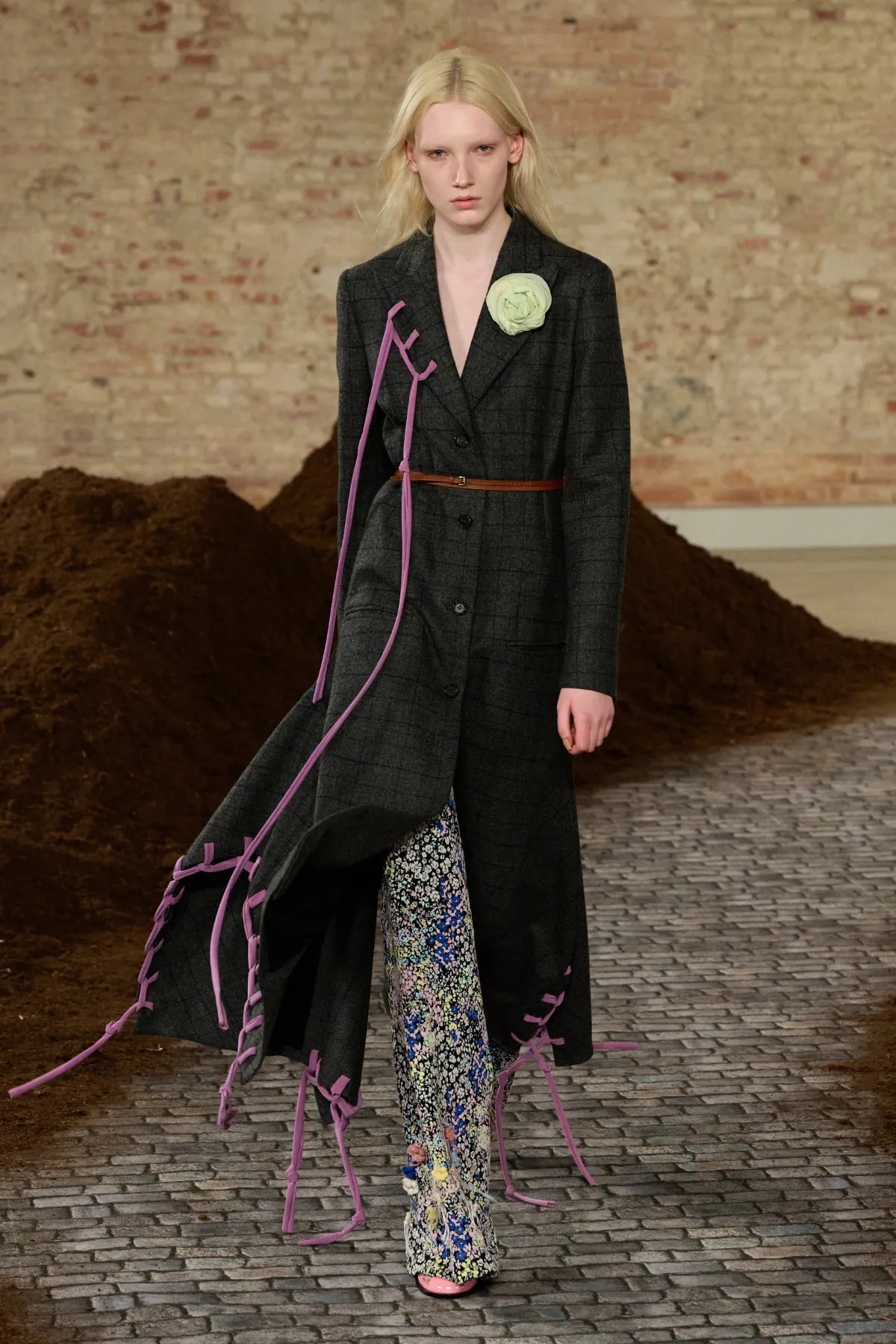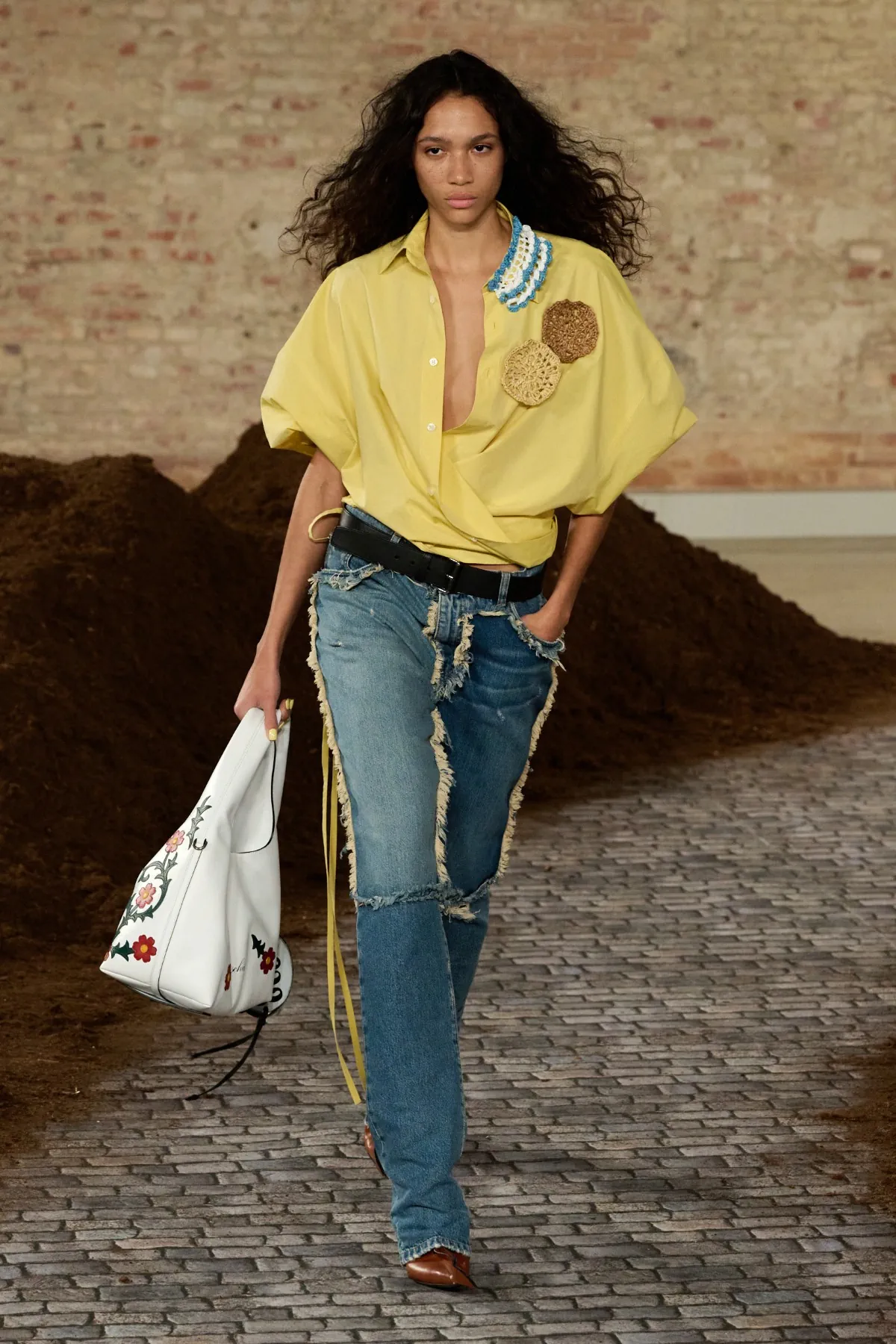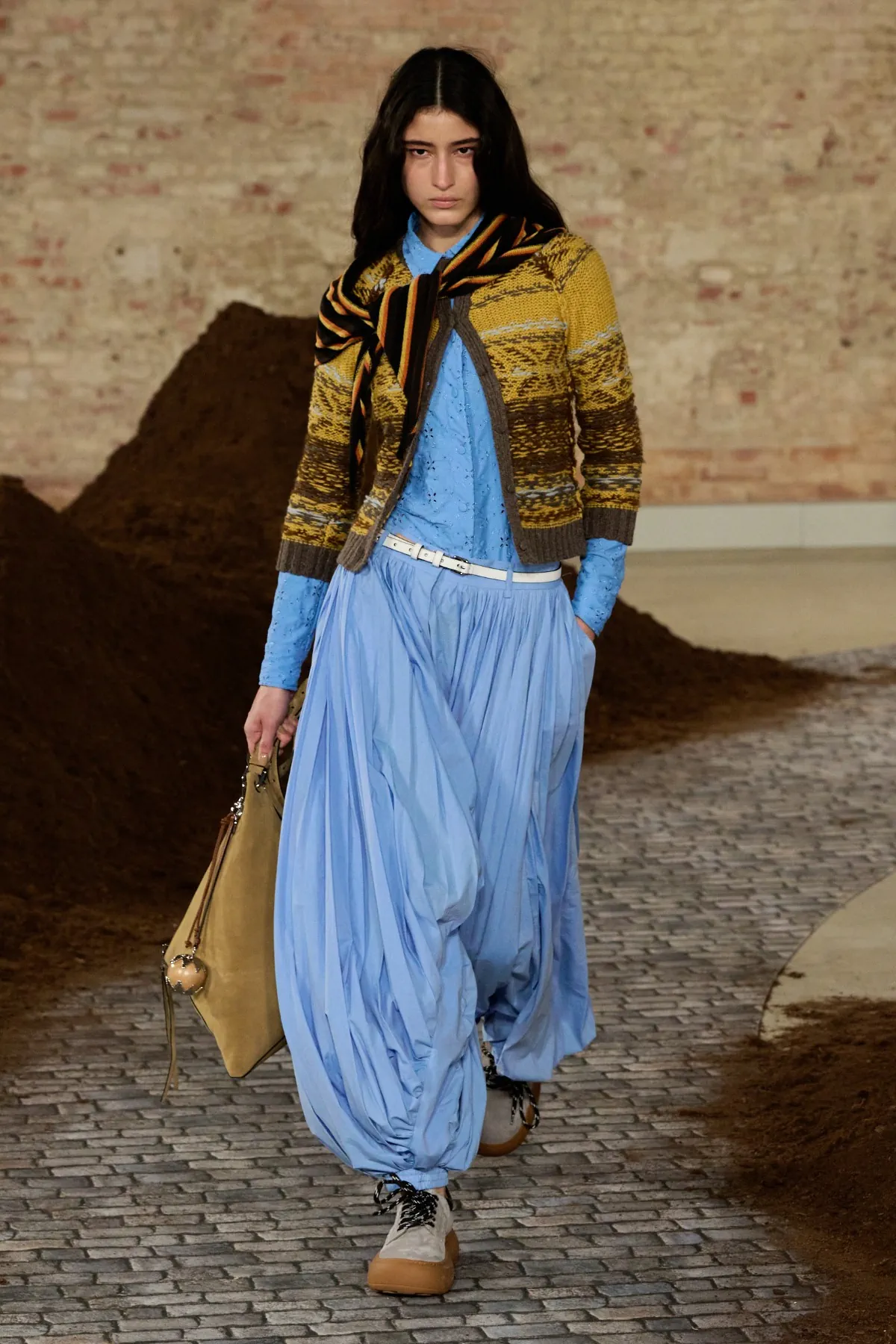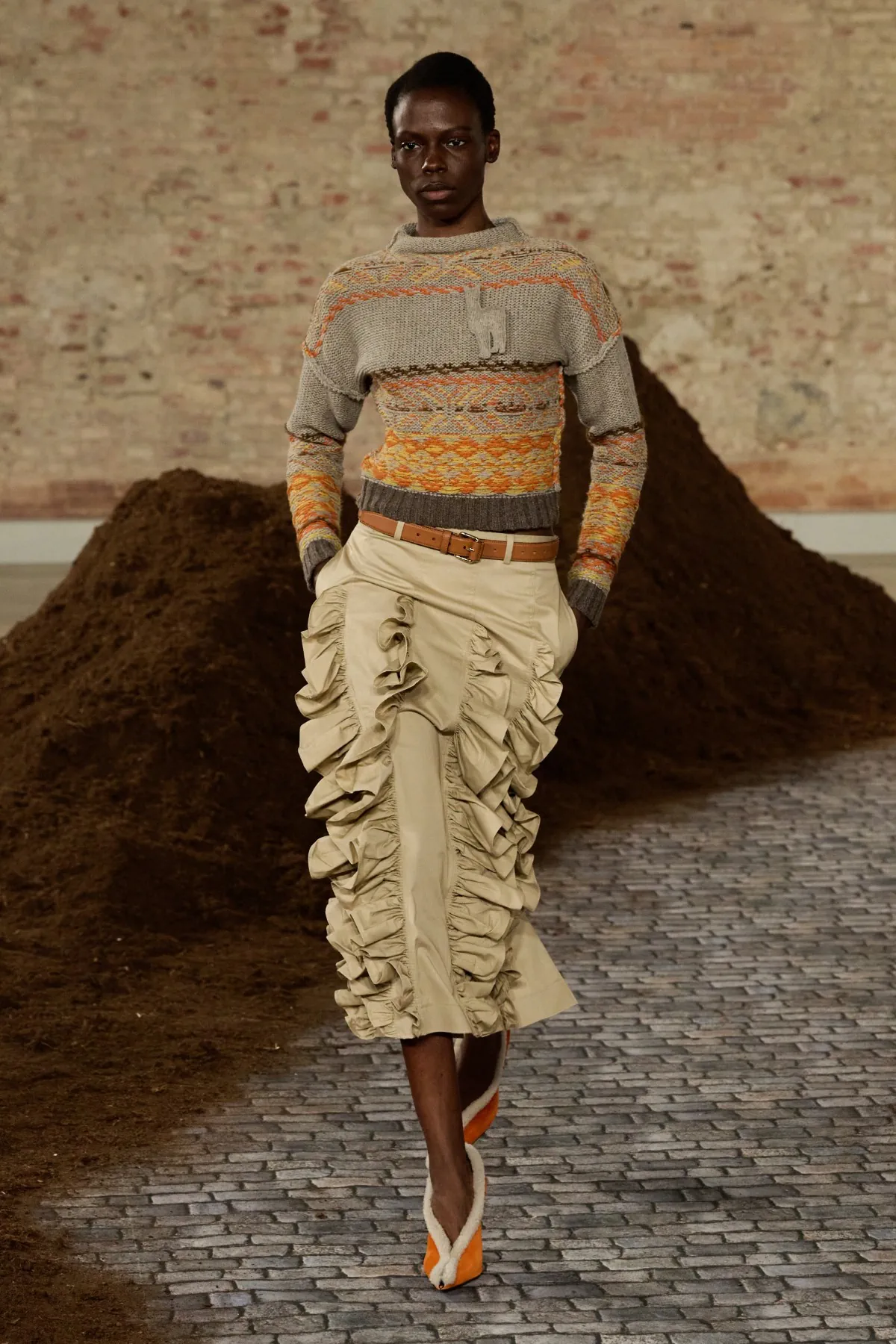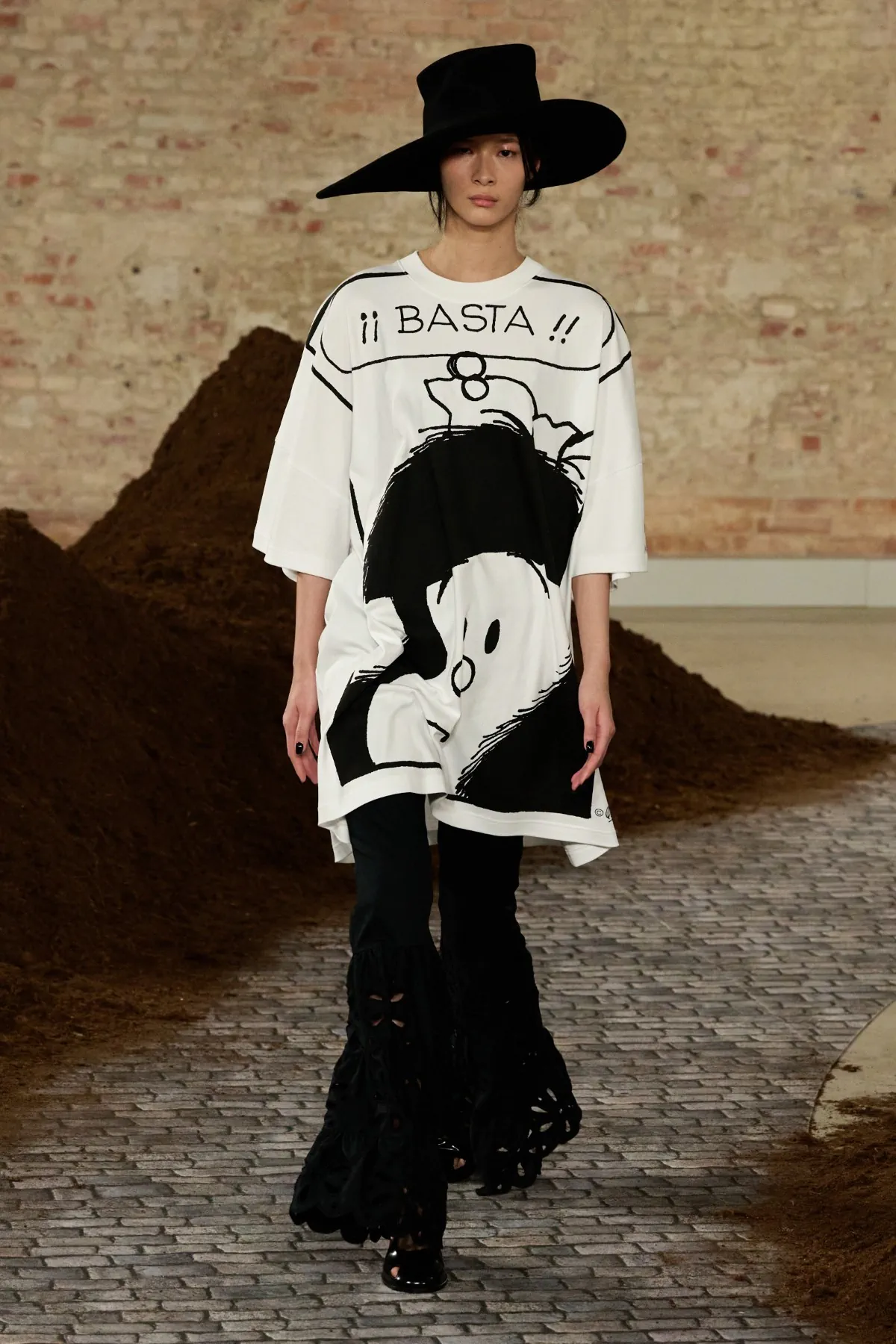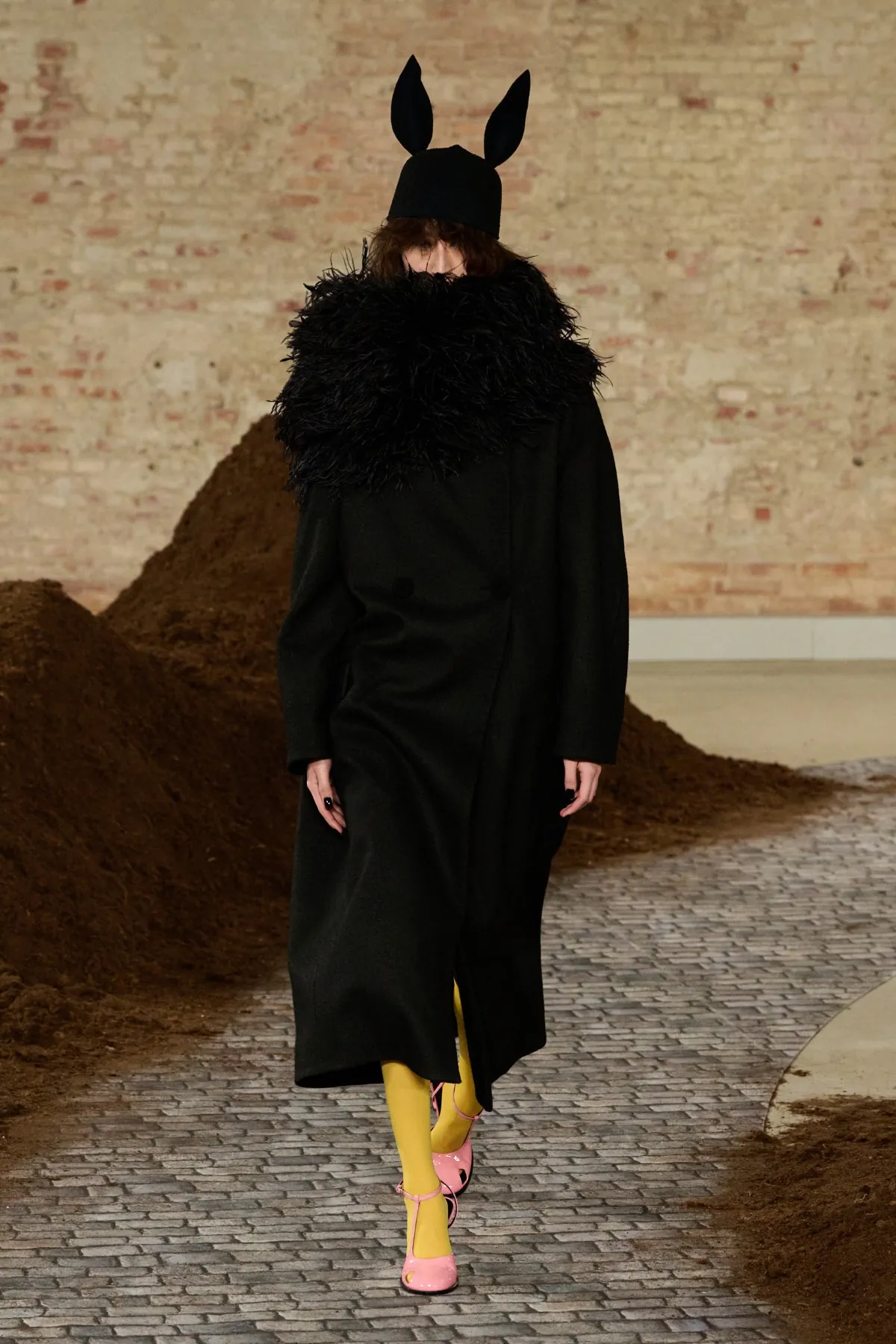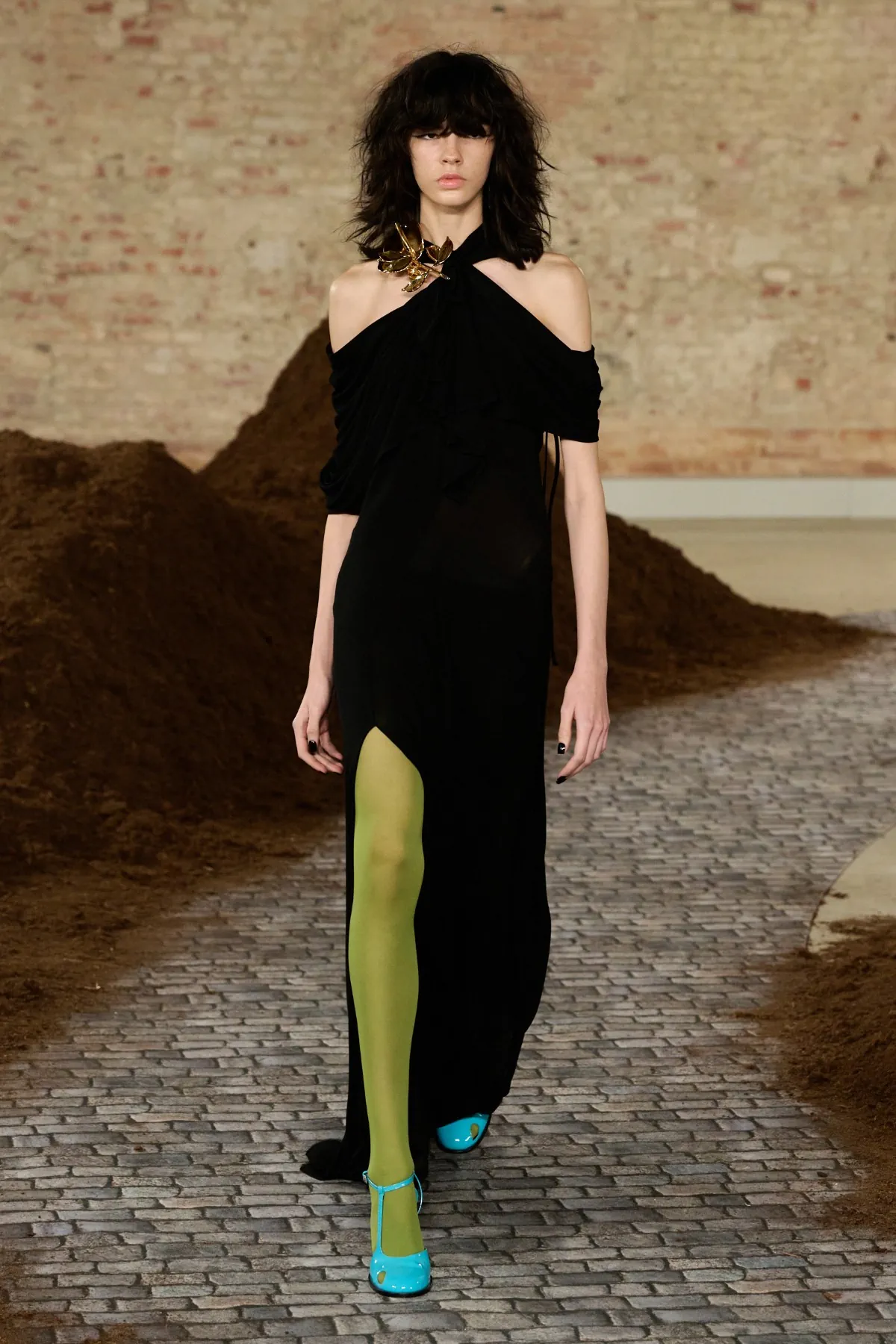

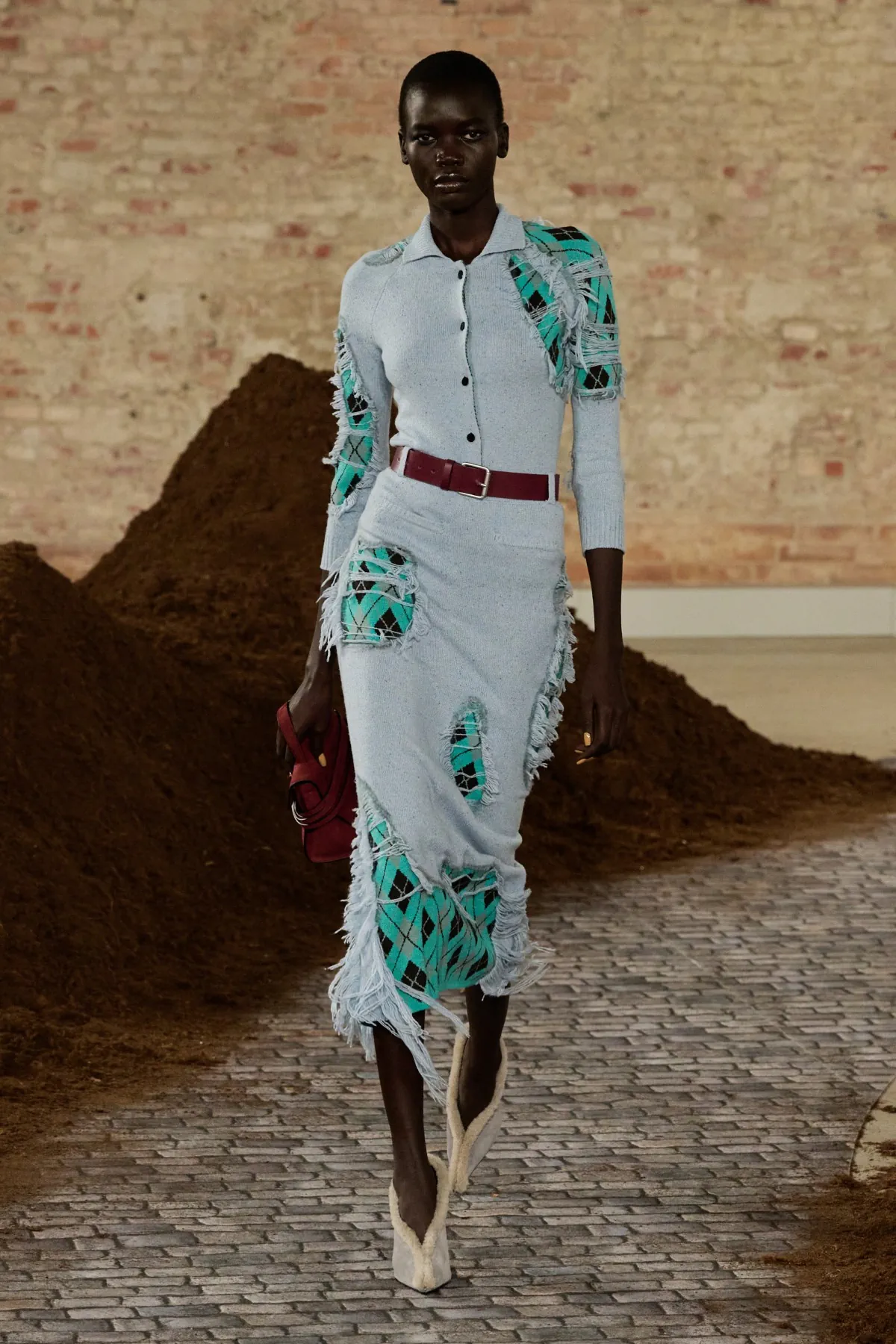
The Moschino Fall 2026 collection arrived Friday evening with a leather bag full of churros, a cactus clutch, and a pixelated image of Eva Perón. In other words, it arrived as itself. Adrian Appiolaza, the Argentine-born designer who has led the Italian fashion house since 2024, fully opened the door. What walked through it was Buenos Aires in full, chaotic, wonderful color.
| 📌 Key Facts |
|---|
| 🇦🇷 Moschino Fall 2026 centers on Argentine cultural references including gaucho tailoring and filete porteño. 👜 Accessories like churro bags and piggy bank purses extend the house’s tradition of visual irony. 💶 The finale look critiques fashion’s financial entanglements through euro-bill shoes and corporate styling. ✂️ Tailoring and silhouette construction signal technical maturity beyond spectacle. 🏛️ The collection aligns with Franco Moschino’s political wit while asserting Appiolaza’s personal voice. |
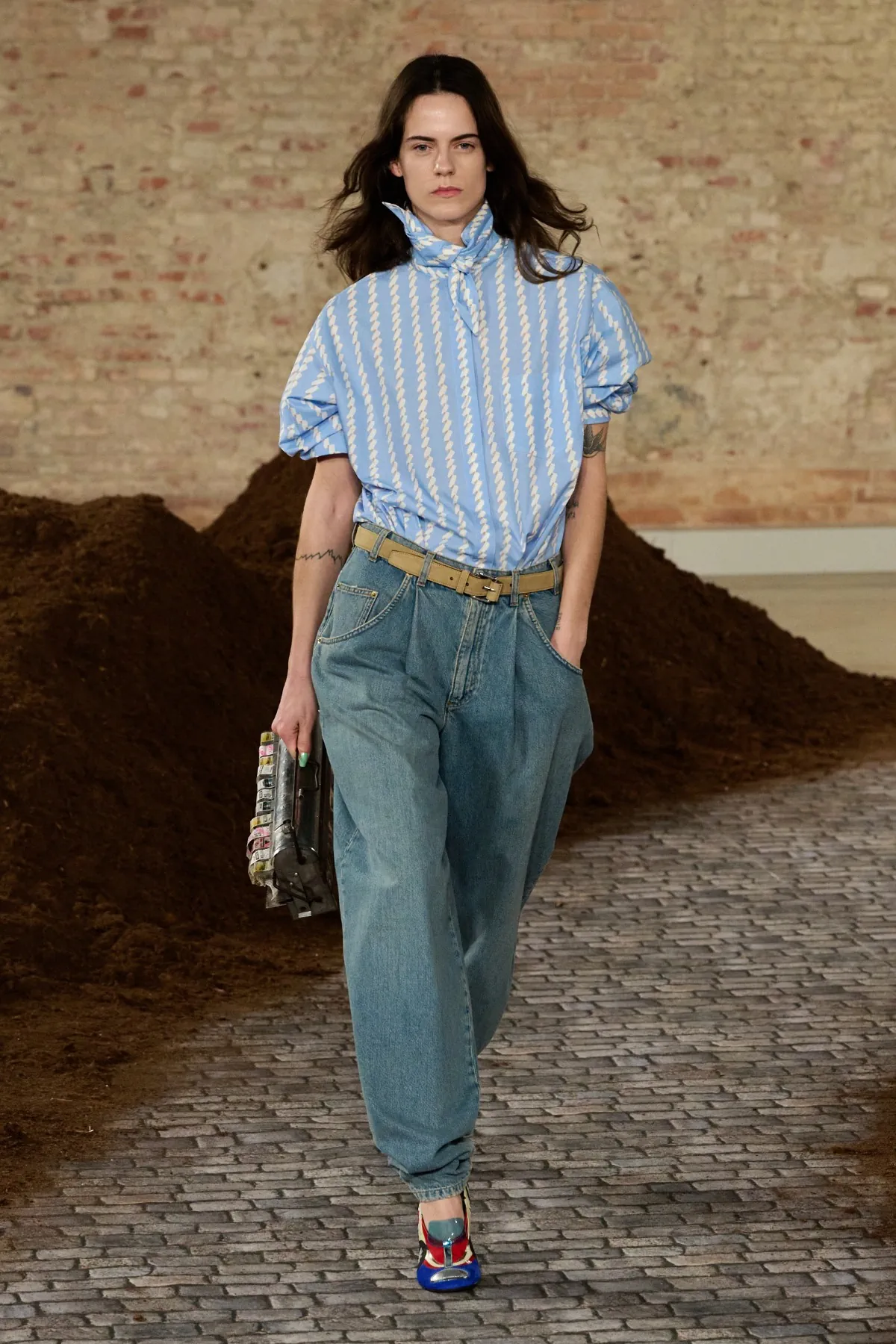
Appiolaza has always had a personal relationship with Argentina lurking beneath the surface of his Moschino work. For Fall 2026, he stopped suppressing it. The runway featured bourgeois ladies, football fans, bus drivers, and gauchos – essentially, a cross-section of Argentine society translated into fashion. Filete porteño, the ornate decorative style found on the sides of Buenos Aires buses and trucks, made its way onto a flaring dress. The effect was bold yet not garish, a harder feat to accomplish than it sounds at a house where restraint has never been the operating principle.
As always, the visual puns were plentiful. There was a piggy bank purse. Pumps constructed from what looked like paper currency. Mafalda, the beloved Argentine comic-strip girl created by cartoonist Quino and known for her stubborn refusal to accept the world as it is, served as Appiolaza’s spiritual mascot for the season. The final look, with a model dressed head-to-toe like a corporate banker, wearing euro-bill shoes and carrying a leather piggy bank under her arm, was the sharpest comment in the show, offering a pointed yet good-humored look at fashion’s relationship with money.
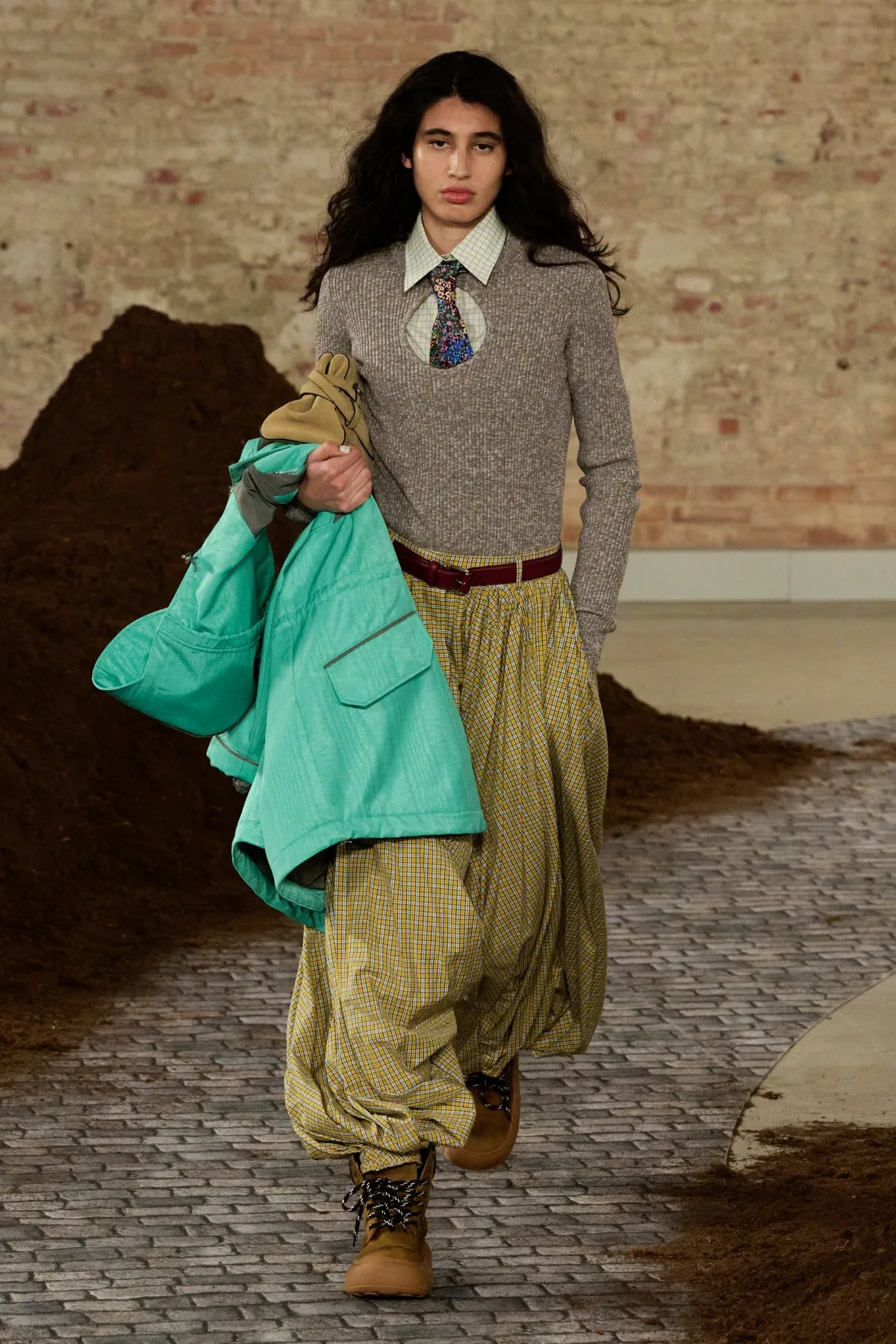
Beyond the spectacle, the clothes were genuinely strong. A dress printed with horse heads had a lean, almost sculptural quality. Gaucho trousers in a blue-and-white check, worn with a nipped waistcoat whose lapels picked up the same micro-plaid, showed that the designer knows how to construct a silhouette. Chunky, hand-knit sweaters worn inside out struck the right note of deliberate carelessness. A well-tailored jacket with 1940s proportions added architectural weight to the collection.
Follow all the latest news from Fashionotography on Flipboard, or receive it directly in your inbox with Feeder.
You may also read
Moschino is a house with a complicated legacy. Franco Moschino, the founder, had strong political convictions, but he expressed them subtly, using wit where others might have used a sledgehammer. Appiolaza shares that instinct. This collection critiqued fashion’s corporate drift, but the critique was delivered with a handbag full of fake churros rather than a manifesto.
It’s important to note that Moschino’s Italian identity has never been as fixed as people assume. Franco Moschino drew from wherever he pleased, including Spanish culture. This culture filtered into the house through personal connections and became part of its visual vocabulary. Appiolaza operates in the same spirit. It turns out that Argentina is not a detour from what Moschino is; rather, it is a surprisingly natural destination for a house built on irreverence, exaggeration, and a willingness to be openly and unashamedly fun.