


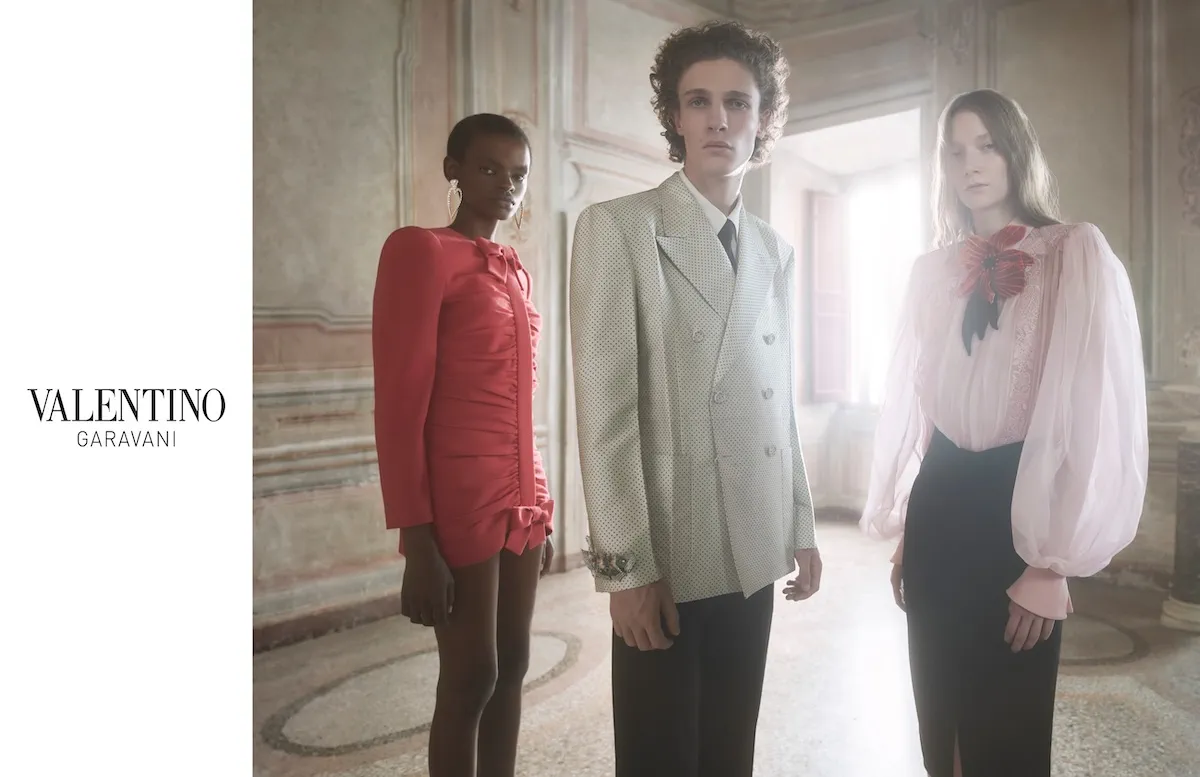
Fashion advertising relies on a tried-and-true formula. Put the clothes on beautiful people, find a beautiful location, and photograph everything in beautiful light. Valentino’s “Fireflies” campaign does not entirely abandon that formula, but Creative director Alessandro Michele uses it to explore a less comfortable idea.
| 📌 Key Facts |
|---|
| ✨ Campaign name: Fireflies 📍 Location: Villa Parisi, Frascati near Rome 📸 Photographer: Willy Vanderperre 👗 Collection: Valentino Spring Summer 2026 Ready-to-Wear 🖋️ Creative director: Alessandro Michele 📚 Reference: Pier Paolo Pasolini WWII letter about fireflies 🧠 Core concept: Elegance through vulnerability and interdependence 🏛️ Visual tone: Formal, restrained, inhabited 👥 Central gesture: Models physically supporting one another |
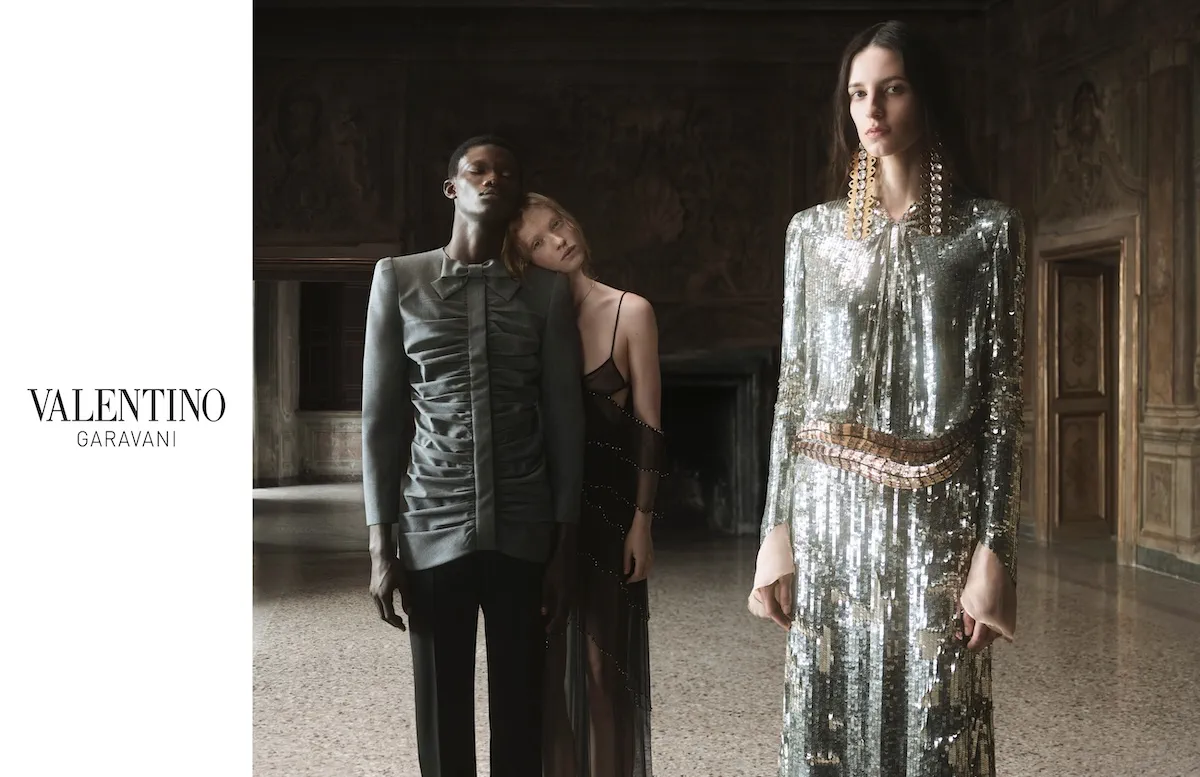
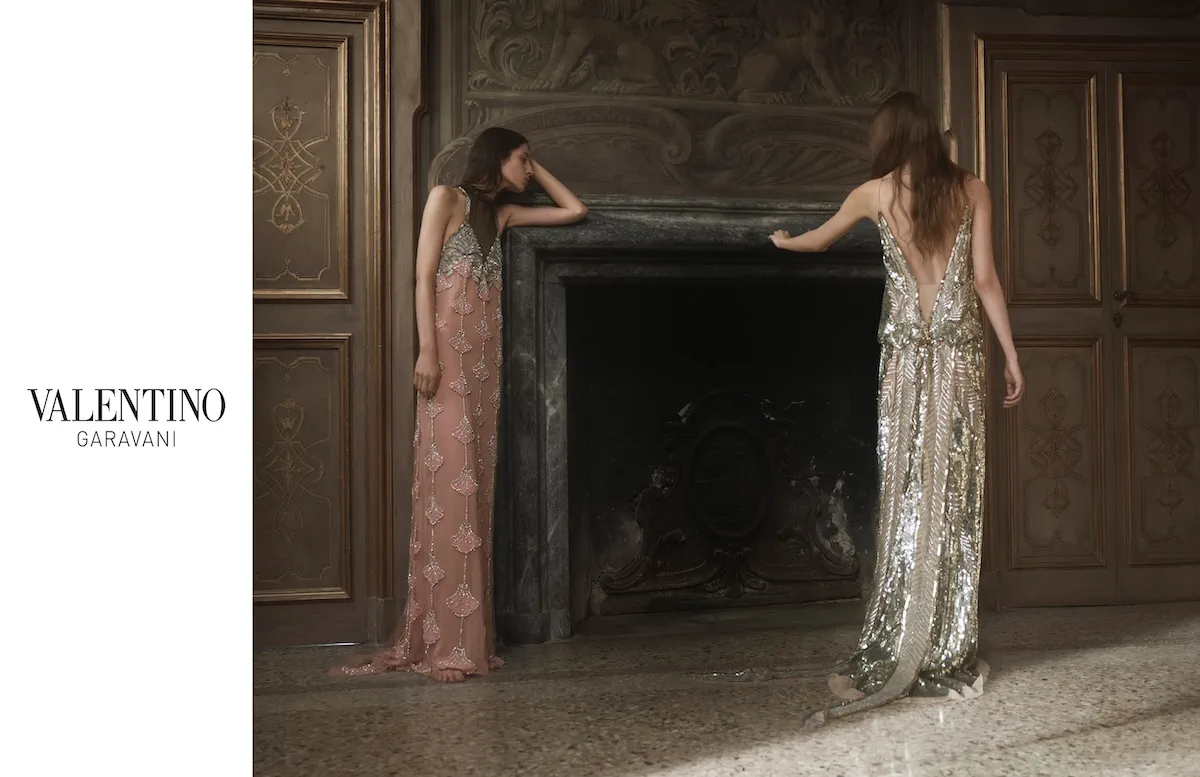
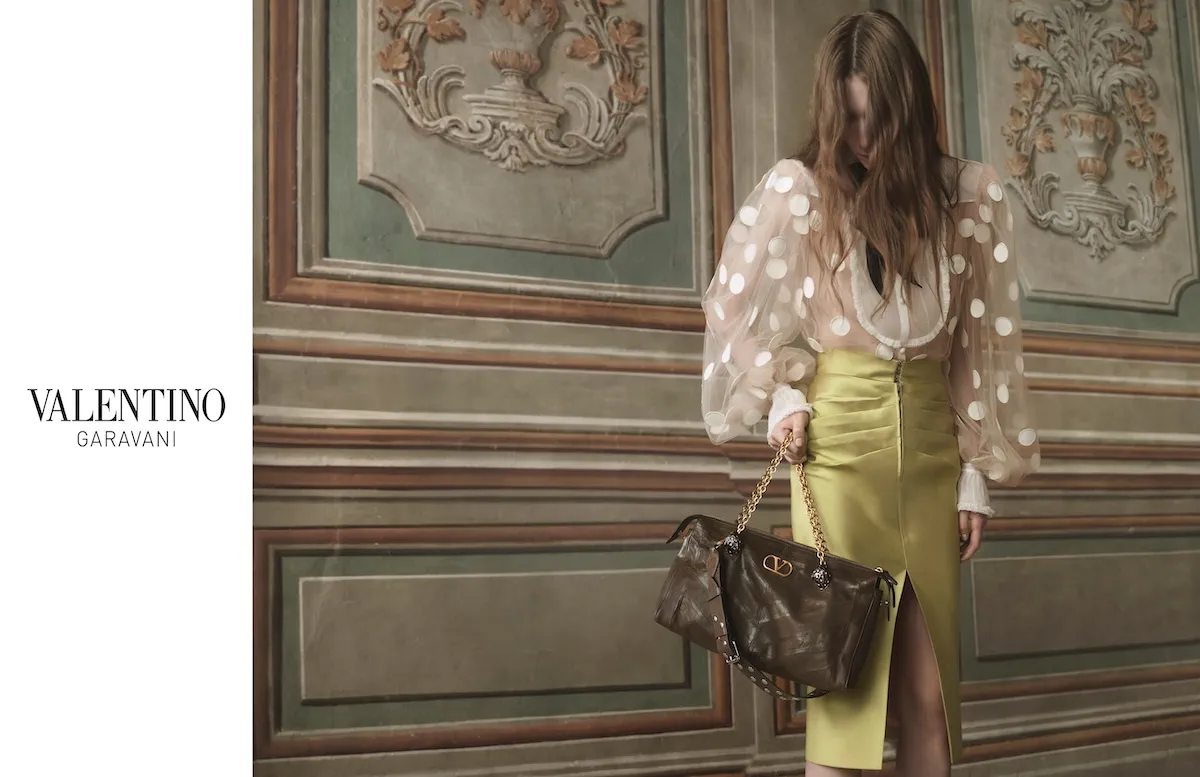
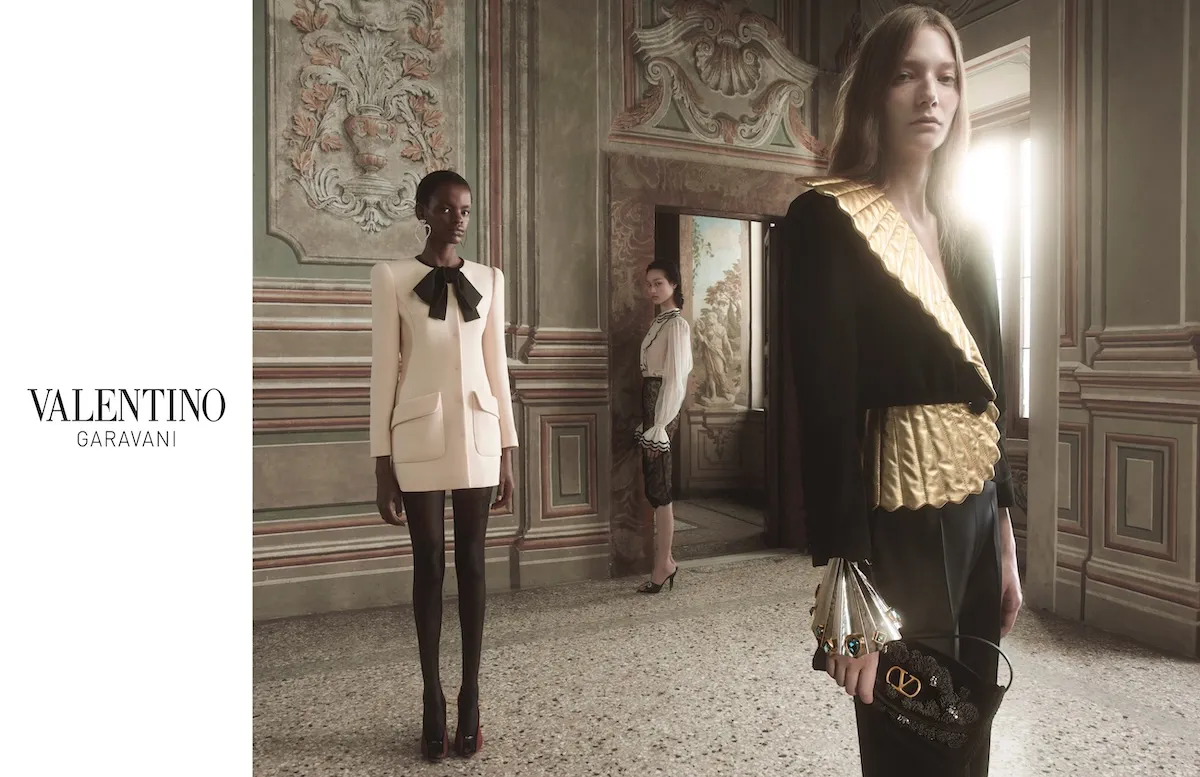
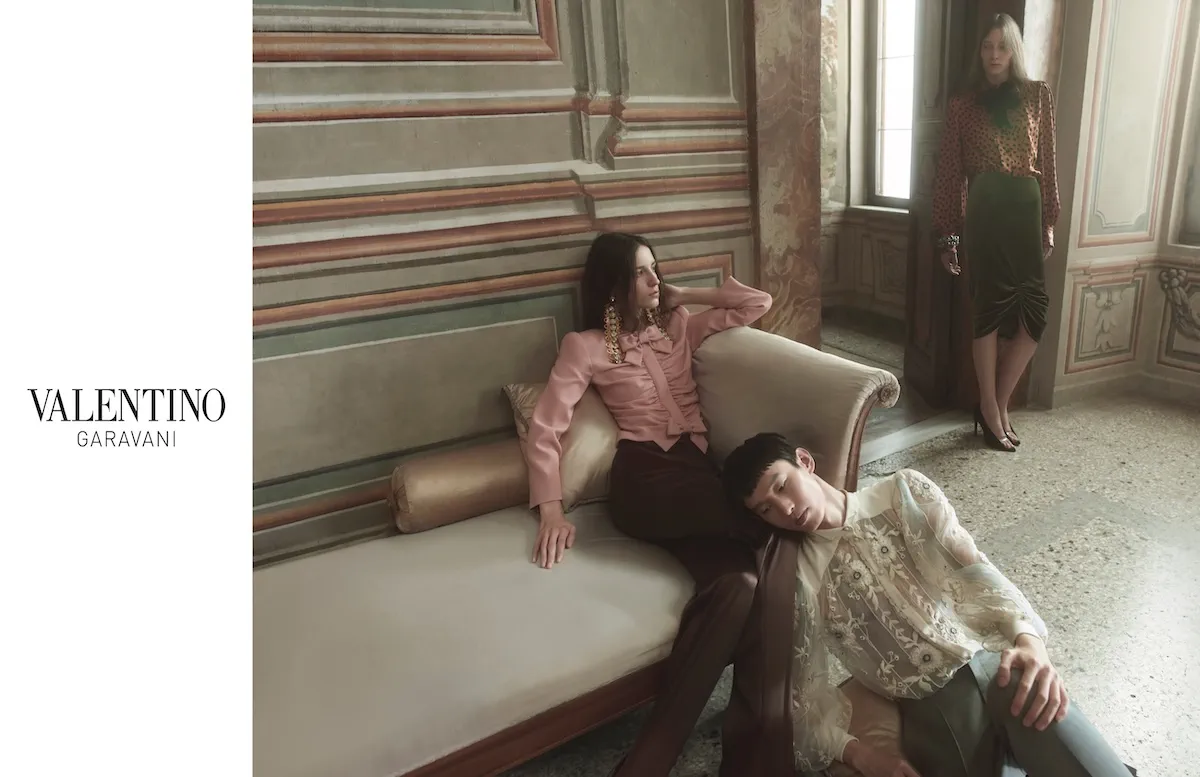
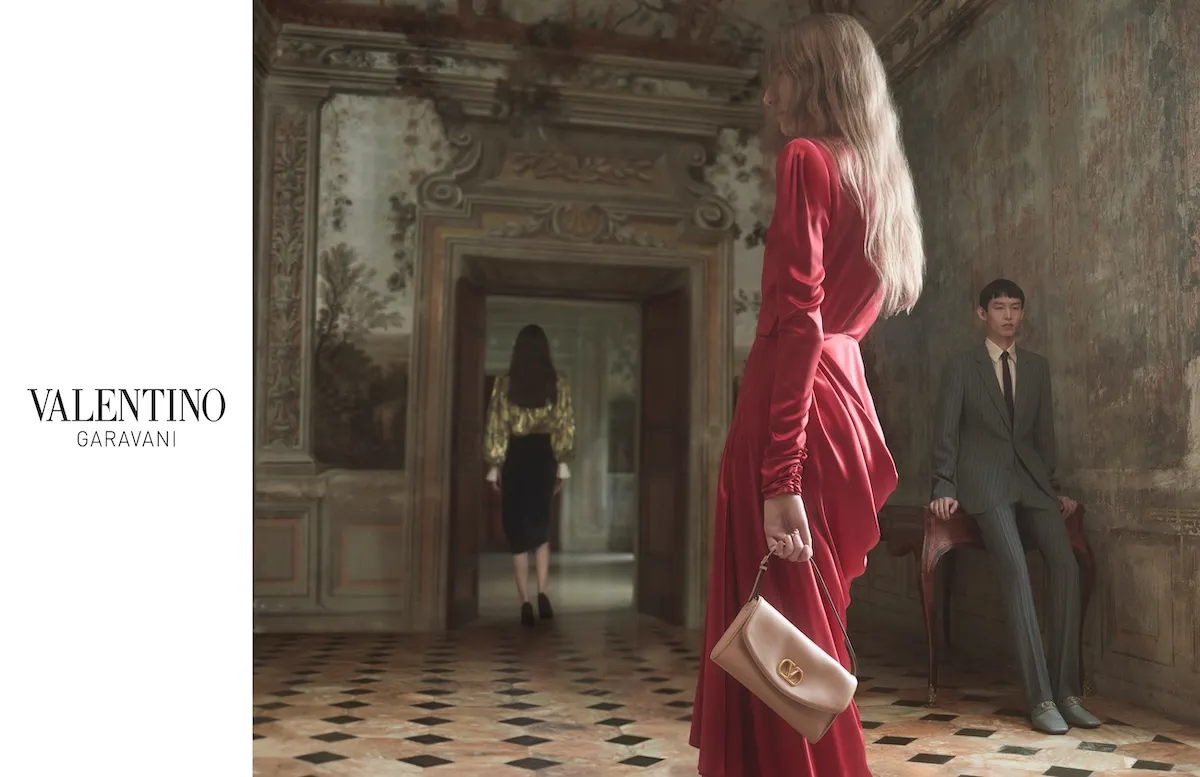
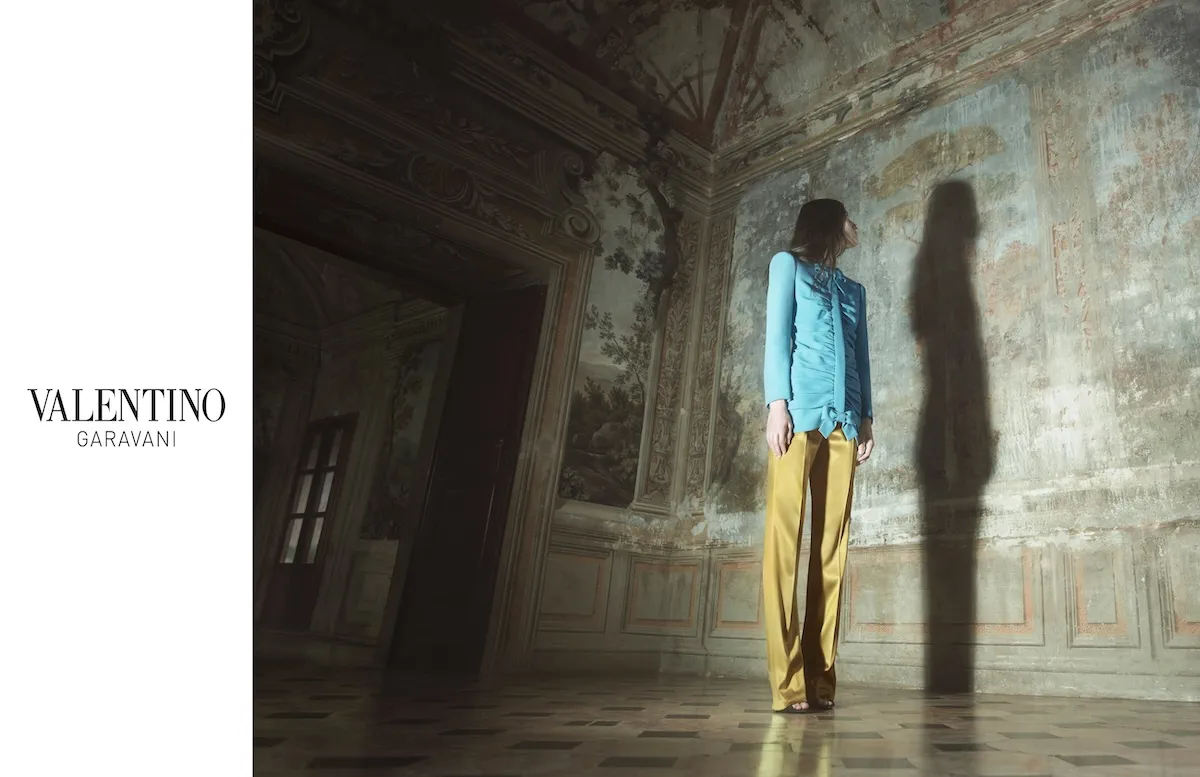
The campaign was shot at Villa Parisi in Frascati, a 17th-century estate outside Rome whose interiors bear the marks of centuries past, with frescoed ceilings, marble fireplaces, and gilded wooden doors. There, photographer and director Willy Vanderperre captured nine models dressed in the season’s richly embroidered blouses, pencil skirts, ruched dresses, and dramatic sequined gowns. The images are formal and composed. However, the defining element is not the architecture or the clothes. It is the act of holding itself.
The models are shown in moments of near-collapse. They lean into one another, reach for an arm, and offer a shoulder. These gestures are quiet and almost automatic – the kind of thing people do for each other without thinking. Michele attached a lengthy letter to the campaign to explain his reasoning. The central argument is straightforward: falling is not an aberration. It is the condition from which we all operate. He contends that the upright position is always provisional and contingent on the people and structures around us.
This represents a shift from the collection’s original spirit. The Spring-Summer 2026 ready-to-wear line, presented in Paris, was initially linked to a letter written by the Italian filmmaker and intellectual Pier Paolo Pasolini during World War II. In the letter, Pasolini marveled at the sight of fireflies with tenderness and wonder. The campaign takes that opening image of fragile light and moves toward something more structural. Dependency, not beauty, becomes the subject.
This is significant because fashion campaigns rarely acknowledge fragility. Luxury brands project an image of absolute control over their image, bodies, and possessions. Strength is the implied promise. However, Michele argues the opposite, claiming that genuine elegance acknowledges the weight we carry and accepts that we cannot carry it alone. This position has a political dimension. Rejecting self-sufficiency is not a sign of weakness. Presenting self-sufficiency as a virtue, Michele suggests, is a form of cultural conditioning – and one worth questioning.
The photographs achieve something fashion imagery often misses. They feel inhabited. Whether seated on a gilded sofa or standing before a centuries-old door, the models do not appear to be posing. They look present. The clothes are unmistakably Valentino – formal, elaborate, and rooted in the long European tradition of dressed occasions. Yet, they do not dominate the frame. The bodies wearing them do. There is visible attentiveness among the subjects of the photographs that redirects the viewer’s attention from their clothing to their actions.
Follow all the latest news from Fashionotography on Flipboard, or receive it directly in your inbox with Feeder.
You may also read
Christopher Simmonds handled the art direction. Jonathan Kaye handled the styling. Victoria Salomoni designed the set, and Rachel Chandler oversaw casting. Together, this team created a visual environment that appears restrained despite its opulent surroundings – a deliberate choice that keeps the focus on the people rather than the decorations. Nothing in the frame competes for attention, and the architecture supports rather than overwhelms.
Michele joined Valentino in 2024, following a decade at Gucci. His design approach leans toward the literary and philosophical. He builds a collection from sources and references and writes at length about his intentions. The “Fireflies” campaign is fully consistent with that method. It frames elegance not as perfection, but as the willingness to provide support when needed.
Creative director: Alessandro Michele
Photographer & Director: Willy Vanderperre @willyvanderperre
Art director: Christopher Simmonds
Stylist: Jonathan Kaye @jonathan_kaye
Set design: Victoria Salomoni @victoriasalomonistudio
Hair: Esther Langham @estherlangham
Make-up: Yadim Carranza @yad1m
Manicure: Sara Ciufo @saraciufo_nails
Casting: Rachel Chandler @rachel_chandler