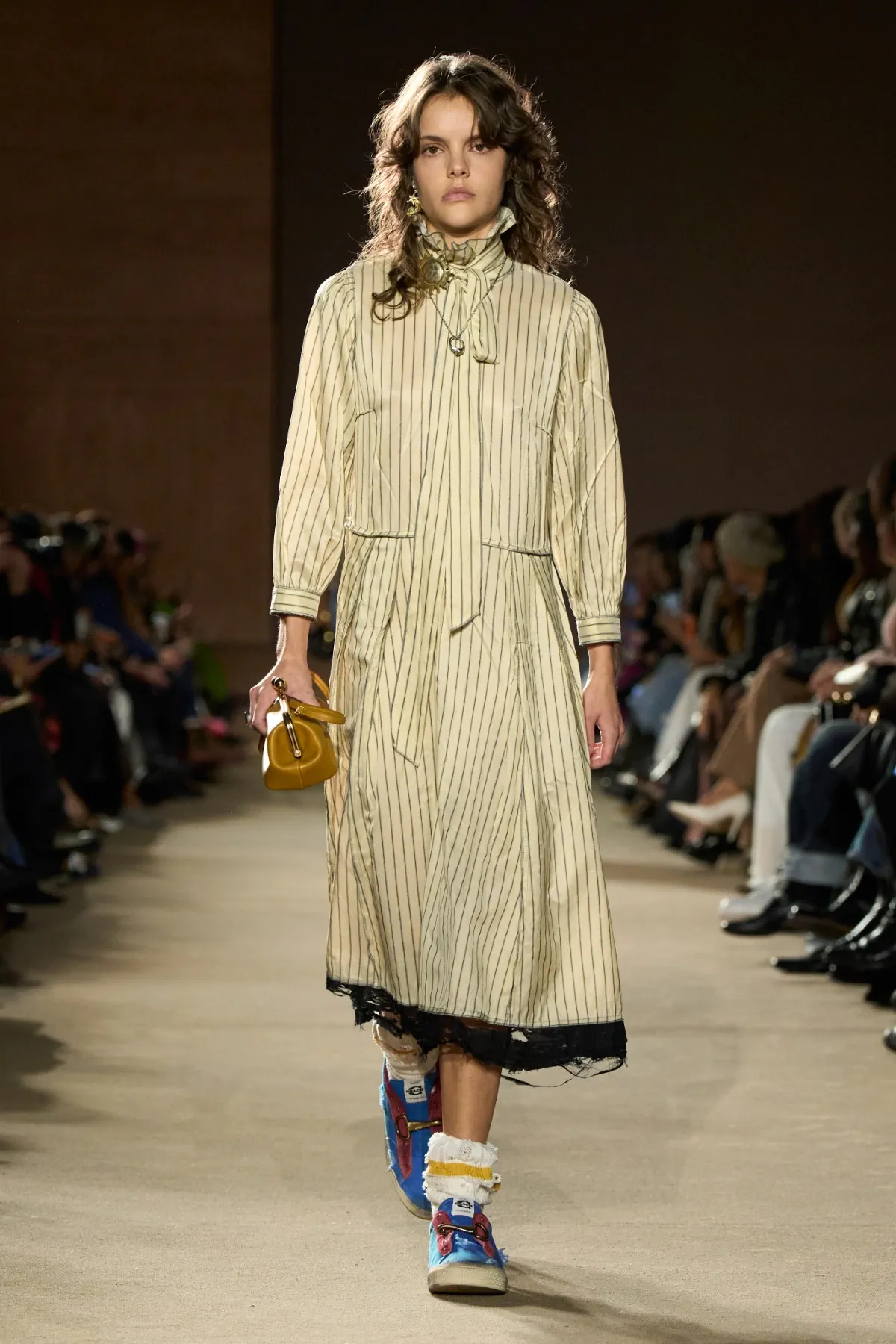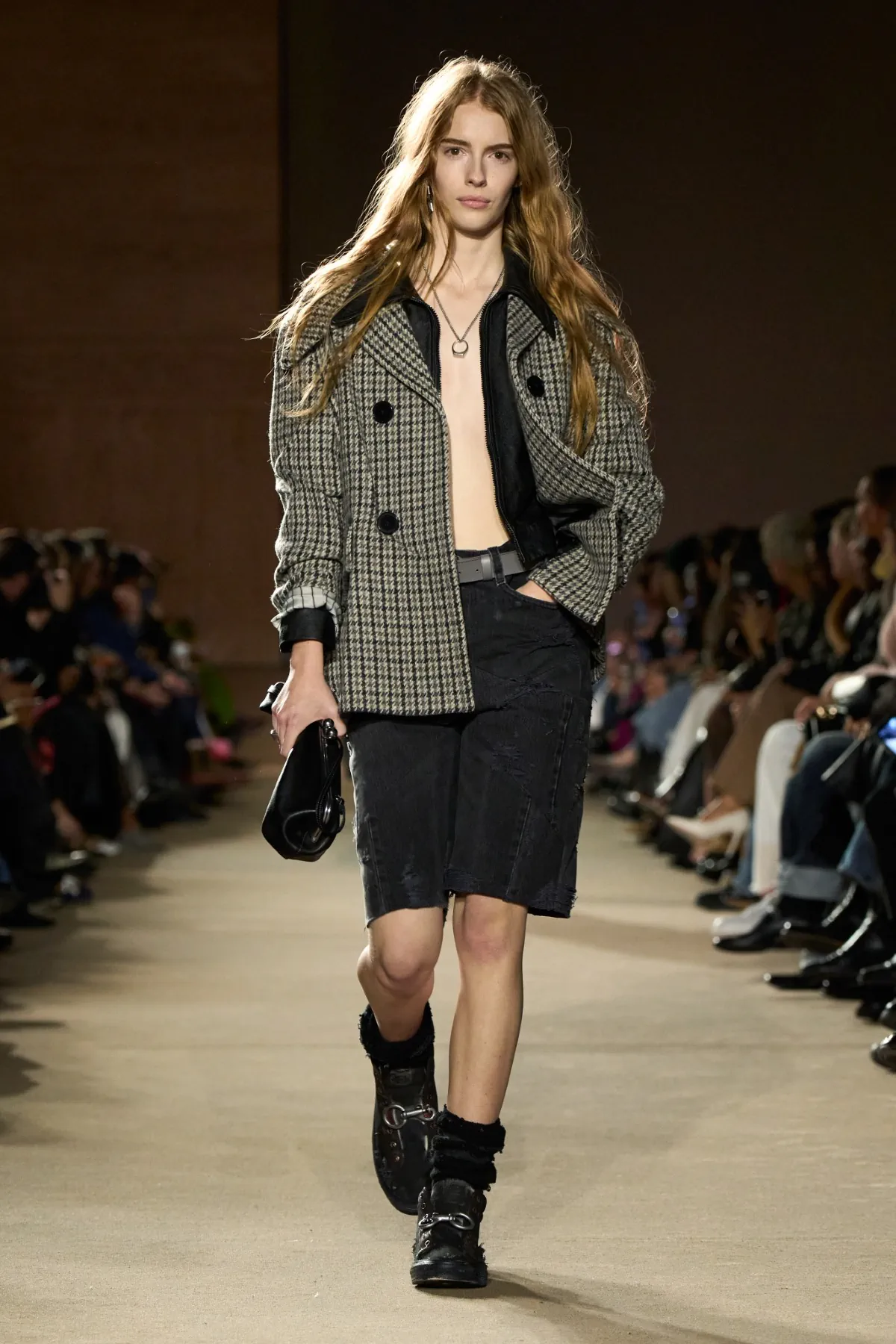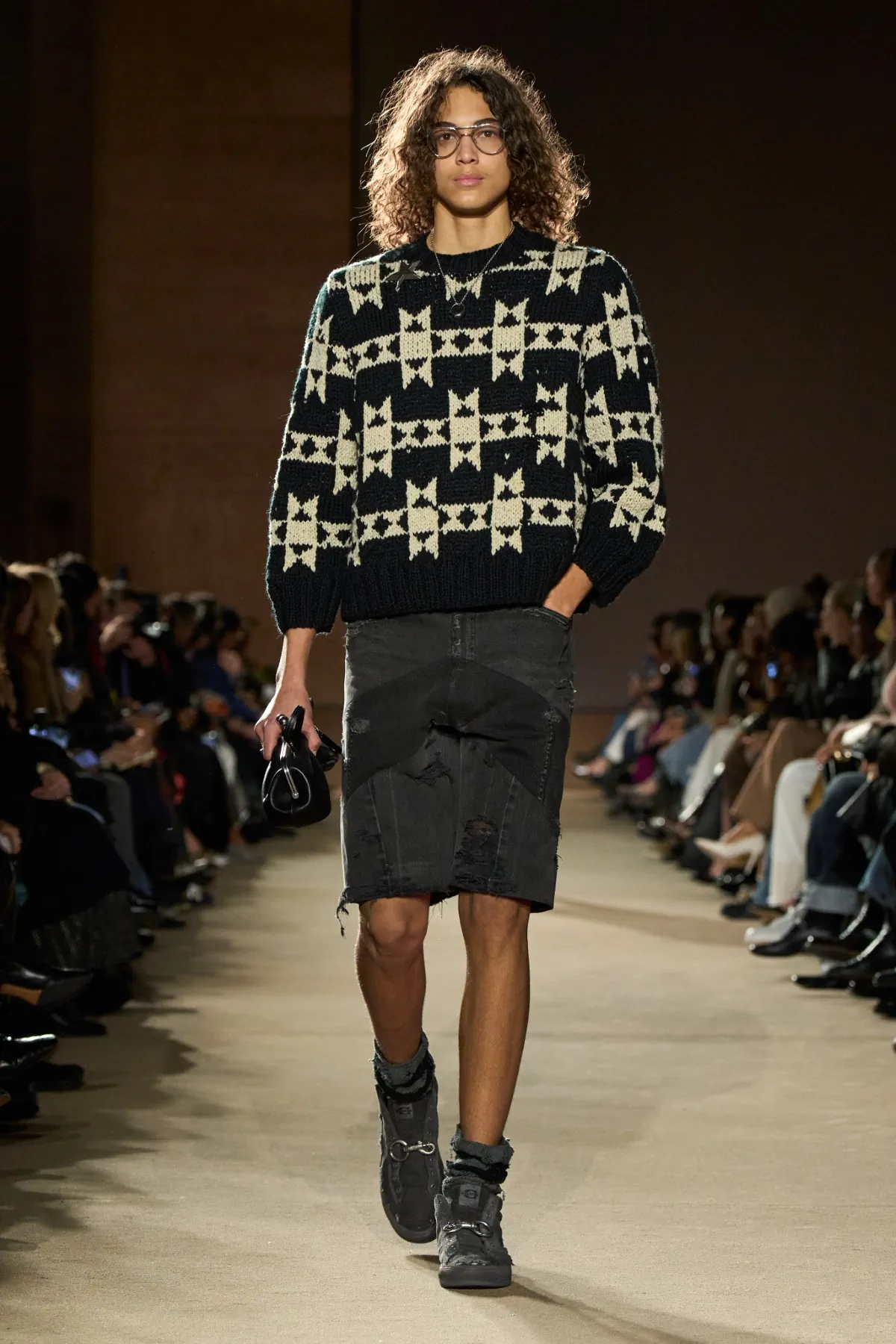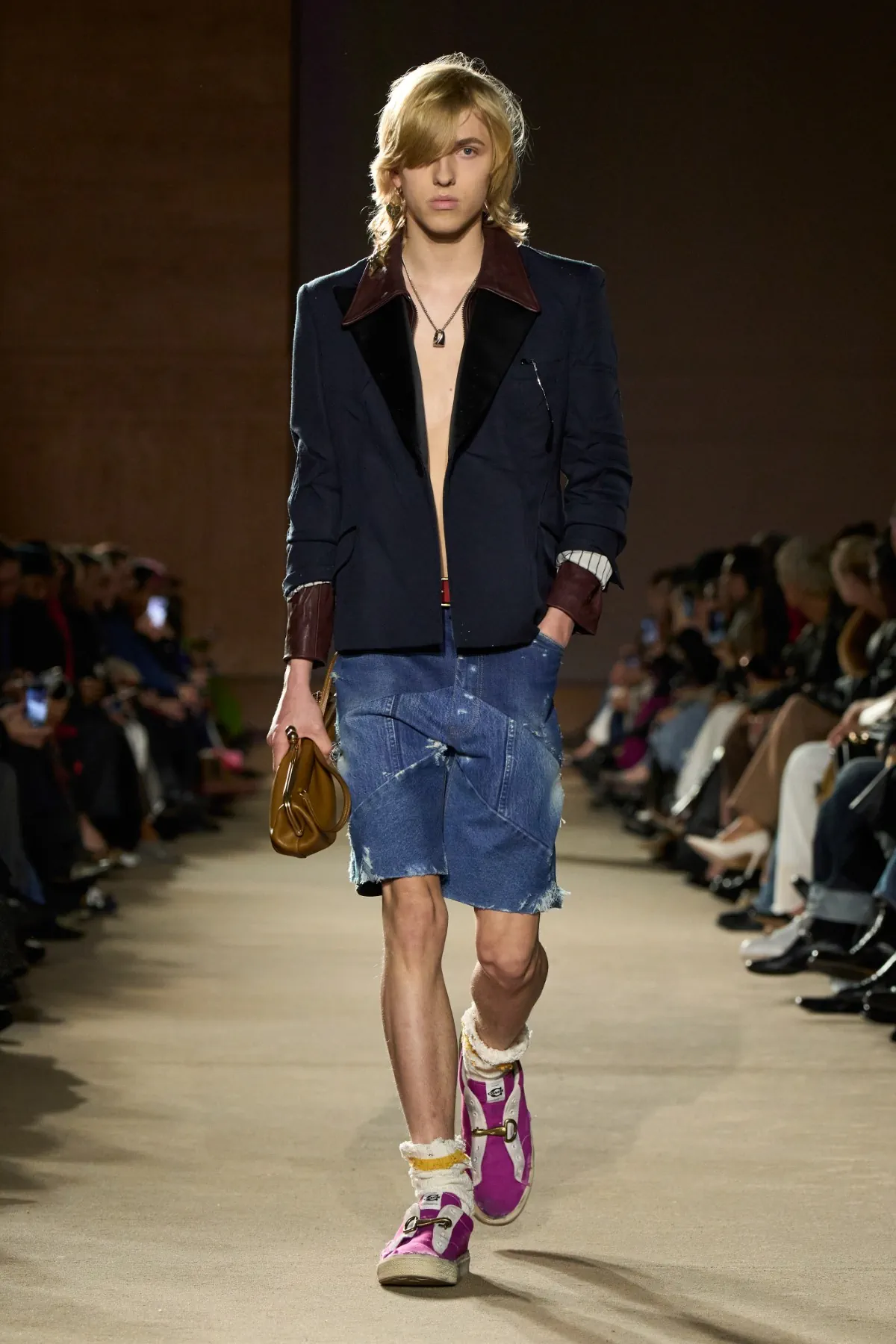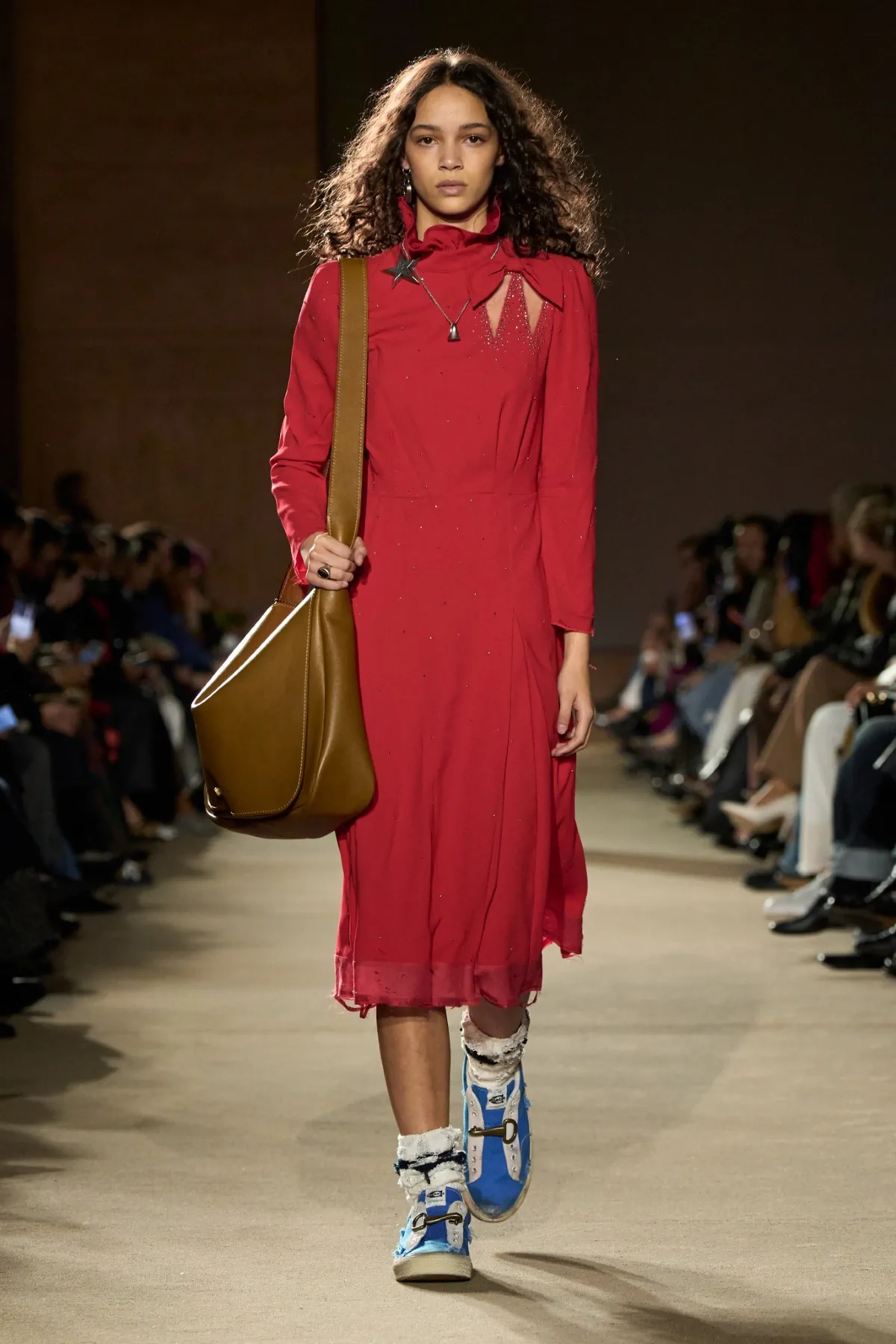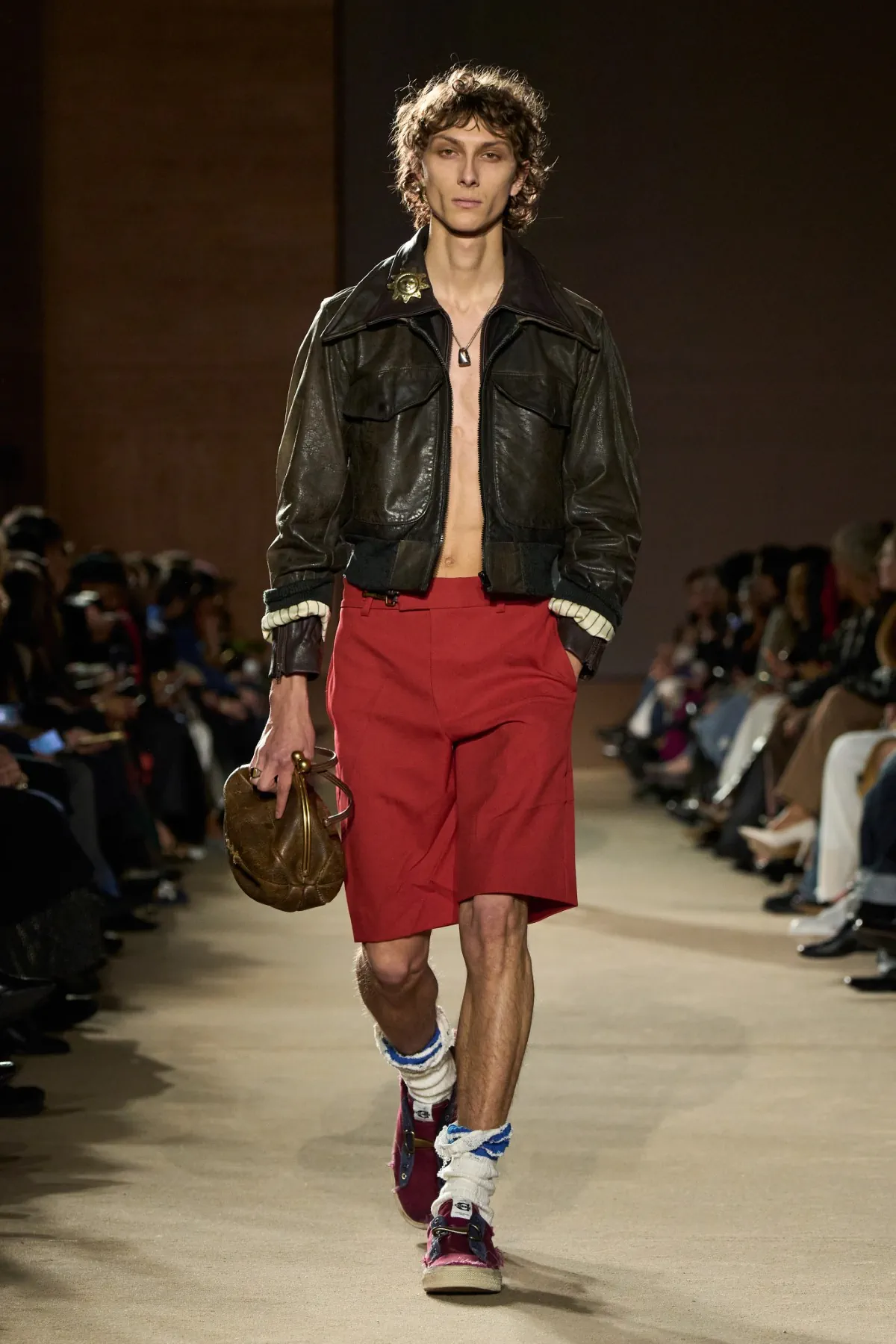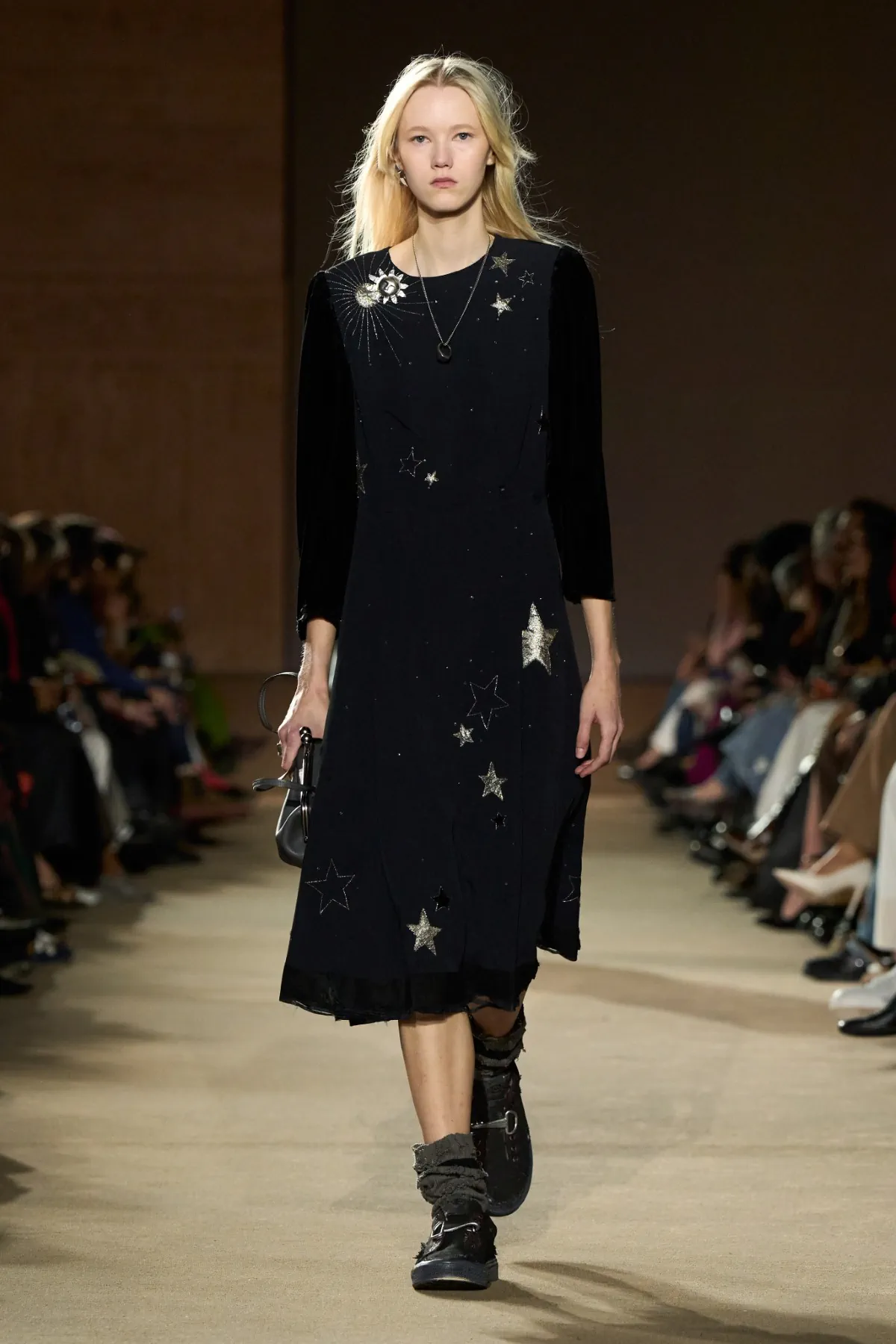

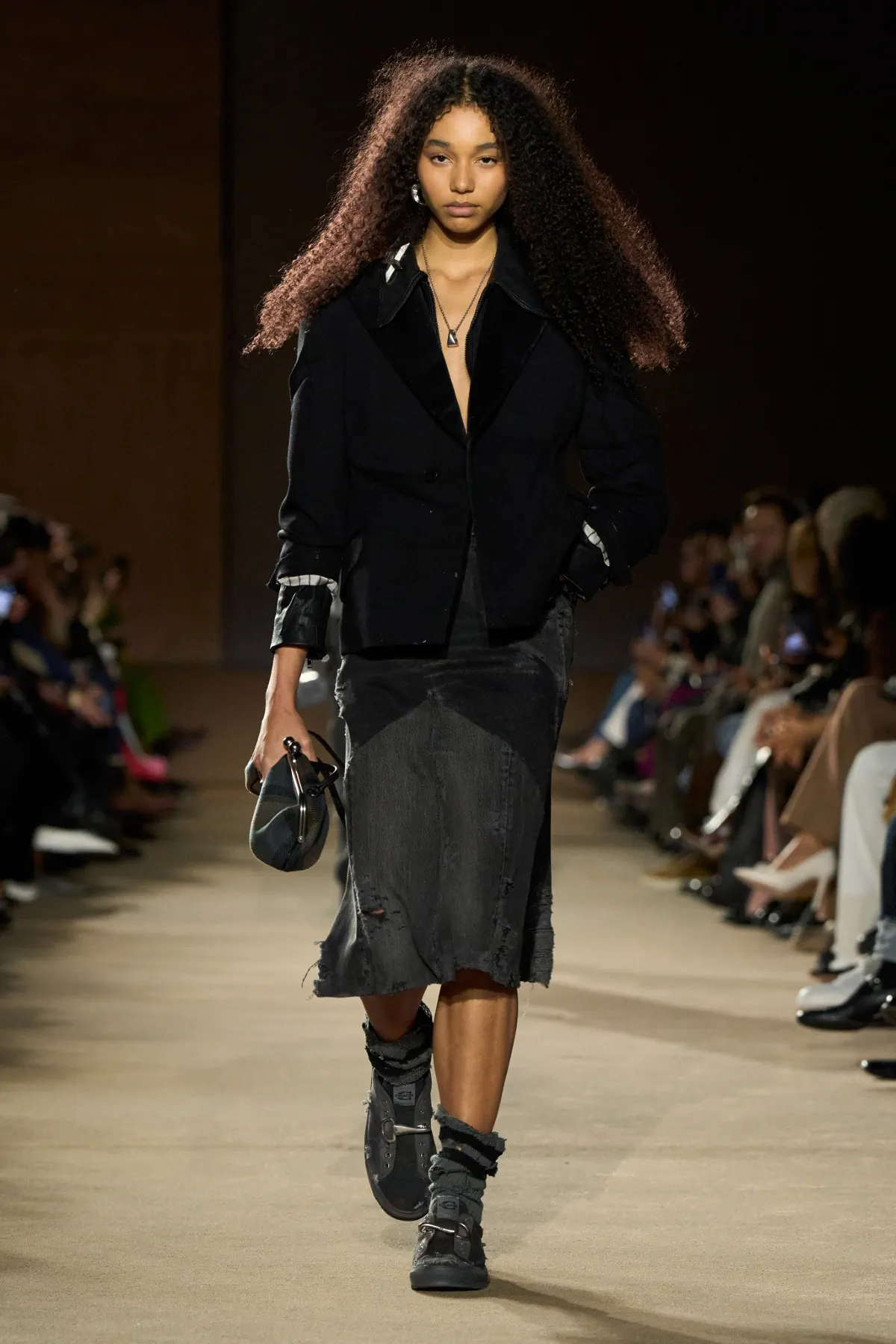
Stuart Vevers transformed the historic Cunard Building into a cinematic tableau for the Coach Fall 2026 collection. The show began in shadows on Wednesday. It evoked the moody sepia tones of film noir before shifting into a vibrant celebration of color. This marked a deliberate departure from the brand’s recent New York – centric focus. Vevers widened his lens to capture a broader American landscape. He looked beyond the city limits for inspiration, embracing the expansive concept of the fifty states. The company’s impressive Q2 results suggested a business on a steady upward trajectory. This collection aimed to solidify that momentum through a clear creative evolution.
| 📌 Key Facts |
|---|
| 👔 Brand: Coach 🎨 Artistic director: Stuart Vevers 📍 Location: Cunard Building, New York 🎬 Creative direction: Stuart Vevers 🇺🇸 Theme: Expanded American identity across all fifty states 👖 Materials: Post-consumer upcycled denim 🧥 Key pieces: Varsity jackets (leather & shearling), flared pants, A-line skirts 👜 Accessories: East-West frame clutches, messenger bags with turn-lock hardware 👟 Footwear: New Coach Skate Sneaker (low & high-top) 🌱 Sustainability focus: Handbags crafted from vintage footballs and baseball gloves 📈 Context: Strong Q2 financial results supporting brand momentum |
His mood board featured an eclectic mix of images, ranging from a young Jodie Foster to California skateboarders and scenes from The Wizard of Oz. This disparate assembly of references allowed Vevers to connect youth countercultures across eras and geographies. The designer has watched The Wizard of Oz every year since childhood. This sense of journey informed the spirit of the clothes. “Exploring the idea of America felt like a move forward,” Vevers explained during a preview. He sought to narrow the silhouette while expanding the brand’s geographic scope.
The atmosphere in the Great Hall was theatrical. Guests sat under coffered ceilings designed by Carrère & Hastings. The lighting shifted to enhance the presentation’s dramatic tension. Models walked the runway in silhouettes that combined the structured tailoring of the 1940s with the relaxed sportswear of the 1970s. The clothing felt lived-in. They had a laid-back vibe that contrasted with the grandeur of the neo-Renaissance architecture. Flared pants and A-line skirts moved with ease, and varsity jackets and deconstructed blazers added layers of texture.
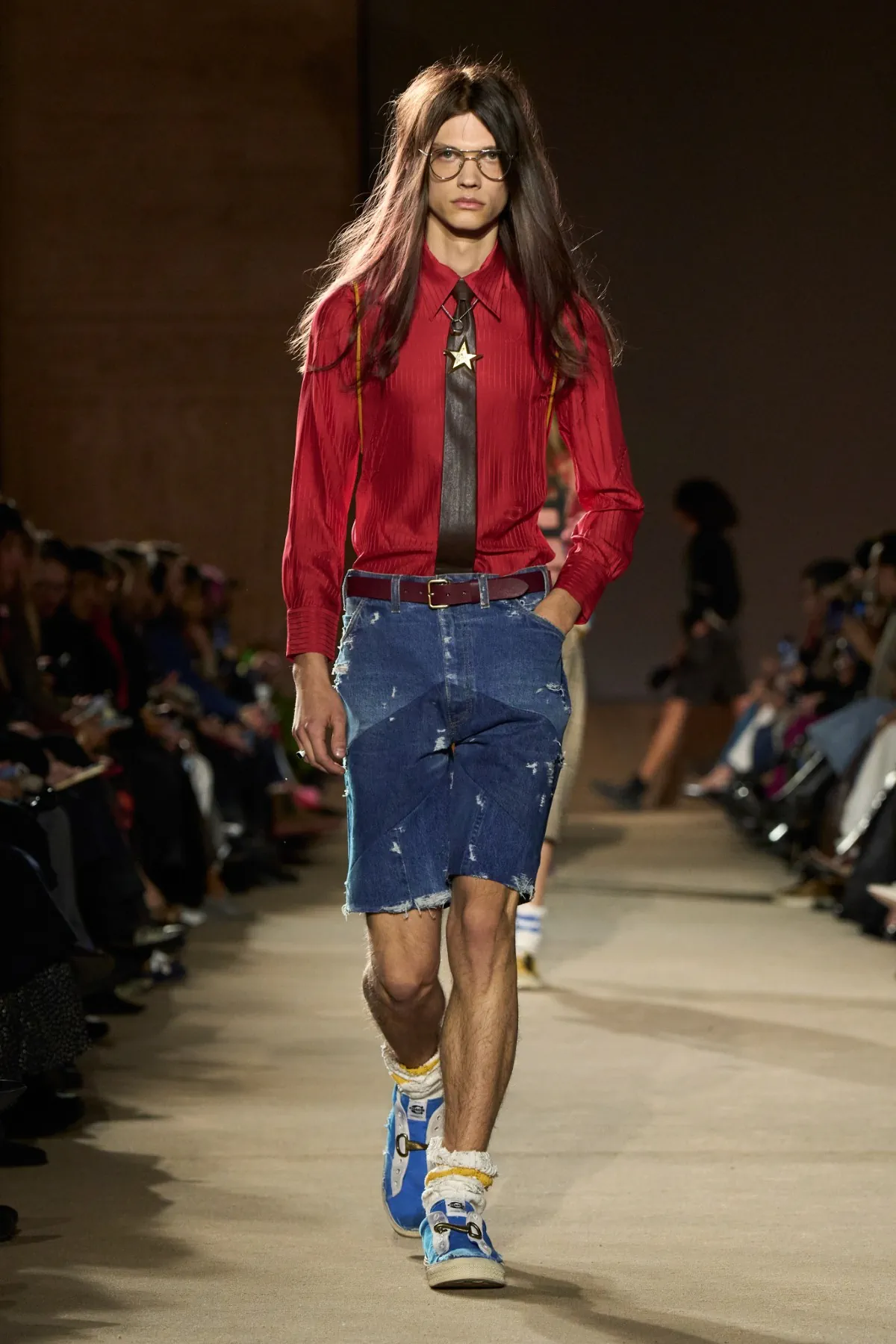
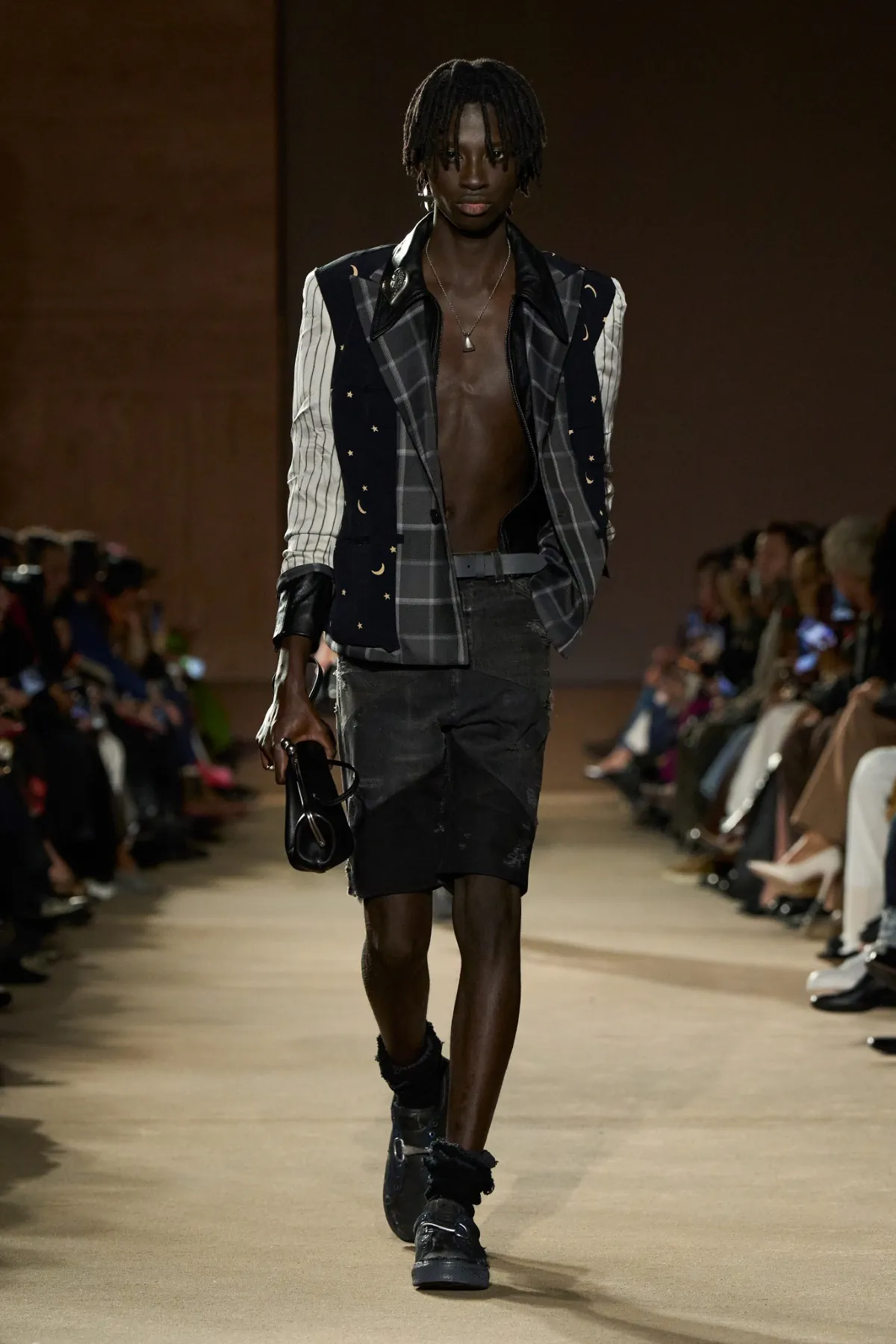
The collection presented more than just a polished exterior. It embraced a distressed aesthetic, recalling the Dust Bowl era meets grunge. Almost everything appeared slightly weathered. Despite models wearing jackets open over bare skin, this dry quietness felt conservative. A deconstructed jacket mixed plaid with lining fabrics. Prim dresses with lace trim and Pilgrim-like collars provided a contrast to the rugged outerwear. The color palette transitioned from grays to heritage shades, including reds, whites, and blues. Varsity jackets were a focal point of the outerwear collection. They came in leather and, for the first time, in full shearling.
Sustainability played a crucial role in the design process. Vevers emphasized a commitment to responsible design through upcycling. The denim used in the collection was post-consumer. He even crafted handbags from vintage footballs and baseball gloves. This choice nodded to the brand’s heritage. The tan leather of Coach’s iconic glove has always been inspired by vintage baseball mitts. “Upcycling is something that we’re starting to do in a meaningful way,” he noted. “All of the denim is post-consumer, and we have a capsule collection of post-consumer garments in store.“
Follow all the latest news from Fashionotography on Flipboard, or receive it directly in your inbox with Feeder.
You may also read

Accessories anchored the look. Models clutched silver East-West frame clutches or carried roomy messenger bags with signature turn-lock hardware, which was introduced by Bonnie Cashin. The new Coach Skate Sneaker appeared in low- and high-top versions. Referencing 1970s styles, they featured signature hardware like a fireman’s carabiner. Jewelry with celestial motifs, such as stars and moons, reinforced the optimistic theme.
“With its transition from the evocative sepia tones of film noir to a dazzling Technicolor worthy of Oz, this season expresses a shared optimism as we follow a new generation on their next adventure,” declared Vevers. The show offered a quiet resilience. It suggested that American style is not static. It evolves through reinvention and resourcefulness.