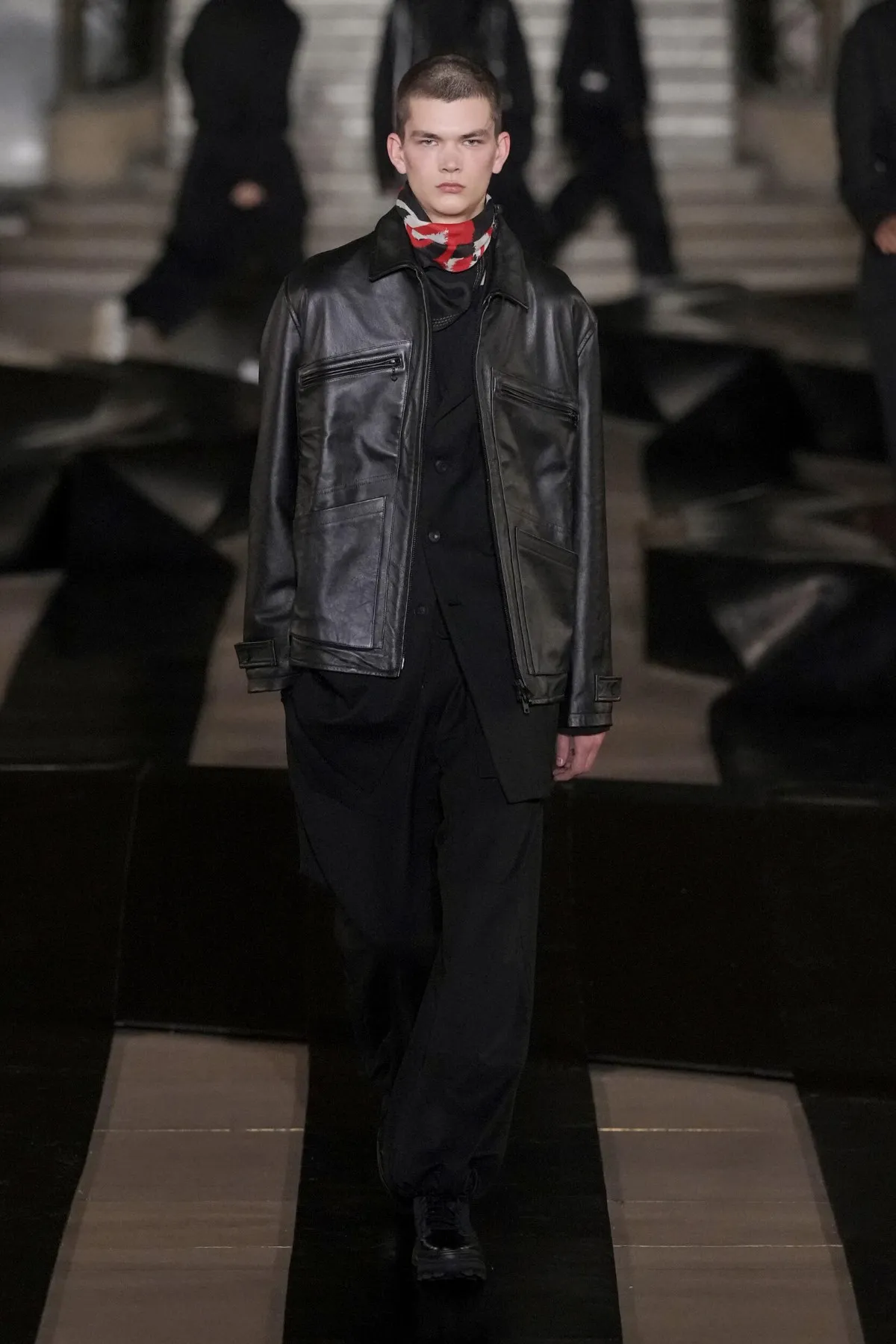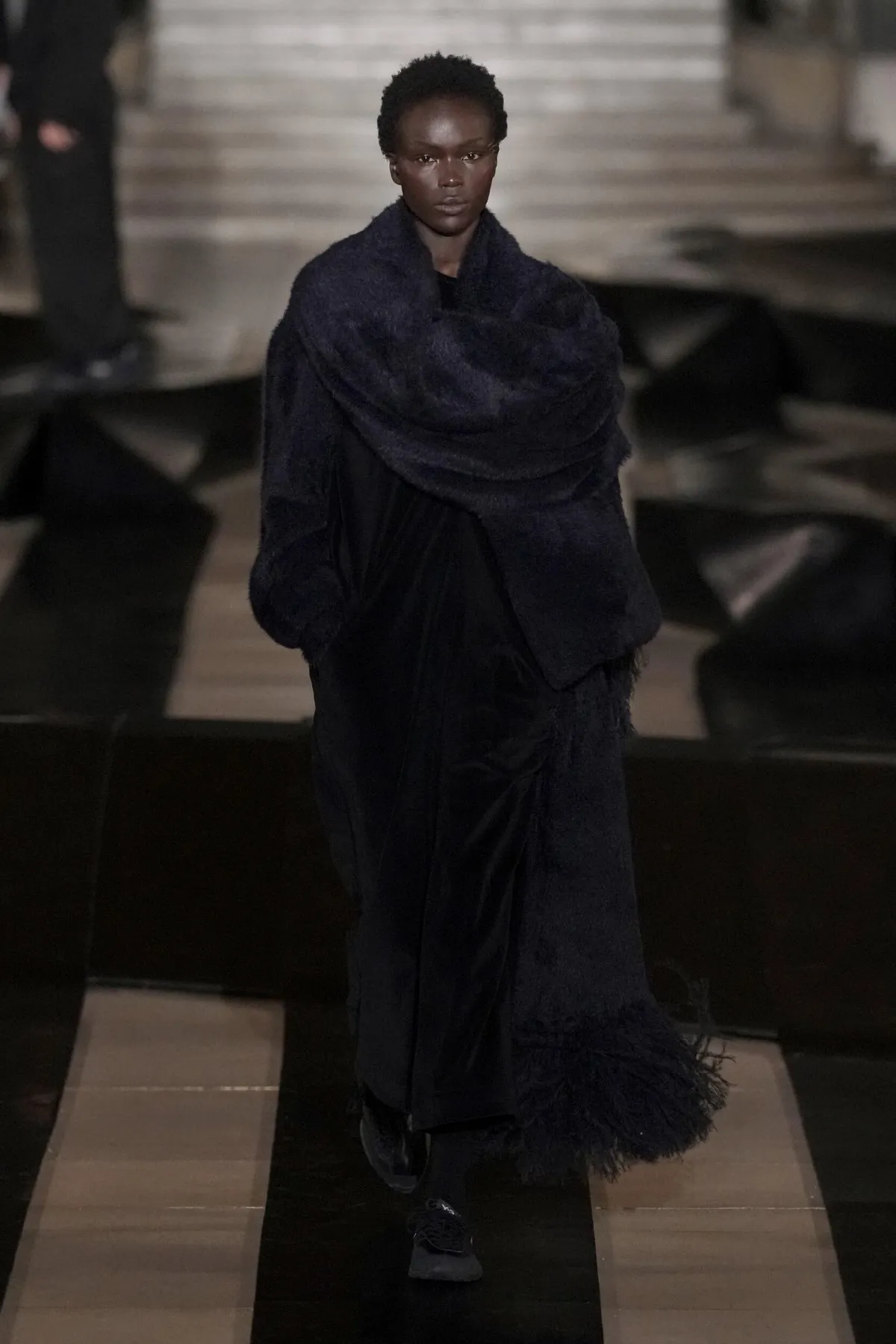

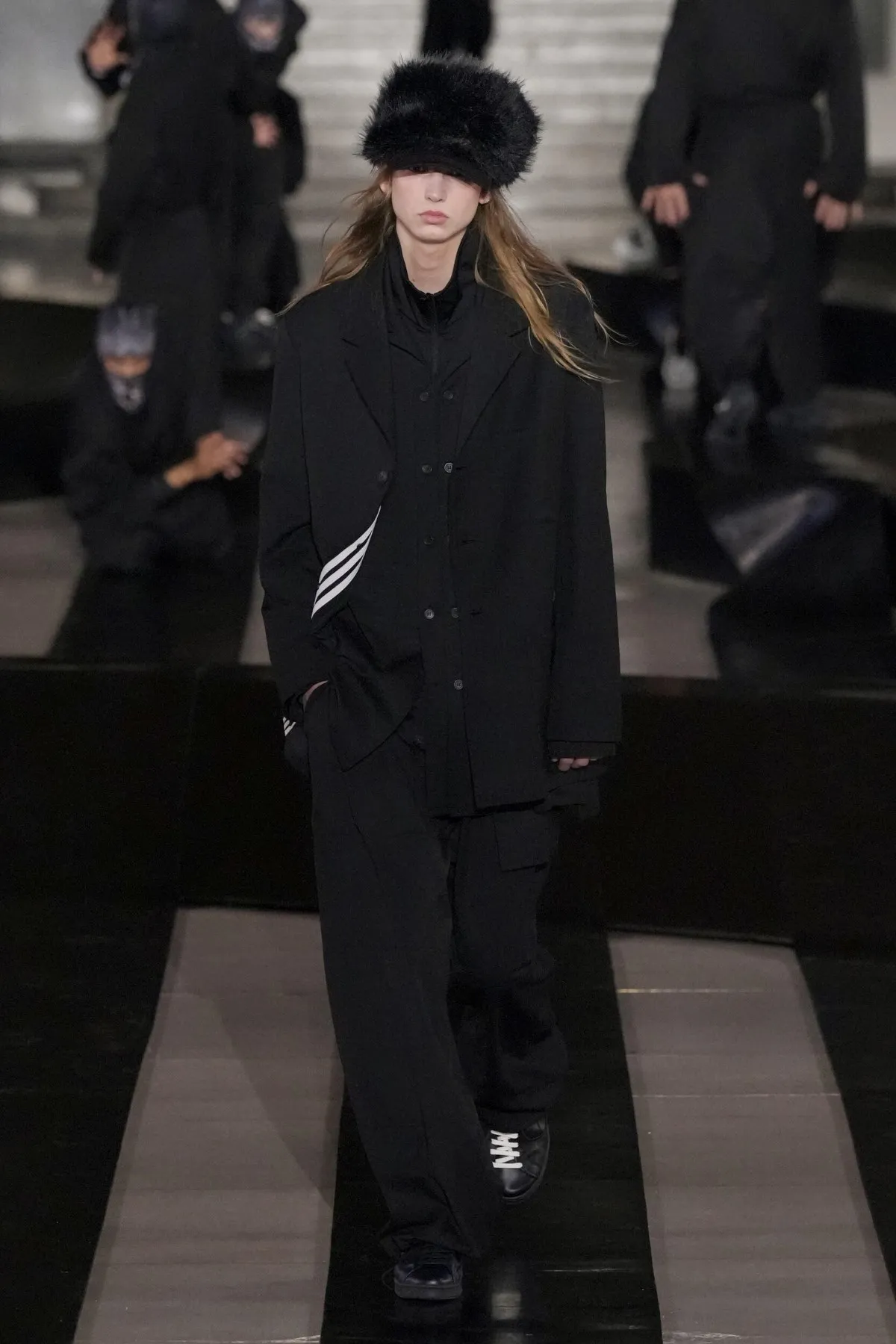
Yohji Yamamoto sat in the front row, watching his decades-long partnership with adidas come to life on three parallel strips of black rubber stretched across the Paris runway. The Y-3 Fall 2026 collection arrived with the force of something engineered for speed. However, what appeared on the runway suggested multiple destinations rather than a single finish line.
| 📌 Key Facts |
|---|
| 🏛️ Brand: Y-3 🧵 Designer: Yohji Yamamoto 🏎️ Partnership: Mercedes-AMG Petronas Formula 1 (multi-year adidas deal) 👟 New Footwear: Tokyo Warped, Superstar 3G 🛹 Cultural References: Skateboarding, motorsports, street performance 🎨 Graphics: Spray paint motifs by Chito, prints by Chikami Hayashi 🧥 Key Materials: Denim, velvet, leather, technical fabrics 🌍 Positioning: “Uniform of the Streets” with global lifestyle appeal |
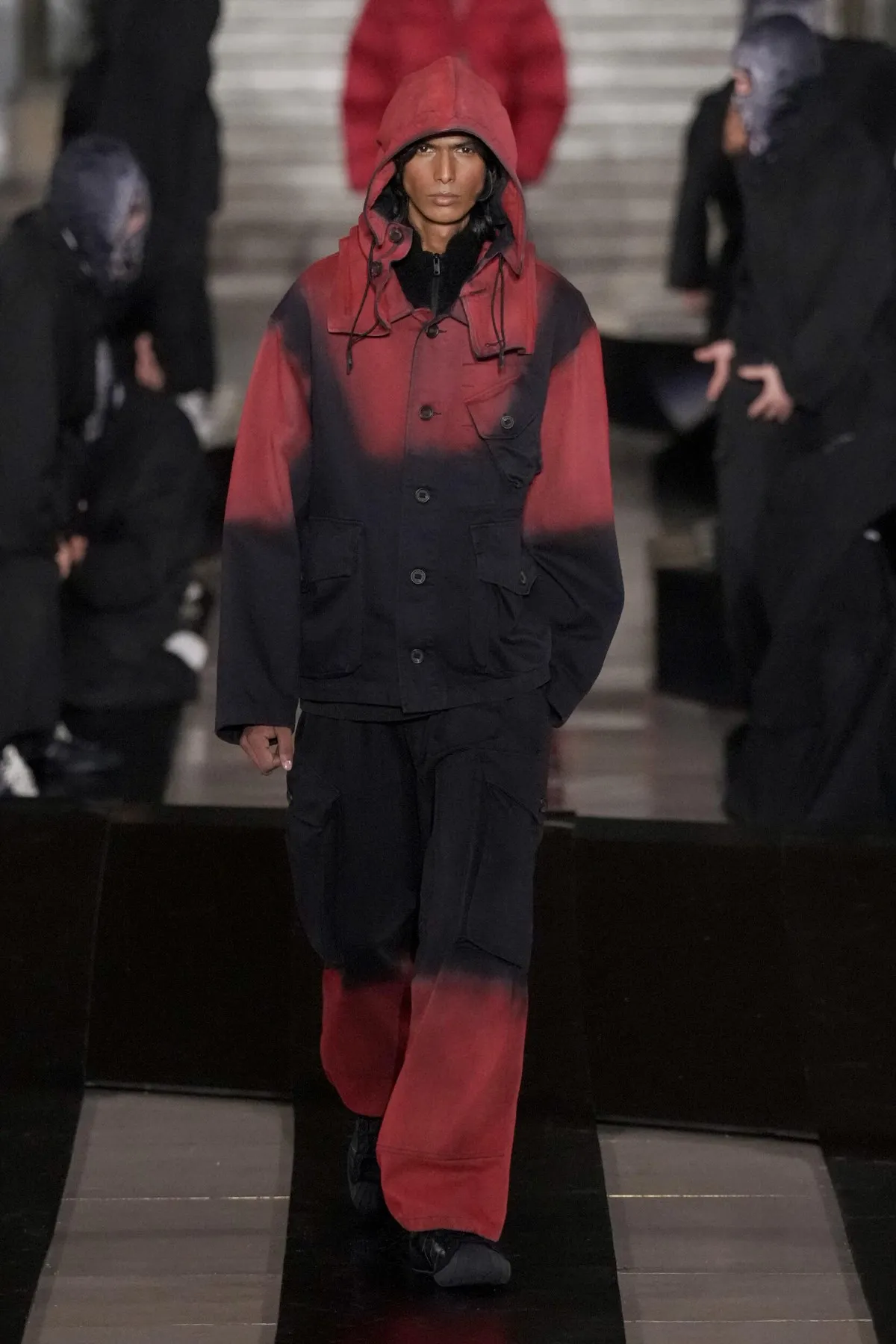
Black dominated the collection, punctuated by deep red accents that recalled a recent Yamamoto men’s presentation. Performers in boiler suits moved across the space – part runway, part racetrack, and part skate park – before unzipping their garments midway through the show to reveal Mercedes-AMG Petronas Formula 1 logos. The automotive partnership, now a multiyear agreement between adidas and the racing team, had found its way into Y-3’s vocabulary. White piping traced the edges of black jackets bearing sponsor names that would look at home in a pit lane.
Professional skateboarder Mark Gonzalez appeared wearing a moto jacket marked with spray paint, adding another layer to the presentation. The NISI vulcanized shoe accompanied his entrance, grounding the presentation in skateboarding culture while Formula 1 references accelerated elsewhere. Chito’s spray-painted graphics, including floating skulls, city names, and dog motifs, appeared on leather pieces set against Chikami Hayashi’s printmaking. Hayashi’s work has anchored the visual identity of Y-3 for years.
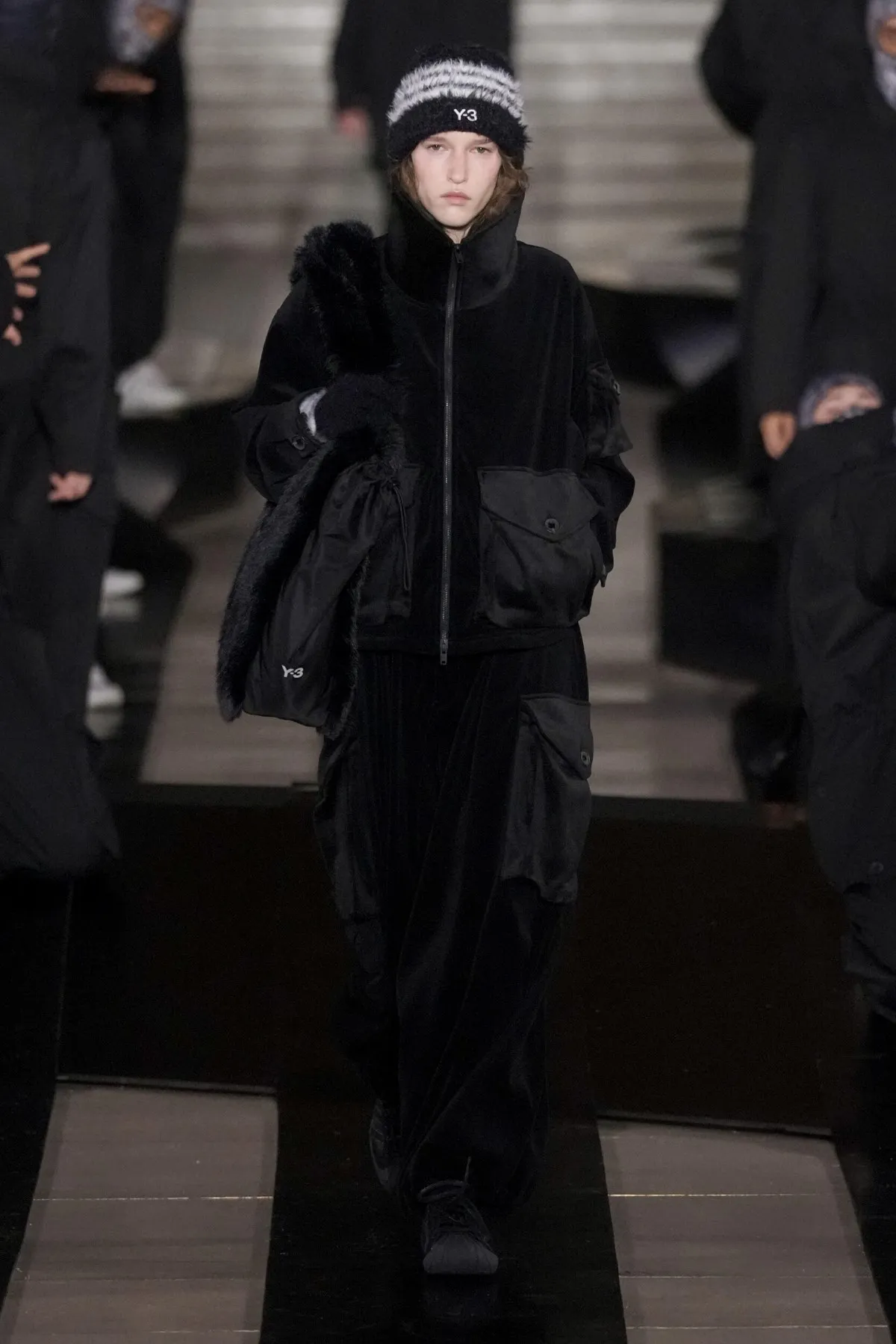
The collection itself ranged widely. Denim returned to Y-3 after an absence, appearing in a dark, generous cut, far removed from technical sportswear. Fitted coats and long skirts provided structure. Belts cinched waists. Velvet jackets suggested evening destinations. Leather blousons transcended gender. Looser silhouettes nodded toward snowboarding and skateboarding references without mimicking their functionality.
Two new sneaker designs emerged: the Tokyo Warped and the Superstar 3G.
Both appeared throughout the presentation, sometimes paired with fluid trousers beneath Formula 1 jackets and sometimes grounding more experimental proportions. The shoes carried forward Y-3’s technical heritage while incorporating aggressive graphics, such as wolf faces, bold lines, and visual intensity.
Follow all the latest news from Fashionotography on Flipboard, or receive it directly in your inbox with Feeder.
You may also read

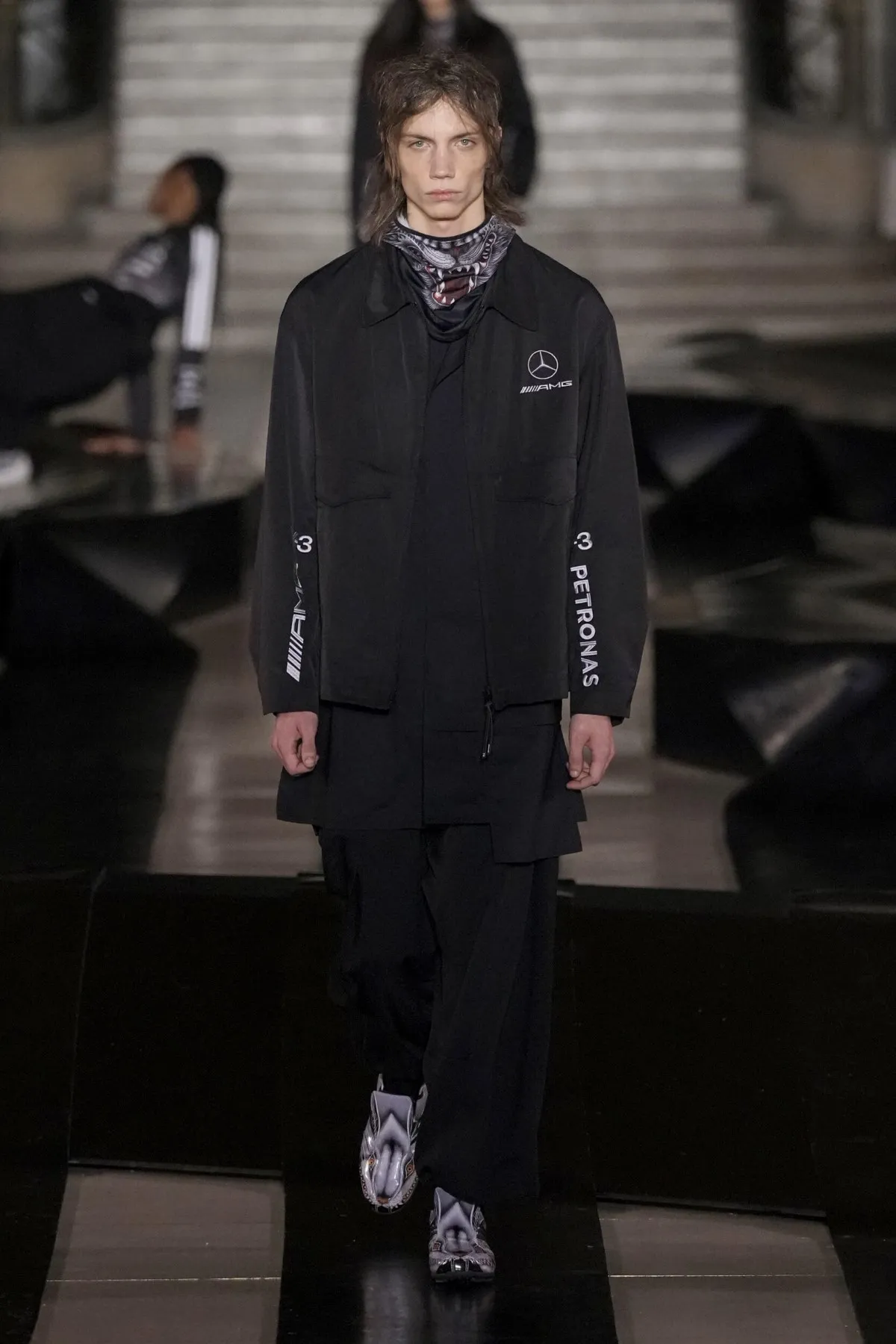
According to official positioning, the collection was the “Uniform of the Streets,” though the term stretched to accommodate substantial variety. A nine-year-old boy might covet the Mercedes merchandise. Those seeking comfort without sacrificing sophistication could find options for formal occasions. The breadth felt deliberate and calculated to pull in diverse consumers when the collection reaches stores.
The staging, designed by Paris creative studio Matière Noire, sloped upward to suggest racing circuits and skate ramps. Contemporary dancers in wolf masks accompanied the models, moving in unison before breaking off on their own. The choreography aimed to represent collective and individual expressions of street culture, though such interpretations remain open to debate.
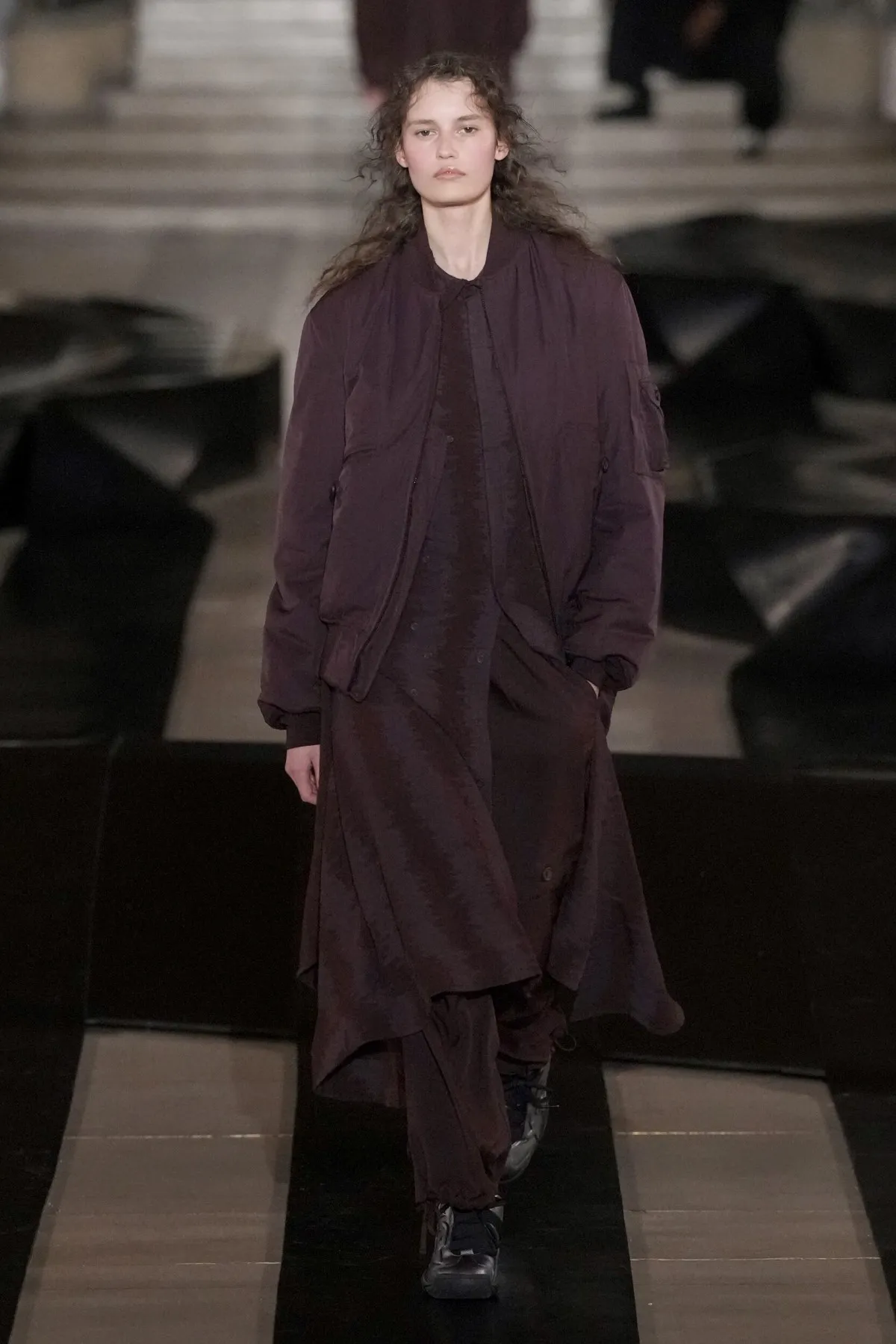
One thing became clear: Y-3 has positioned itself at an intersection where motorsports, skateboarding, and elevated streetwear can coexist. The partnership with Mercedes-AMG Petronas won’t end here. adidas has committed to creating apparel, footwear, and accessories for the racing team throughout the season. Y-3 has also signaled more Formula 1 moments ahead.
Whether the racing connection enhances or dilutes Y-3’s identity depends on its execution in the coming seasons. For now, the collection offers enough variety that customers can choose their own path – literal or metaphorical – and find something that speaks to them, whether it involves high-performance textiles or simply looking the part.
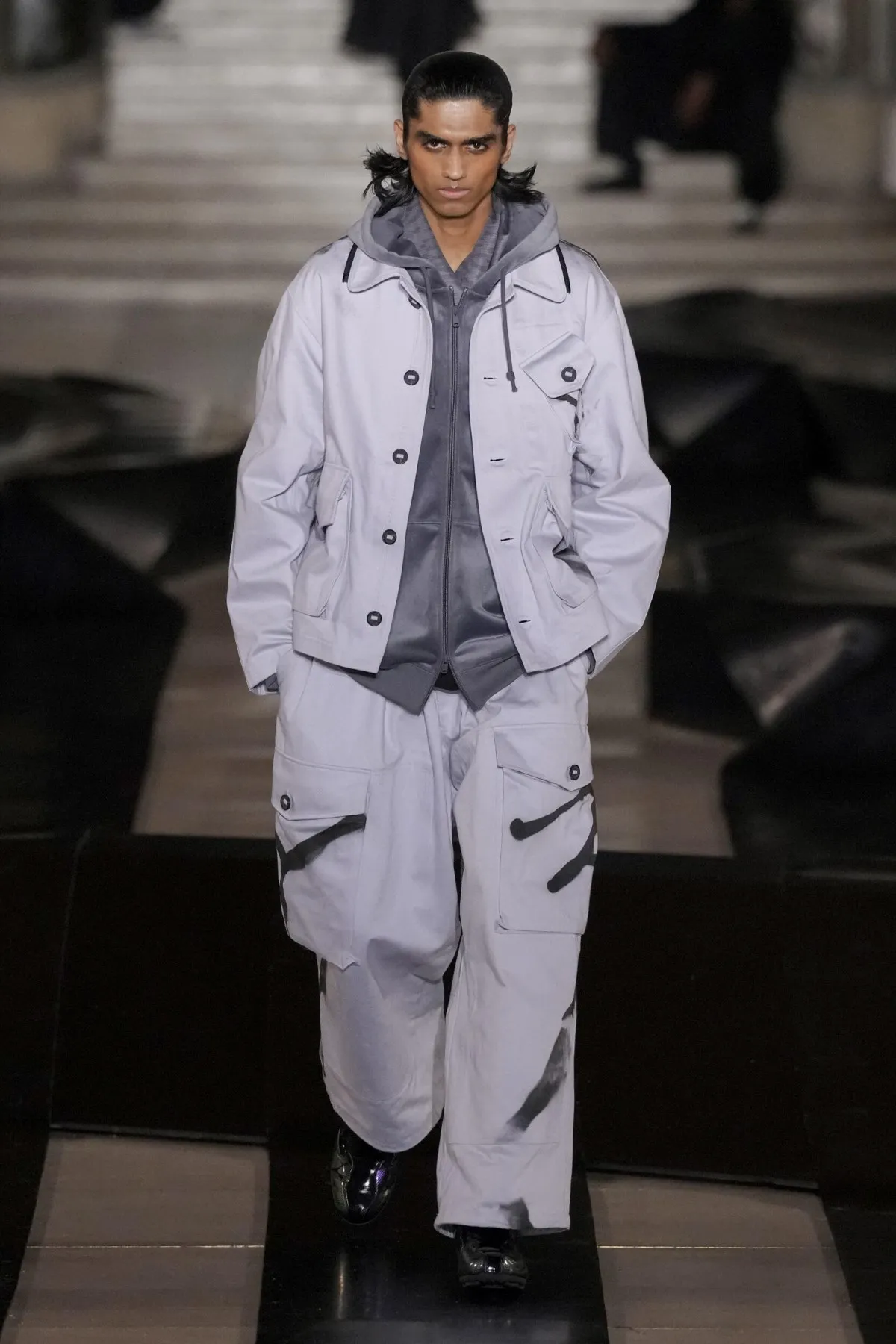
Yamamoto launched Y-3 in 2002, and twenty-four years later, the collaboration continues to explore new territories. This fall, those territories included racetracks and skate parks, luxury materials, and street culture references. All of these elements were presented on a runway that refused to choose just one direction. Audience members could watch the performers glide across the black rubber strips and decide for themselves if Y-3 had found a winning formula or if it was simply exploring more terrain.