


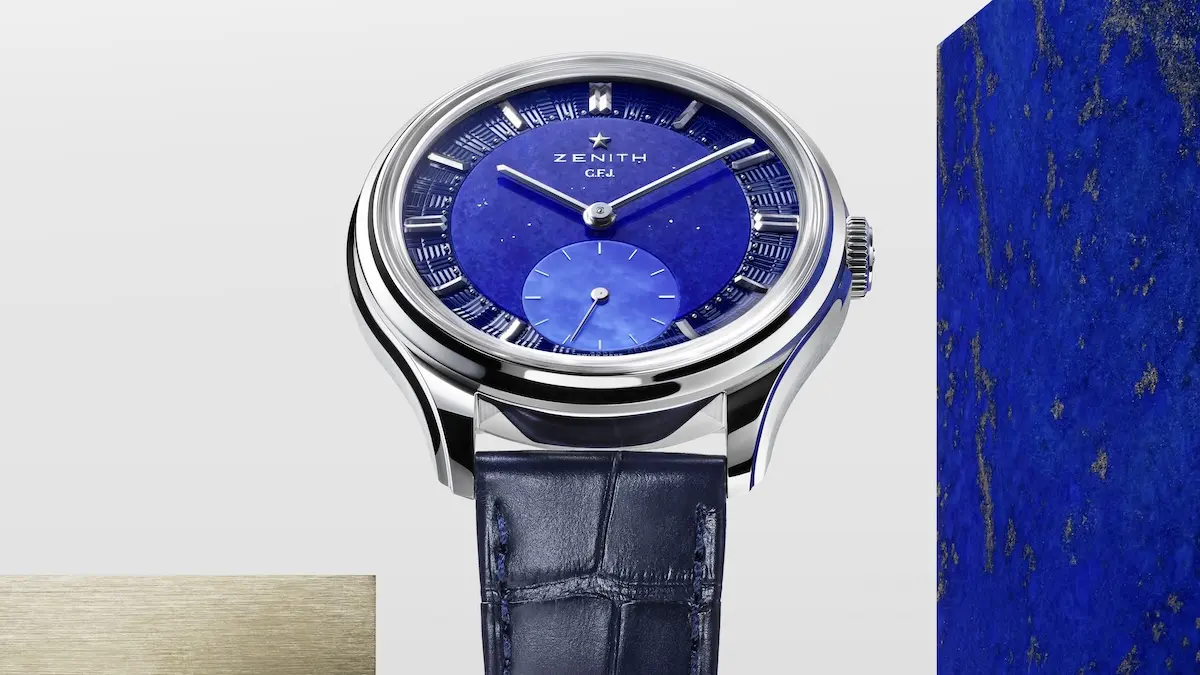
ZENITH claimed the Chronometry Prize at this year’s GPHG, reinforcing the brand’s 160-year legacy of obsessive focus on precision. Named after founder Georges Favre-Jacot, the ZENITH G.F.J. beat out competitors to take home one of the most technically demanding awards at the ceremony held on November 13 at Geneva’s Bâtiment des Forces Motrices.
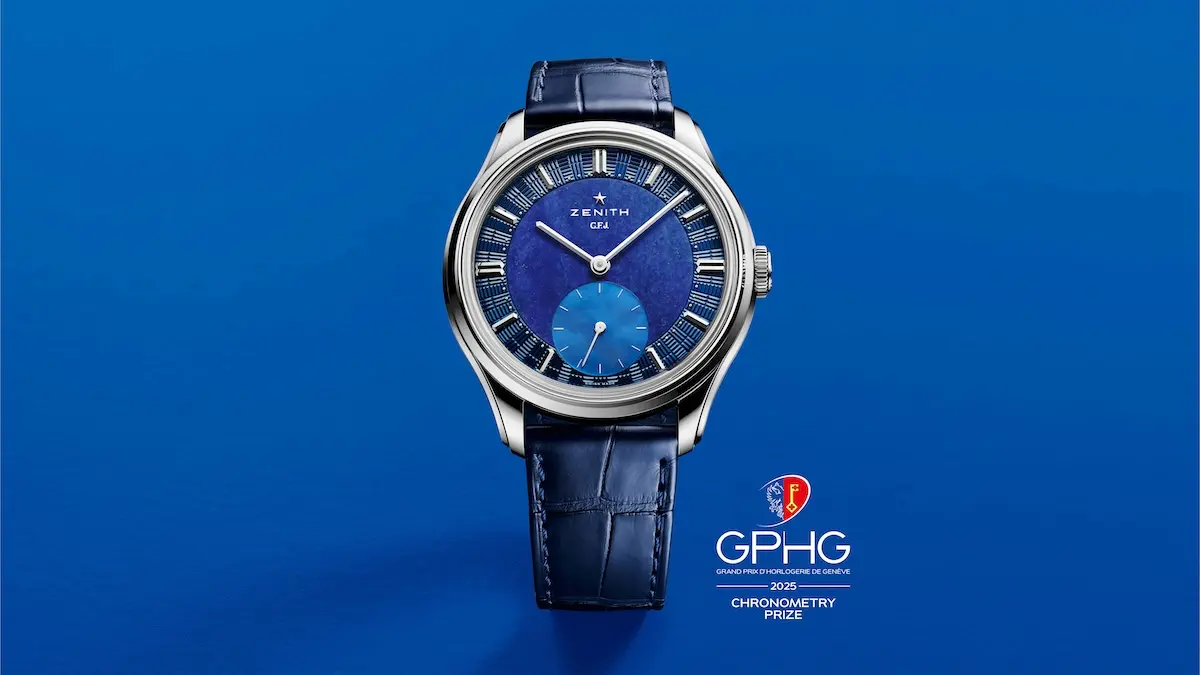
This year marks the 25th anniversary of the GPHG, often called the Oscars of watchmaking. Ninety timepieces competed across multiple categories.
This win brings ZENITH full circle, honoring a legacy that began in 1865 when Favre-Jacot set out to create what he called “the perfect watch.” This ambition led ZENITH to win 2,333 chronometry prizes from observatory competitions, surpassing any other manufacturer. The caliber 135, which powers the G.F.J., alone earned 235 of those distinctions, making it the most awarded movement in the history of chronometry trials.
The revival of an observatory champion
Originally produced from 1949 to 1962, the Calibre 135 was manufactured in approximately 11,000 units during that period. Ephrem Jobin designed it at the request of Charles Ziegler, ZENITH’s technical director, to compete specifically at observatories in Neuchâtel, Geneva, Kew, Teddington, and Besançon. The movement came in two versions: a commercial variant and the 135-O iteration, which was built exclusively for competition.
Between 1950 and 1954, the 135-O won five consecutive first prizes at the Neuchâtel Observatory, an impressive record in watchmaking that still stands today. René Gygax and Charles Fleck, elite régleurs, regulated these competition pieces, extracting every fraction of a second from the movement’s architecture. The name “135” derives from its dimensions: It is 13 lignes (30 mm) in diameter and 5 mm in thickness – the maximum size permitted in the wristwatch category at the Neuchâtel Observatory.
When modern engineering elevates history
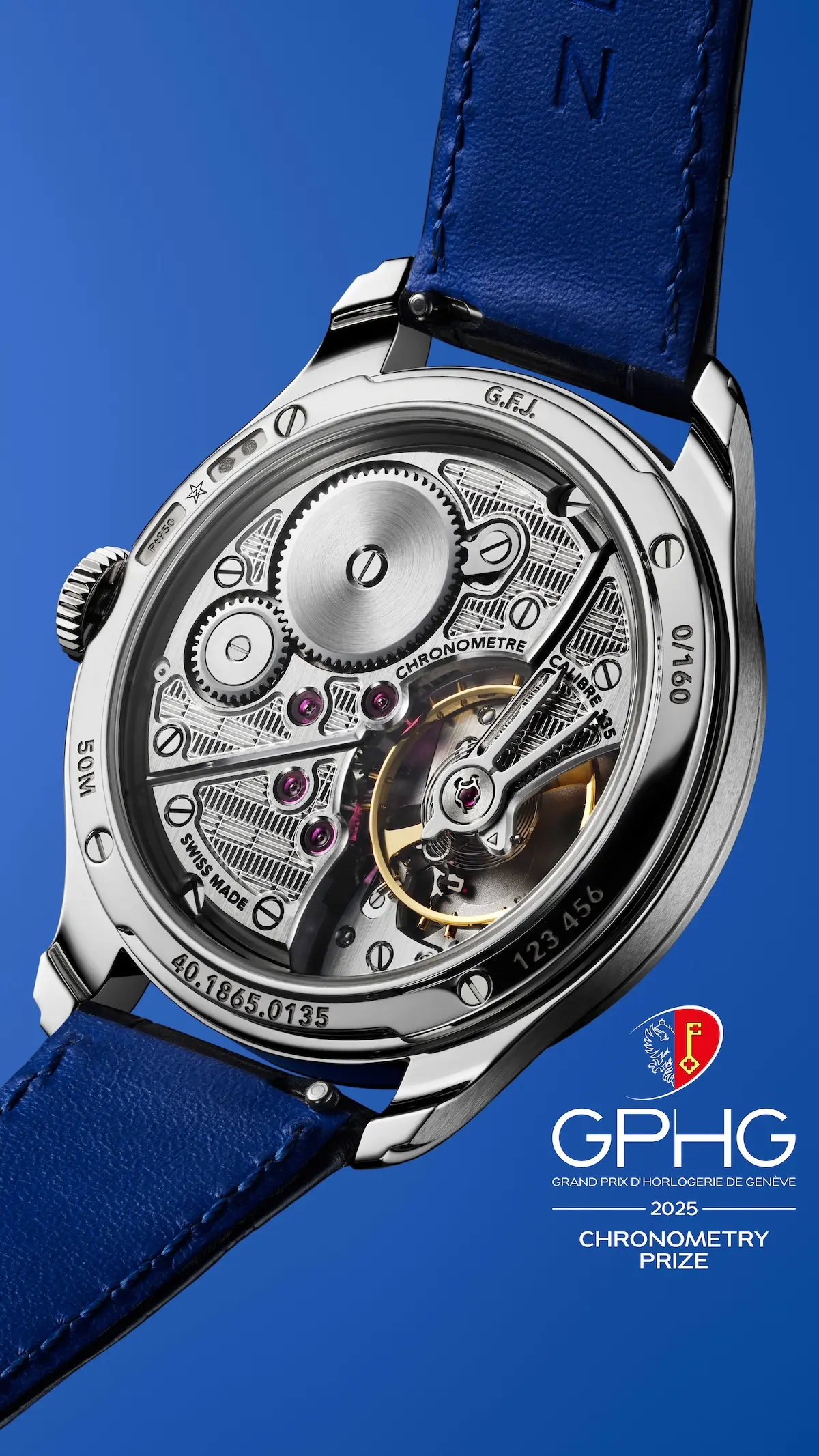
ZENITH didn’t just reproduce the original Calibre 135 for the G.F.J. They rebuilt it from the ground up, maintaining the original dimensions, appearance, and architecture while incorporating modern materials and technical solutions. The barrel now provides a power reserve of 72 hours, compared to 40 hours in the 1950s version. An optimized gear train features improved tooth geometry for greater efficiency.
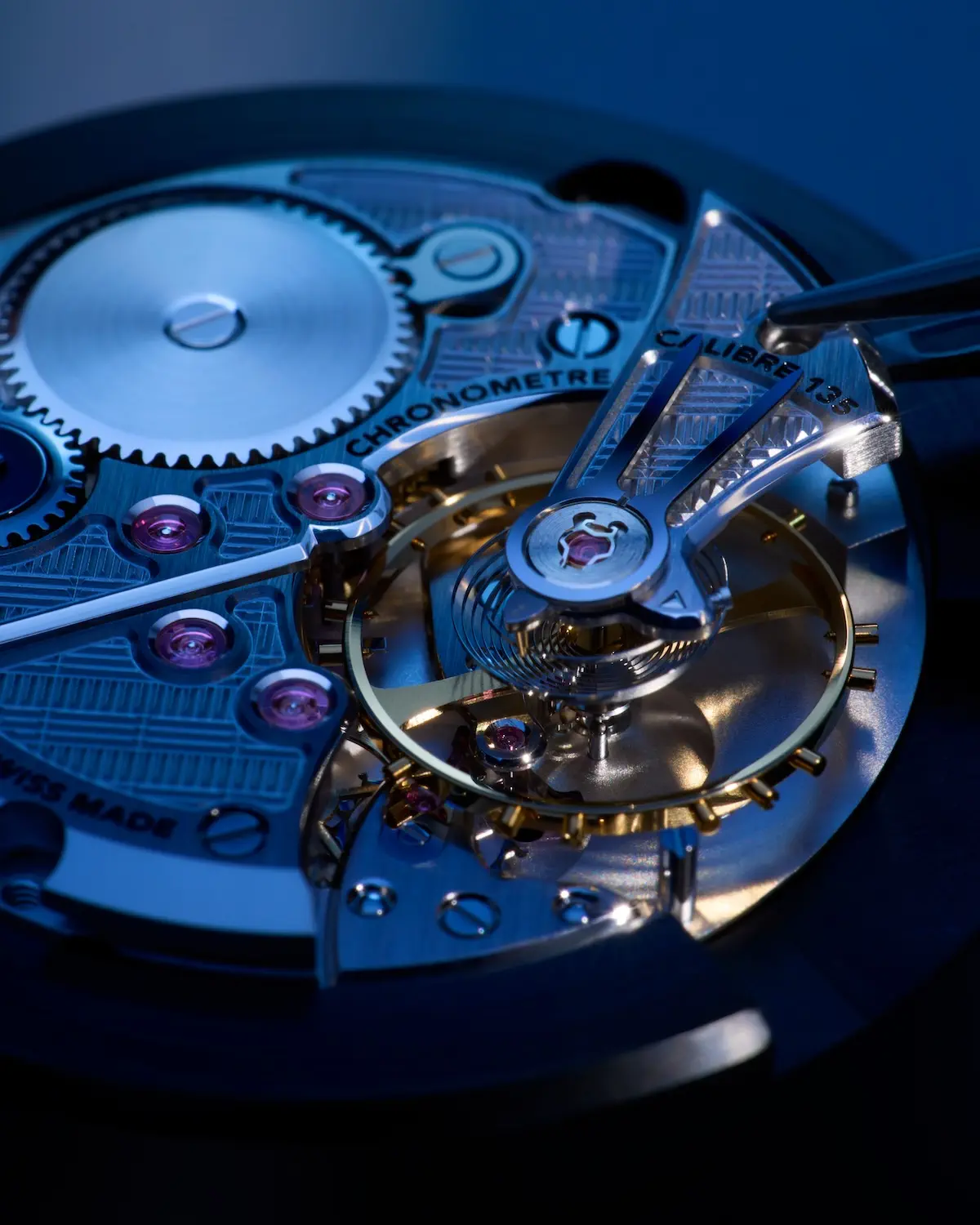
The balance wheel operates at 2.5 Hz and features regulation screws and a Breguet overcoil — hallmarks of classical, high-grade watchmaking. ZENITH added a stop-seconds mechanism, which was absent from the original, that allows owners to set the time to the exact second. The double arrow-shaped regulator, a signature feature of the 135-O, remains to allow for precise adjustment. Spring-mounted jewel settings now protect the balance staff. The COSC officially certifies the movement, which is regulated to +/-2 seconds per day.
“Few movements in watchmaking history have achieved the level of chronometric excellence and recognition as the caliber 135,” said Benoît de Clerck, CEO of ZENITH Watches. “Bringing it back for our 160th anniversary is about honoring this legacy while sharing it with a new generation of collectors.“
Follow all the latest news from Fashionotography on Flipboard, or receive it directly in your inbox with Feeder.
You might also read

A platinum case that honors 1950s design codes
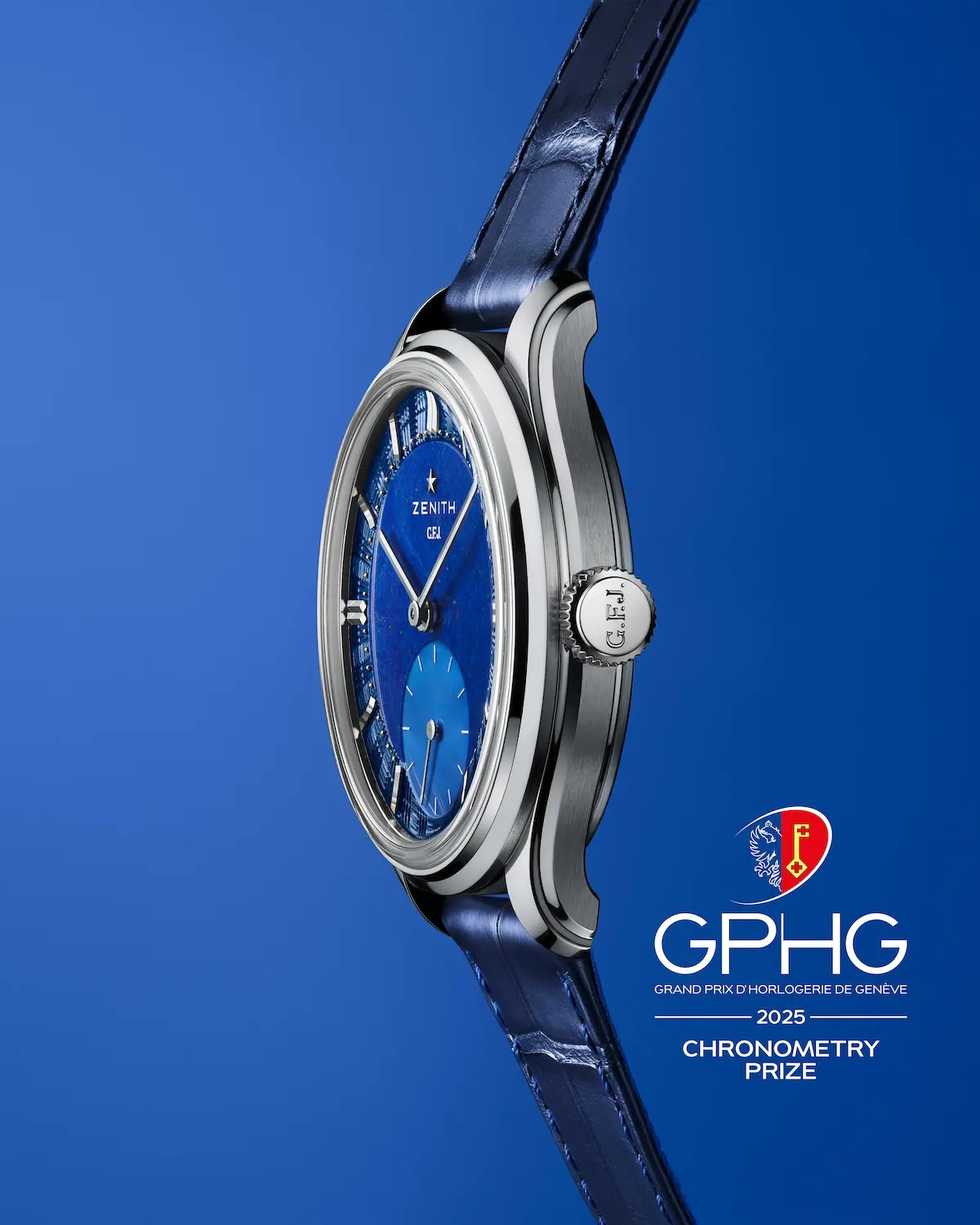
The G.F.J. sits in a 39mm platinum case that channels 1950s design codes without resorting to pastiche. It features a stepped bezel, curved stepped lugs, and alternating brushed and polished surfaces that catch light from multiple angles. At 10.5 mm thick and 45.75 mm lug-to-lug, the watch sits comfortably on most wrists. The notched crown bears the G.F.J. initials.
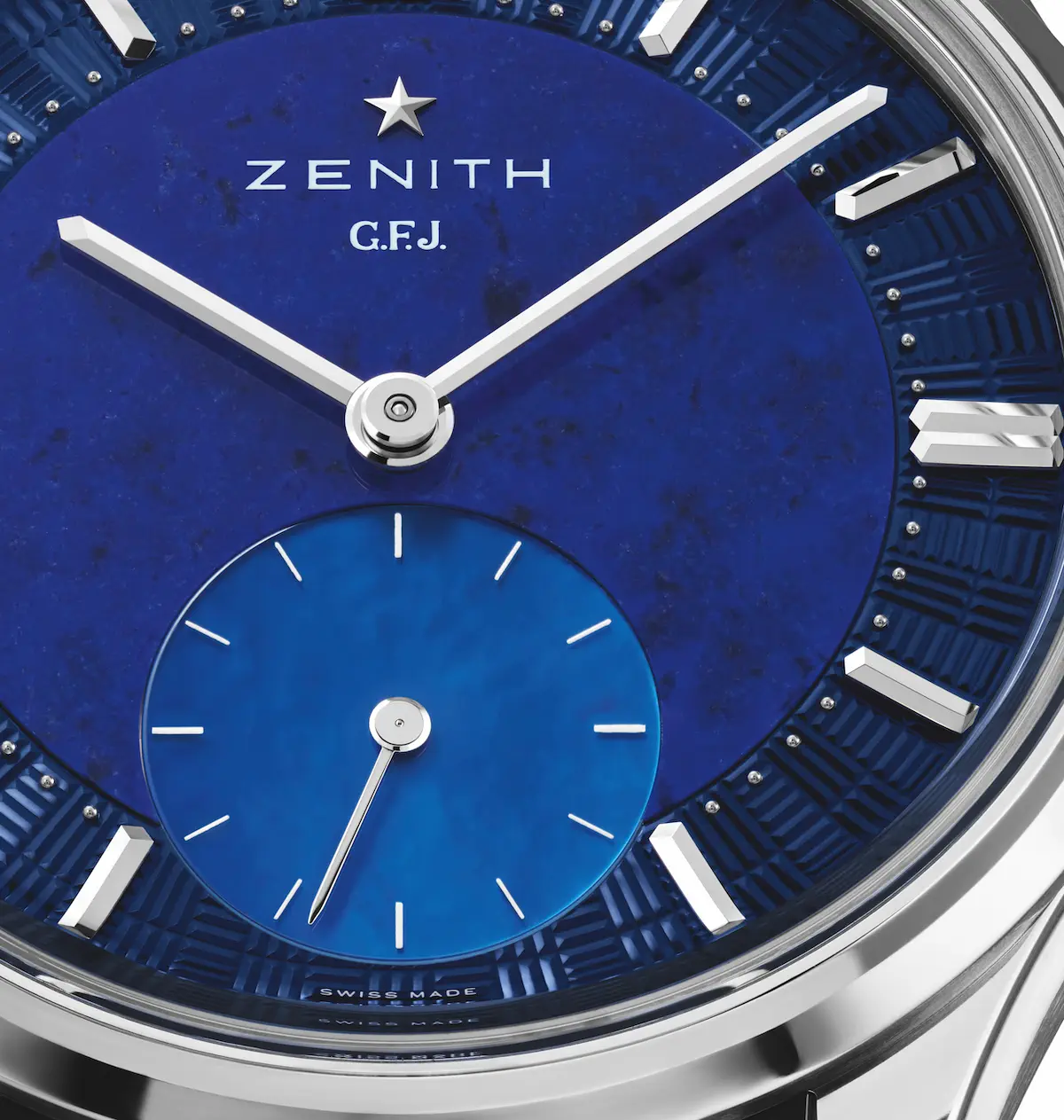
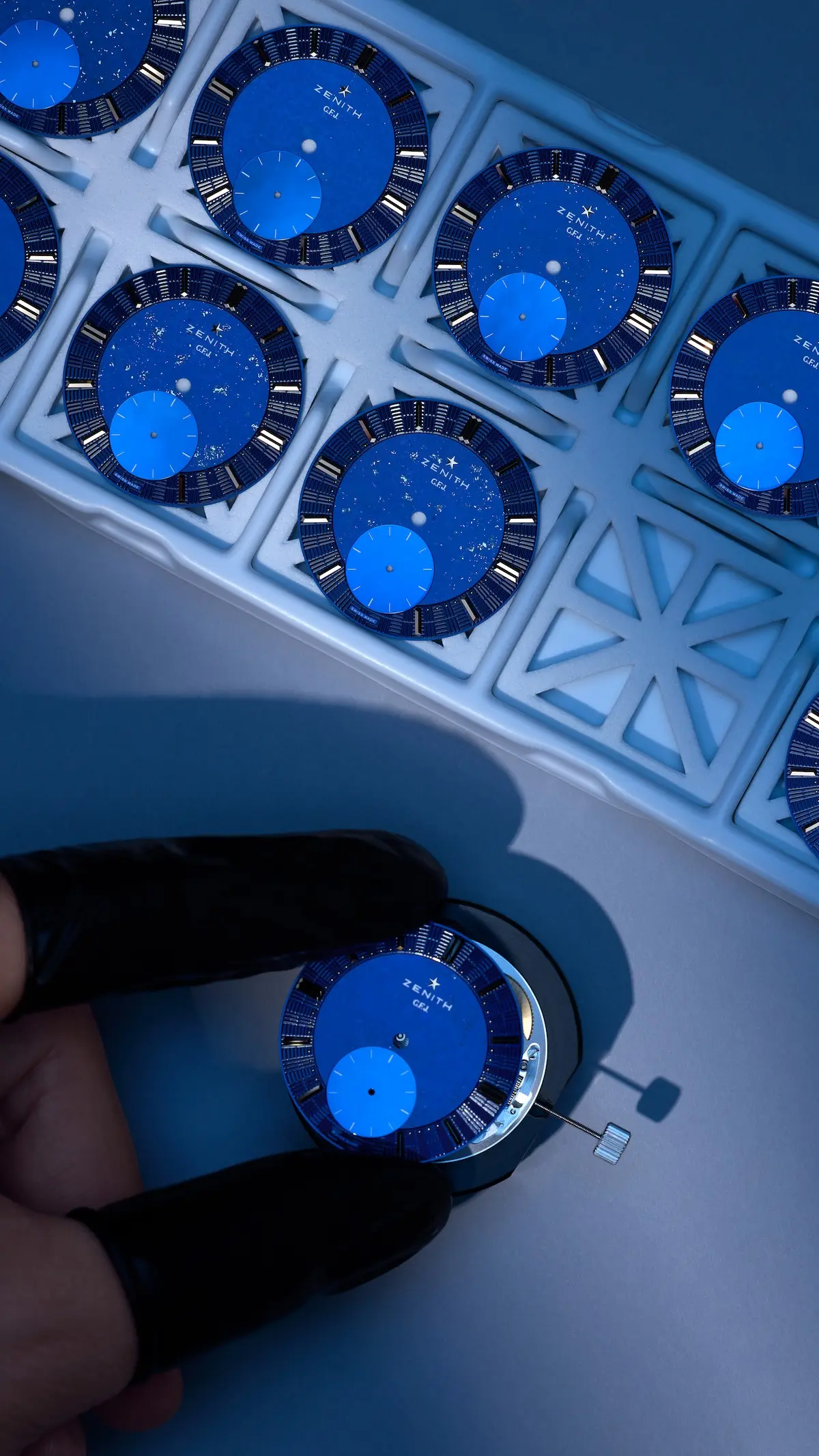
Beneath the sapphire crystal is a three-part dial construction that creates depth while maintaining legibility. The outer ring features a “brick” guilloché pattern inspired by the red and white brick façade of the ZENITH Le Locle manufacturing facility, where the initials of Favre-Jacot appear in the architecture. Faceted white gold hour markers and 40 hand-applied white gold beads form the minute track.
The center section is made of deep blue lapis lazuli, whose natural gold-colored pyrite inclusions resemble a starry sky. Because lapis lazuli is a natural stone, no two dials are identical. The oversized subdial at 6 o’clock, rendered in mother-of-pearl, displays the seconds hand. Thin, baton-style, white gold hands indicate the hours, minutes, and seconds.
Movement decoration rooted in purpose and beauty
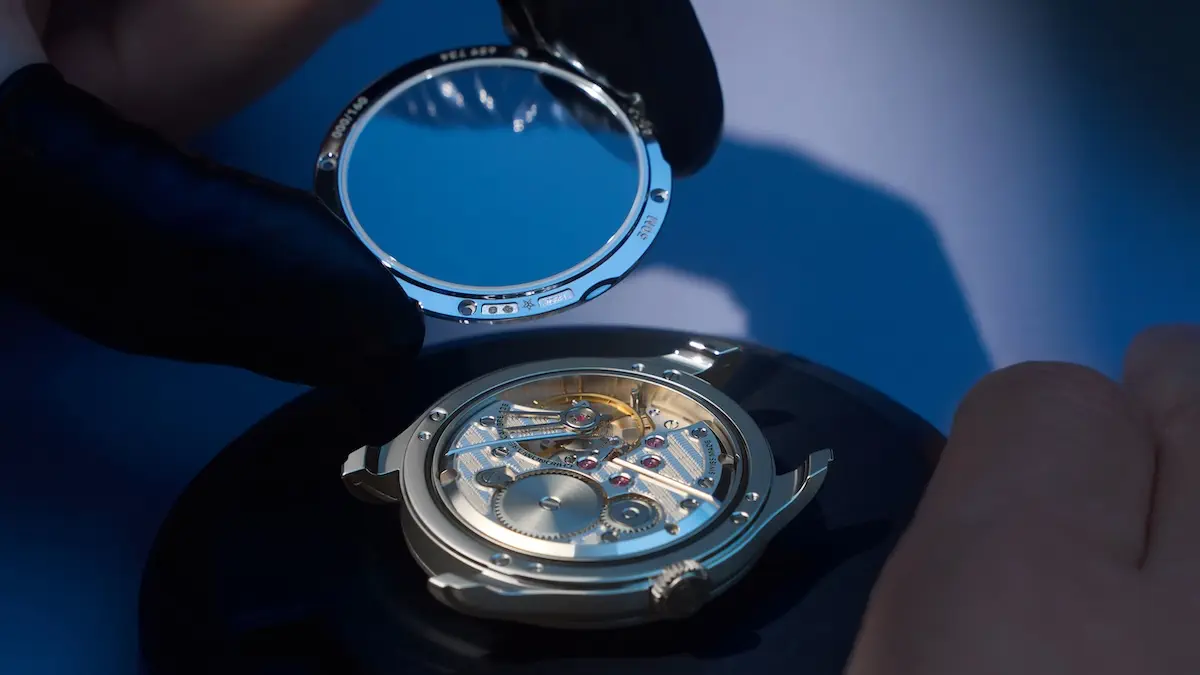
The decoration of the Calibre 135 balances technical purpose with aesthetic refinement. The bridges feature the same brick guilloché pattern found on the dial, which is another reference to the manufacture’s façade. The barrel has a circular satin finish, and the crown wheel has a black polish. Large jewels add visual interest without being ostentatious.
Romain Marietta, ZENITH’s Chief Product Officer, explained the approach: “While remaining faithful to the spirit and character of the original, the new caliber has been thoughtfully re-engineered to meet contemporary expectations.” The movement blends historical charm with modern reliability seamlessly.
Why the Chronometry Prize still matters
Since 2001, the GPHG has celebrated the finest watchmaking creations annually. The Chronometry Prize specifically recognizes timepieces that demonstrate exceptional precision and are officially certified to ISO 3159 standards by an inspection authority. To win in this category, a timepiece must prove its accuracy through rigorous testing, as good looks or clever complications alone are not enough.
In the past, observatory competitions held enormous significance for watchmakers, serving as the ultimate benchmark of precision. Success in these trials enhanced a brand’s reputation and credibility, as mechanical accuracy represented the pinnacle of horological achievement at that time. For ZENITH, participating in observatory trials validated the manufacturing system that Favre-Jacot pioneered. This system demonstrated that his integrated approach produced more reliable and precise watches.
Laurence Bodenmann, ZENITH’s Head of Heritage, noted: “These trials were highly significant for watchmakers, serving as the ultimate test of a movement’s precision and technical quality.” These competitions were a mark of distinction, confirming a watchmaker’s technical mastery.
Limited edition craftsmanship and market positioning
ZENITH is limiting the G.F.J. to 160 pieces to mark the brand’s anniversary. The watch comes with three straps: a dark blue alligator leather strap with a platinum pin buckle; a black calfskin leather strap; and a blue Saffiano calfskin leather strap. The platinum pin buckle features the G.F.J. initials and a brick pattern. Buyers may also purchase an optional seven-row platinum bracelet with center links embossed with the brick motif.
The retail price is 48,900 CHF, 52,900 euros, or 49,900 USD. Pre-orders are available exclusively through ZENITH’s physical and online boutiques, as well as authorized retailers worldwide. Water resistance is rated to 5 ATM.
A legacy reinvented for today’s collectors
Before this year’s release, ZENITH revived the legendary Calibre 135-O in collaboration with master watchmaker Kari Voutilainen and the Phillips auction house in 2022. The ultra-exclusive, limited-edition watch featured ten vintage movements from the 1950-1954 winning years that were decorated to the highest degree by Voutilainen. The project deeply resonated with collectors, reigniting interest in this chapter of ZENITH’s history.
The current G.F.J. takes this concept further by making the Calibre 135 accessible to a broader audience while maintaining the technical and aesthetic standards that made the original legendary. Rather than merely nodding to the past, ZENITH offers a contemporary interpretation that honors the movement’s historical significance while meeting modern expectations for reliability and performance.
The 1950s were a golden age of chronometry trials, when watchmakers competed fiercely for observatory recognition. The bold graphic exploration and innovation of that era influenced ZENITH’s chronometer designs, in which elegance emerged through balanced proportions and meticulous finishing. The brand has refined this “forever design” philosophy for 2025, creating something that appeals to people of all ages.