

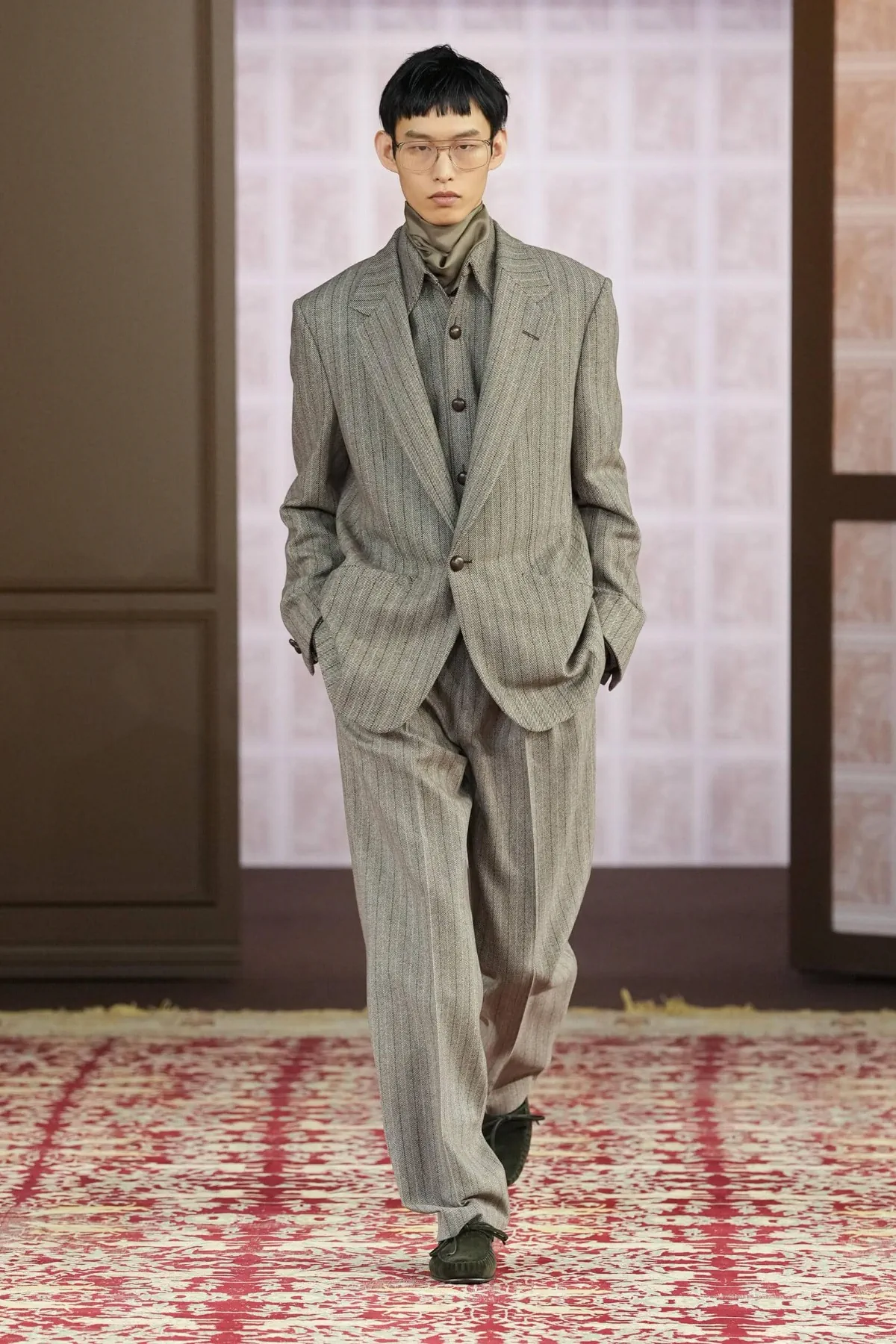
For Fall 2026, Alessandro Sartori transforms Zegna into a living wardrobe where past, present and future coexist. Drawing from family heirlooms, innovative textiles and period references, the collection celebrates menswear designed not just to be worn, but passed down through generations.
| 📌 Key Facts |
|---|
| 🧵 Designer: Alessandro Sartori 🧥 Fashion House: ZEGNA 📍 Show Location: Milan 🗓 Season: Fall 2026 🧬 Core Theme: Heirloom menswear and generational transmission 🪡 Key Fabrics: Cashmere, Trofeo wool, recycled paper jacquard 🕰 References: 1930s tailoring, 1970s textures, Piedmont heritage 👔 Signature Pieces: Reworked Conte jacket, modular double-breasted suits |
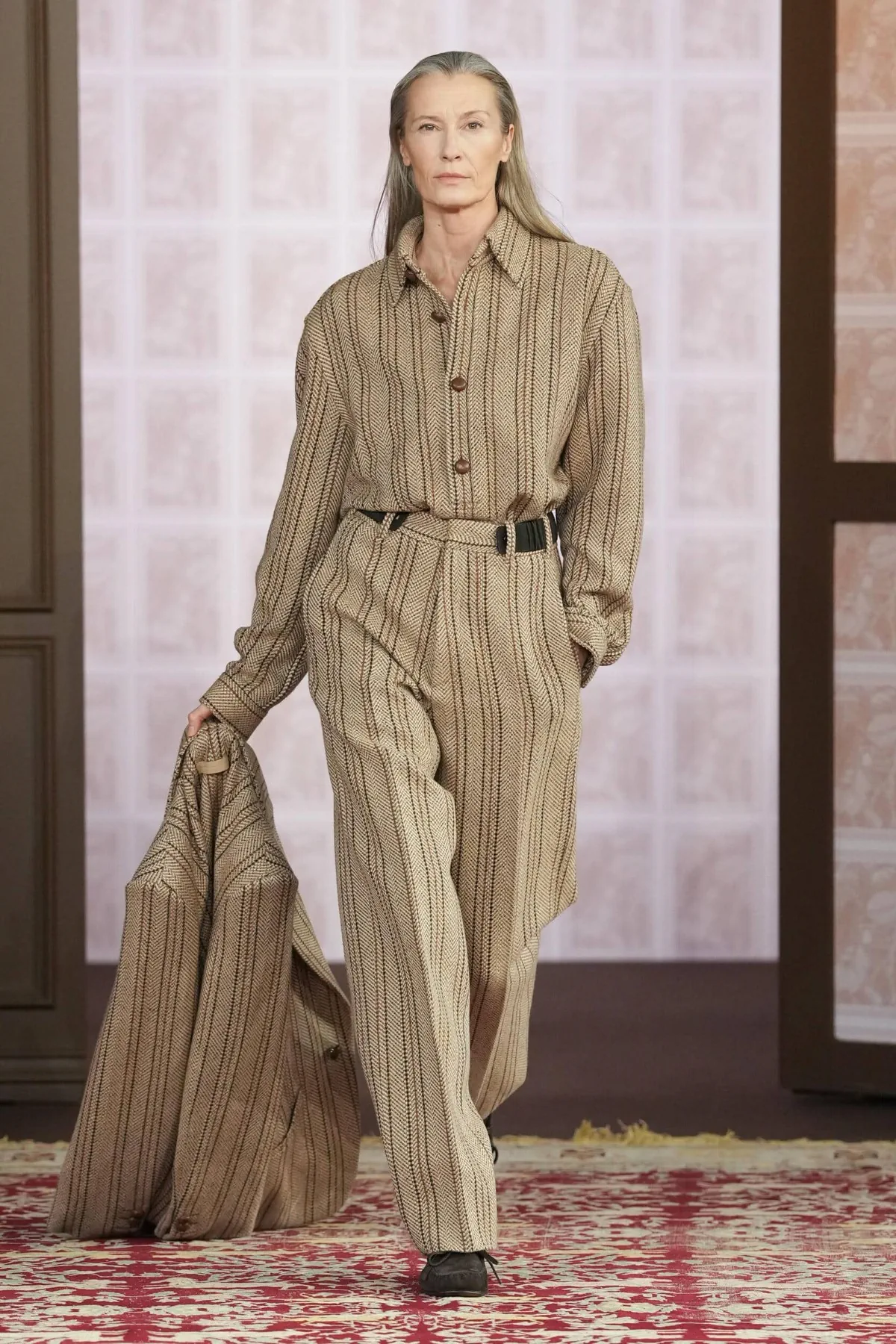
The show space functioned as a supersized wardrobe built around an oval catwalk. Garments from executive chairman Gildo Zegna and his cousin Paolo – both third-generation family members – hung alongside historical pieces. Models emerged from this closet onto floors scattered with rugs of various sizes and patterns. Sartori’s casting was deliberately diverse, spanning ages and ethnicities. Several women demonstrated the lineup’s versatility.
Sartori observed how clients wear their wardrobes, noting their tendency to pair old pieces with new acquisitions. This longevity creates a sentimental value comparable to that of watch collecting. Garments become items that fathers pass down to sons, provided that the quality remains impeccable and the classic silhouettes are given a contemporary reinterpretation.
The designer reworked Zegna’s Conte jacket, elongating its length slightly and repositioning the pockets and buttons lower. The structured piece maintained high peak lapels while projecting relaxation. Sartori introduced a “little trick,” adding a third horizontal button to certain jackets and turning familiar silhouettes into something unexpected.
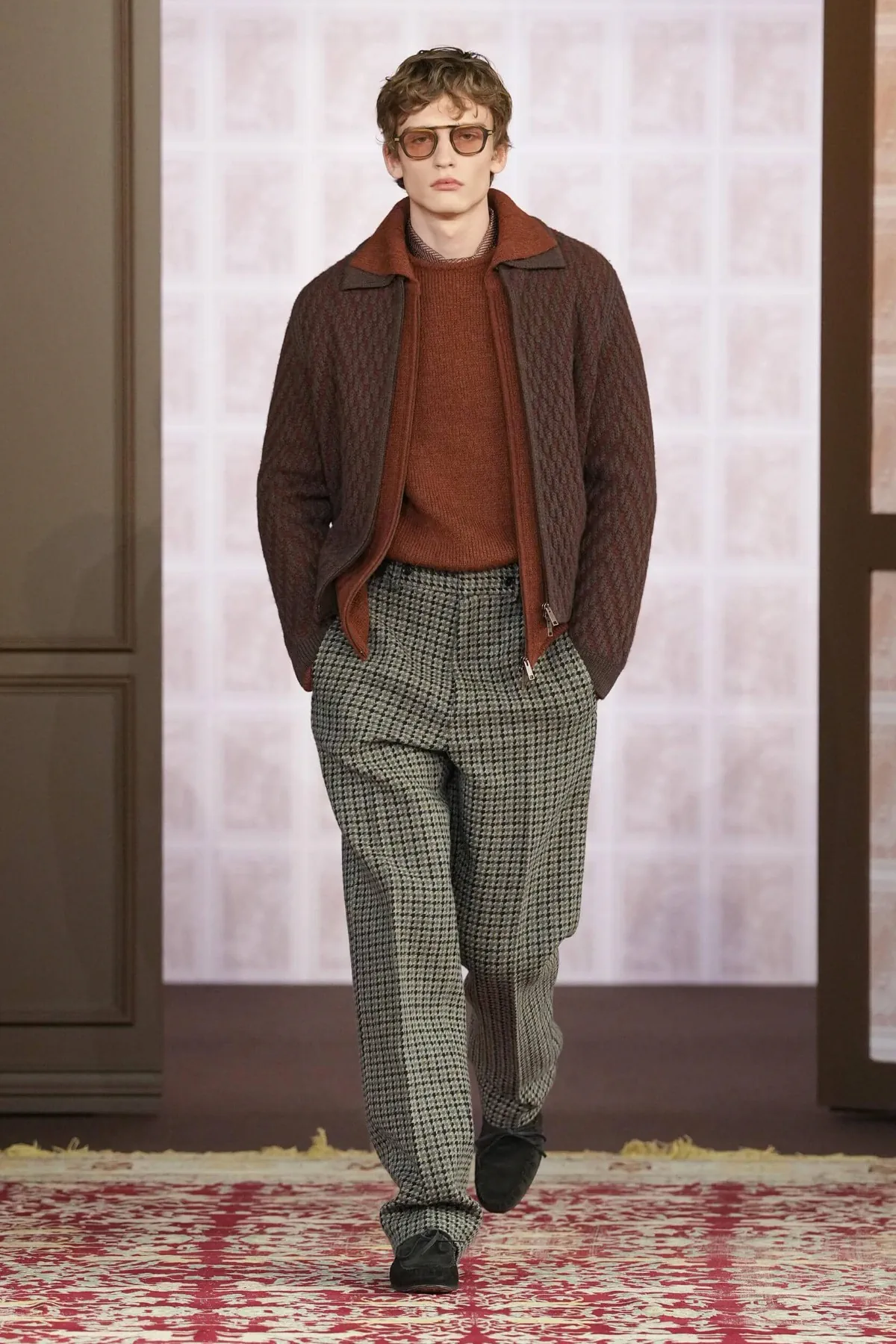
His extensive fabric research produced the collection’s most compelling transformations. Classic pied-de-poule and tweed patterns were actually new graphic motifs made of cashmere and recycled paper jacquard that are featherweight. The weightlessness of the fabrics remained imperceptible to show attendees, but customers who wear them will immediately notice.
Follow all the latest news from Fashionotography on Flipboard, or receive it directly in your inbox with Feeder.
You might also read

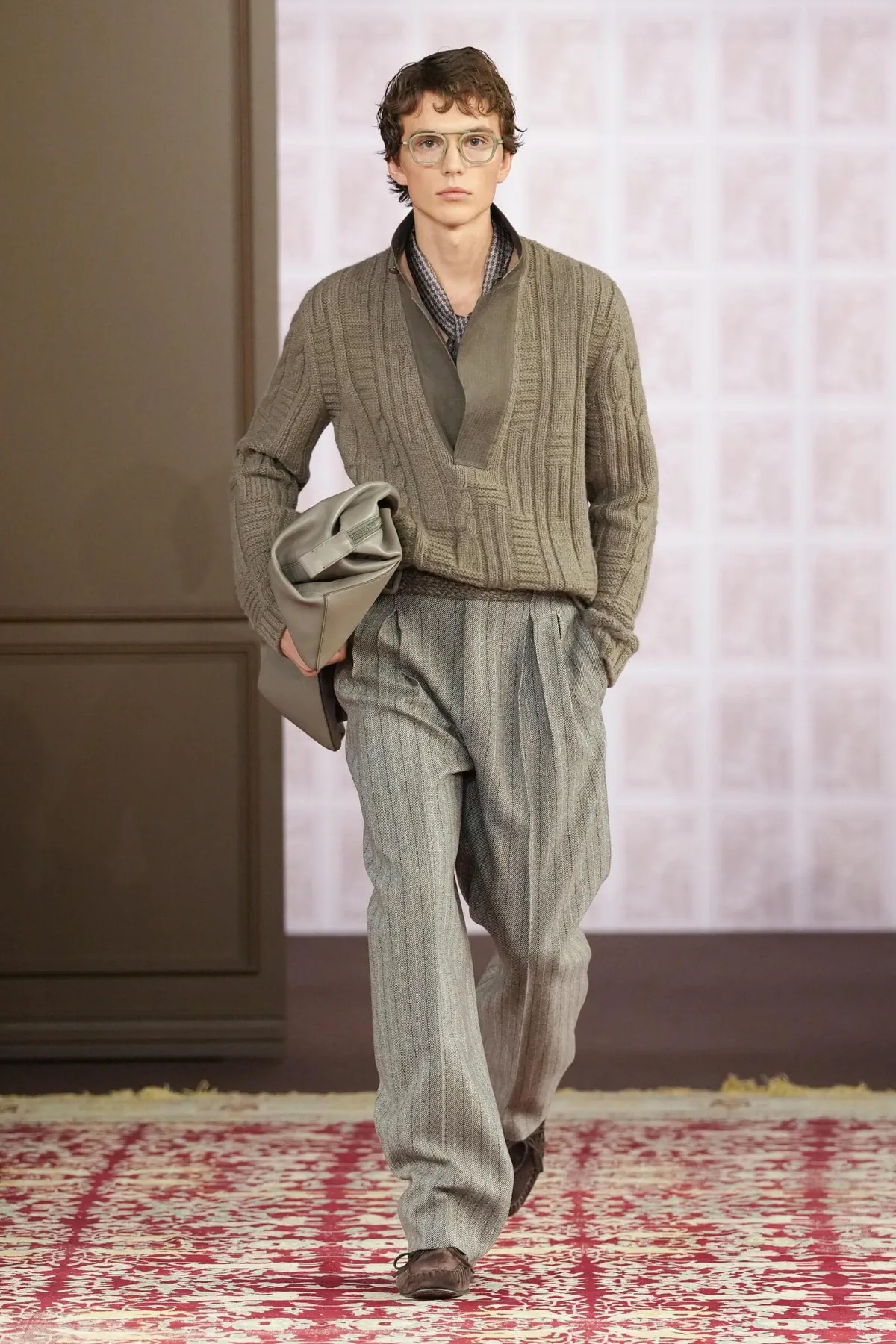
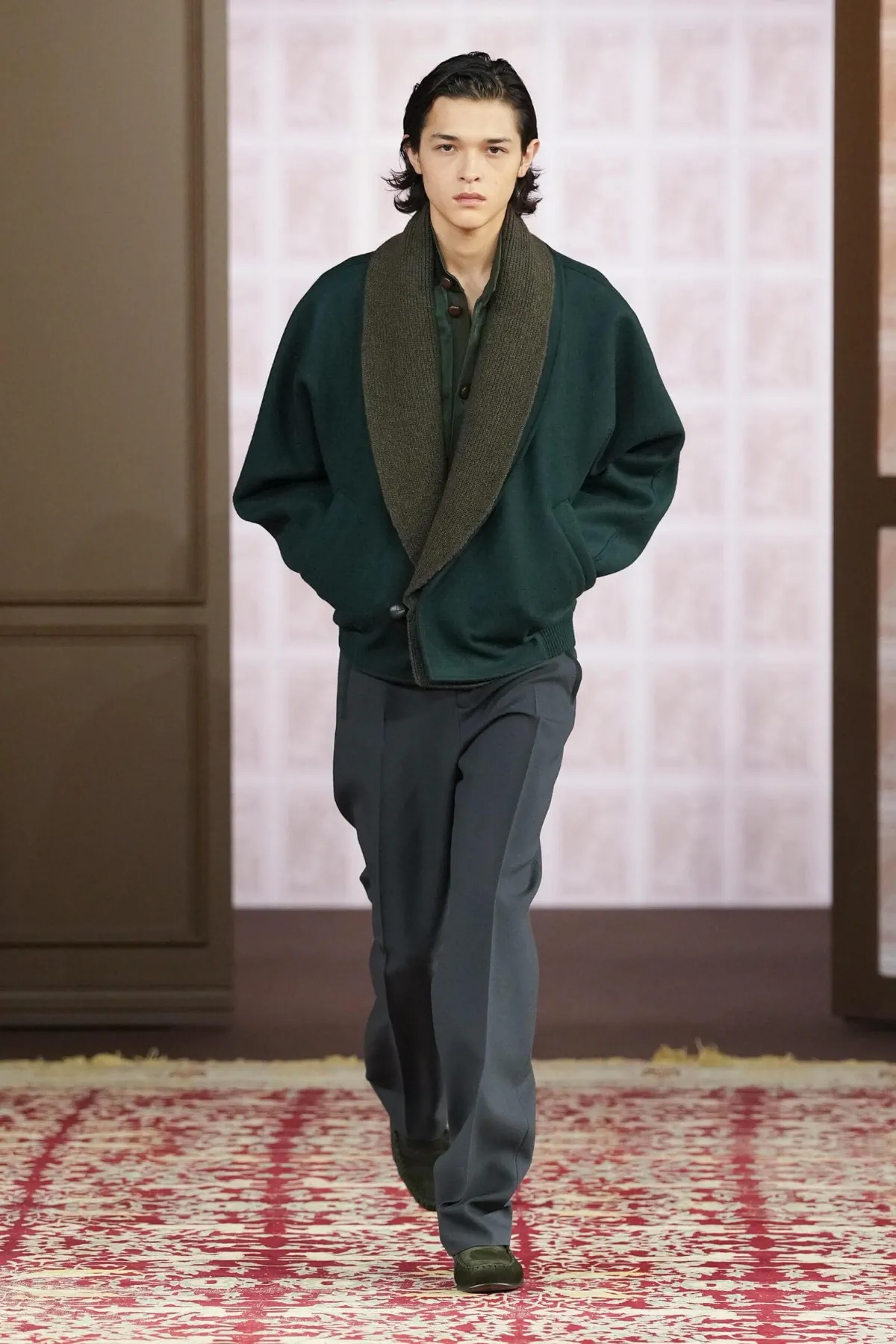
Even the overshirts were engineered to be lighter – a good example of how Sartori approaches lightweight tailoring. Sartori eliminated pockets to pursue his preference for layering. The brand’s Trofeo worsted fabric, created in 1965 from superfine Australian wool, anchored the collection. Leather details and suede jackets with high collars were presented alongside padded cashmere cardigans that echoed shirt patterns, a trend that proliferated this season. Cozy knits in sage green and mustard reinforced the idea of keeping clothes for life.
Sartori inherited approximately twenty suits and other garments from his late father, Giuseppe, while still a teenager. Giuseppe designed technical machinery for textile production in Biella, Piedmont, where Ermenegildo Zegna founded his company in 1910. Sartori has worked for the company since February 2016, and this presentation was his first under the direction of the newly appointed CEO, Edoardo Zegna, the founder’s great-grandson.
The family wardrobe on the runway contained garments from four generations, including the first tailored jacket from 1930. Before the show, Sartori suggested that wardrobes become repositories for collectors, comparing them to libraries or watch collections. Well-made clothes that withstand the test of time become everyday totems that connect generations while inspiring wearers to inhabit them according to their own tastes and moments.
This collection marked a departure from Sartori’s perfected semi-formal uniform toward a playful engagement with period style touchstones. Heavy checks and deep russet and brown tones in cardigan coats and sweaters nodded toward 1970s contrasts. Broken box pleats on outerwear were inspired by the Tirolean-style loden coat, which was historically popular in Piedmont and other northern Italian regions.
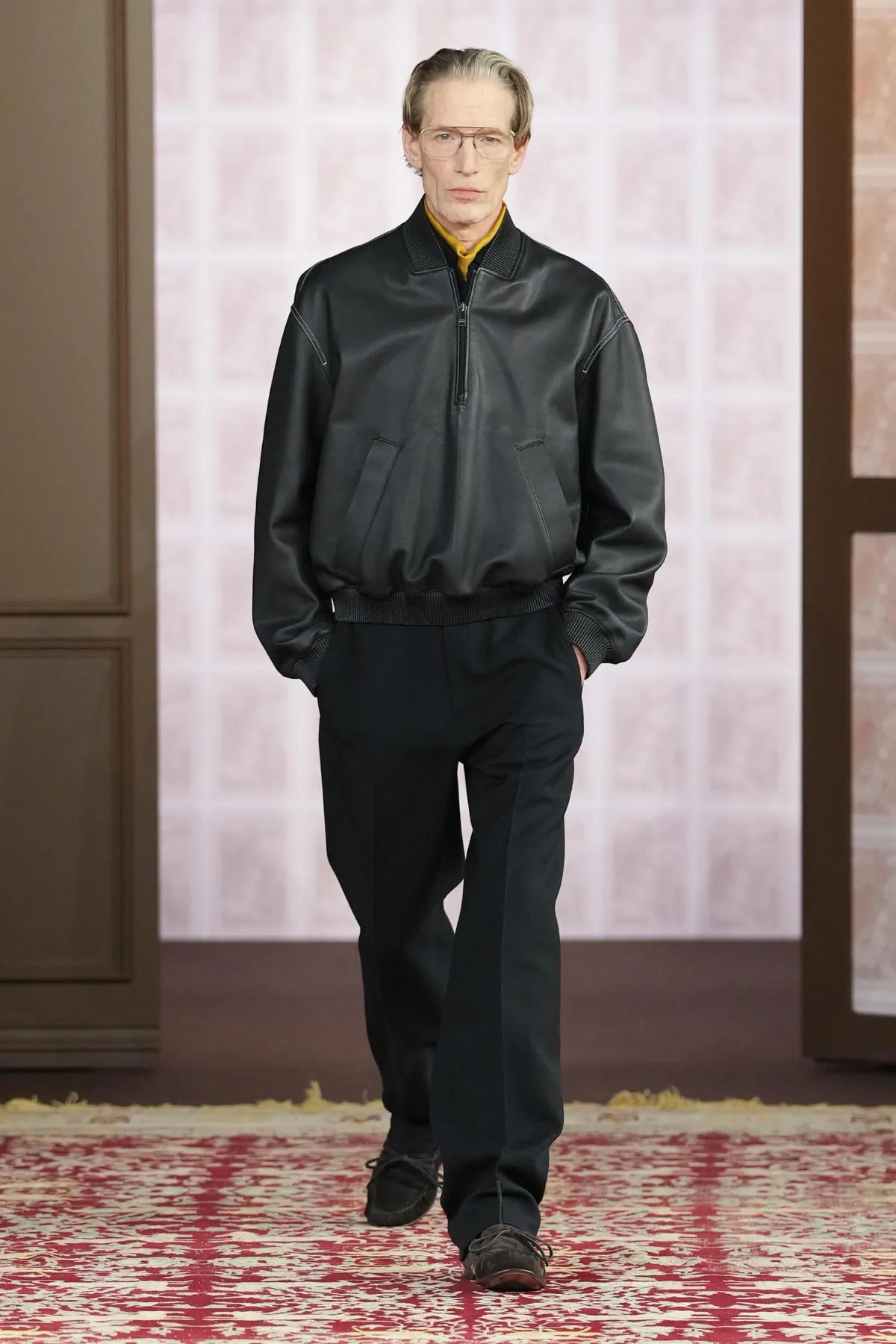
Double-breasted suiting referenced vintage pieces from the wardrobe behind the runway. The construction featured an ingenious, reversible, leather-covered button arrangement that allowed for three fastening options: left, right, or centered. Material innovations included printed herringbone and cashmere shearling. The assertion of different characters across different periods also felt innovative within this collection, which seemed emotionally driven while remaining technically accomplished.