
Madame Woo stands apart in fashion’s digital frenzy. The 66-year-old designer behind Wooyoungmi rarely goes online and describes herself as maintaining an analog existence while her team handles the internet’s demands. This deliberate distance from screens might explain why her Fall 2026 collection feels tangible and rooted in physical memory rather than algorithmic trends.
| 📌 Key Facts |
|---|
| 🏛️ Brand: Wooyoungmi 🧵 Designer: Youngmi Woo 🚆 Core Inspiration: Winter travel and early 20th-century Korean railway culture 🧵 Creative Signature: Korean heritage motifs reinterpreted through modern tailoring 🧥 Key Pieces: Faux astrakhan outerwear, reversible bombers, velvet tailoring 🧠 Design Philosophy: Analog creativity resisting algorithm-driven fashion 🌏 Brand Positioning: Cultural confidence and the global maturity of Korean fashion 🎧 Innovation: AI-generated soundscapes serving tradition rather than replacing it |
South Korea’s harsh winters formed the basis for the presentation at Salle Wagram, where the atmosphere was punctuated by steam train whistles. Woo fixated on the Gyeongin Railway, her country’s first train line from the turn of the 20th century, when boarding a locomotive meant more than just commuting. Travel demanded preparation, intention, and ceremony.
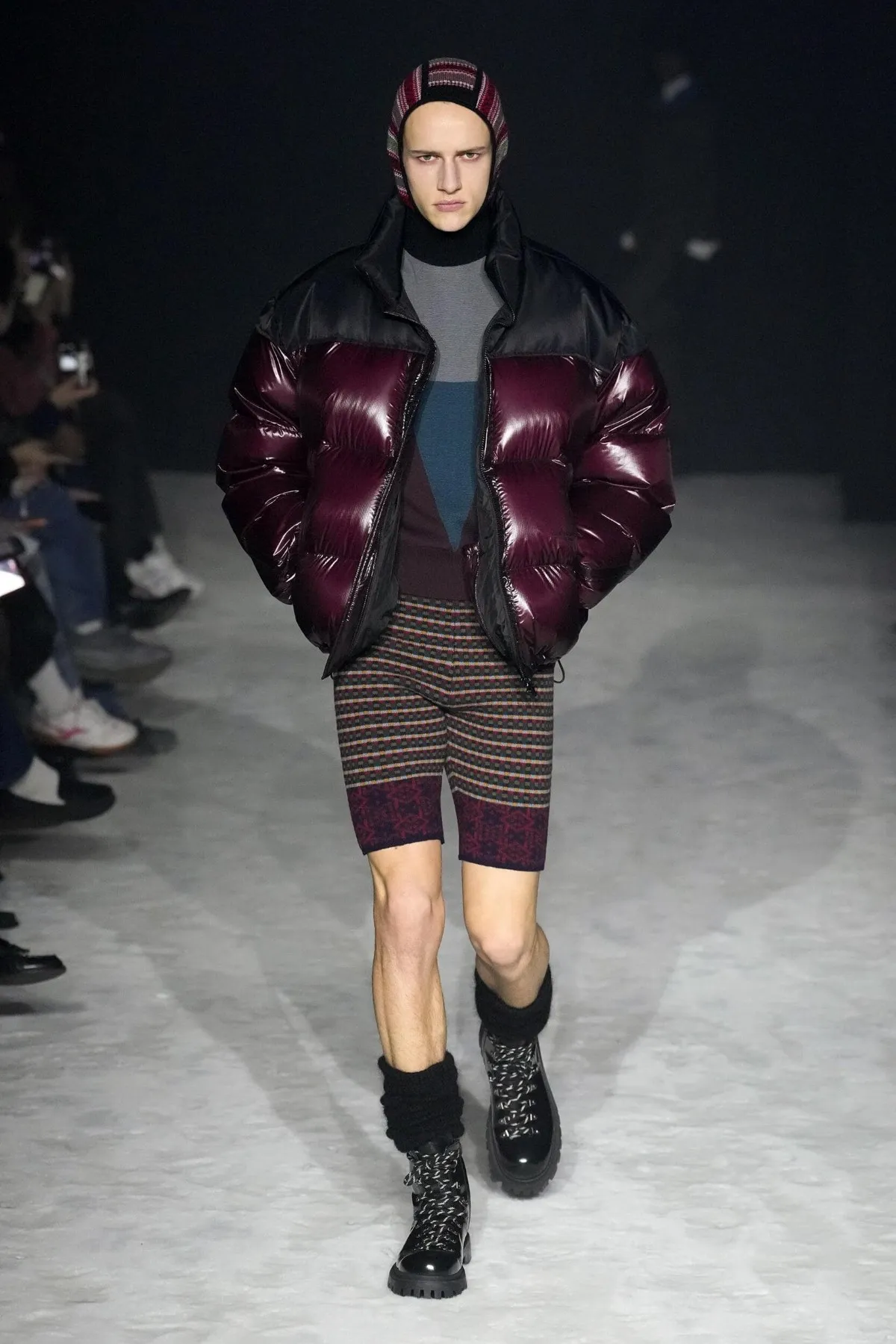
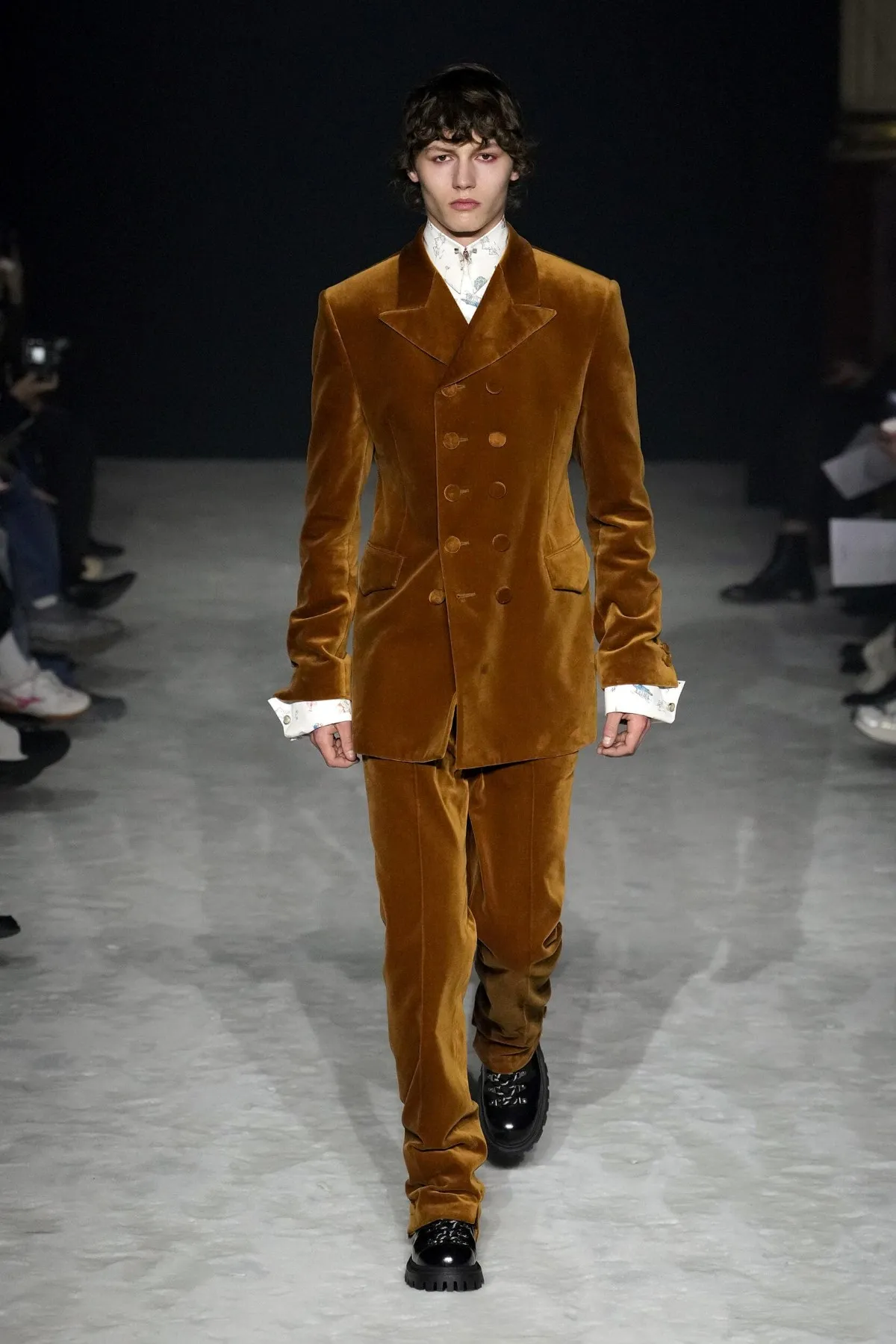
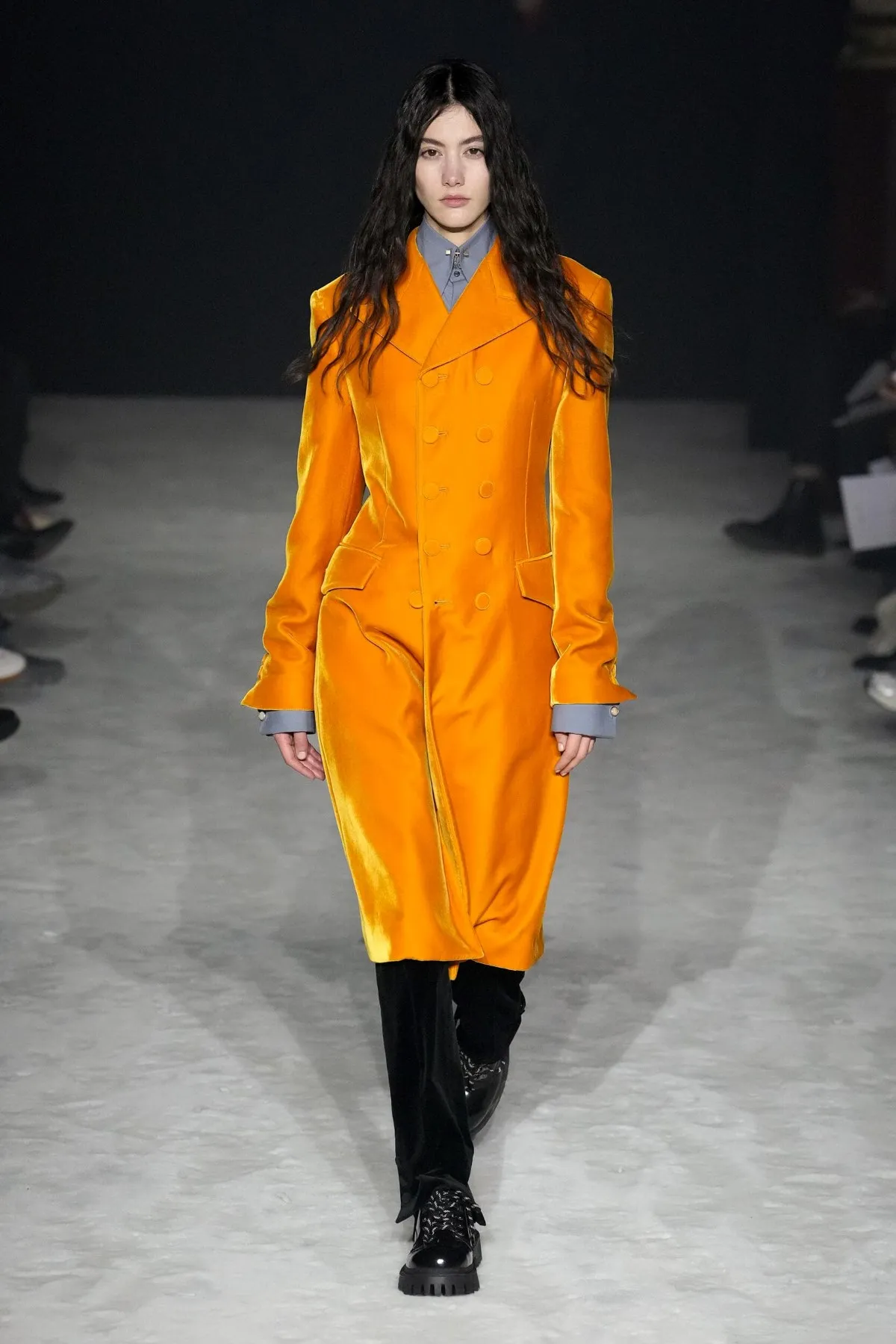
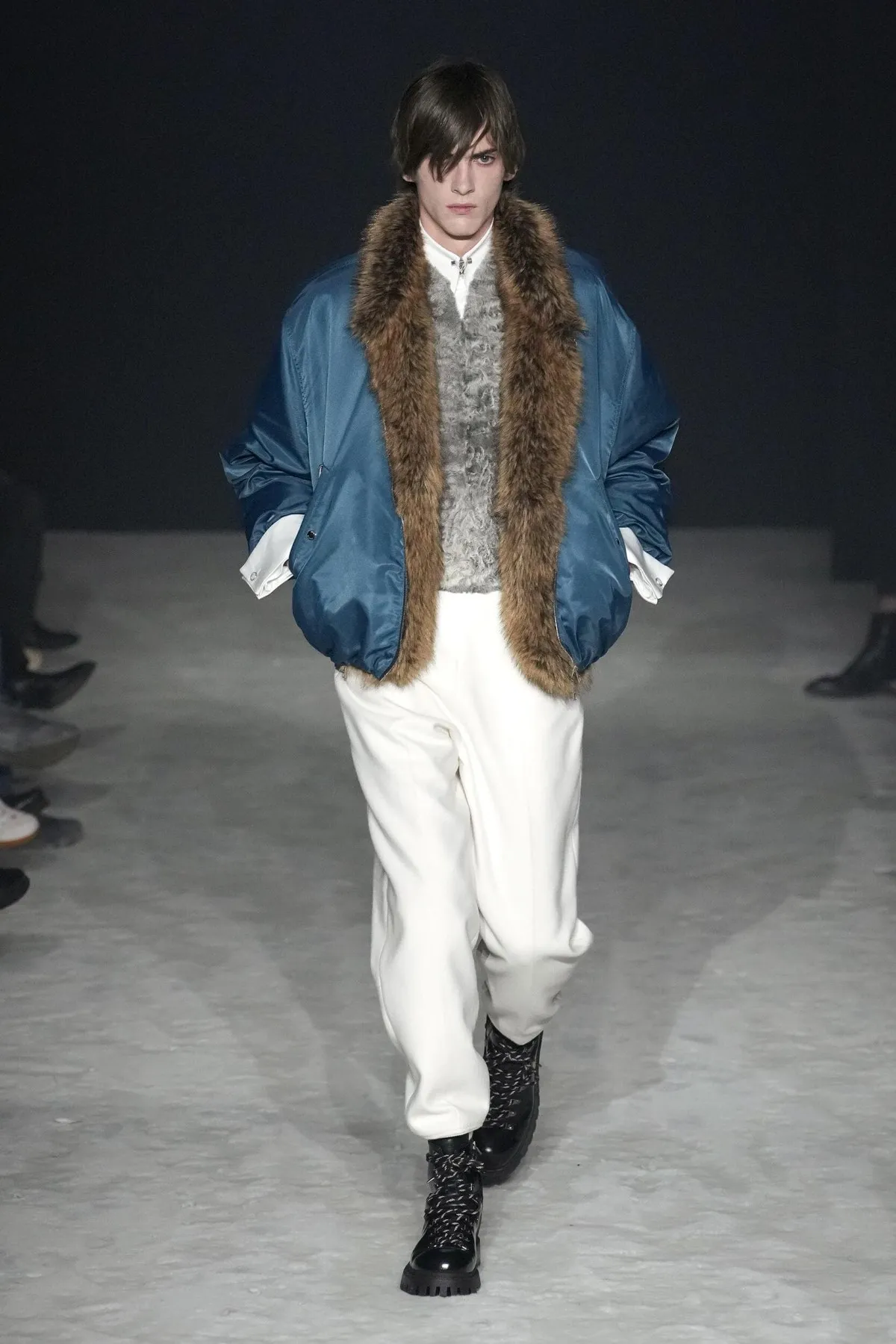
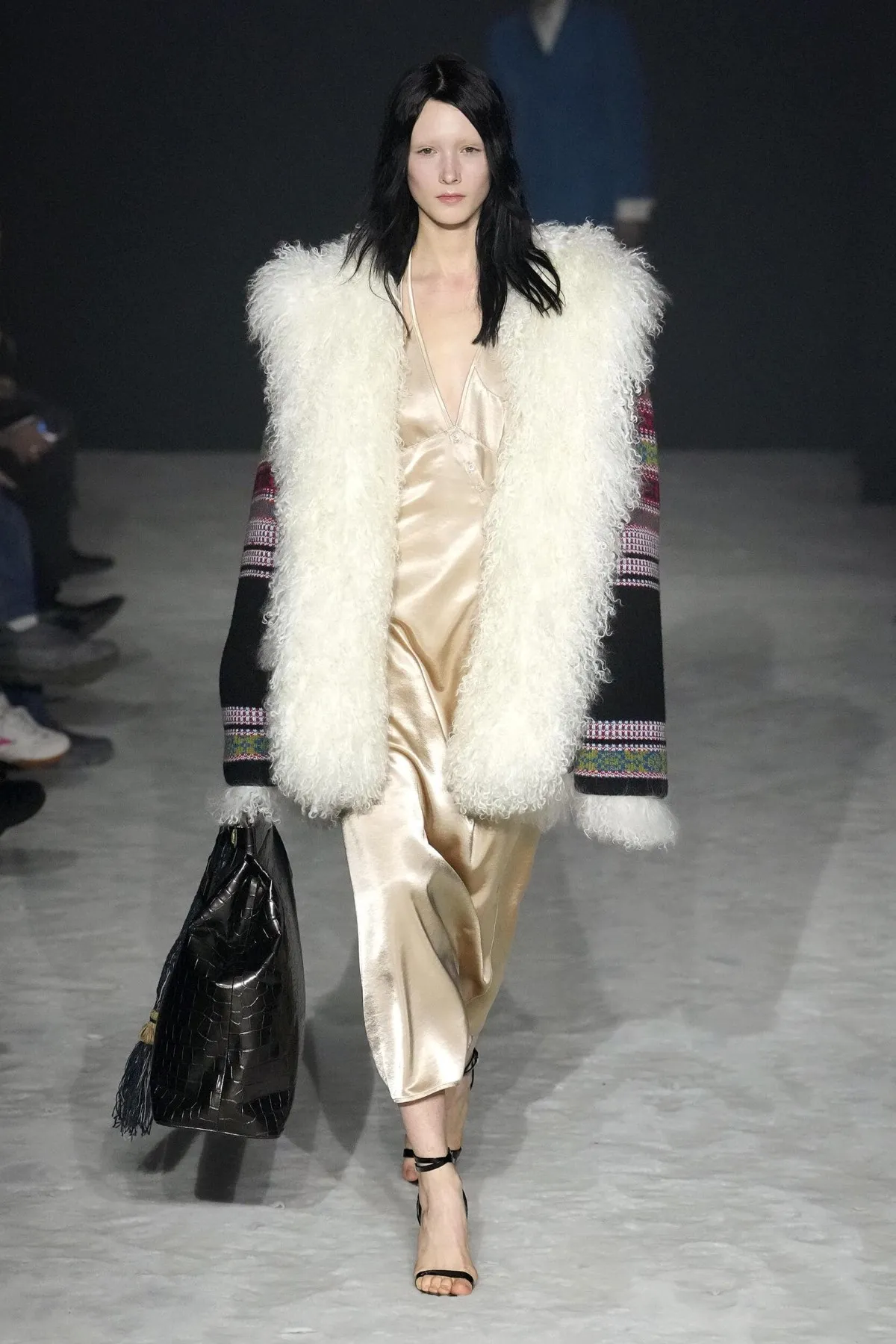
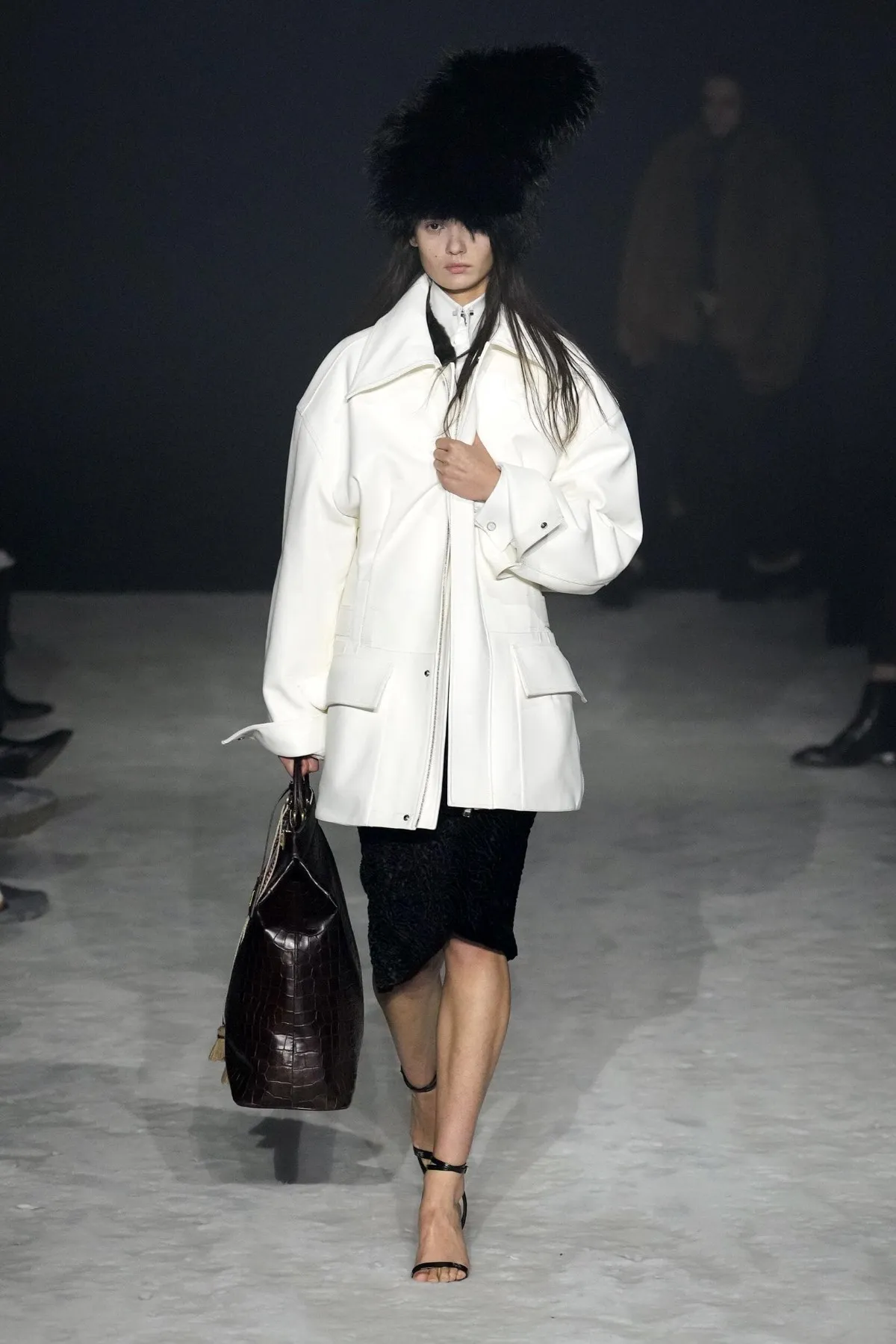
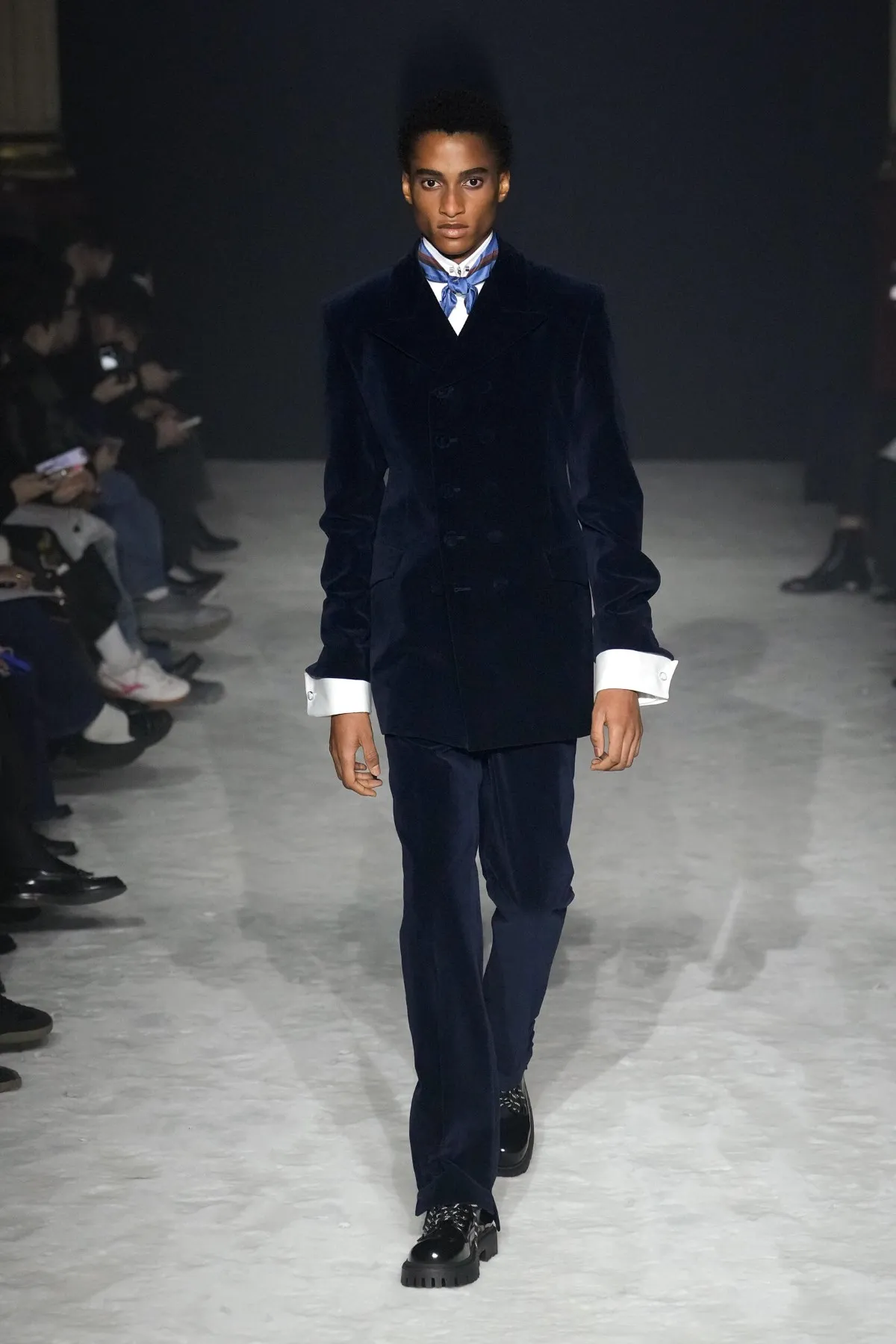
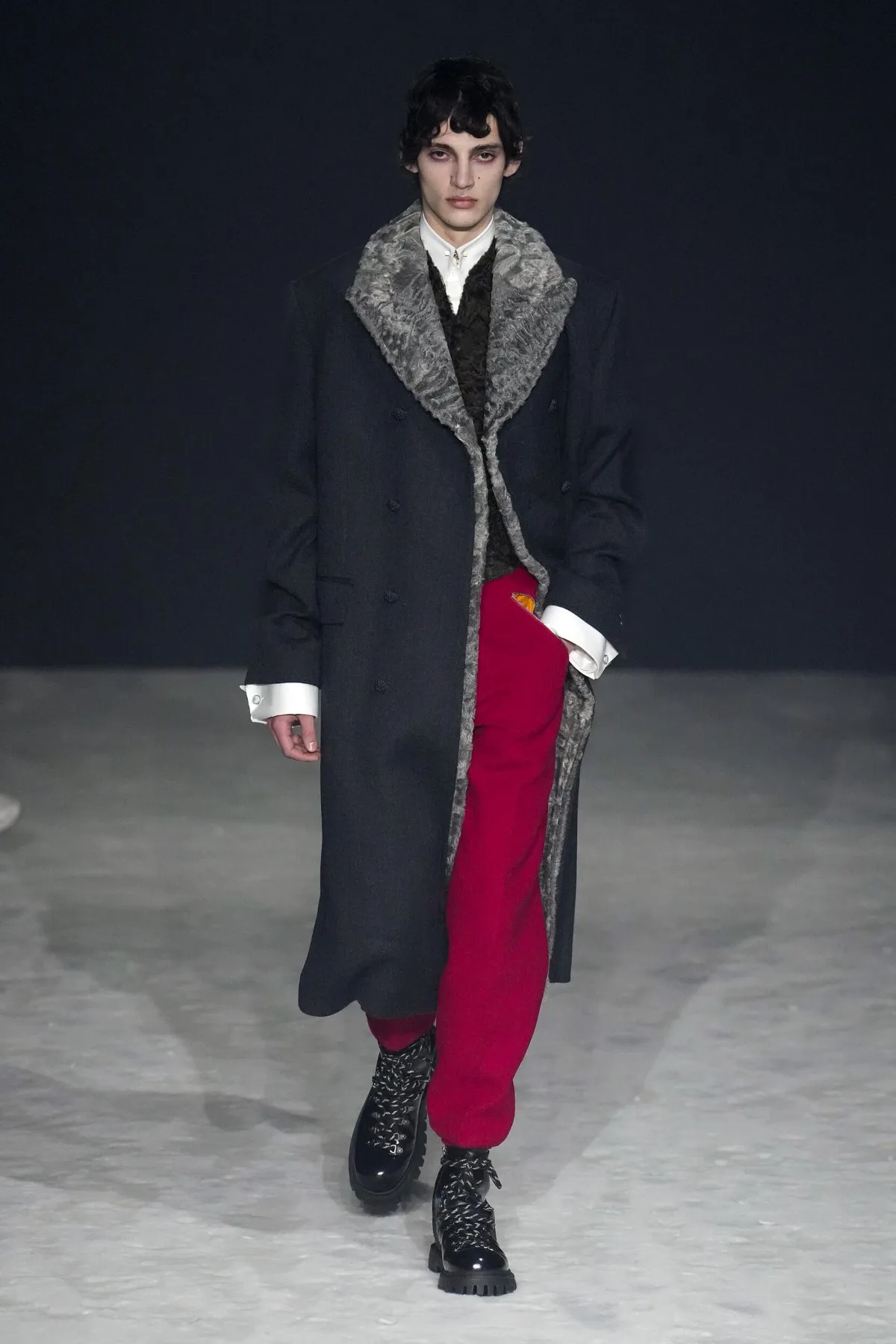
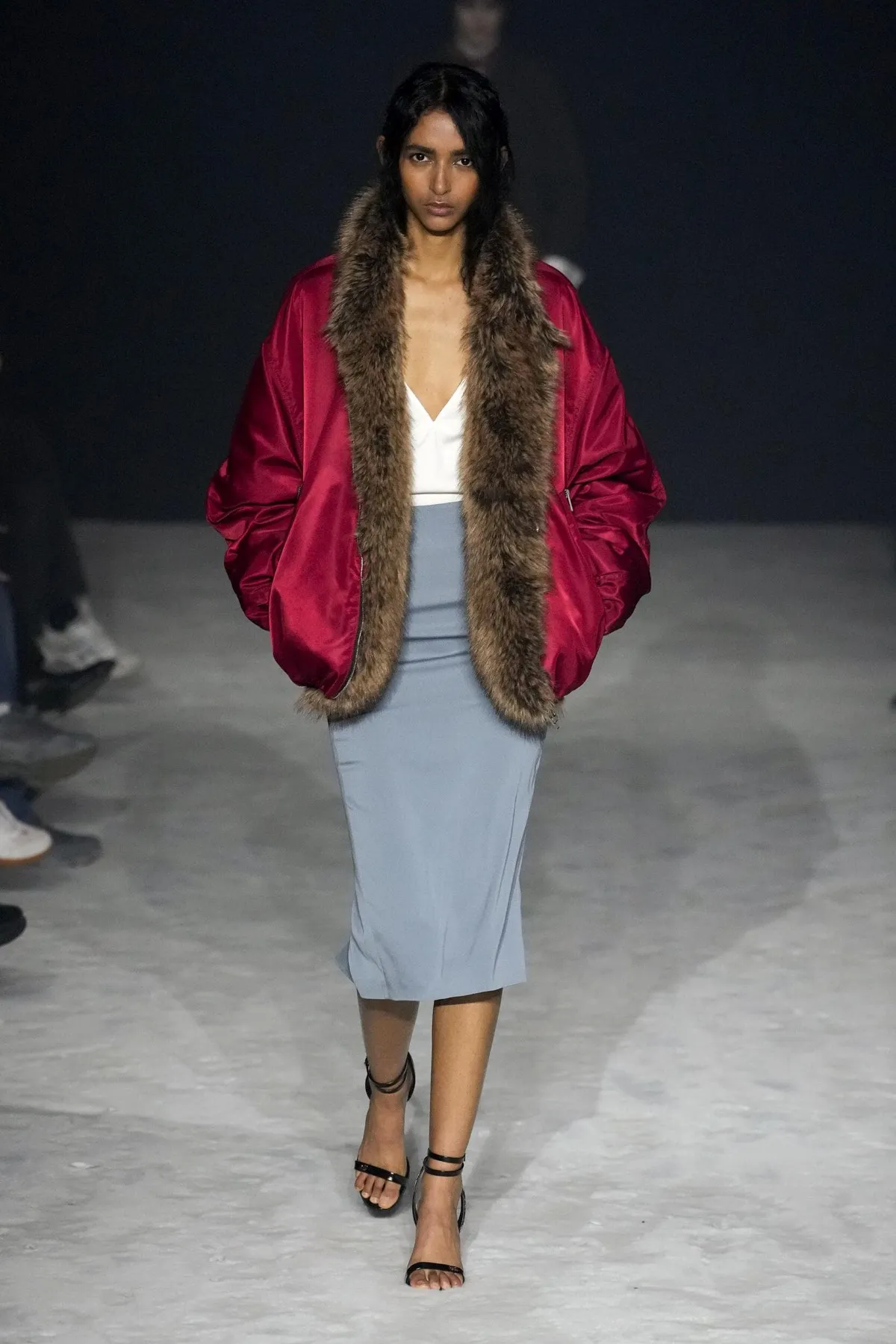
This historical perspective influenced the design of outerwear with faux astrakhan collars and velvet suits cinched at the waist – garments that evoke an era when passengers dressed for departure. However, Woo acknowledges the contemporary reality. Modern travelers want comfort and elegance, so she designed garments that solve that tension. Stretchy materials maintained structured silhouettes. Reversible bombers featured technical exteriors and plush faux fur linings. Shearling-lined denim incorporated leather ankle straps for functionality. Nylon tracksuits gained velvet trim, combining athletic practicality with refined aesthetics.
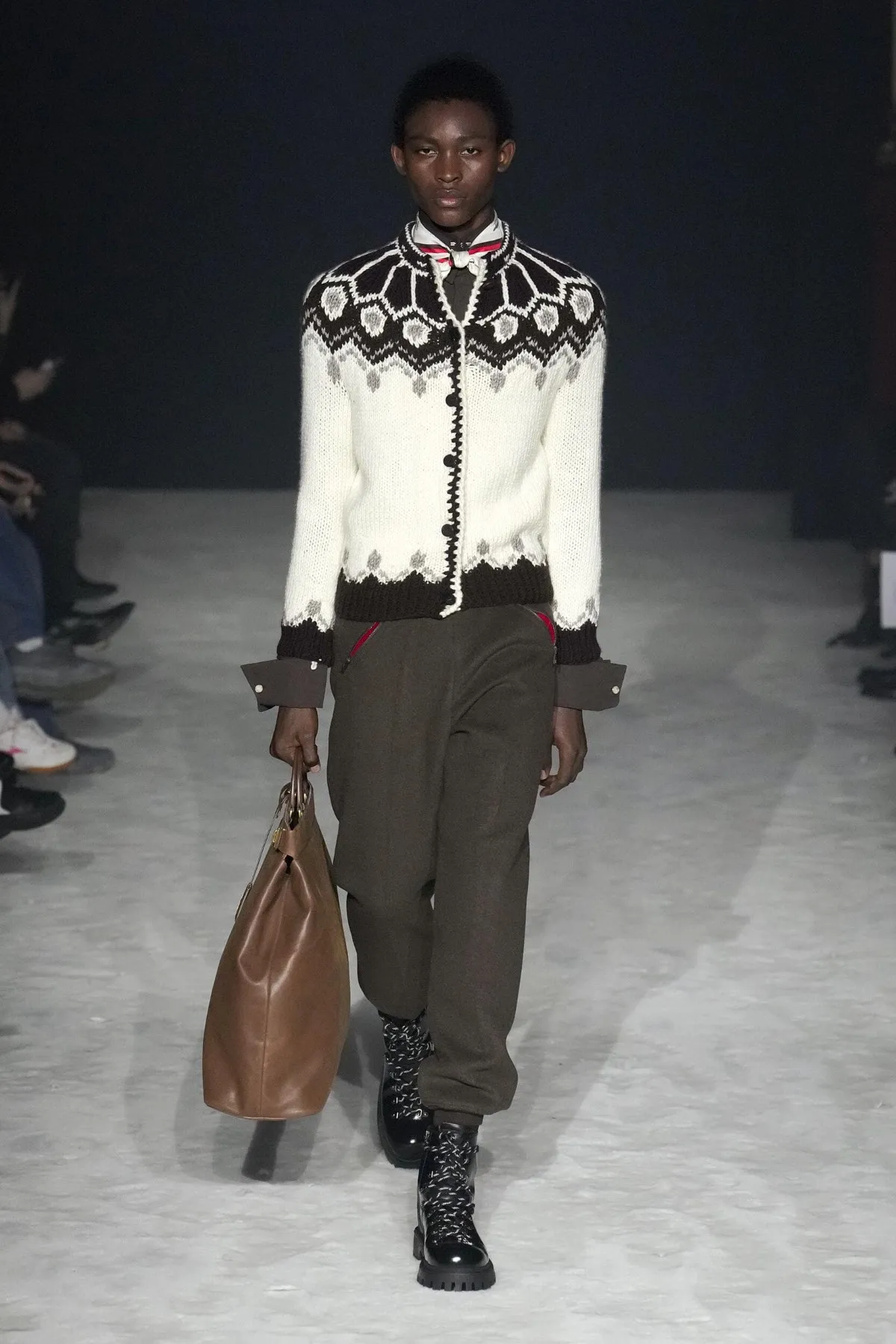
Korean cultural references appeared throughout the Wooyoungmi Fall 2026 collection, particularly in knitwear that initially resembled Nordic patterns but revealed dancheong motifs from temple decorations. Button-up shirts featured printed sketches of Korean temples and vases. Prints incorporated traditional hanbok elements, such as beoseon socks and brimmed hats, as well as miniature mountains and pagodas. These prints were applied to trench coats.
This cultural confidence represents new territory for Wooyoungmi. When Woo brought her label to Paris Fashion Week in the early 2000s, she became the first Korean designer to show in that arena. This pioneering position came with pressure to assimilate European sensibilities, leading her to downplay her background. Years of building credibility shifted her perspective. She now publicly embraces her roots, particularly as Korean popular culture gains global traction.
The presentation’s sound design reinforced this approach with audio manipulated by artificial intelligence that wove together the sounds of wind, rain, and a steam engine, as well as Korean folk songs and chants processed to sound nearly Gregorian. Technology served tradition rather than replacing it.
Follow all the latest news from Fashionotography on Flipboard, or receive it directly in your inbox with Feeder.
You might also read

Pencil skirts were paired with Chesterfield coats. Velvet tailoring appeared alongside faux astrakhan on skirts, coats, and trim details. Parkas opened to reveal dual personalities. Hiking boots grounded tailored suits. Oversized doctor bags suggested movement and utility.
Woo proposes elegance not as exhibition, but as a consideration of others and oneself. Her vision for winter dressing rejects the season’s inconveniences and frames cold weather as an opportunity for sartorial expression. The collection suggests that ceremony need not require sacrifice and that travelers can honor both heritage and comfort. Looking backward sometimes clarifies forward movement.