



Vacheron Constantin and Phillips in association with Bacs & Russo are launching the world’s first Vacheron Constantin Concours d’Élégance Horlogère, a competition dedicated exclusively to vintage timepieces. Open to historic pocket and wristwatches produced between 1755 and 1999, this unprecedented event celebrates elegance, rarity, provenance and the emotional power of horological heritage.
Registration is open from January 19th, 2026, through April 30th, 2026, and is available through Vacheron Constantin boutiques and their website. Anyone who owns a Vacheron Constantin pocket or wrist watch produced between 1755 and 1999 can enter, though certain restrictions apply. Quartz movements and heavily modified pieces won’t make the cut, which seems reasonable given the competition’s focus on preserving horological heritage.
| 📌 Key Facts |
|---|
| 🕰️ Brand: Vacheron Constantin 🏆 Concept: World’s first Concours d’Élégance dedicated to timepieces 📅 Registration: January 19 – April 30, 2026 📍 Awards Ceremony: November 10, 2026, Geneva ⌛ Eligible Watches: Produced between 1755 and 1999 🧩 Categories: 7 competition classes ⚖️ Judging Criteria: 9 (authenticity, rarity, provenance, emotion…) 🤝 Partner: Phillips in Association with Bacs & Russo 💰 Prizes: Trophies only (no financial awards) |
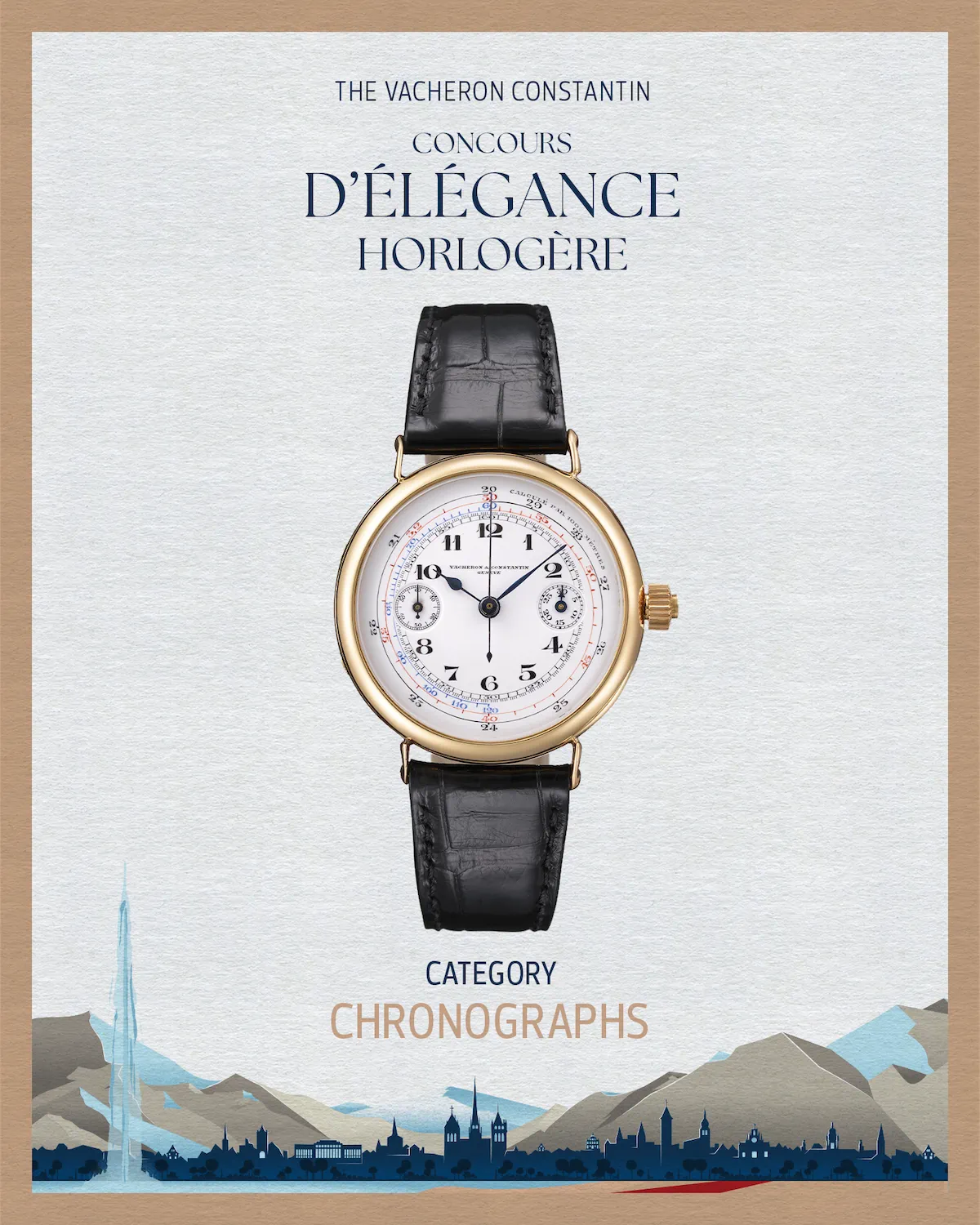
Seven competition categories at the Vacheron Constantin Concours d’Élégance Horlogère
The competition is divided into seven distinct categories, allowing entrants to choose where their watch best fits. Chiming mechanisms include minute repeaters, quarter repeaters, half-quarter repeaters, and grande sonnerie complications. Chronographs include two- or three-counter variants, single pushers, and split-seconds mechanisms. Astronomical complications include triple calendars, complete calendars, and perpetual calendars, as well as Métiers d’Art timepieces inspired by astronomy.
The multiple complications category is the most ambitious, requiring at least two major functions, such as tourbillons, repeaters, chronographs, split-seconds, complete or perpetual calendars, and sky charts, as seen in modern ultra-thin perpetual calendar models. The Chronomètre Royal category targets pieces bearing the official designation issued since 1907. The Métiers d’art category focuses on decorative crafts, such as engraving, enameling, gem setting, and guilloché work; however, skeleton pieces are excluded. The design category showcases Vacheron Constantin’s signature style through case design and time display methods, such as retrograde displays, jumping hours, and world time complications.
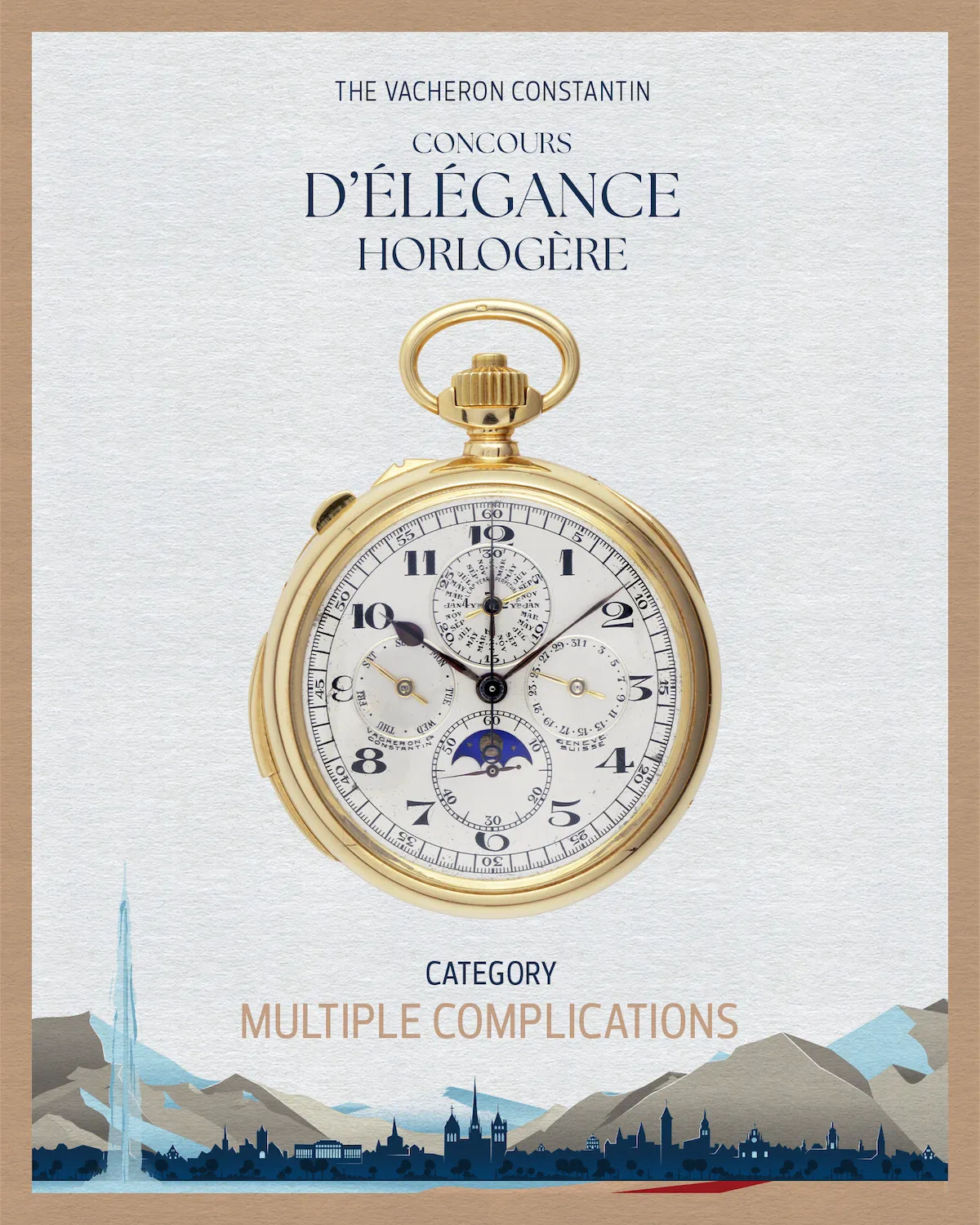
Nine criteria shape the judging
The jury will evaluate watches using nine specific criteria: authenticity, elegance, rarity, impact on Vacheron Constantin or the broader history of watchmaking, provenance, technicality, Métiers d’Art, state of preservation, and emotional dimension. The final criterion stands out. It acknowledges that watches carry personal histories beyond their mechanical specifications. Similarly, the provenance criterion recognizes that ownership history and documentation matter significantly to collectors.
The state of preservation criterion rewards owners who have properly maintained their watches over decades or even centuries. Rarity is determined by production numbers and surviving examples, particularly in historic ultra-thin perpetual calendars. The impact criterion evaluates whether a particular piece represented innovation or significance during its era. Together, these criteria create a comprehensive framework that goes beyond simple beauty contests.
An international expert jury of watchmakers, collectors and historians
Aurel Bacs and Christian Selmoni co-chair an international jury that includes watchmakers, designers, historians, journalists, collectors, and industry figures. Bacs explained his motivation clearly: “As a lifelong enthusiast of the Concours d’Élégance concept, it has long been my dream to bring this concept to fine watchmaking. I am delighted that Vacheron Constantin has accepted our invitation to support the world’s first Concours d’Élégance dedicated to timepieces, and I look forward to the inspiring discoveries and scholarly conversations that will emerge from the timepieces entered in this competition.”
Selmoni emphasized the heritage angle: “Following our 270th anniversary celebrations, this competition allows us to further honor those who preserve and promote the Maison’s expertise and history. It also creates new opportunities for exchange, particularly with members of exclusive communities, such as The Hour Club.“
The jury includes Benjamin Clymer from Hodinkee, Nicholas Foulkes, Wei Koh from Revolution, Roberta Naas, and several other prominent figures. Felix Baumgartner of URWERK will bring an independent watchmaker’s perspective. Yasmine AlShathry will represent collectors from Saudi Arabia through her platform, CLÉ. This mix ensures that technical expertise meets market knowledge and cultural understanding.
Follow all the latest news from Fashionotography on Flipboard, or receive it directly in your inbox with Feeder.
You might also read

Vintage watch market context behind the Concours d’Élégance Horlogère
The competition launches amid notable momentum for vintage watches. Phillips has established itself as the leading auction house for collectible timepieces. Bacs has driven record-breaking sales for individual watches and complete collections. Another jury member, Dr. Helmut Crott, pioneered vintage watch auctions between 1975 and 1993, helping to establish mechanical wristwatches as serious collectibles.
Alexandre Ghotbi, who co-founded the Purists discussion forum before joining Phillips, brings decades of community-building experience. His background illustrates how online communities have transformed watch collecting over the past two decades. The competition recognizes collectors who have studied, documented, and preserved Vacheron Constantin pieces across generations.
Why the Concours d’Élégance Horlogère awards prestige, not money
Winners receive trophies rather than monetary awards, which feels appropriate. Financial prizes might create perverse incentives or suggest that watches should be valued purely as investments. Trophies recognize excellence and preservation without reducing timepieces to their market value. The awards ceremony follows Phillips’s autumn auctions in Geneva, creating a natural overlap between the competition and the broader collector community.
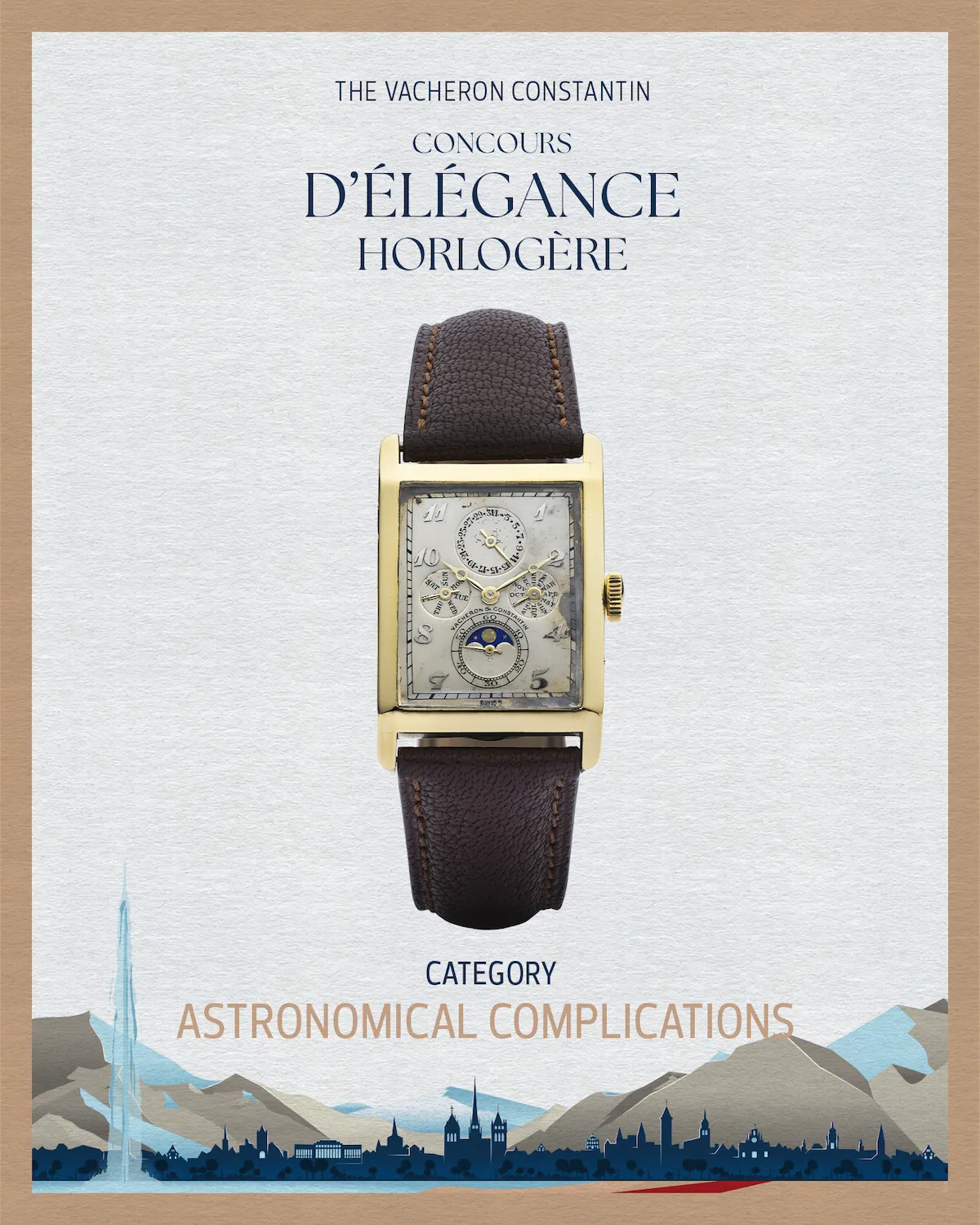
What the Vacheron Constantin Concours d’Élégance Horlogère means for collectors
The competition strengthens the connection between Vacheron Constantin and its collectors while potentially revealing exceptional pieces that have remained private. Owners who have carefully maintained complicated vintage watches can now receive formal recognition for their efforts. The comprehensive judging criteria reward technical achievement and historical significance.
Whether this inaugural edition will be successful enough to become a recurring event remains uncertain, but the concept addresses the genuine interest of collectors. Automotive concours events have thrived for decades because they celebrate preservation, knowledge, and passion beyond mere ownership. Extending this framework to watches is a logical step, especially for a company with 270 years of continuous production history.
Complete competition rules will be available on vacheron-constantin.com when registration opens on January 19th.