



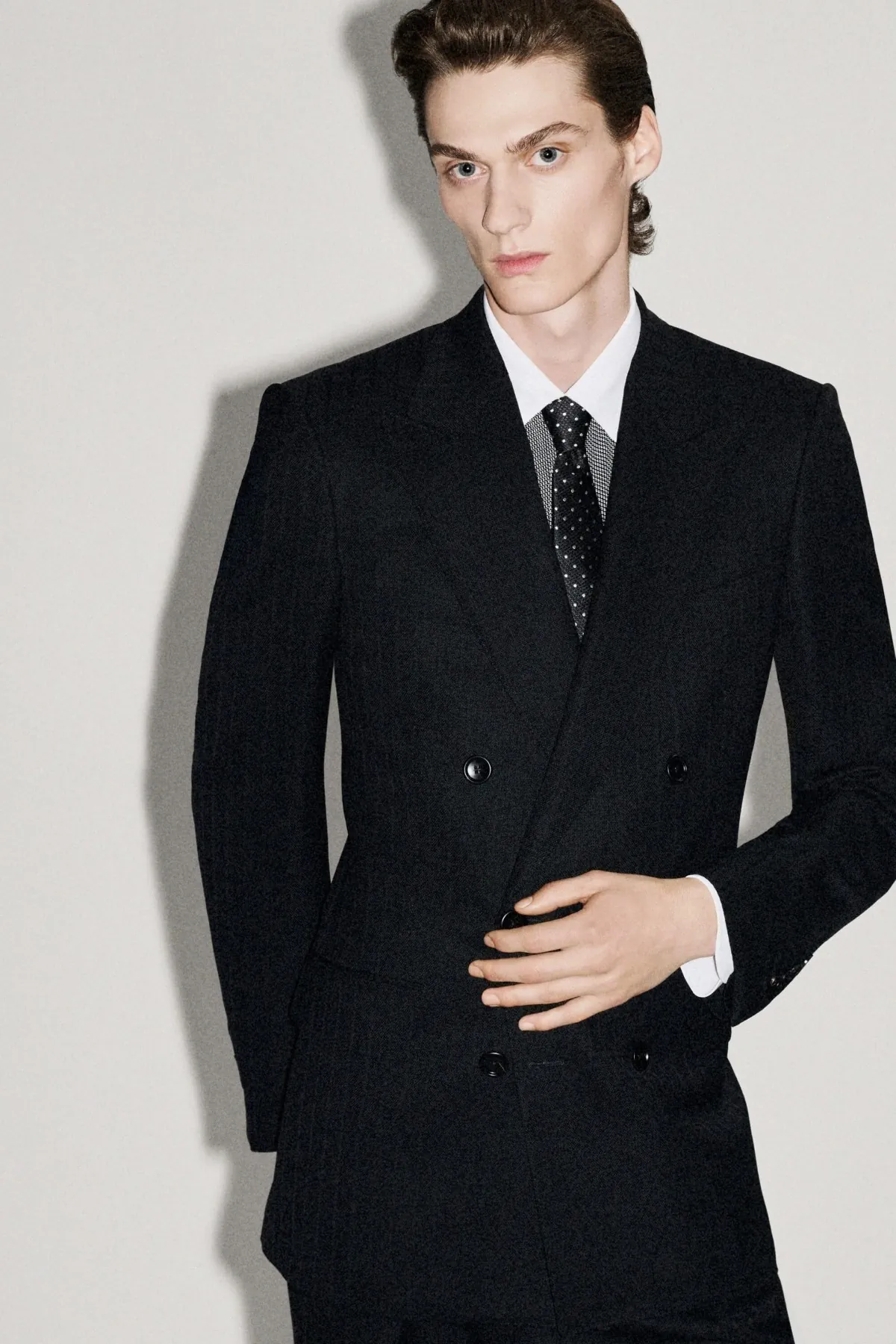
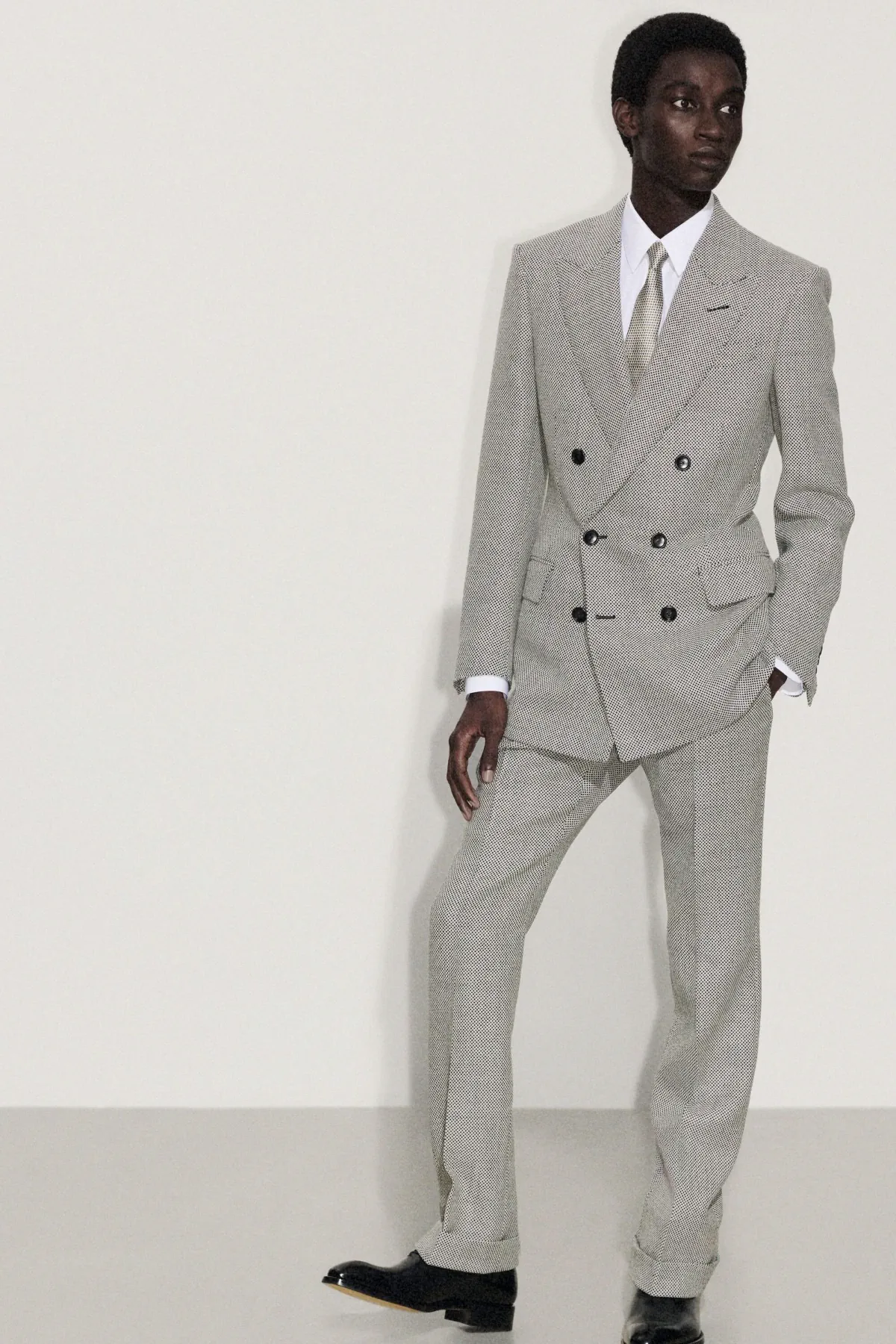
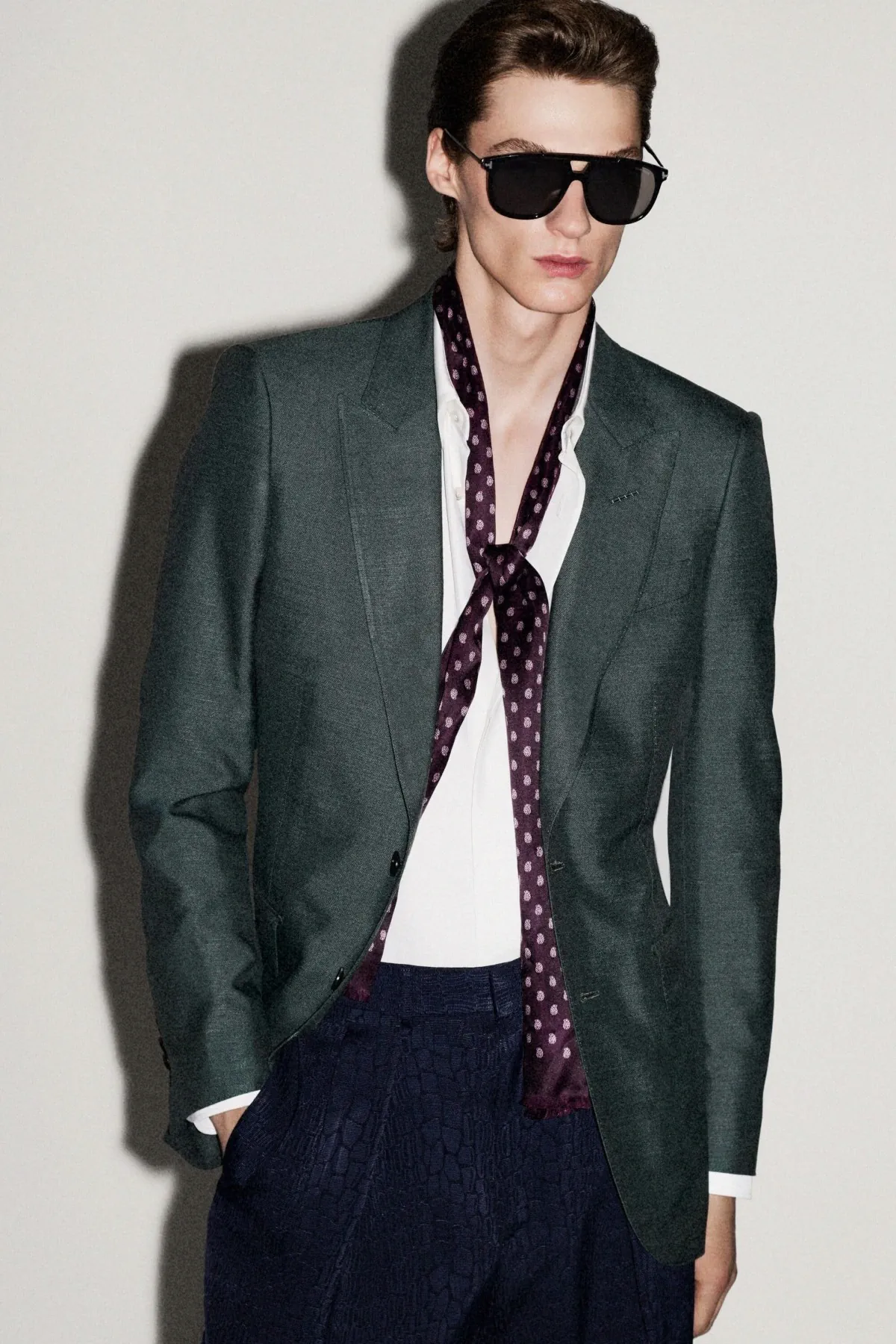
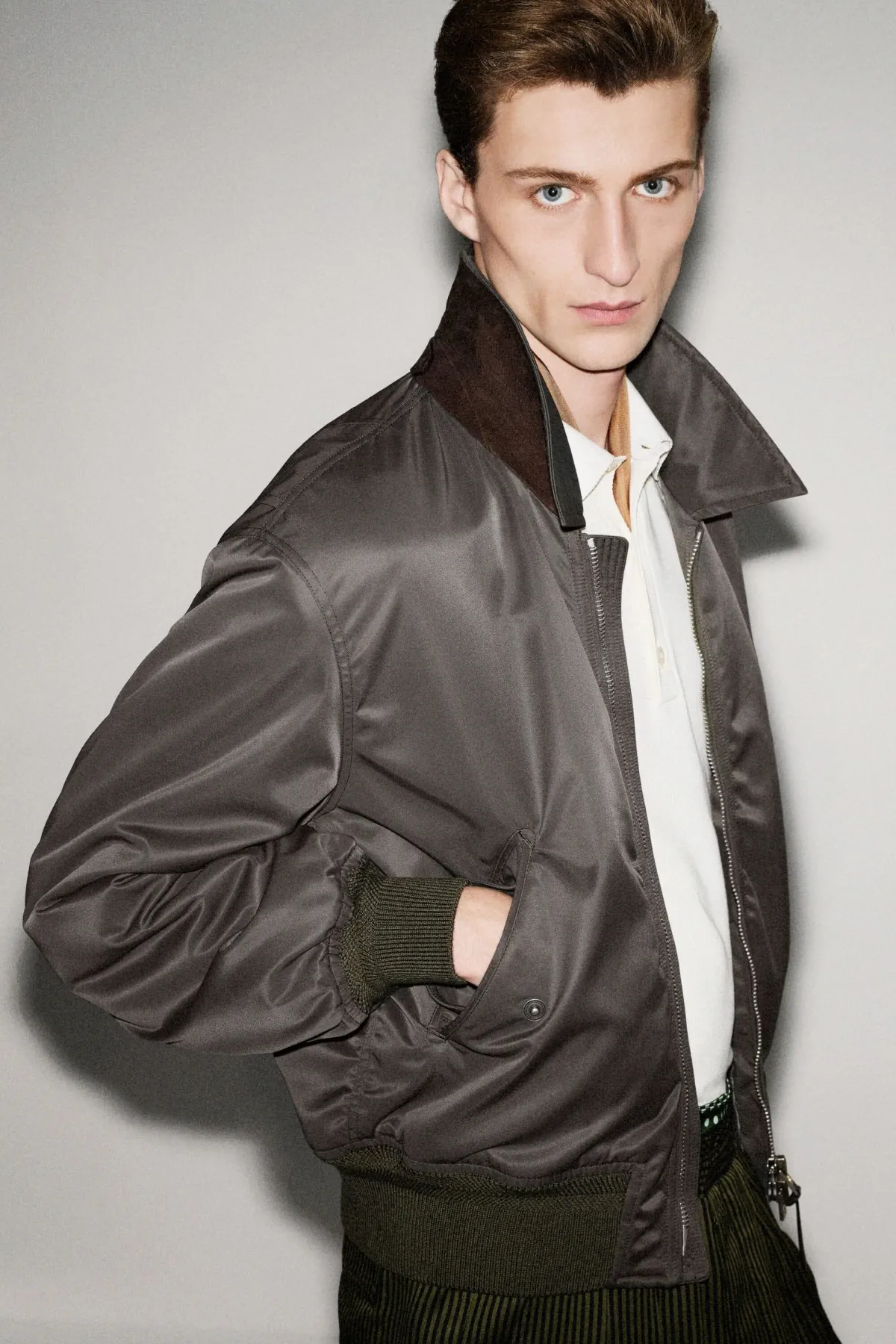
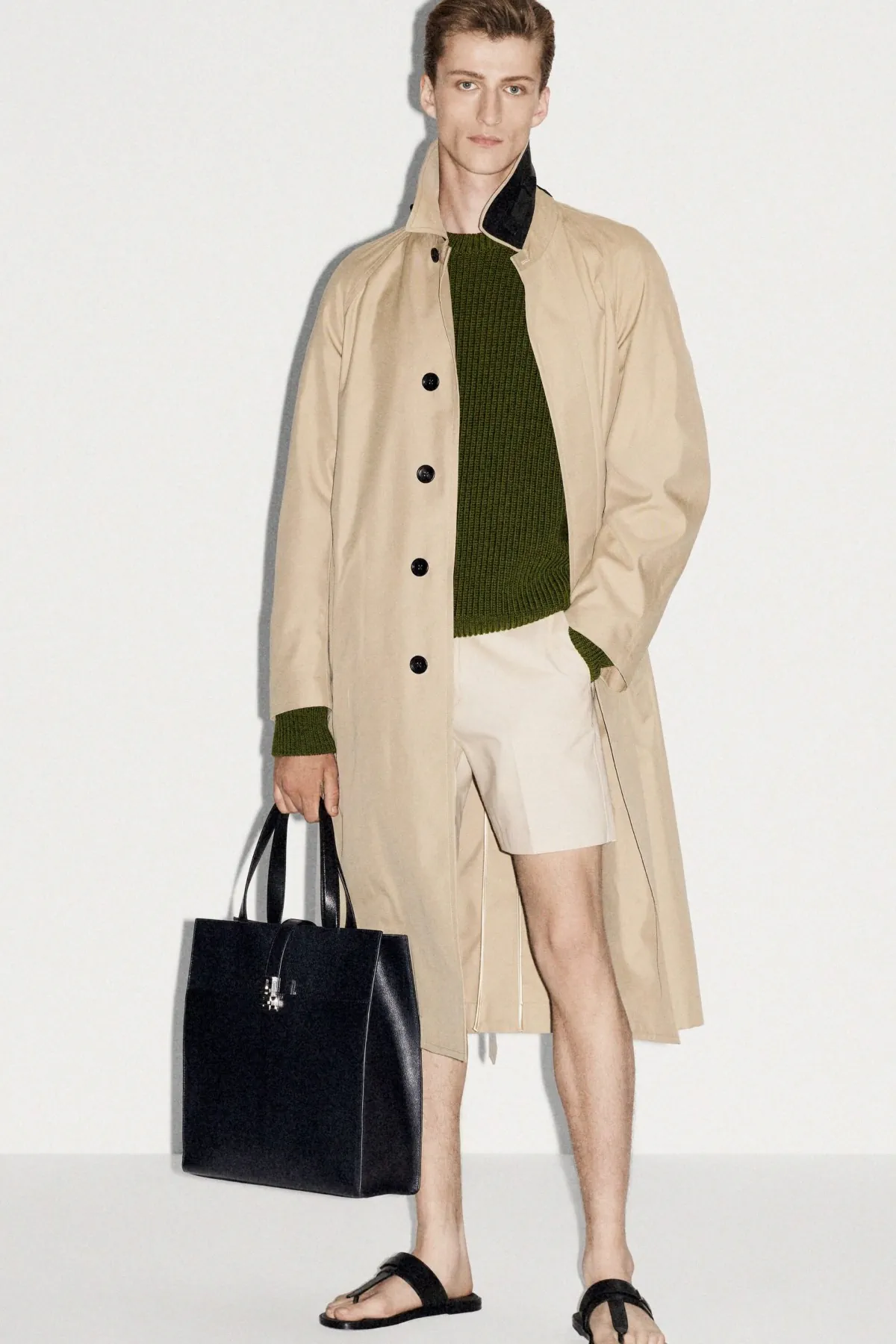
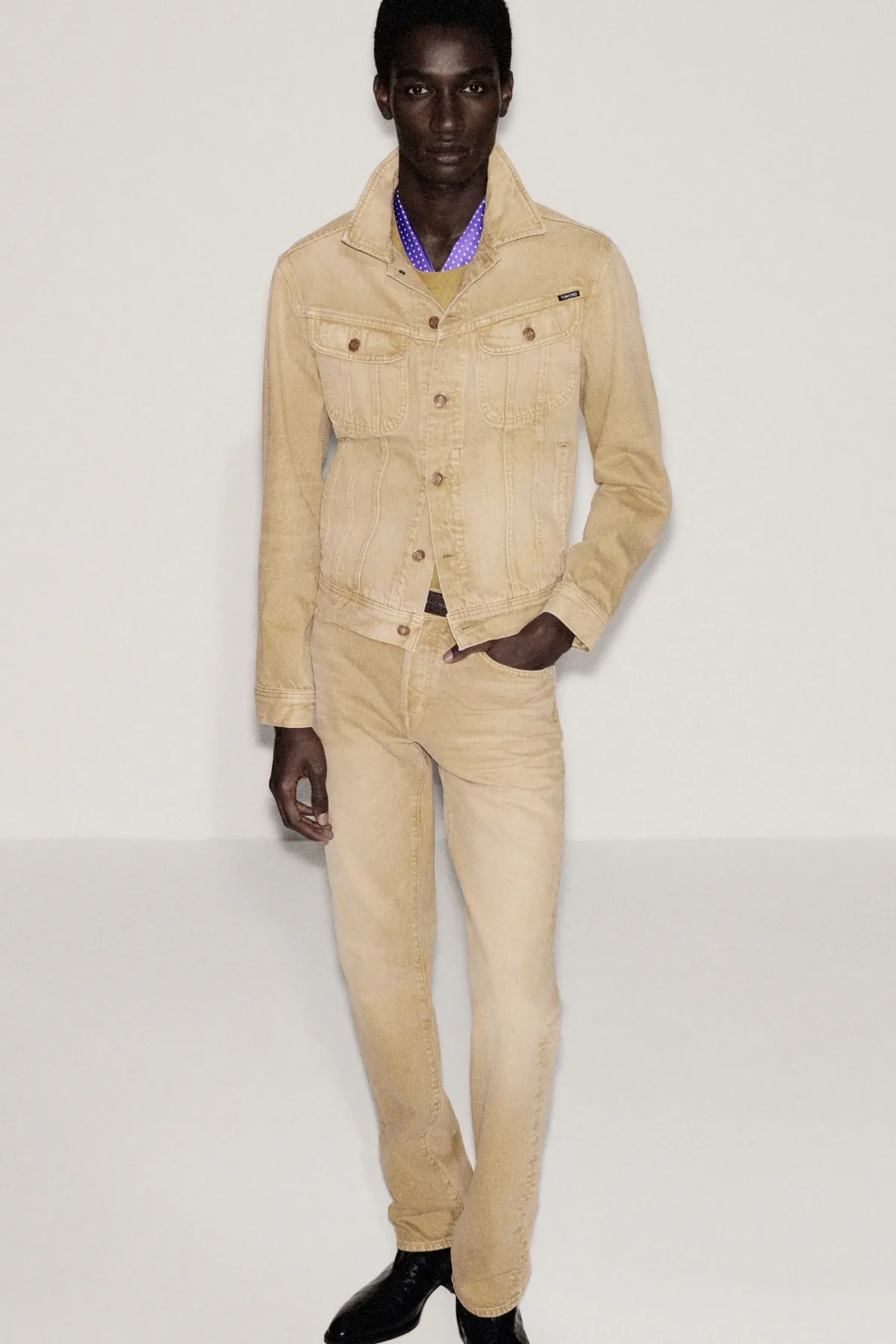

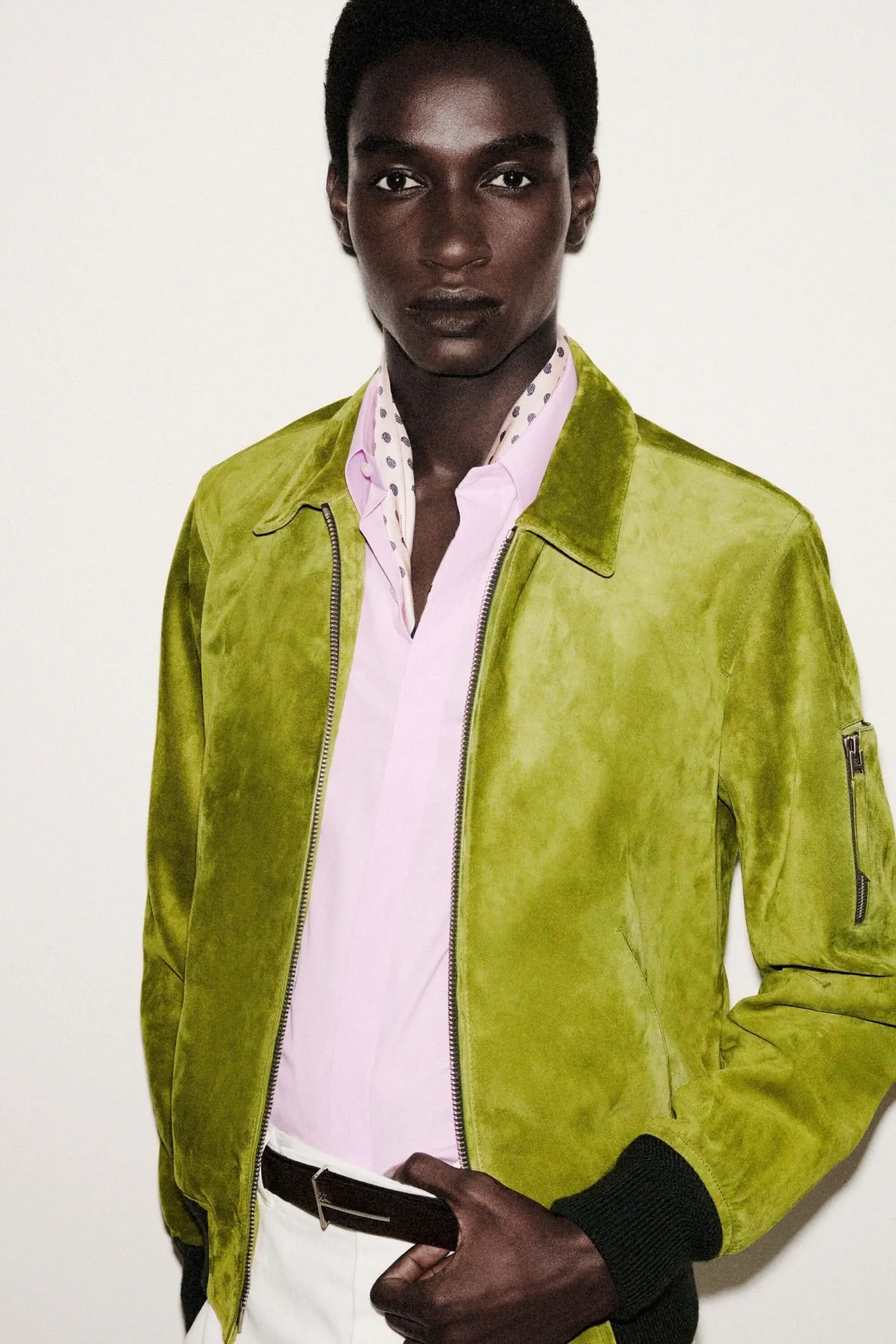

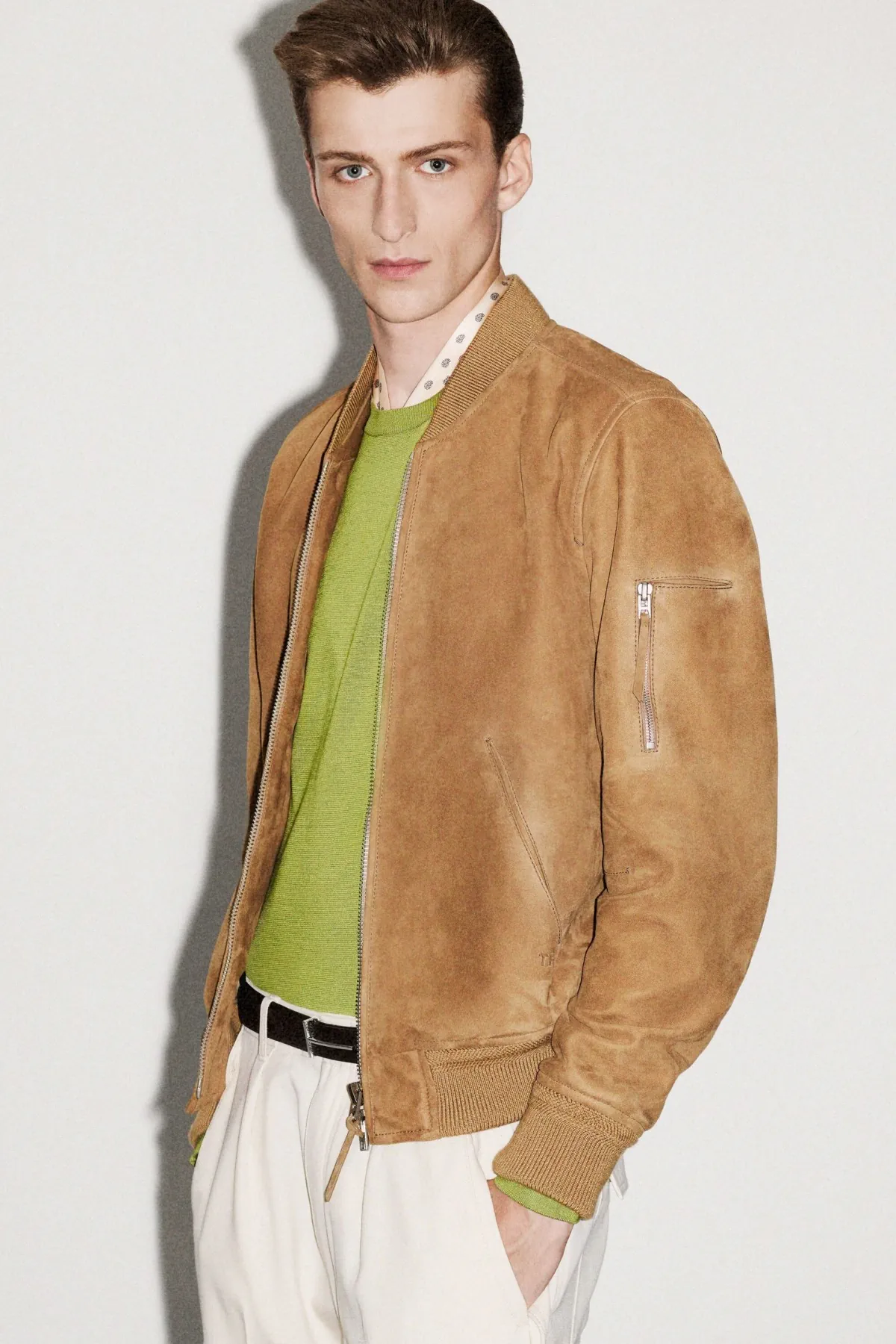
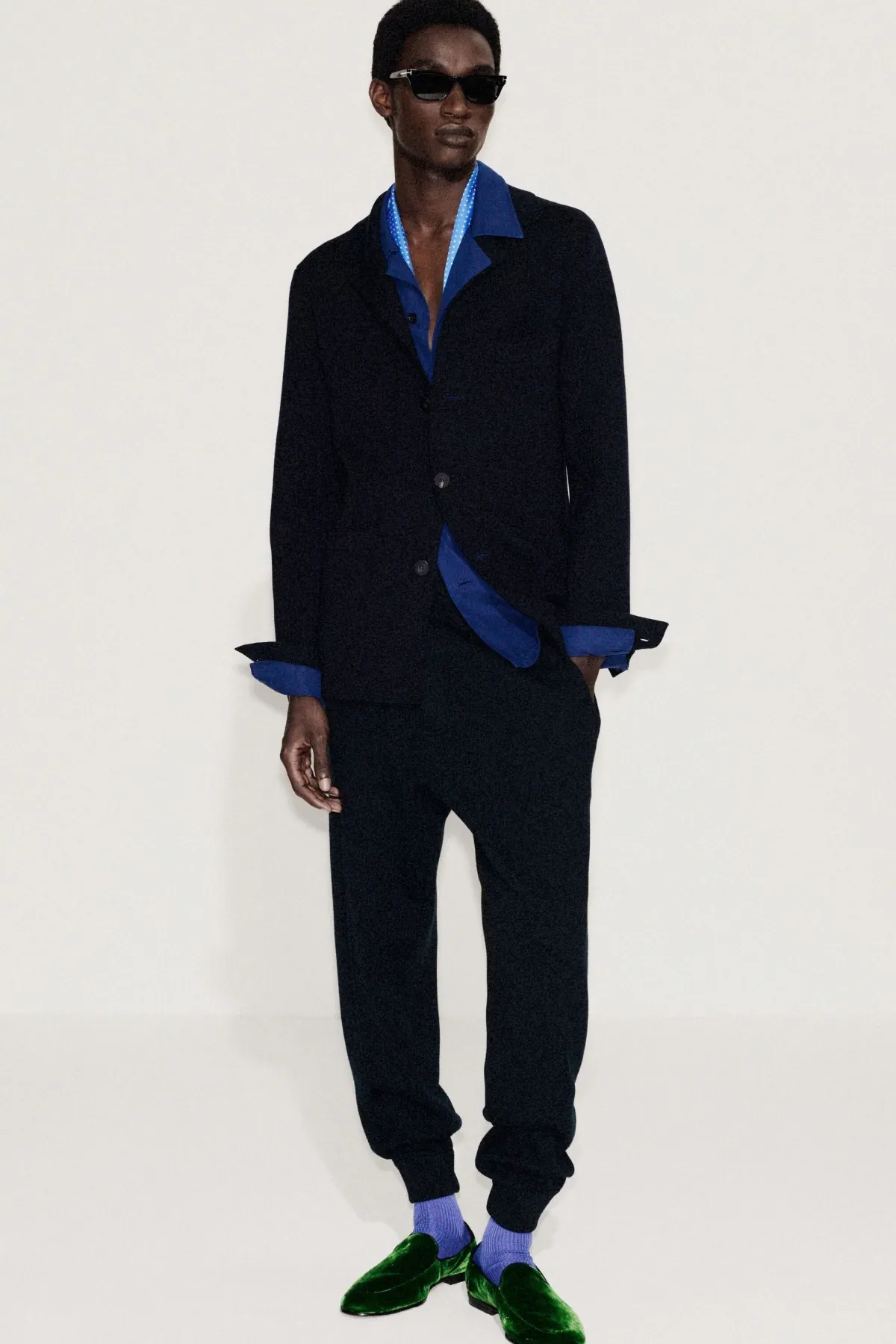


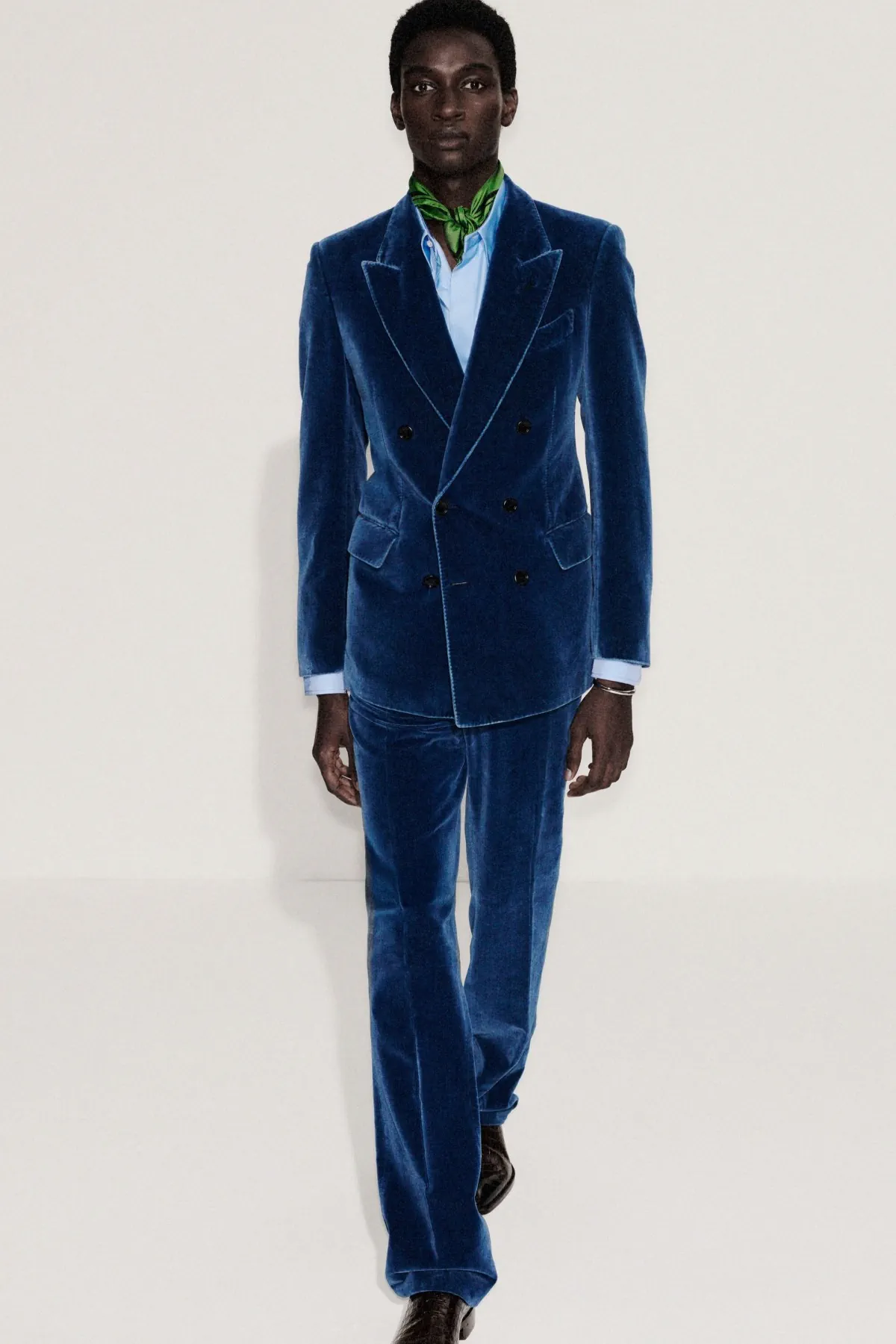
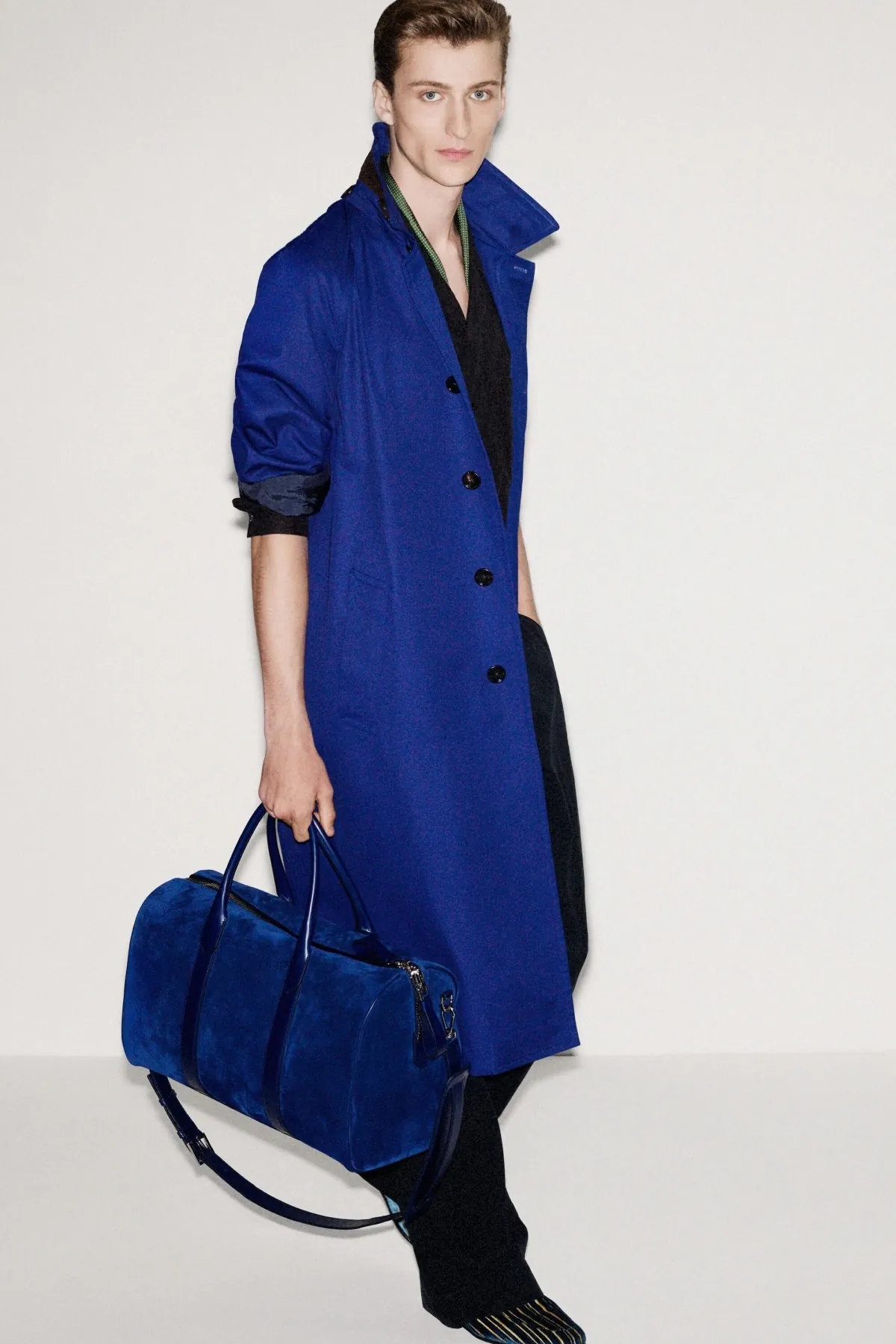
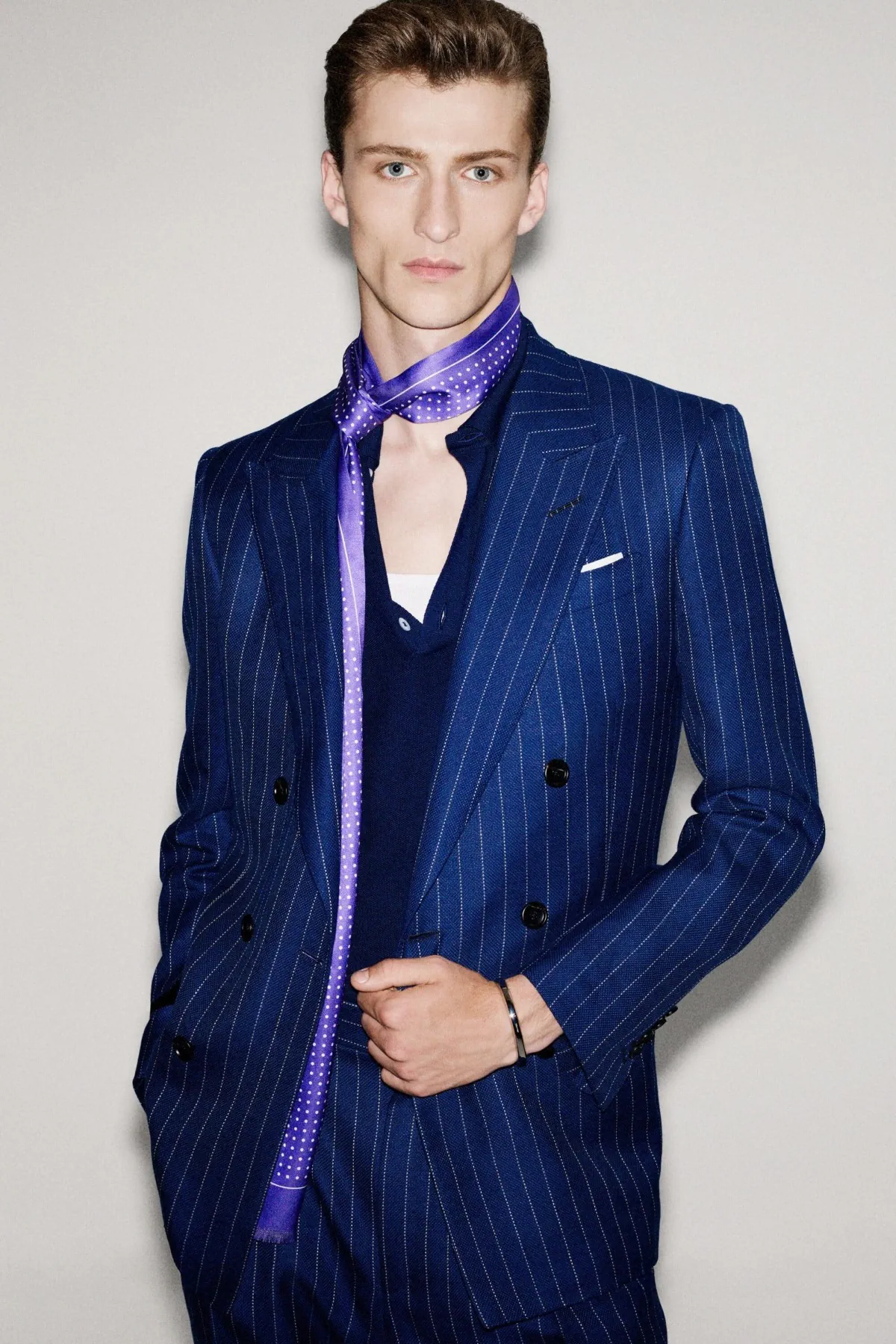
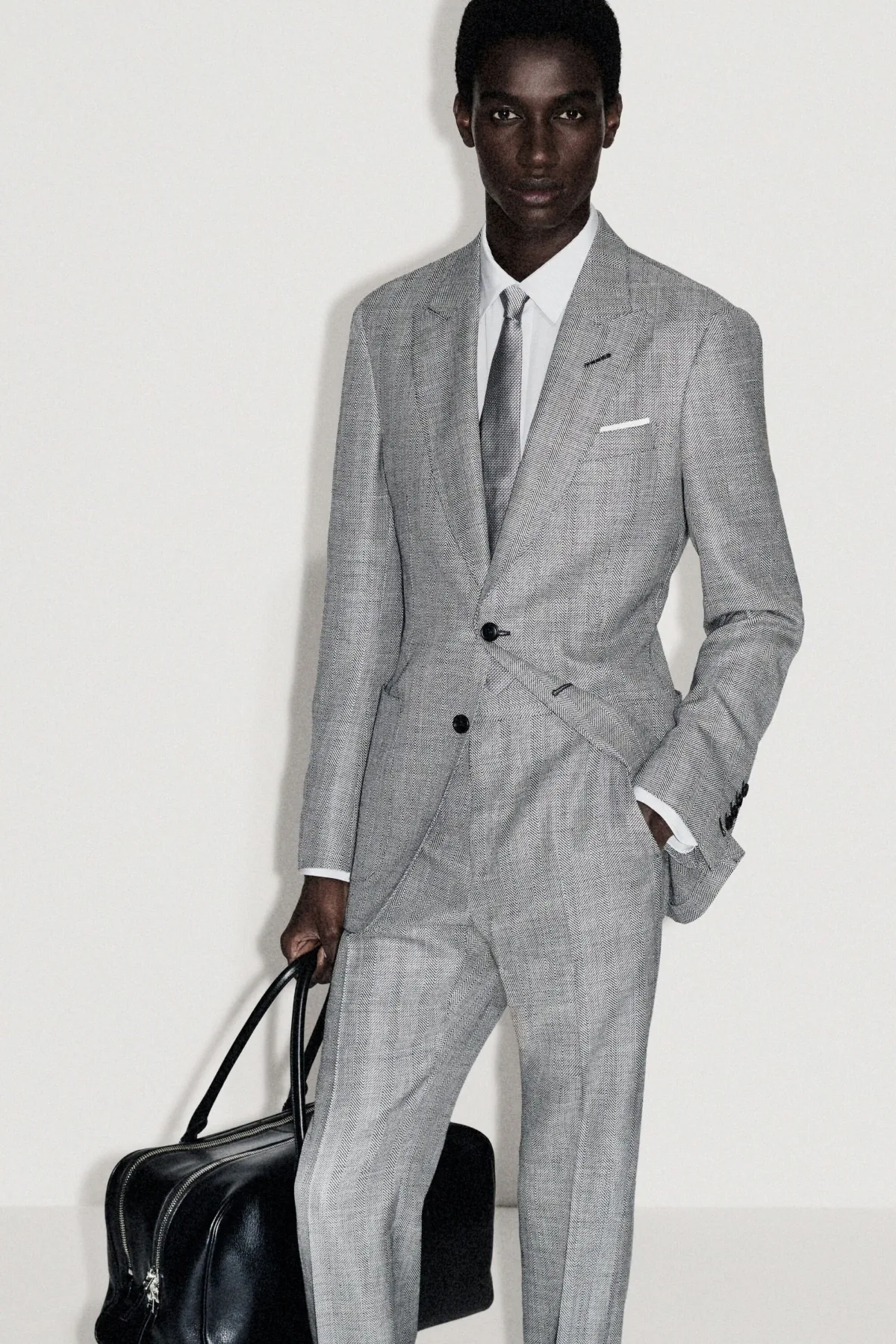
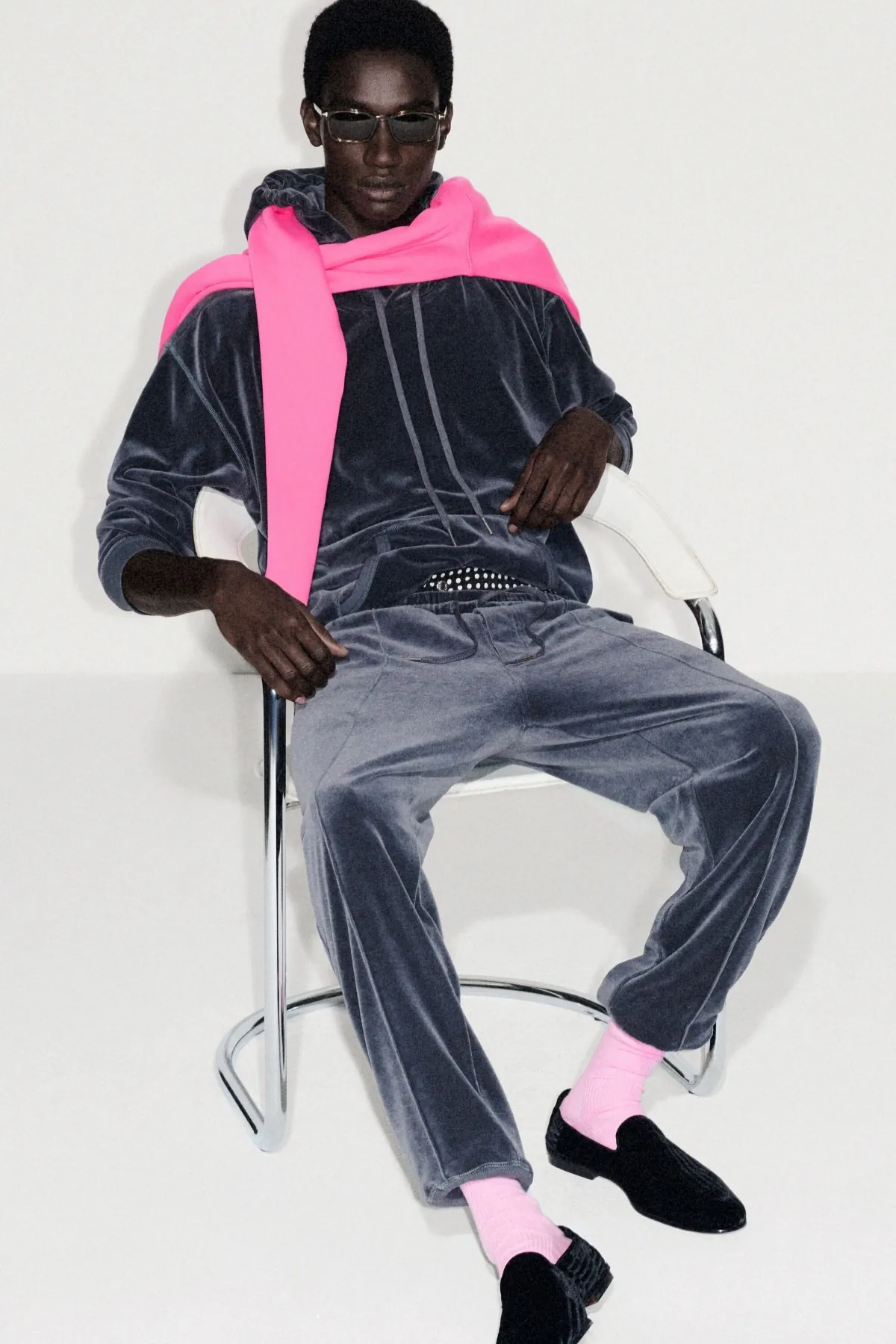


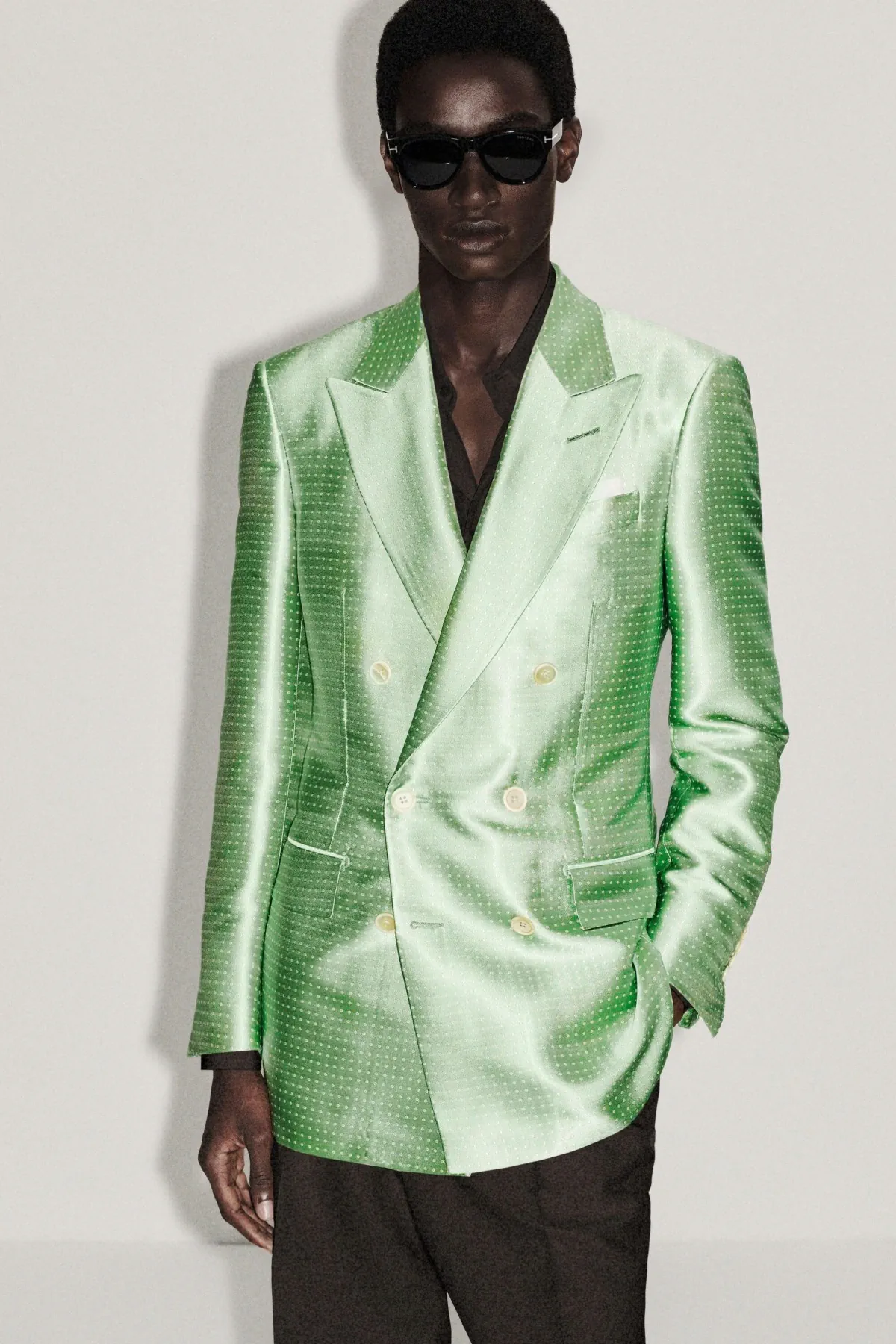


Haider Ackermann’s menswear Resort 2026 (Cruise 2026) collection for Tom Ford signals a quiet yet purposeful evolution of the house’s masculine codes. Through refined tailoring, unexpected color harmonies and a newfound fluidity, he introduces a softer form of luxury that respects the brand’s sensual legacy while steering it toward a more contemporary, lived-in elegance.

Tom Ford built an empire on distilled desire, on clothes that announced their intentions before you crossed the room. Ackermann appears to be working from a different playbook. Where the founder favored bold declarations, his successor proposes something quieter. The collection reveals this through unexpected yet considered color choices. Consider a red suede shirt layered over a lilac sweater. A blue suede blouson is paired with a yellow silk shirt. Pink socks coordinated with a matching sweater. An electric blue raincoat demands attention without raising its voice.
These are not the typical combinations one associates with Tom Ford, the brand or the man. They suggest a designer who is willing to explore the archives while refusing to be imprisoned by them.

Designers rarely acknowledge publicly the constraints that fashion operates within. This Resort collection, alongside its womenswear counterpart, was designed to hit stores shortly after reviews appeared online. That kind of timeline exerts pressure. It demands pieces that photograph well, travel efficiently through production, and translate desire into transactions. Ackermann appears comfortable working within these boundaries.
The collection broke down into three distinct groups. First came the tailored pieces, which were slimmer than Tom Ford’s original Zegna-influenced cuts. They were made of luxurious fabrics that elevated the formality. Next came preppy staples rendered in rich materials that evoke country club life without the stuffiness. Finally, robes and coordinated separates offered a deliberately rumpled ease.
Follow all the latest news from Fashionotography on Flipboard, or receive it directly in your inbox with Feeder.
Ces articles peuvent également vous intéresser
Ackermann described his approach in almost academic language: “I aim to depict a mosaic of masculine selves.” While fashion designers often make grand statements when discussing their work, this particular phrase carries weight when examining what appeared in Milan. Rather than proposing a single vision of how men should dress, the designer offered options that acknowledged different contexts and moods.
The menswear embodied what Ackermann calls “ease, nonchalance, and studied carelessness.” These three qualities share common ground but occupy slightly different territories. Ease suggests comfort. Nonchalance implies confidence. Studied carelessness reveals the work required to appear effortless. Together, these qualities describe a particular kind of luxury that the Tom Ford brand has not always pursued.

Since the beginning, leather has functioned as a foundational material for Tom Ford. Ackermann maintained this commitment, though he altered its application. Rather than using leather for bold statements and aggressive silhouettes, he used it more subtly. The material became more pliable and elegant, and more interested in texture than armor.
This shift reflects a larger change within the collection. Under its founder, Tom Ford projected strength through structure and sex through suggestion. Ackermann, on the other hand, appears more interested in fluidity and clothes that move with the body rather than shape it. Robes migrated outdoors. Pajama elements appeared in daytime outfits. Velvet slippers and oversized bags hinted at a life spent moving between cities without consulting a schedule.