

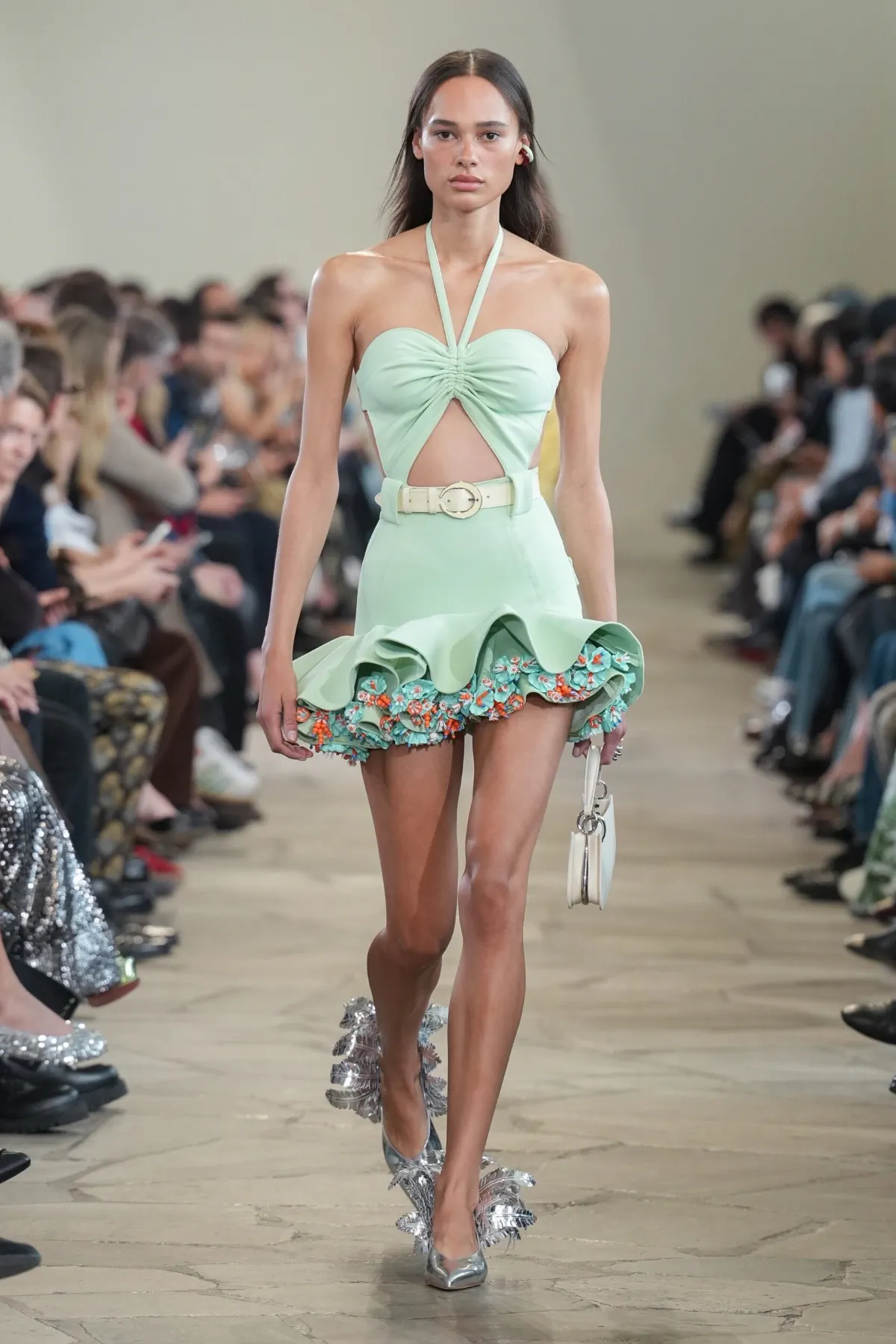
The Rabanne Spring-Summer 2026 collection was presented with a sense of optimism, looking to the sea for inspiration while staying true to the house’s futuristic codes. Drawing on his Breton upbringing, Julien Dossena recalled 1950s bathing beauties and the carefree spirit of a day at the beach.
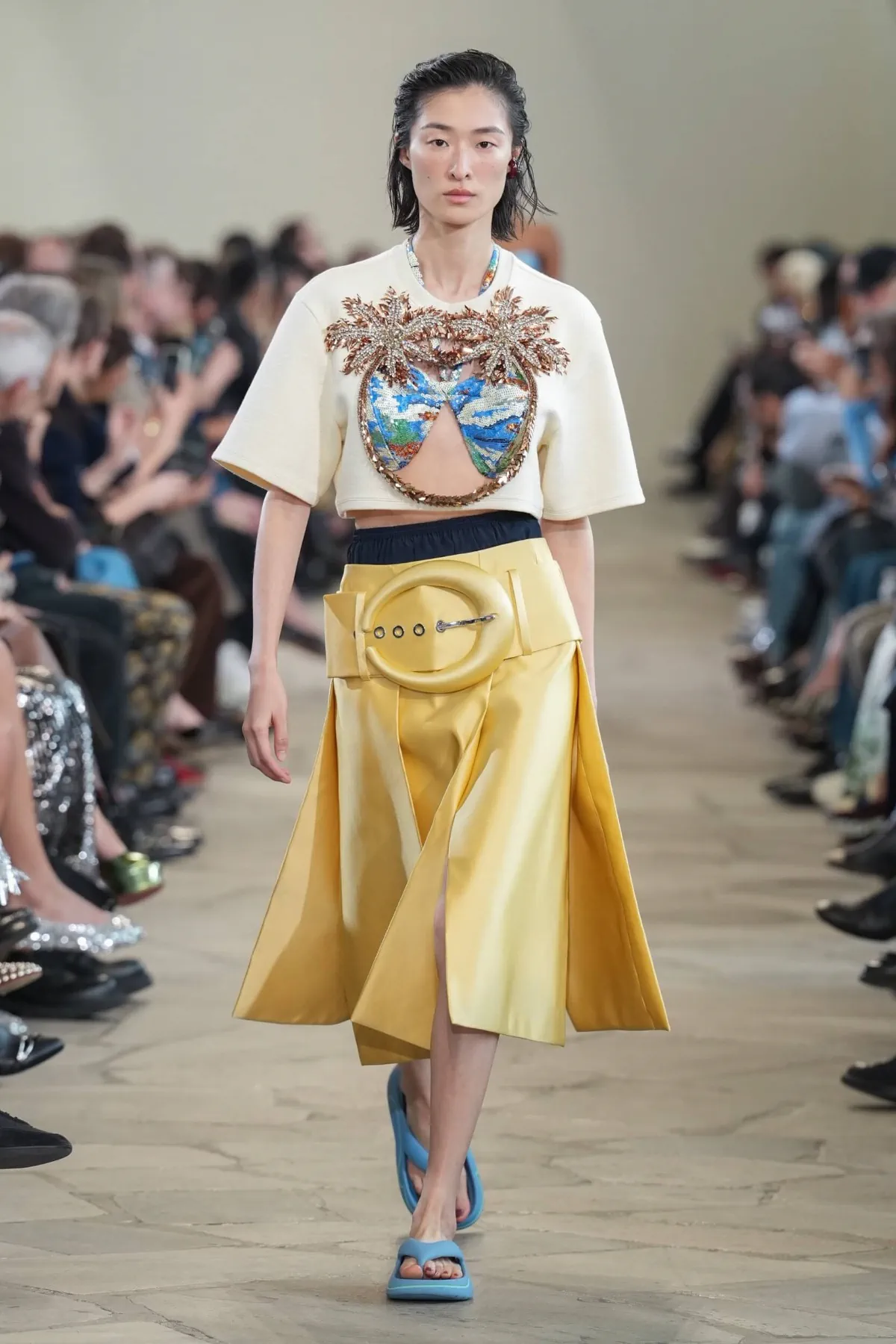
The opening looks set the tone, featuring halter tops reminiscent of vintage bikinis styled under blouses with cutout details and paired with long, flowing skirts. Embroidery shaped like sea creatures or rubber flowers, reminiscent of bathing caps from another era, appeared quickly, showcasing a focus on decoration.
Playful sea urchin patterns were scattered across red and silver beaded skirts, and flowery hems gave skater dresses a breezy charm. Pastels lifted the mood, but sparkle soon dominated with short skirts made from crinkled metallic layers that shimmered under the lights. These nods to Paco Rabanne’s Space Age legacy firmly anchored the collection in the house’s DNA.
Follow all the latest news from Fashionotography on Flipboard, or receive it directly in your inbox with Feeder.
You might also read

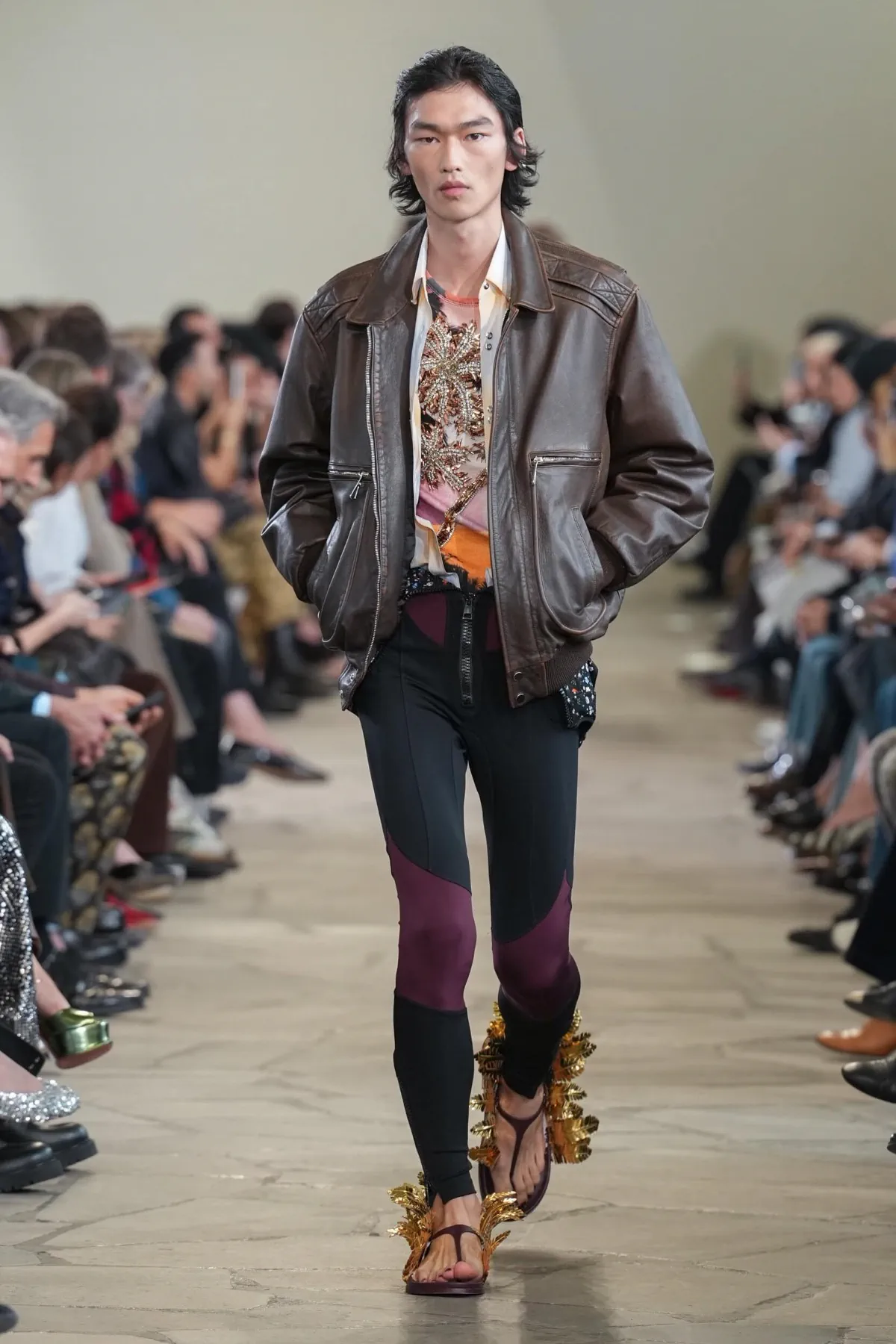
Dossena pushed contrasts by pairing a gold metallic miniskirt with a striped polo shirt, suggesting a sporty mermaid aesthetic. Silver ruffles emerged beneath a yellow minidress, and metallic fringe adorned tutus and airy blue dresses with rough-cut sleeves. The creative director explained that he wanted the clothing to look improvised, as if it had been thrown together for a day at the beach. This concept was evident in the ragged edges, open-sided skirts tied loosely with knots, and casual layers that appeared deliberately unfinished.
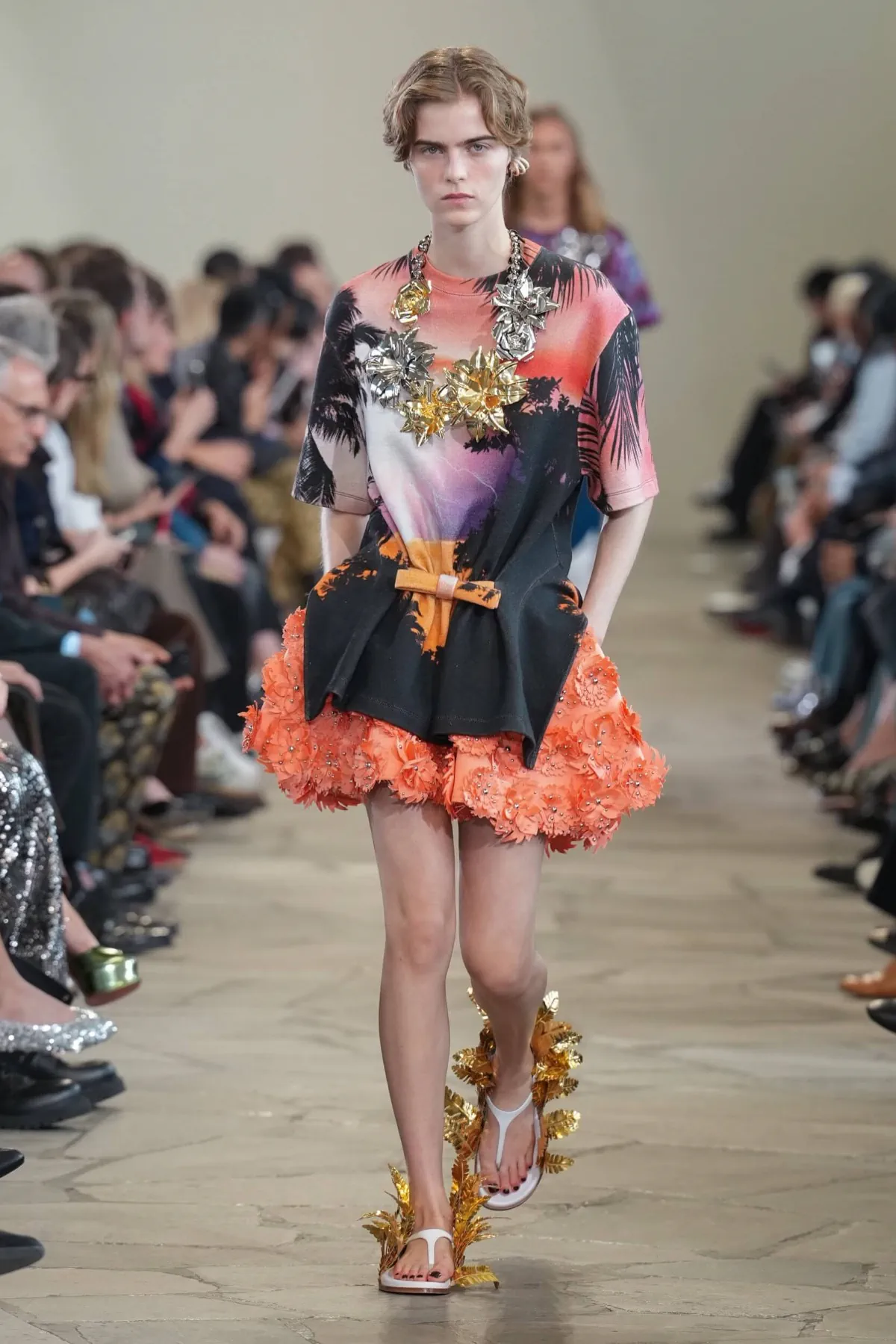
Attention extended to the accessories. Shoes became part of the spectacle, adorned with metallic leather leaves that wrapped around heels and sandals, creating the illusion of walking on a ground covered in palms. From high heels to flip-flops, the footwear contributed to the beach atmosphere while maintaining an inventive, almost sculptural quality.
While some looks were overburdened with embellishments—such as fringe, sequins, embroidery, and metallic textures competing for attention—the strongest pieces were those left in their simplest form. A clear line could be seen between Dossena’s desire to celebrate decoration and his instinct for restraint.

The show reaffirmed Rabanne’s dual spirit, rooted in futurism yet softened by nostalgia. Dossena embraced the joy of summer dressing without losing sight of structure or innovation. His ability to reinterpret the house’s metallic codes for a new season brought coherence to a collection oscillating between playful excess and sharp clarity.