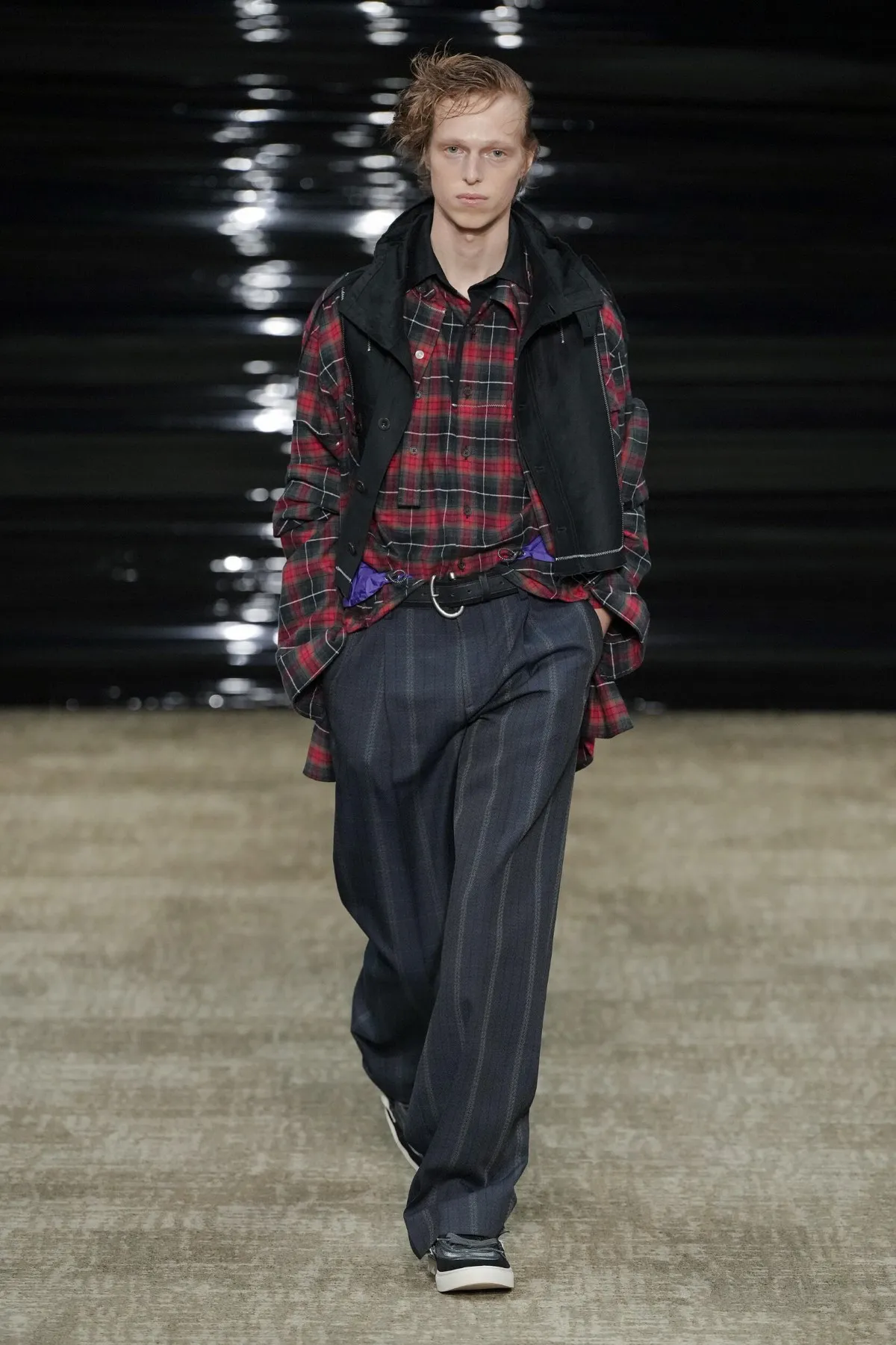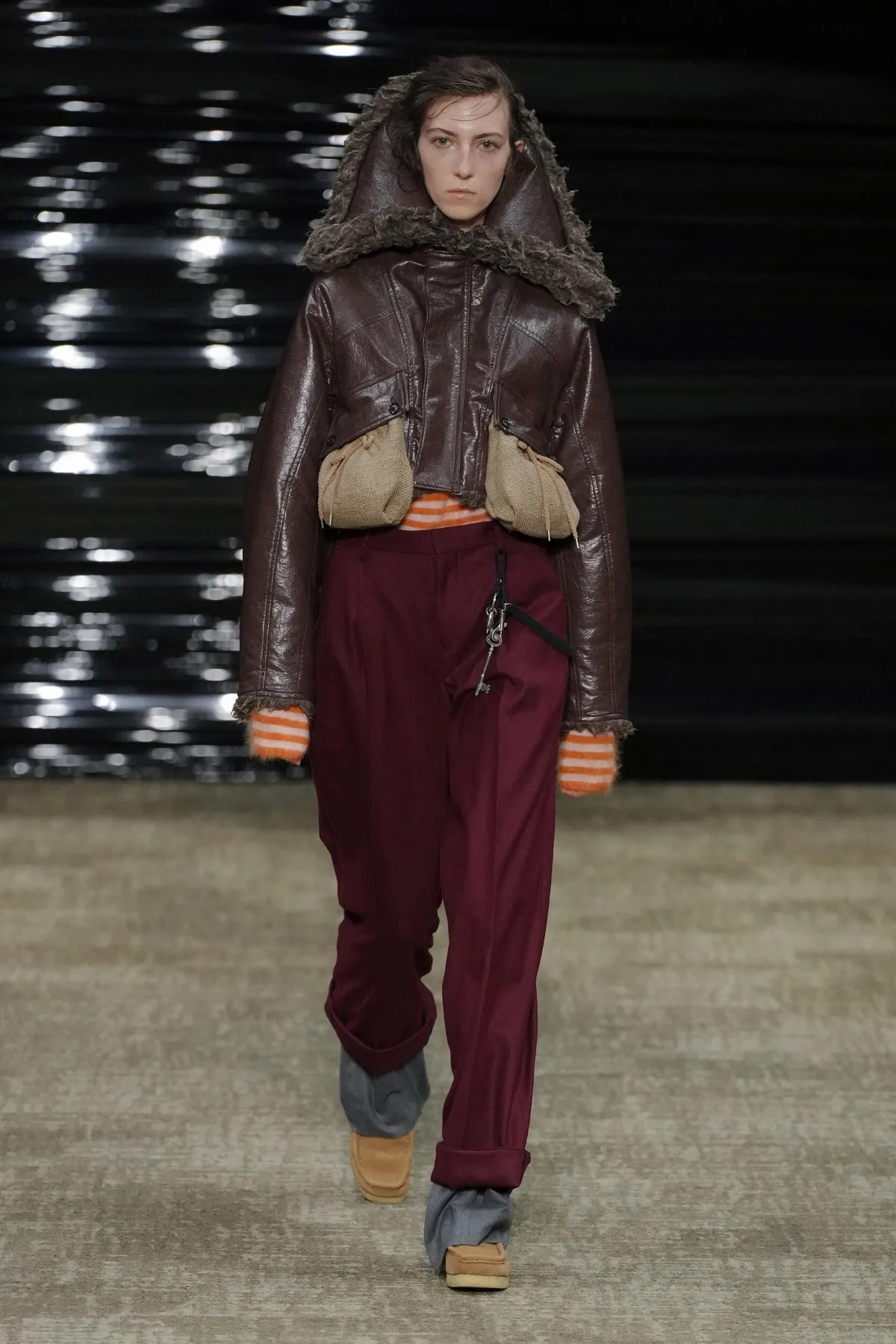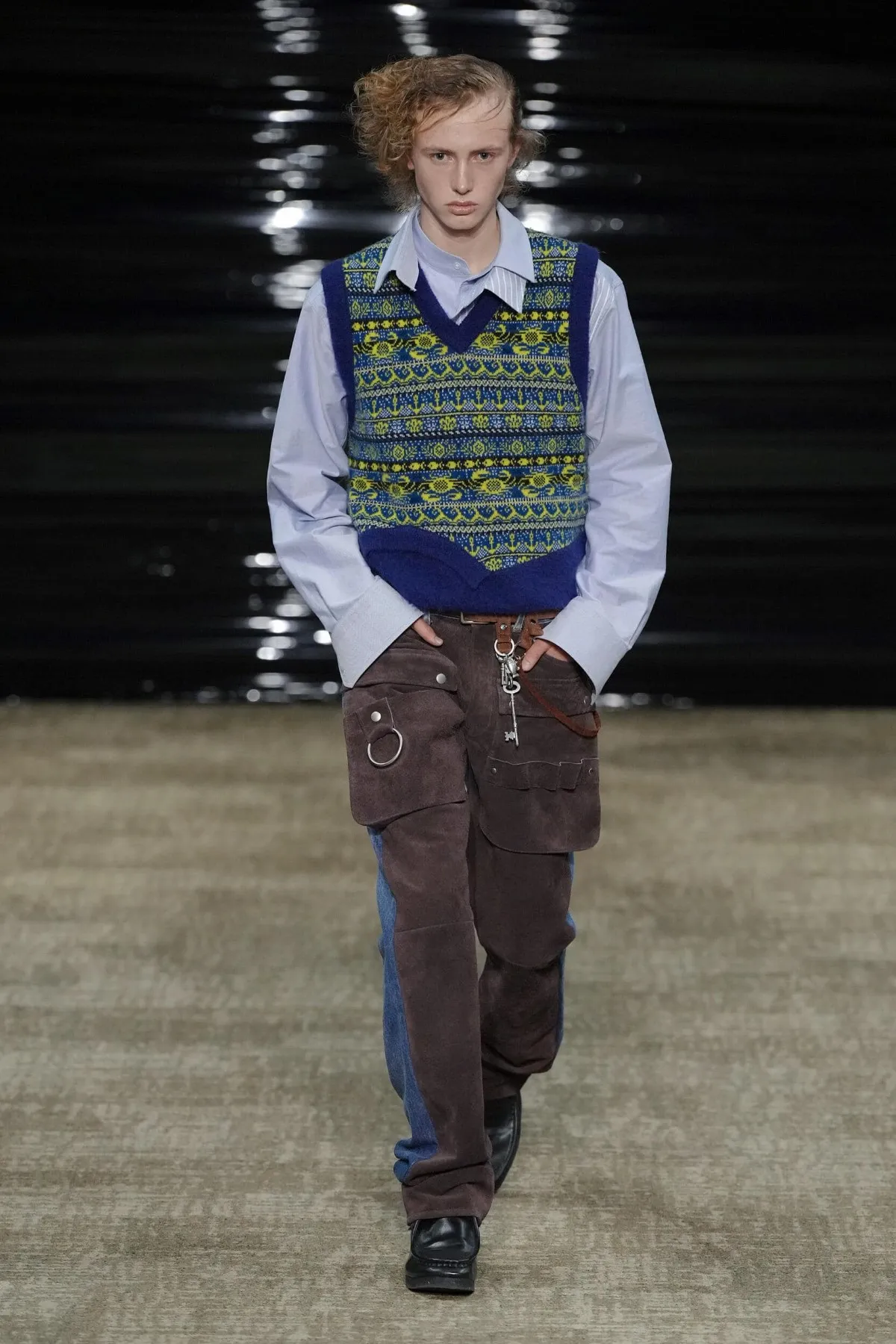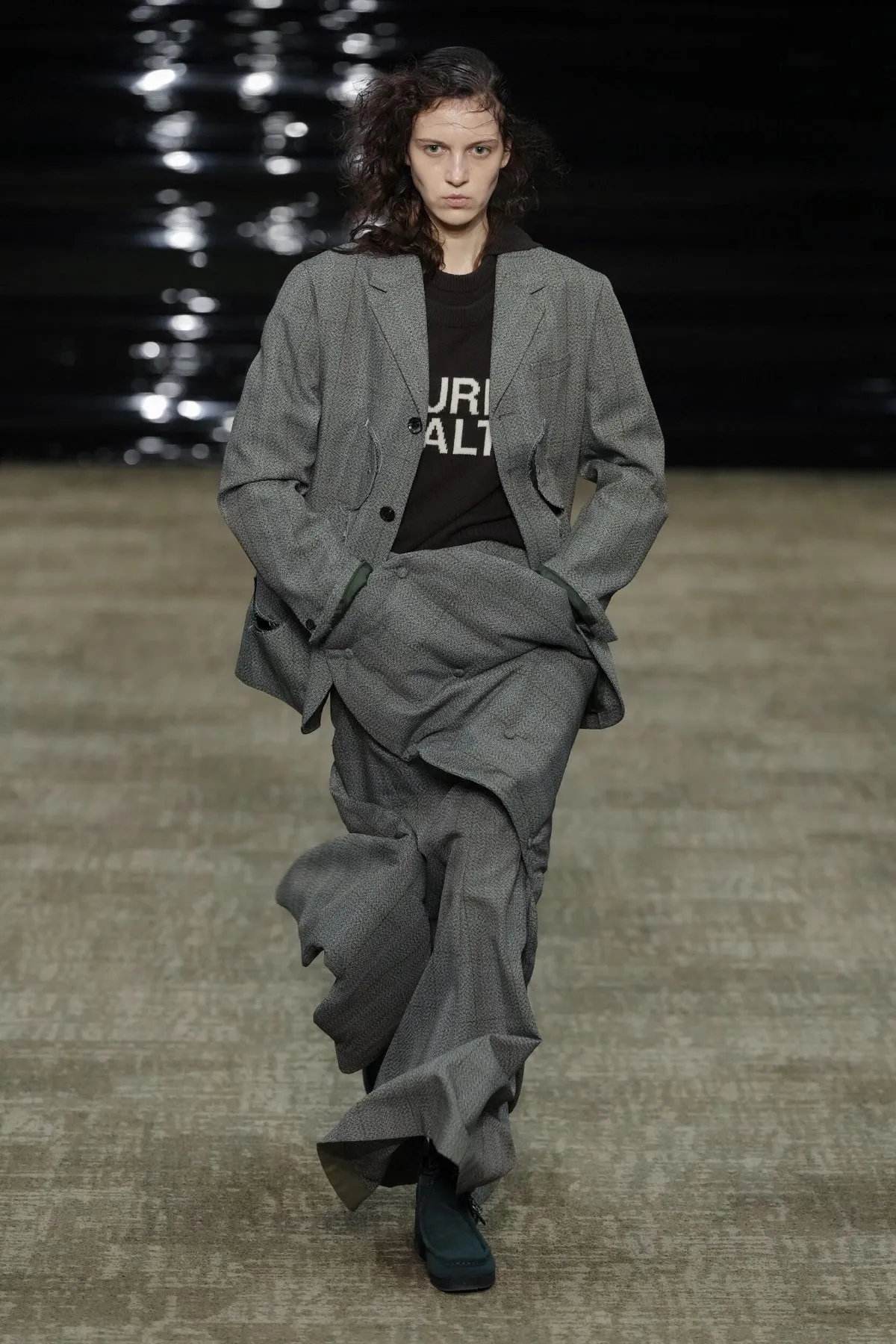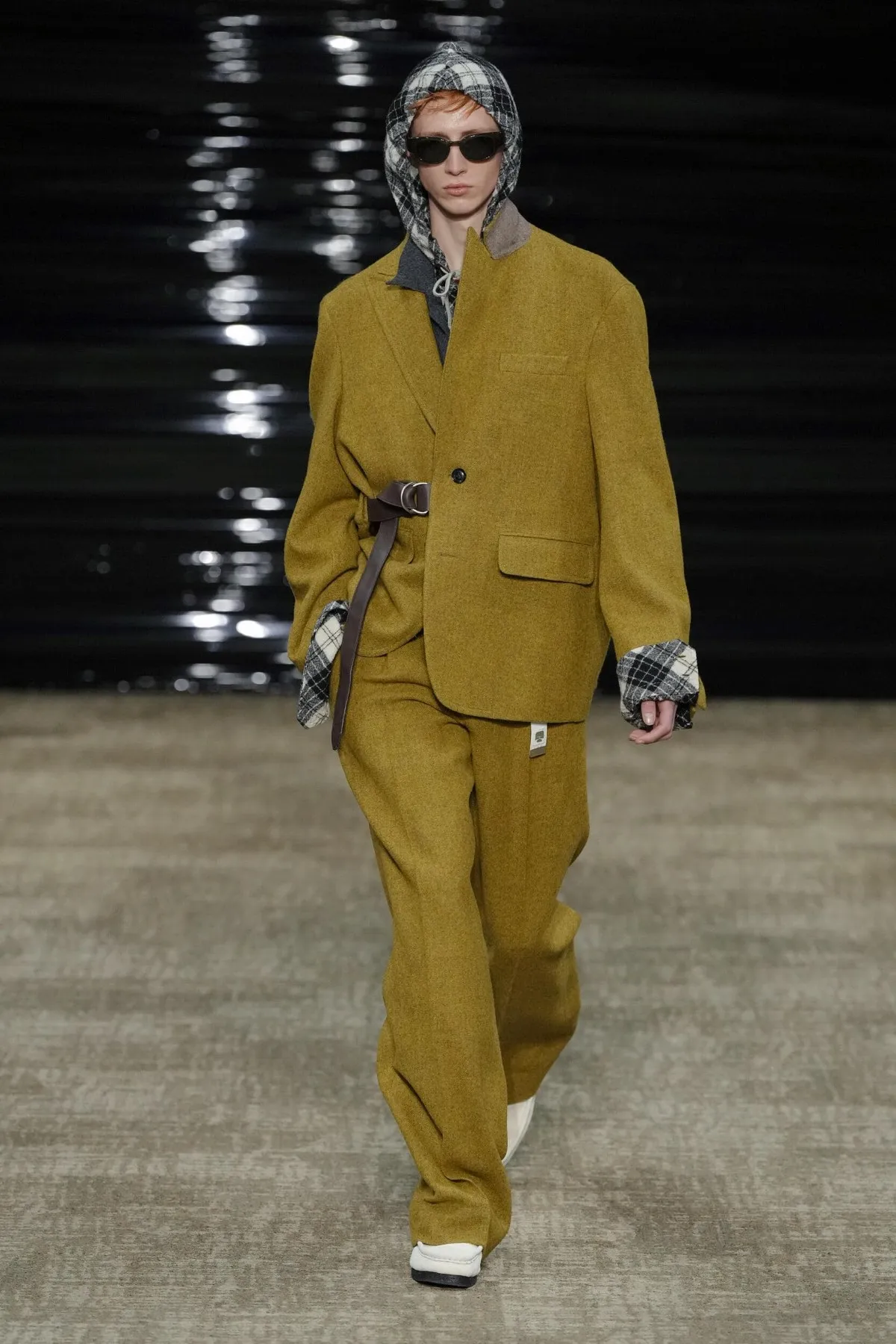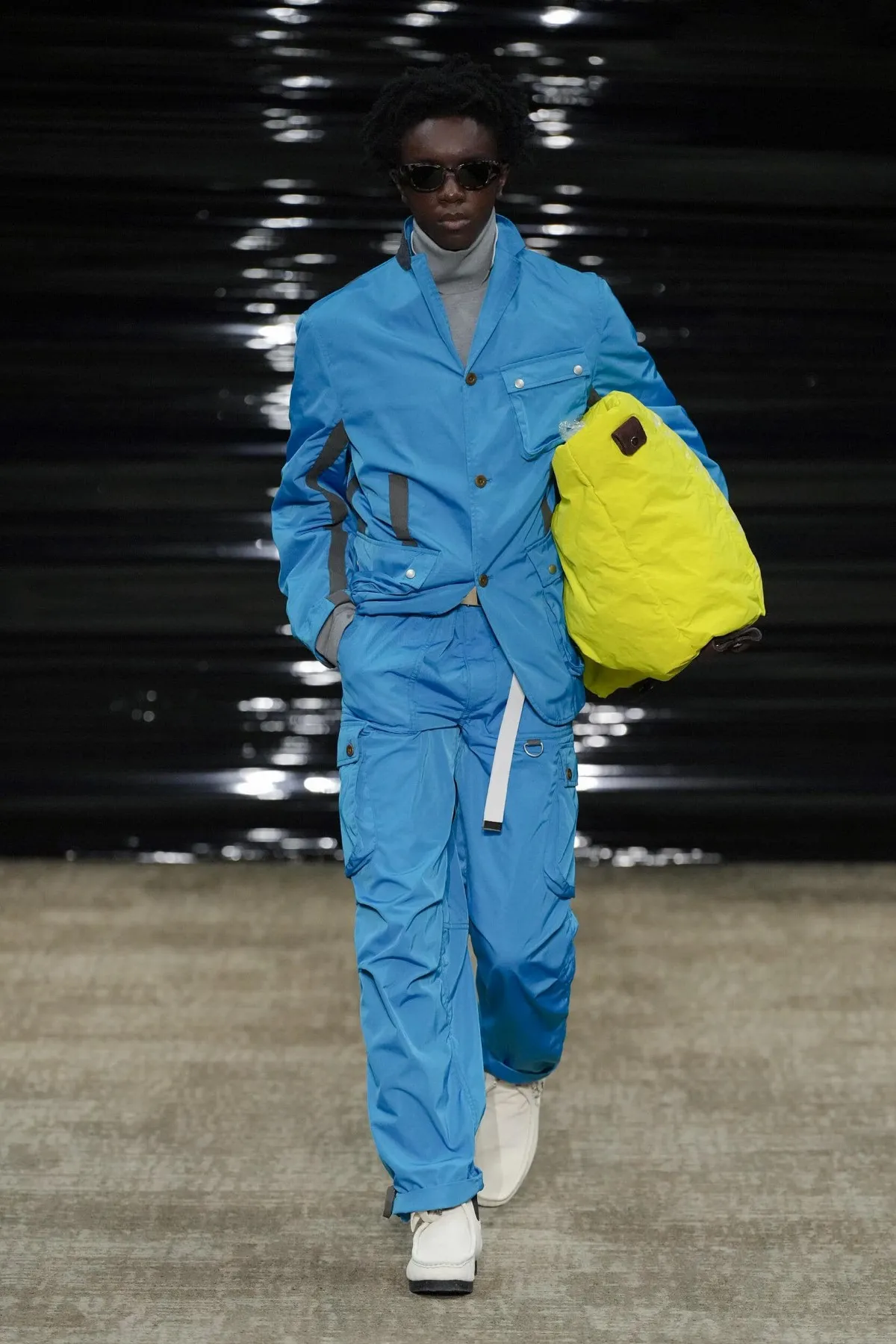

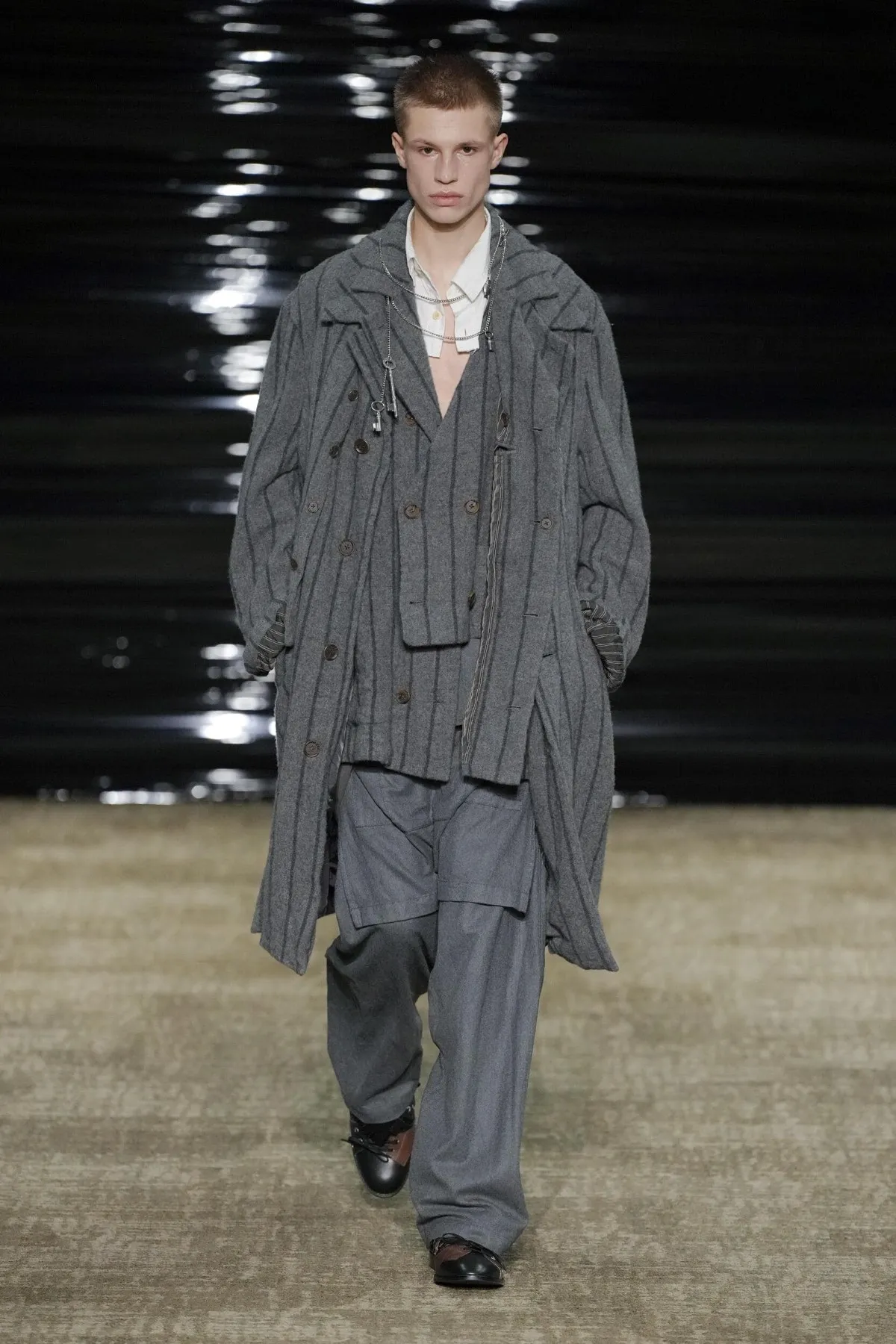
Taro Horiuchi’s Fall 2026 collection for Kolor navigates uncharted waters with quiet confidence, intertwining nautical motifs and existential inquiries into a lineup that feels both grounded and forward-looking. Now in his second season at the helm of the Tokyo-based label, the Japanese designer uses the language of seafaring – storms, shipwrecks, and distant horizons— – not as mere decoration, but as a framework for understanding transition itself. His work arrives at a time when the fashion industry is grappling with rapid technological change and shifting cultural tides. Horiuchi responds not with spectacle, but with thoughtful construction.
| 📌 Key Facts |
|---|
| ⚓ Collection: Kolor Fall 2026 Menswear 👤 Designer: Taro Horiuchi (second season at Kolor) 🧵 Core Themes: Nautical symbolism, craft, restraint, uncertainty 🤖 Technology Angle: AI used for soundtrack, not garment design 🎨 Color Evolution: From stormy greys to sky blue, metallics, and yellow 🧩 Design Approach: Modular garments engineered as single pieces 🌍 Industry Context: Fashion responding to AI and cultural instability |
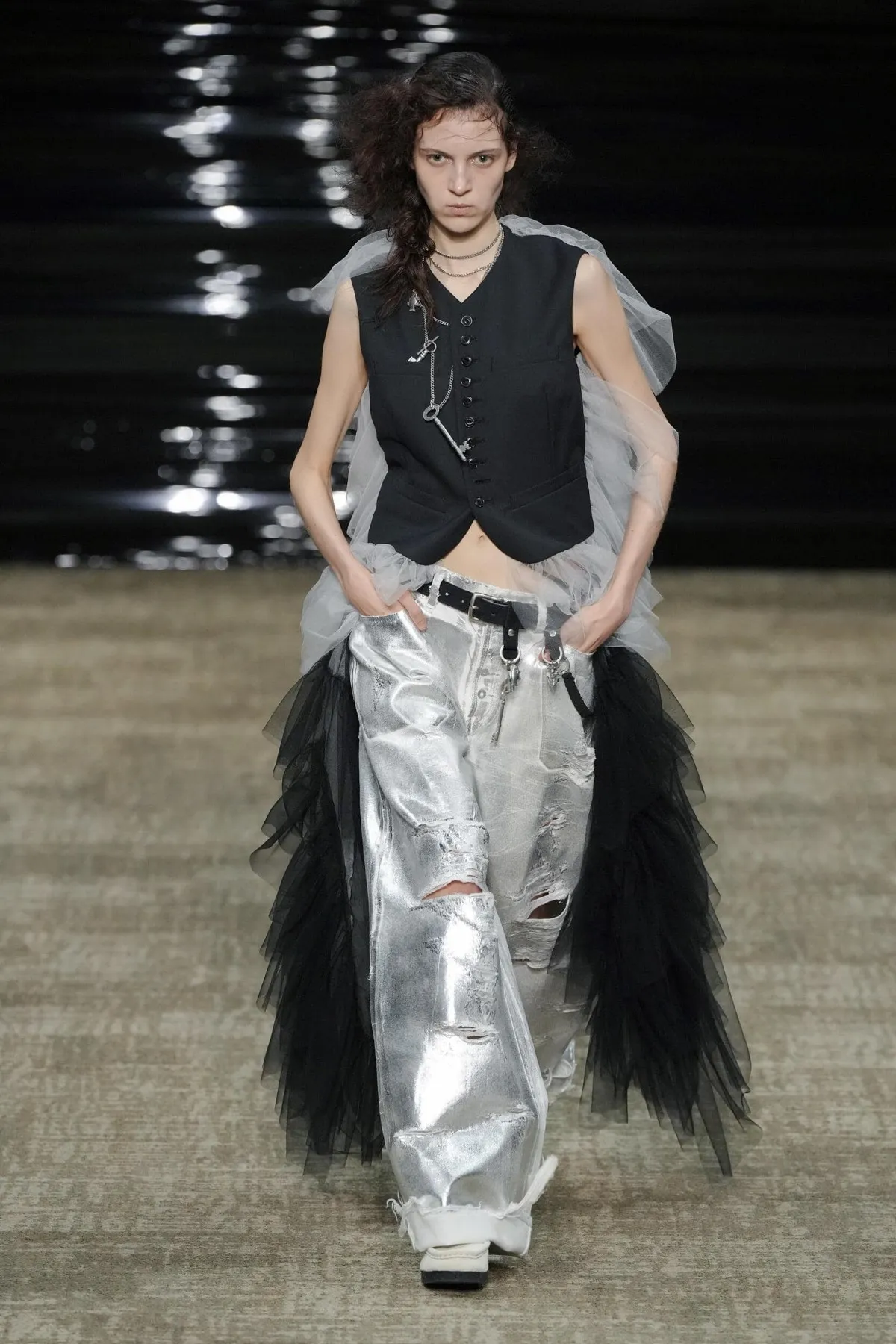
The show opened with heavy wool suiting and Edwardian-inspired tailoring with exposed stitching that evoked maritime workwear. This contrasted nicely with Abe’s restrained Fall/Winter 2024 tailoring. These early pieces carried the weight of uncertainty; their distressed surfaces suggested garments pulled from wreckage rather than stitched in calm. Horiuchi drew from literary and cinematic sources – Herman Melville’s Moby-Dick and Robert Eggers’s The Lighthouse – to explore fear and resilience. Yet he avoided literal interpretation. Instead, he embedded references in subtle details: peplums shaped like buoy belts, ropes repurposed as fastenings, and capes cut from technical jersey rather than traditional wool.
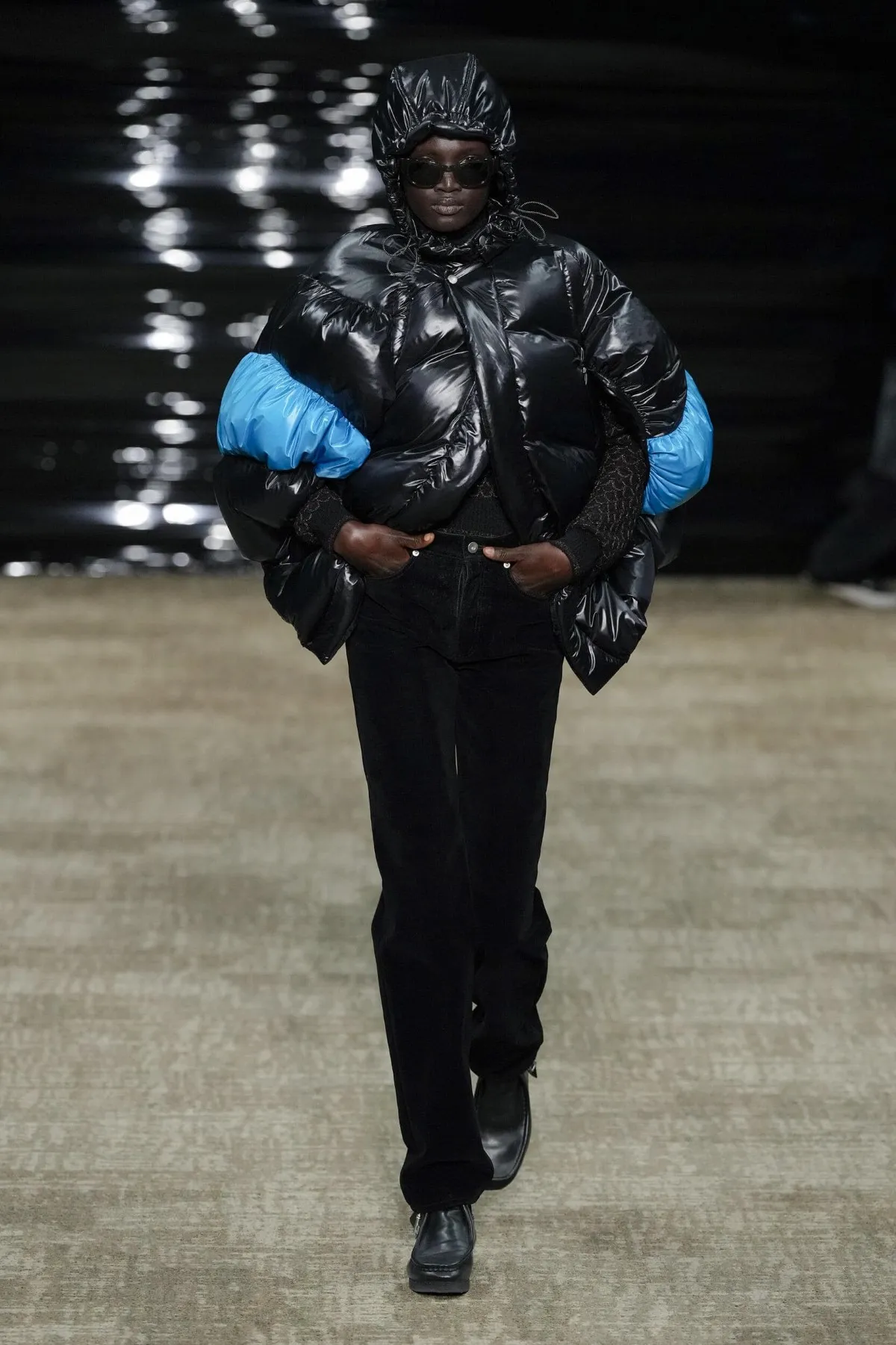
What distinguishes this collection is its restraint. Unlike Junichi Abe, the founder of kolor, whose farewell collection marked the end of an era, Horiuchi works within a tighter vocabulary. Abe’s designs often leaned into eccentric layering and bold juxtapositions. He honors the house’s legacy of modular dressing – garments designed to be worn together or apart – but streamlines it. Many complex-looking outfits were actually single pieces engineered to mimic layered ensembles – a clever solution that speaks to both practicality and conceptual clarity.
Follow all the latest news from Fashionotography on Flipboard, or receive it directly in your inbox with Feeder.
You might also read
Midway through the presentation, the color scheme changed. Stormy grays gave way to iridescent metallics, sky-blue nylon, and a vivid yellow duffel coat that signaled calmer seas ahead. This tonal evolution mirrored Horiuchi’s own stance on creative leadership: cautious optimism. Backstage, he acknowledged the anxiety stirred by the growing role of artificial intelligence in design and culture. He even used AI to compose the show’s soundtrack: a retro jazz piece that felt uncannily human. The tension between the handmade and the algorithmic runs beneath the surface of the collection, never overt, but always present.
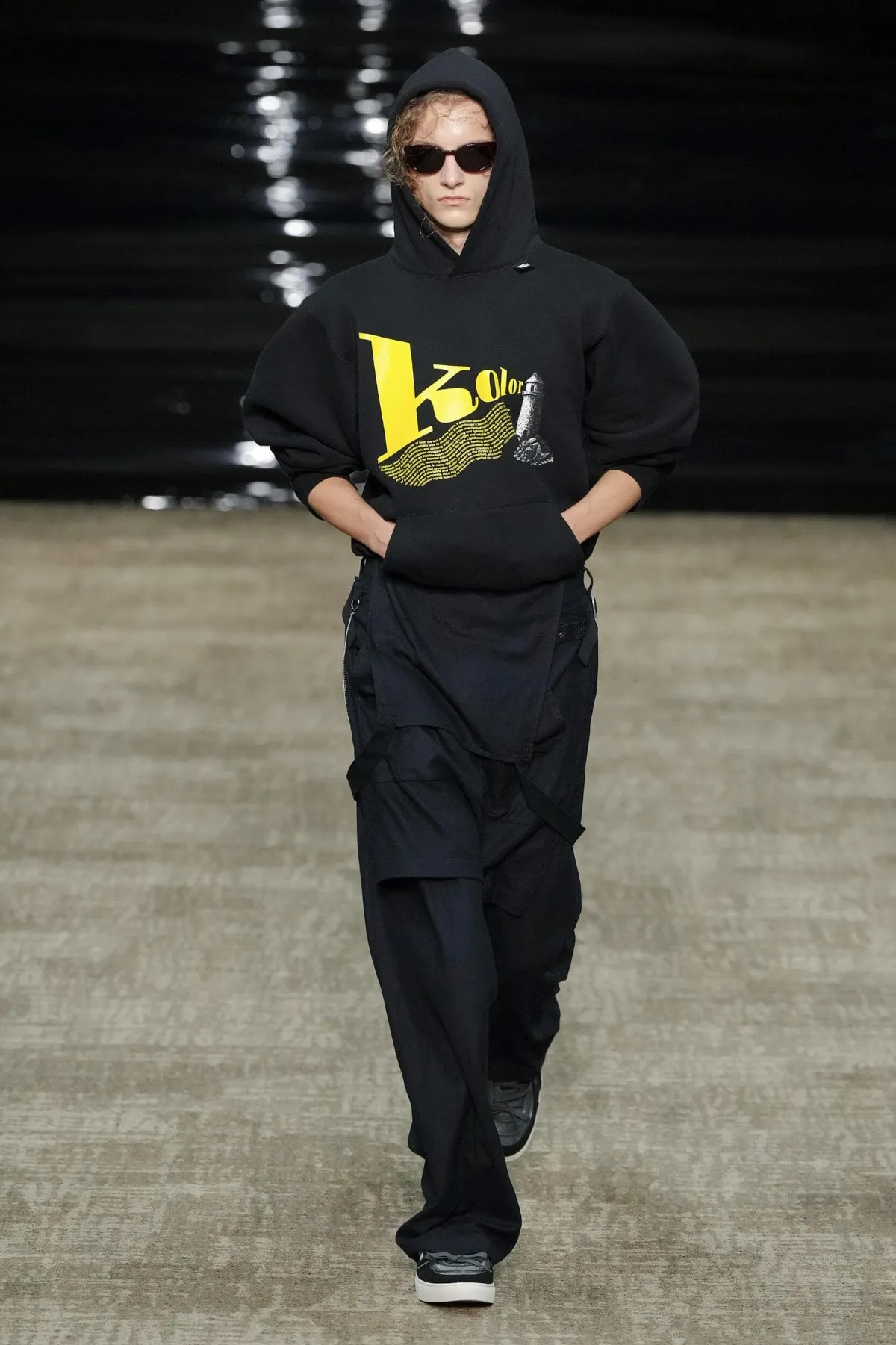
Horiuchi does not position himself as a disruptor. He sees his role less as revolutionizing Kolor and more as guiding it through a period of flux. His approach reflects a broader shift in fashion where designers are expected to create desirable clothes and articulate a worldview. In Horiuchi’s case, that worldview is one of humility in the face of the unknown. He makes no grand pronouncements, only carefully considered garments that suggest endurance rather than escape.