
The question mark in the title is significant. Prabal Gurung launched his New York Fashion Week show amid a cultural atmosphere that, by his own account, feels fractured and accelerating. Rather than retreating into pure sentiment, he reimagined the concept of home as something more profound: not just where you sleep, but where you were forged.
| 📌 Key Facts |
|---|
| 🧵 The collection centers on structured suiting and ceremonial eveningwear 🌍 Nepalese heritage shapes lace, draping and symbolism 💎 Pearls and emeralds are worn as protective elements 🎨 Primary colors give way to deeper jewel tones 📉 Immigration anxiety and tariffs influence the brand’s outlook 🏛️ The title’s question mark signals uncertainty about belonging |
For Gurung, the answer begins in Nepal. He grew up in a country where temple bells, shamans, Catholic nuns, and Sufi traditions coexisted in the same neighborhoods without apparent contradiction. This kind of religious and cultural coexistence, deeply layered, shaped his character and the way he thinks about designing clothes.
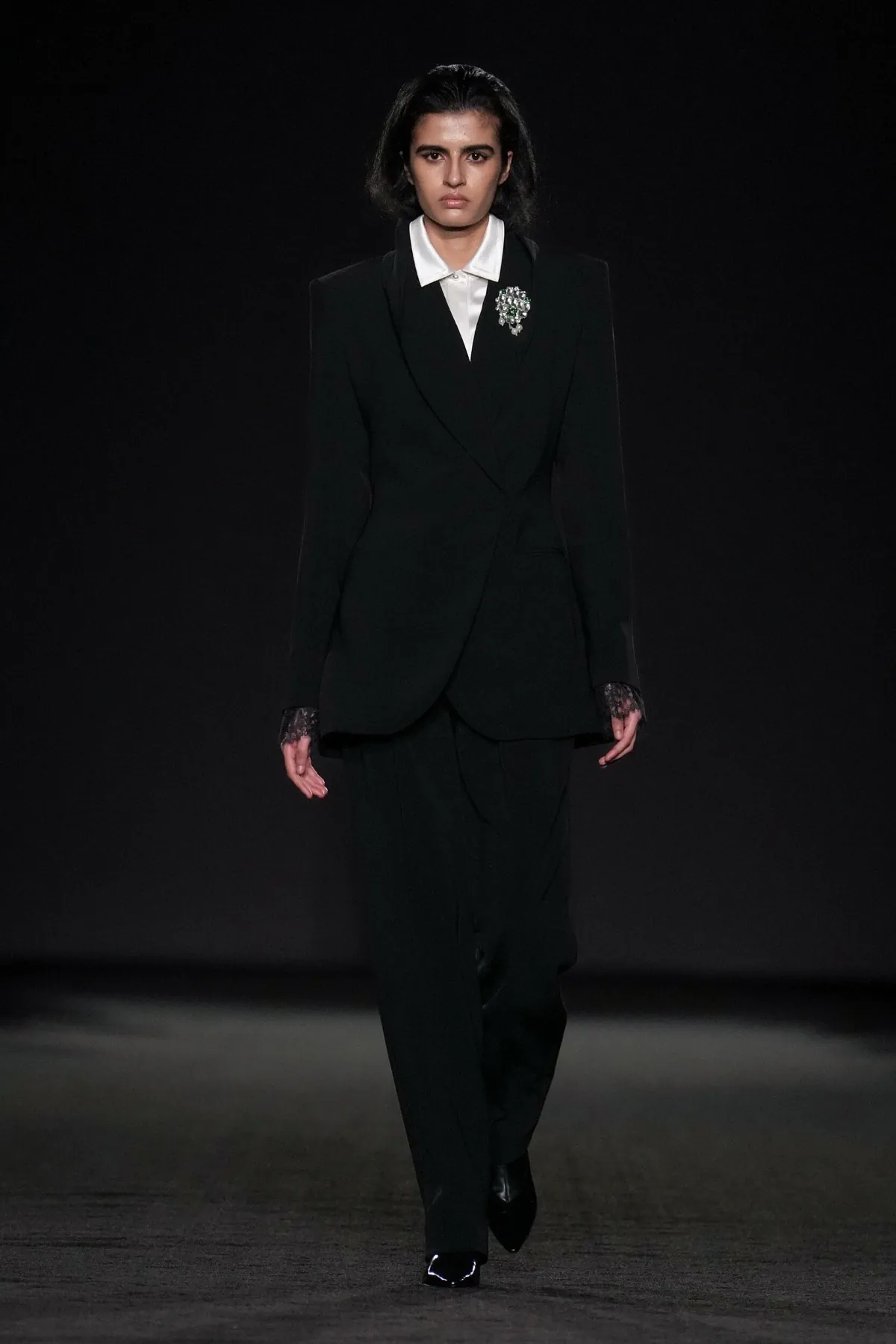
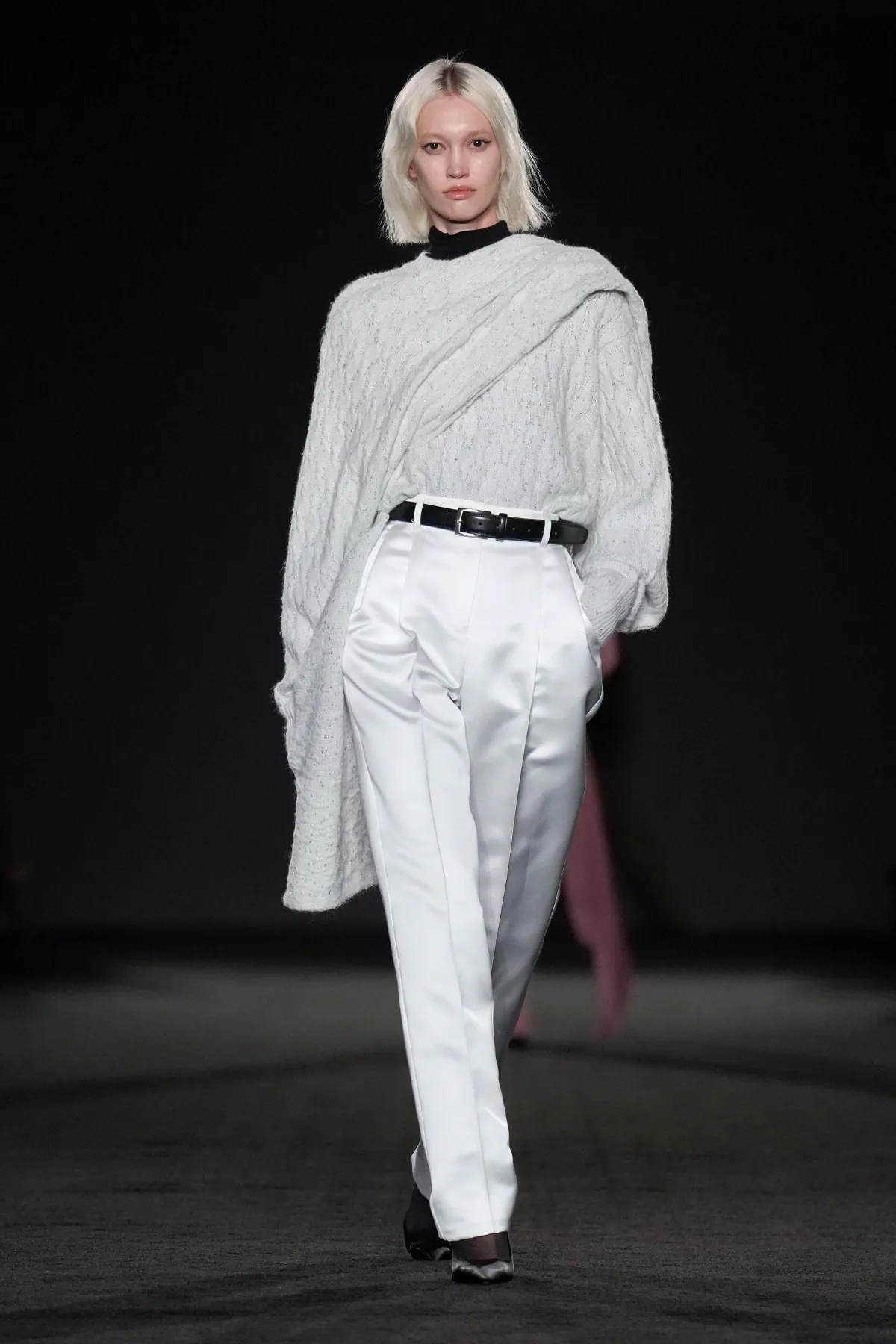
The Fall 2026 collection opened with suiting, the terrain Gurung feels most at home with. The black-and-white suits were structured yet softly draped, with delicate stitching along the lapels and hems. They were not boardroom armor. They were more like a rethought uniform, referencing the British Catholic boarding school he attended as a boy where discipline and beauty coexisted.
Coats were another anchor. Quilted and voluminous, they evoked the duvets and school blankets of his childhood. Lace trimmed the sleeves of the opening blazers, reminiscent of the needlework produced by the nuns at his school. These were clothes that carried memory without being consumed by it.
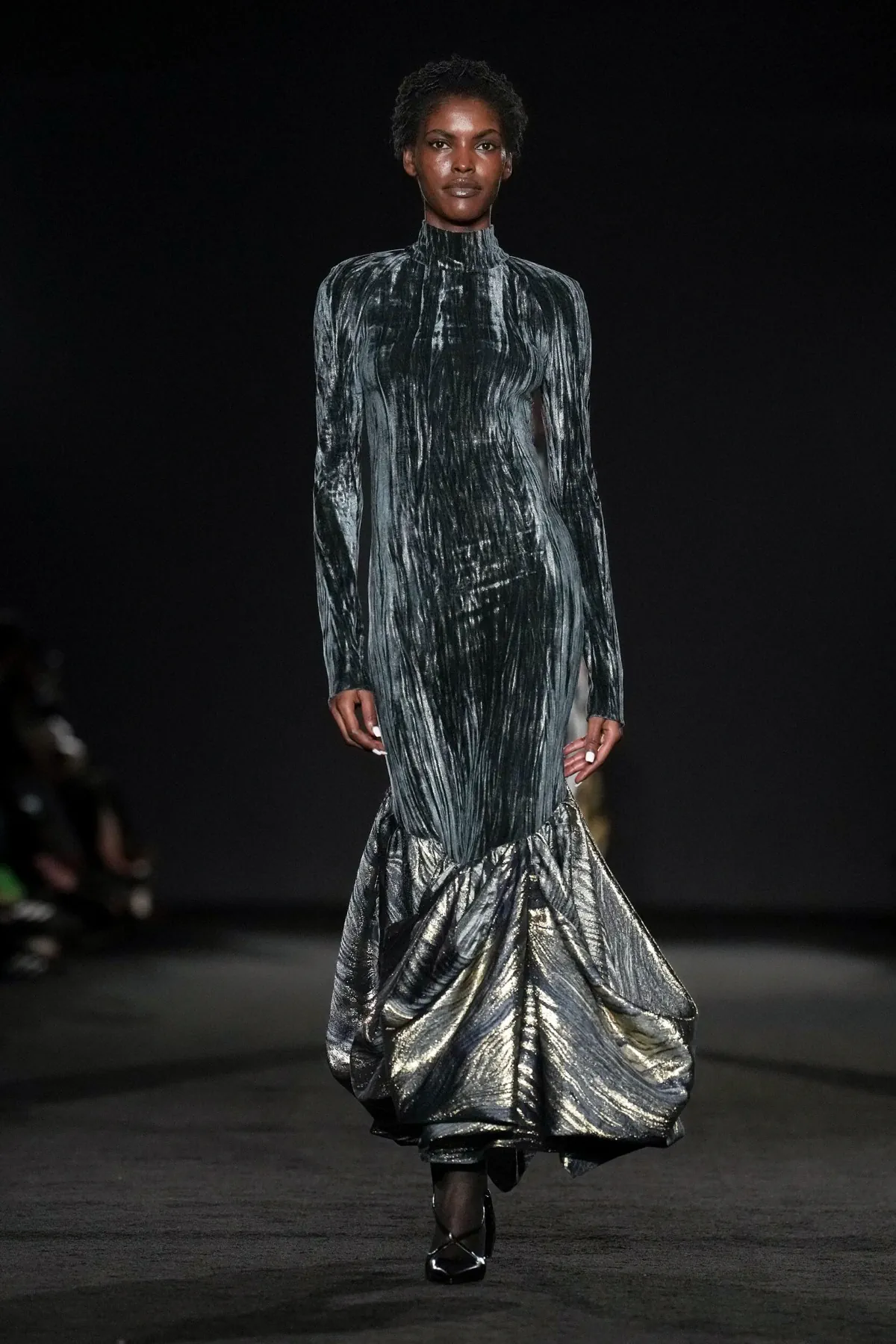
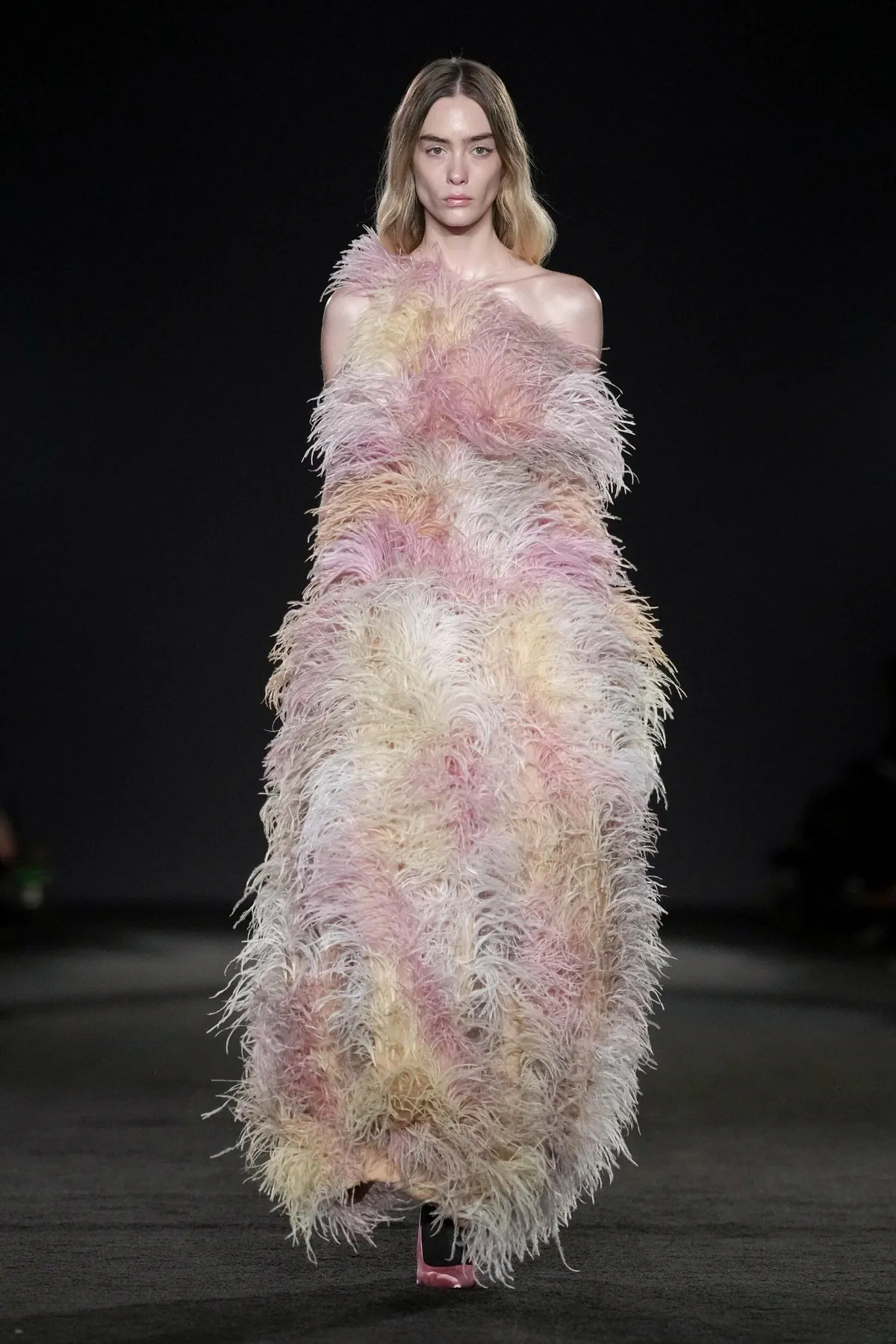
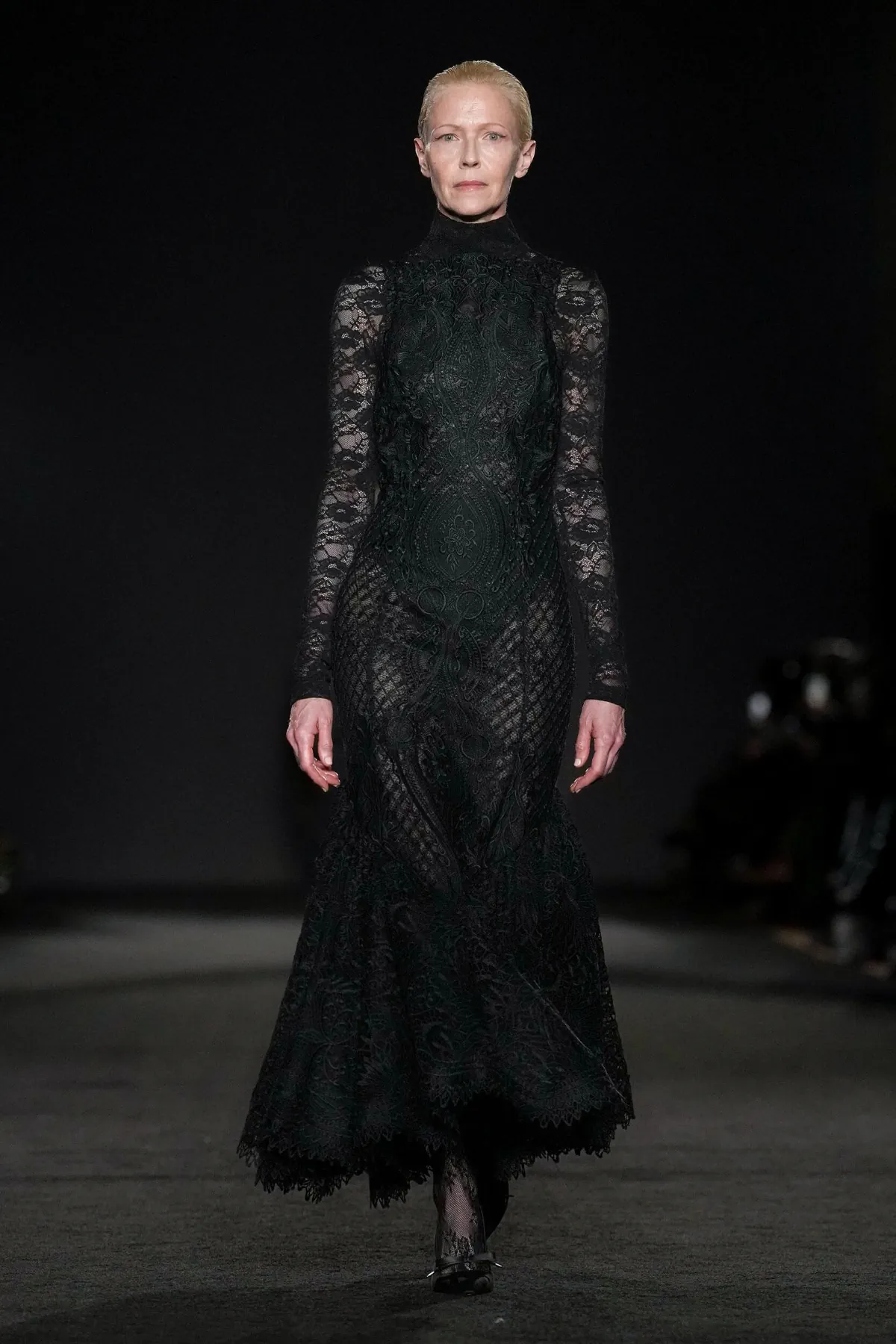
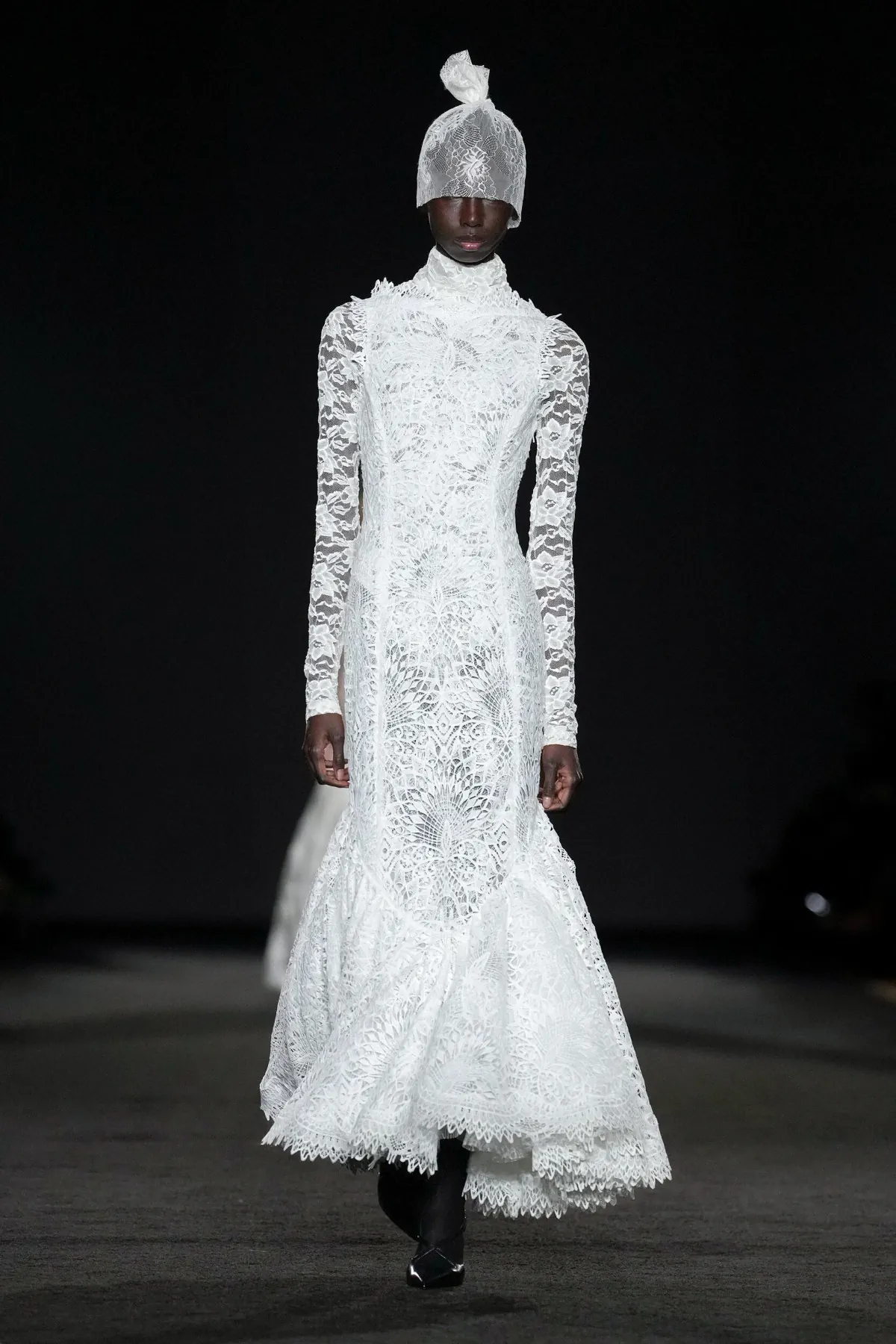
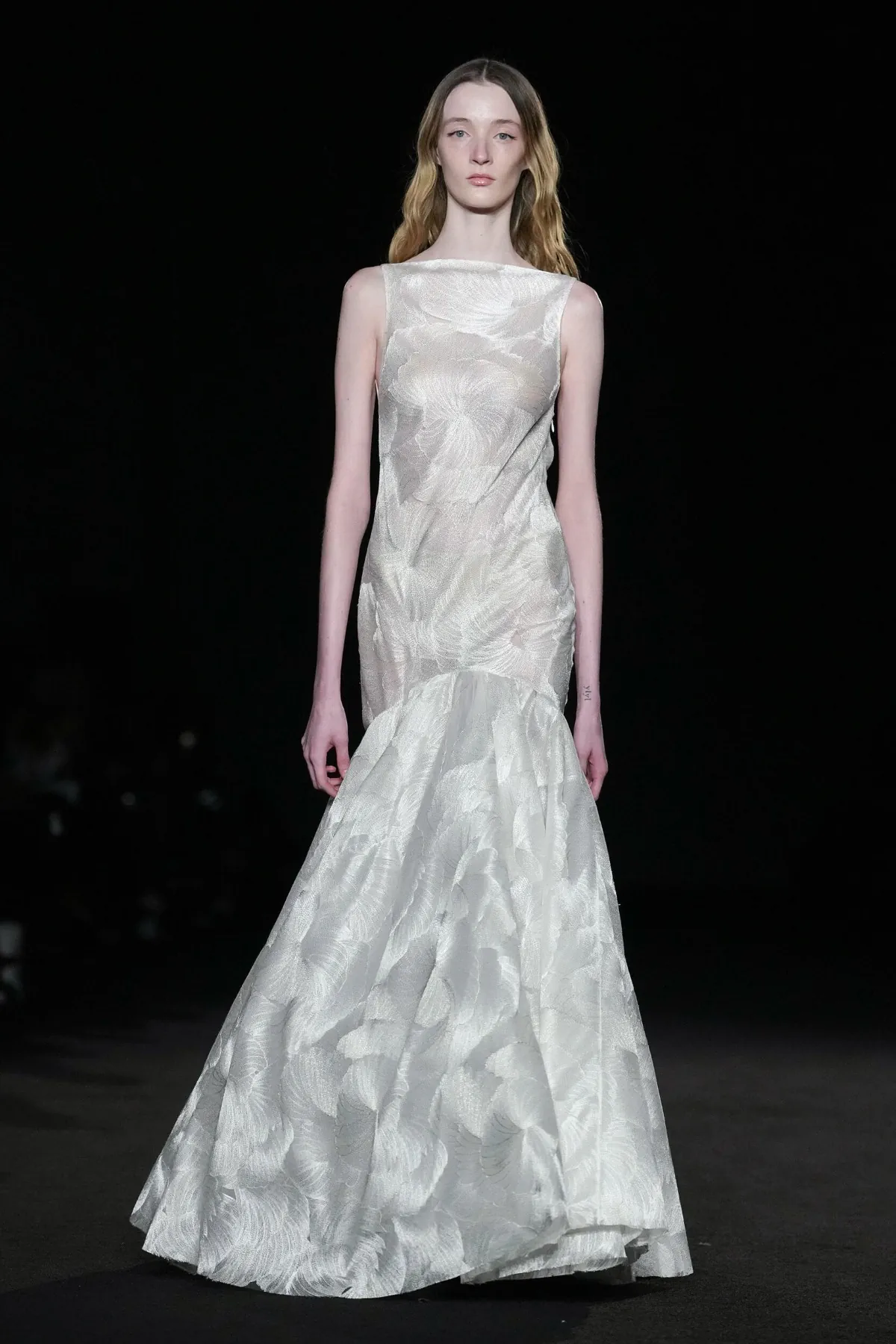
Evening dresses made up the core of the collection, as they have for much of Gurung’s career. Some silhouettes echoed the trumpet shapes from his Spring 2026 show. Plumage added volume. Lace reappeared, forming a cocoon-like, drop-waist gown with an open back that felt both ceremonial and intimate.
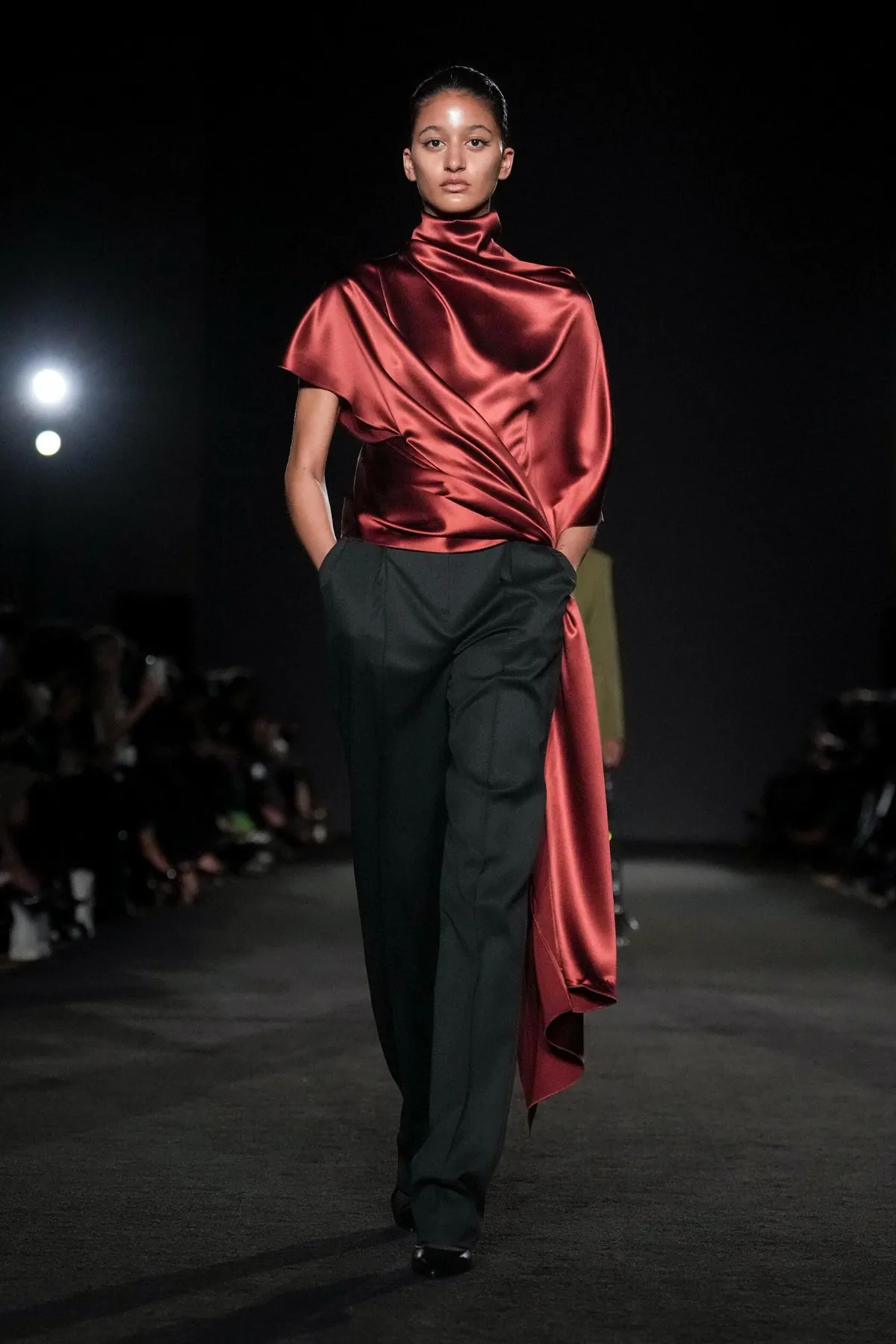
Gurung also adorned several looks with pearls and emeralds. He has said that he wears these stones personally for protection. Some models wore tight lace caps that covered their eyes, some of which were fringed with beads and drawn from the shaman traditions of his upbringing. Draped silhouettes quietly honored the chiffon saris worn by the women who raised him. Silk blouses with a fluid drape offered a more wearable, everyday look.
Follow all the latest news from Fashionotography on Flipboard, or receive it directly in your inbox with Feeder.
You may also read
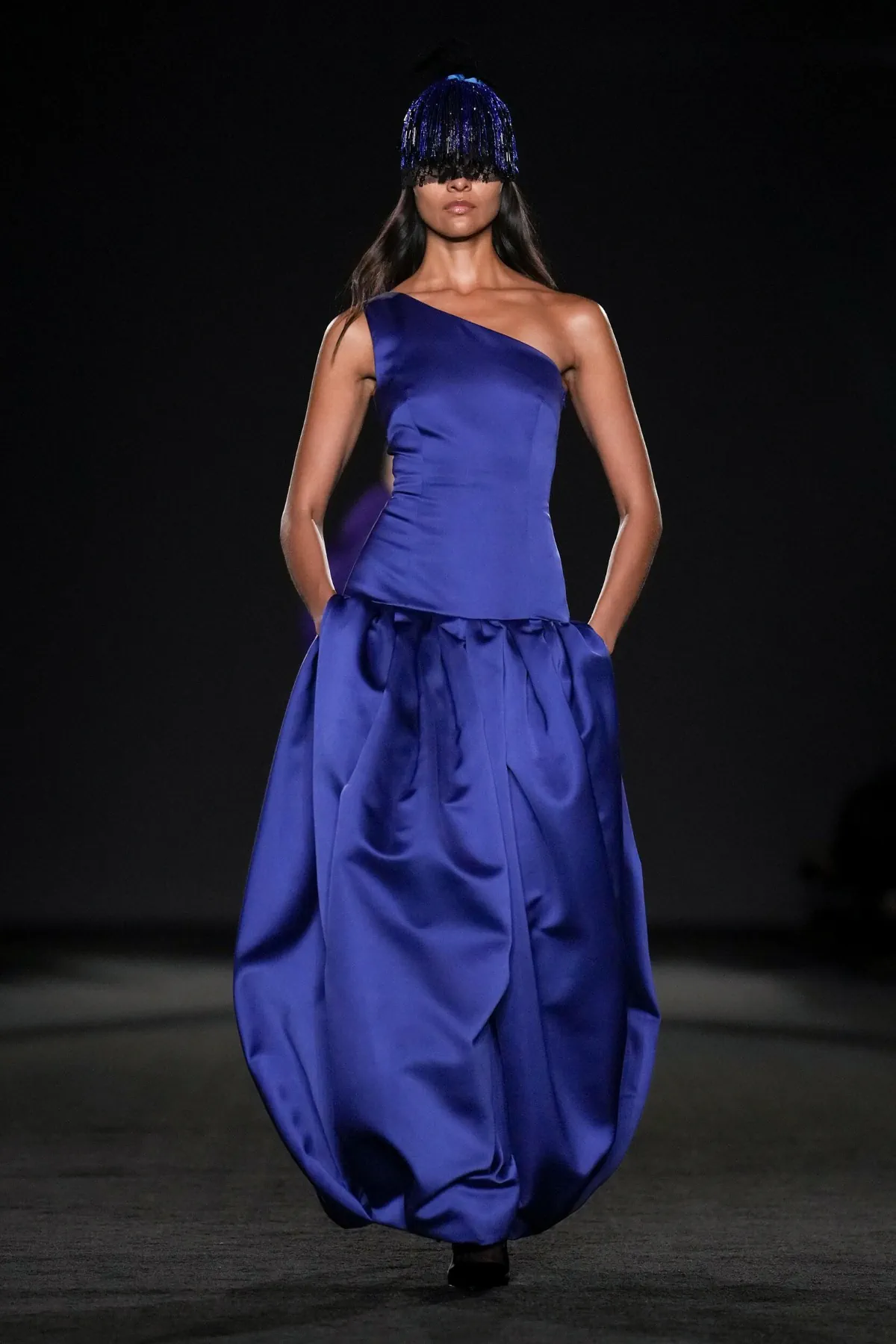
One of the most deliberate shifts in the Fall 2026 collection was the color palette. Gurung moved away from primary colors, which he felt no longer conveyed the sense of hope they once did. Instead, he went deeper, incorporating jewel tones that were saturated and serious, searching for beauty in a darker register.
This choice was not arbitrary. Gurung has spoken openly about the anxiety that now permeates his daily business interactions and concerns about tariffs and the precarious position of immigrants in America. He built his label in this country over 15 years, and now the ground beneath that achievement feels less certain.
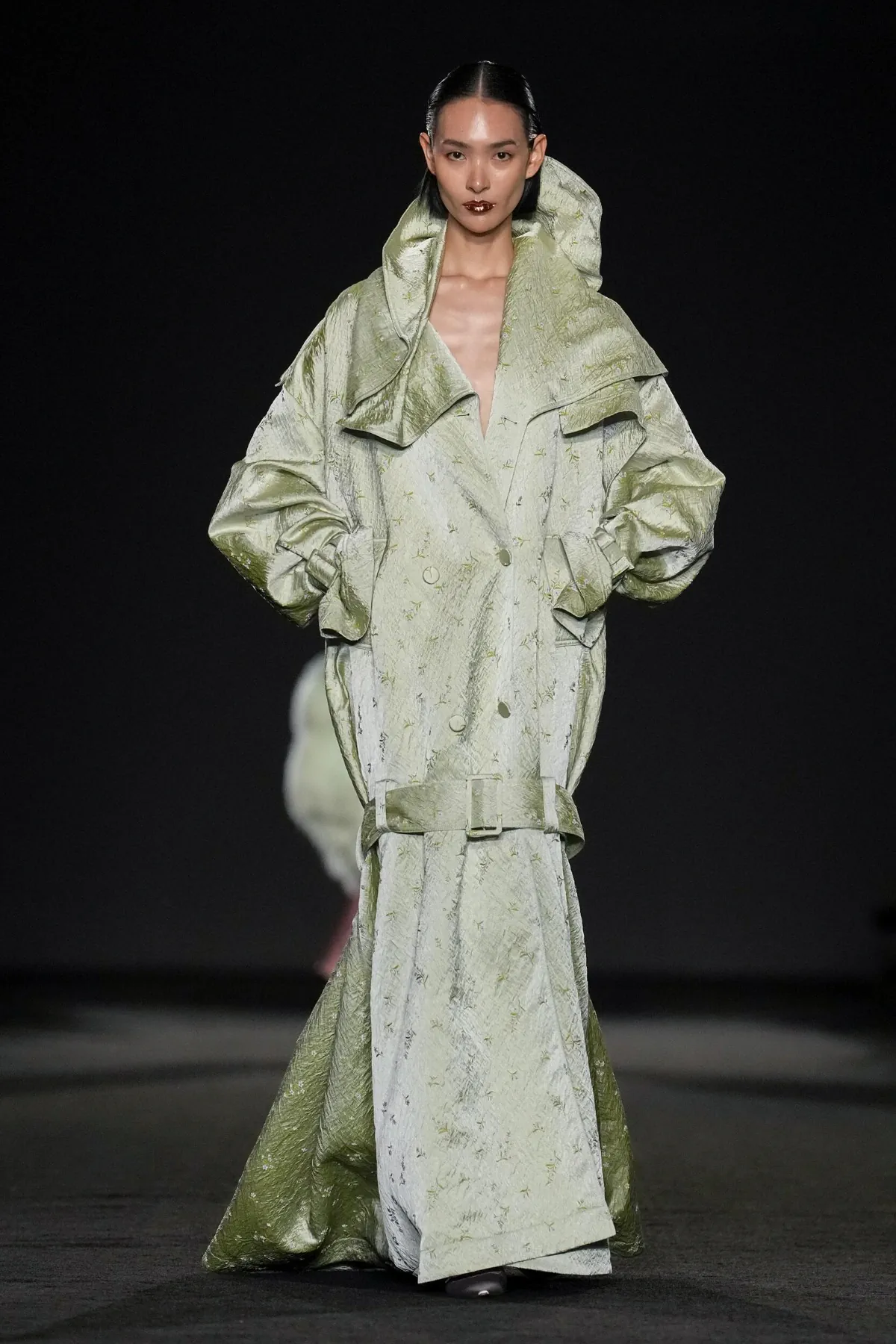
What held the collection together was not a single motif, but an underlying attitude. Gurung looked to his own background—the school, the women, and the traditions – to find the endurance to build something lasting. The clothes that emerged from that inquiry were disciplined and refined but also carried the weight of a real question: What does it mean to belong somewhere when belonging feels conditional?
For fall 2026, Gurung’s answer came through craft: French and Nepali lace. Structured shoulders and draped backs. Pearls that protect. Coats that comfort. While fashion cannot resolve political uncertainty, at its best, it can hold the complexity of the moment without flinching. This collection did just that.