


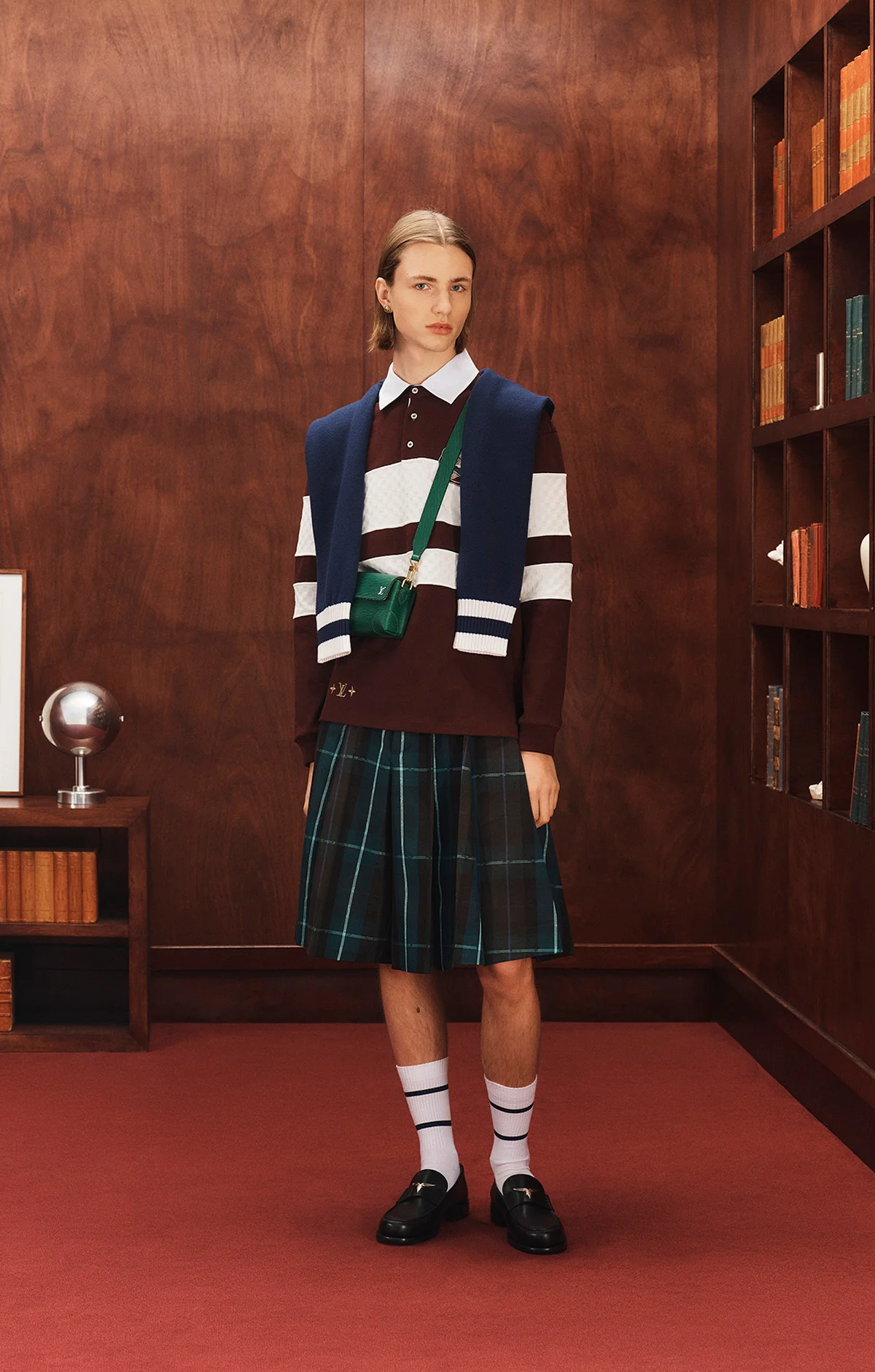
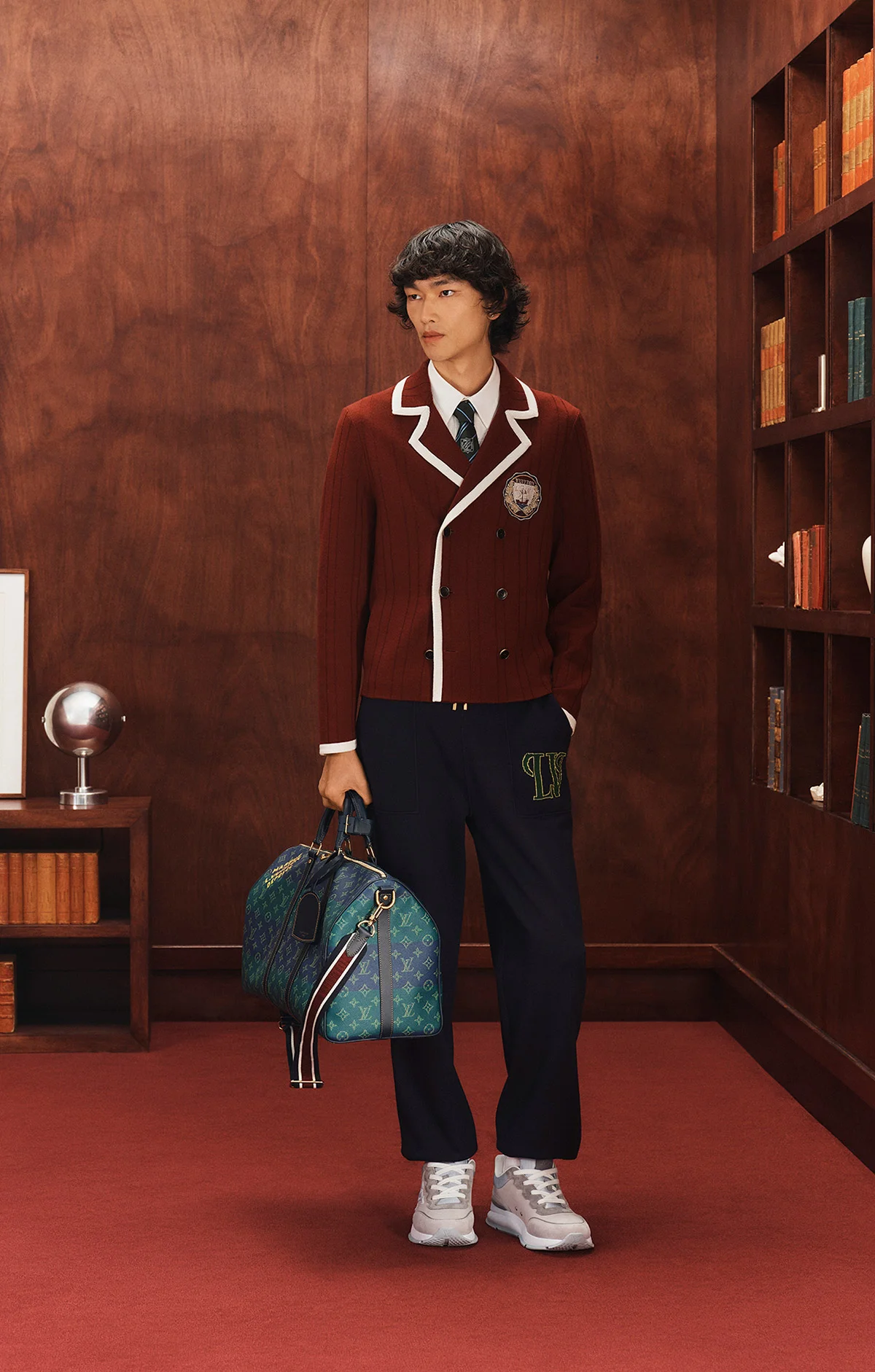
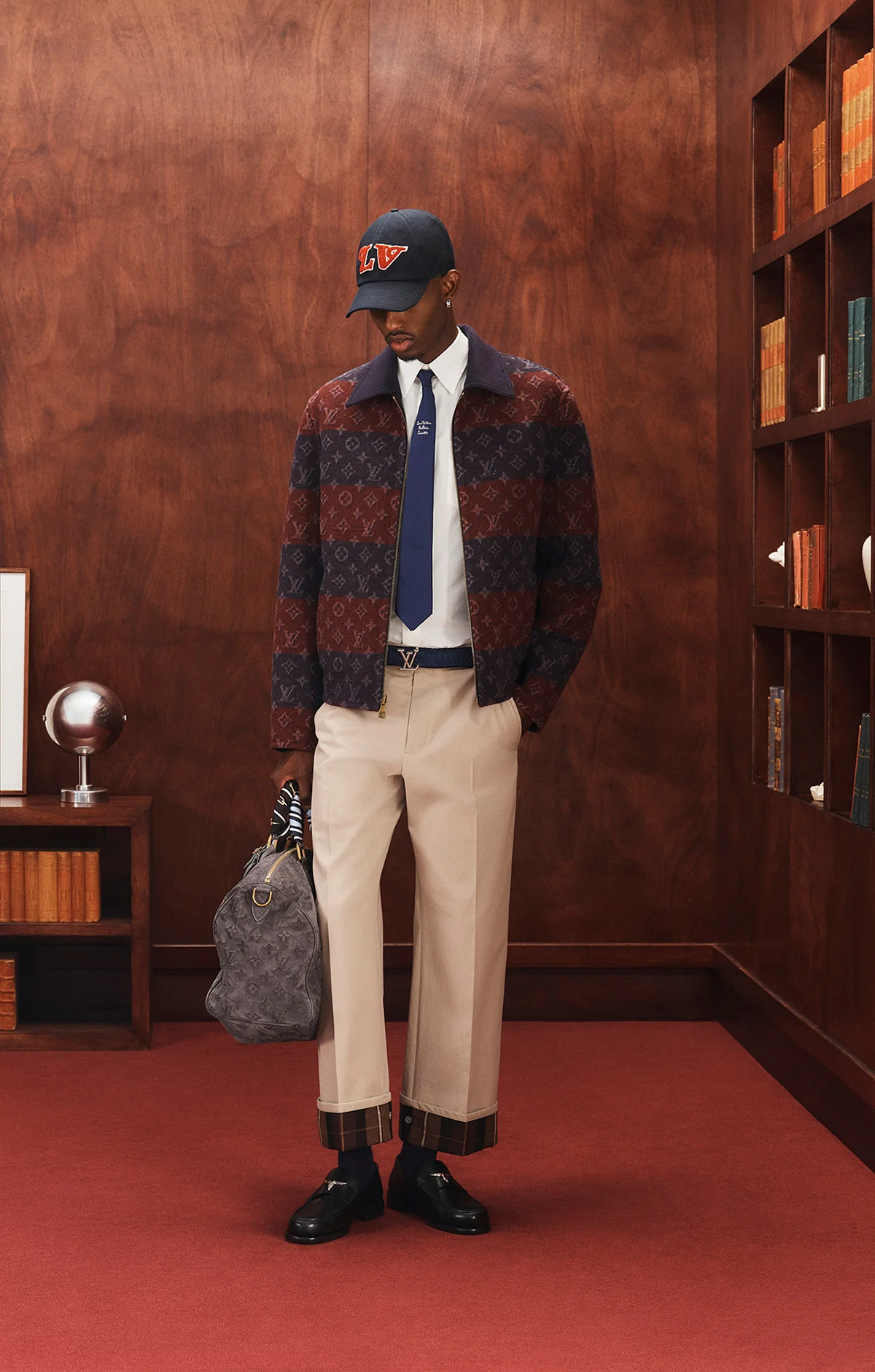
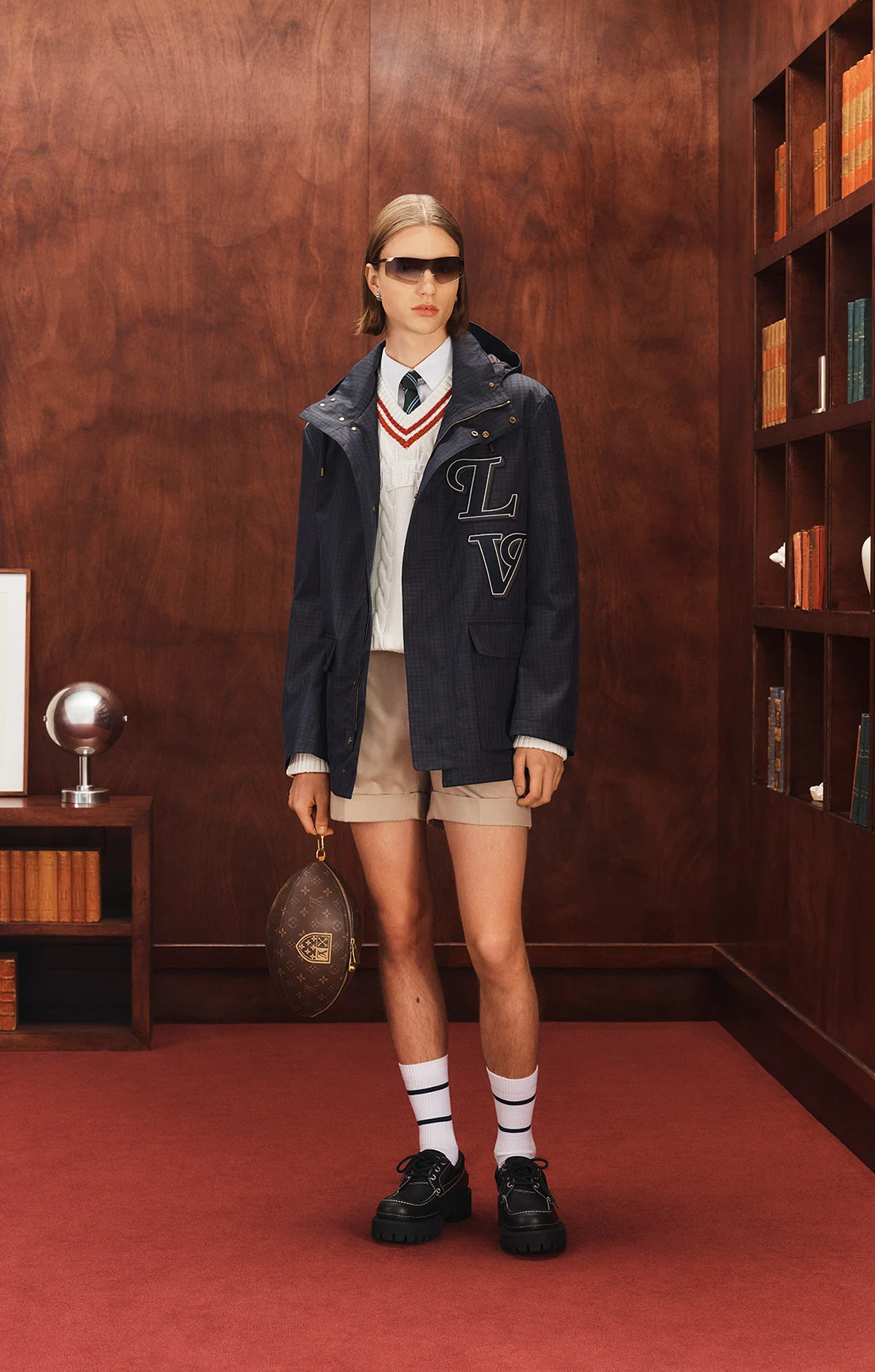
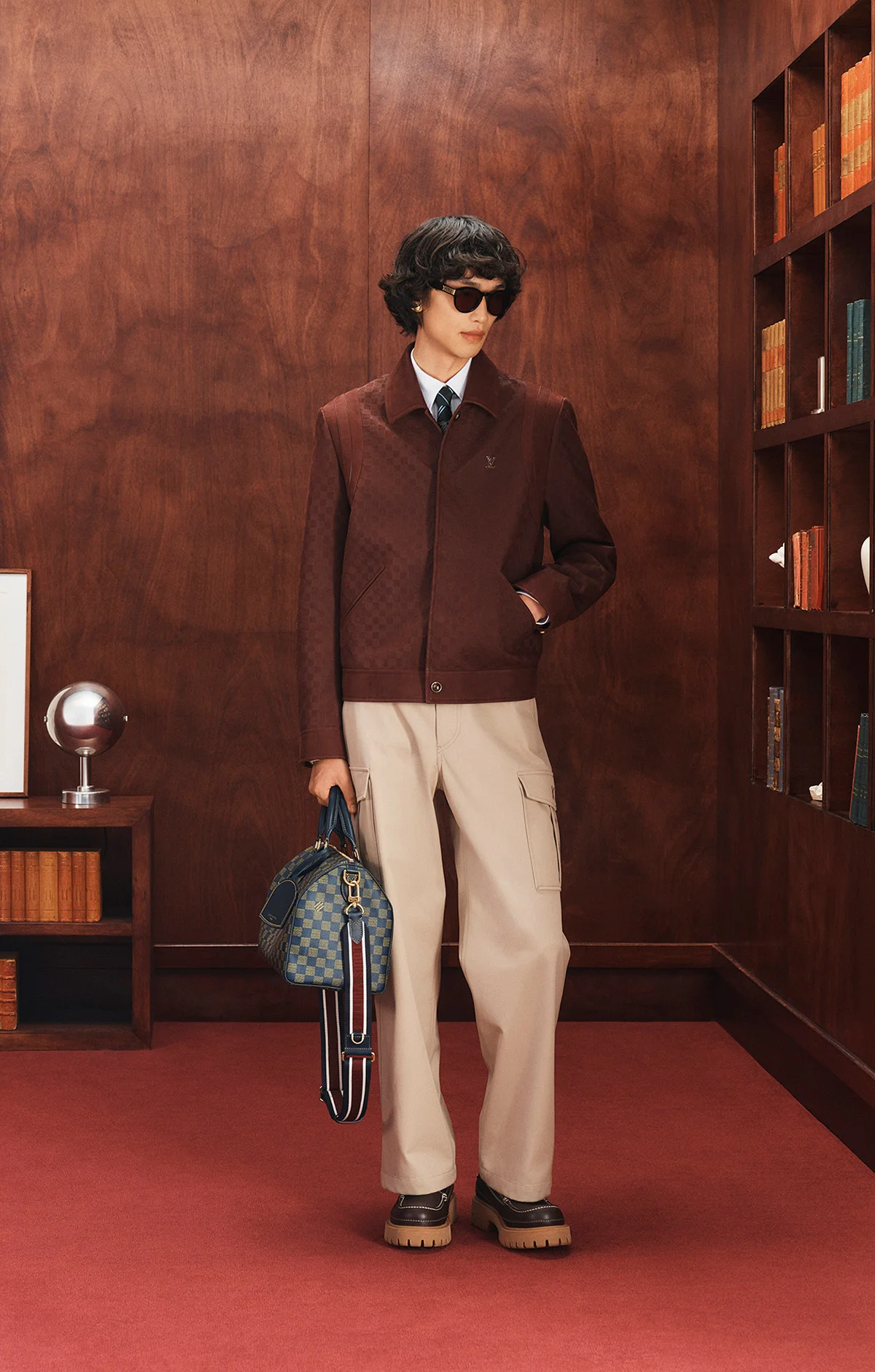
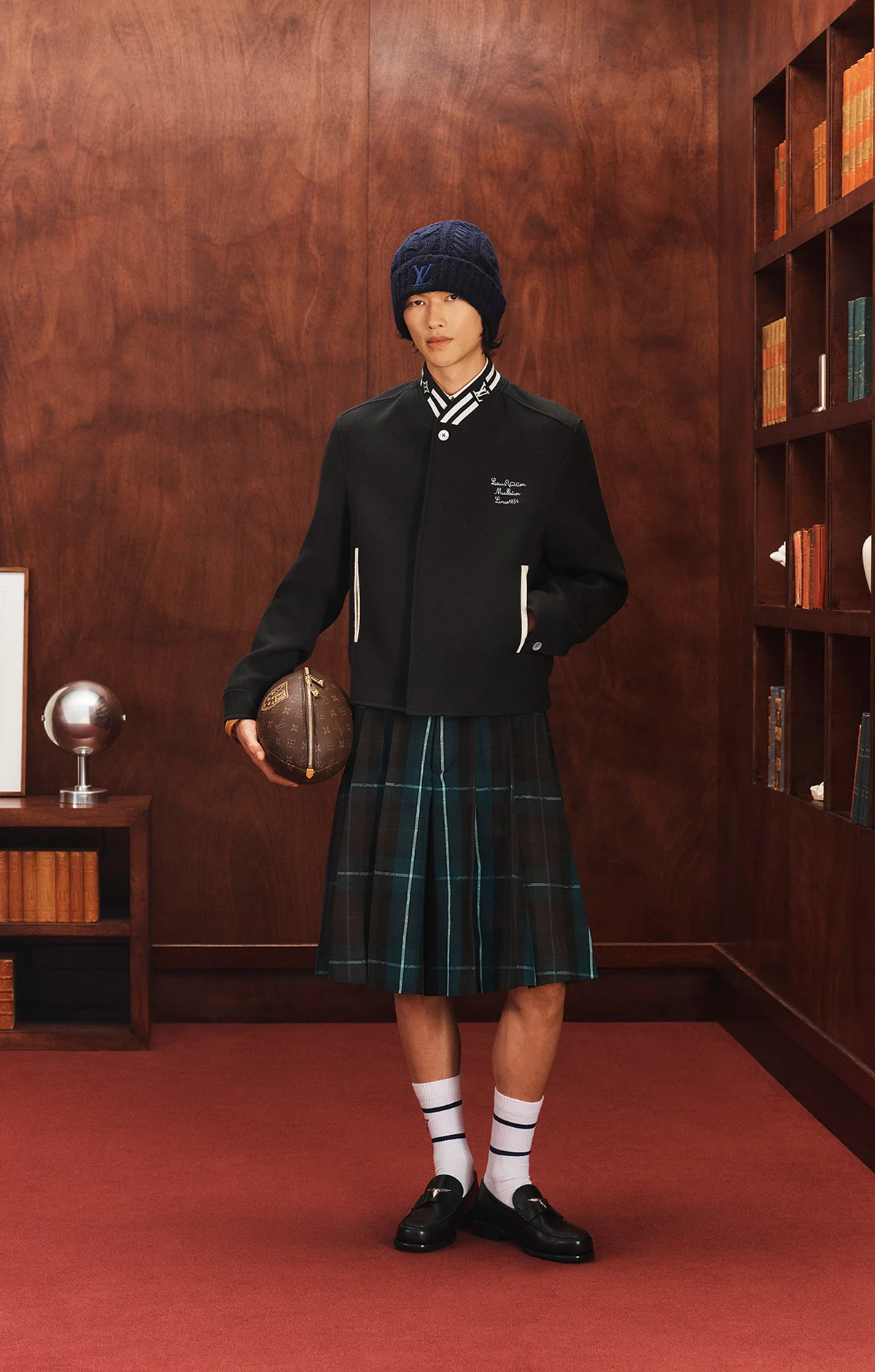
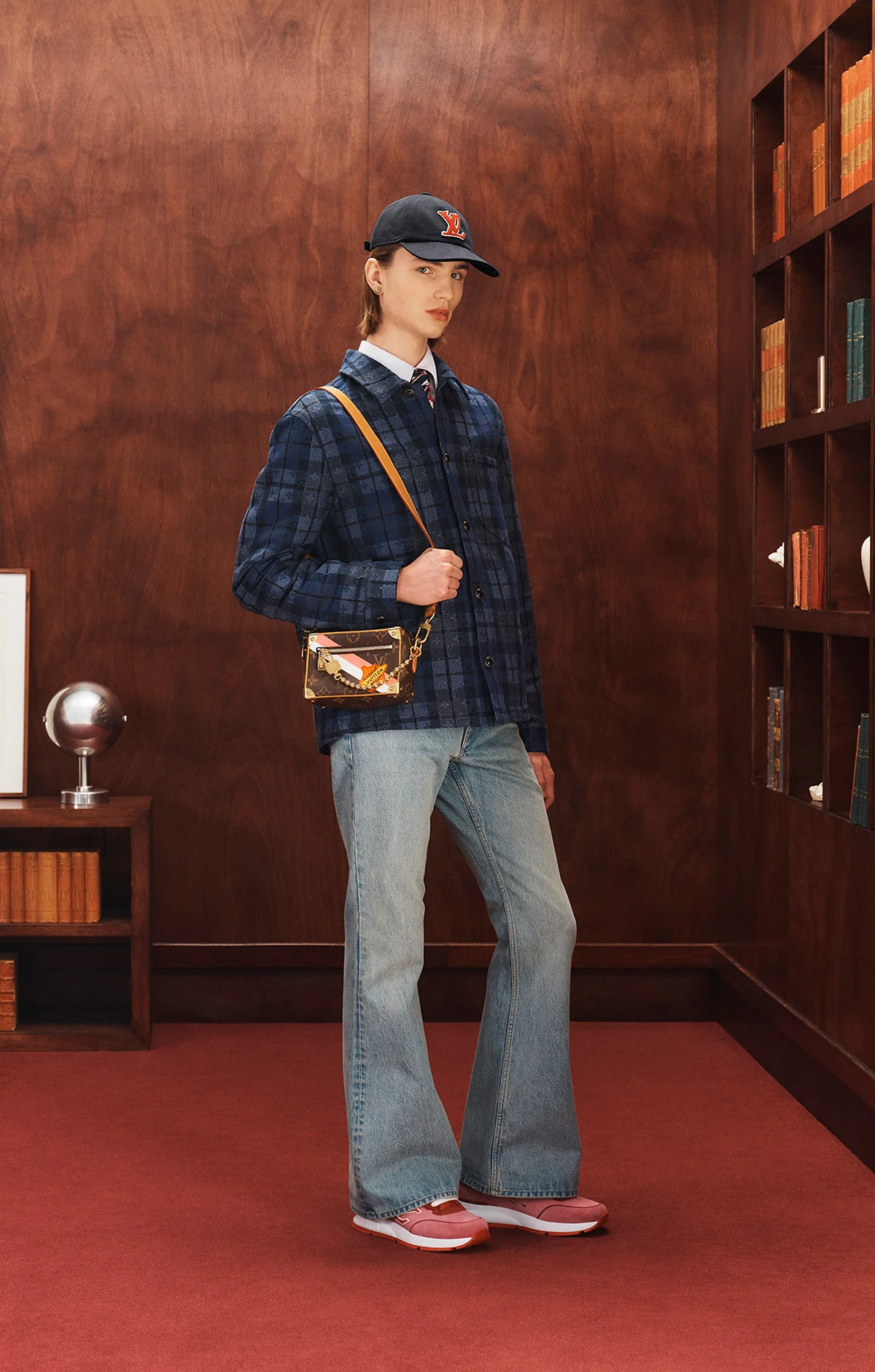
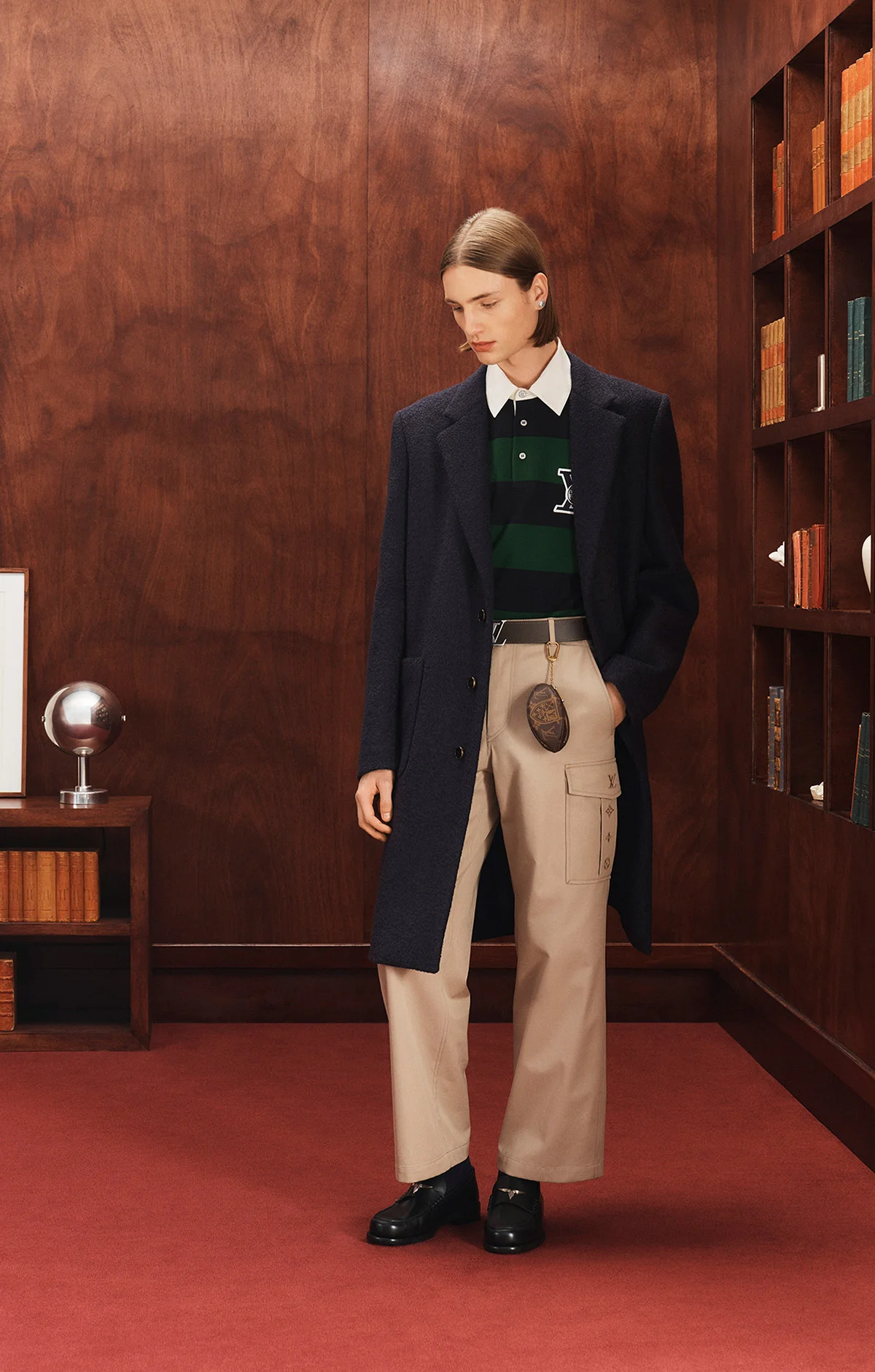
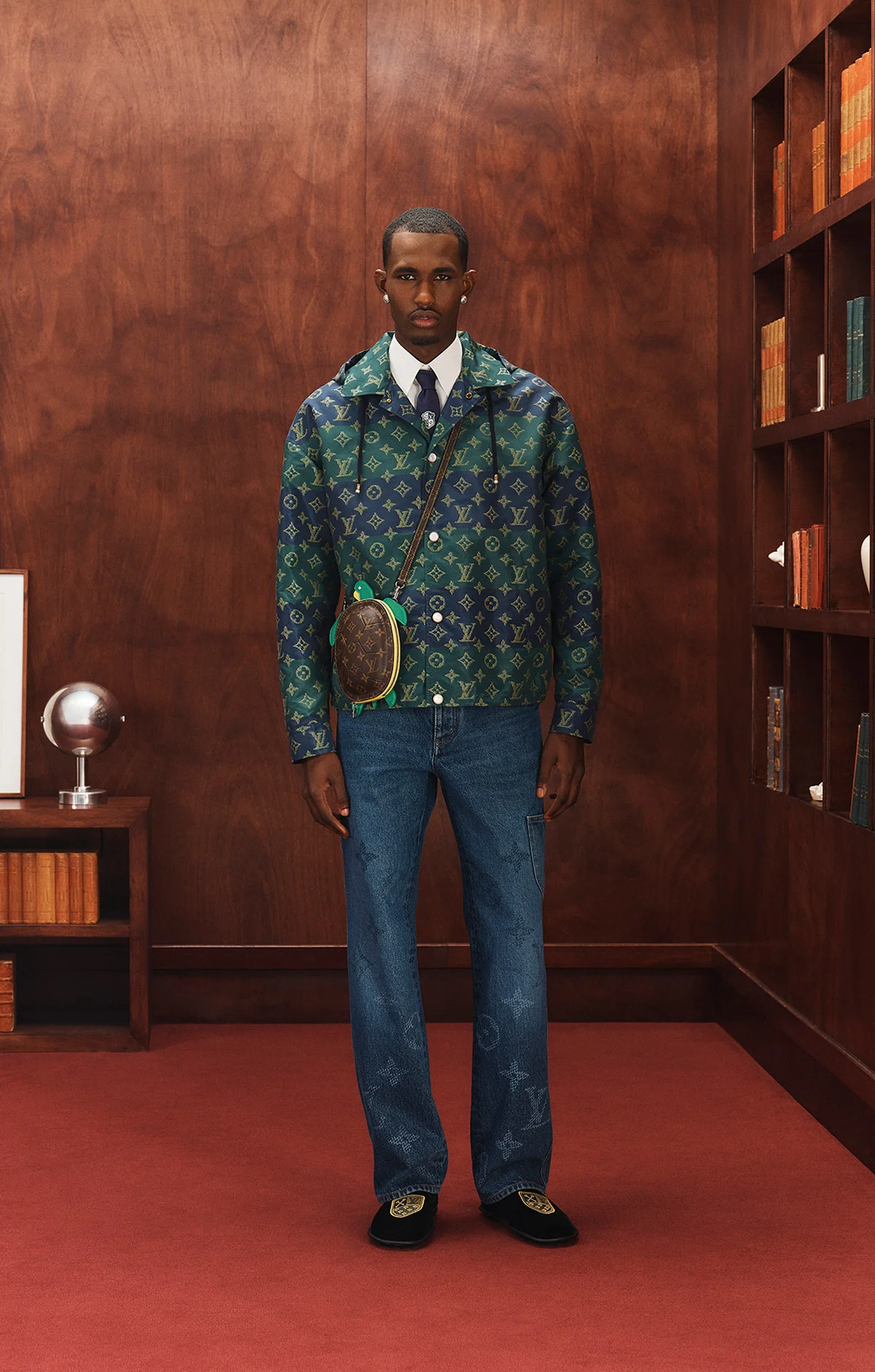
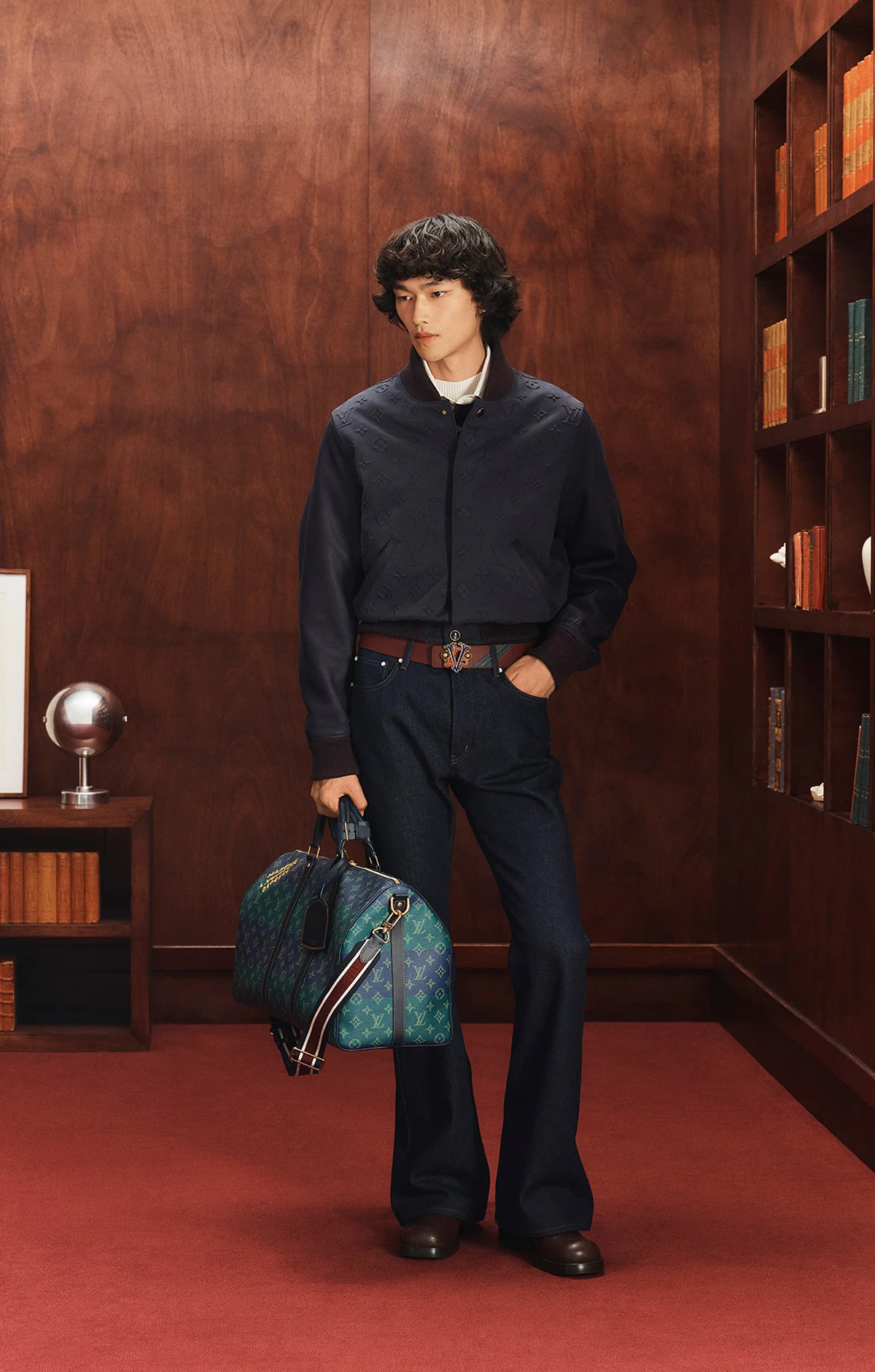
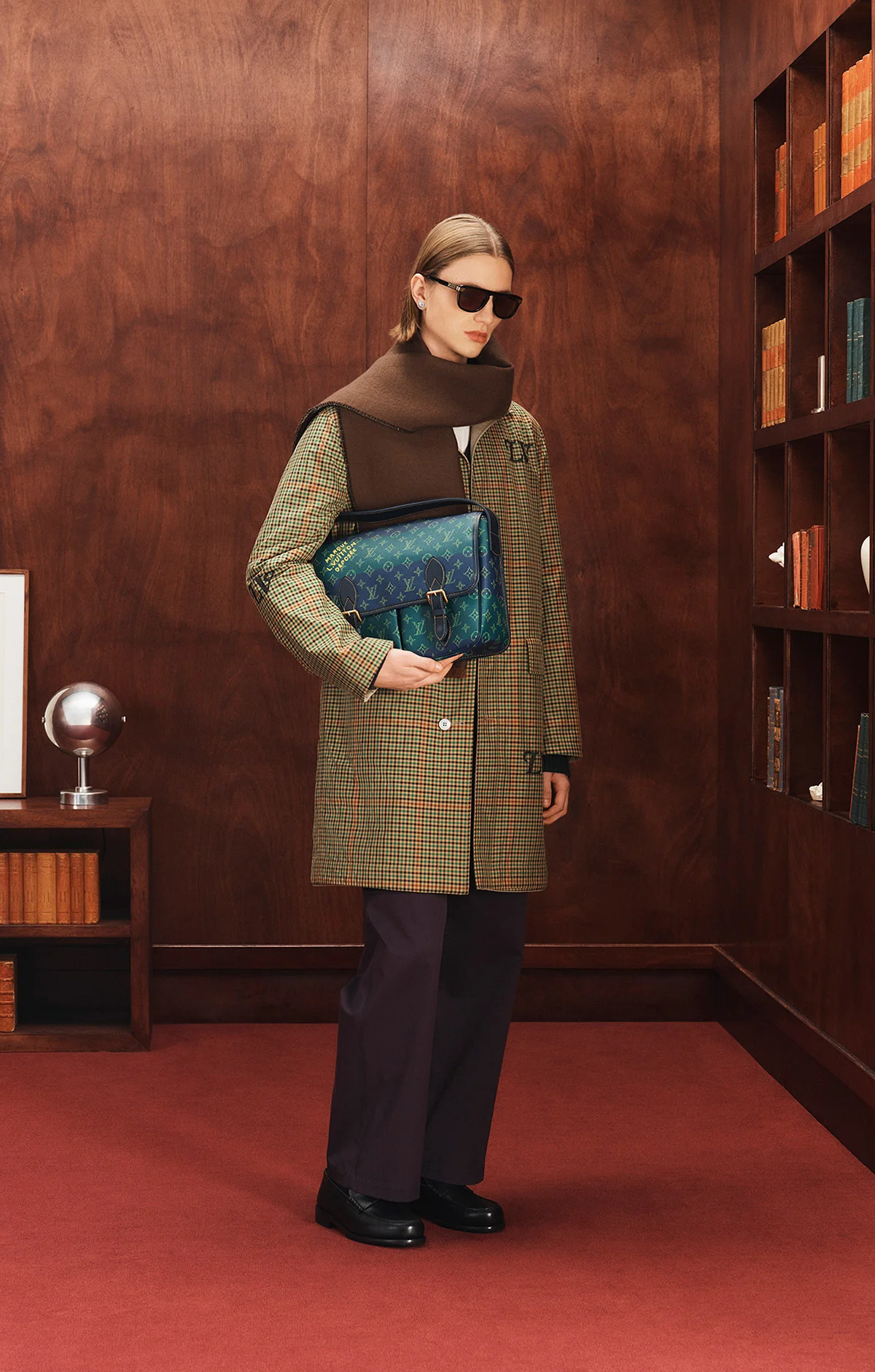
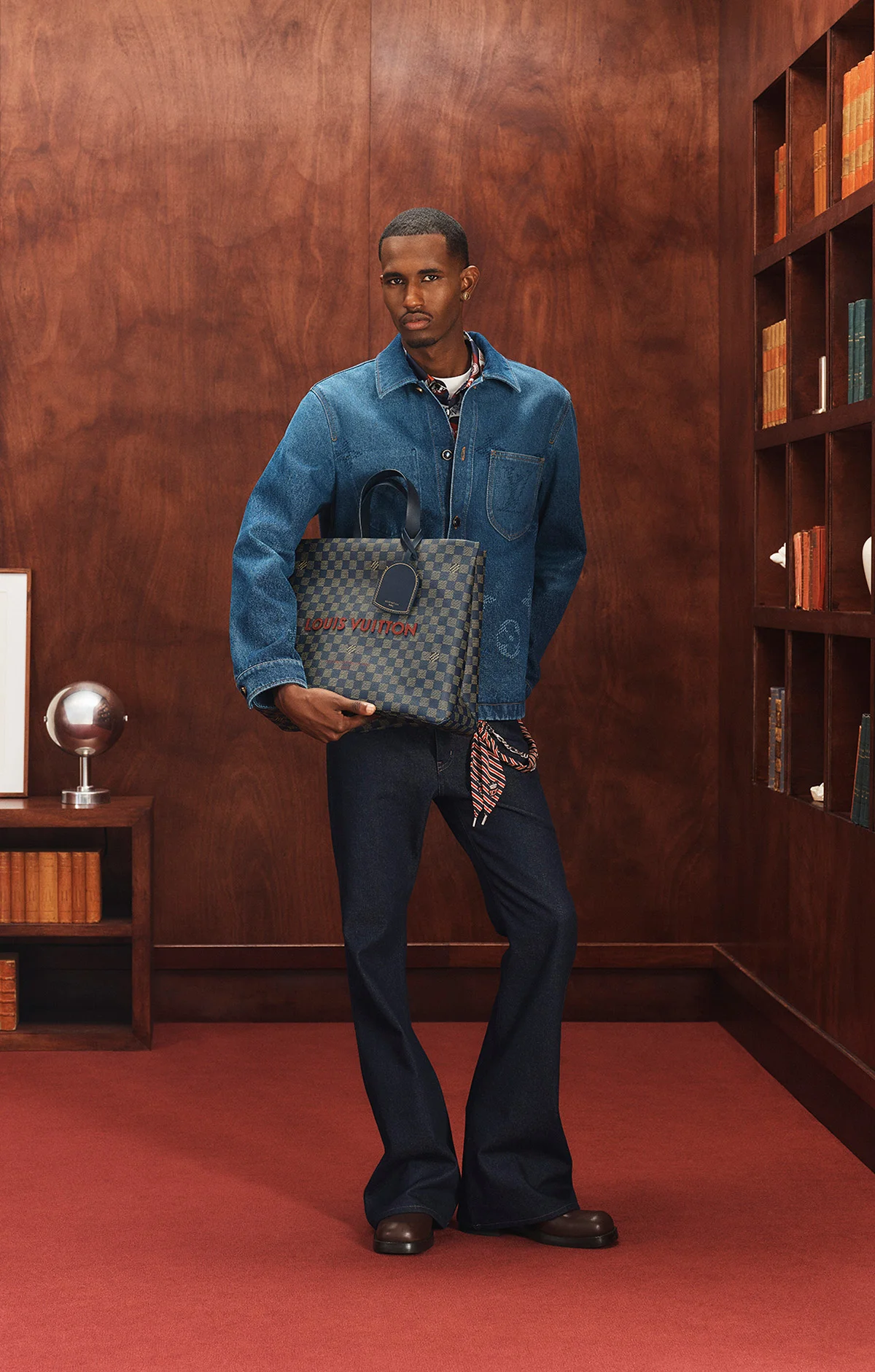
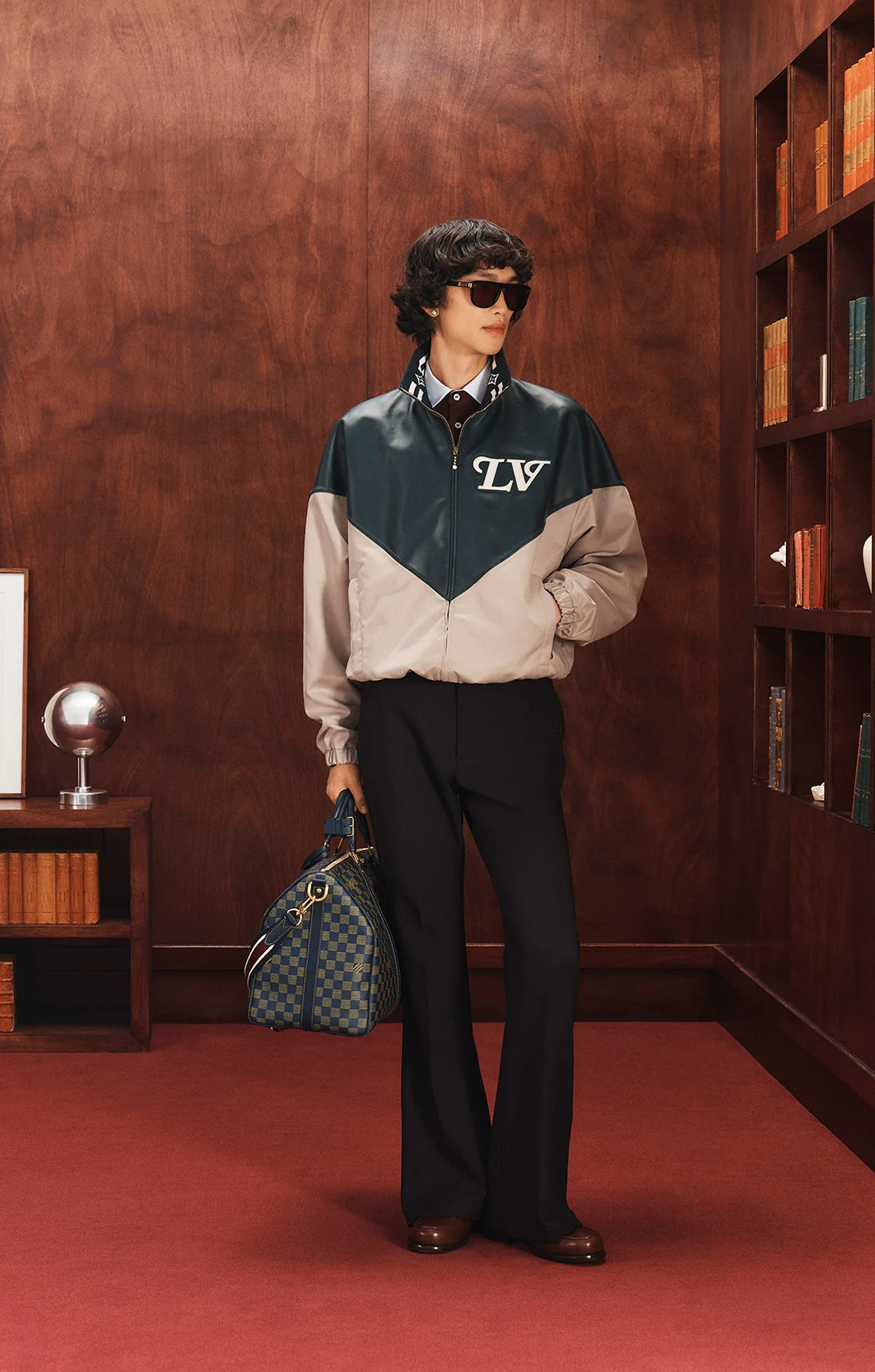
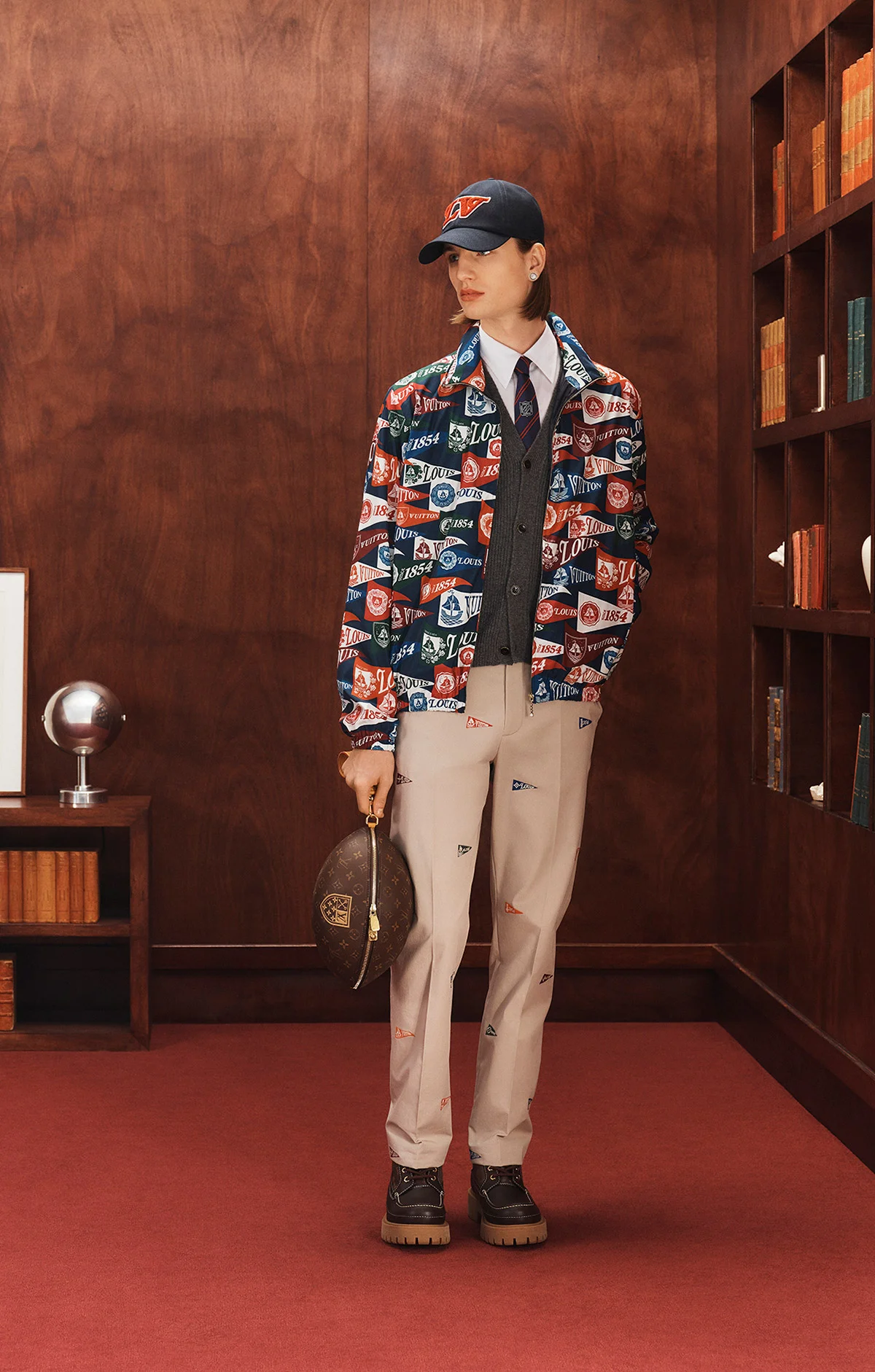
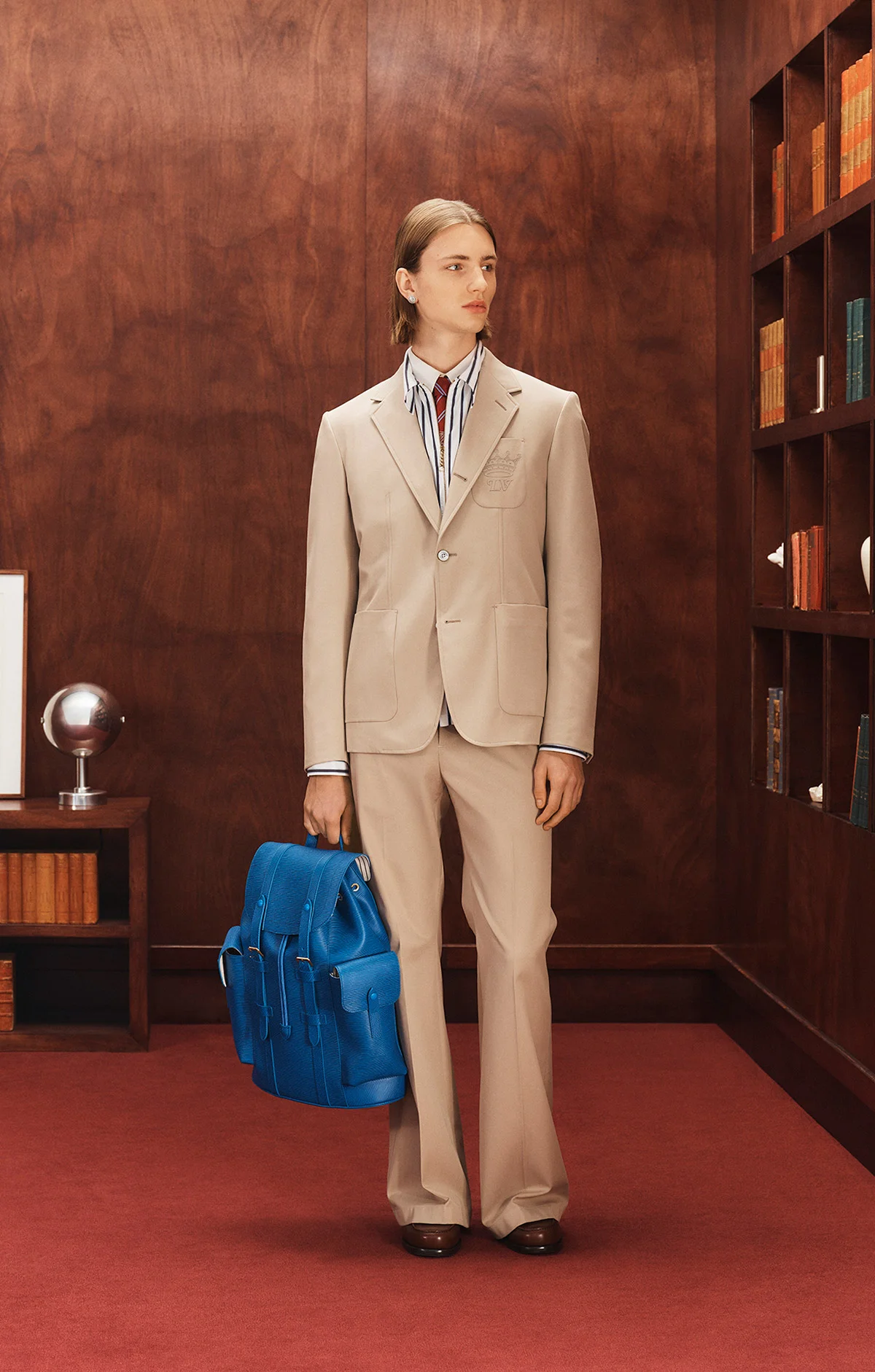
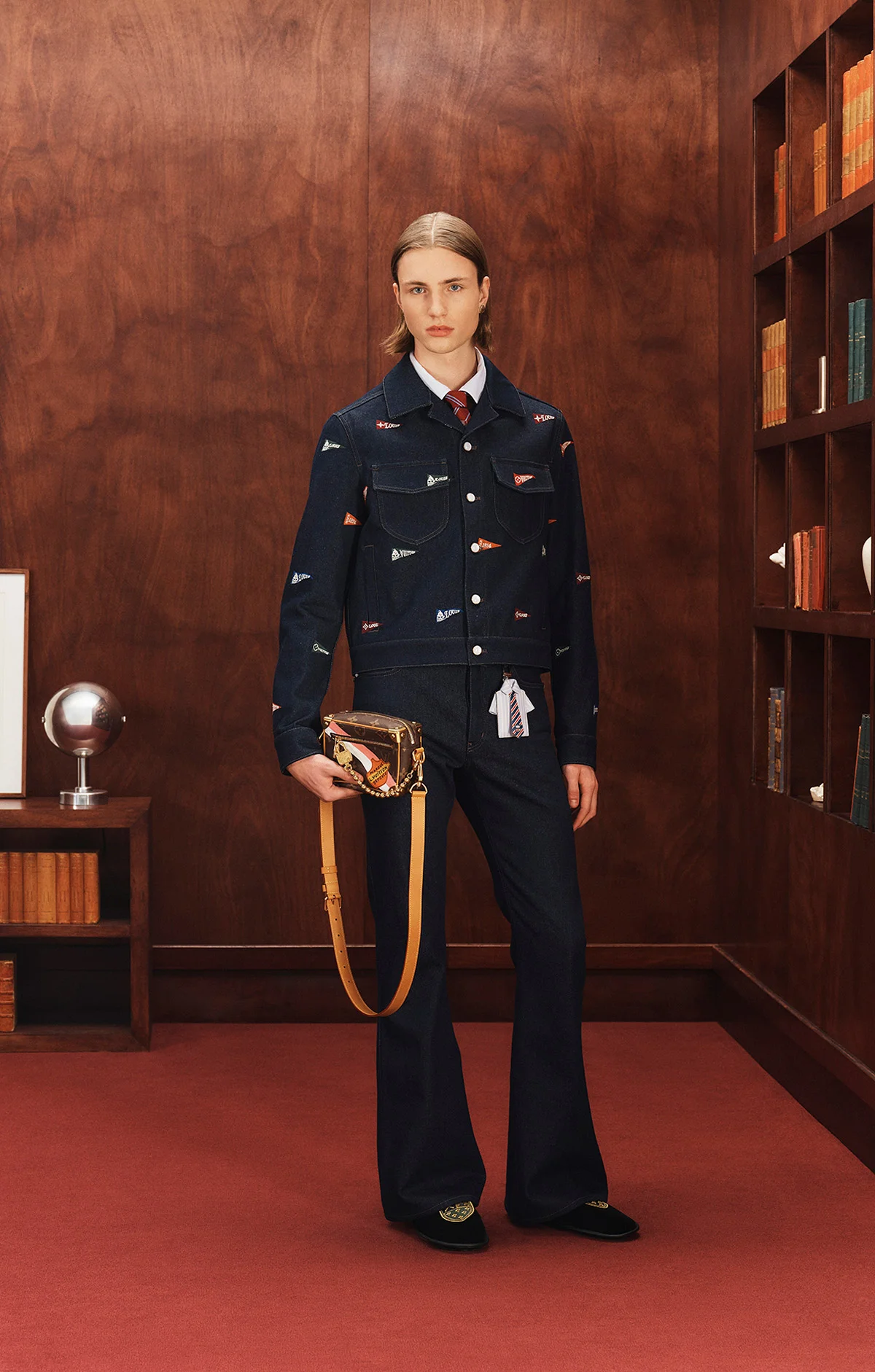
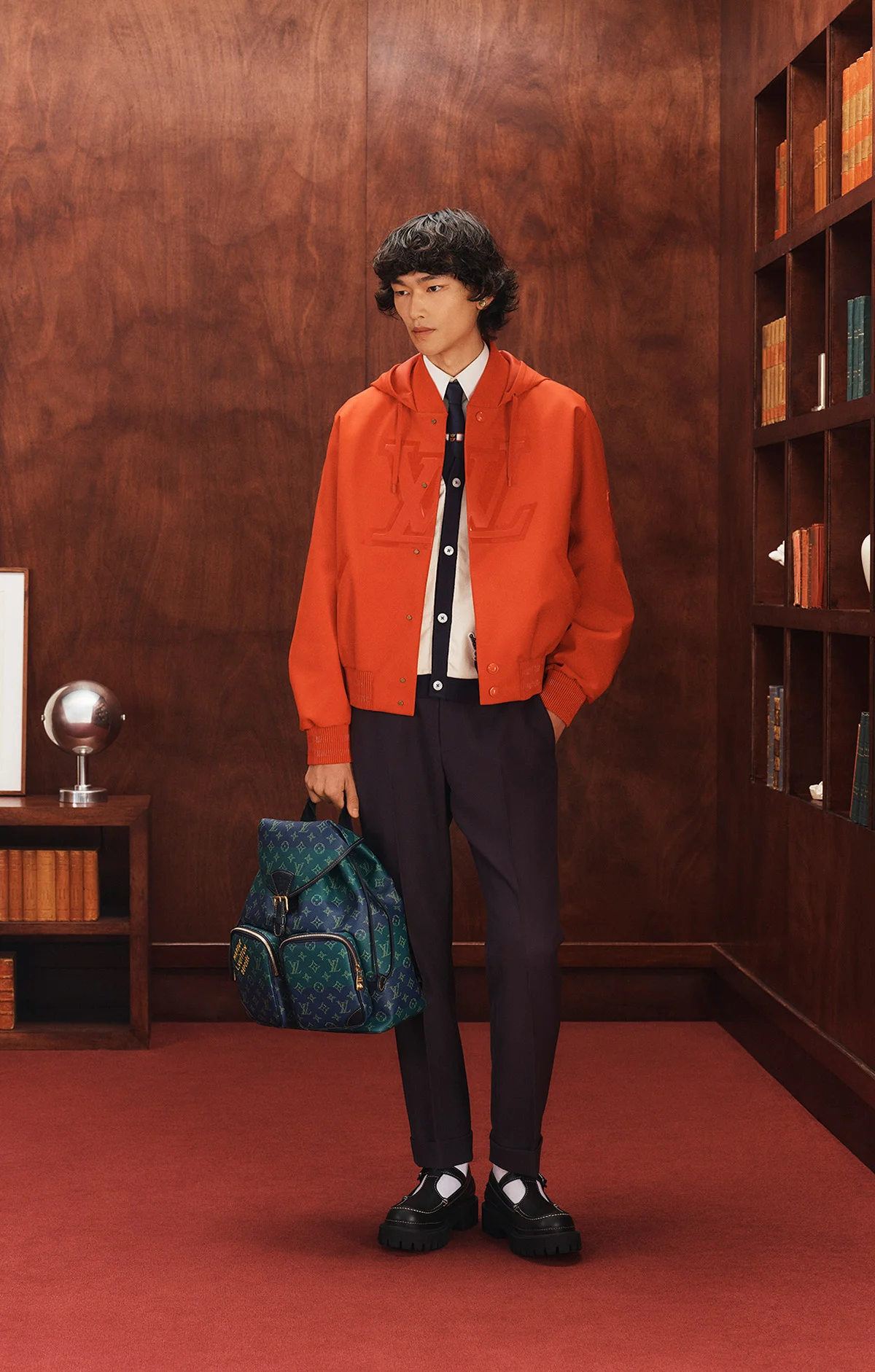
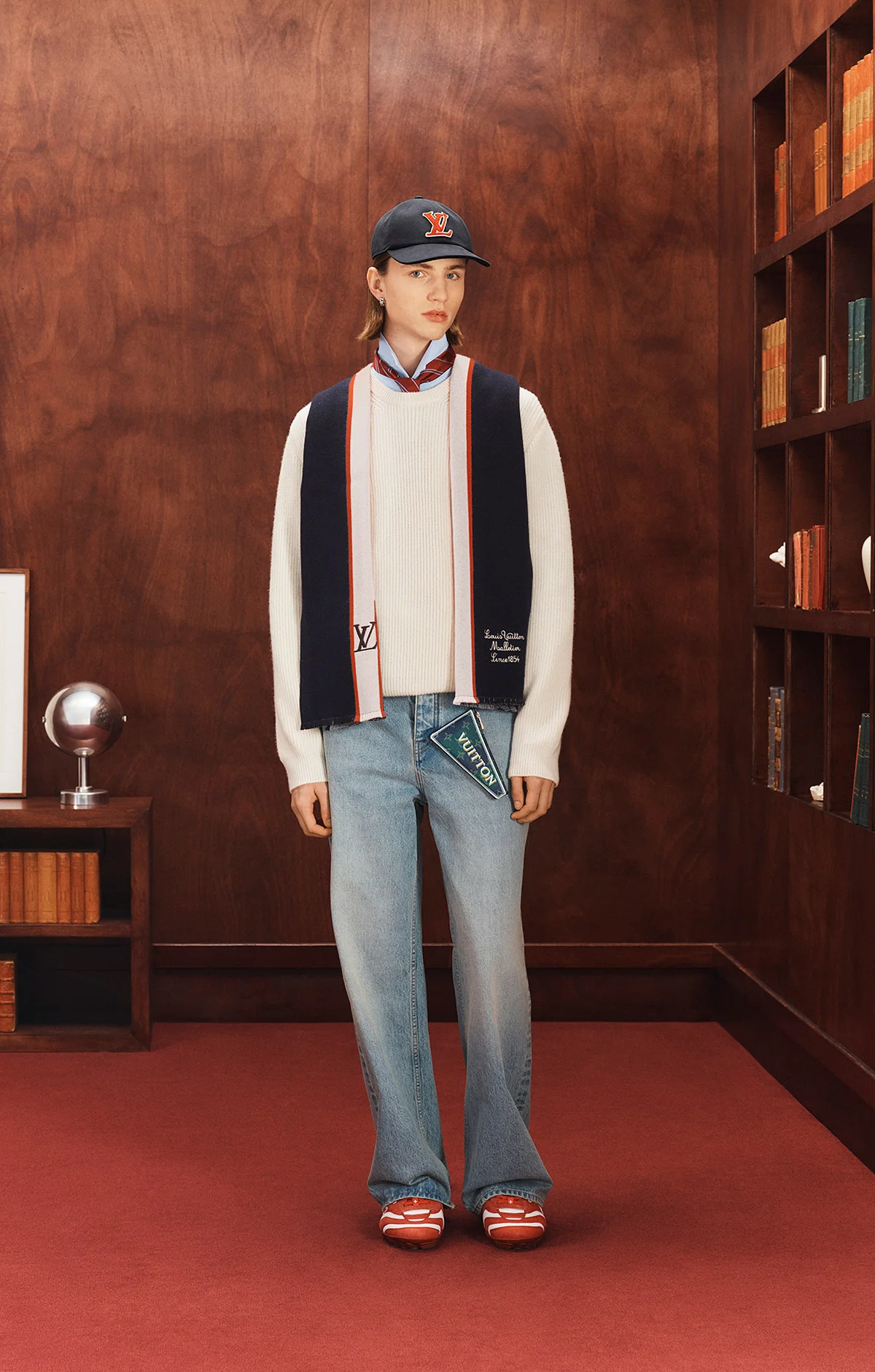
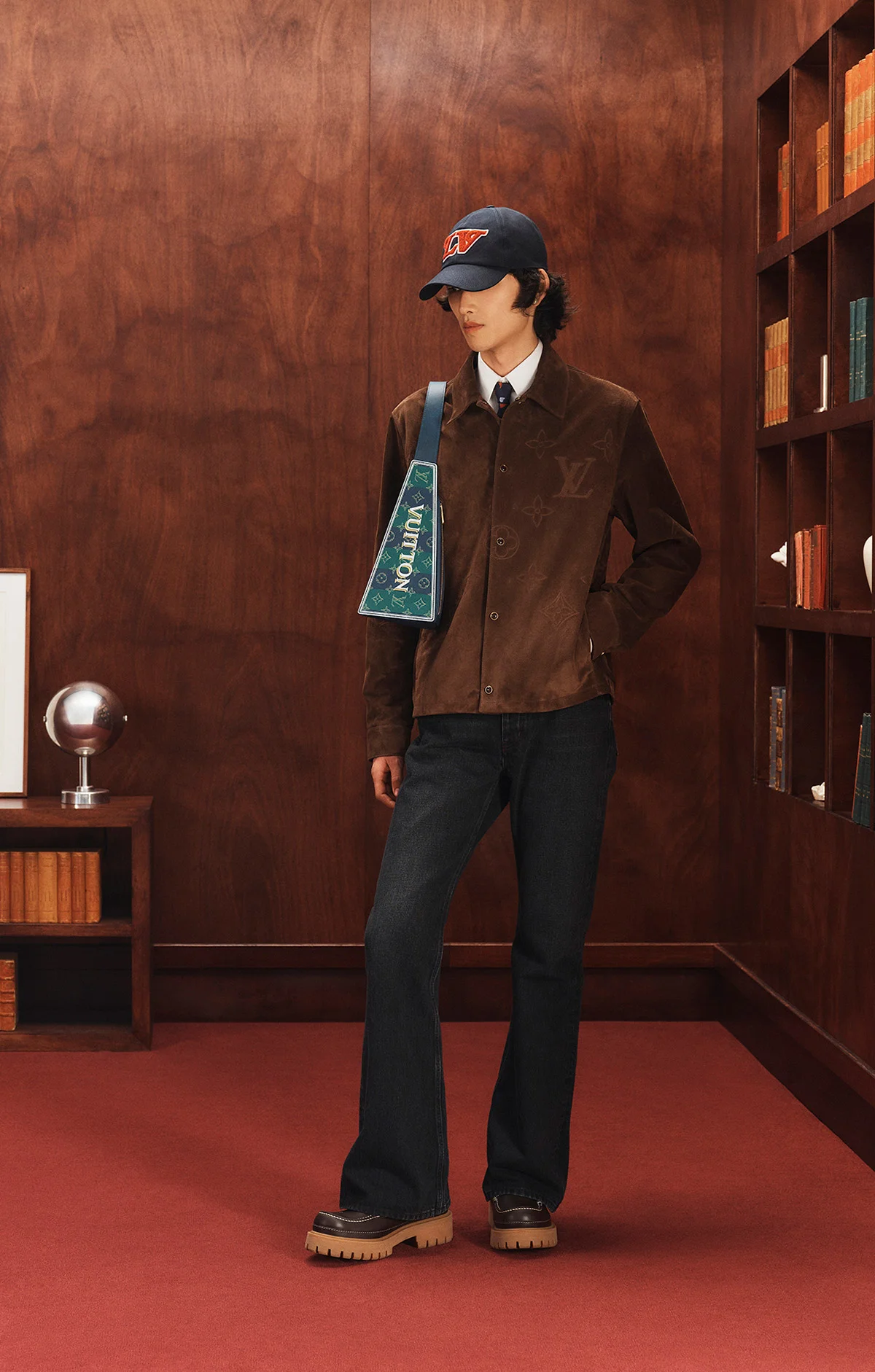
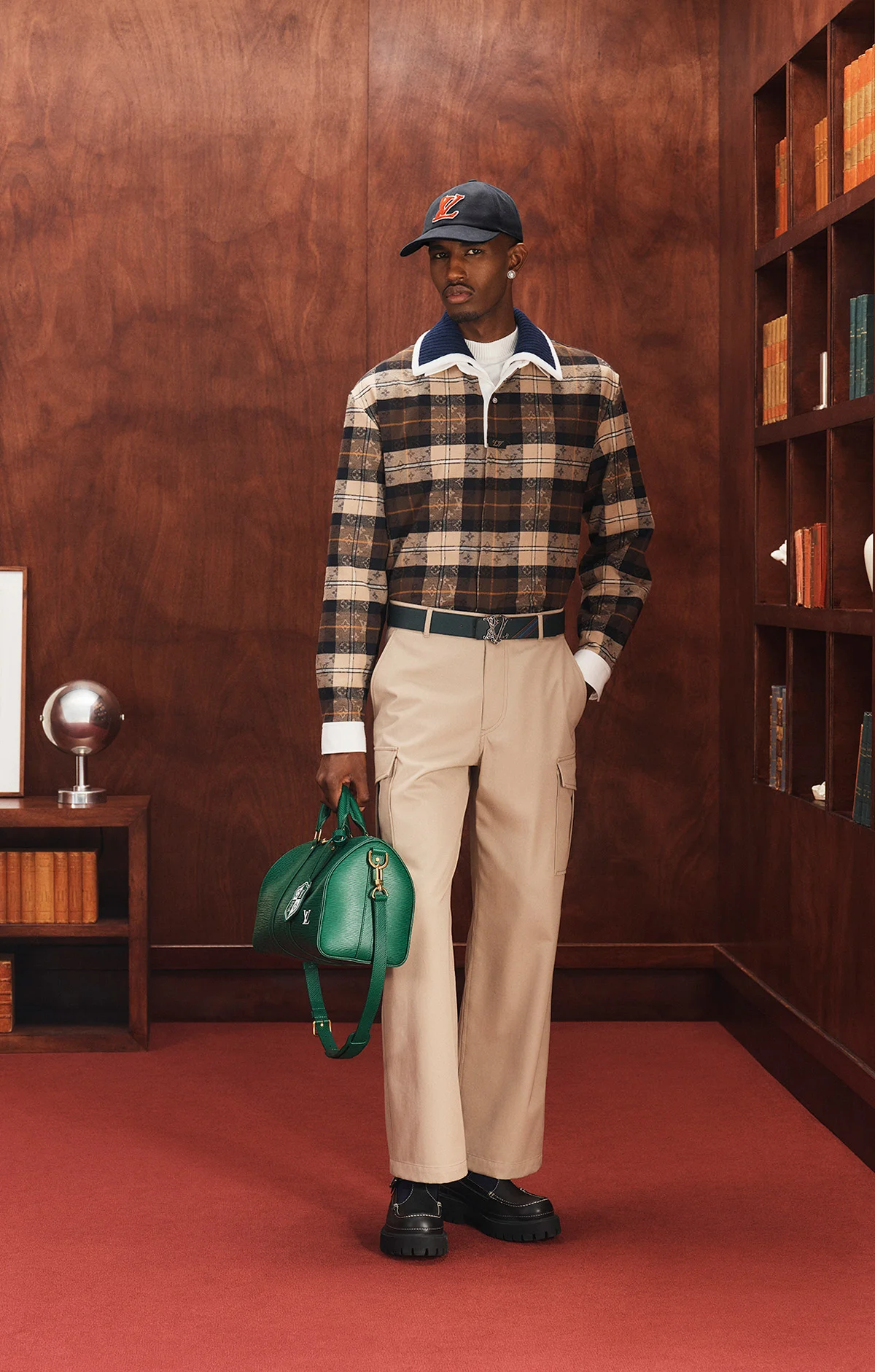
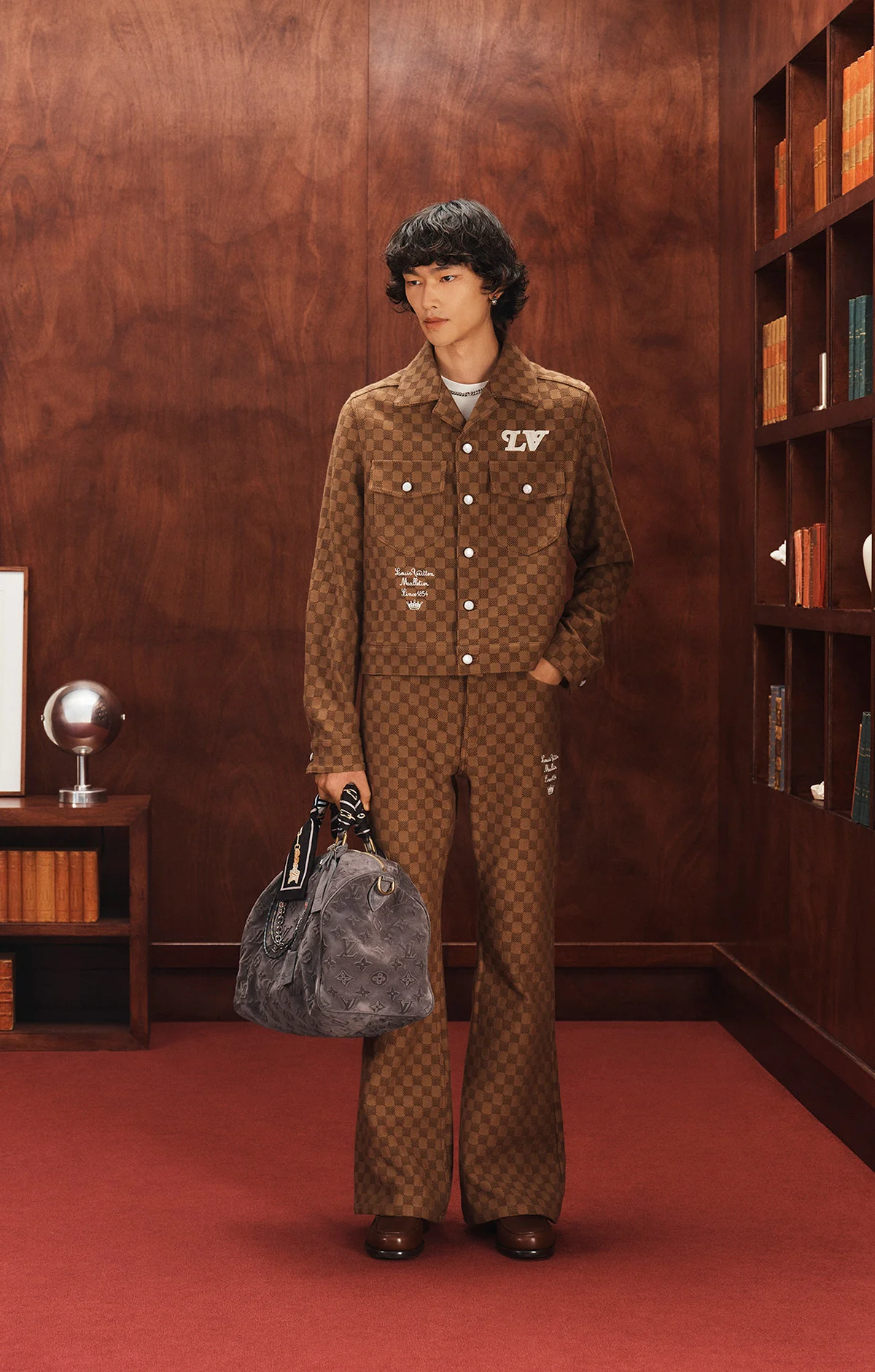
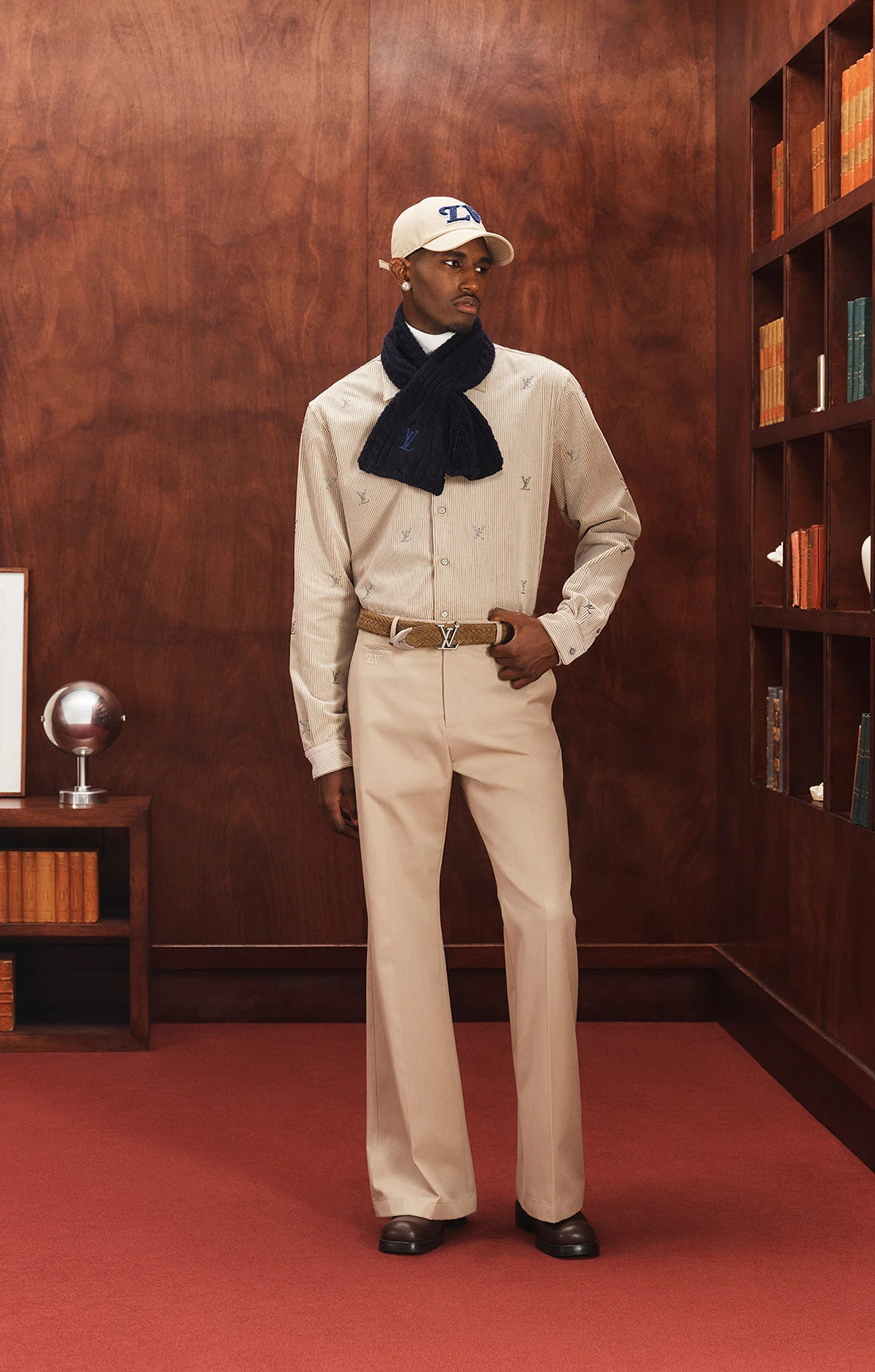
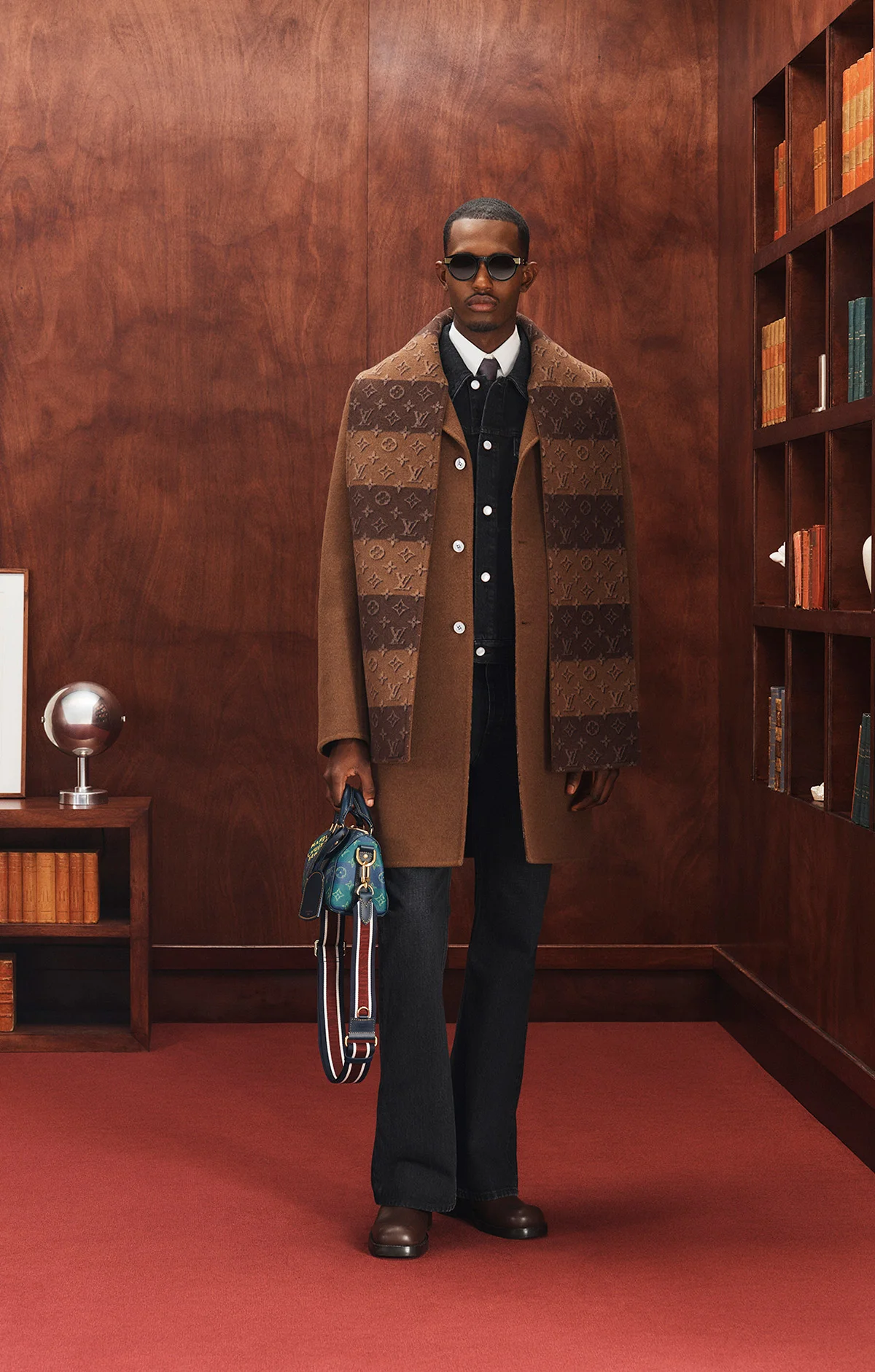
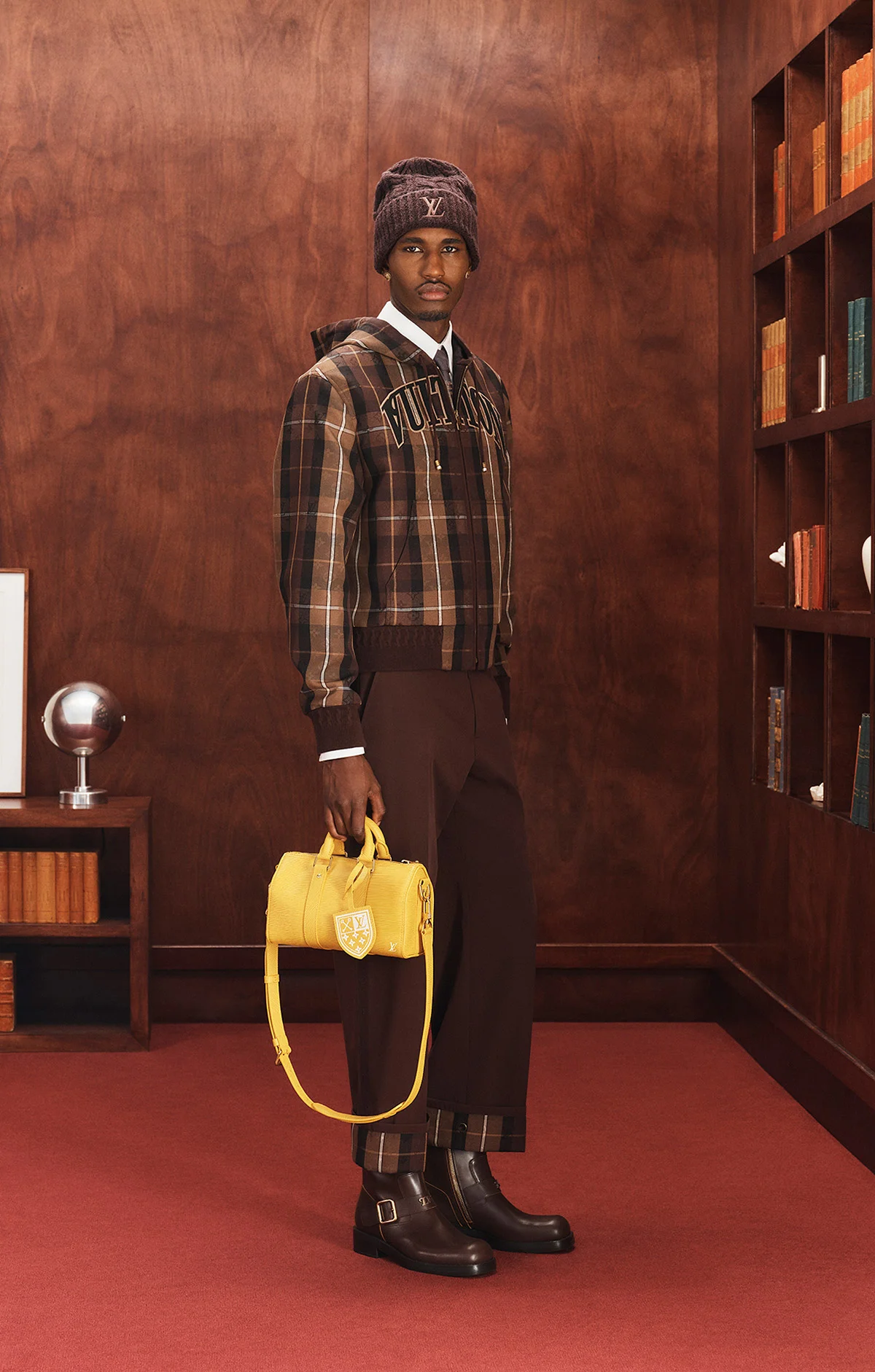
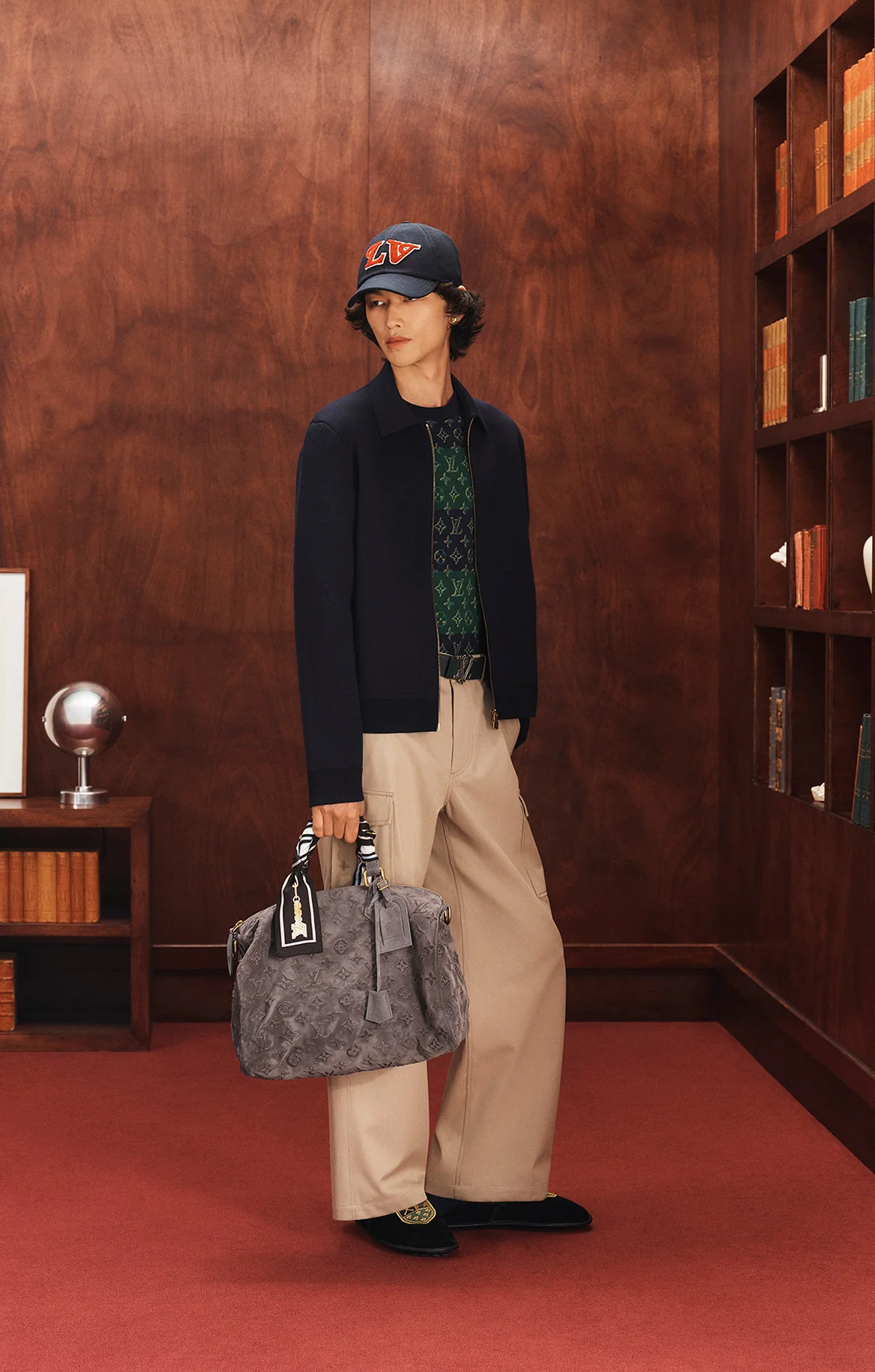
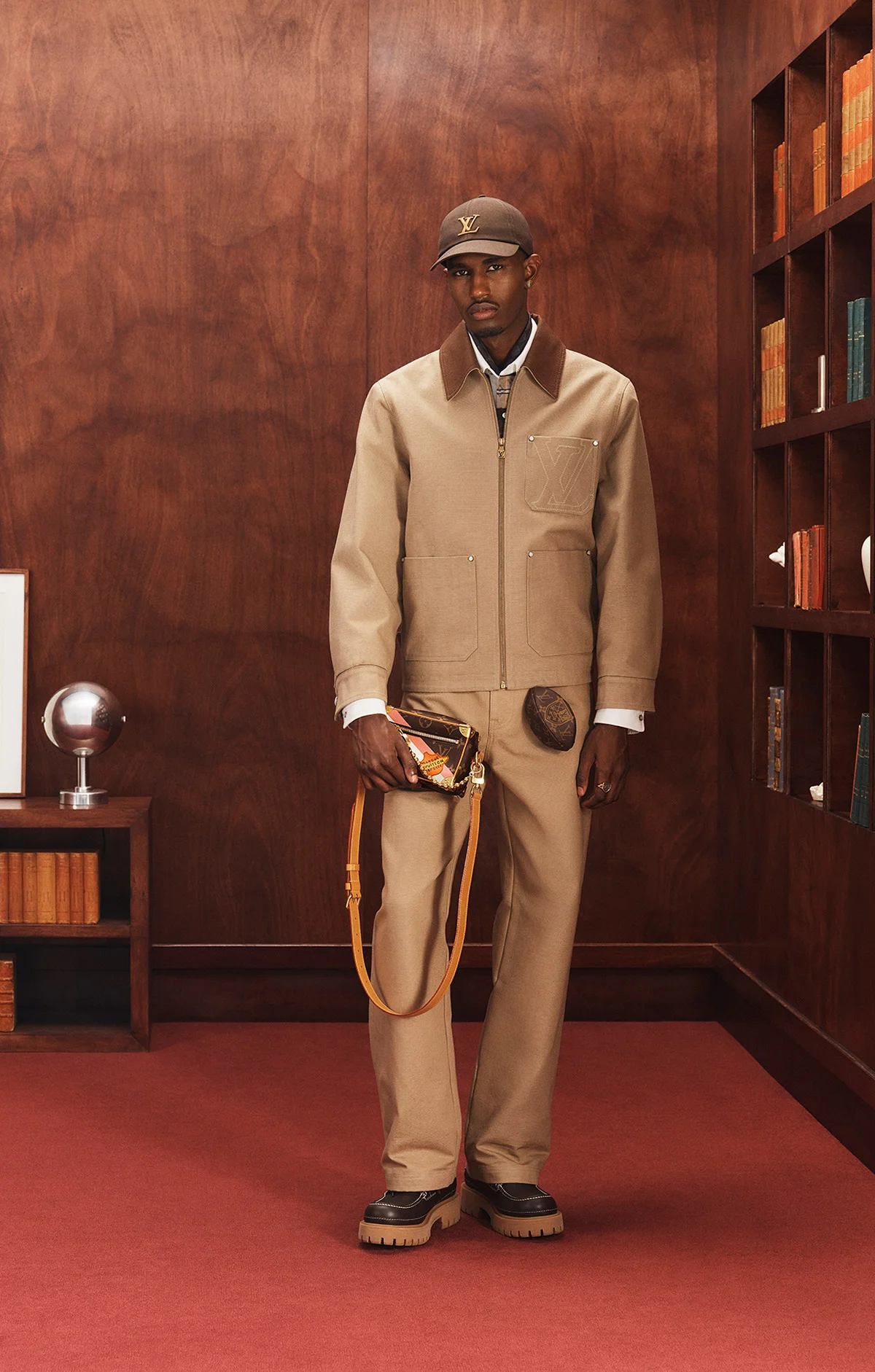
Pharrell Williams has turned his attention to the hallowed halls of academia, and the result is this Louis Vuitton‘s Fall 2025 capsule collection that reimagines collegiate traditions in a modern light. This trans-seasonal offering, scheduled for a September release, serves as a prelude to the house’s spring/summer 2026 collection, exploring the cultural exchange between American university style and European refinement.
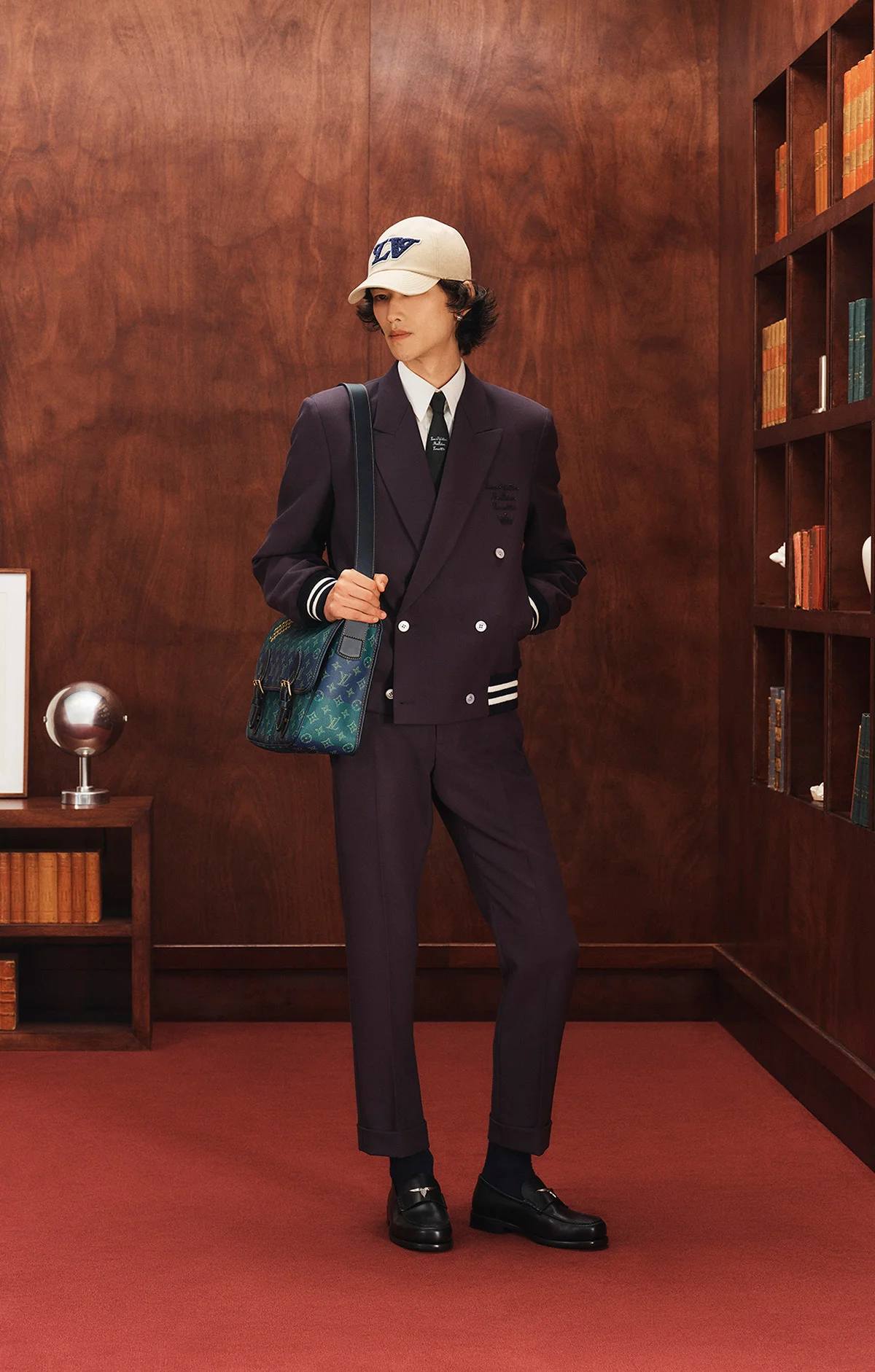
The collection emerges at a time when fashion increasingly looks to the past to move forward. Williams understands that true innovation often requires mining the past. His latest effort demonstrates how Ivy League aesthetics can speak to modern sensibilities without feeling costume-like. Rather than simply appropriating preppy codes, Williams interrogates them, asking what makes these looks endure across generations and continents.
Central to this exploration are three signature Louis Vuitton patterns that Williams has reimagined for an academic context. The Monogram Tartan appears on flannel shirts, hooded blousons, and denim sets, creating a visual language that connects Scottish heritage with American campus culture.
The Monogram Heritage stripe decorates windbreakers and workwear tops with a rhythmic flow, and the Monogram Seeds motif transforms the house’s floral iconography into a grid inspired by Damier that covers leather overshirts and denim pieces.
Follow all the latest news from Fashionotography on Flipboard, receive it directly in your inbox with Feeder.
You may also read
These patterns do more than merely decorate; they anchor the collection in Louis Vuitton’s DNA while enabling Williams to venture into new territory. The interplay between heritage and innovation reflects broader questions about how luxury brands maintain relevance while honoring their histories. Williams seems to understand that patterns can be both signature and playground.
Given the transitional nature of the collection, outerwear takes center stage. Double-faced wool and cashmere blousons meet single-breasted bouclette coats and camel jackets with double-faced jacquard construction. These pieces reveal Williams’s understanding that contemporary luxury must offer both substance and style. The emphasis on layering reflects how people actually dress and acknowledges that real life requires adaptability.
The accompanying cargo pants and shorts offer a contemporary take on traditional dandy dressing. Williams recognizes that modern luxury cannot exist in isolation from streetwear influences. These pieces demonstrate how high fashion can incorporate utility without sacrificing elegance.
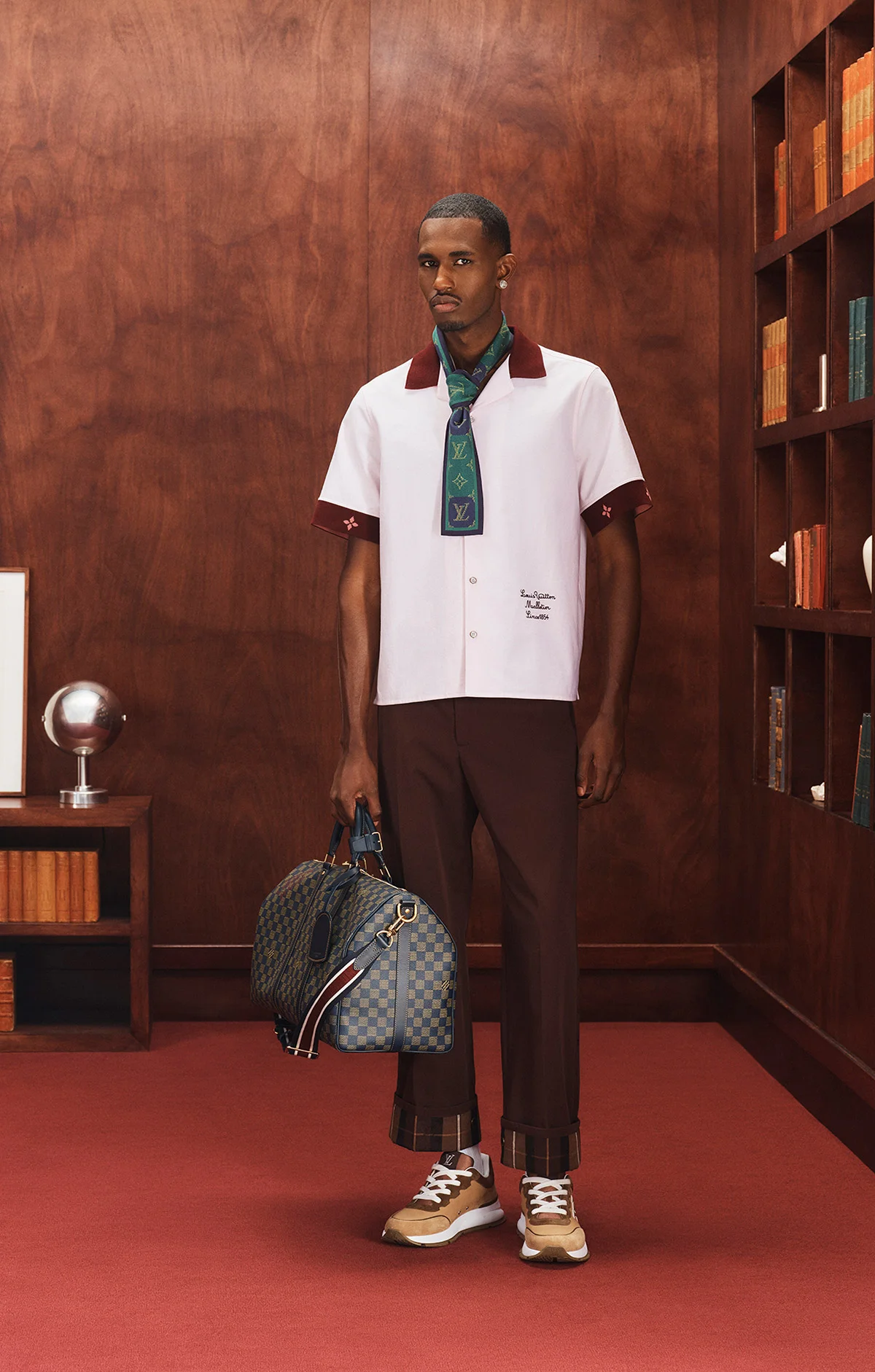
The collection’s color palette speaks to its broader cultural ambitions. Muted tones provide the foundation, while pops of color reminiscent of collegiate pennants and rowing club insignia are strategically placed. This approach reflects Williams’s sophisticated understanding of how color can convey meaning beyond mere aesthetics. The restrained palette suggests confidence rather than ostentation, allowing the craftsmanship and silhouettes to speak for themselves.
The rowing references are particularly fitting, connecting the collection to traditions of teamwork and discipline while avoiding problematic Ivy League imagery. Williams carefully navigates these cultural waters, extracting elements that serve his vision while avoiding those that might alienate.
Neckwear emerges as a crucial element with reversible woven jacquard Monogram Heritage scarves. This reversibility reflects the collection’s broader themes of transformation and adaptability. The footwear selection, including LV Oxford loafers in calf leather and the boat-shoe-inspired LV Remix, maintains the preppy aesthetic while offering contemporary comfort.
These accessories exemplify how luxury brands can honor traditional categories while updating them for modern needs. The attention to detail in these pieces reflects Williams’s understanding that accessories determine whether an outfit feels authentic or forced.
The significance of this collection extends beyond its individual pieces. Williams addresses the challenge of working with culturally loaded aesthetics by transforming Ivy League style from an exclusive signifier to an inclusive inspiration. The collection arrives as conversations about access and privilege in education continue to evolve, and Williams seems aware of these dynamics.
His approach suggests that fashion can engage with complex cultural territory when handled thoughtfully. Rather than ignoring the implications of preppy style, Williams acknowledges them while creating something new. This awareness elevates the collection from trend-chasing to genuine cultural commentary.
The September release date positions these pieces perfectly for the back-to-school season, when fashion naturally gravitates toward more structured and purposeful dressing. Williams understands that timing is important in fashion, and this collection is released when consumers are most receptive to its academic references.