

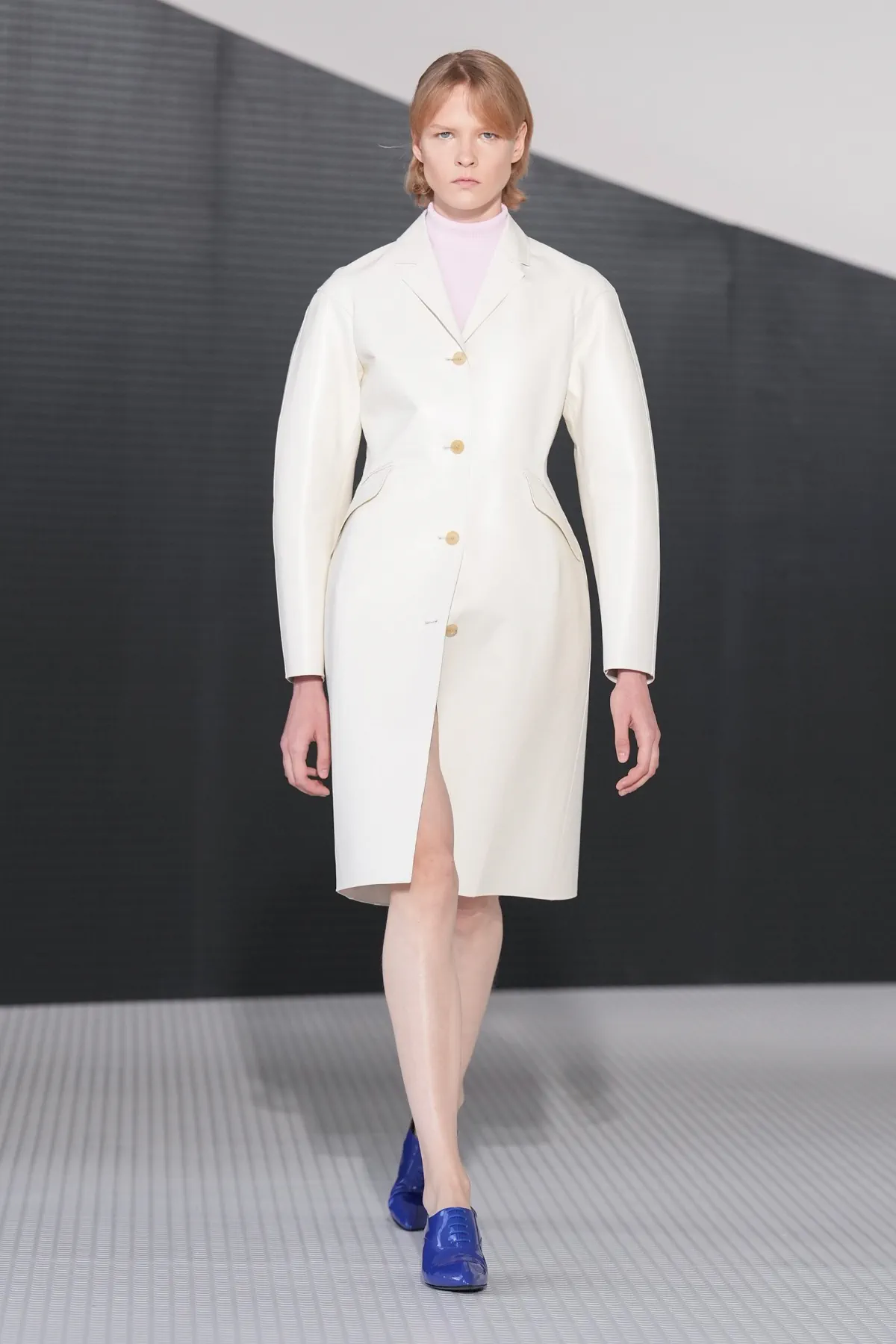
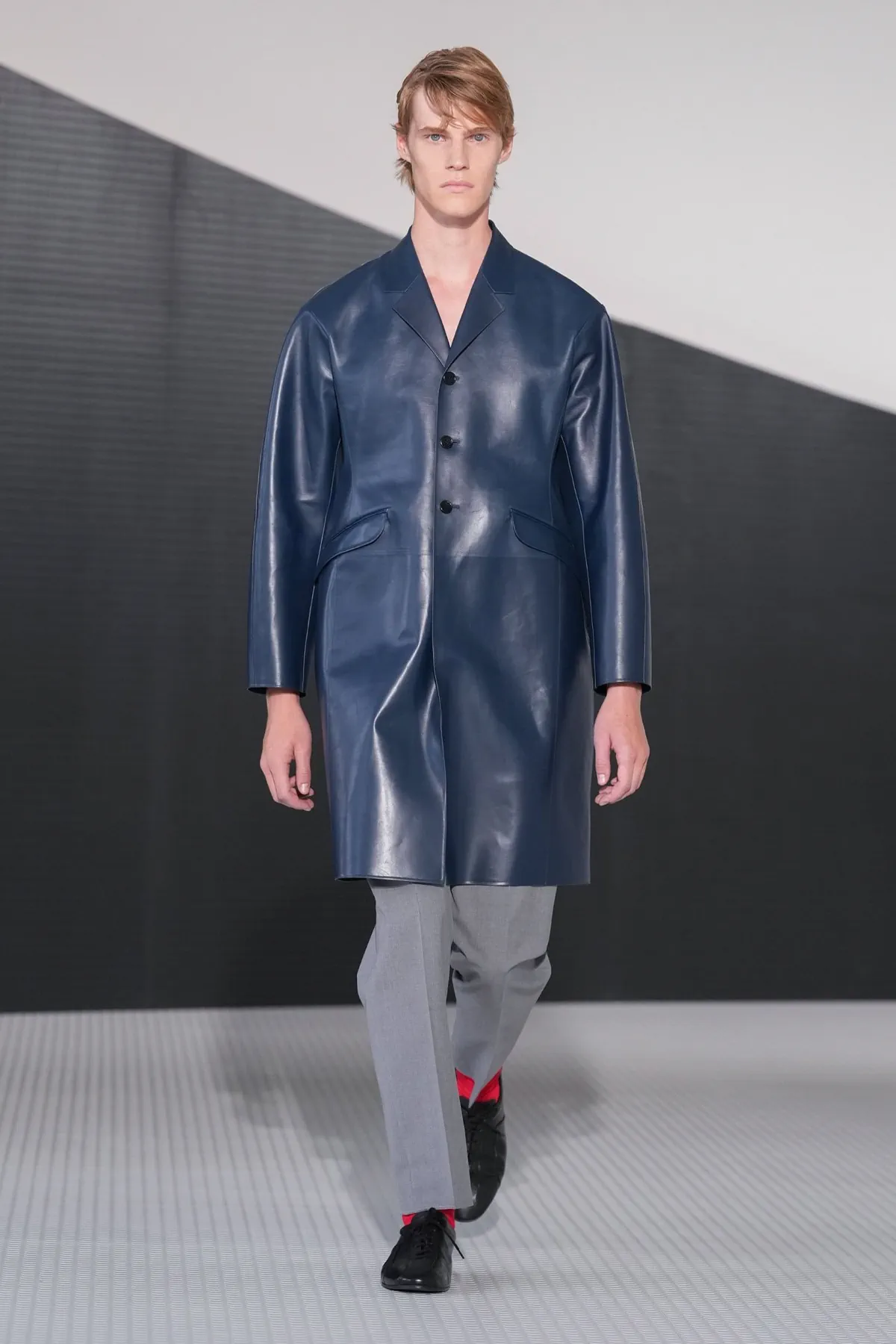
Bellotti, who joined Jil Sander after a tenure at Bally, approached this collection with what he called “apparent simplicity.” This phrase captured his design philosophy, focusing on refinement rather than spectacle. The theatrical gestures seen under Meiers were gone, replaced by a streamlined vocabulary rooted in the label’s history of purism.
Tailoring led the way. Men’s and women’s coats were cut slim with boxier shoulders. Their surfaces were left clean to let the lines speak. Leather jackets stood out for their precision and polished, quiet luster. Trousers had discreet slits at the hips, and jackets had high vents in the back that offered glimpses of skin in a measured way.
Follow all the latest news from Fashionotography on Flipboard, or receive it directly in your inbox with Feeder.
You might also read

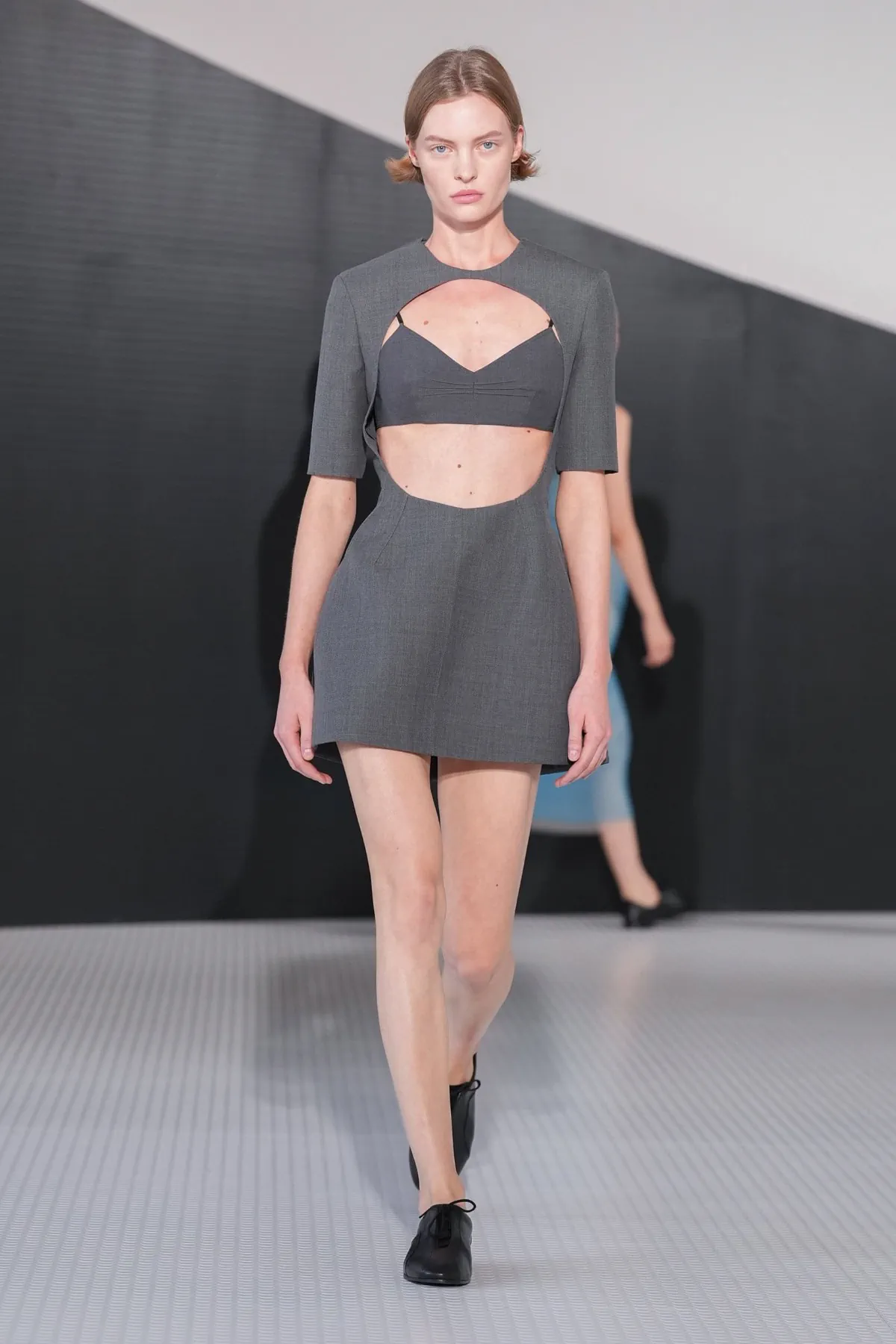
Bellotti’s focus extended to form and detail. Shirts and skirts featured diagonal slits, nodding to Lucio Fontana’s art, and dresses had small portholes that revealed bras made of matching fabric. He added unexpected volume by folding and layering fabrics into geometric protrusions, a technique inspired by Wolfgang Tillmans’s bent-paper works. These elements suggested a curiosity about shape without disrupting the clothes’ calm rhythm.
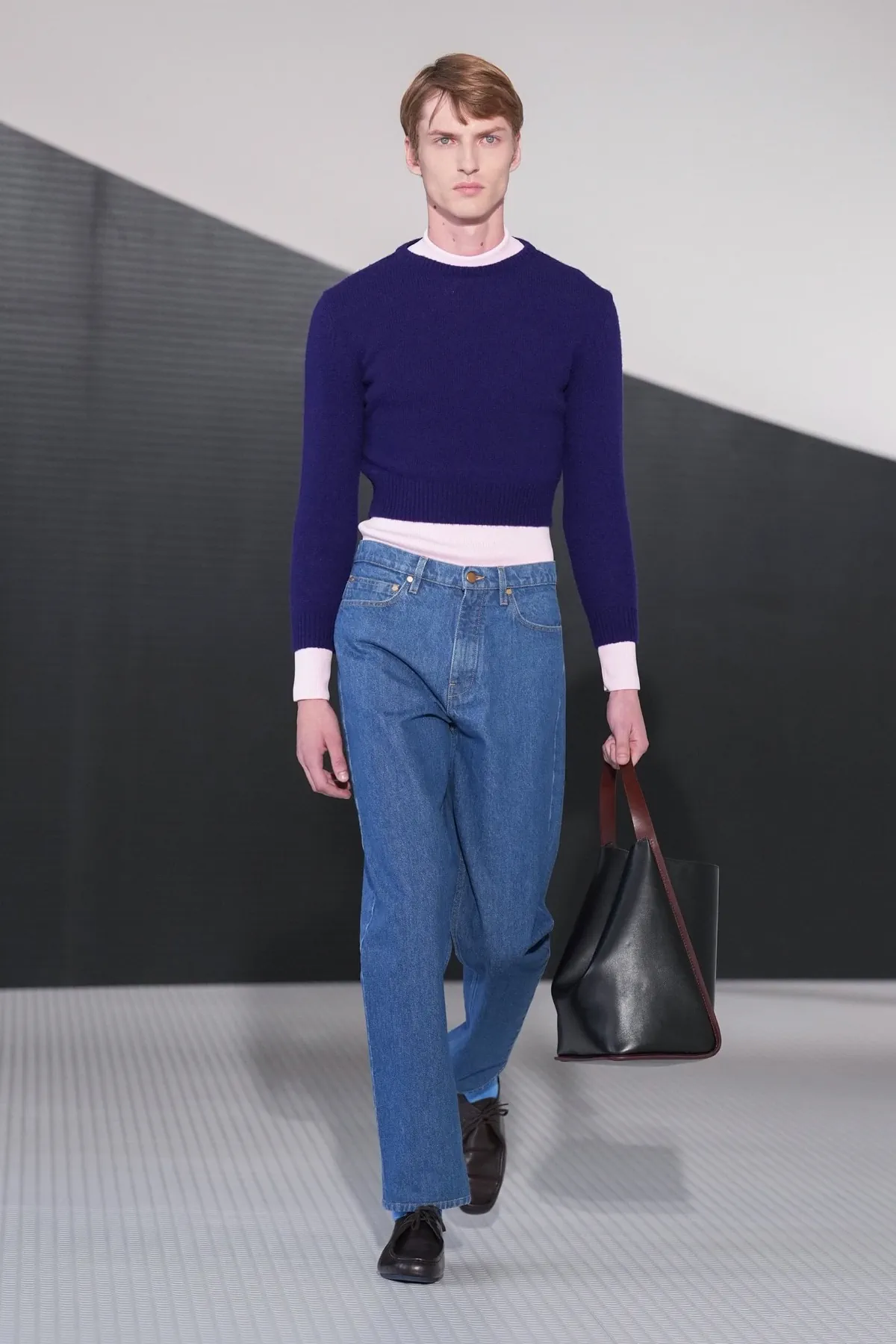
Knitwear held another layer of intrigue. Compact sweaters were styled over sleeker, ribbed versions, creating a dialogue of scale and proportion. Bellotti’s decision to introduce denim on the runway-something absent during Jil Sander’s founder years-hinted at his intention to connect the house with everyday relevance.
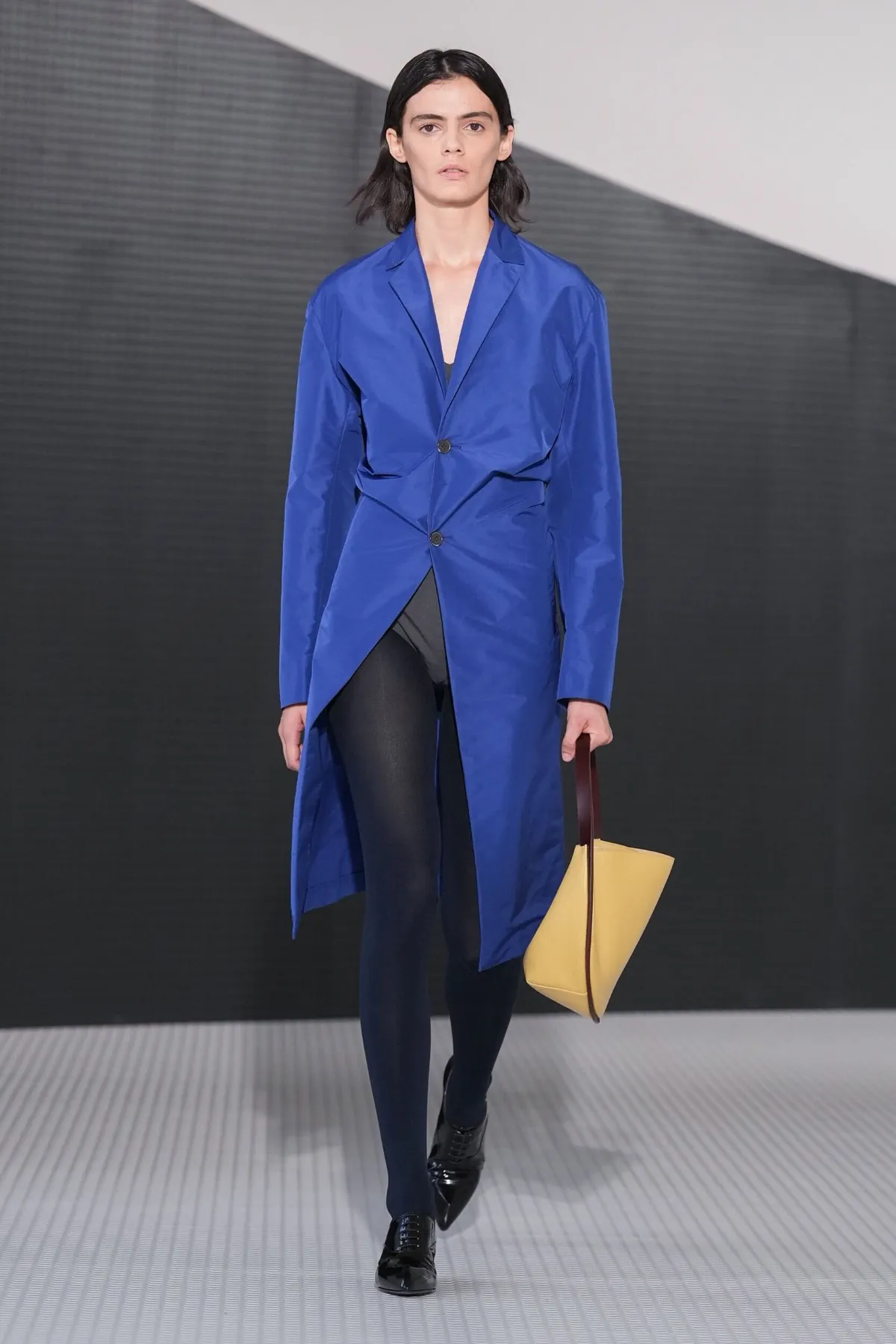
Shoes played their role with equal importance. Glossy oxfords featured subtle, armature-like details; ballet flats had off-center vamps; and curved-heel pumps provided structure under light skirts. The shoes felt contemporary yet remained firmly tied to the label’s rigor.
Simone Bellotti’s first full statement for the house was revealed through the Jil Sander Spring/Summer 2026 collection. Presented at the brand’s Milan headquarters, it signaled a shift toward precise tailoring and subtle experimentation with structure.
Bellotti, who joined Jil Sander after a tenure at Bally, approached this collection with what he called “apparent simplicity.” This phrase captured his design philosophy, focusing on refinement rather than spectacle. The theatrical gestures seen under Meiers were gone, replaced by a streamlined vocabulary rooted in the label’s history of purism.
Tailoring led the way. Men’s and women’s coats were cut slim with boxier shoulders. Their surfaces were left clean to let the lines speak. Leather jackets stood out for their precision and polished, quiet luster. Trousers had discreet slits at the hips, and jackets had high vents in the back that offered glimpses of skin in a measured way.
Follow all the latest news from Fashionotography on Flipboard, or receive it directly in your inbox with Feeder.
Bellotti’s focus extended to form and detail. Shirts and skirts featured diagonal slits, nodding to Lucio Fontana’s art, and dresses had small portholes that revealed bras made of matching fabric. He added unexpected volume by folding and layering fabrics into geometric protrusions, a technique inspired by Wolfgang Tillmans’s bent-paper works. These elements suggested a curiosity about shape without disrupting the clothes’ calm rhythm.
Knitwear held another layer of intrigue. Compact sweaters were styled over sleeker, ribbed versions, creating a dialogue of scale and proportion. Bellotti’s decision to introduce denim on the runway-something absent during Jil Sander’s founder years-hinted at his intention to connect the house with everyday relevance.
Shoes played their role with equal importance. Glossy oxfords featured subtle, armature-like details; ballet flats had off-center vamps; and curved-heel pumps provided structure under light skirts. The shoes felt contemporary yet remained firmly tied to the label’s rigor.