


Inside the Palazzina Reale di Santa Maria Novella, a 1930s Brutalist marble structure adjacent to Florence’s train station, the Paris-based designer stood contemplating a fundamental question about contemporary menswear. How do young men approach formal wear today? Hed Mayner’s Fall 2026 collection, presented during his Pitti Uomo debut, offered a radical answer through garments that challenged traditional tailoring principles.
Hed Mayner arrived at the venerable Italian trade fair with a reputation for subverting traditional menswear codes. His appointment as guest designer represented Pitti Uomo’s ongoing effort to shed outdated sartorial constraints, a parallel ambition that made the partnership logical. The setting, with its red marble floors adorned with Roman stuccos and walnut wall coverings, provided striking opposition to his deconstructed aesthetic.
The opening looks sparked uncertainty. Silver sequined pajama sets were layered beneath fluid duster coats and appeared alongside pleated ensembles under abbreviated houndstooth capes. These initial pieces refused easy categorization, instead functioning as declarations of intent. Mayner was establishing his refusal to conform to established norms and setting up contrasts that would become his primary tool.

What followed demonstrated his technical prowess more clearly. Topcoats, bomber jackets, and collarless peacoats had rounded arm lines that stood away from the body, creating volume where sharpness usually dominates and echoing his explorations of exaggerated volume. Cinched leather belts emphasized nipped waists, producing hourglass silhouettes in garments typically designed to project a masculine angularity. The designer manipulated jacket sleeves by reversing their construction and angling the arms forward into a protective shrug.
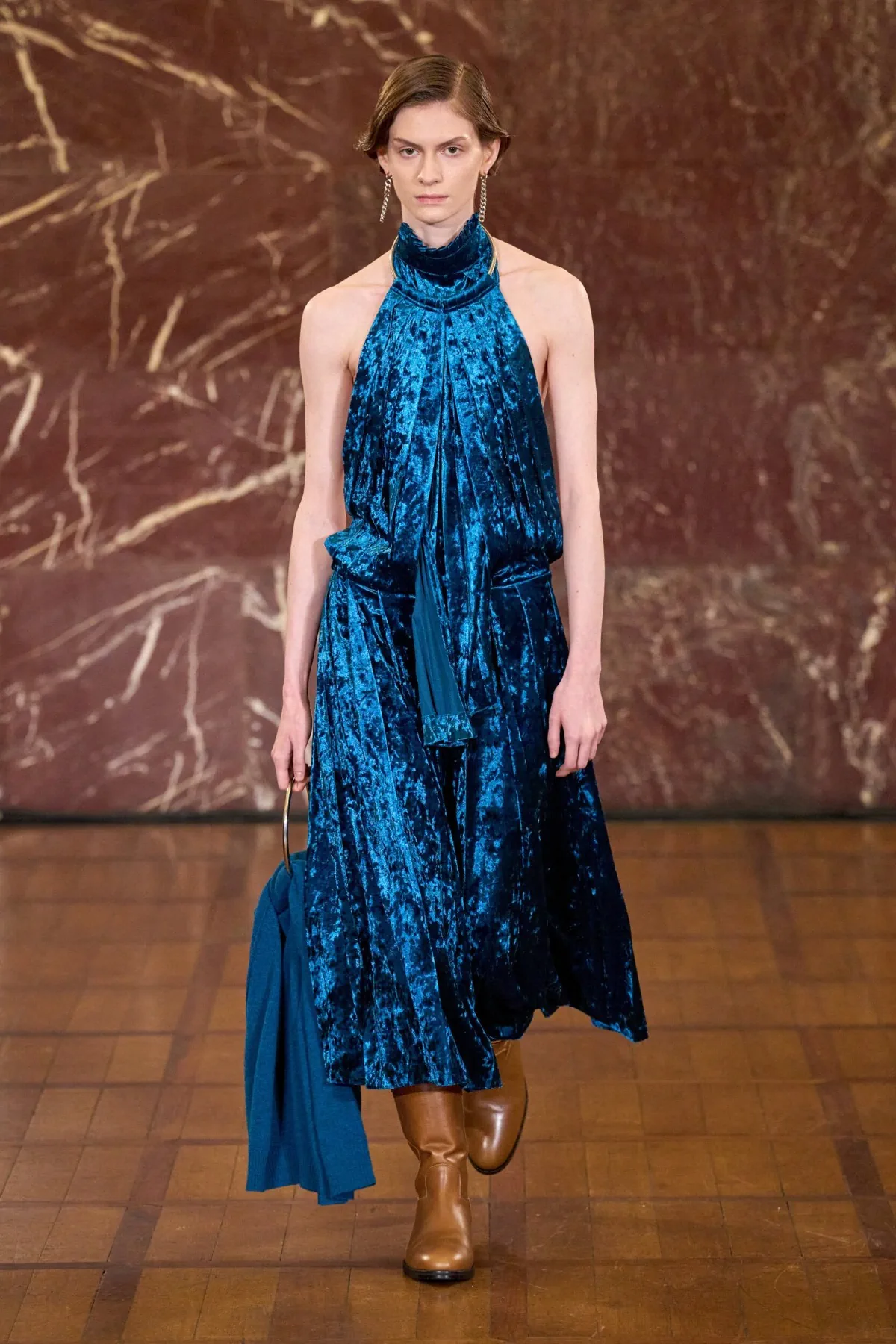
Heritage patterns, such as tartan and houndstooth, appeared throughout the presentation, but Mayner placed them against unexpected materials. Silver foil created space-age effects, and pleated suede resembled upholstery fabric. Crushed velvet formed halter dresses, and bonded mohair constructed oversized sweaters. Reebok boxing sneakers, selected for their tight silhouette, grounded looks that might otherwise have been unwearable.

Follow all the latest news from Fashionotography on Flipboard, or receive it directly in your inbox with Feeder.
You might also read
The designer’s pattern work deserved attention. While photographs captured static moments, the garments generated fluid movement on the runway. V-shaped suits with power shoulders and carrot pants created abnormal verticality. Bias-cut sweatshirts and silk shirts with scarf necks and tie motifs introduced languid elements against structured pieces.

Mayner’s exploration extended beyond male customers. Draped blouses paired with hybrid pants-skirts demonstrated his genderless approach. Raw-hemmed culottes in gray flannel were paired with oversized, hand-knitted cardigans. Carpenter pants and pleated, baggy jeans offered volume without referencing traditional gender distinctions. The cumbersome dresses, constructed from four layers of pleated fabric of different lengths, were less successful than most pieces, which appeared genuinely genderless rather than simply unisex.
The designer works within the classical vocabulary of menswear, a framework he deliberately stretches. He takes familiar elements and blurs them into unfamiliar territory. The result is clothing that feels simultaneously familiar and disorienting. Traditional made-to-measure tailoring views the body with particular sharpness, but Mayner rejects singular perspectives.

His work explores how form reshapes the body while defining attitude. Meaty heritage fabrics appeared in hourglass coats, which were worn with base-layer garments and riding boots. Baggy bottoms anchored nearly every silhouette, providing balance against structured tops. The collection deliberately embraced imperfection, finding strength in departing from accepted standards.
Press notes distributed on seats posed a provocative question: Who has the freedom to be different, and who challenges norms? This question framed the collection within broader cultural conversations about conformity and individuality. As models navigated a maze of benches arranged throughout the marble space, their movement contrasted with the building’s grandeur.

Mayner’s appearance at Pitti Uomo was his first presentation at the fair, although his work has earned recognition in Parisian fashion circles. The invitation to show as a guest designer represented significant institutional validation. His collection defied easy categorization, refusing to be reduced to a mere tailoring exercise or a pure deconstruction project.
The collection showcased sophisticated pattern-making, ensuring that the garments would not overwhelm the wearers. This is a common issue when designers prioritize sculptural form over functionality. Mayner’s technical skill enabled him to create bold, cocooning silhouettes that empower the wearer. Instead of following the human form, he subverted, exaggerated, and warped conventional proportions.