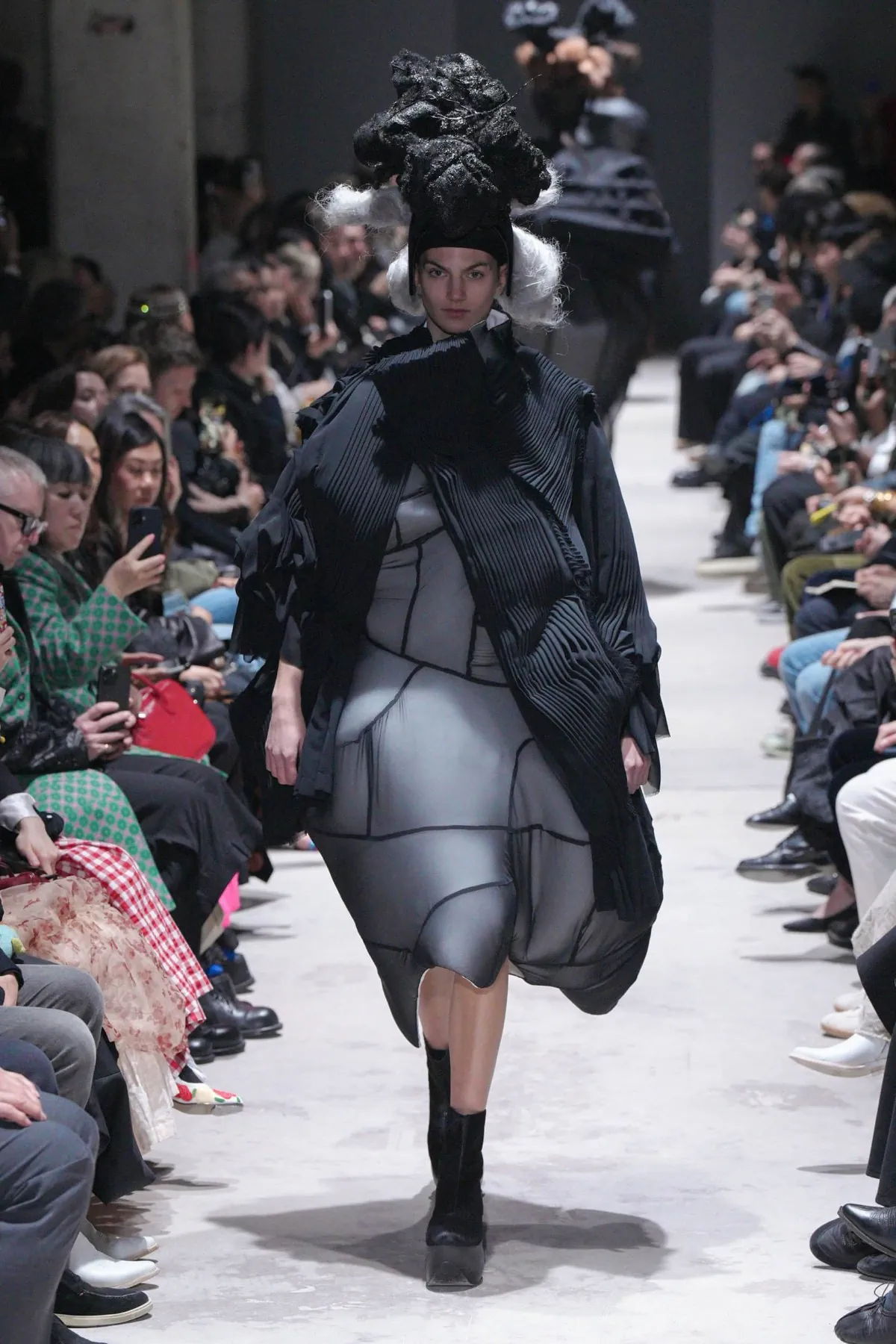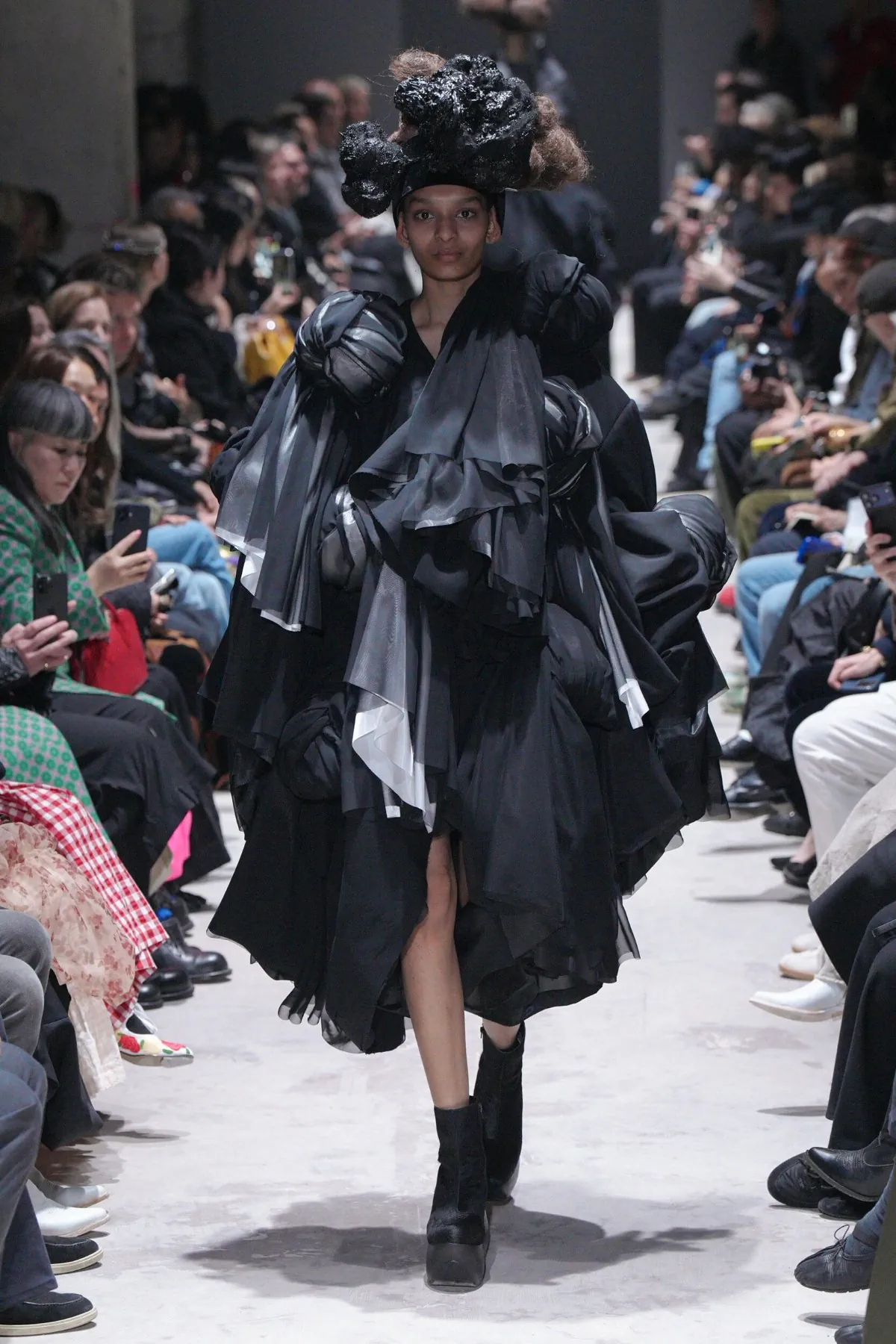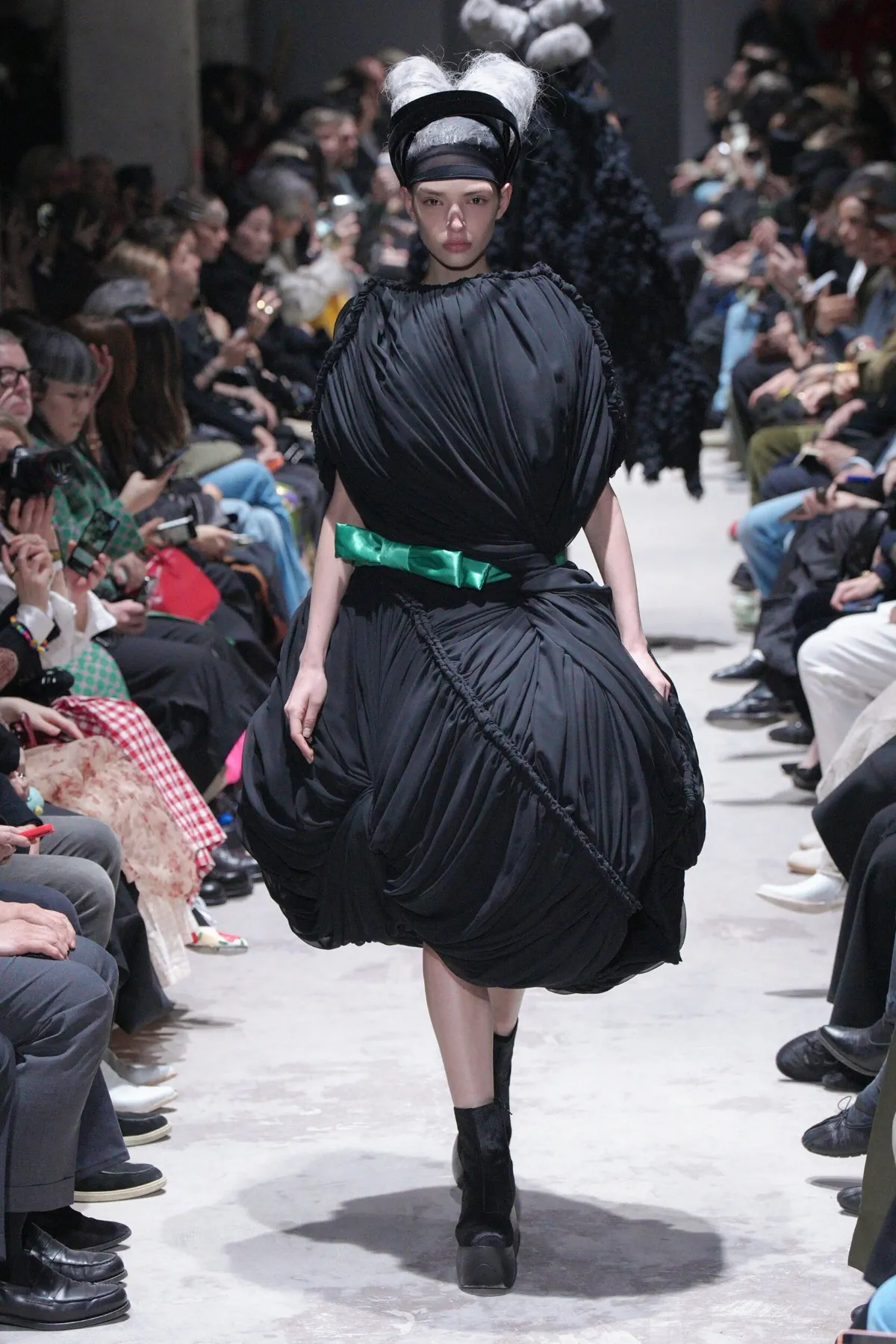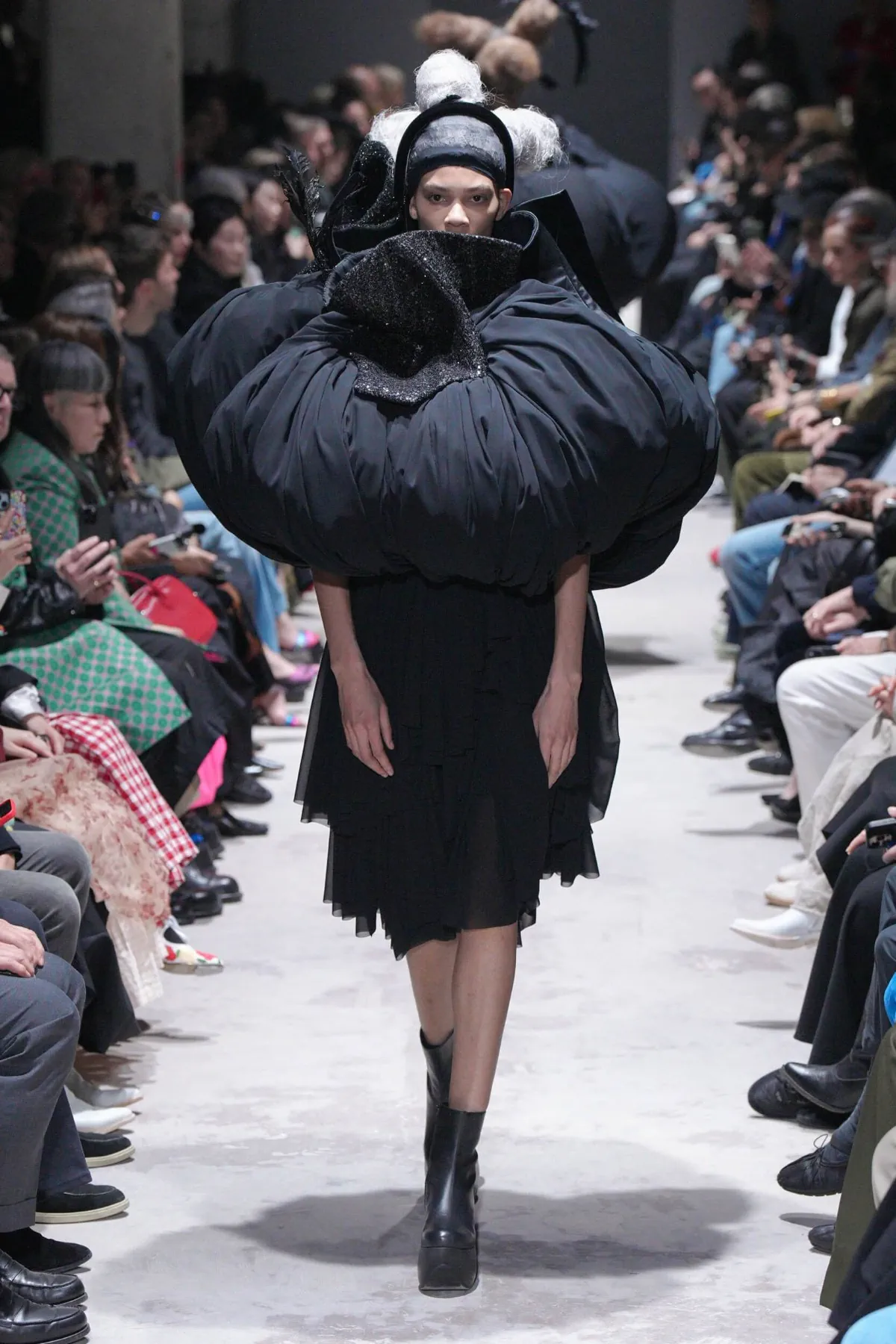

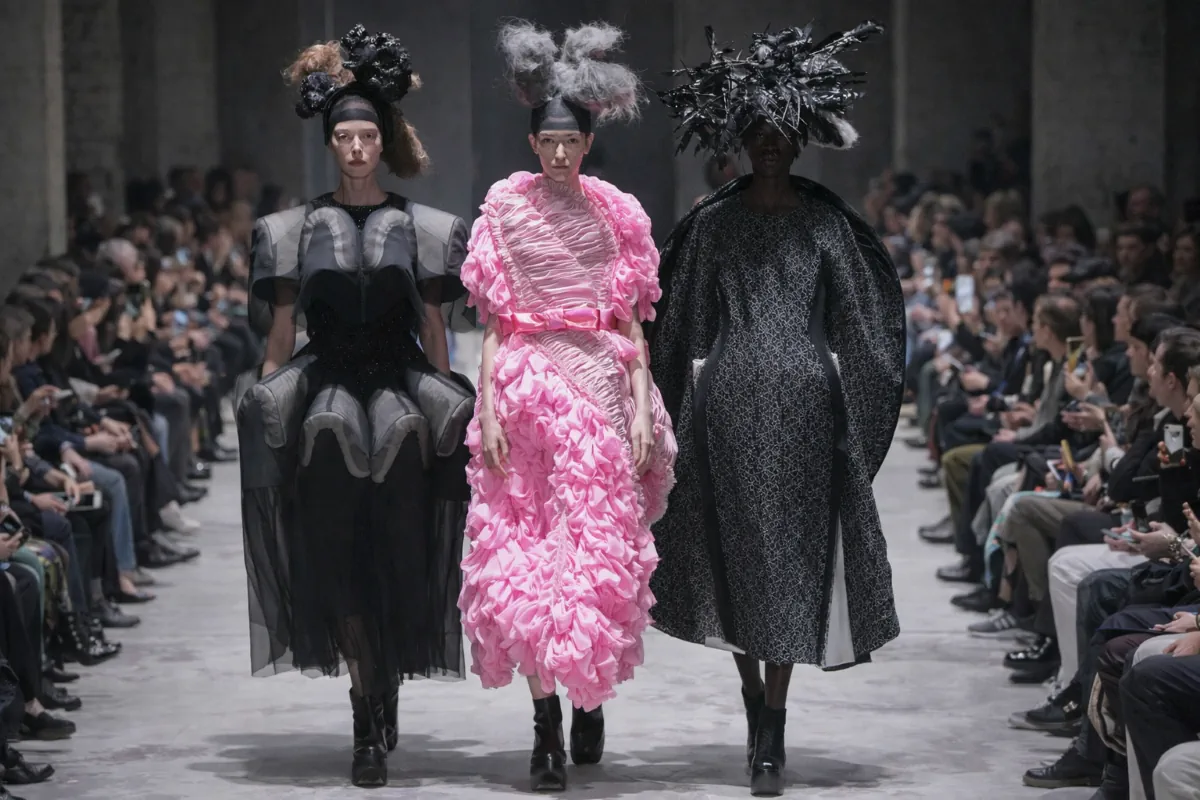
Rei Kawakubo has made up her mind. After decades of working in near-total darkness, aesthetically speaking, she has arrived at what feels less like a conclusion than a confirmation: Black is her color, her material, her medium. The Comme des Garçons Fall 2026 collection, presented in Paris, made that position clear from beginning to end.
| 📌 Key Facts |
|---|
| 🖤 Rei Kawakubo presents sixteen opening looks entirely in black, reinforcing her long-standing aesthetic commitment. 🧵 Shirring, lace, sequins, brocade, chiffon and fringe enrich the garments’ surfaces. 👗 Voluminous shapes, padded protrusions and architectural forms define the collection. 🌸 Six final looks appear in bold pink, reframing the dominance of black. 🪐 Kawakubo’s designs intentionally invite multiple readings, from geological to cosmic forms. |
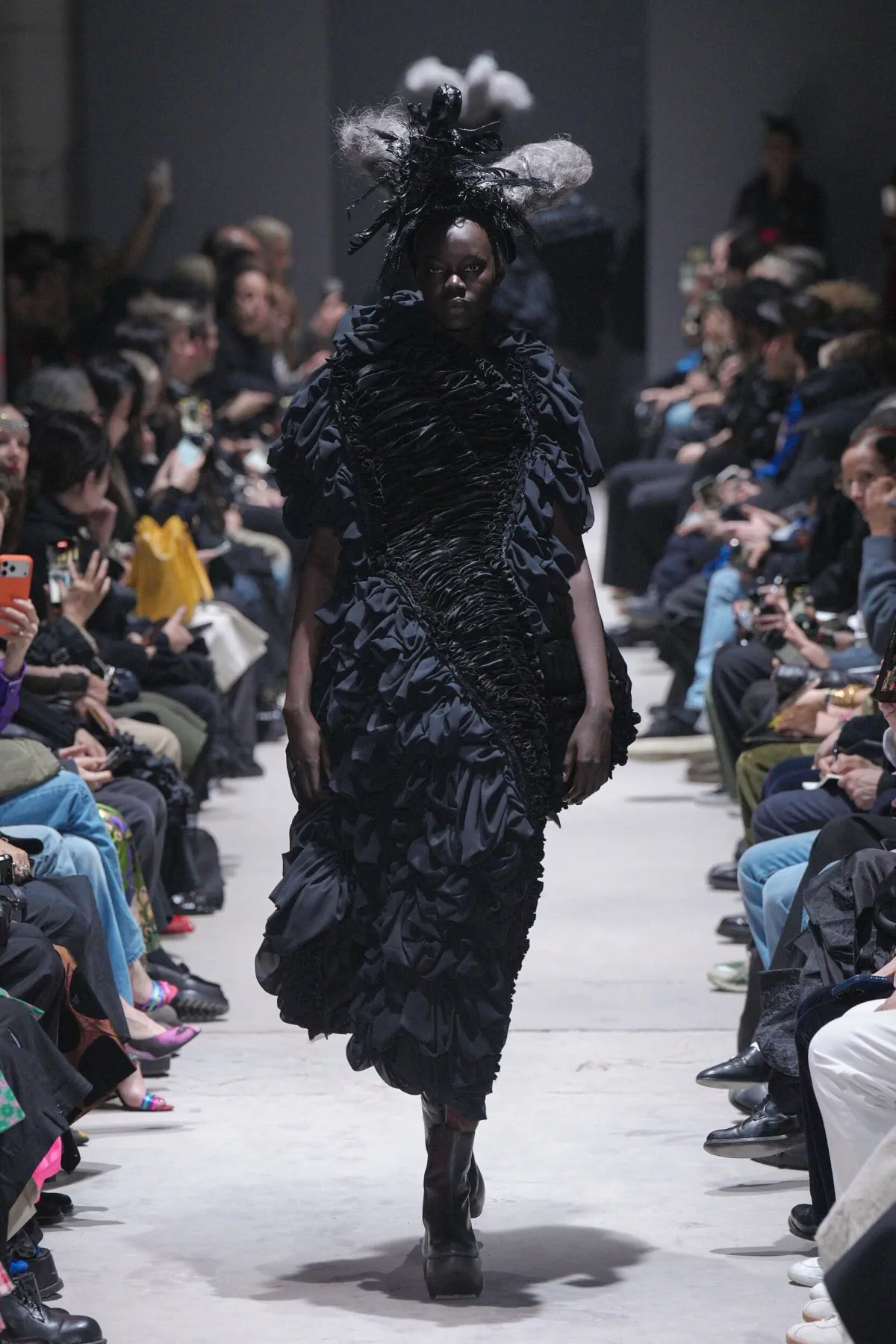
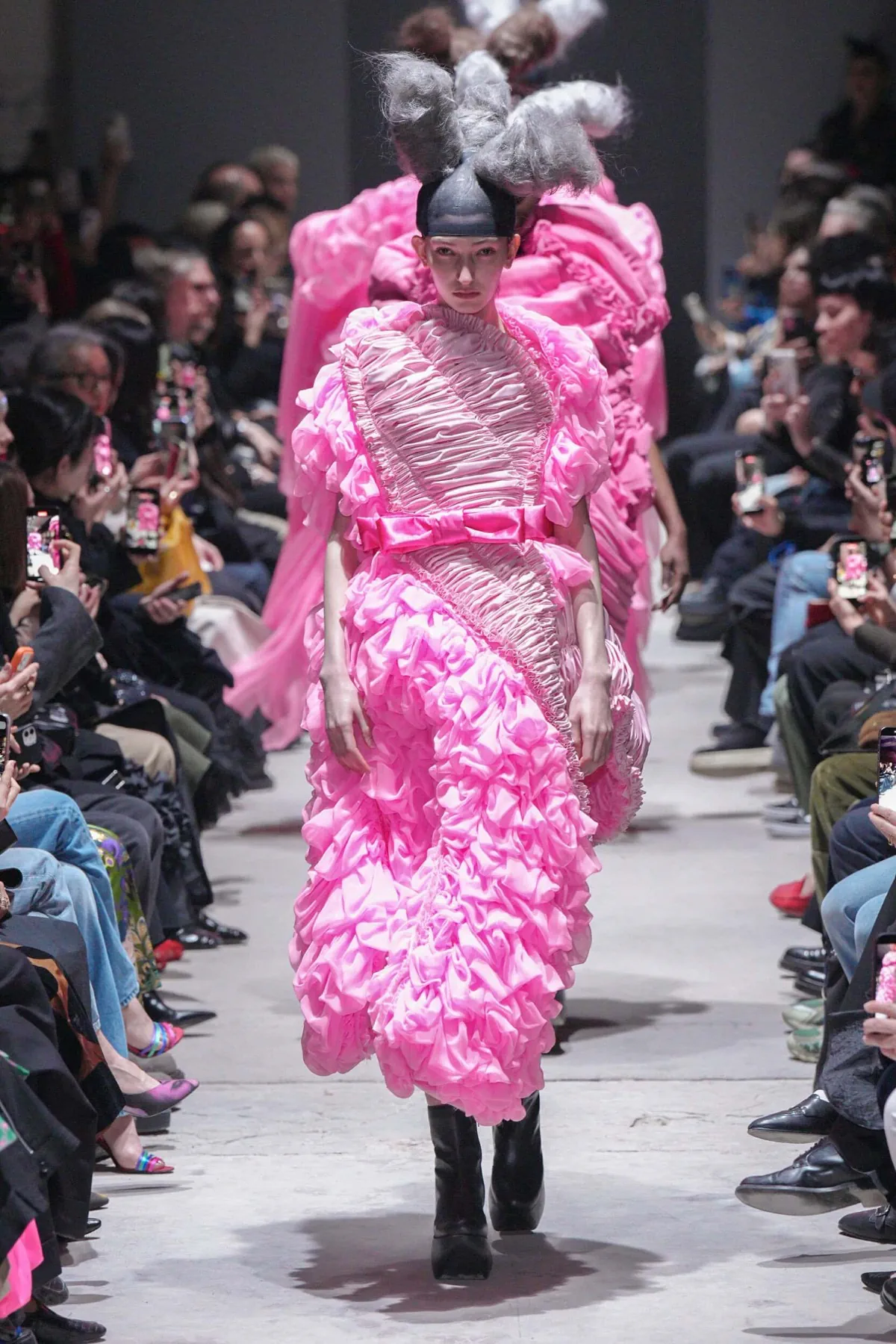
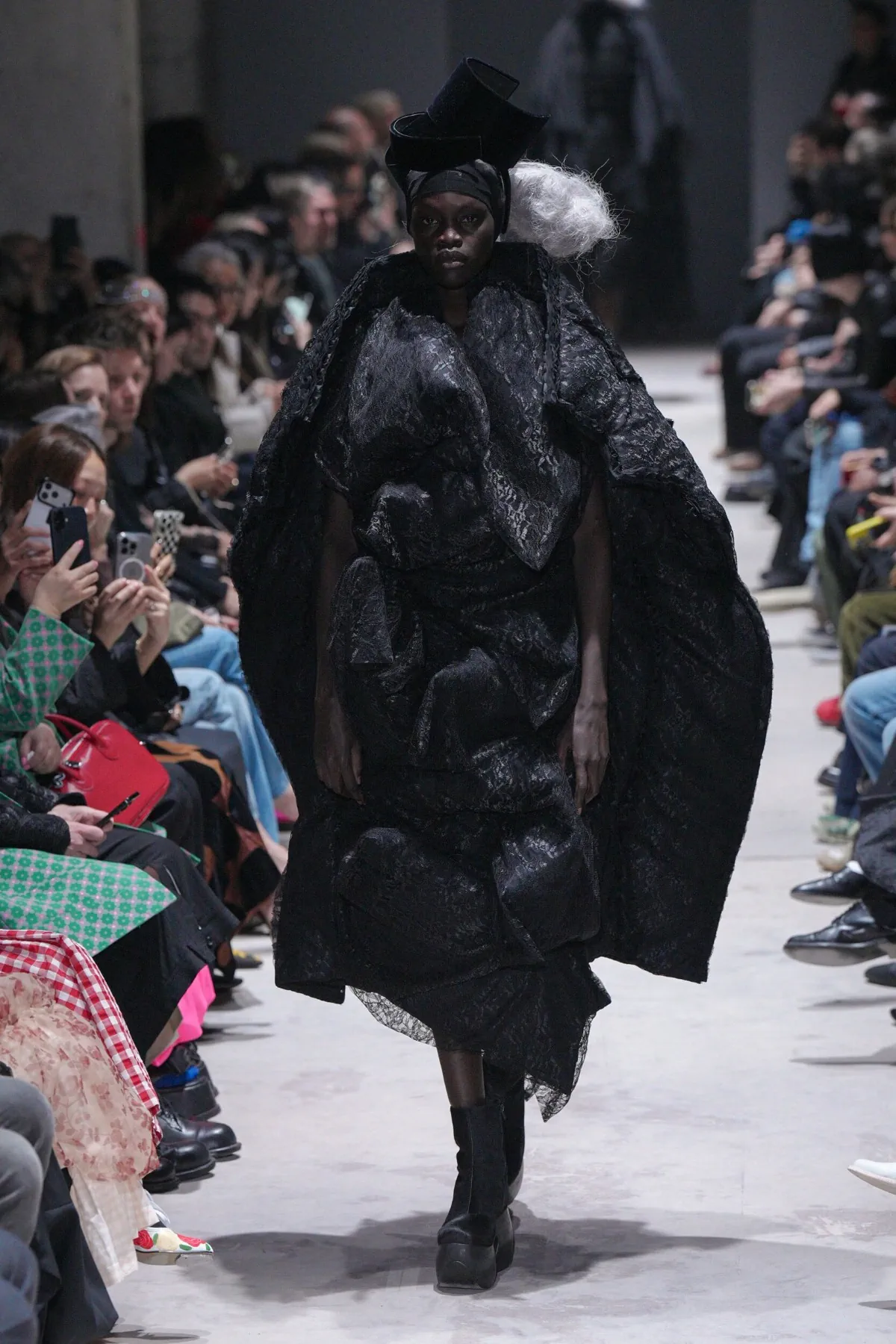
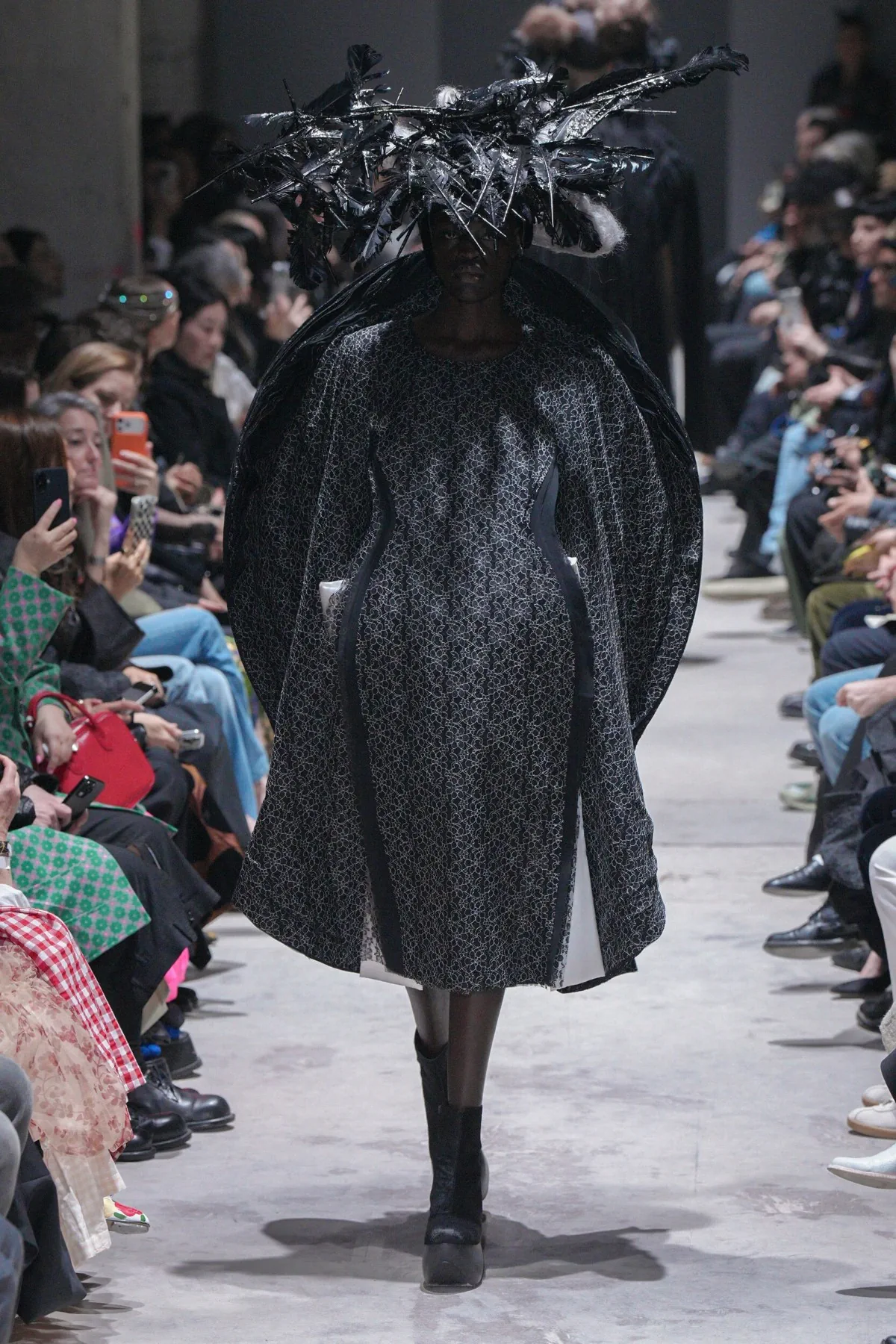
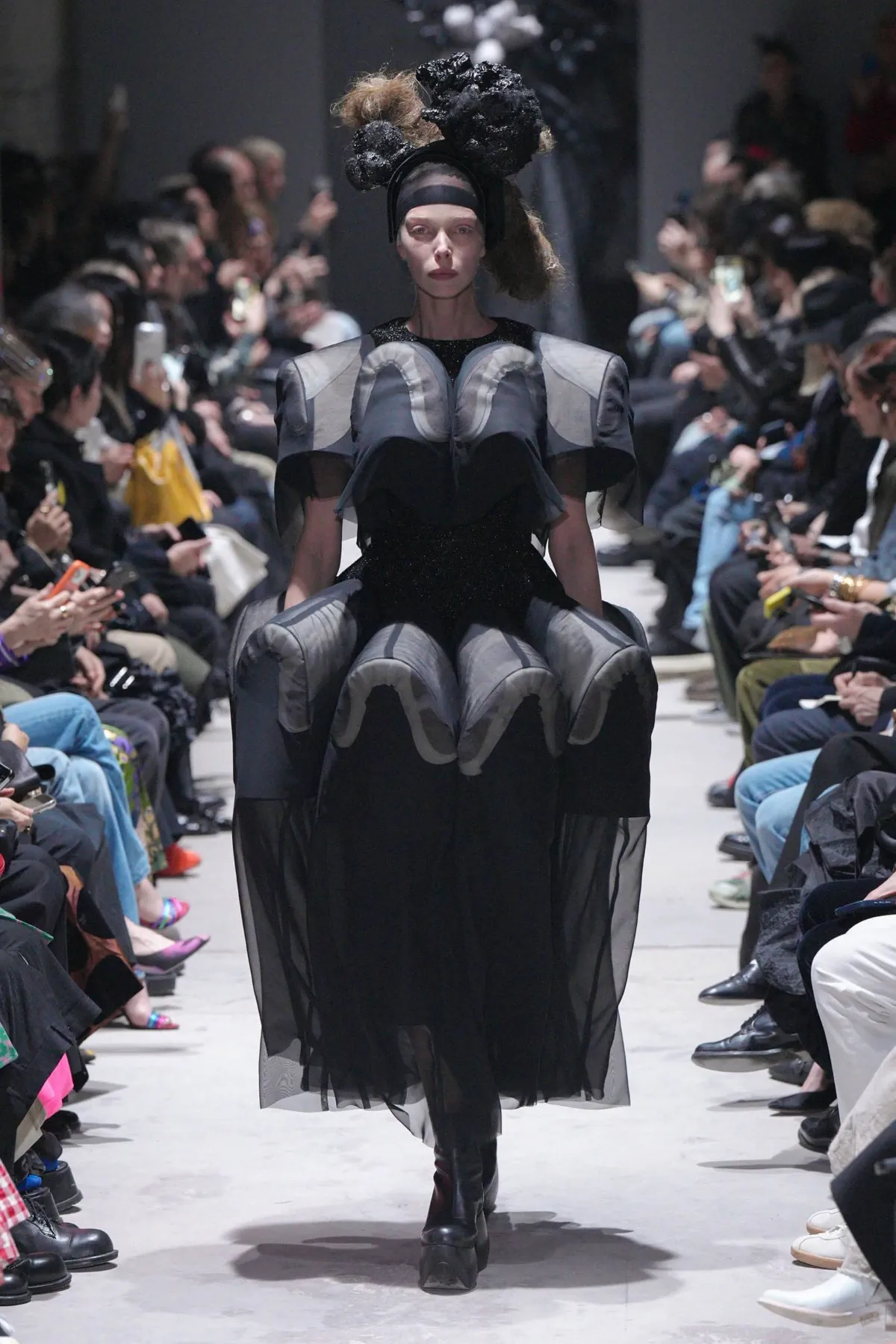
Kawakubo opened with sixteen looks, all black and uncompromising. The familiar shapes were there: the padded protrusions at the hip; the abstract volumes stacked on the body like geological formations; and the sculptural silhouettes that seem to challenge how much a human frame can support. But this season, the surface received unusual attention. Shirring, ruching, layers of lace, cascading fringe, brocade, sequins, and delicate chiffon softened the architecture without dismantling it. Knotted bows and wisteria-like draping appeared throughout the collection, lending a romantic quality to Kawakubo’s work, which is not always so openly foregrounded.
The clothes were beautiful. That word is not always the right one for Comme des Garçons, but here it applied. Whatever the shape – and some were extravagant, with side volumes wide enough that models had to step aside when crossing paths on the narrow runway – the fabrics did their work quietly. Sequins caught the light. Fringe trembled. Lace gave certain pieces an air of being both ancient and very much alive.
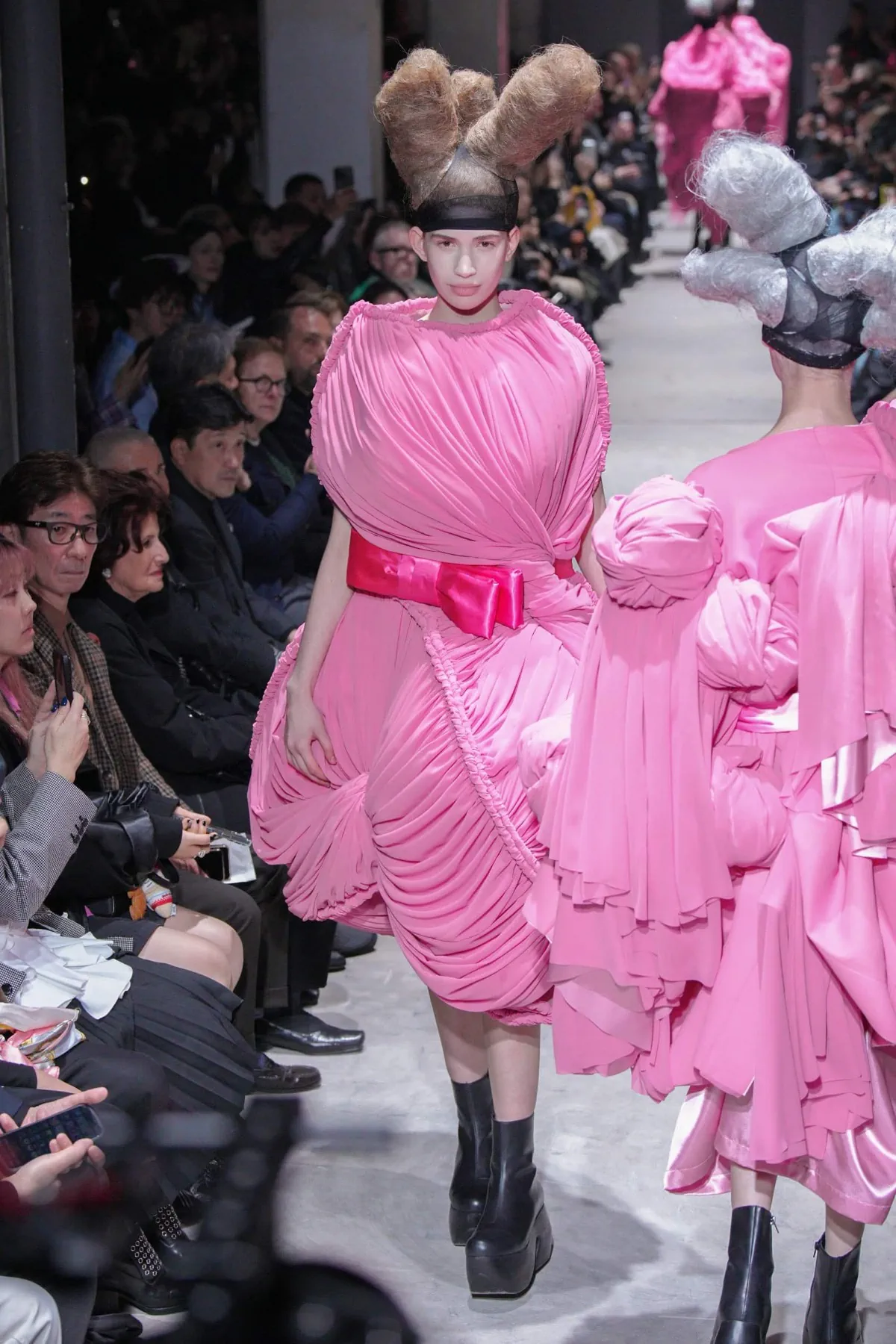
A pause settled over the room. When movement resumed backstage, six more looks appeared. They were structurally identical to what had come before – the same massive, abstract envelopments – but rendered in pink. A saturated, unabashed, almost defiant pink. The room took them in without a sound. Only after they had retreated did the music return, slow and elegiac.
This was a striking choice, especially for those who had read Kawakubo’s notes for the season. She wrote that black was ultimately her color, the strongest and most charged. It was capable of containing both rebellion and cosmic meaning – the universe and the black hole at once. The pink interlude did not contradict that declaration so much as frame it. After all, darkness reads differently when something bright has just left the room.
Follow all the latest news from Fashionotography on Flipboard, or receive it directly in your inbox with Feeder.
You may also read
The structural vocabulary on display – the bolted-on protrusions, the 2D garments carved into capes, and the stalactite volumes – has appeared in Kawakubo’s work before. What shifts, season to season, is how much she allows into that architecture. This time, she allowed quite a lot: detail, texture, and the suggestion of softness. Look 6 featured curved panels of padding on the shoulders, bust, and skirt that could be compared to roof tiles, formal wigs, fossils, or planets.
That ambiguity is the point. Kawakubo’s clothes have long functioned as projective objects. What you see in them says something about what you bring to the room. The final look, with its long fronds of fringe shivering at the slightest movement, could have been oceanic, atmospheric, or neither. The collection asked questions it had no intention of answering.