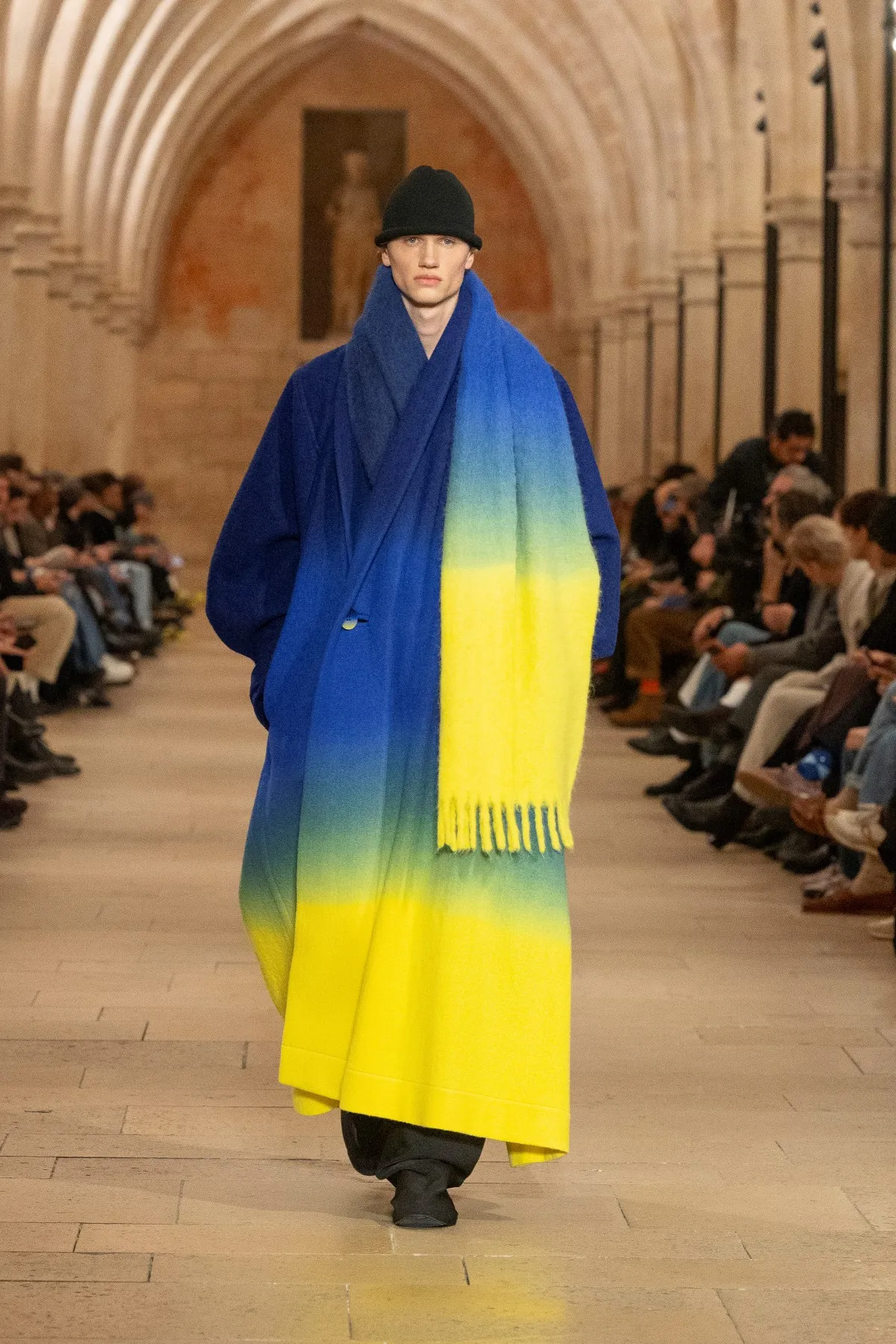

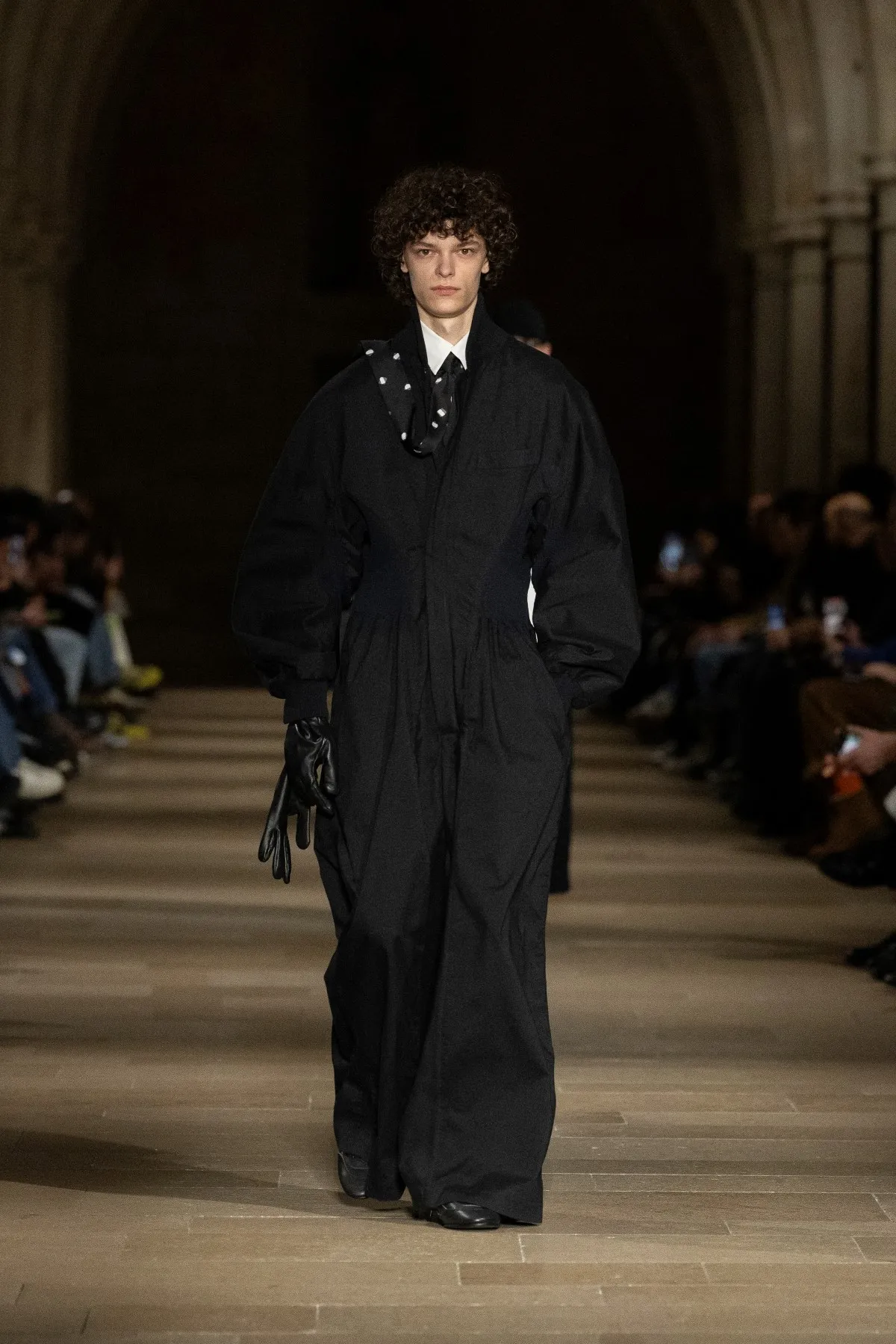
The IM Men Fall 2026 collection was presented beneath the vaulted stone arches of the Collège des Bernardins in Paris, a thirteenth-century cloister where shadows pooled like spilled ink. The setting felt deliberate. This was not fashion as spectacle, but rather, fashion as meditation – an exploration of form without rigidity. Designers Sen Kawahara, Yuki Itakura, and Nobutaka Kobayashi titled their work “Formless Form,” a paradox that guided every silhouette down the runway.
| 📌 Key Facts |
|---|
| 🏛️ Brand: IM Men 🧠 Creative Direction: Sen Kawahara, Yuki Itakura, Nobutaka Kobayashi 📍 Location: Collège des Bernardins, Paris 🎨 Inspiration: Sunrise and sunset color gradations 🧵 Key Materials: Sculptural wool, elastic single-piece fabrics, recycled polyester 👔 Design Focus: Deconstructed tailoring and adjustable silhouettes 🕊 Philosophy: Elegance without rigidity, movement without constraint |
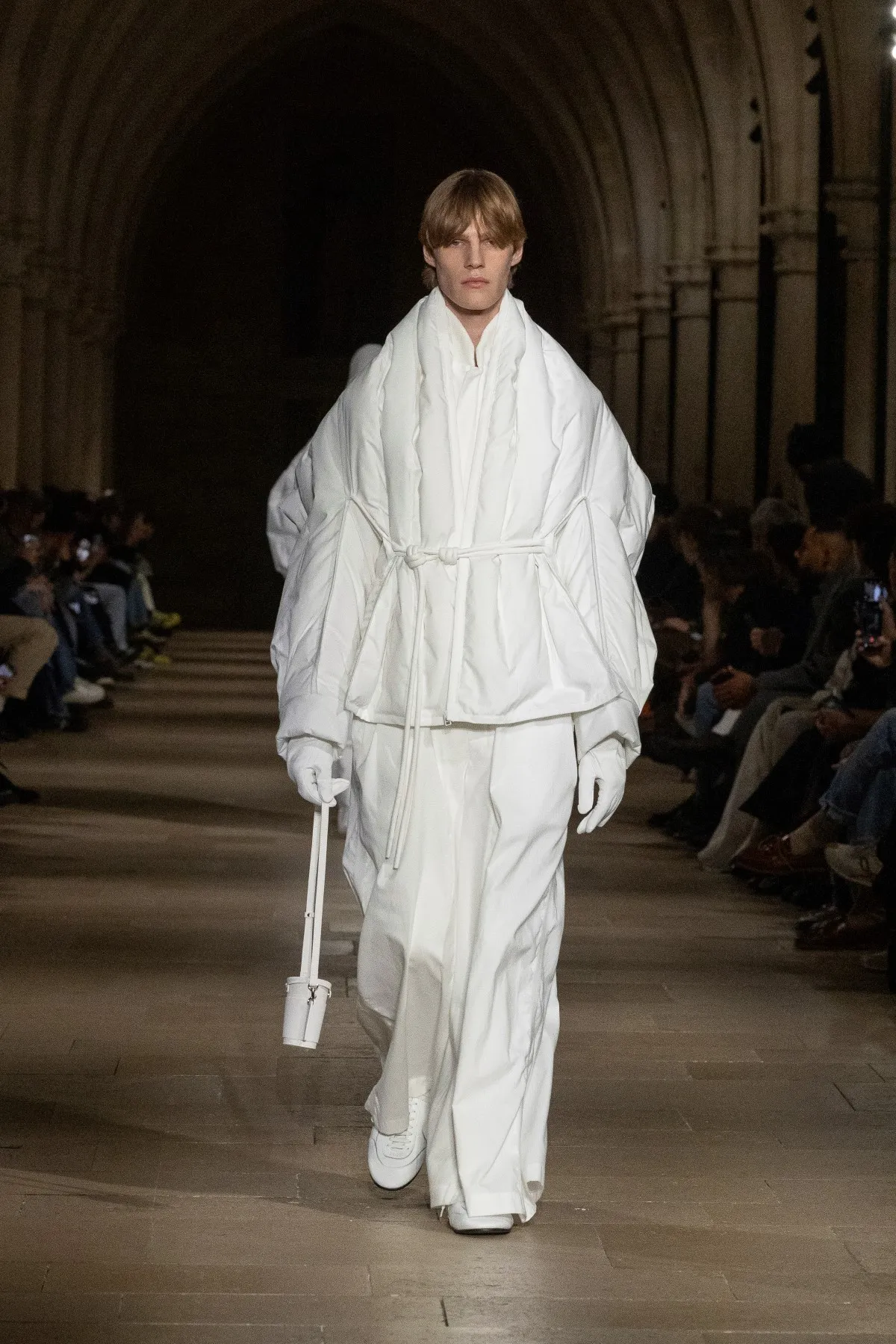
Sunrise and sunset served as the heartbeat of the collection’s colors. The garments transitioned through a spectrum of colors, starting with the darkness of pre-dawn and gradually shifting to shades of gray before blooming into hues of ocean blue and dusky pink. These were not prints applied to fabric but rather dyes poured directly onto bolts of wool, each roll absorbing color uniquely. A double-breasted coat exemplified this technique; its collar was a deep marine blue that faded gradually through gray to robin’s-egg blue, finally ending with a hint of rose at the hem. The effect was organic and inevitable, like the changing light across a sky.
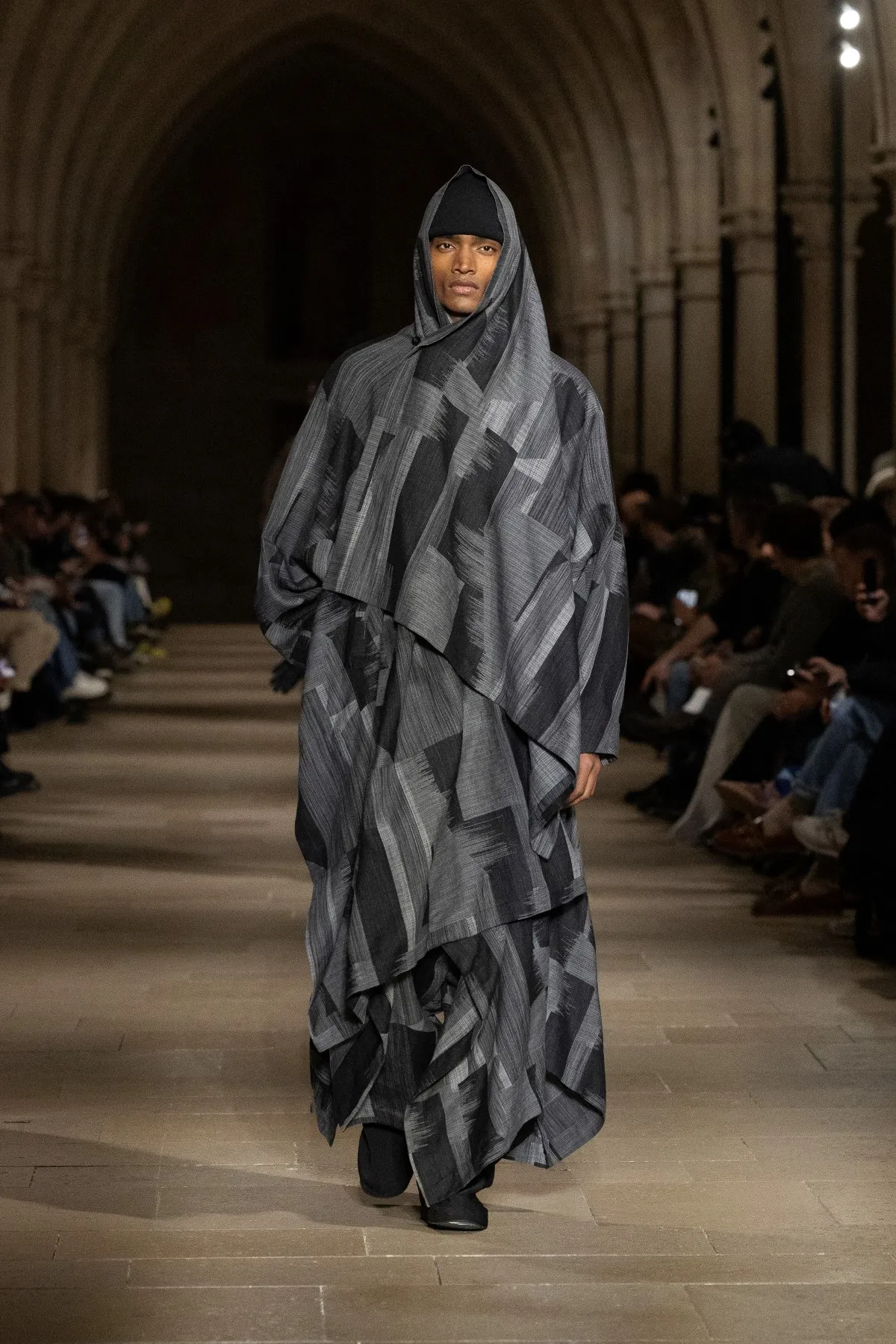
Textiles carried equal weight. The opening Clay series introduced a single-piece fabric with built-in elasticity. Its structure contracts under heat to create sculptural volume without seams. A black jumpsuit made from this material draped generously over the arms and legs, yet it retained its shape when the wearer moved. It was clothing engineered for motion yet dignified in repose. Elsewhere, recycled polyester stuffing lent quilting a soft, architectural presence that suggested Japanese ceremonial robes without directly quoting them.
Tailoring underwent a quiet transformation. Shoulders relaxed their grip on the body. Jackets featured storm flaps that were absorbed into the garment’s body rather than layered on top of it. Elastic crocodile clips replaced traditional fastenings at the shoulders and waist, allowing the garments to adjust to the wearer instead of demanding that the wearer conform. Trousers came with wide, smoking-inspired waistbands, and dungarees were paired unexpectedly with formal jackets. The message remained consistent: Elegance need not mean restriction.
Follow all the latest news from Fashionotography on Flipboard, or receive it directly in your inbox with Feeder.
You may also read

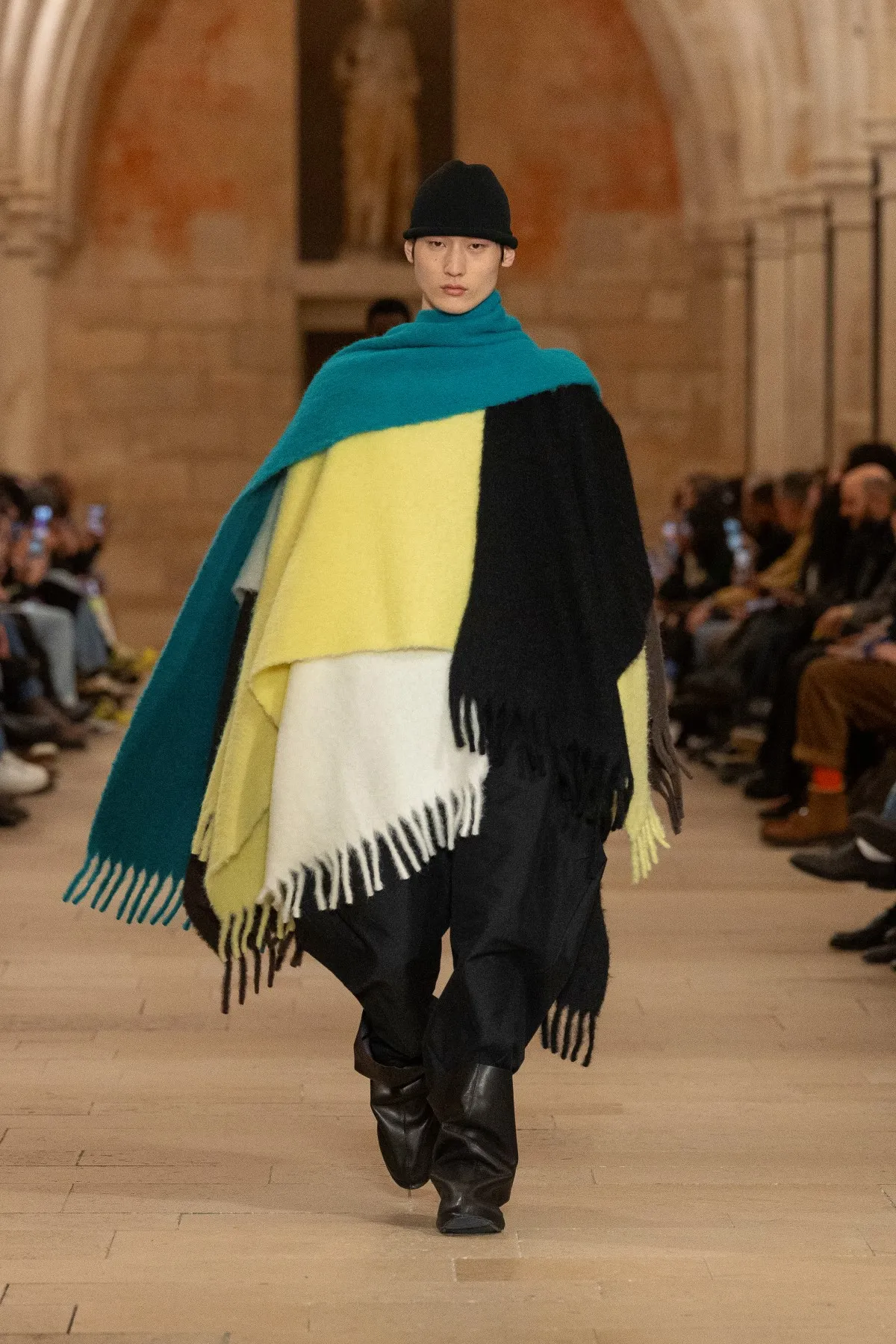
Outerwear was particularly inventive. One trench-like piece could be transformed through simple manipulation: the fabric around the sleeves could be detached to become a poncho or lifted at the shoulders to create alternative silhouettes. Hand-dyed gradations covered oversized coats, and their fronts were designed to cross like wide stoles. These were not merely garments, but rather, propositions about how clothing could accompany a person throughout the day.
Layering appeared throughout, yet it never felt excessive. Scarves with fringed edges overlapped patchwork sections. Kasuri weaves in black and blue created draped effects, suggesting fabric gently heaped upon the body rather than precisely cut to it. An irregularly checked wool suit had an almost stained quality to it, with an oat-toned palette that was beautiful precisely because it refused perfection.
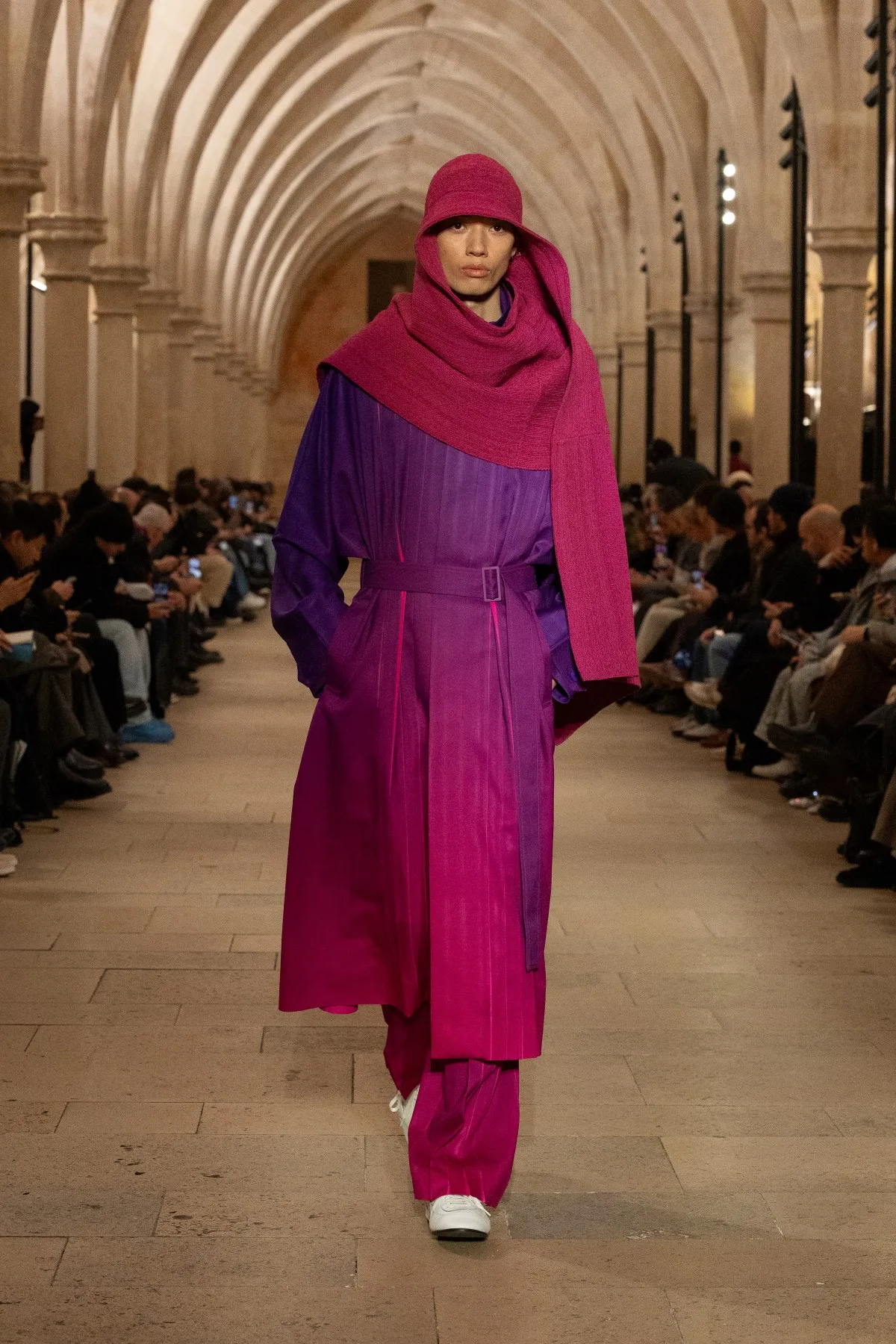
Kawahara spoke of translating sensation into cloth and capturing the subtle impulse one feels when watching dawn break. The collection succeeded not through technical fireworks, but through restraint. A brown raglan coat with a pronounced notch collar required no explanation. Its texture, proportion, and quiet confidence said everything necessary.