


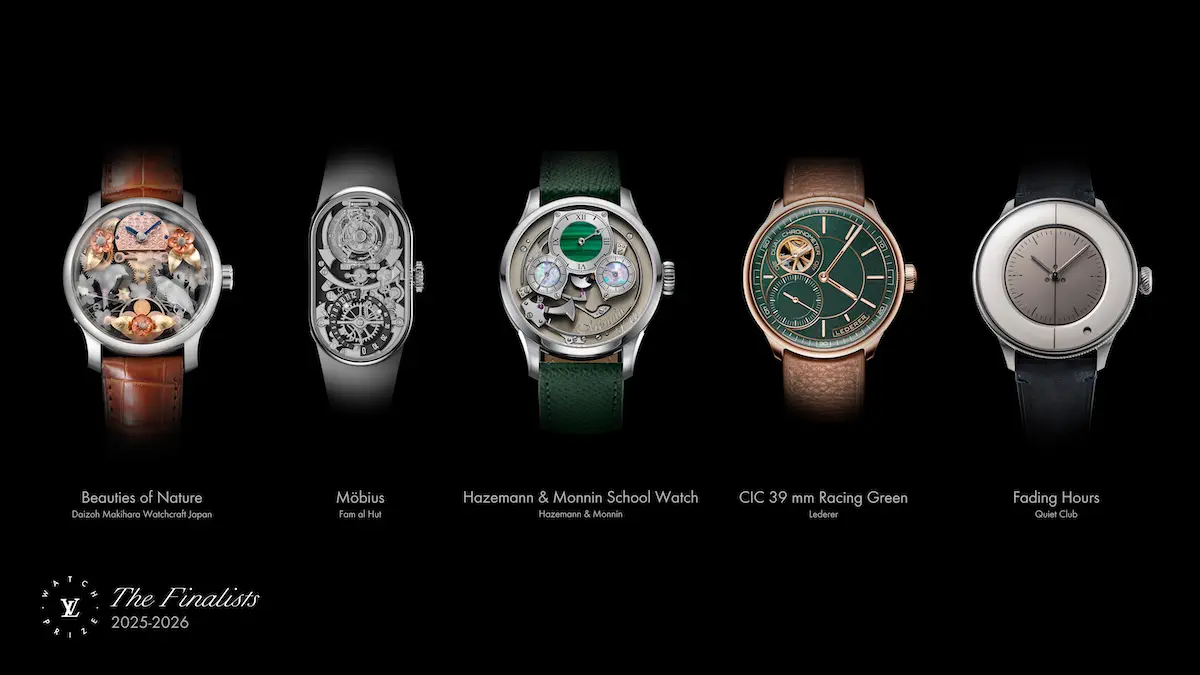
The Louis Vuitton Watch Prize 2026 confirms its evolution from a branded initiative into a true benchmark for independent watchmaking. Through a rigorous selection process and a jury of leading specialists, this second edition offers a rare, structured insight into how contemporary horology is evaluated, supported, and sustained at the highest level.
Its second edition shows a clear shift from announcement to impact. The recently revealed finalists and jury highlight the project’s growing influence within the collector community. Information released by Louis Vuitton in December 2025 offers a rare, structured perspective on how contemporary independent horology is evaluated at the highest level.
A prize defined by process, not spectacle
Although Paris hosted the announcement, geography plays a secondary role here. The Louis Vuitton Watch Prize 2026 follows a lengthy evaluation process. Twenty semifinalists were reviewed by a committee of sixty-five specialists, collectors, and professionals. Five criteria shaped the selection: design, creativity, innovation, artisanal skill, and technical complexity.
Jean Arnault clearly framed the ambition. He stated, “Since the launch of the Louis Vuitton Watch Prize, our admiration for the dynamism of independent watchmaking has continued to grow.” His words suggest continuity rather than disruption, which aligns with the prize structure itself.
What stands out here is restraint. There are no inflated promises. No exaggerated claims. Just a defined framework and time.
Why the 2026 edition marks a turning point
Second editions often reveal whether an initiative has direction or merely momentum. The 2026 Louis Vuitton Watch Prize confirms direction.
The number of applications increased significantly, and the diversity of proposals widened. Studios from Japan, Europe, and emerging Asian countries appear side by side. This range is not just for show. It reflects the current evolution of independent mechanics, materials research, and display logic.
The winner will be announced on March 24th, 2026, at the Fondation Louis Vuitton. In addition to recognition, the winner will receive a full year of mentorship at La Fabrique du Temps in Meyrin, as well as financial support. These resources are important because independent studios often struggle more with time and infrastructure than with ideas.
Daizoh Makihara: when cultural heritage becomes mechanical expression
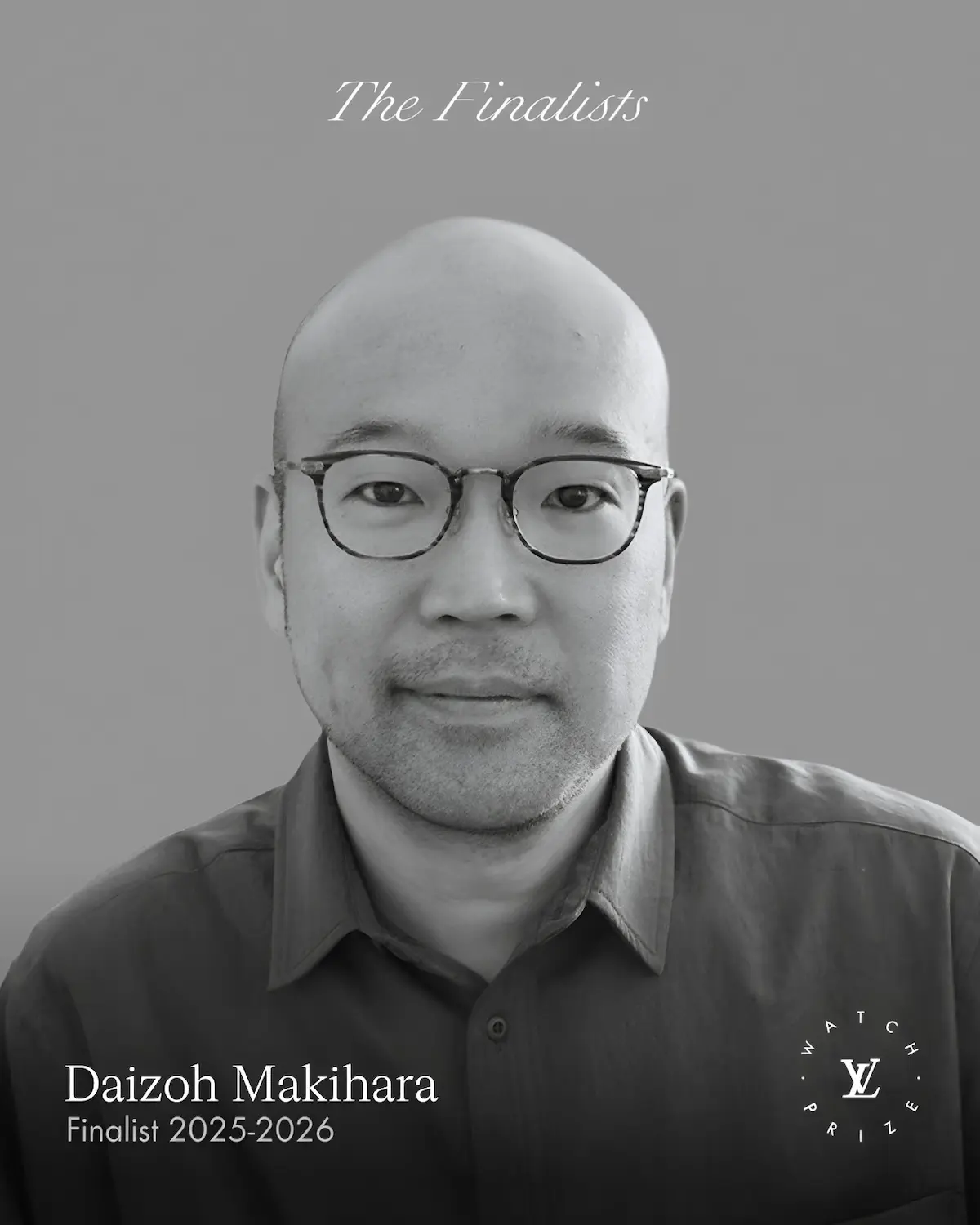
Daizoh Makihara Watchcraft Japan presents Beauties of Nature, a piece deeply rooted in Japanese decorative tradition yet mechanically ambitious.
The watch features an automatic floral mechanism that opens and closes petals. It is paired with dual time displays and a perpetual moon phase accurate to one day every 122 years. The dial uses Edo Kiriko, a glass-cutting technique rarely seen on wristwatches.
Makihara explained his intent directly: “When I started studying watchmaking, I realized I wanted to create watches that reflect my own view of the world and build a bridge between Japan and traditional craftsmanship.” This clarity of purpose aligns with what juries often value yet rarely articulate.


Fam Al Hut: extreme watchmaking in compact form

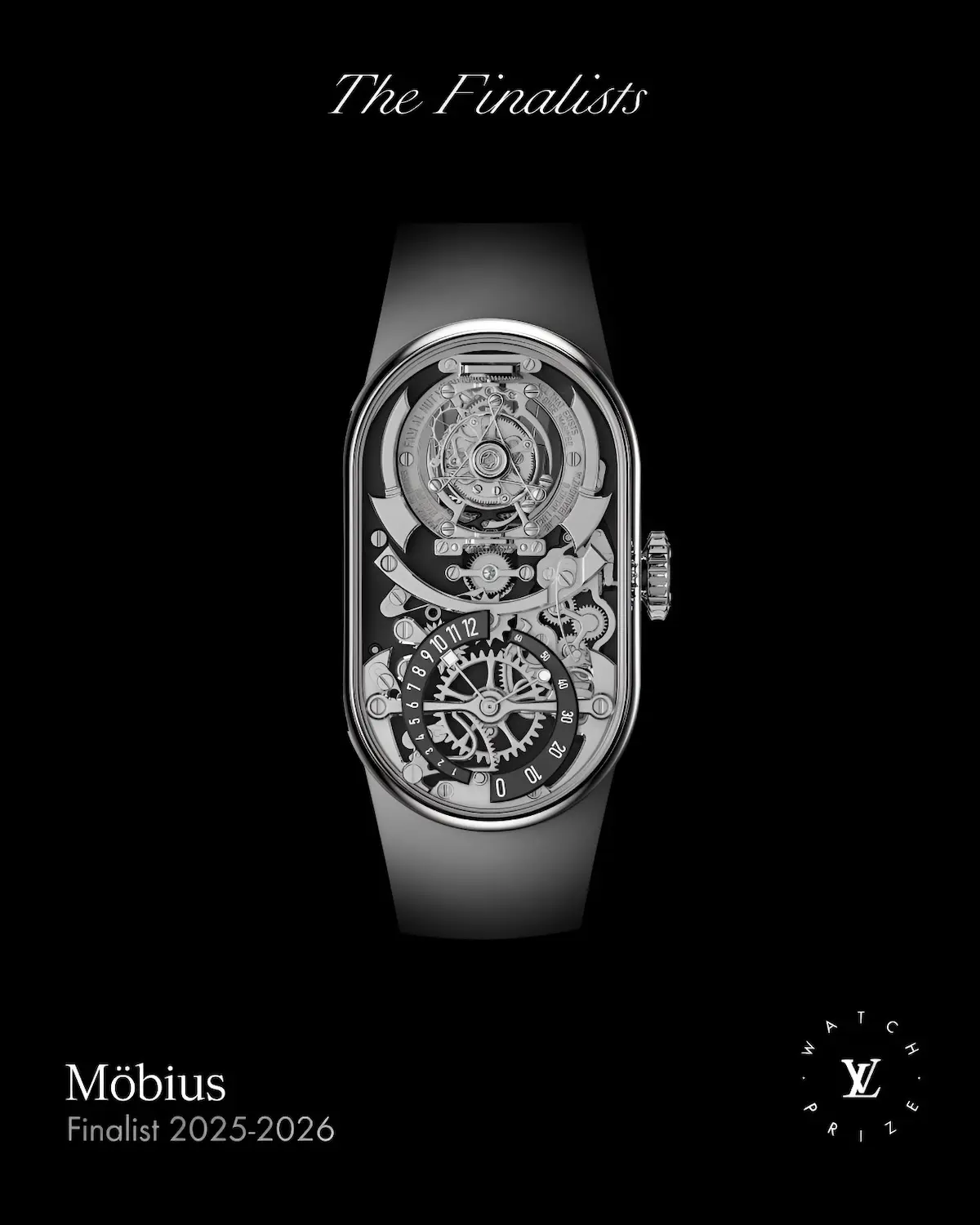
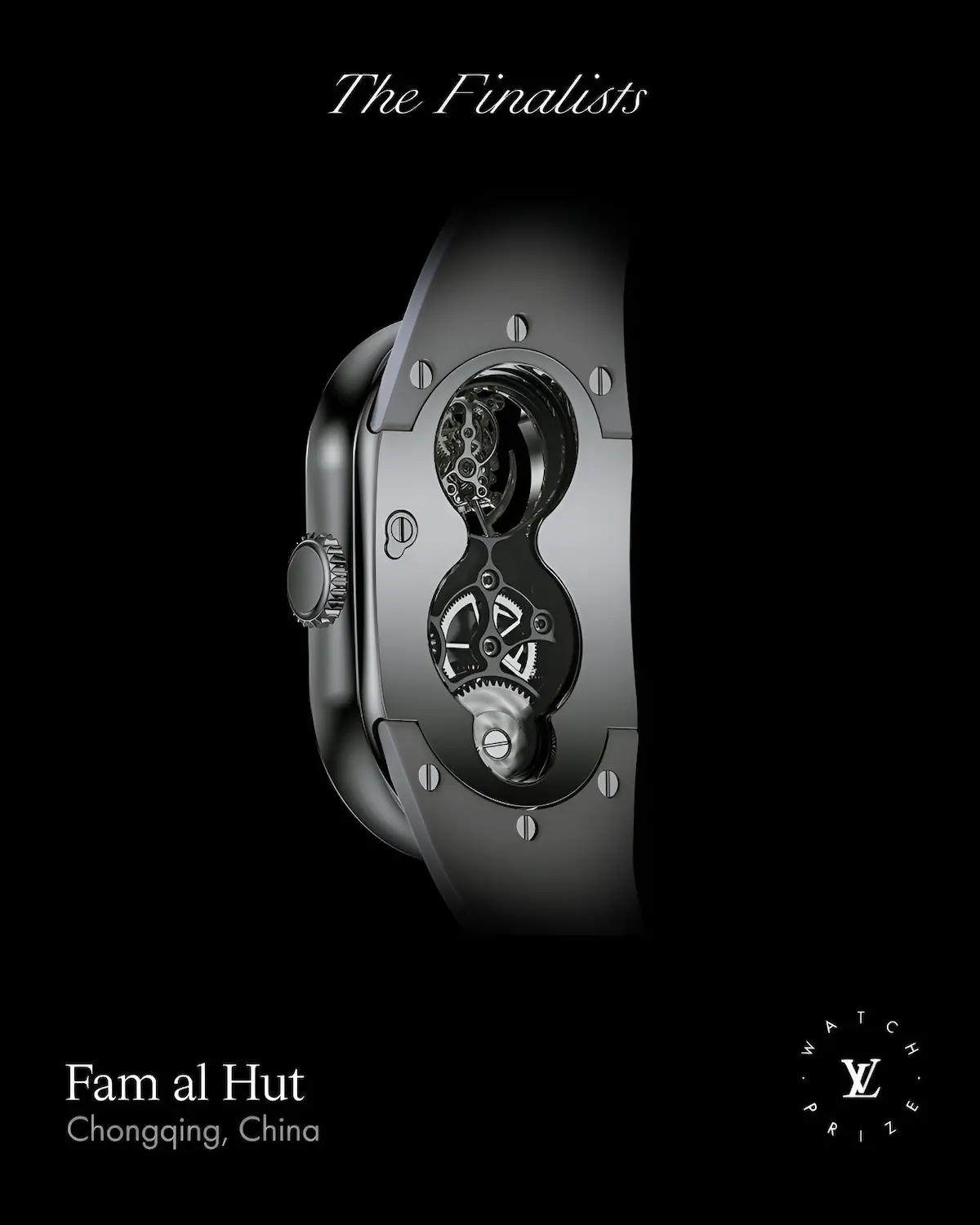
Fam Al Hut, founded by Xinyan Dai, enters with the Möbius watch, which compresses complexity into an almost architectural object.
Its bi-axial tourbillon boasts the smallest footprint of its kind and is paired with retrograde displays and a jumping hour. The case measures 24.3 mm across yet rises vertically, rejecting traditional wristwatch proportions.
Dai summarized the project simply: “After studying and working in Europe for several years, I felt the desire to create something with my own hands.” This statement carries weight precisely because it avoids flourish.
Follow all the latest news from Fashionotography on Flipboard, or receive it directly in your inbox with Feeder.
You might also read

Hazemann & Monnin: academic figor meets independent creation
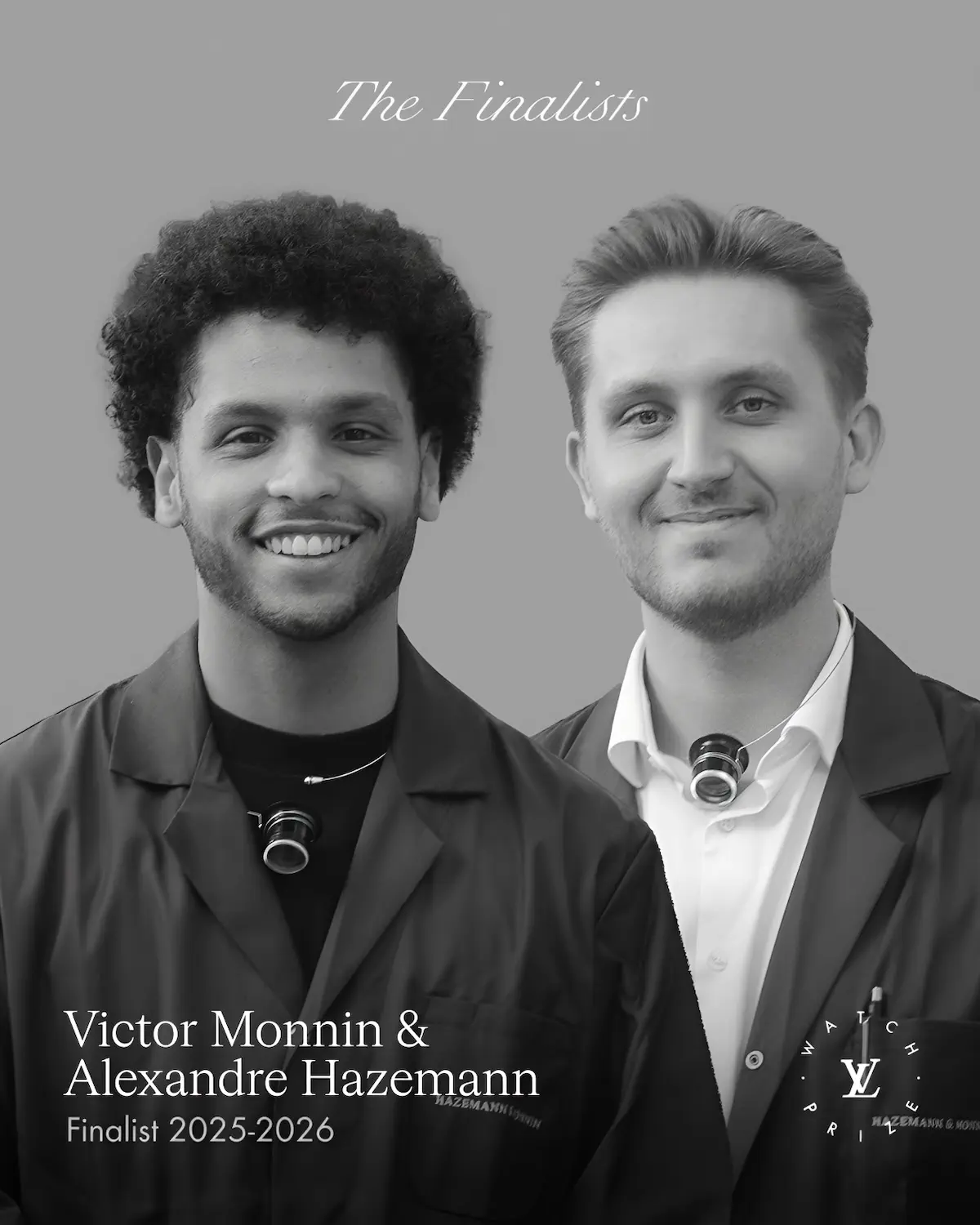
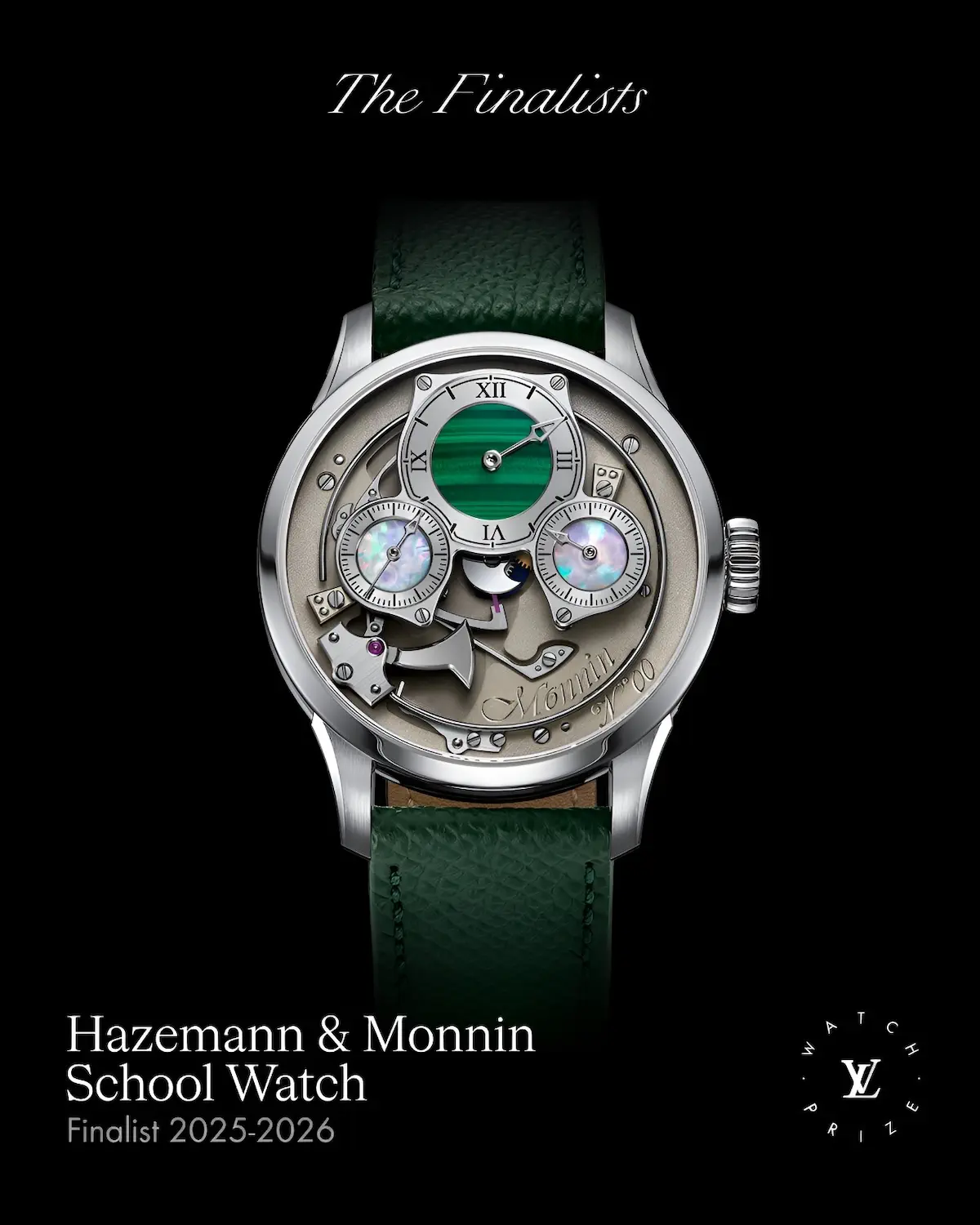
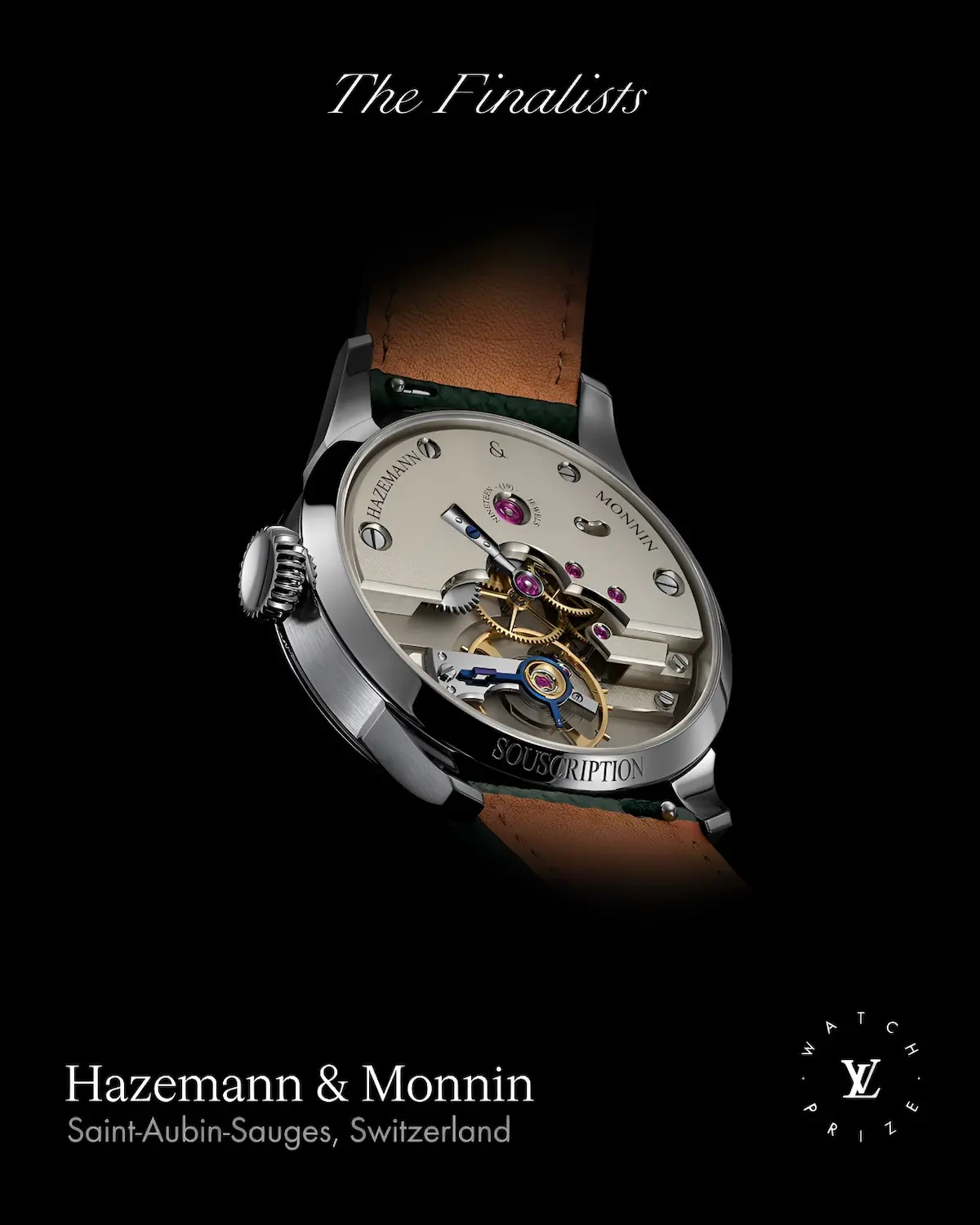
The School Watch by Hazemann and Monnin pays homage to the Morteau watchmaking school, where the two founders met.
Their in-house caliber HM01 features an hourly striking mechanism and an instantaneous jumping hour. These two complications are rarely combined due to synchronization challenges.
They describe their partnership as “the meeting of two longtime friends who share a passion for watchmaking and a desire to create authentic timepieces.” The watch reads almost like a thesis project taken to a professional scale.
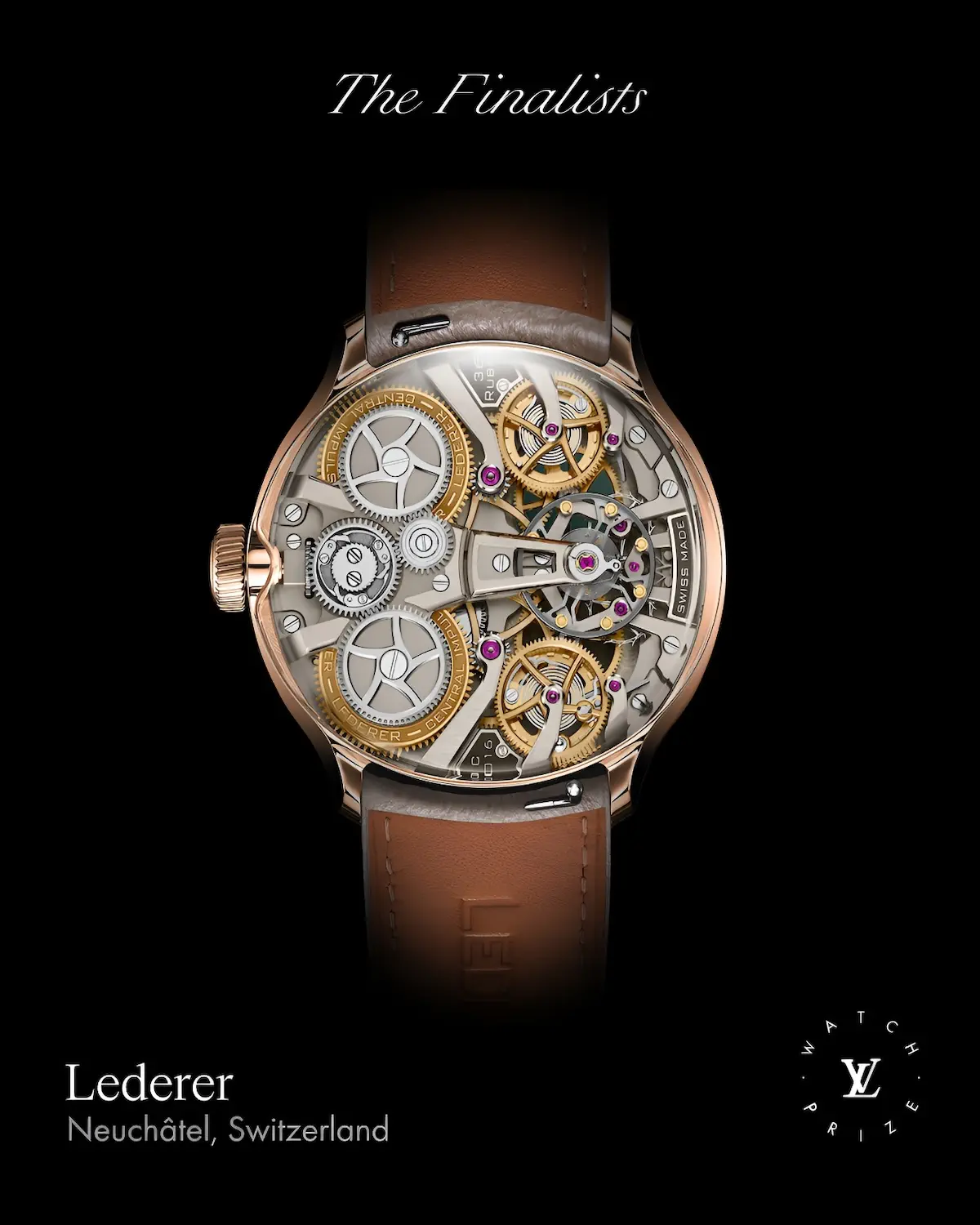
Bernhard Lederer: chronometry as a lifelong discipline
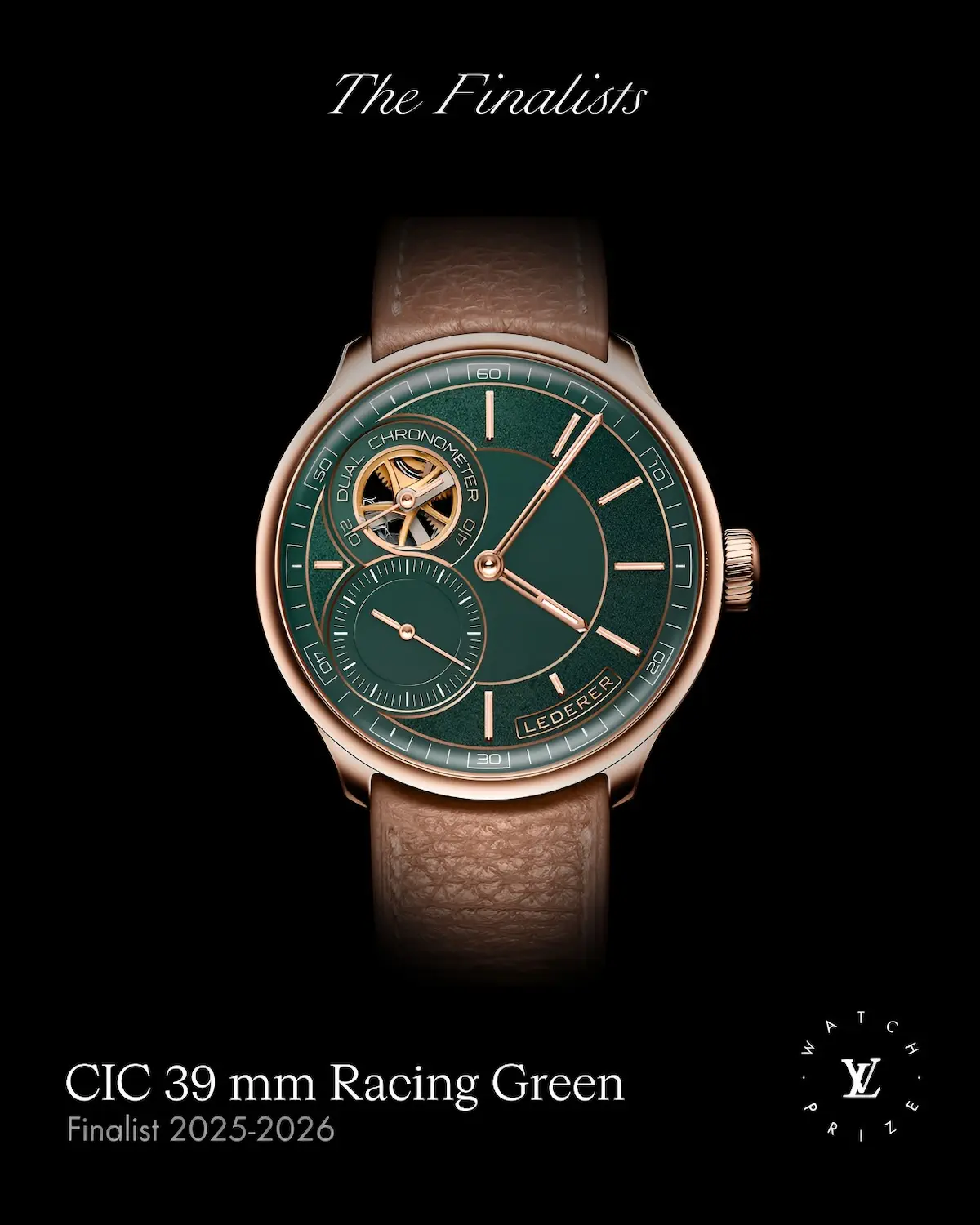
Lederer is no newcomer. Active since 1985, his CIC 39 mm Racing Green is the result of long-term research distilled into a wearable form.
The watch uses a fully functional double detent escapement with dual remontoirs, delivering constant energy transmission. Most components are produced internally, and the movement is COSC-certified.
Lederer defines his work as “a silent but relentless pursuit to understand and perfect mechanical chronometry.” This pursuit explains why this watch resonates strongly with technically minded collectors.
Quiet Club: mechanical reduction as creative statement

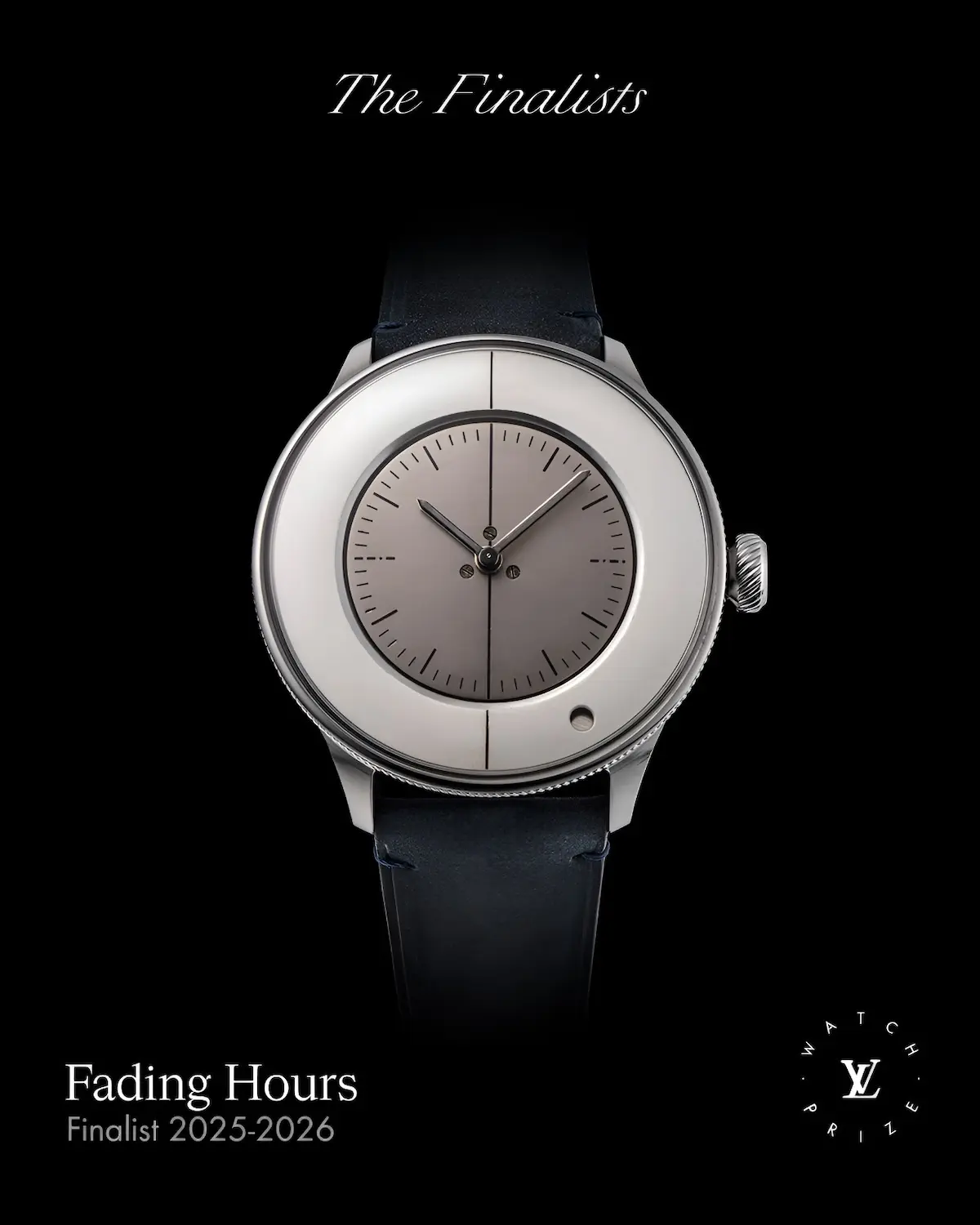
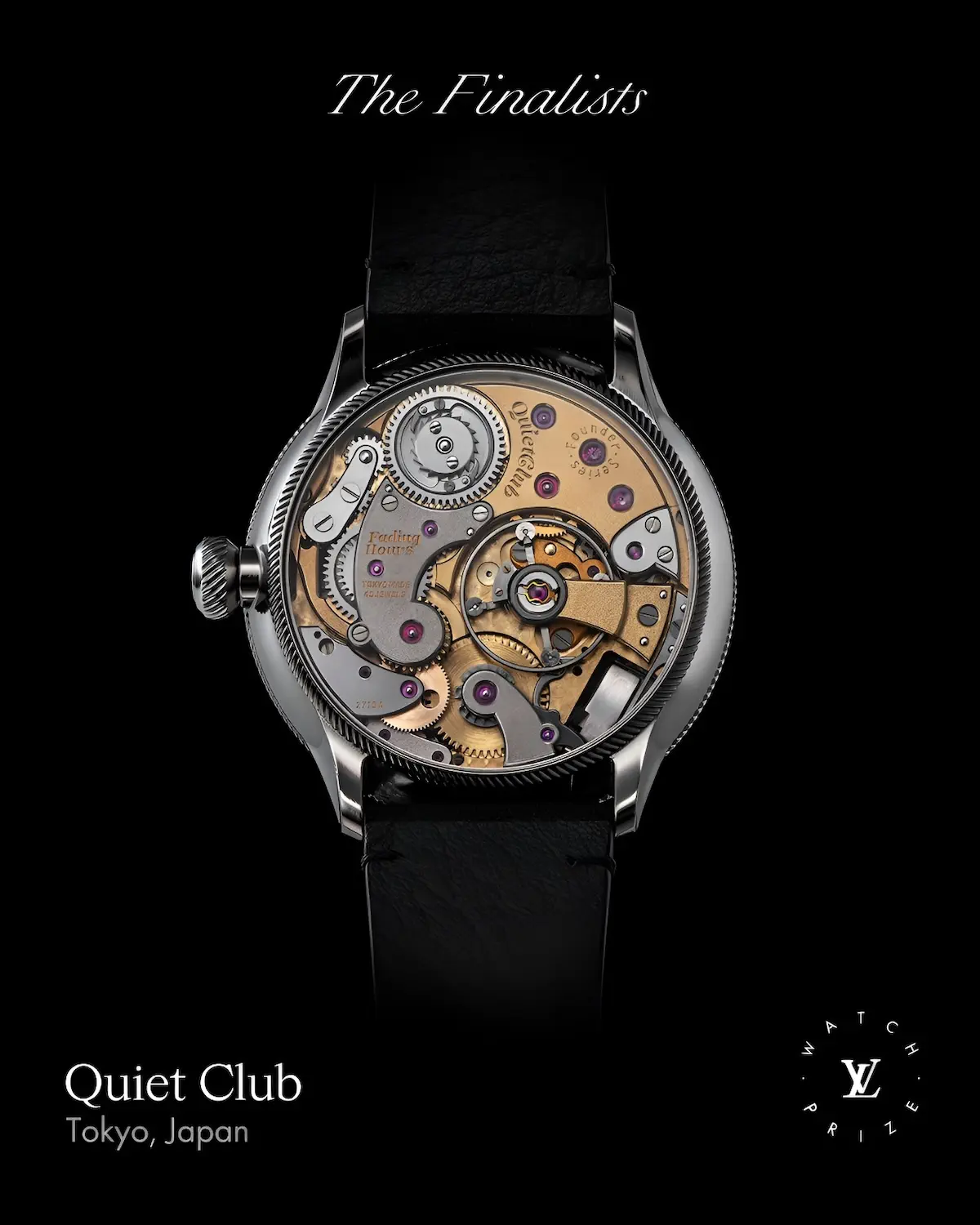
Led by Norifumi Seki, Quiet Club offers the Fading Hours, a watch designed and assembled by hand in Tokyo.
This timepiece features a mechanical alarm with a vertically mounted hammer that strikes the dial. A single pusher controls the alarm functions, and a rotating bezel sets the alarm time. When inactive, the alarm hands hide beneath the hour display.
Their philosophy remains grounded: “Tradition does not rely only on delicate craftsmanship, but also on a creative spirit that gives birth to new mechanisms aligned with current needs.” The watch embodies this belief through reduction rather than accumulation.
On March 24th, 2026, the five finalists will present their creations to the final jury at the Louis Vuitton Foundation in Paris. The distinguished jury includes Carole Forestier-Kasapi, the jury president and strategic director of movements and high watchmaking at TAG Heuer; Frank Geelen, a journalist and the founder of Monochrome Watches; Matthieu Hegi, the artistic director of La Fabrique du Temps Louis Vuitton; François-Xavier Overstake, the founder of the Équation du Temps blog; and Kari Voutilainen, a master watchmaker and the founder of Ateliers Voutilainen.
The Louis Vuitton Watch Prize 2026 showcases independent creators without homogenizing them. It rewards risk when supported by craftsmanship. It also offers something rare: sustained engagement after the ceremony.
Readers interested in independent horology should view this prize as a diagnostic tool rather than as a competition. The prize demonstrates where technical thinking, cultural identity, and mechanical ambition intersect today.