


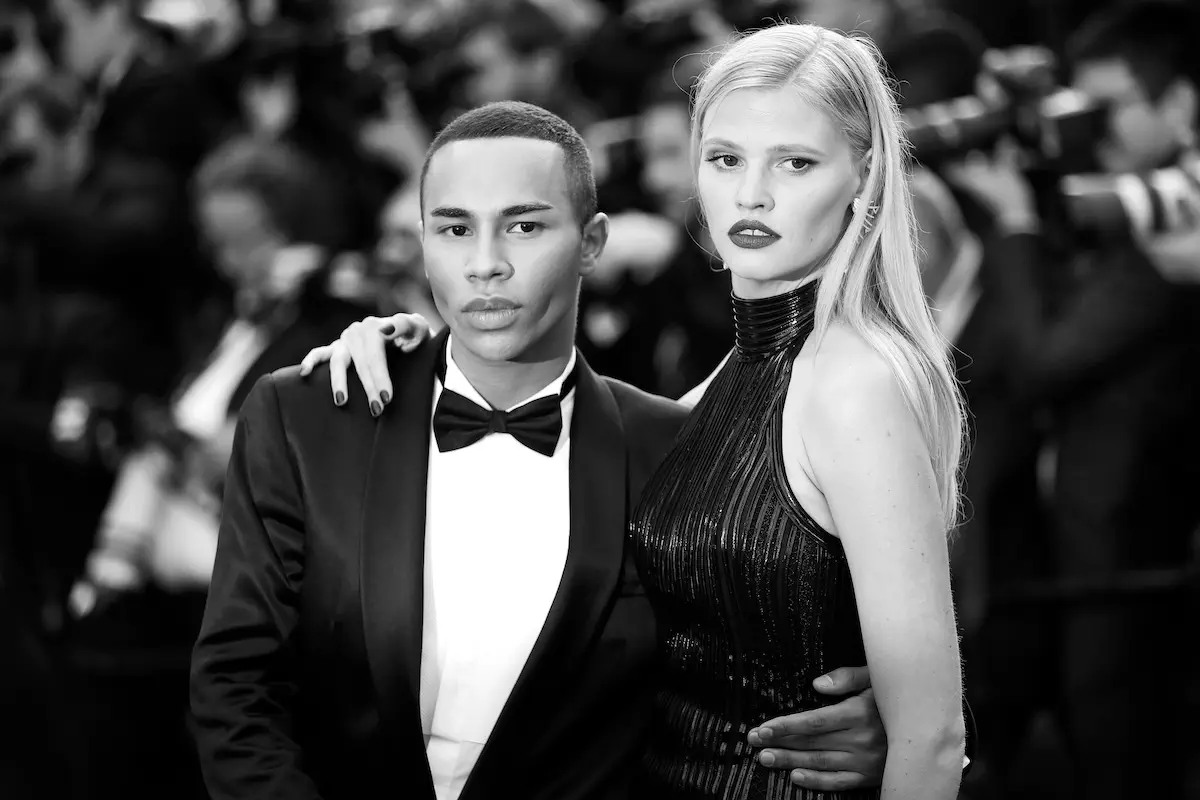
Olivier Rousteing exits Balmain, marking the end of a 14-year chapter that redefined French luxury fashion for a generation raised on social media and celebrity culture. The Parisian house announced the departure on Wednesday, closing one of the most publicly visible and commercially successful designer tenures in contemporary fashion history.
Rousteing joined Balmain from Roberto Cavalli in 2009, working under the then-Creative director, Christophe Decarnin. Two years later, at just 25 years old, he was appointed Creative director, becoming the youngest designer to lead a major Parisian fashion house since Yves Saint Laurent took the helm at Dior. More significantly, he became the first Black designer to lead a heritage French fashion house across all design categories.

Financial growth and brand transformation
The numbers tell a striking story of commercial success. When Rousteing took full control in 2012, Balmain recorded revenues of €30.4 million and profits of €3.1 million. Last year, the house generated an estimated €300 million in revenue. This tenfold increase occurred during a period when many heritage fashion houses struggled to find relevance with younger consumers.
In 2016, Mayhoola for Investment acquired full ownership of Balmain for €500 million. Then-CEO Emmanuel Diemoz credited Rousteing’s designs and social media presence for accelerating the transaction. Today, Balmain operates 50 stores worldwide, with the United States serving as its number-one market.
The Balmain Army and celebrity culture
Rousteing understood early on that fashion’s traditional gatekeepers no longer controlled the conversation. He cultivated what he calls the Balmain Army: a social media–driven community built around diversity and direct consumer engagement. His 9.7 million Instagram followers gave him a platform that rivaled traditional fashion media.
His friendships with celebrities like Rihanna, Kim Kardashian, Beyoncé, and Gigi Hadid transformed Balmain from an elite insider label into a globally recognized symbol of contemporary glamour. His collaboration with Beyoncé on her “Renaissance” album resulted in a special collection that merged high fashion and pop culture.
His 2015 collaboration with H&M demonstrated his commercial instincts. The collection achieved a 99 percent sell-through rate, with 500 people camping outside the London Regent Street flagship store overnight in November. The designer later called it a career highlight.
Follow all the latest news from Fashionotography on Flipboard, or receive it directly in your inbox with Feeder.
You might also read

Democratic fashion and public spectacles
Rousteing opened Balmain’s shows to the public, creating festival-style presentations that combined music performances with runway collections. The 2019 men’s show during Paris’s Fête de la Musique drew over 2,000 guests to the Jardin des Plantes. While critics complained, audiences loved the accessibility.
The 2020 Balmain Sur Seine event, in which Rousteing sent a barge down the Seine loaded with performers and the singer Yseult, foreshadowed key elements of the 2024 Paris Olympics opening ceremony. This sparked a trend toward more democratic, public-facing fashion presentations.
Heritage and innovation
Throughout his tenure, Rousteing positioned himself as both a custodian of Pierre Balmain’s legacy and a challenger of fashion’s conservatism. He studied the 1950s archives and used founder Pierre Balmain’s post-war precision and courage to reestablish the house’s identity after years of diminished relevance.
“My strength has been to build Balmain’s pop-culture relevance, but also to build Balmain into a heritage house,” he said. Karl Lagerfeld, who began his career as Pierre Balmain’s assistant, suggested Rousteing as a possible Chanel successor.
In 2019, Rousteing reintroduced couture to Balmain’s schedule and served as guest couturier for Jean Paul Gaultier’s Fall/Winter 2022 haute couture collection. In 2023, he launched beauty and fragrance lines under license with Estée Lauder and expanded accessories into a significant business category.

Collaborations and cultural impact
Beyond fashion, Rousteing has collaborated with Barbie, Disney, Evian, Netflix, and Johnnie Walker, extending the brand’s reach into broader cultural territories. He embraced technology, including NFTs, and opened shows to livestream audiences, recognizing that the future of fashion required digital fluency.
When his use of diverse casting and hip-hop music at his shows was questioned early in his career, Rihanna told him backstage, “You’re changing the rules of this fashion world.” He prioritized diversity and inclusivity in the industry long before it became standard practice.
Personal journey and resilience
Rousteing’s openness about his personal history added depth to his public persona. Adopted at age one and raised by white French parents in Bordeaux, he released the documentary “Wonder Boy” in 2019. The film follows his search for his birth parents against the backdrop of France’s anonymous birth system.
After a fireplace explosion at his Paris home in 2020 left him with severe burns, he posted a selfie of his bandaged upper body and head a year later. He opened up about his recovery journey in the post. These experiences informed subsequent collections that reflected personal vulnerability alongside glamour.
Departure and future
“I am deeply proud of all that I’ve accomplished and am profoundly grateful to my exceptional team at Balmain, my chosen family, for the past 14 years,” Rousteing said in a statement. He thanked Rachid Mohamed Rachid, the CEO of Balmain’s owner, Mayhoola, as well as Balmain’s chairman and CEO, Matteo Sgarbossa, for their support.
Sgarbossa, who joined Balmain in 2024 from positions at Mango, Gucci, and Givenchy, expressed “deep gratitude” for Rousteing’s contributions during the house’s 80th anniversary year. Rachid Mohamed Rachid praised Rousteing’s “visionary leadership” and commitment to inclusivity.
At his final show on October 1st, 2025, in the ballroom of the Intercontinental Hotel, where he debuted in 2011, Rousteing reflected on how he was “so scared and so shy” at his first presentation. He said, “Everybody’s talking about a new era and new beginnings this season, but I believe you can build a new era and make a new beginning by being yourself in the same house and challenging yourself.“
Balmain stated that a new creative organization would be announced in due course. It remains unclear whether the house will appoint an established designer or take another gamble on untested talent. What’s certain is that Olivier Rousteing leaves Balmain having built a blueprint for how heritage fashion houses can connect with digital natives without sacrificing craftsmanship or cultural impact.