

The Gabriela Hearst Spring/Summer 2026 collection opened with Laura Dern wearing a dress adorned with 2,400 leather flowers, all set by hand. The actress walked through the Paris venue with the quiet confidence that comes with wearing something that took countless hours to create. She symbolized the Empress card, representing fertility and creative expression within the show’s tarot framework.
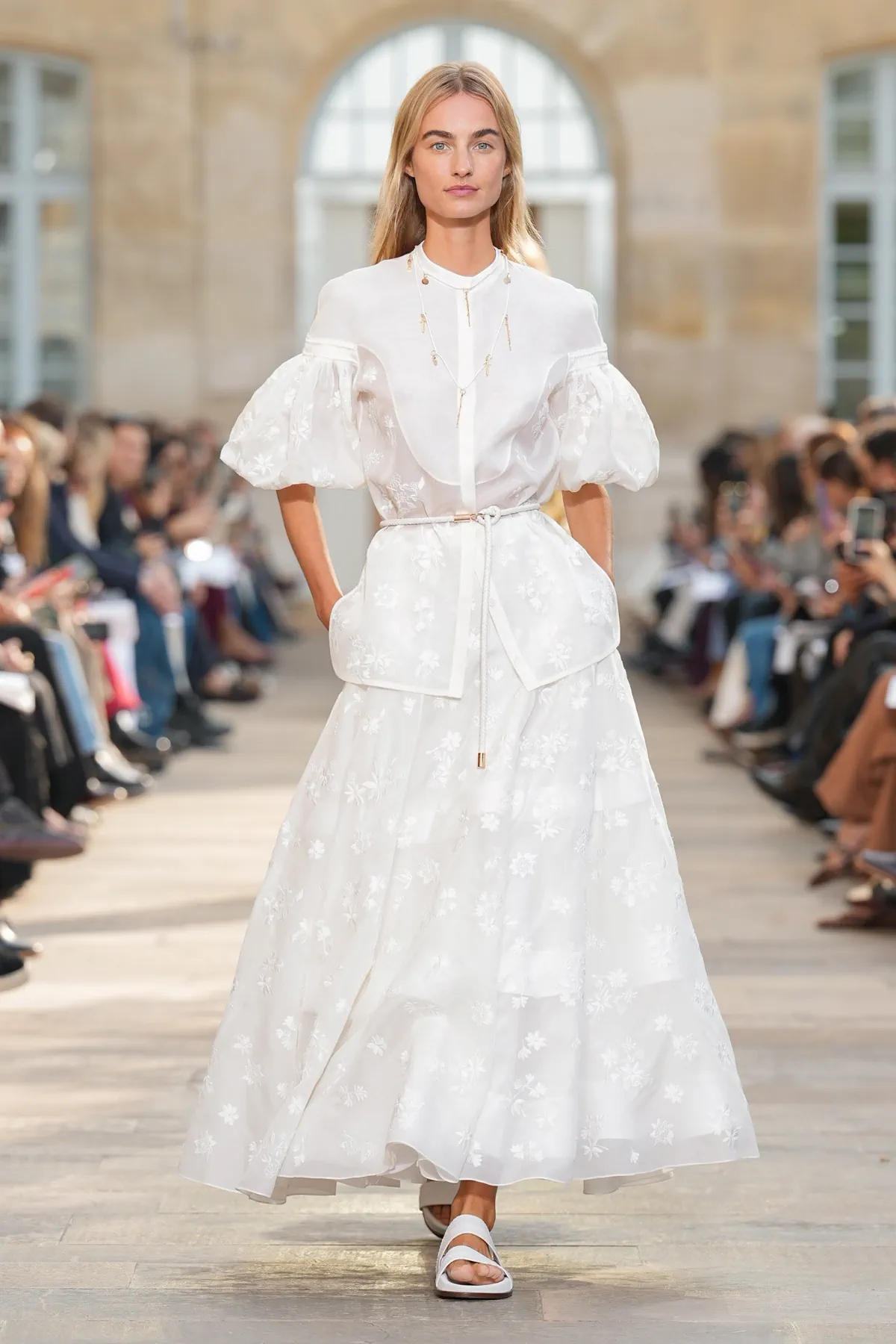
Hearst called this her “recalibration” collection. She made 97 percent of the woven pieces from fabrics that were already in her inventory. These included buttery cashmere-silk blends that feel cool against the skin, silky Sea Island cottons from a small-batch supplier in Barbados, and substantial linens, some of which were coated in gold. This approach reflected a commitment to sustainability without compromising luxury.
The designer continued the tarot theme she introduced during her resort presentation. This time, she focused on the Major Arcana, the 22 cards representing significant life events and spiritual themes. Over six months, she studied the cards and created watercolor illustrations that later appeared as intarsia patterns on sweaters. The references remained subtle throughout most looks.
Hearst discovered a collection of gold charms, including moons, wands, skulls, and cups. She strung them onto the fringes of suede coats and skirts to represent the Hanged Man card, her favorite character from the deck. As the models walked, the charms likely made soft sounds against the Max Richter soundtrack.
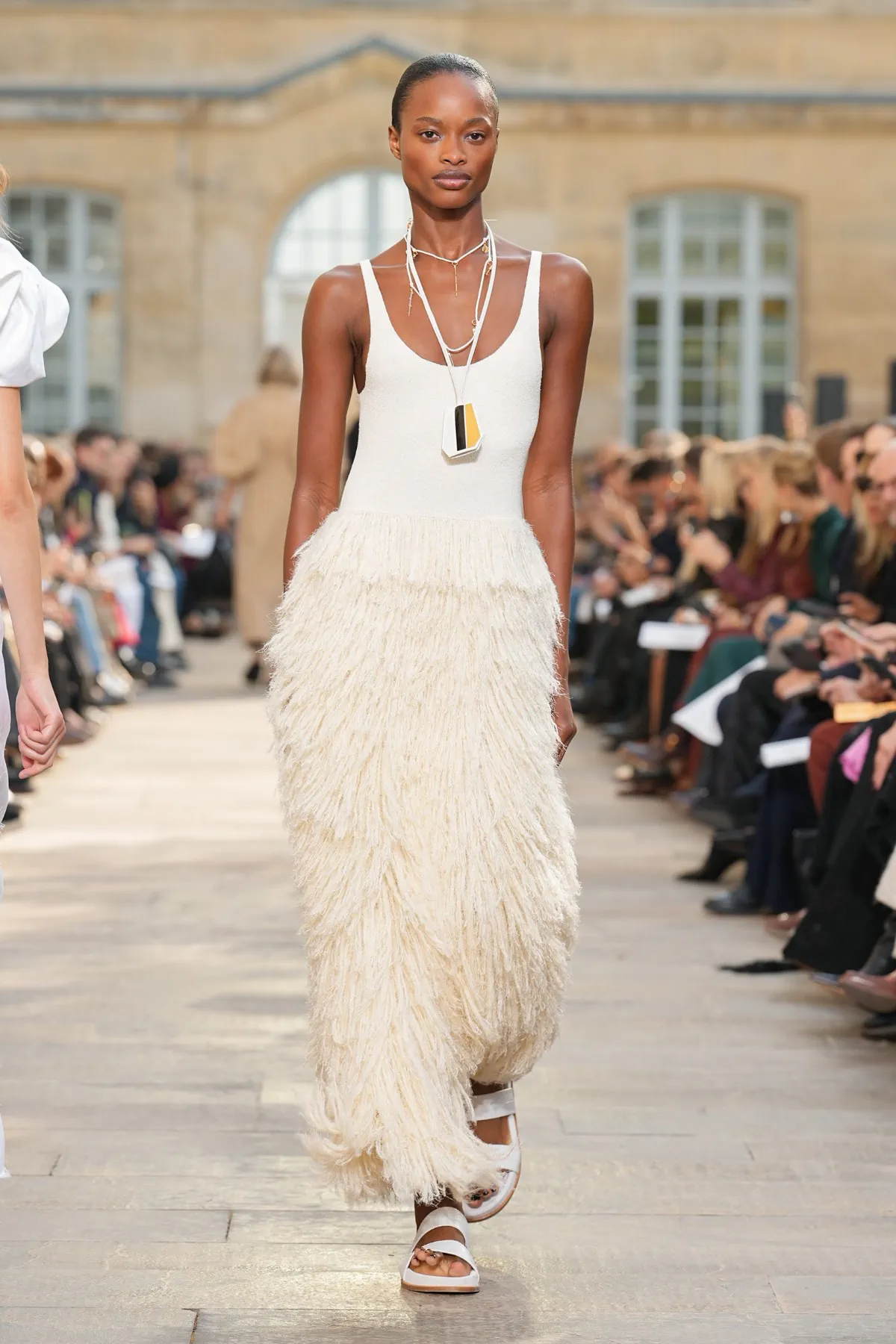
The collection featured grand puff sleeves on coats, blouses, and dresses made of cotton, linen, and leather. Body-skimming knit dresses and capes showcased her talent for creating elegance from austere silhouettes. One simple V-neck cotton dress had deliberately frayed, embroidered edges. An ivory tank dress with a shaggy skirt showcased her attention to texture and tactile appeal.
Follow all the latest news from Fashionotography on Flipboard, or receive it directly in your inbox with Feeder.
You might also read
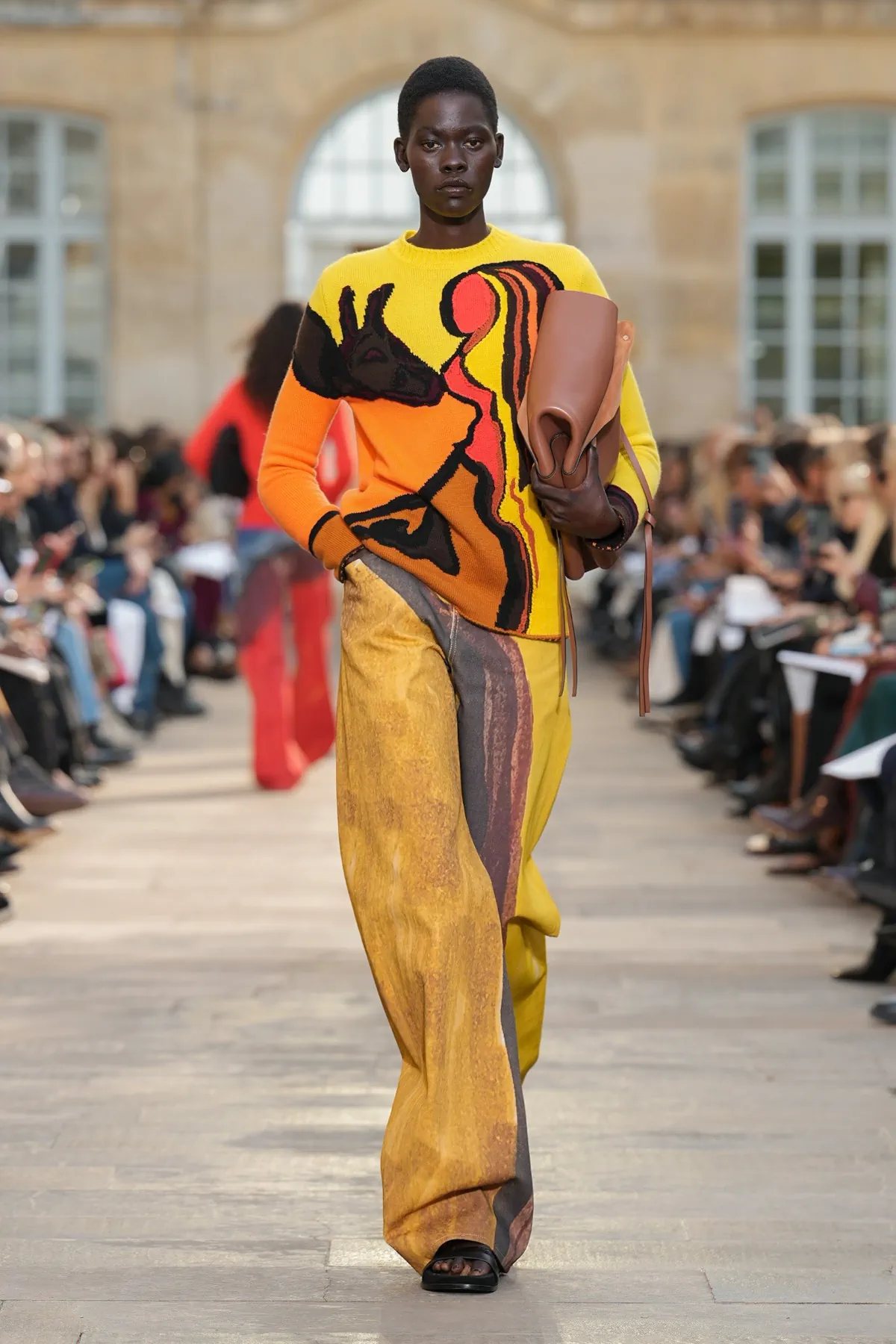
Halfway through the presentation, the mood shifted. Brightly colored sweaters and matching jeans displayed Hearst’s watercolor drawings representing water, air, and earth. For fire, she designed a long dress adorned with tiny, hand-crocheted stars from Bolivia, modeled after the star on the Hierophant card. The final look featured suede and knit bisected with braided leather rope to represent the surrender of the Hanged Man.
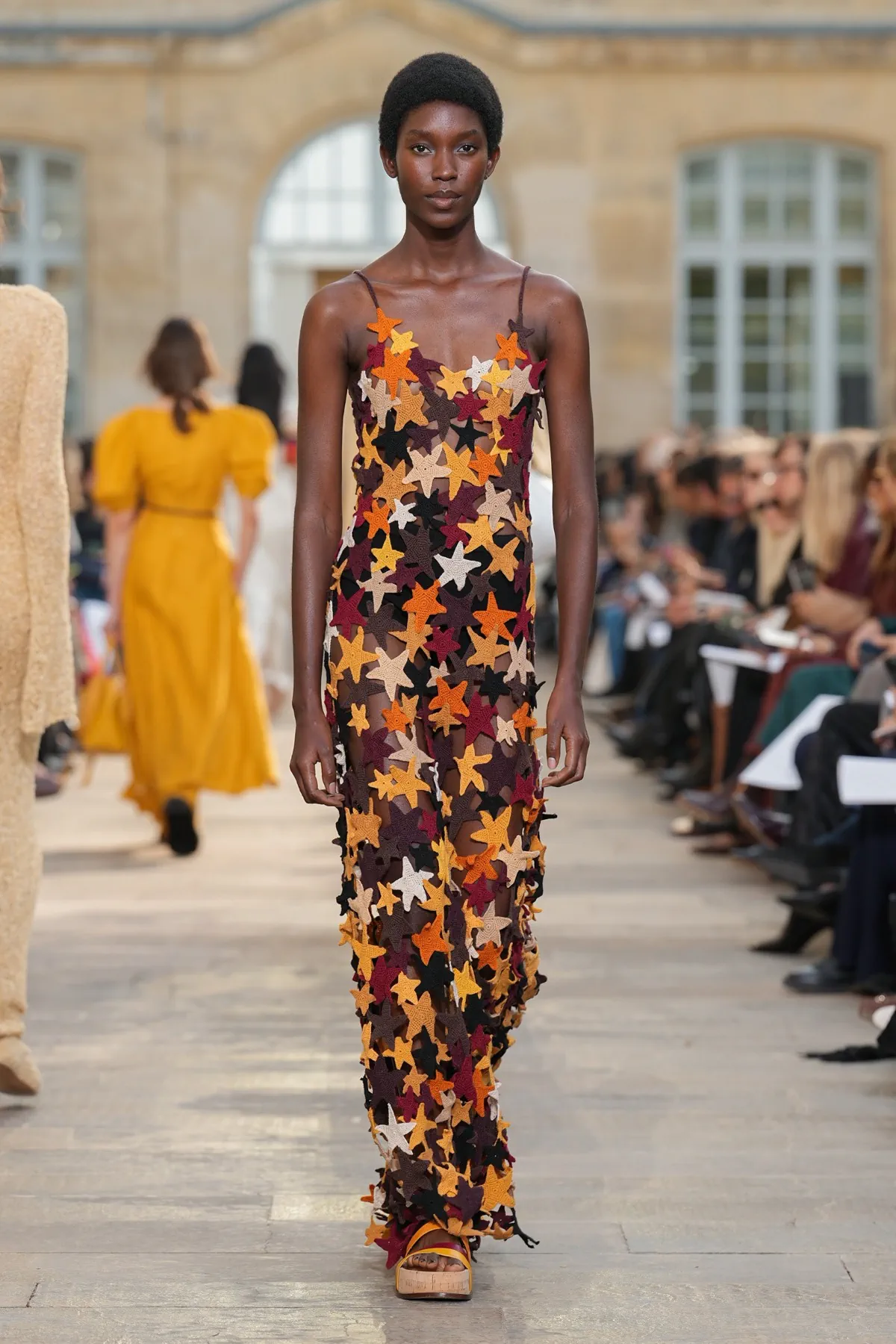
Hearst used skins from invasive species for the sandals. She took materials that would otherwise be wasted and turned them into wearable items. This philosophy applied to her entire fabric selection. She explained her preference for working with materials she knows and trusts.
The designer has named bags after famous friends before. A decade ago, Demi Moore requested a smaller version of the structured Nina bag, which remains the brand’s bestseller. Now, Dern has her own bag design, too. These relationships reflect how Hearst builds her brand through personal connections rather than aggressive marketing.
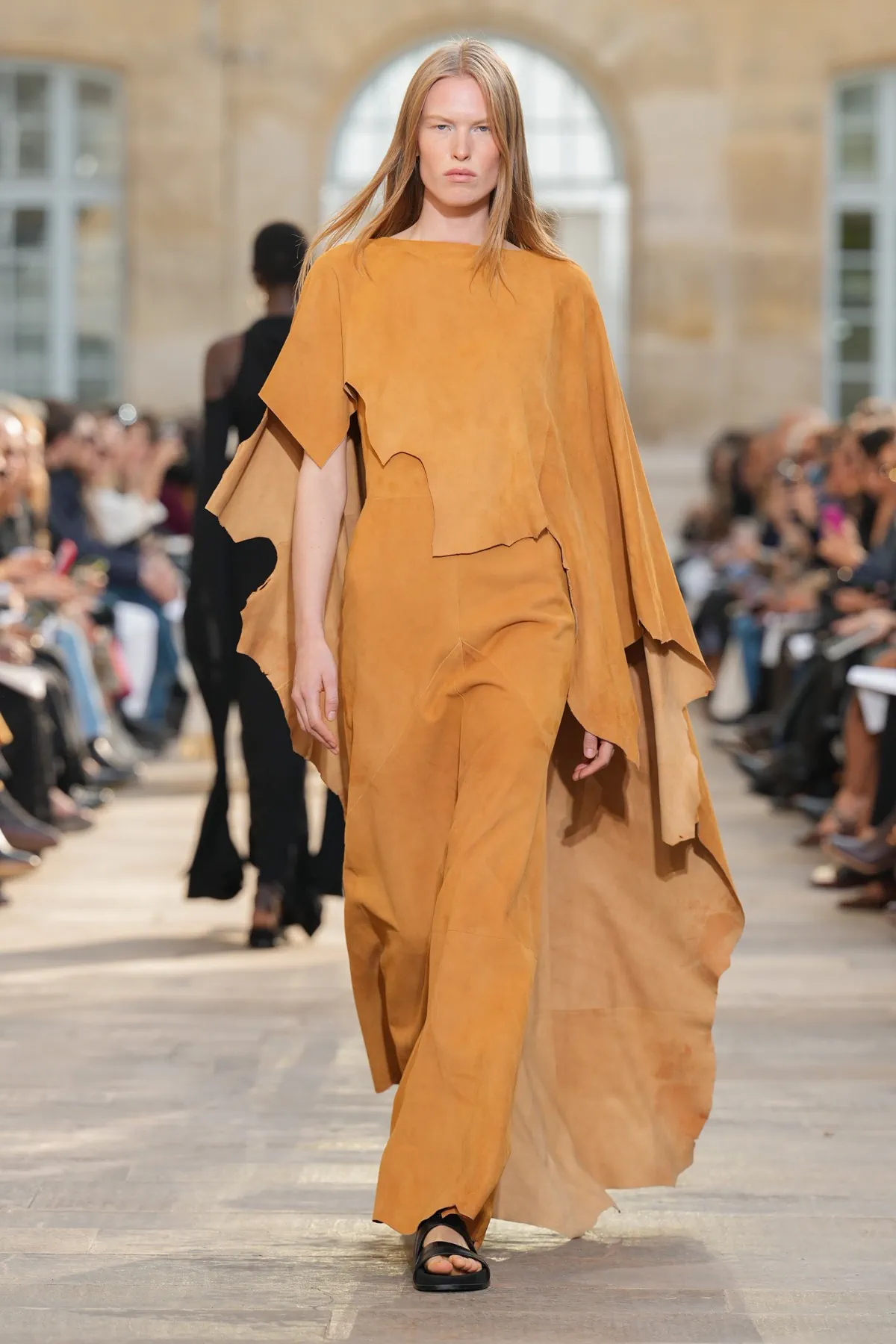
Tarot cards, particularly the Lady Frieda Harris deck from the late 1930s, provided Hearst with a structure for meditation and sketching. She described the Major Arcana as representing the journey of the soul, with different cards marking moments in life. The Devil card appeared as an inverted triangle inset into the chest of a body-skimming, knitted silk T-shirt dress.
Her materials remained the true focus. The softness of the fabrics and the quality of the construction matter more than obvious branding or following trends. She continues to make clothes for women who value substance and craftsmanship over flashiness.