

For the Patou Fall 2026 collection, Guillaume Henry wanted to do something different. The French label’s Artistic director decided to abandon the single-woman framework that had defined previous presentations. Instead, he opted for a collage of muses. What emerged on the runway was a deliberate attempt to demonstrate breadth rather than focus.
| 📌 Key Facts |
|---|
| 🏛️ House: Patou 🎨 Creative Direction: Guillaume Henry shifts from muse-driven storytelling to category-driven design 👖 Commercial Focus: Denim and knitwear gain runway visibility for the first time 🧵 Craft & Sustainability: Tapestry fabrics, offcuts and embroidery used with restraint 🏛️ Heritage References: Medieval art and stained-glass palettes modernized 💼 Business Strategy: A clear response to LVMH’s growth and profitability expectations 👟 Wearability: Sneakers, polos and easy silhouettes validate real-life dressing |
Henry has spent years positioning Patou at an unusual intersection. The house stages its shows on the eve of couture week, drawing inspiration from that elevated world while maintaining prices and sensibilities that appeal to younger women seeking quality without extravagance – timeless pieces designed for everyday life. Post-pandemic fashion has tilted toward comfort, making Henry’s task trickier. How does one maintain couture-inspired aspiration when women prefer ease?
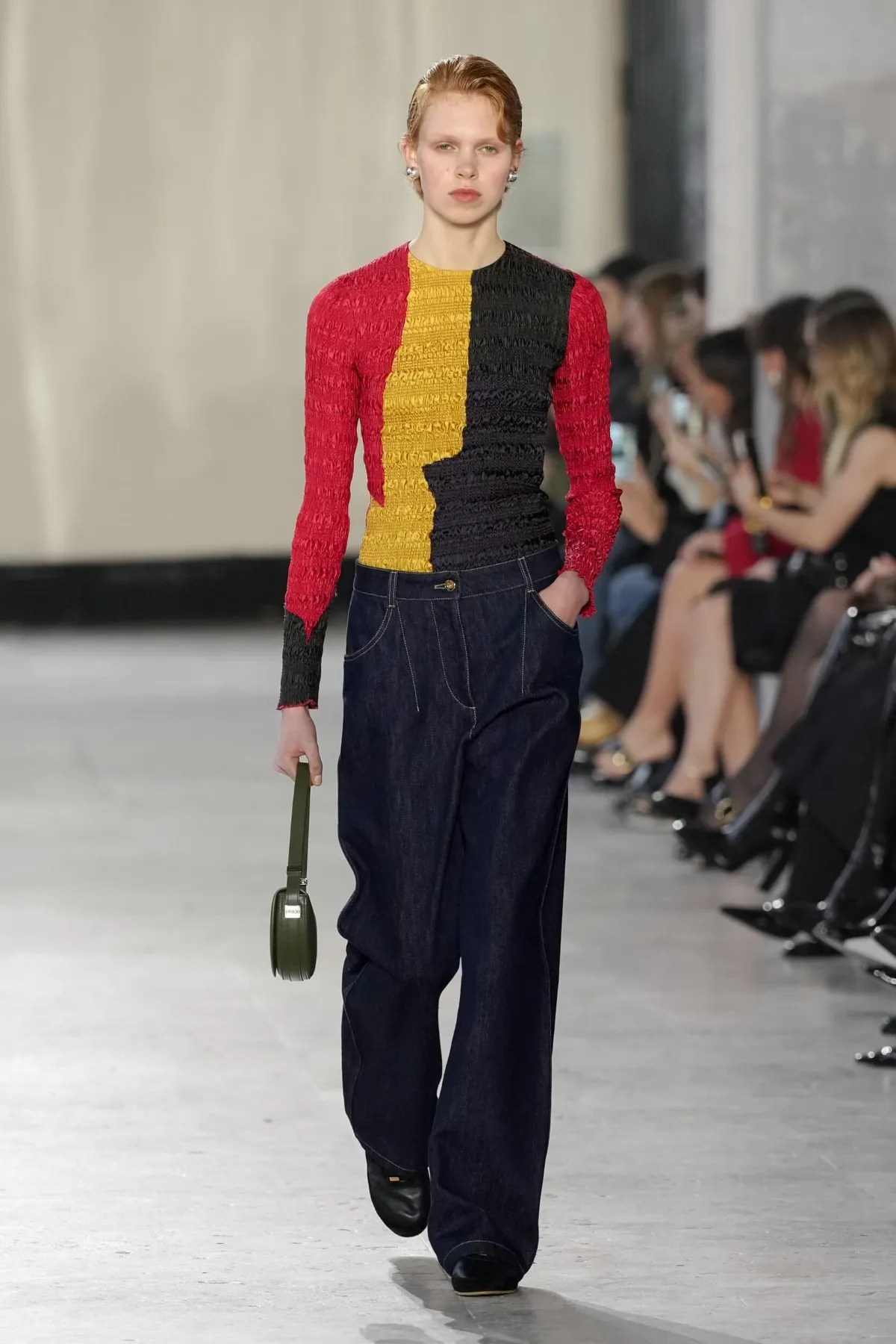
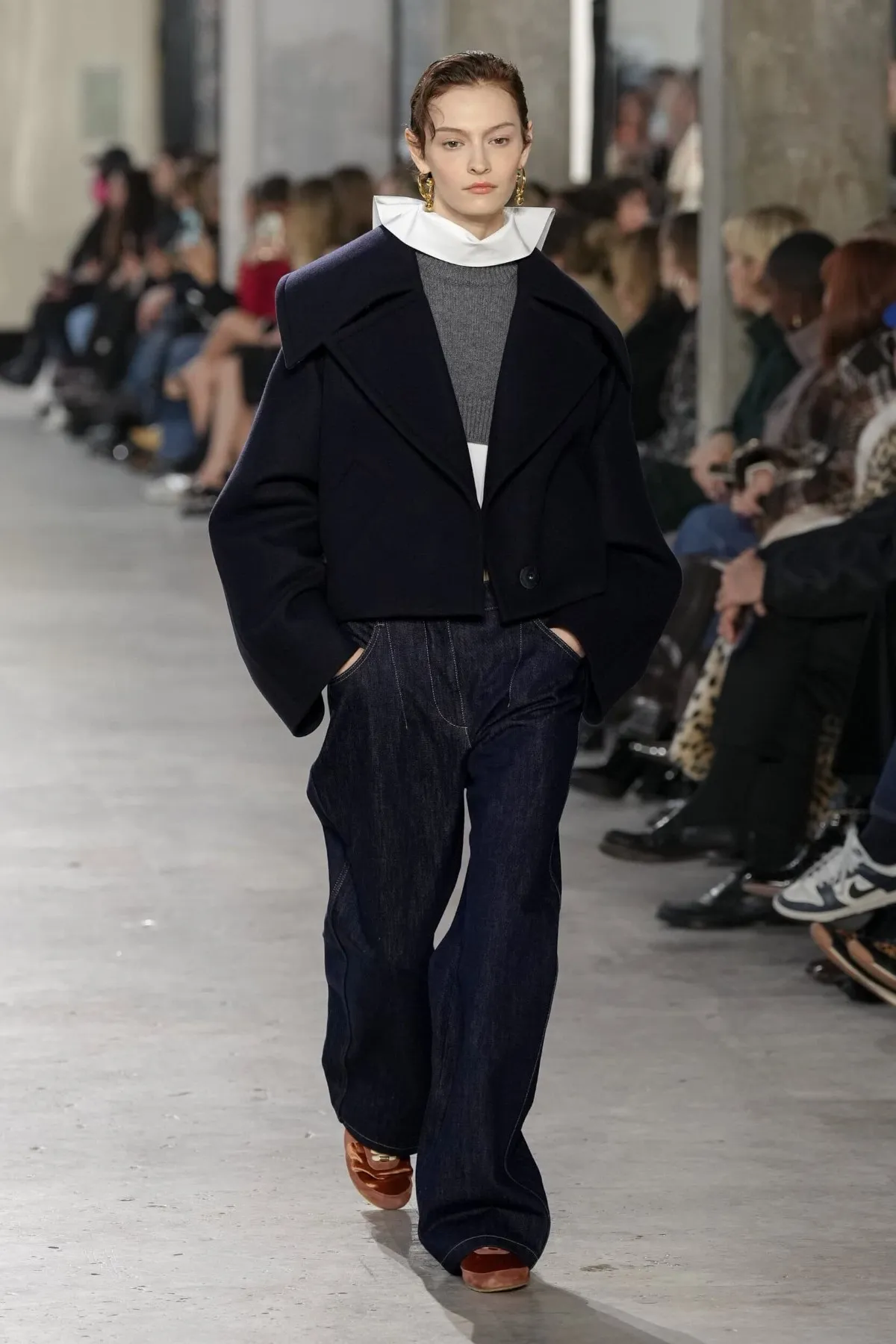
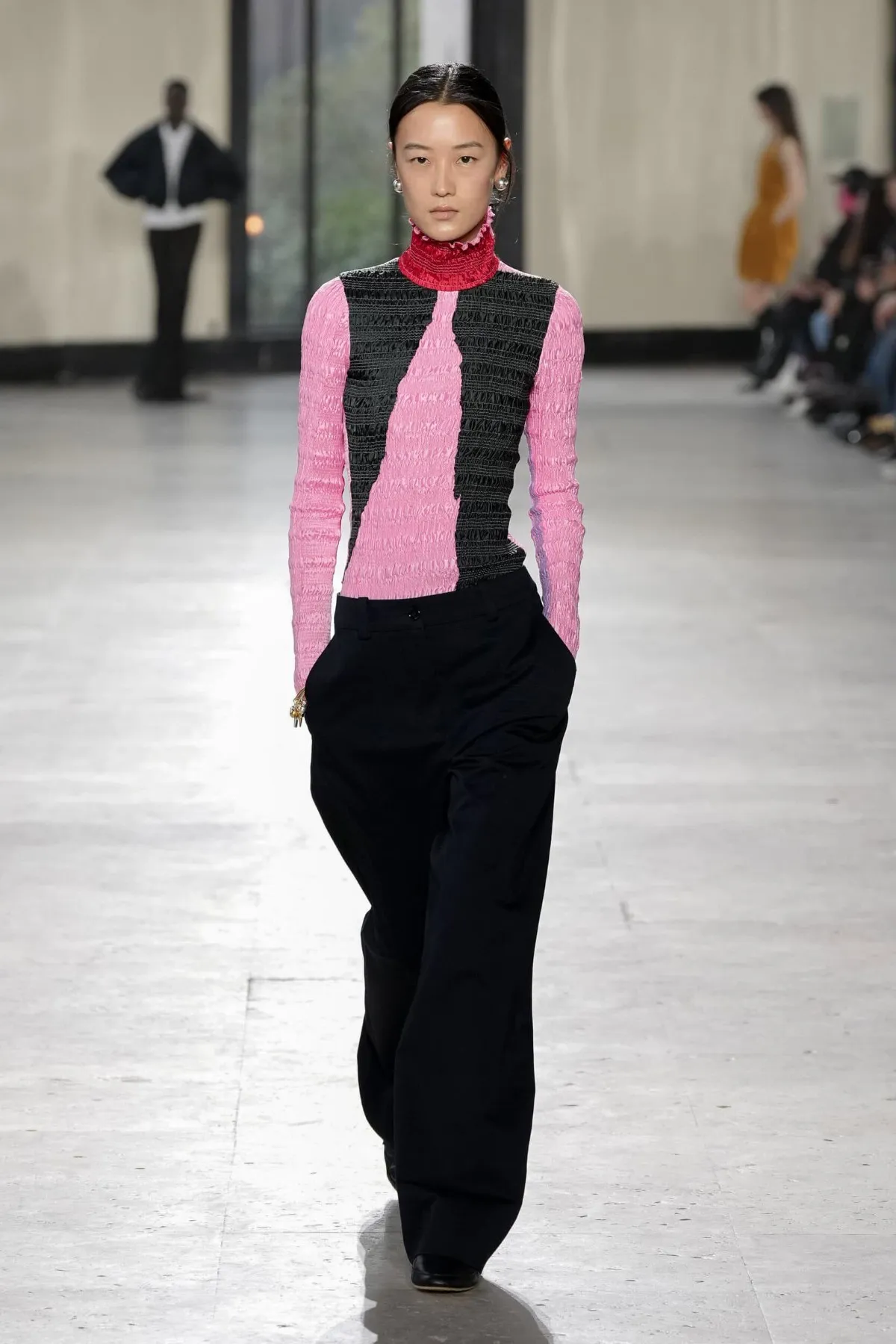
The opening look provided an immediate answer. Dark denim jeans appeared alongside a ruché top constructed from color-blocked panels. Henry later clarified that, although denim has always been part of Patou’s commercial offerings, he had never given it runway visibility until now. This decision reflects a pragmatic shift. Knitwear and denim generate substantial revenue for the house; yet, they remained backstage elements while romantic dresses claimed the spotlight.
Slim sneakers accompanied these casual pieces. This low-profile footwear mirrors trends gaining traction across other European collections, suggesting that Henry is tracking what women actually want to wear rather than dictating fashion from on high.
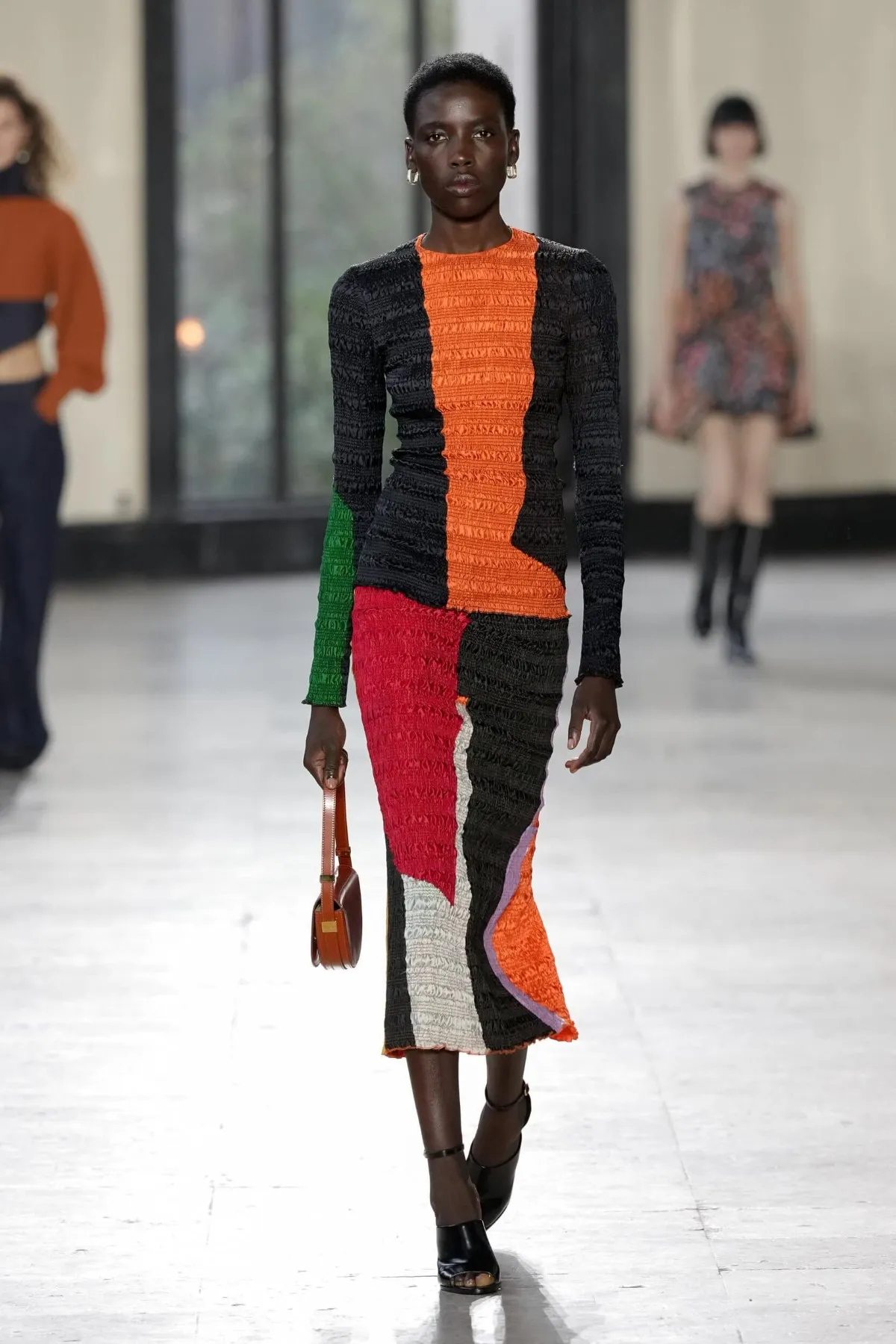
Henry cited Henri Matisse, Pieter Bruegel the Elder, and medieval art as influences. He joked about his medieval color selections, which drew inspiration from stained glass windows and included bubblegum pink, Klein blue, multiple greens, and a range of orange tones. The palette felt jewel-toned without being precious.
Tapestry fabric appeared throughout the collection, and prints referenced the doodles Copist monks sketched in illuminated manuscripts. These textile developments accompanied Henry’s sustainability efforts. He repurposed offcuts for color-blocked tops, showing that environmental consciousness doesn’t have to be loud to be effective.
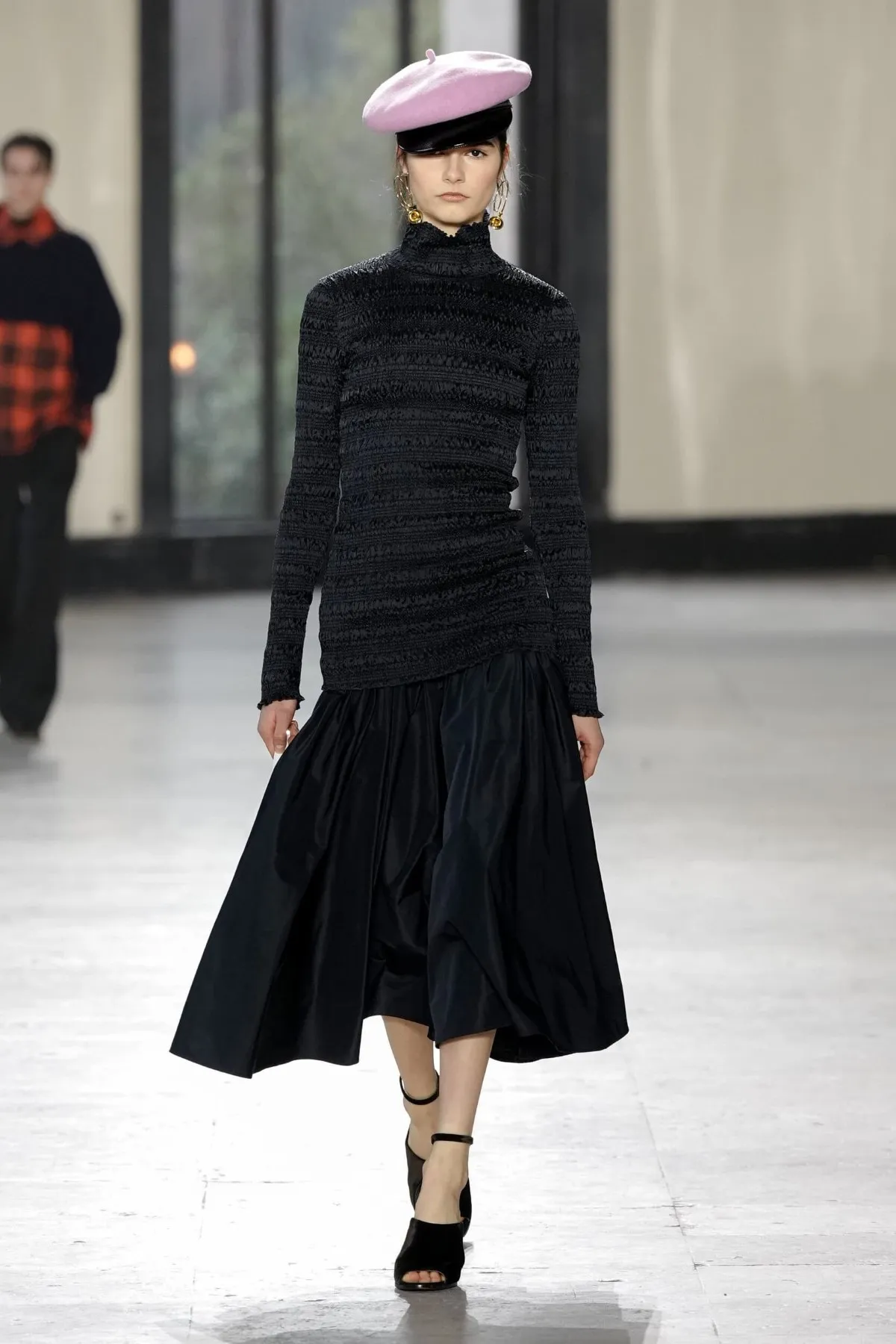
The range included polo shirts, straight-leg trousers, thin turtleneck sweaters, roomy blousons, and cropped biker jackets. Handkerchief skirts appeared in knee-length and midi lengths, while floor-length gowns featured lace and devoré velvet. Henry described wanting dresses that women could wear like sweatshirts, suggesting a deliberate collapse of formality.
Follow all the latest news from Fashionotography on Flipboard, or receive it directly in your inbox with Feeder.
You may also read
Guipure lace and Gobelins tapestry fabric were adorned with colorful bead embroidery to create texture without added weight. The silhouettes remained sculptural yet simple to avoid any complexity that might intimidate potential buyers. The footwear ranged from soft sneakers to stiletto-heeled boots, reinforcing the collection’s refusal to adopt a single identity.
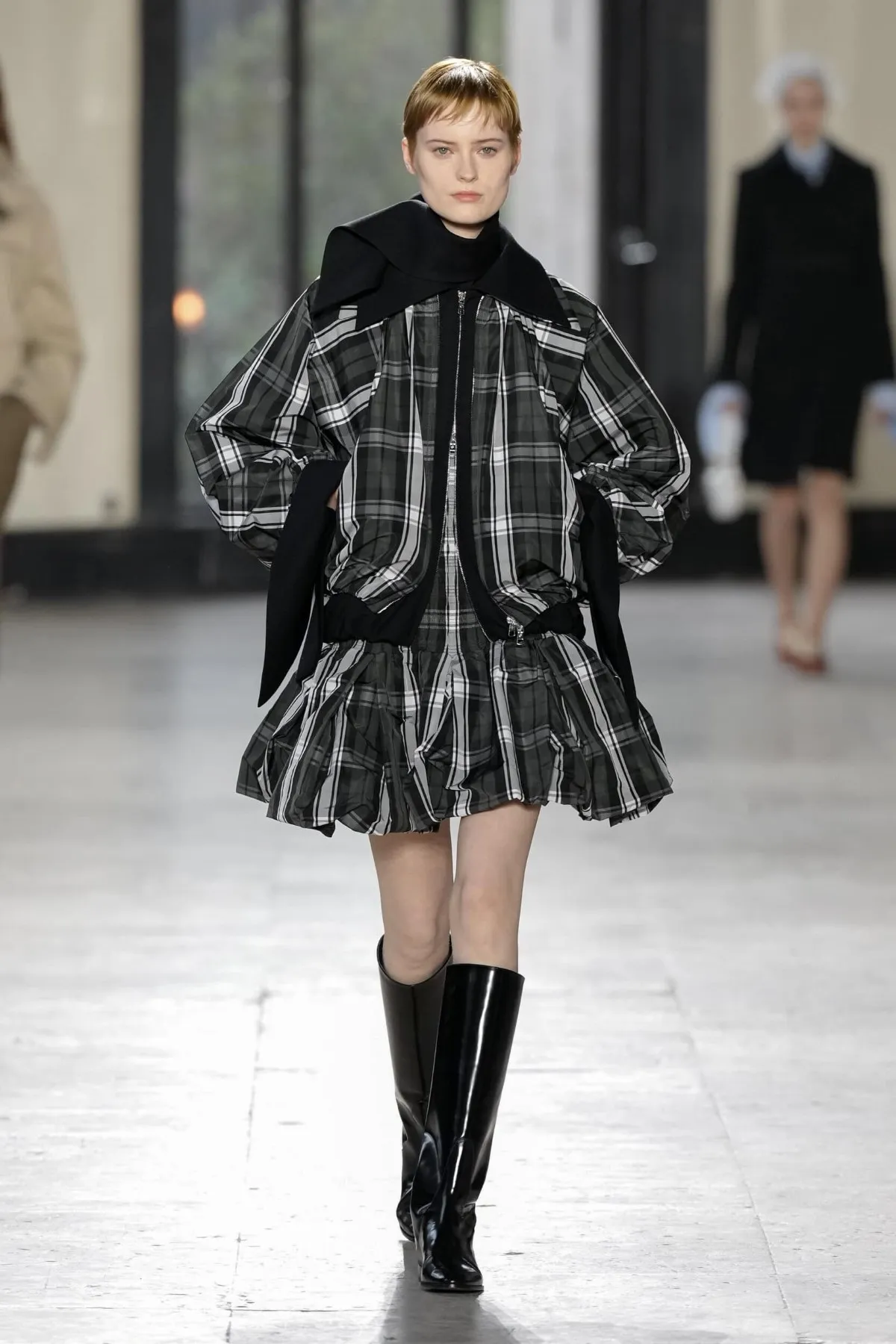
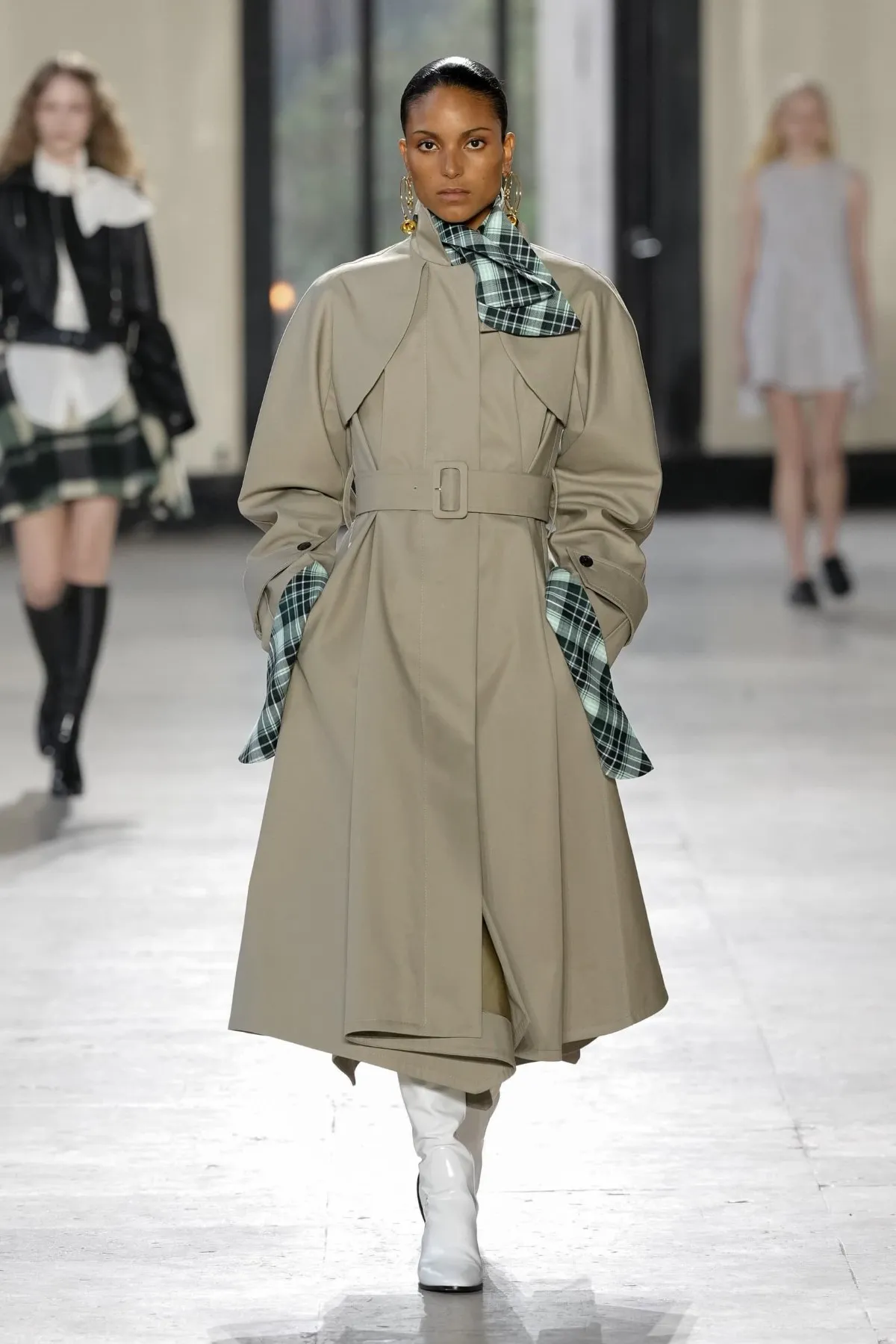
Pointed, flaring hems on dresses and coats were one of the few visible nods to medieval references. Another example was a capelet-style dress worn over a blouse printed with manuscript marginalia. An amber dress with a stretch-cut velvet pattern of the same marginalia hit the accessible-yet-refined note that Henry established when he arrived at Patou in 2019.
Henry was transparent about his motivation. He wanted to celebrate diversity and showcase categories that the house usually leaves out of runway conversations, despite their commercial strength. This candor reveals the tension many designers at heritage houses face. Runway shows exist to generate desire and press coverage, but ultimately, they must sell clothes that pay for everything else.
Patou operates within LVMH, where the bottom line matters as much as creative vision. Henry understands that his job requires satisfying multiple constituencies: young women seeking accessible elegance, retail buyers looking for bestsellers, and fashion editors hungry for innovation. This collection attempted to address all three simultaneously.
The risk was obvious. Too much variety can dissolve into incoherence, leaving viewers unable to identify the brand’s identity. However, Henry’s eclecticism felt democratic rather than scattered. Whether you agree with this interpretation depends partly on how forgiving you are toward designers trying to solve commercial puzzles while maintaining creative credibility.
Since joining Patou, Henry has said that he wants to preserve the house’s couture philosophy through an atelier approach while acknowledging market reality. This dual commitment has produced collections that are more approachable than most Parisian offerings, yet still maintain high technique and quality standards. Henry dresses real women rather than imaginary muses, which grounds his work in something tangible.
The Fall 2026 collection furthered that accessibility by validating everyday pieces that many brands would deem too ordinary for a runway presentation. Jeans and knitwear received the same treatment as evening gowns, suggesting that Henry believes value exists across all categories. Whether this philosophy will translate into increased sales remains to be seen, but the creative vision was evident.
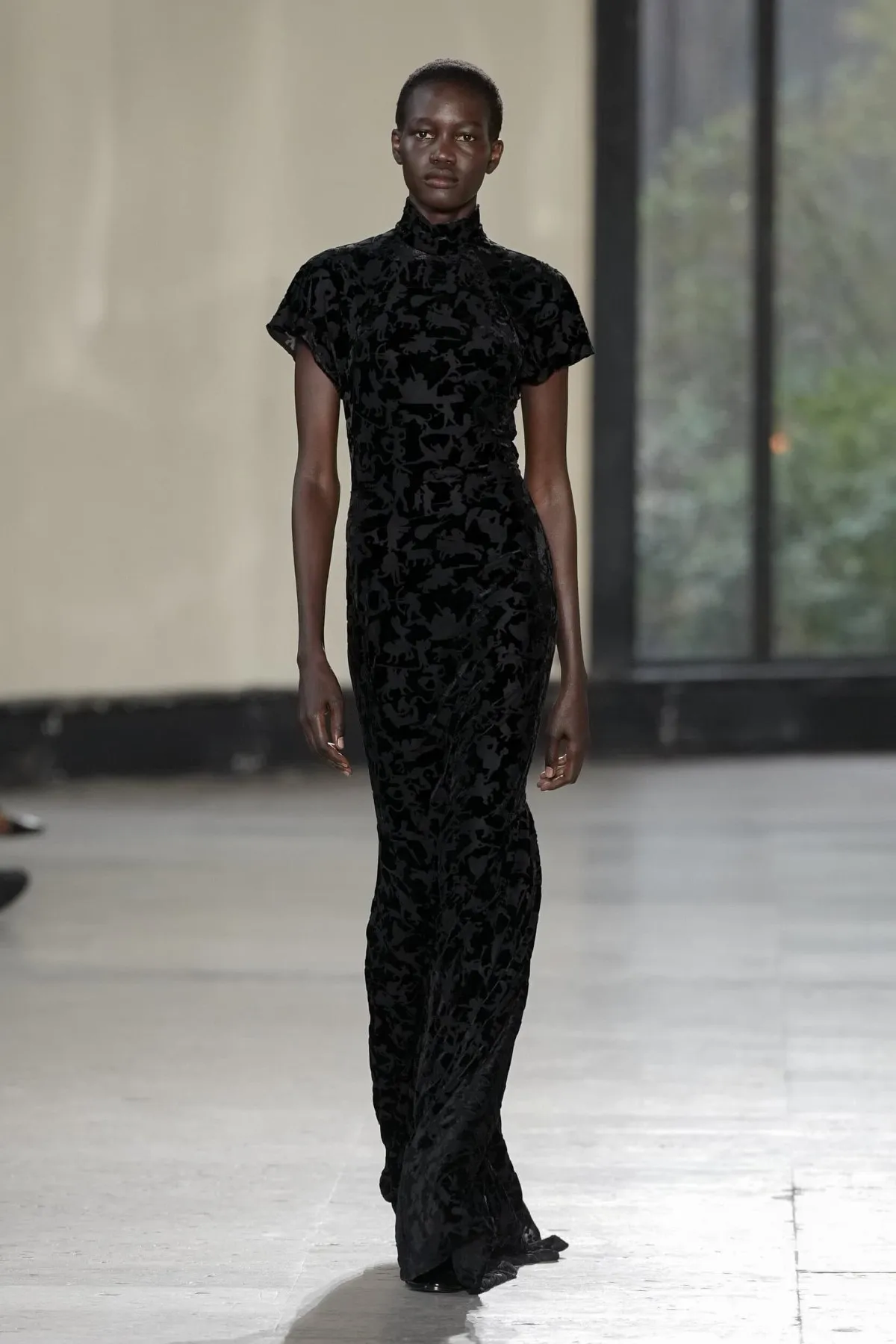
A medieval color palette provided visual continuity across disparate pieces. Those stained-glass hues linked a polo shirt to a velvet gown, creating a family resemblance where silhouette alone might not suffice. Henry’s ability to use historical references without being literal allowed the collection to feel both rooted and contemporary.
Fashion houses face mounting pressure to demonstrate commercial viability while maintaining creative distinctiveness. Henry’s decision to highlight Patou’s revenue-generating categories suggests that he understands survival requires satisfying both demands. The days of purely artistic collections that exist only for magazine editorials are largely over, especially at conglomerate-owned houses expecting growth.
Patou’s position remains unusual within the LVMH portfolio. The house lacks the massive revenue of Louis Vuitton and the haute couture cachet of Dior. This middle position could be advantageous if Henry establishes Patou as a place where young women can find quality pieces that don’t require extreme wealth or fashion expertise to appreciate.