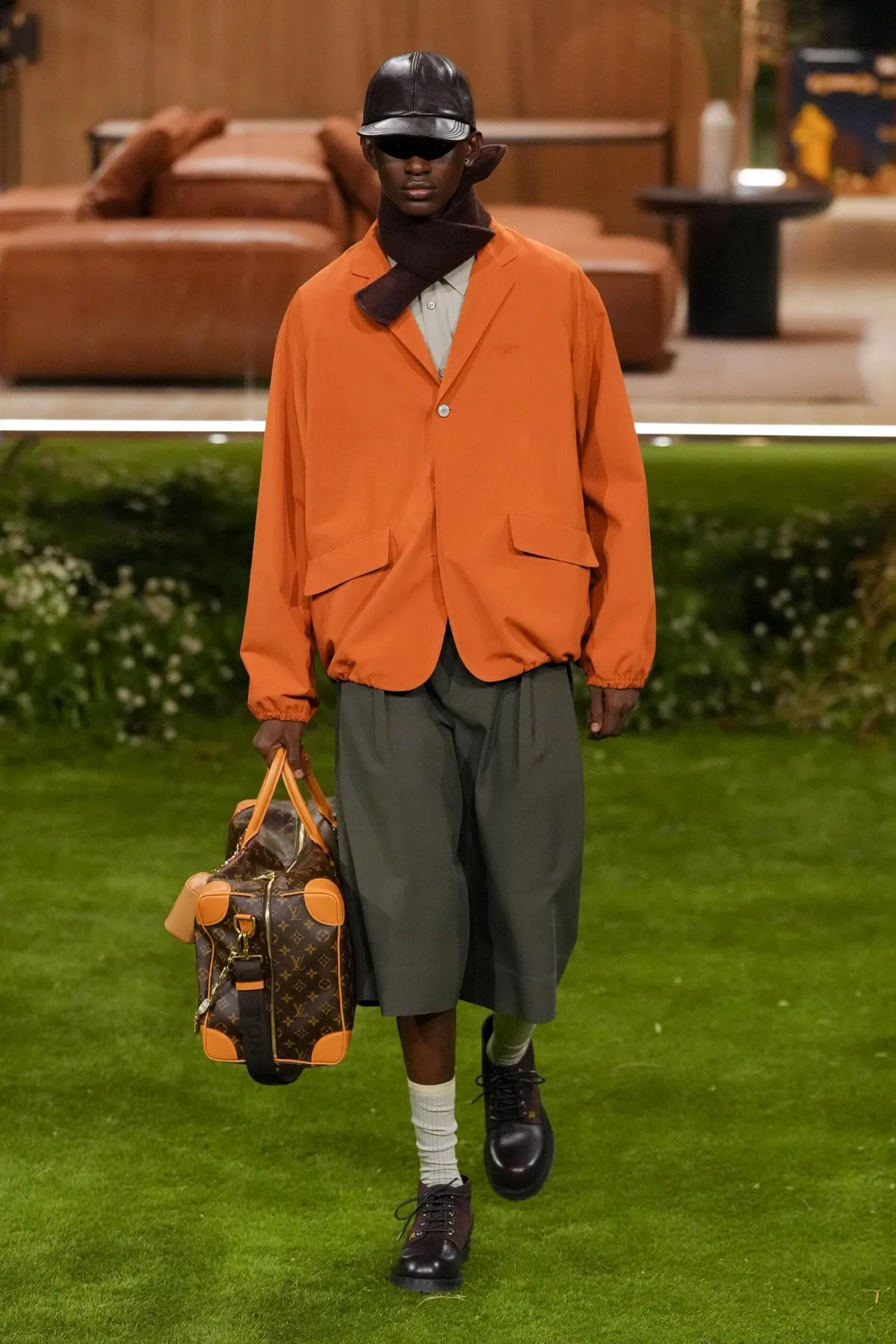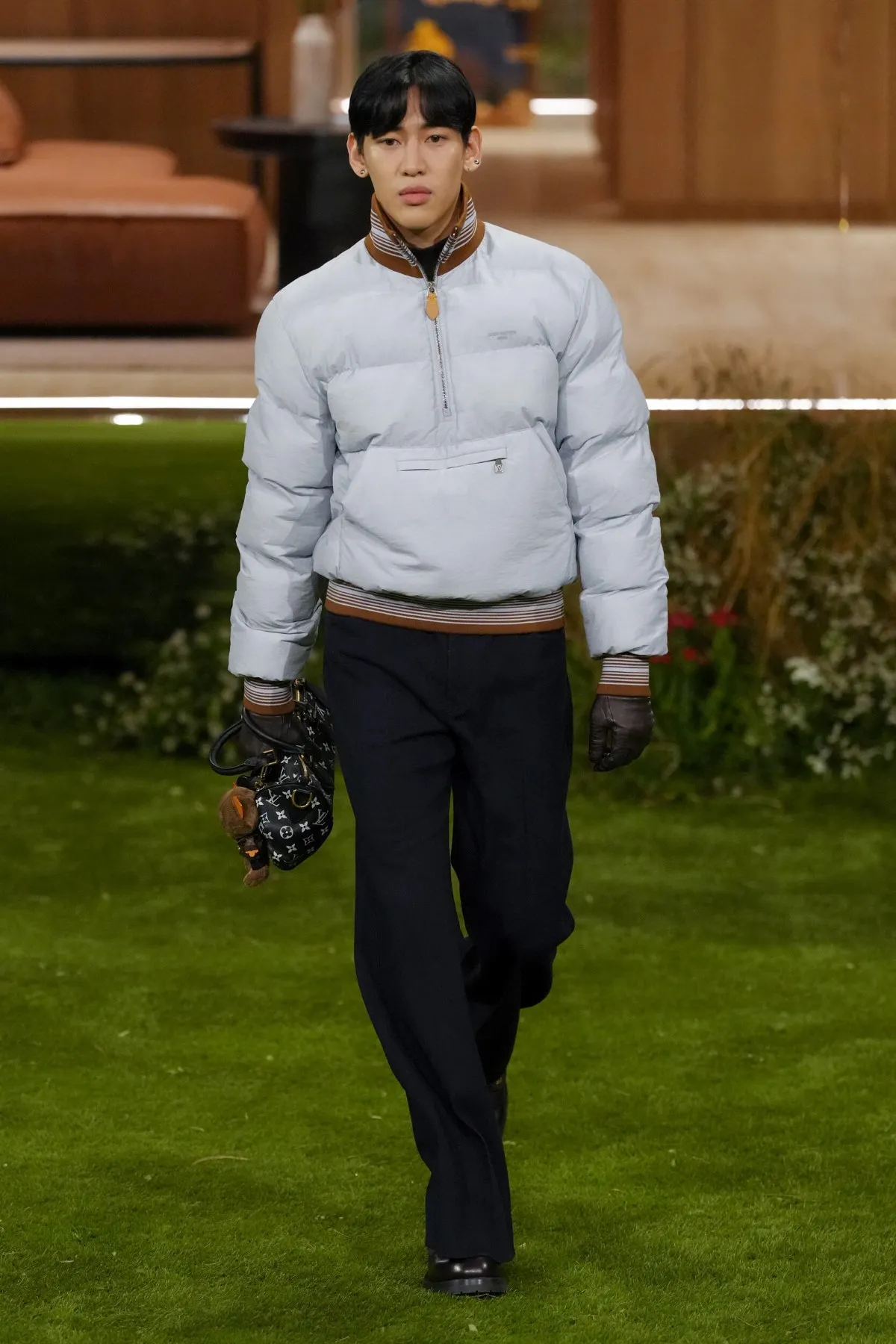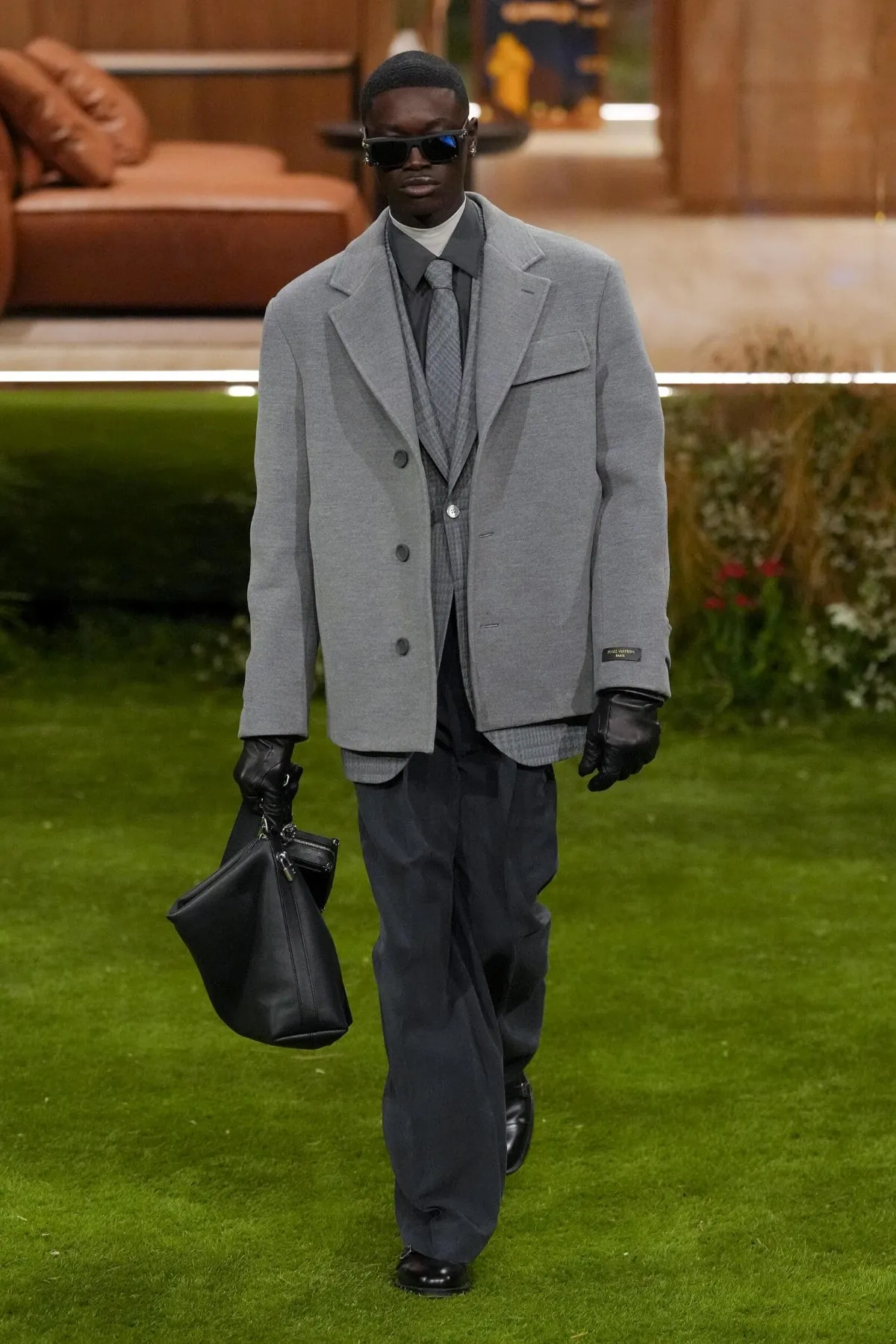

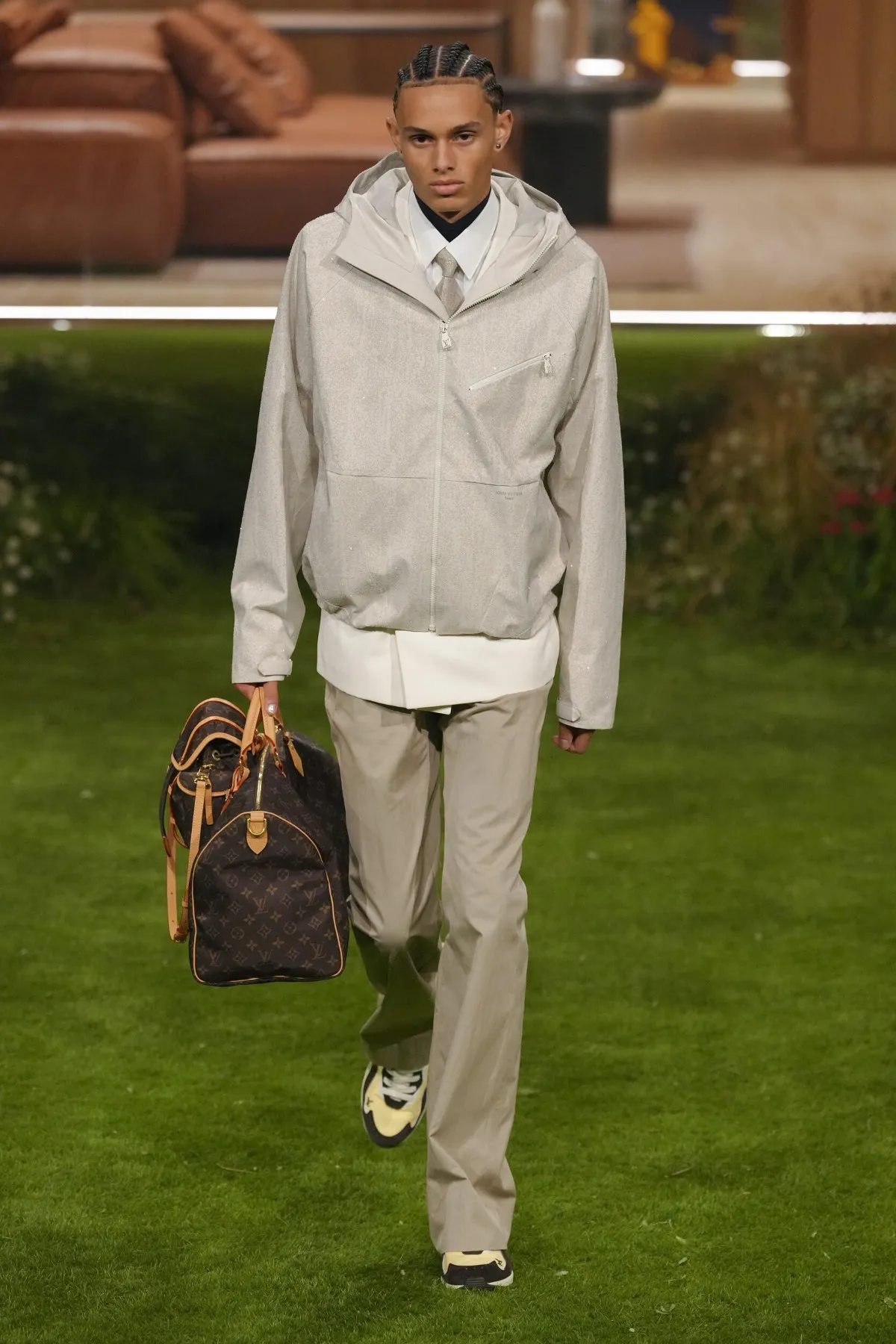
At Louis Vuitton, Pharrell Williams pushes menswear beyond aesthetics. For Fall 2026, he transforms classic 1980s tailoring into technically advanced garments, arguing that true modern luxury must perform as well as it looks.
The collection arrives at a time when the luxury sector is tired of buzzwords. Quiet luxury is having its moment, especially with the brand’s take on it for Spring 2026. Now, the industry has settled on “timeless” to describe a commercial imperative: convincing consumers that expensive clothing is an investment, not an indulgence. Williams approached this mandate with a seemingly simple but technically complex proposition. He took classic 1980s menswear silhouettes and engineered them to perform like high-tech sportswear.
| 📌 Key Facts |
|---|
| 👔 Designer: Pharrell Williams, Creative Director of Louis Vuitton Menswear 🧵 Season: Fall/Winter 2026 🧥 Core Idea: Classic tailoring engineered with sportswear-level performance 🌧️ Technologies: Reflective fabrics, water-repellent membranes, aluminum threads 🎒 Accessories: Technical bags in silk and recycled nylon, flexible split-toe shoes 🧠 Luxury Shift: Functionality becomes as valuable as heritage and status |
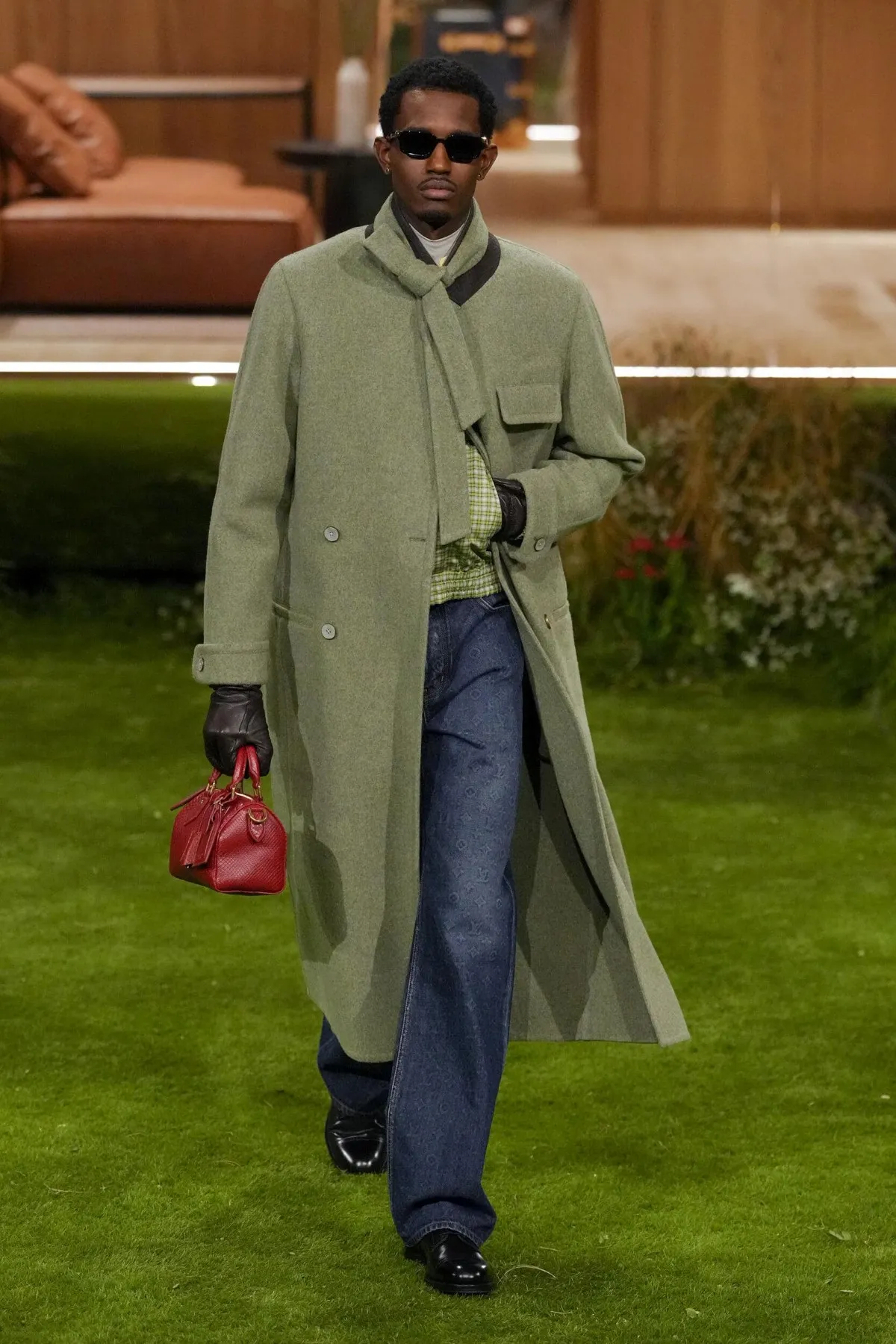
Reflective tailoring: When classic menswear meets technical performance
The creative director applied reflective treatments to traditional suiting fabrics, such as houndstooth, herringbone, and Prince of Wales check. These garments were designed to glow in the light, making them ideal for cycling after dark. Williams tucked trousers into socks on the runway to demonstrate the intended use. The innovation extended beyond visibility. Silky parkas were bonded with water-repellent membranes. A crinkled Harrington jacket was woven with aluminum thread to allow for precise draping.
Before the show, Williams cited Ralph Lauren, acknowledging the preppy designer’s current revival among younger consumers – an idea he also played with in his Pre-Fall 2026 Central Park story. However, he questioned whether Savile Row–inspired tailoring could do more than look good and last a long time. His solution was to import technical materials from his work with adidas, specifically citing the German sportswear company’s Climacool technology. The goal was to bring functional properties to luxury fabrics.
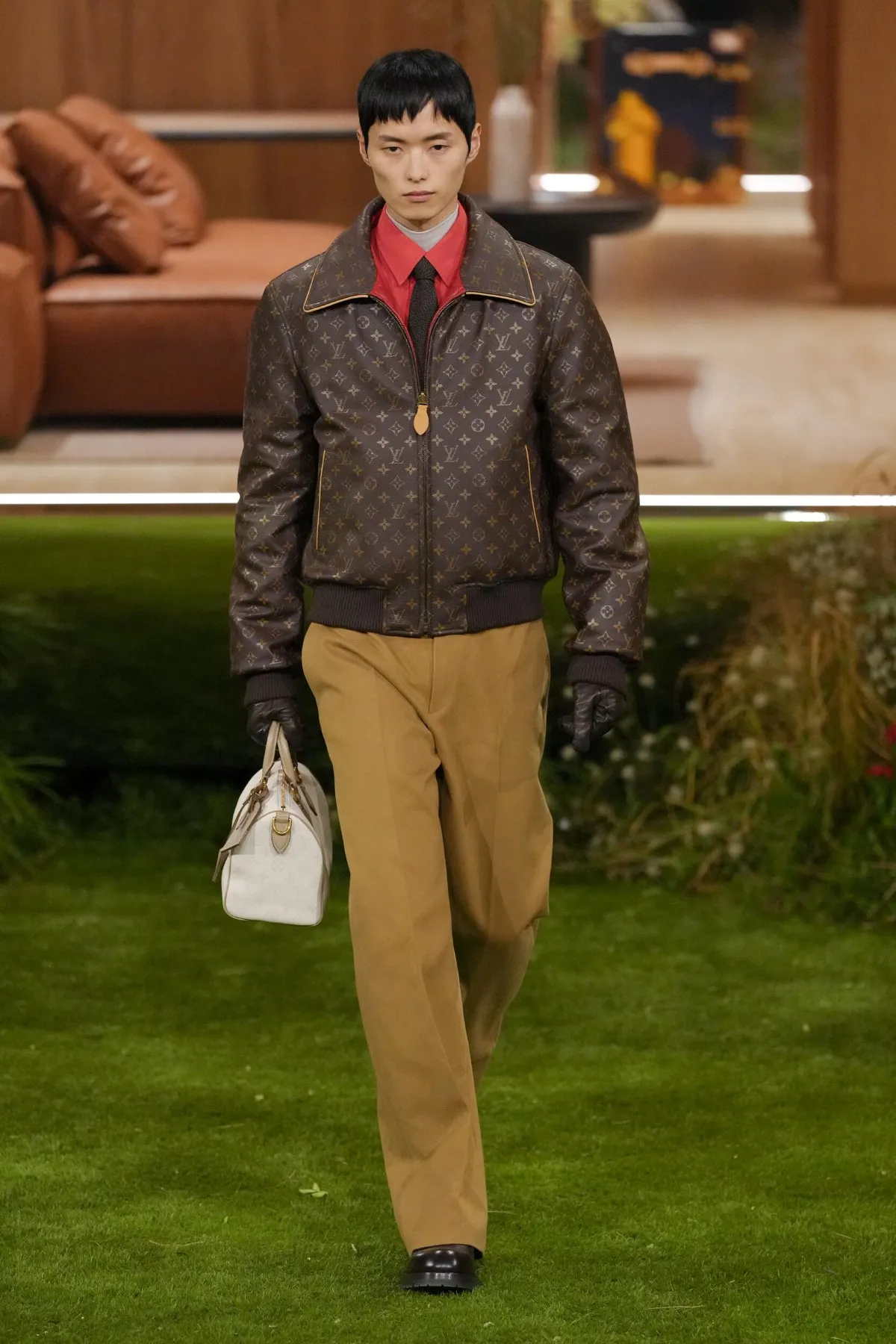
A runway that undersold the collection’s technical innovation
The show’s format failed to highlight these technical achievements. Models walked around the Drophaus, a prefabricated, glass-walled home that Williams designed with the architecture firm Not a Hotel. The space opened with UV light illuminating a reflective monogram on a trunk. Applying the same treatment to the clothing would have demonstrated the collection’s performance capabilities. Instead, Williams relied on trompe l’œil effects, dusting silver crystals on the models’ shoulders to simulate rain and bedazzling a gray tweed overcoat.
The gap between technical function and visual presentation reveals a tension at the heart of this collection. Williams has built his reputation on maximalist gestures and visible luxury. Backstage, he wore a diamond necklace and ring that likely cost more than most people’s homes. His definition of luxury includes quiet restraint and loud display. He calls this “timeless luxury” rather than old money discretion.
Follow all the latest news from Fashionotography on Flipboard, or receive it directly in your inbox with Feeder.
You might also read
Reinventing Louis Vuitton heritage through modern materials
The Monogram appeared throughout the collection on caps, backpacks, and glossy windbreakers. Williams also introduced supple bags made from silk and recycled nylon, offering a contemporary alternative to the brand’s traditional coated canvas. Introduced in 1896, the Monogram motif has survived for 130 years precisely because Louis Vuitton has consistently found ways to refresh its application without abandoning the core design—whether on the runway or through the Mon Monogram customization service. Williams understands this principle. Having discovered the brand through hip-hop culture and Dapper Dan’s bootleg interpretations, he has an outsider’s appreciation for its cultural value.
The collection included crushable cotton caps that return to shape, waterproof suede caps, and split-toe shoes with flexible, gel-reinforced leather soles that bend like sneakers. These details suggest that Williams has learned that luxury menswear customers increasingly expect their expensive clothing to justify its price through functionality rather than status alone. Whether that expectation can support an entire business model remains an open question. For now, Williams has offered his answer: beautiful clothes that do more than look expensive.