


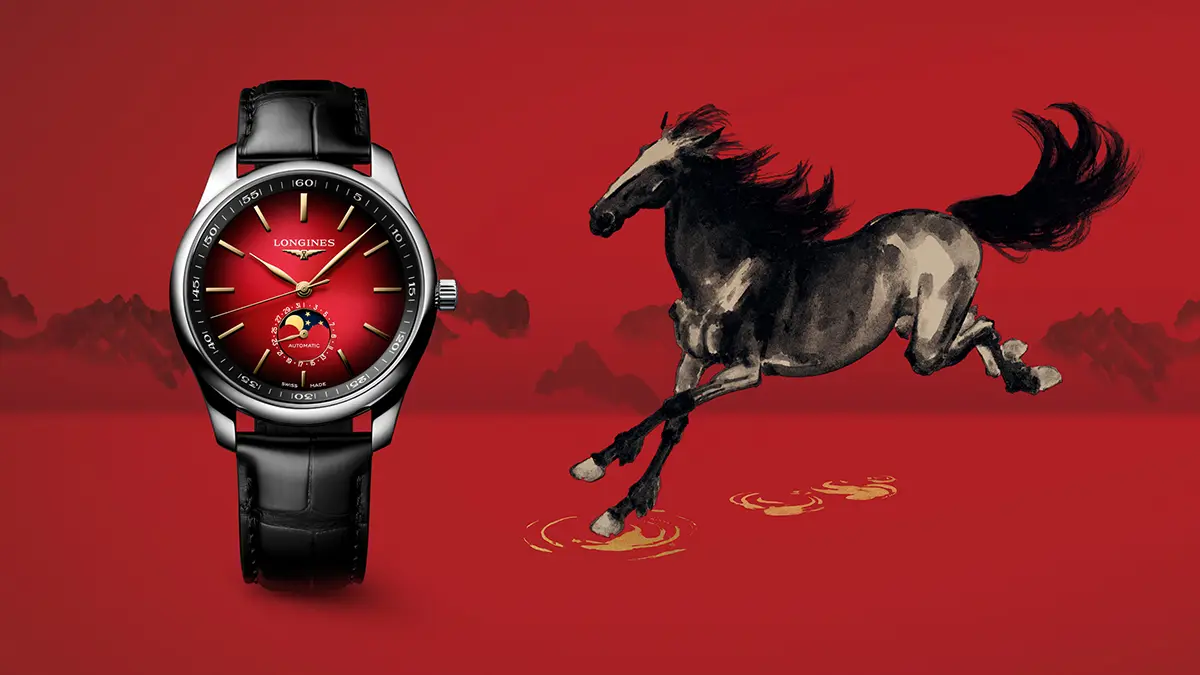
With the Longines Master Collection Year of the Horse, the brand goes beyond the usual Lunar New Year tribute. This limited edition blends Swiss watchmaking, contemporary Chinese art and deep equestrian symbolism, anchored by Peon Xu’s iconic galloping horse and a refined moon phase display.
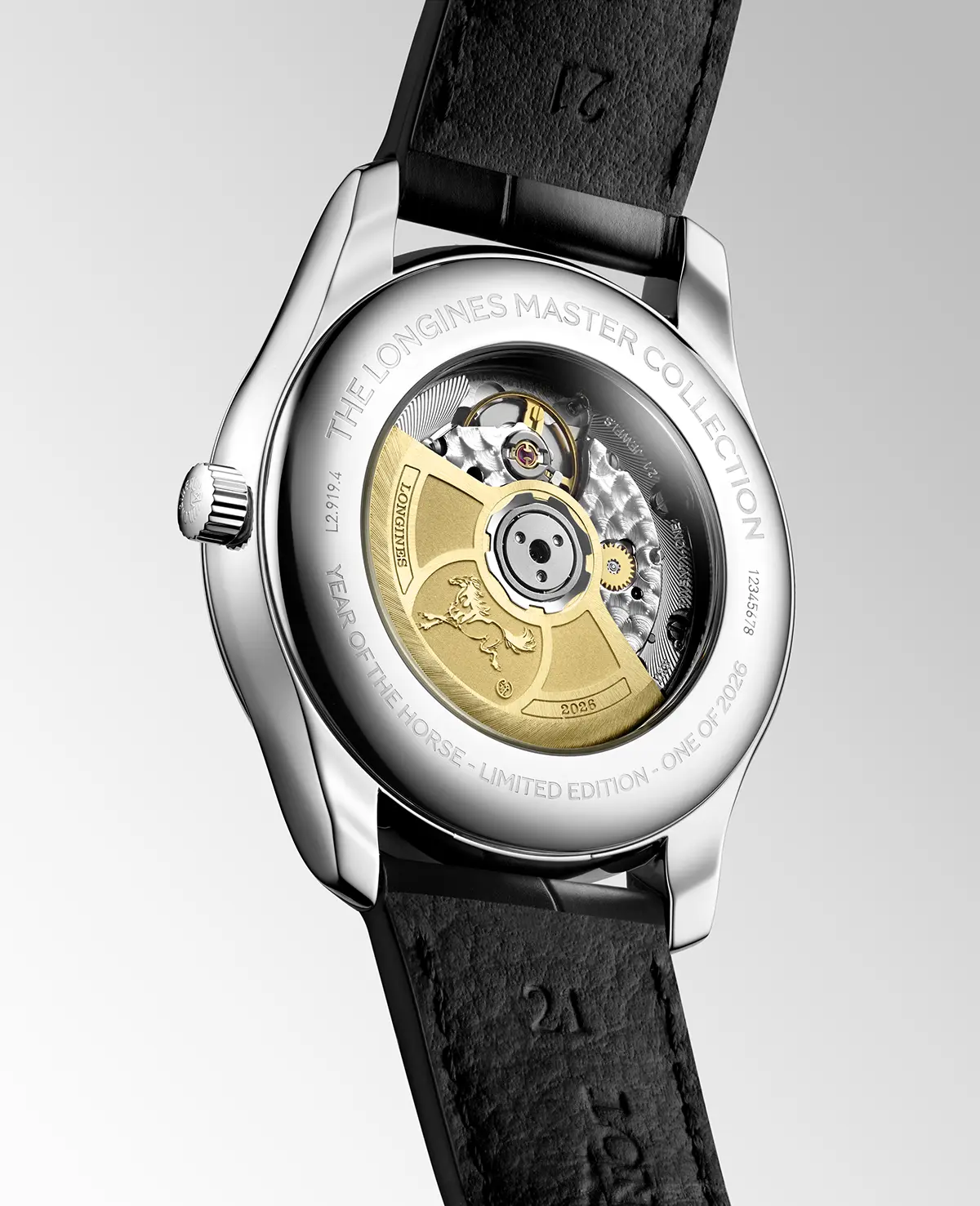
Limited to 2,026 pieces worldwide, this watch represents more than just another lunar calendar release. The brand collaborated with Qingping Xu, the son of the renowned painter Peon Xu and an accomplished calligrapher, to engrave the iconic “Galloping Horse” motif onto the yellow gilt rotor. When worn, the horse appears to move forward with the motion of the wrist, creating an unusual kinetic effect that goes beyond typical exhibition casebacks.
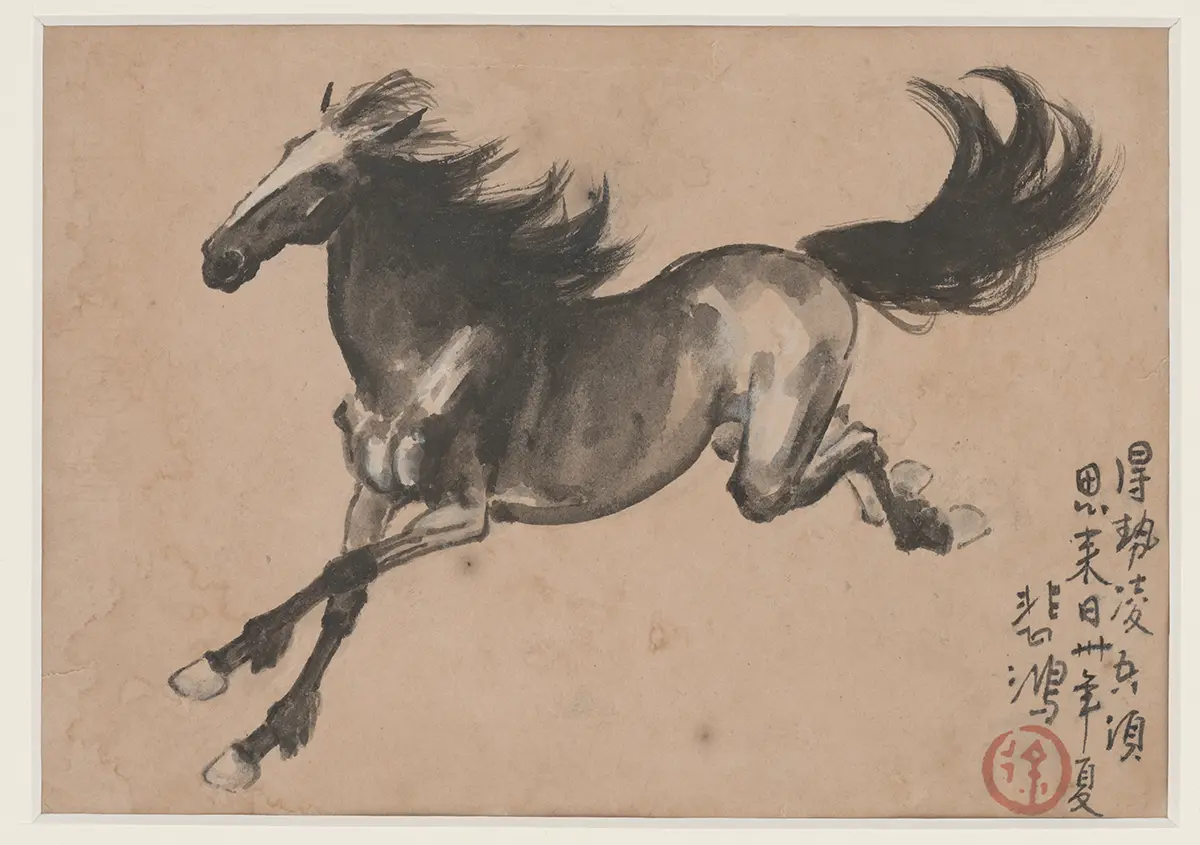
The artist behind the “Galloping Horse“
Peon Xu revolutionized Chinese painting by merging Western techniques with traditional Chinese realism. His galloping horses capture something unique: the precision found in Western art combined with the fluid energy of Chinese ink painting. His horses weren’t static portraits, but rather expressions of movement and vitality.
For watch collectors unfamiliar with his work, think of Peon Xu as an artist who bridged two artistic worlds during a pivotal moment in modern Chinese art history. His influence extends well beyond galleries, making this collaboration particularly relevant for a Swiss watchmaker deeply tied to the equestrian world.
A dial inspired by sunrise and lunar renewal
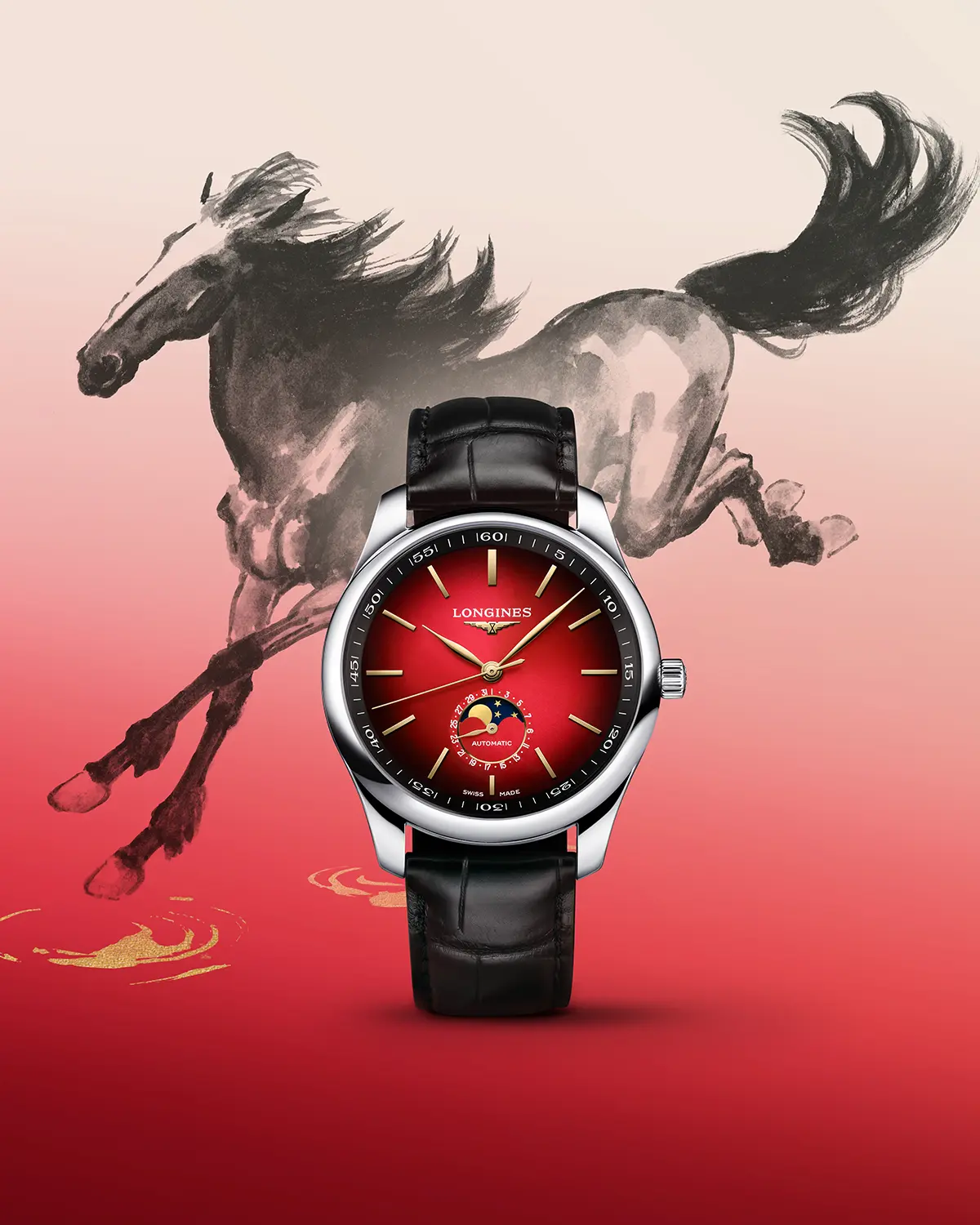
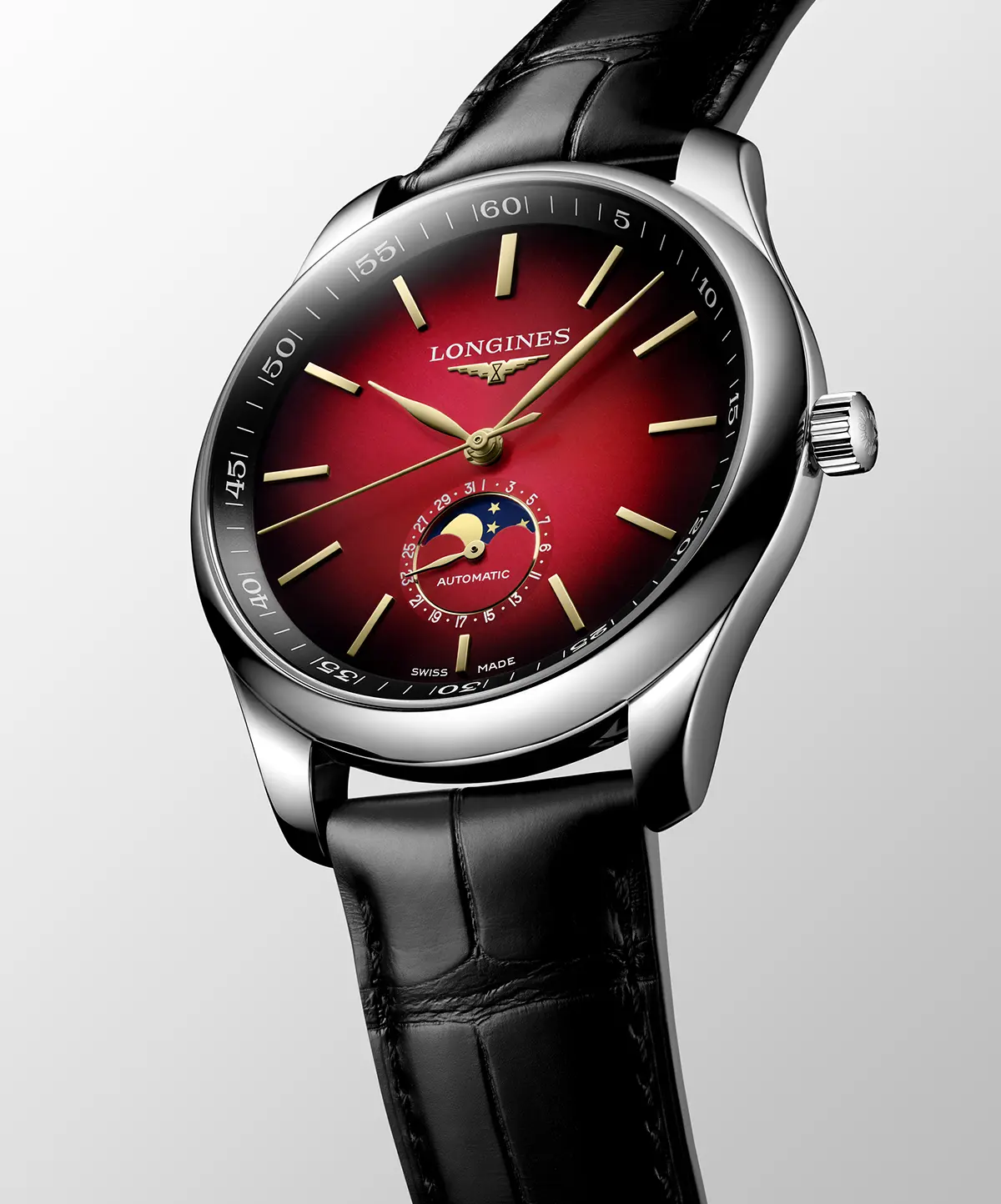
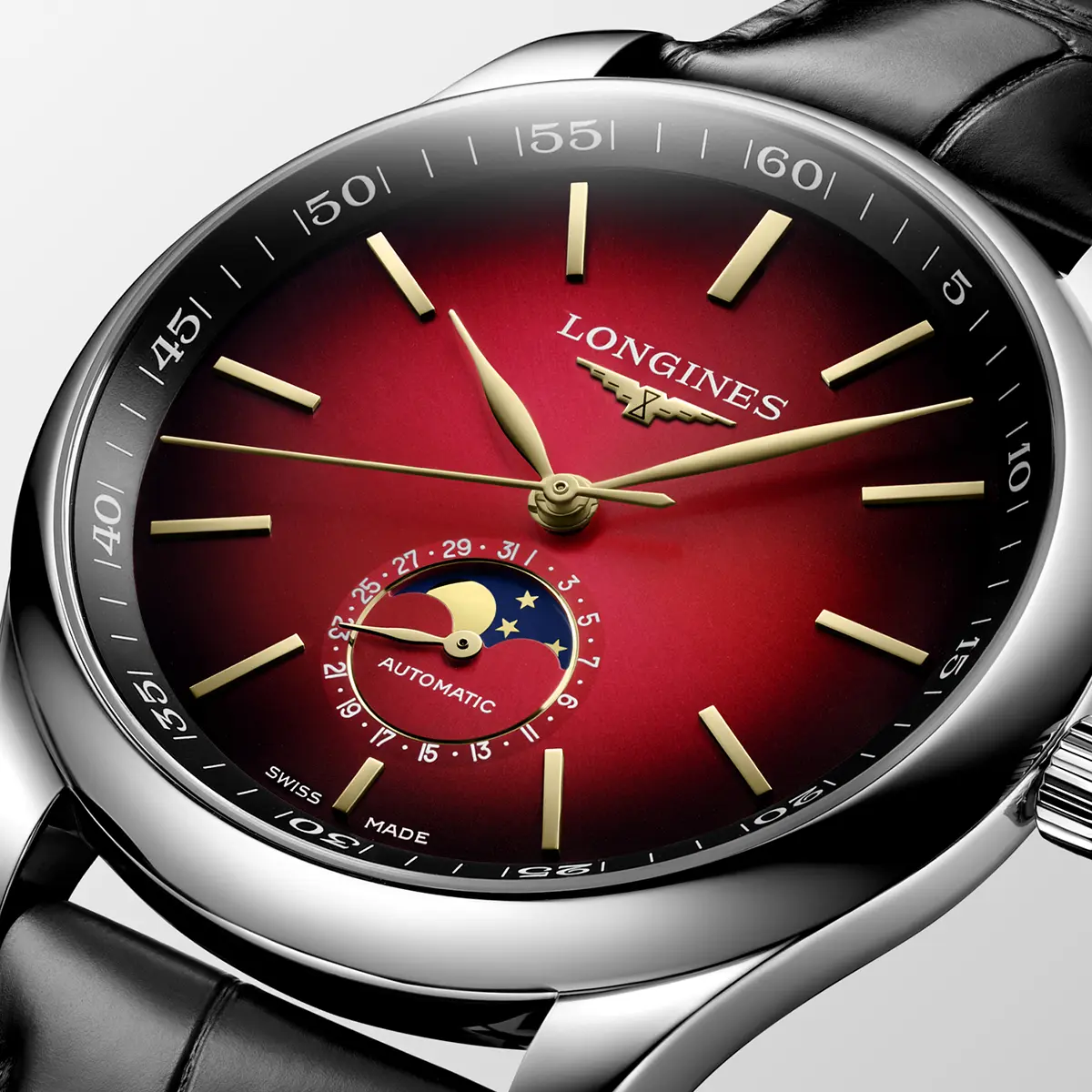
The watch features a 42mm stainless steel case, the ideal proportion for a dress watch with moon phase complications. The dial is where Longines made some deliberate choices. They opted for a red sunray brushed finish that transitions through a subtle gradient.
This effect evokes a sunrise, tying into the cultural symbolism of new beginnings associated with the Lunar New Year. Gilt hands and applied indexes maintain a refined look without being overly formal. The moon phase sits at 6 o’clock and is surrounded by a date indicator that frames the feature nicely.
From different angles, the sunray brushing catches the light, preventing the red from looking flat or one-dimensional. While the color may not appeal to everyone, it certainly distinguishes itself from the typical blue, black, or white dials seen in most Master Collection models.
Follow all the latest news from Fashionotography on Flipboard, or receive it directly in your inbox with Feeder.
You might also read
The L899.5 movement and artistic caseback
Longines equipped this watch with their L899.5 caliber movement, which features a silicon balance spring and is self-winding. This movement offers 72 hours of power reserve, meaning you can take the watch off on Friday night and put it back on Monday morning without resetting it.
Silicon balance springs have become increasingly common in modern watchmaking, and for good reason. They resist magnetic fields and temperature variations better than traditional hairsprings. Longines guarantees all of its automatic watches with silicon balance springs for five years, which speaks to the company’s confidence in the technology.
The transparent caseback reveals the engraved “Galloping Horse” artwork, as well as Peon Xu’s personal seal stamped onto the rotor. The quality of the engraving matters here. You’re buying this watch partly for the artistic collaboration, so the engraving must hold up under scrutiny. From what I understand, the brand collaborated closely with the Peon Art Museum to ensure that the reproduction maintains the integrity of the original painting.
Chinese symbolism meets equestrian heritage
The accompanying calligraphy by Qingping Xu reads “奔马得势,” combining “奔马” (galloping horse) with “得势” (gaining momentum). Together, these characters convey the idea of a horse in full stride, gathering an irresistible force that symbolizes a breakthrough or success.
For collectors interested in cultural context, the horse holds great significance in Chinese tradition. It represents courage, freedom, and a pioneering spirit. Longines deliberately selected these artistic elements, tying them back to the brand’s connection with equestrian sports, which dates back to the 19th century.
The brand has served as the official timekeeper for prestigious international equestrian competitions for decades. This special edition acknowledges that relationship while celebrating the lunar calendar and Chinese artistic heritage. Whether you find meaning in this dual symbolism depends on what you value in a watch beyond its technical specifications.
On the wrist: Proportions, strap and wearability
The watch features a black leather strap with a stainless steel folding clasp. Given the dressy nature of the moon phase complication and the artistic focus of the dial, leather makes sense here.
The 42mm case sits right in the sweet spot for modern dress watches. It provides enough wrist presence without feeling too large for formal occasions. The case thickness depends partly on the moon phase module, but Longines generally maintains balanced proportions in the Master Collection.
One thing to consider is that red dials can be difficult to match with different outfits. The subtle gradient treatment on this watch is more subdued than the bold red dials found on some other models, but you’ll still want to think about how it pairs with your typical wardrobe.
Why the 2,026-piece limited edition matters
With only 2,026 pieces worldwide, this watch is firmly in the “limited edition” category, but not so scarce that you’ll never see one. The number itself references the year 2026, which aligns with the lunar calendar celebration.
Limited editions often prompt questions about collectability and value retention. The Peon Xu collaboration adds a cultural dimension that may appeal to collectors interested in art-focused watches or those with Chinese heritage. Whether that translates to long-term collectability remains to be seen, but its artistic pedigree certainly sets it apart from standard production models.