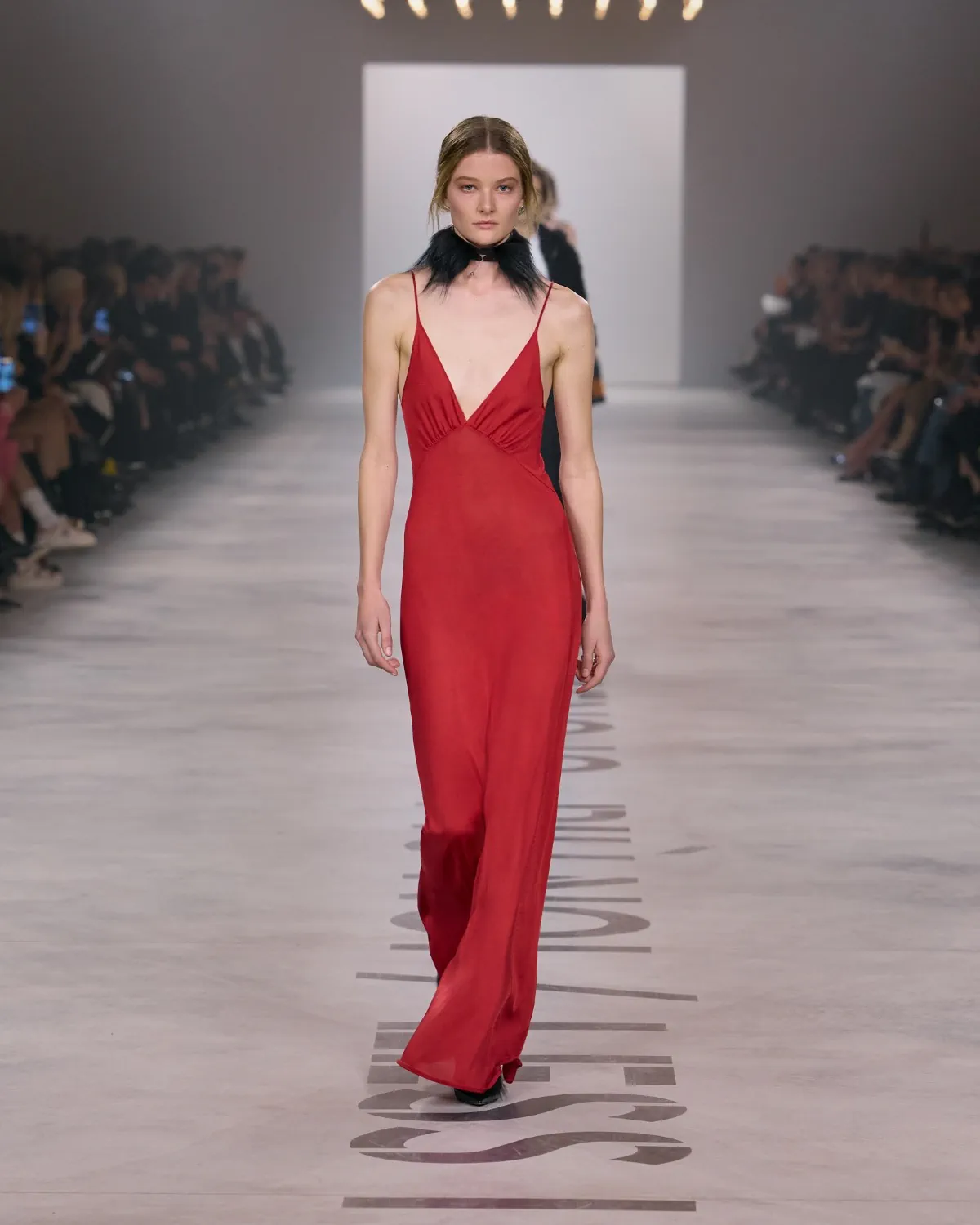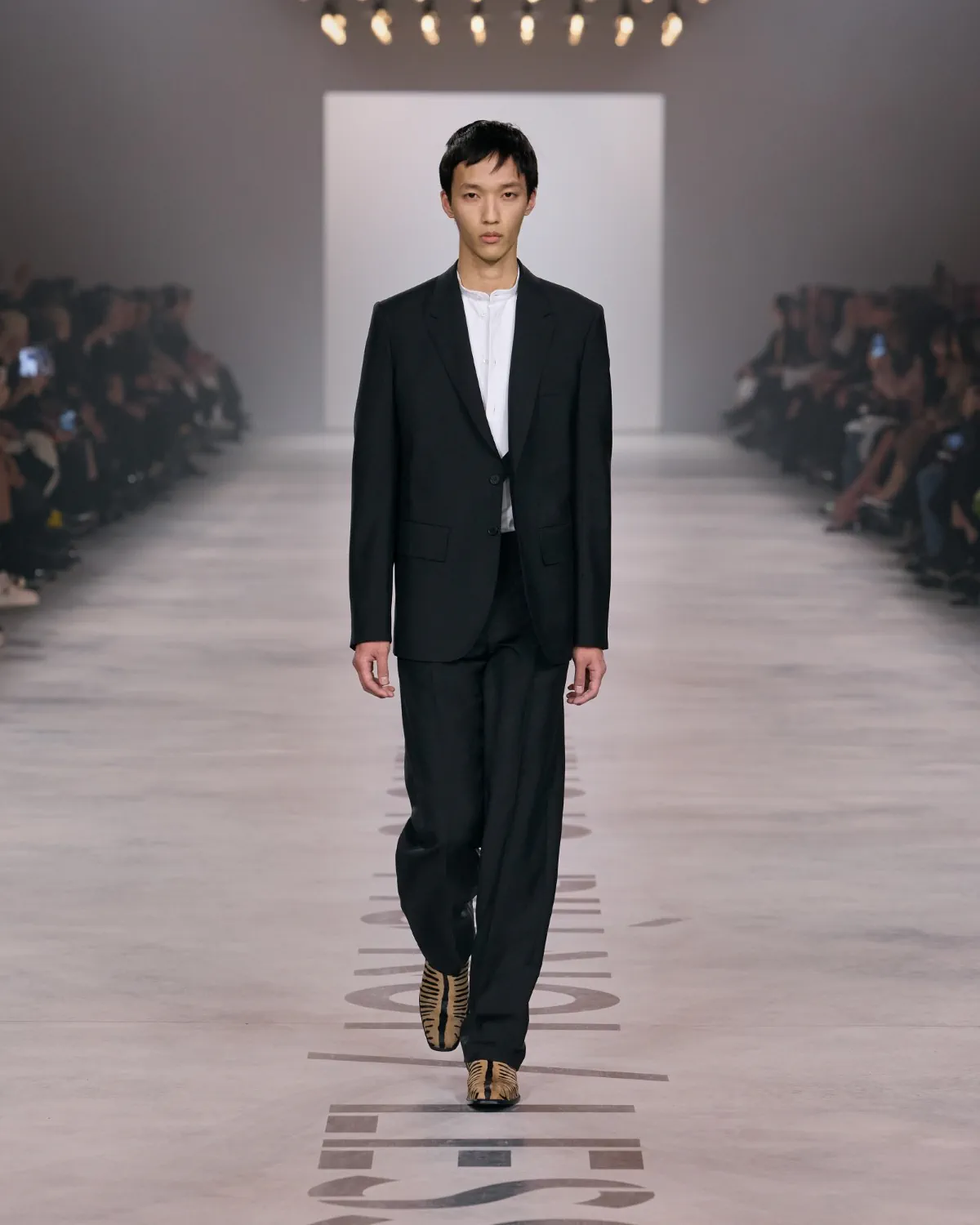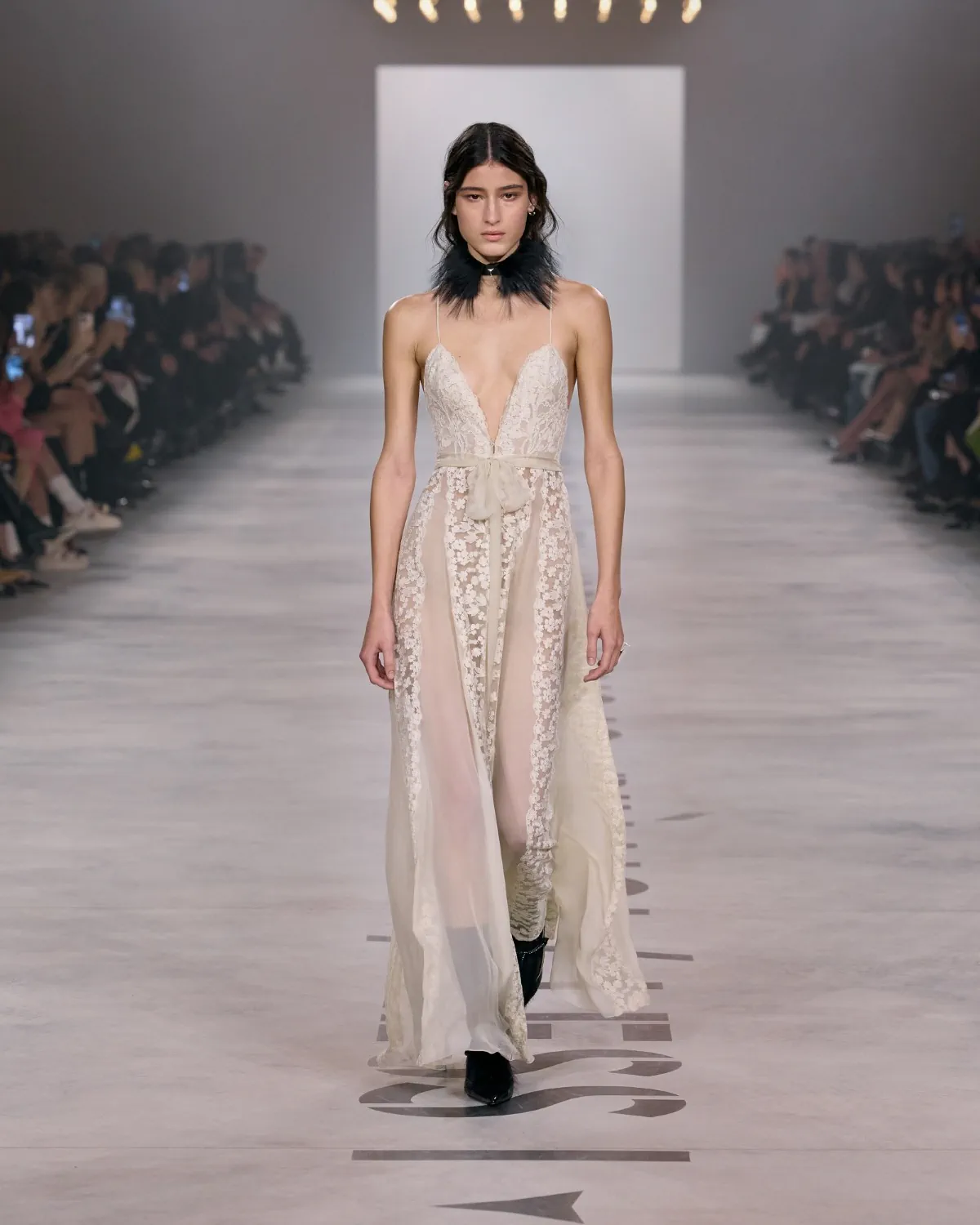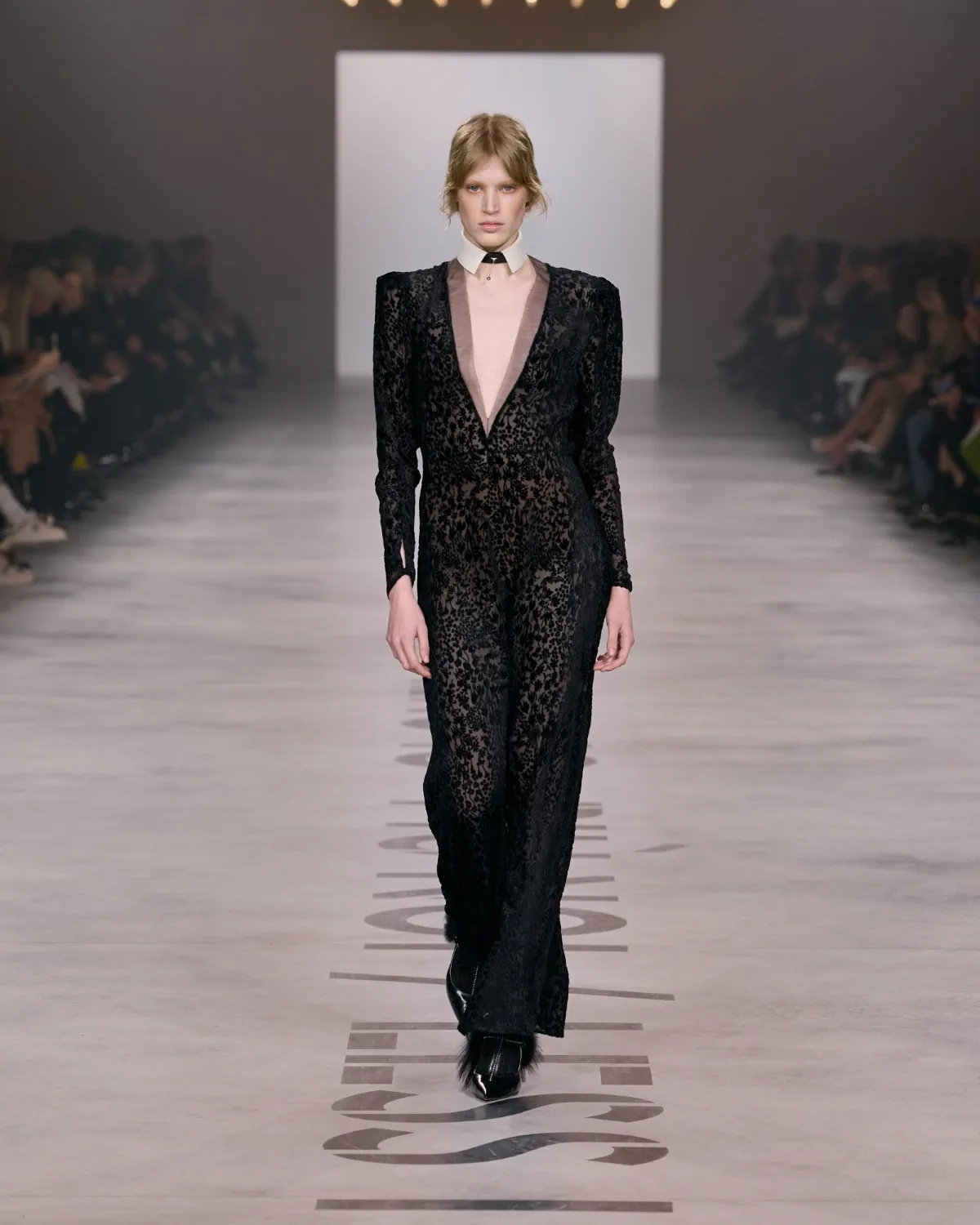

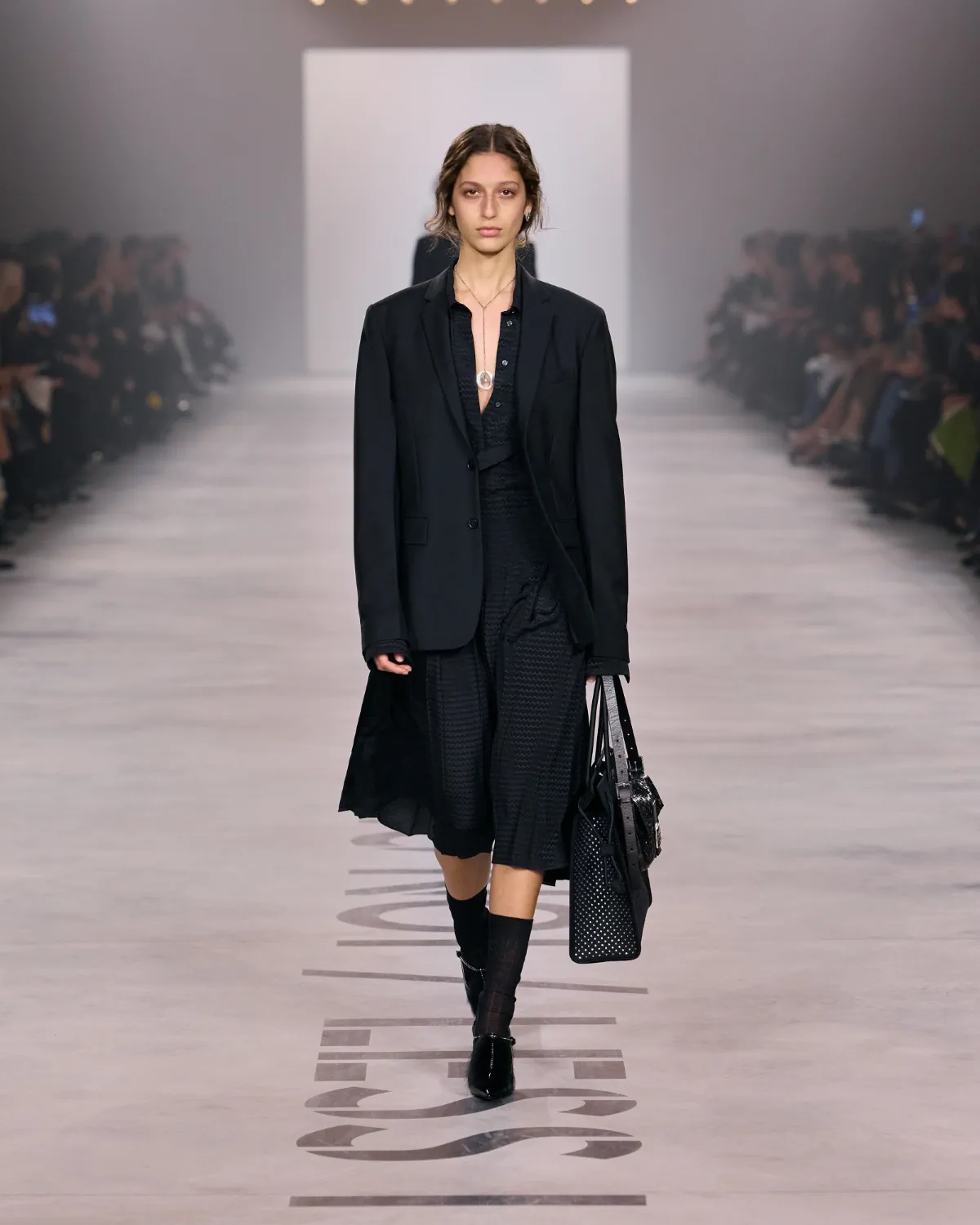
When Maria Grazia Chiuri presented her inaugural Fendi collection, the phrase emblazoned on the catwalk spoke volumes: “Less I, More Us.” Those four words, a translation of the Italian “Meno Io, Più Noi,” were more than just a mood board caption. They were a declaration of the purpose of this Fall 2026 collection and of Chiuri’s vision for the future of the house.
| 📌 Key Facts |
|---|
| 🧵 Maria Grazia Chiuri presents her first Fendi collection for Fall 2026 👥 Men and women wear identical looks, introducing a shared wardrobe concept 🦊 Fur returns prominently, including bold pieces worn by male models ♻️ The Echo of Love project allows clients to remake existing furs 🎨 Collaborations include SAGG Napoli and Mirella Bentivoglio’s estate 👜 The Baguette bag is updated with a second strap and craft embellishments ✂️ The silhouette forms an X-shape, a signature Chiuri structure |
Chiuri came to Fendi knowing the place well. She had worked there for a decade, starting in 1989, learning the craft and the culture, before her stints at Valentino and Dior made her one of the world’s most watched designers. Returning to the Roman house in a new role, she wasn’t starting from scratch. She was picking up a thread she had set down years ago. The question was where to take it.
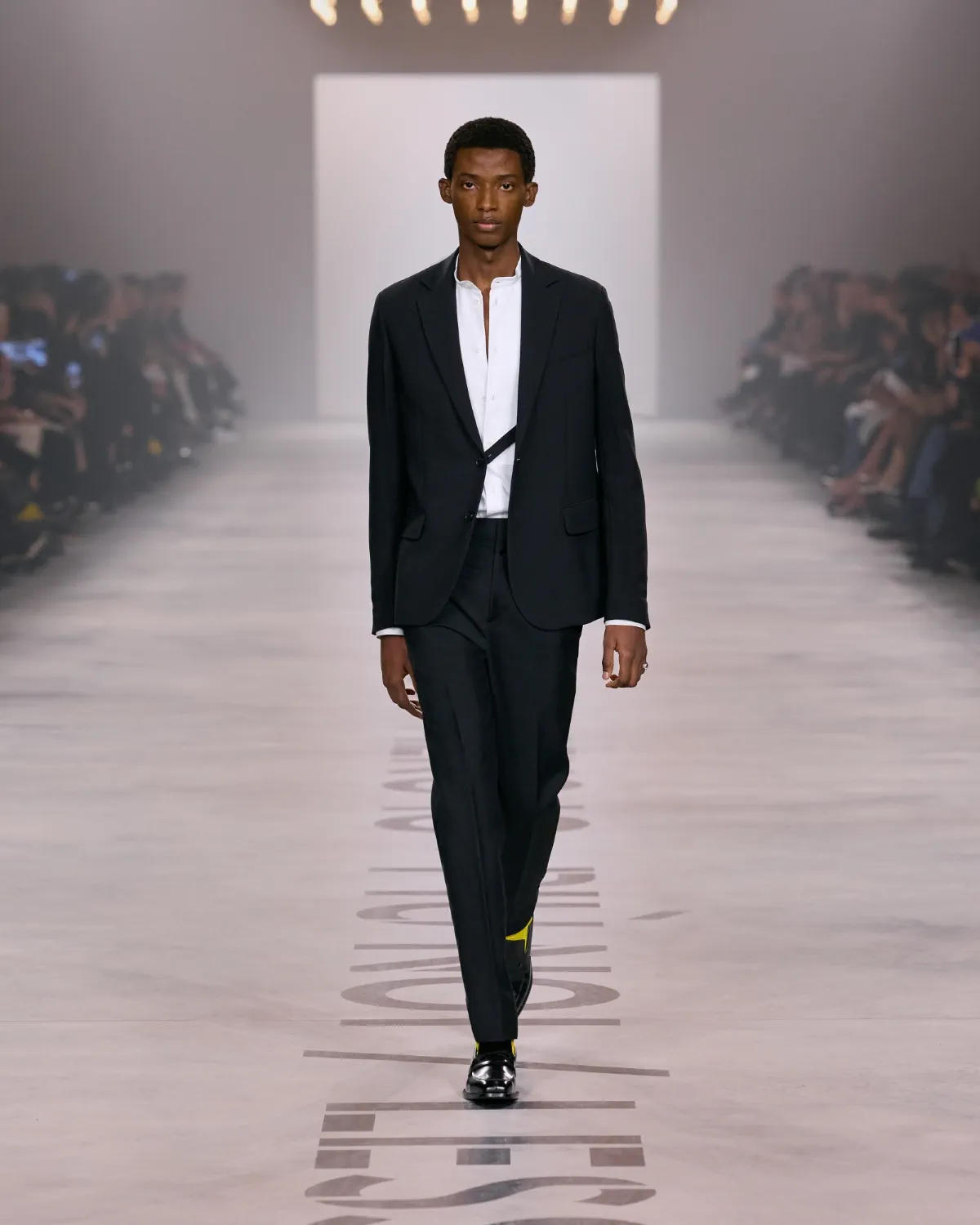
Chiuri’s most striking decision was structural: men and women walked the runway together, wearing the same looks. A double-breasted, notch-collar jacket appeared on both a man and a woman. So did double denim, single-breasted jackets with straps, and workwear-inspired donkey jacket topcoats that felt more workday than runway. The point was not to blur gender for the sake of it but to treat clothing as something genuinely shared – objects built to accompany daily life rather than announce an identity.
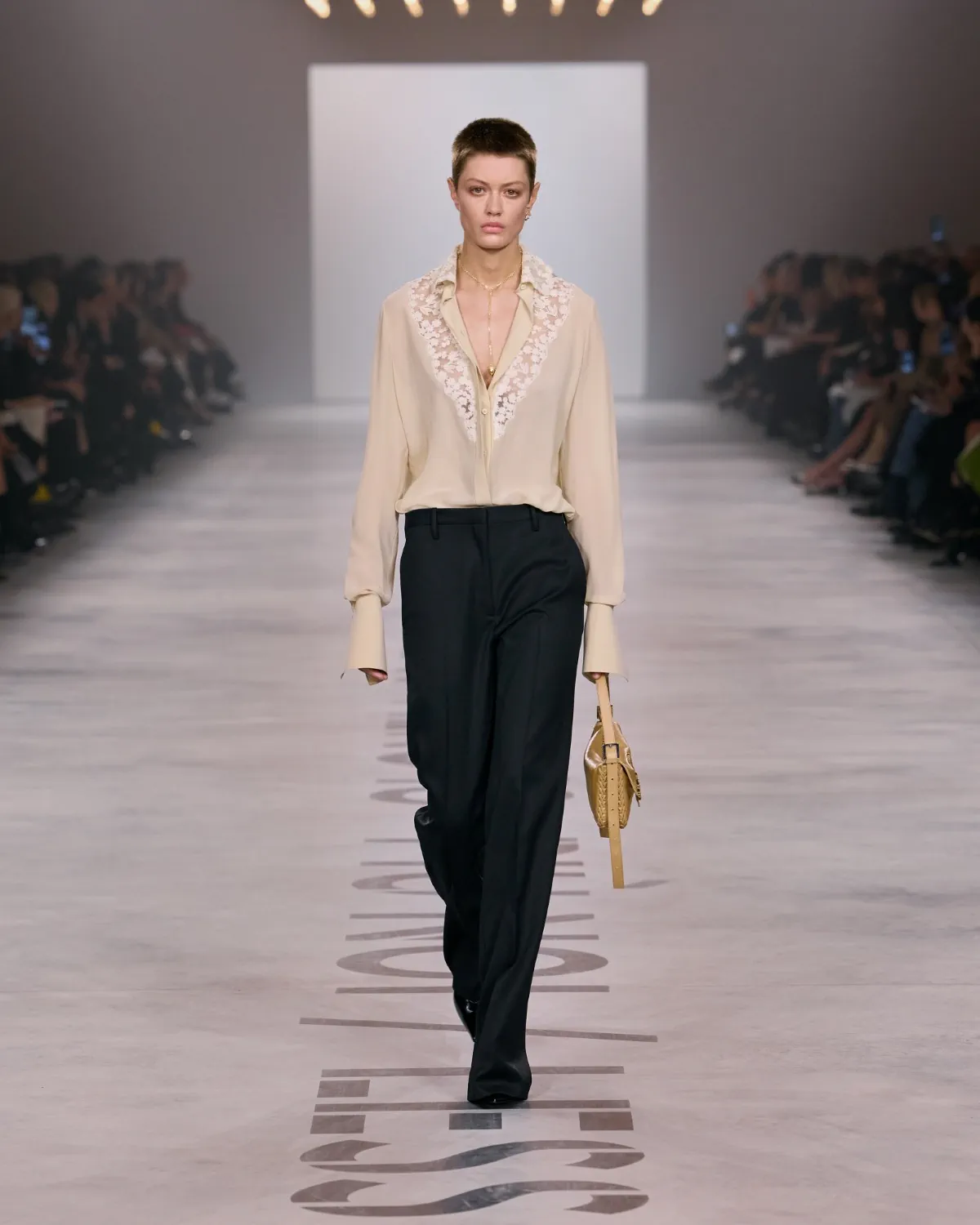
Through her choices, Chiuri argued that the feminine and masculine are not opposing categories. They are qualities and descriptors available to anyone. The wardrobe she proposed was one in which a man might reach for a piece not designed specifically for him and vice versa, and find it fitting all the same.
Nothing at Fendi signals confidence like fur, and Chiuri brought it back with conviction. For years, the company had quietly downplayed its core area of expertise to avoid criticism in certain markets. This season, the trims, collars, and fringes on gilets, trench coats, and leather jackets made no apology for their origin. Notably, the men wore the most extravagant pieces, such as a long-haired, green-dyed blazer; a shaggy, patchwork jacket; and a fox coat that recalled an earlier, less apologetic era of luxury dressing.
Follow all the latest news from Fashionotography on Flipboard, or receive it directly in your inbox with Feeder.
You may also read
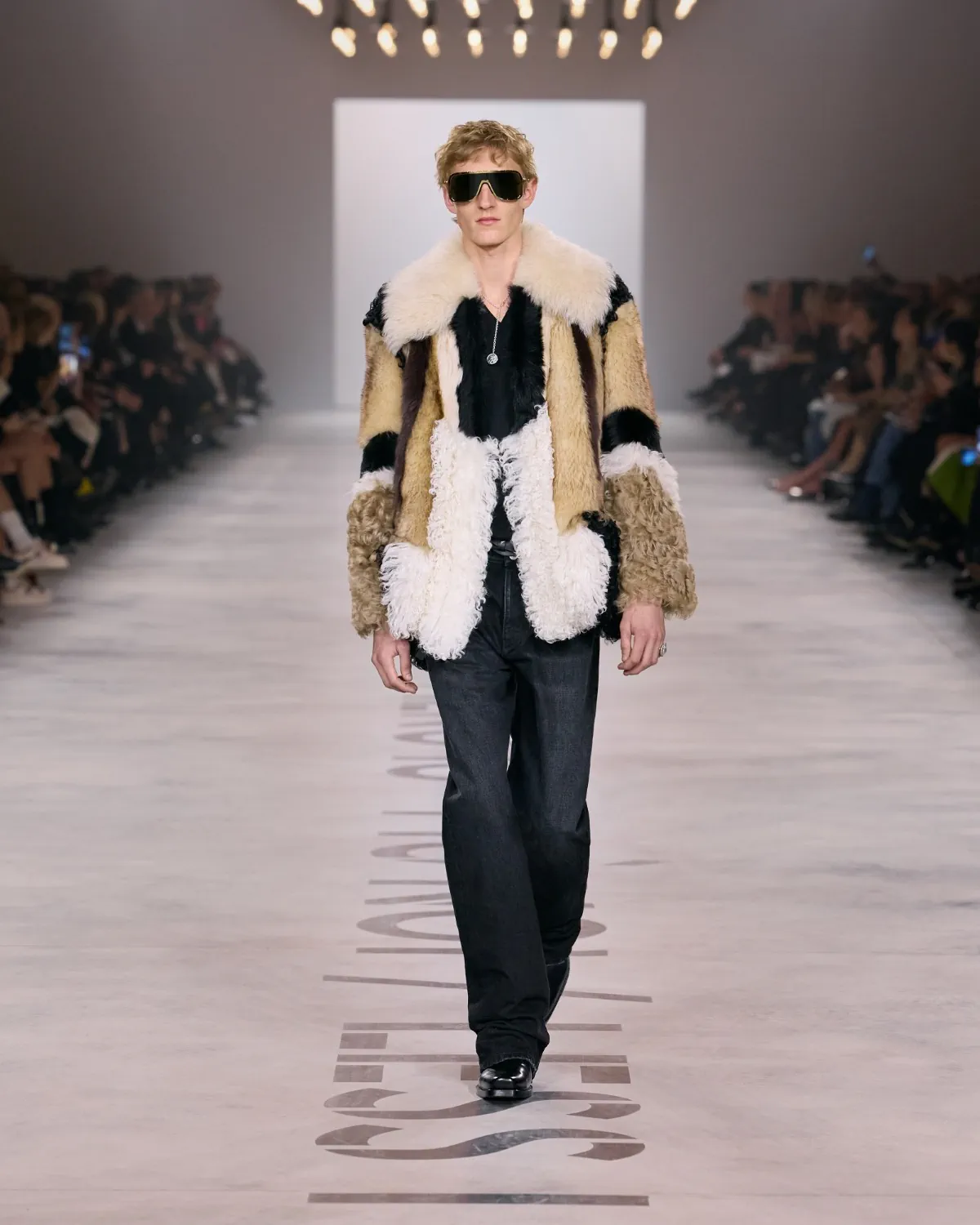
Chiuri introduced the Echo of Love project, through which clients can bring their existing furs to the Fendi atelier and have them remade. She described the idea as resting on emotional durability, the notion that an object carries personal meaning and that its value is not simply material. Young people in cities like New York have already been rediscovering vintage fur; Fendi is formalizing a trend that was already happening.
Two collaborations gave the collection a deeper cultural significance. Artist SAGG Napoli contributed football scarves and t-shirts printed with phrases like “rooted but not stuck,” which express her “South Aesthetics” and loyalty to the five Fendi sisters who shaped the company. A second collaboration with the estate of the late artist Mirella Bentivoglio saw the house reissue jewelry and graphic prints originally designed to question the gendered nature of language.
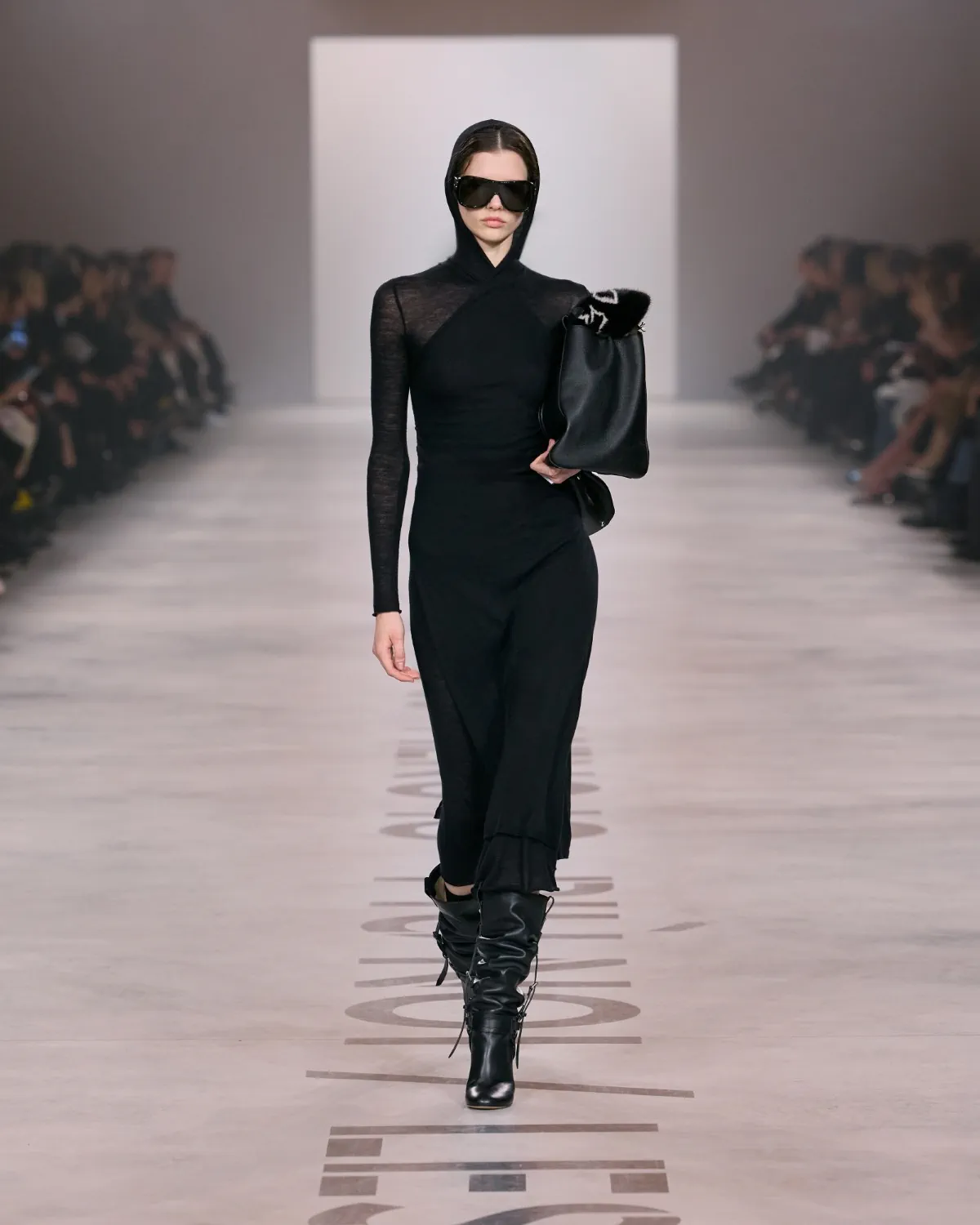
The detachable collars, made of white cotton, black leather, and black fur, drew comparisons to Karl Lagerfeld’s famous Hilditch & Key shirts. Whether Chiuri intended them as a tribute or simply found them useful is open to debate, but they were worn exclusively by women, which felt deliberate.
Accessories are the second pillar of Fendi’s identity. Chiuri, who was part of the original team that created the Baguette, gave renewed attention to the iconic bag. She added a second strap to allow it to be worn across the shoulder and applied embroidered beading and fur, showcasing the full range of the house’s craft expertise. The gesture was more than cosmetic. It was a reminder that the house’s skills, accumulated over decades, remain very much alive.
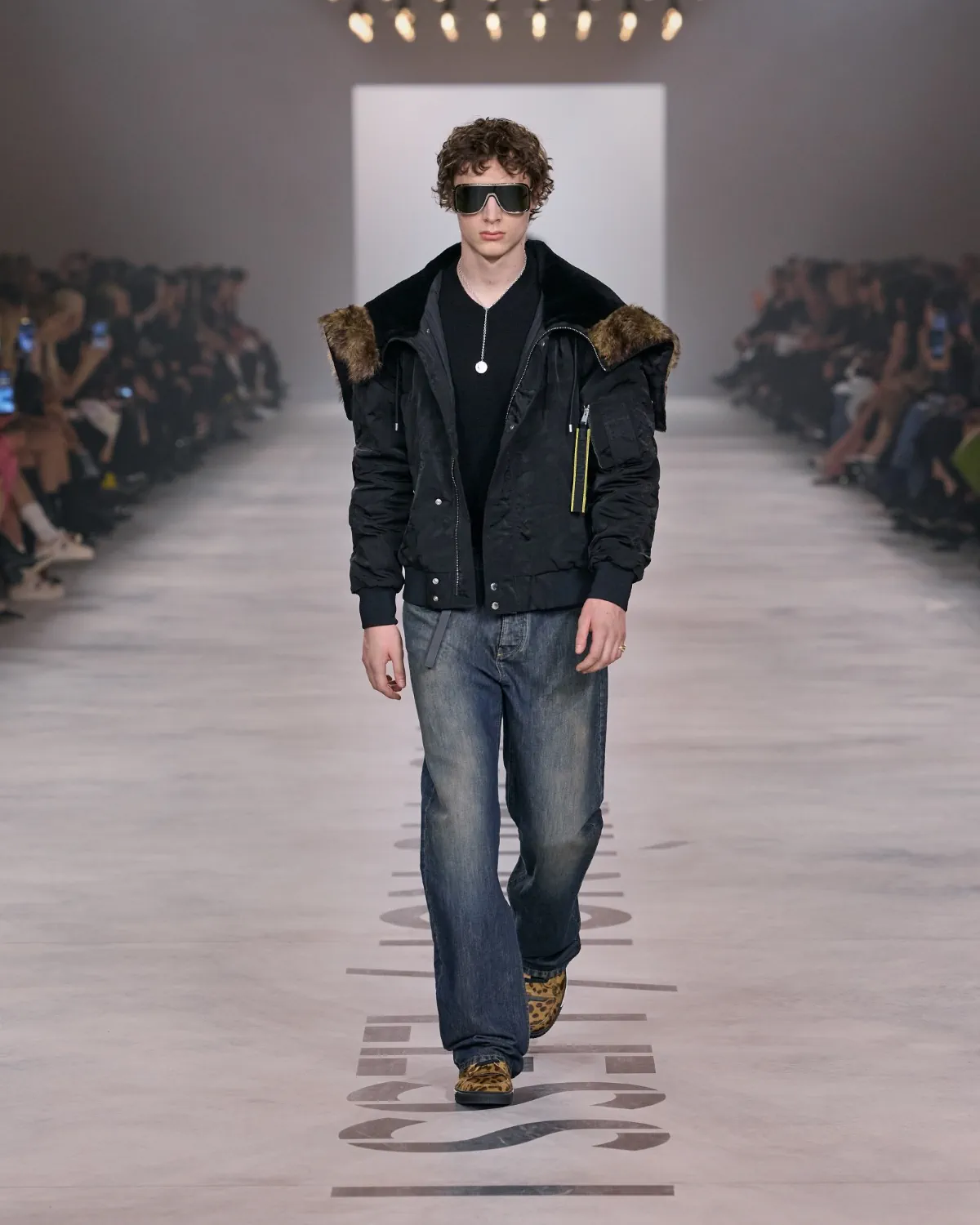
The underlying shape of the collection formed something close to an X: a deep V-neck opening at the top and a skirt or jacket that tapered and flared at the hem. Those familiar with Chiuri’s work at Valentino and Dior will recognize this structure as her preferred style. She did not abandon her signature style when she joined Fendi. She brought it with her and allowed the house to absorb it.
That is perhaps the most revealing thing about this debut. Chiuri is not erasing Fendi’s past. She is building on it, adding her own materials to a solid foundation while making clear that, at its best, fashion is a collective act.