
Julian Klausner presented his second collection for Dries Van Noten in Paris this week, and the creative director appears eager to prove himself. The Fall 2026 collection arrived with ambitious energy and layered complexity, driven by a designer determined to explore the full capabilities of the house’s veteran teams while establishing his own creative voice.
Klausner came to this position after six years designing womenswear alongside the Belgian founder. In December 2024, he was promoted to creative director, taking control of both the men’s and women’s lines. Now, slightly more than a year into the job, he remains visibly enthusiastic about what he can accomplish at Dries Van Noten.
| 📌 Key Facts |
|---|
| 🎨 Creative Director: Julian Klausner (second menswear collection) 🧵 Core Focus: Advanced knitwear and modular construction 🧠 Theme: Youth, independence, emotional inheritance 🧥 Standout Category: Tailored outerwear with detachable knit elements 📸 Print Development: Florals derived from Polaroid photography 🗓 Season: Fall 2026 Menswear 📍 Location: Paris |
A coming-of-age narrative at the core of Fall 2026
The collection centered on a young man leaving home for the first time. Klausner described someone packing belongings filled with personal meaning, such as a grandfather’s coat, a childhood blazer, and hand-me-downs that carry memories forward into adulthood. This premise allowed him to combine different elements without adhering to strict sartorial logic.
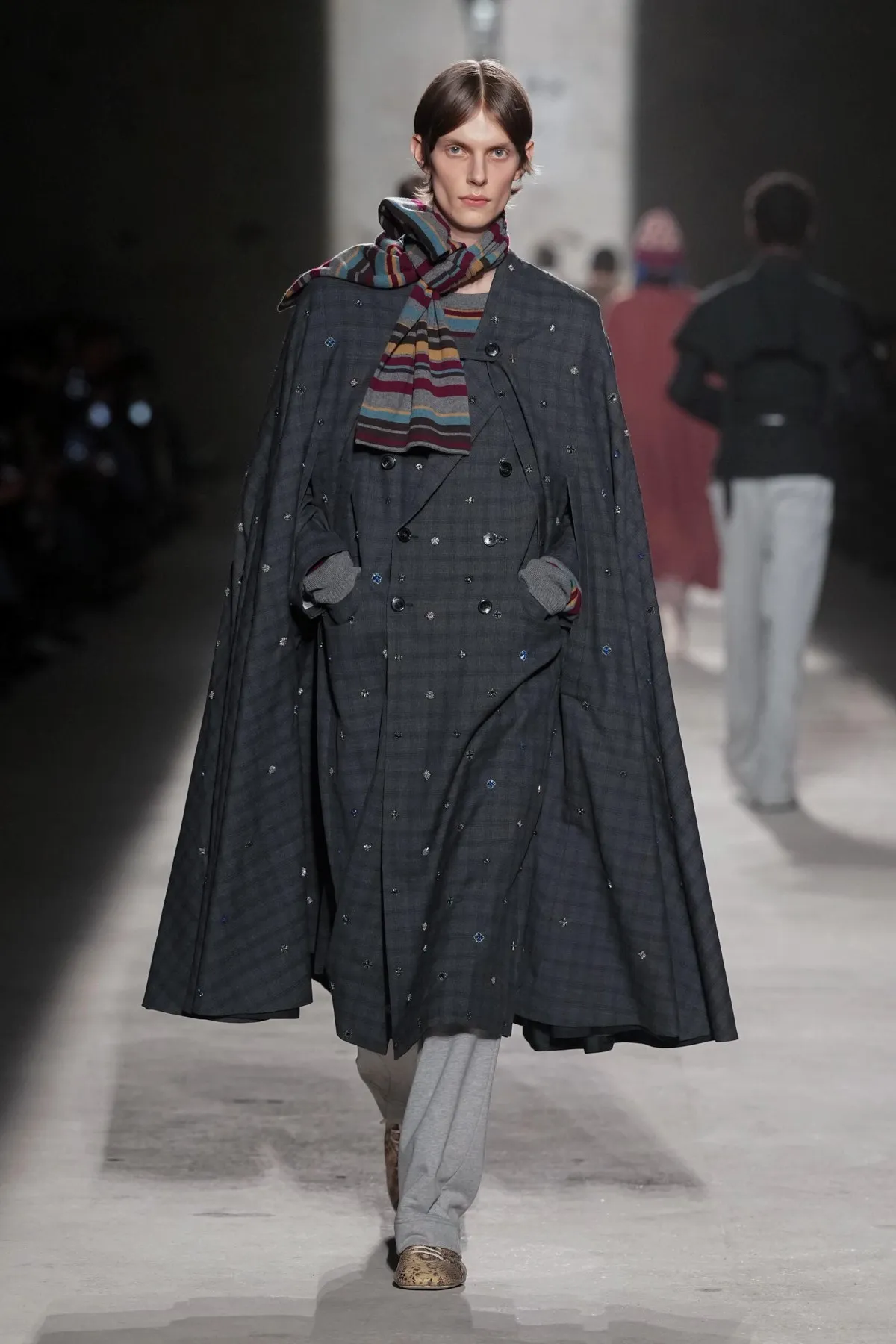
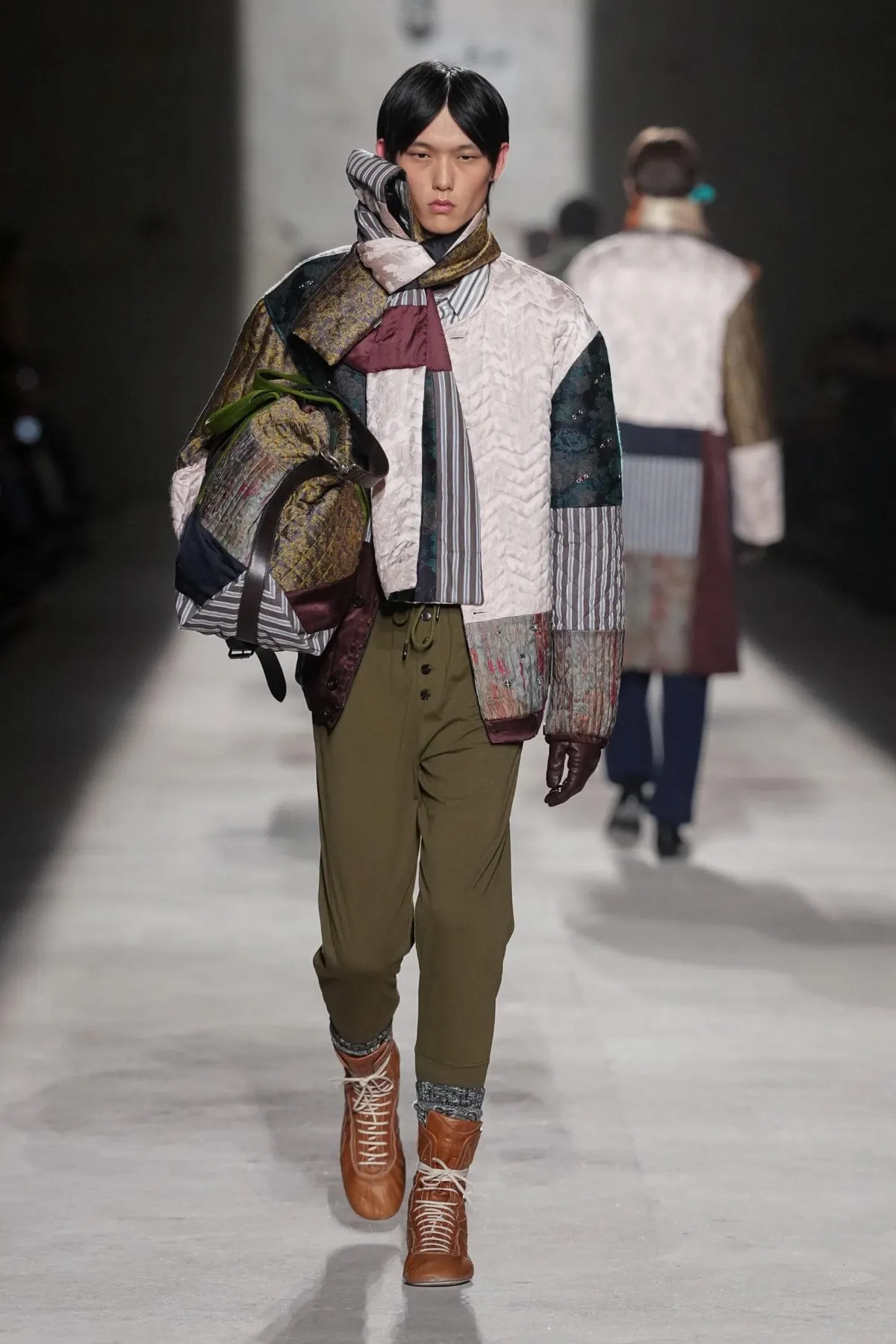
The result felt intentionally unpolished. Models wore pieces that appeared borrowed from different eras and wardrobes. Detachable knitted collars sat atop slender, military-inspired coats. Fair Isle patterns appeared alongside paisleys, stripes, and geometric prints. Hooded overcoats were covered in florals developed from Polaroid photographs. The house sent 500 Polaroid snapshots to guests, using them for both invitations and print development.
Knitwear as the emotional and technical backbone
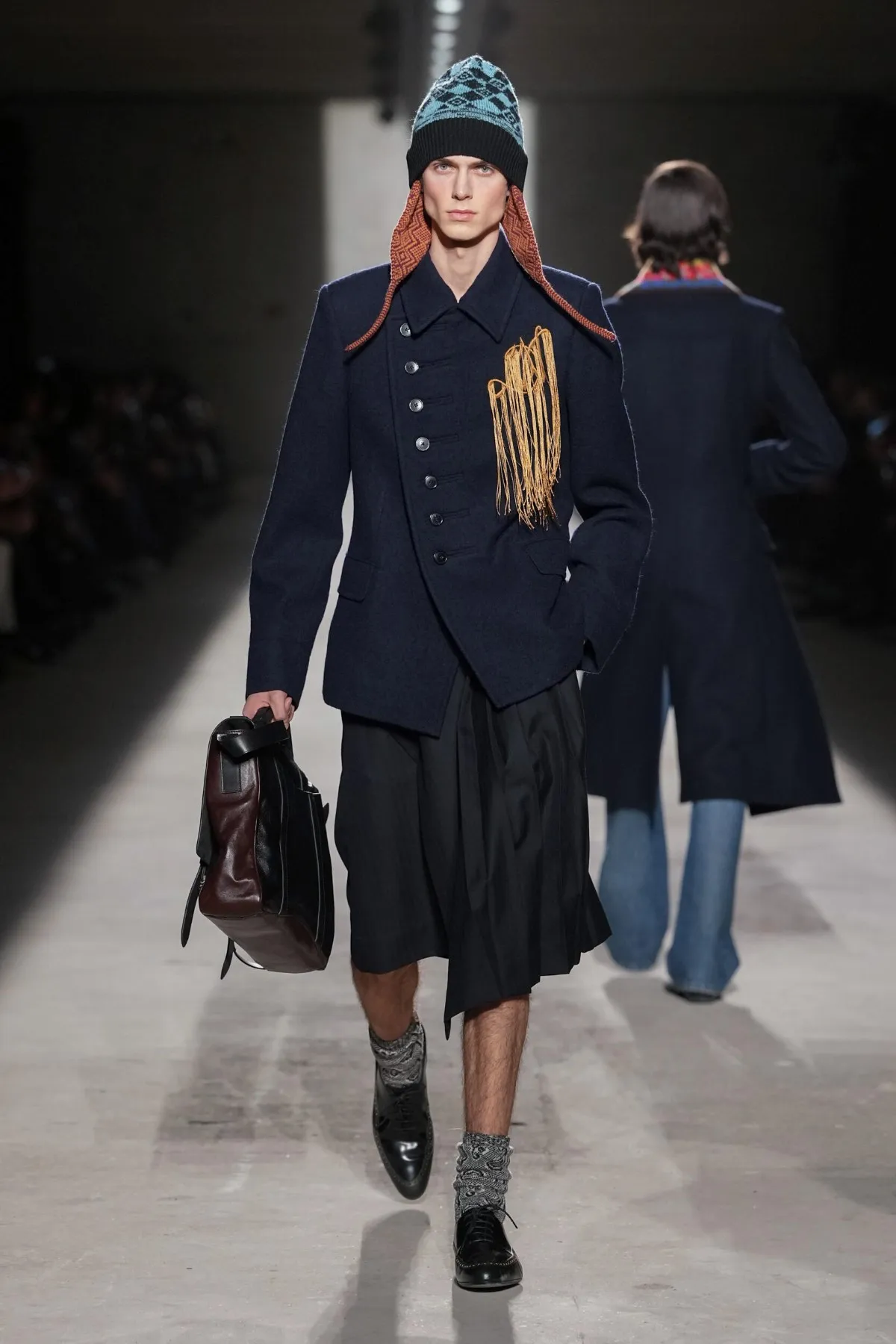
Klausner placed particular emphasis on knitwear throughout the presentation. He acknowledged that the house employs knit specialists who have worked there for three decades and have produced nearly all Dries Van Noten knitwear. Their expertise was evident. Rib-knit striped cardigans featured geometrically patterned panels that could be zipped off or opened on either side. Shrunken knit tank tops were layered under collegiate-crested shirts. Center-parted hair, nerdy glasses, and knit trapper hats reinforced the youthful atmosphere.
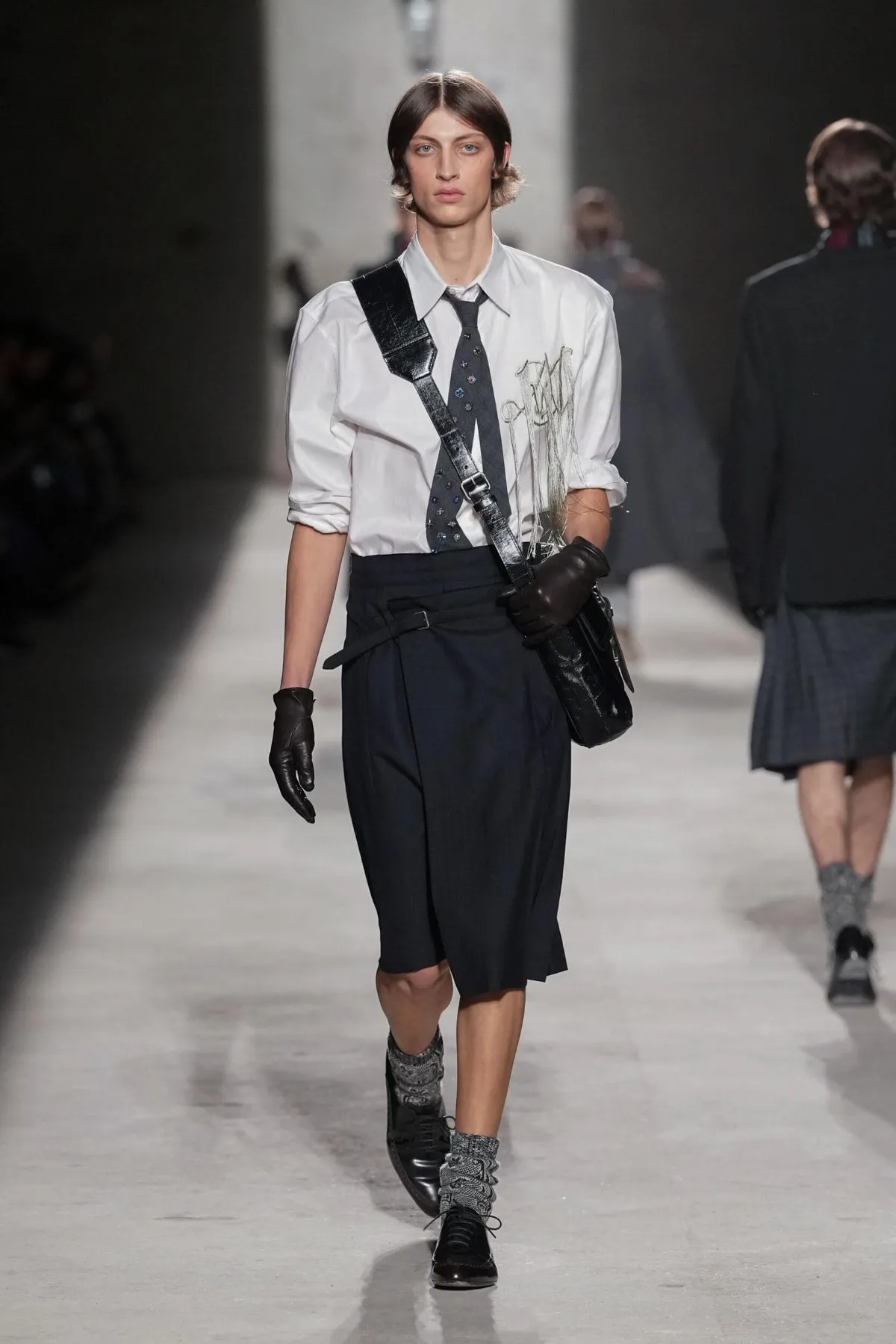
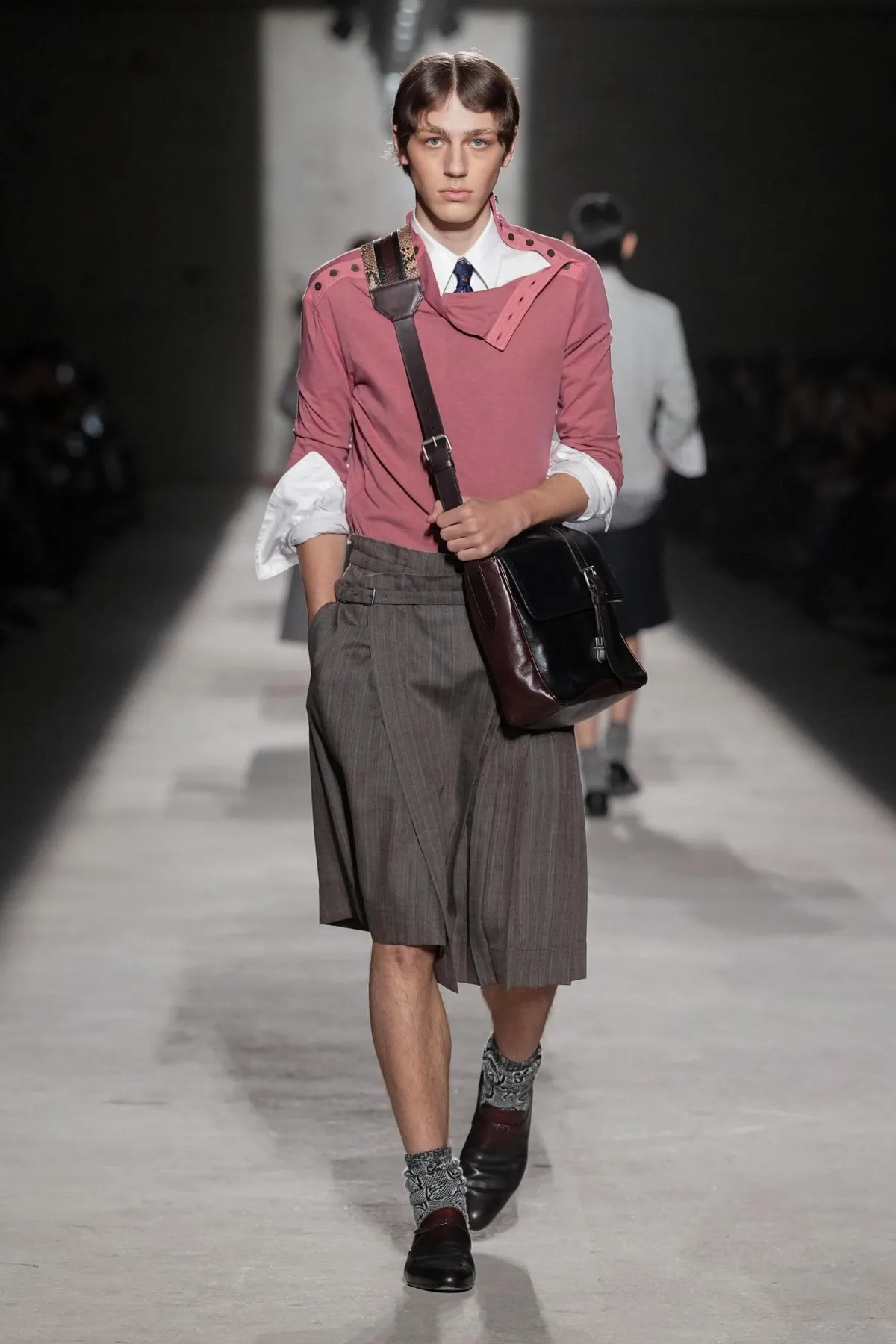
The designer also pulled kilts from the early 2000s archives. Some were worn over trousers and others were worn with bare legs. The designer introduced what he called a cropped sarong adaptation that was belted around the waist to resemble the tails and hem of an untucked shirt. The piece functioned like a dickey relocated to the hips.
Follow all the latest news from Fashionotography on Flipboard, or receive it directly in your inbox with Feeder.
You might also read

Balancing patterns and color through discipline
Managing so many competing patterns required discipline. Klausner kept his palette muted, allowing florals, checks, and Fair Isle motifs to coexist without visual chaos. He borrowed certain shades from the founder’s Francis Bacon–inspired women’s collection from Fall 2009, thus acknowledging the house’s history while pushing forward.
Outerwear emerged as the strongest category. Tailored coats came with detachable knitted collars, establishing outerwear as a focal point of the Fall 2026 menswear collection. A tonal floral jacquard parka in olive layered over a quilted liner in burnt orange demonstrated sophisticated fabric development. A double overdyed, flower-printed, satin capelet trench in red and petrol showed real technical ambition.
Accessories, styling, and youthful signifiers
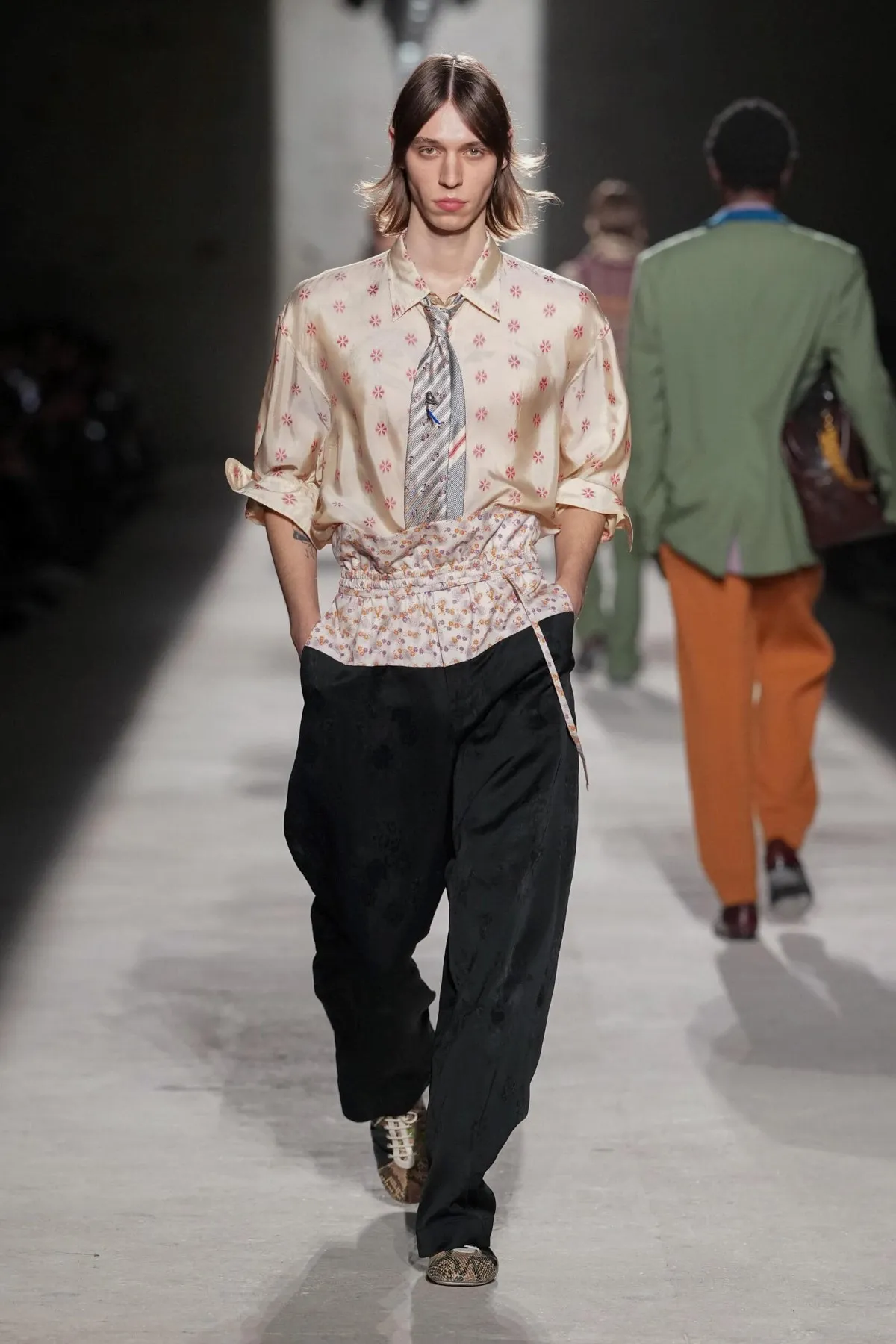
Klausner developed clever accessories, including super-flat leather shoes and wrestling boots with ultra-wide shoulder bag straps. Collegiate references appeared in the form of pocket crests, graduation capes cut from traditional menswear fabrics, and roomy school bags. White under-collar details framed faces without adding formality. Paper bag pants featured contrasting top sections that created the illusion of loose shirting or low-slung trousers.
The show contained perhaps too many ideas for a single collection. Klausner acknowledged his ambition, saying that he wants to challenge himself and explore multiple directions. That approach carries risks. When a designer presents too many ideas on the runway, the message can become muddled. However, there was genuine craftsmanship evident throughout, particularly in print development and knitwear construction.