


The Casablanca Spring-Summer 2026 collection drew its energy from the pulsing heartbeat of house culture. Charaf Tajer, the brand’s founder and creative director, drew on his passion for the club scene to design clothes that evoke music, nightlife, and freedom.
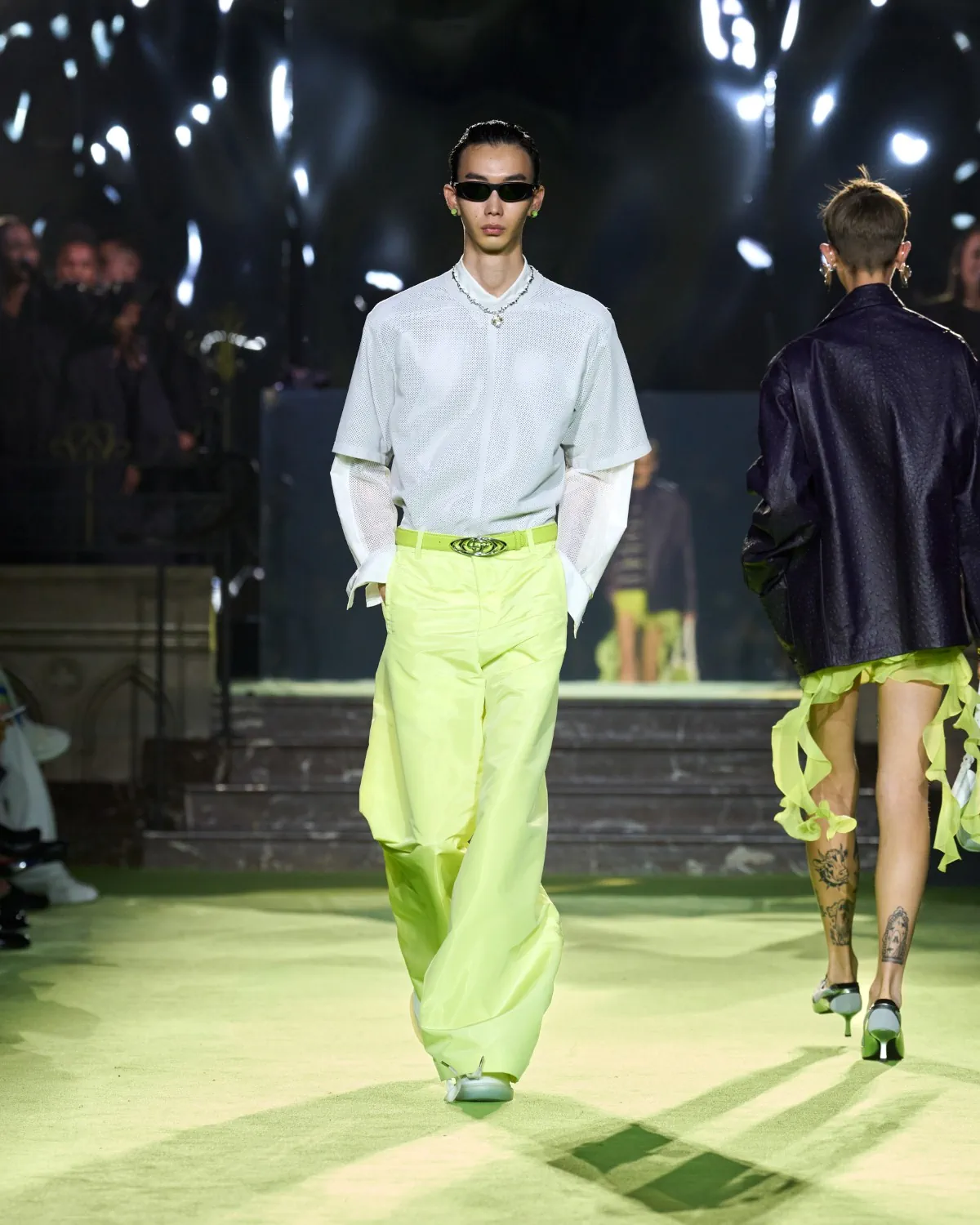
The show took place at the American Cathedral in Paris, where Grammy-winning DJ Louie Vega performed with a gospel choir, creating an atmosphere that matched the collection’s roots. House music, born in Chicago’s underground clubs in the early 1980s, provided more than just a soundtrack. It gave the collection its spirit of openness and community, mirrored in the diverse models who walked the runway.
Tajer did not offer a uniform look, but rather a portrait of the people who fill the dance floor. There was the confident figure in oversized tailoring and loose shirts; the playful character in neon knits; the entrepreneur in sleek, black suits with utility details; and the carefree partygoer in skin-baring rompers. Each reflected a different facet of nightlife.
Follow all the latest news from Fashionotography on Flipboard, or receive it directly in your inbox with Feeder.
You might also read

Prints carried the energy of rave flyers, filled with graphics and bold typography. Gradients appeared like sound waves mapped across the body; these were designed in collaboration with artist Martin Naumann. These visual cues gave a sense of rhythm and movement, even when the models stood still. The fabrics ranged from sporty jersey tracksuits to delicate chiffon embroidered with sequins and feathers, suggesting the many layers of club culture.

Accessories played their part, too. High-heeled mules came with technical straps, and small evening bags were reimagined in mesh and leather. Sneakers, such as the Stade and Del Mar, were styled as easily with tailoring as with casual wear, underlining the idea that nightwear cannot be boxed into one category anymore.

The mood was both nostalgic and futuristic. References to Ibiza’s club scene in the 1990s stood beside digital prints that seemed lifted from video games. Even Casablanca’s signature motifs were transformed: orchids appeared distorted, as if seen through old screens, and the house monogram featured glitch effects.

The result was a collection that didn’t preach fashion, but showed how clothing can capture a shared experience. There was less emphasis on perfection and more on freedom, echoing the inclusivity that has always defined house music. Tajer distilled that feeling into garments ready for the club and the street, speaking directly to a generation that sees fashion as part of life, not an accessory to it.