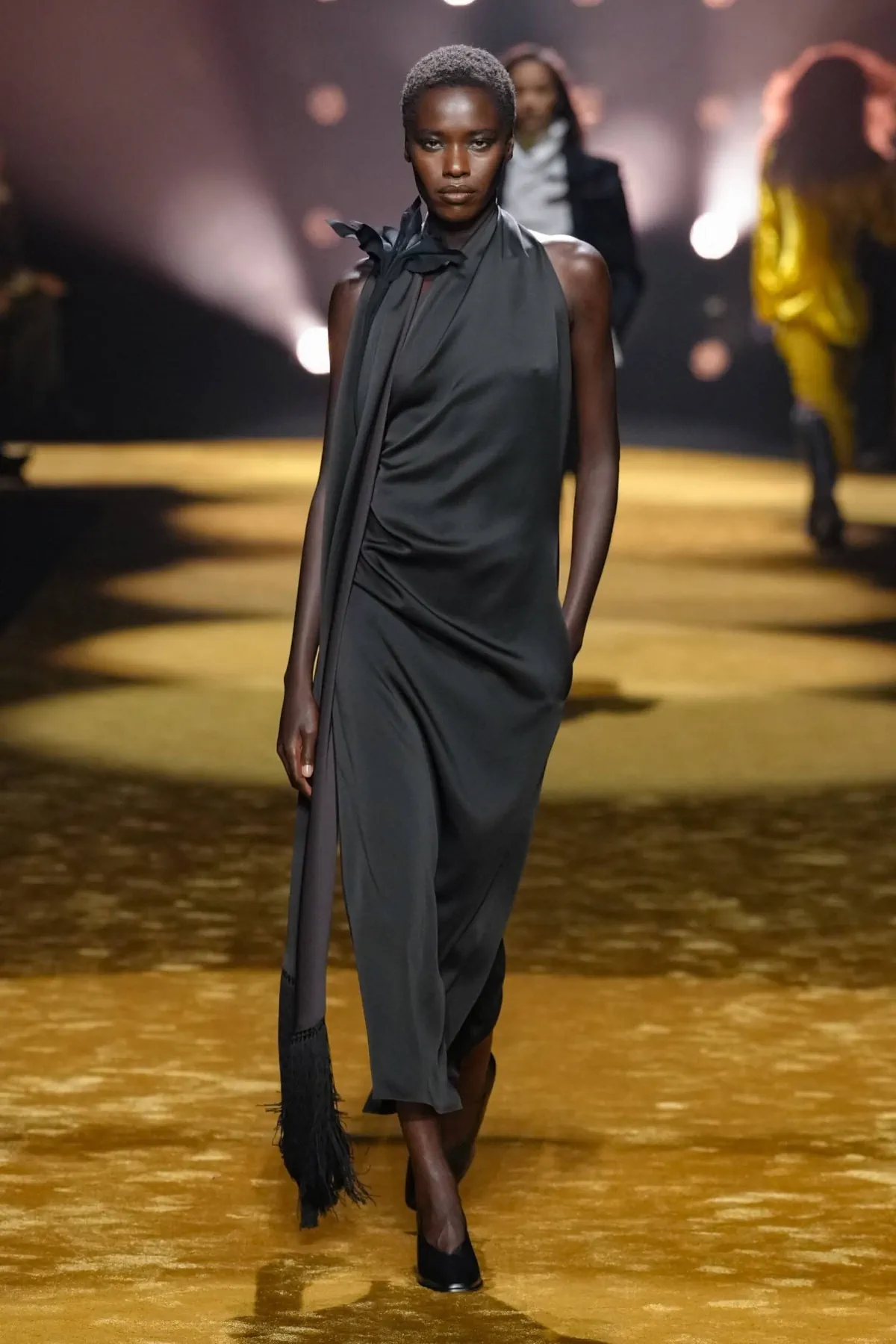

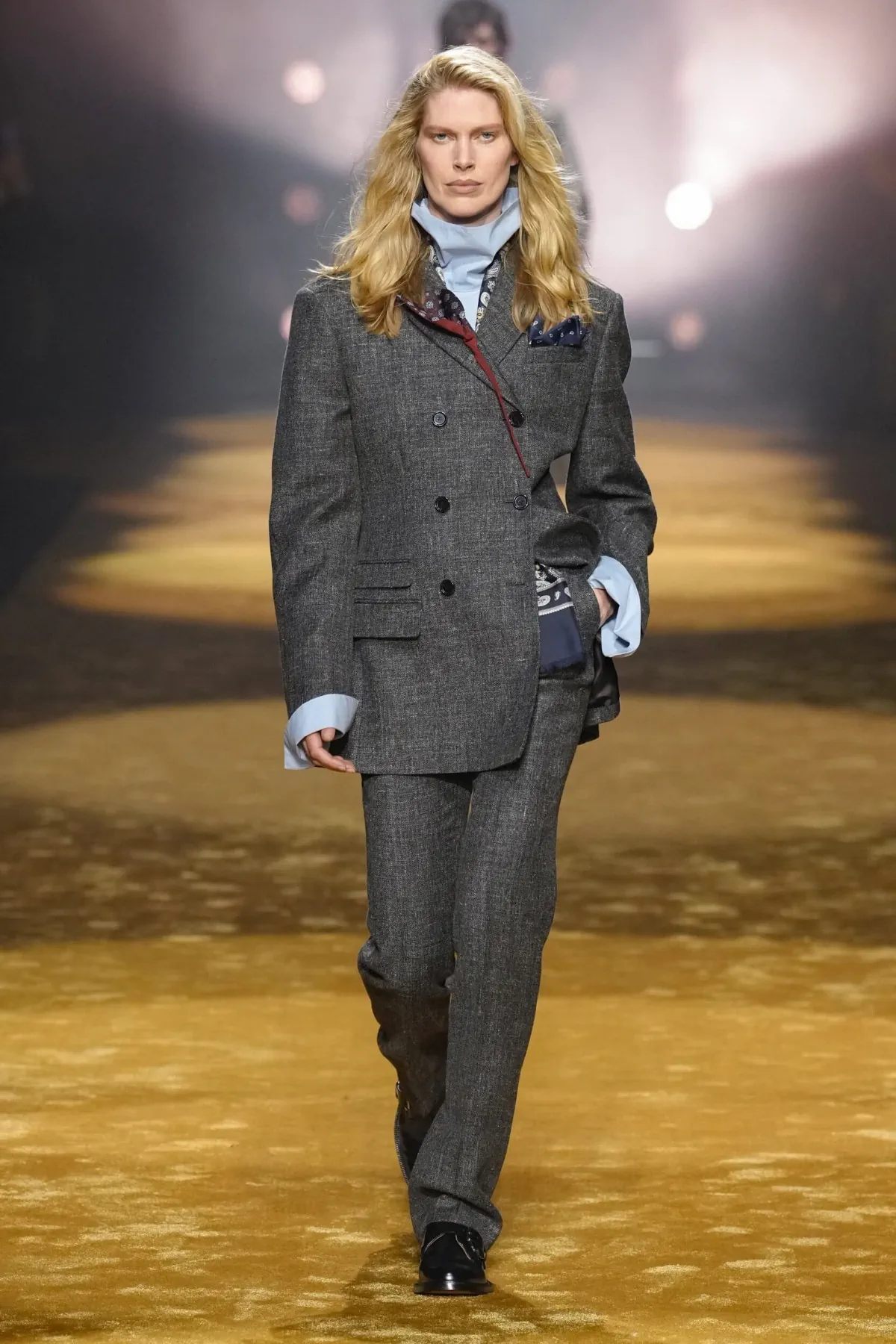
A quiet confidence runs through the BOSS fall 2026 collection that feels almost unfashionable in a season dominated by spectacle. On Thursday in Milan, Creative director Marco Falcioni presented a deliberate, considered, and pointedly sober collection. It was not boring, but rather the work of someone who knows exactly what they want to say and has no interest in shouting it.
| 📌 Key Facts |
|---|
| 🧵 The collection draws heavily from BOSS’s late-’80s and early-’90s tailoring archives 🧥 Sculpted shoulders and cinched waists redefine the modern suit silhouette 🪡 Hybrid layering mixes leather blousons with shirt-and-tie combinations 🧶 Brushed alpaca, cashmere and ostrich-effect leather anchor the materials palette 🌸 Archive florals expand from accessories into full garments 📍 The show took place at Rubattino56 during Milan Fashion Week 🎯 The strategic goal: reposition BOSS beyond the job-interview suit |
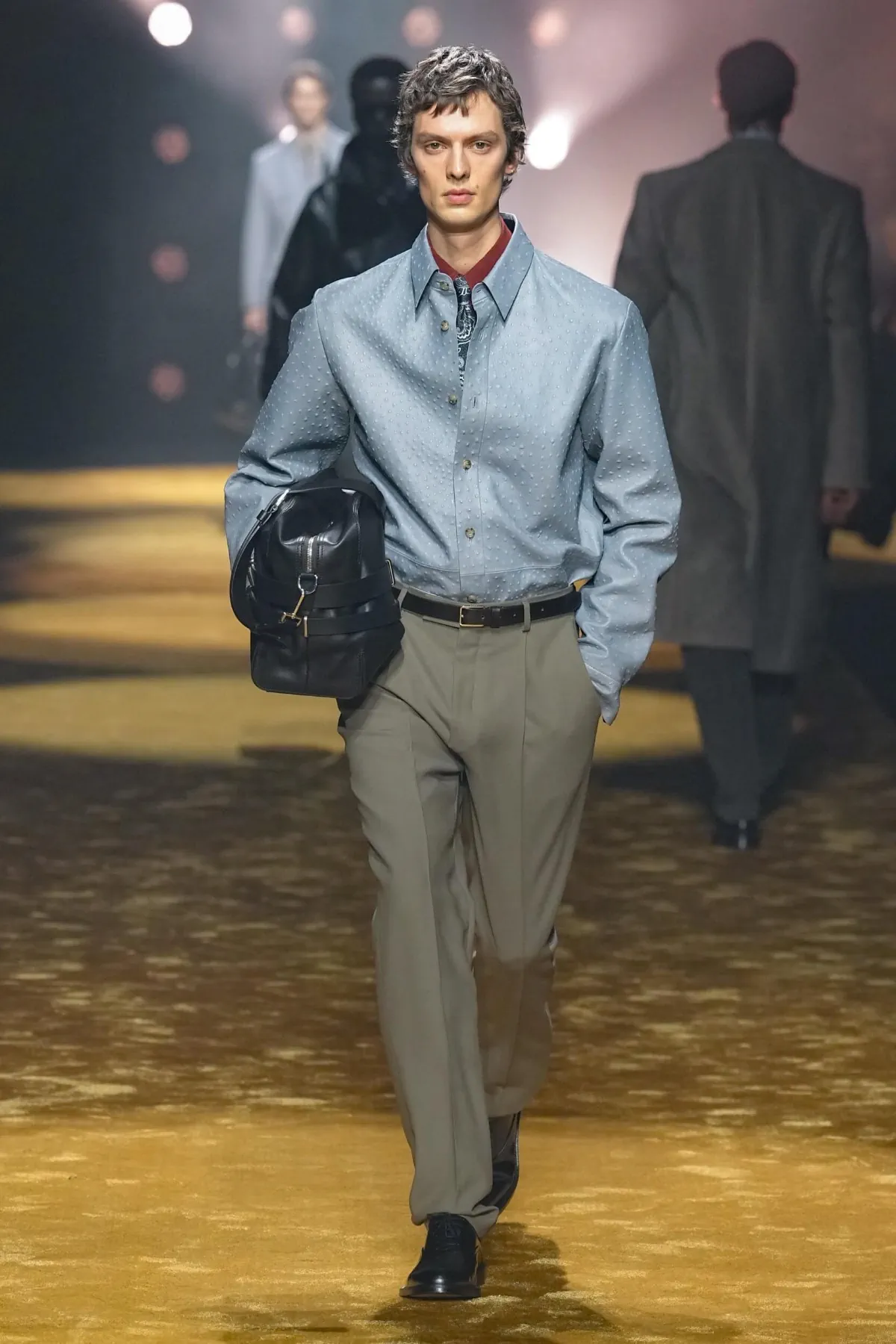
The collection drew heavily from the brand’s past, specifically the late ’80s and early ’90s. During that period, the label found its identity as a purveyor of refined workwear. Falcioni studied the sales books from that time, the handsome prestige-paper publications in which looks were carefully styled and intentionally photographed. Today’s equivalent, the look book, rarely aspires to that level of craft. Falcioni took those images as a point of departure, not a blueprint to copy.
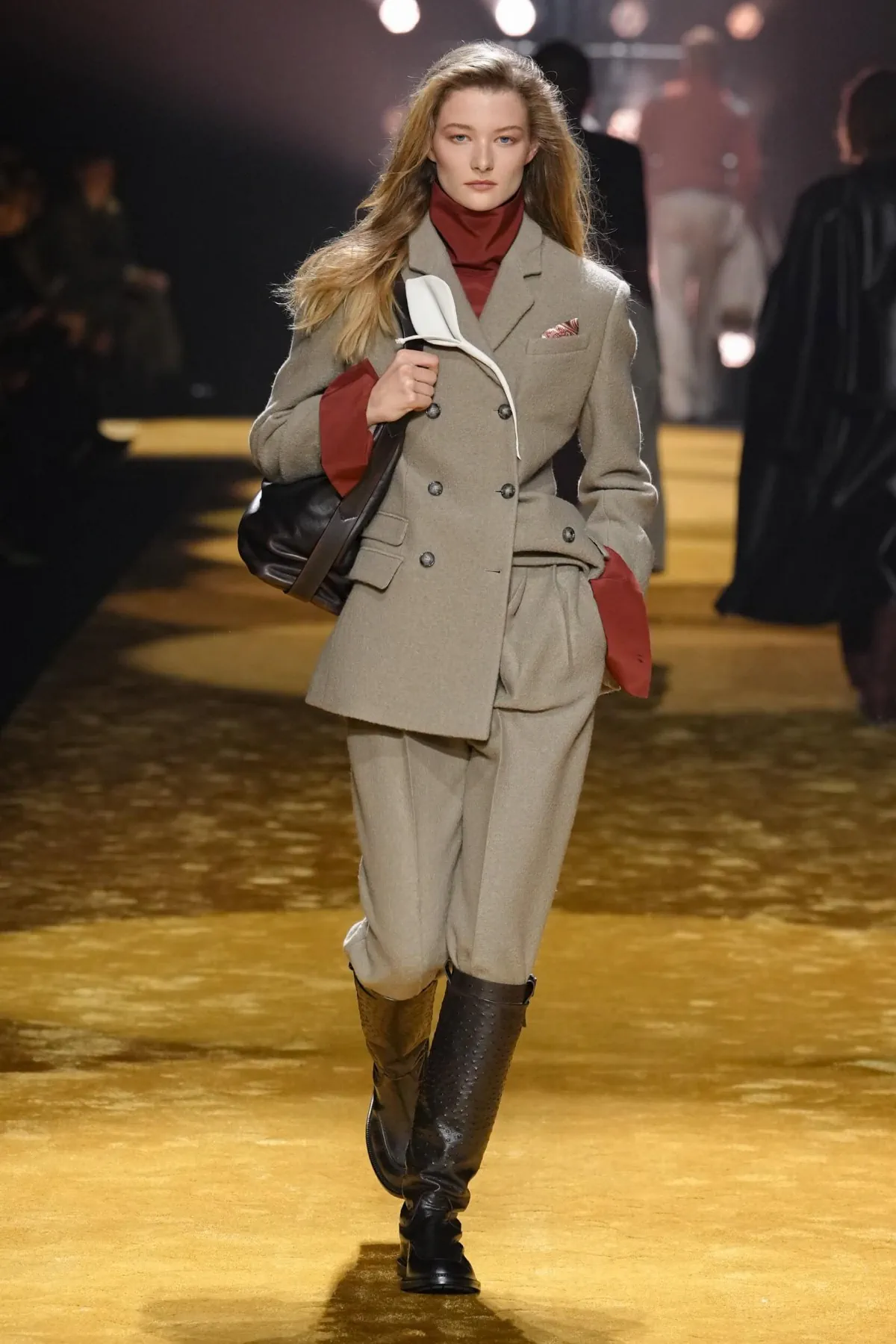
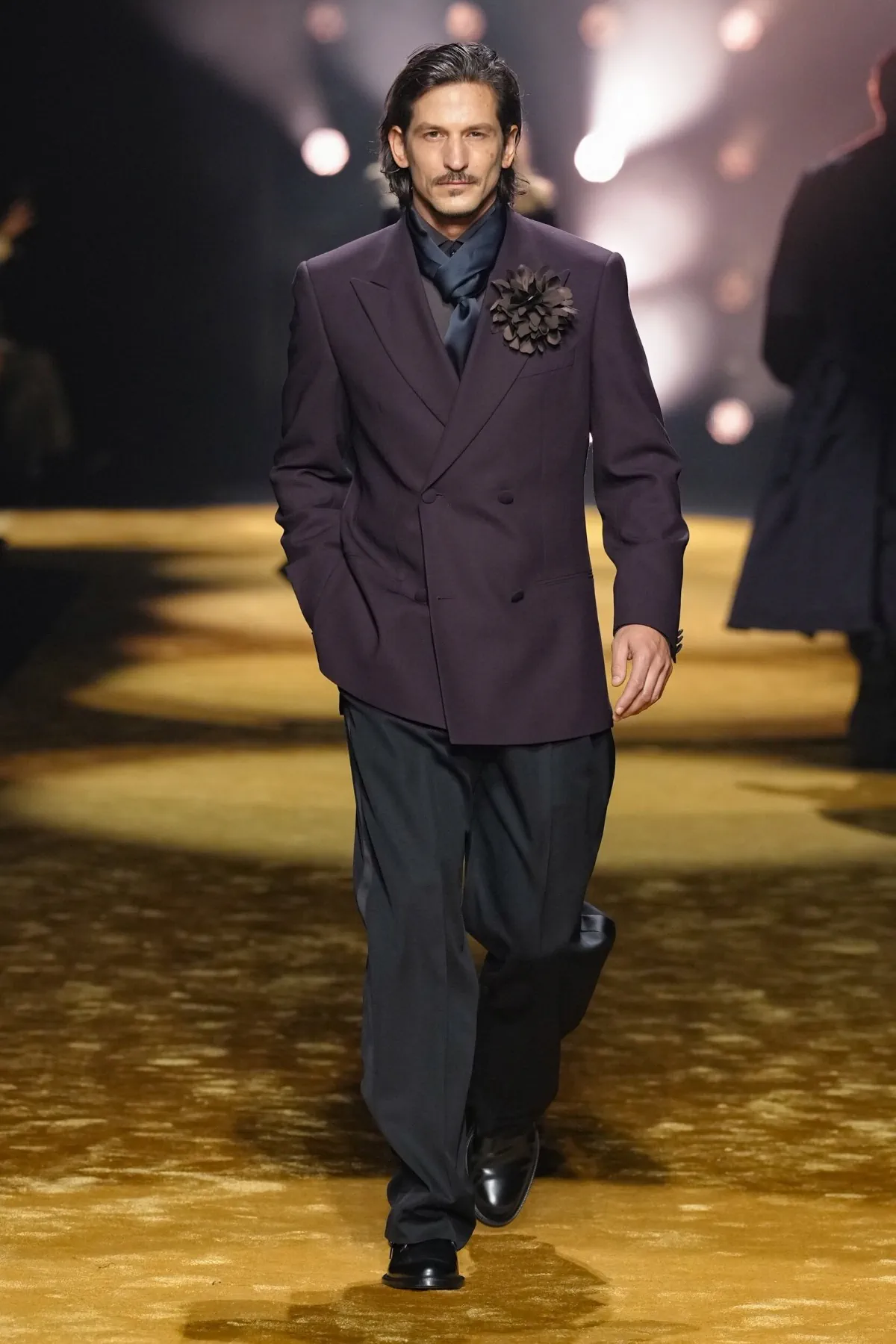
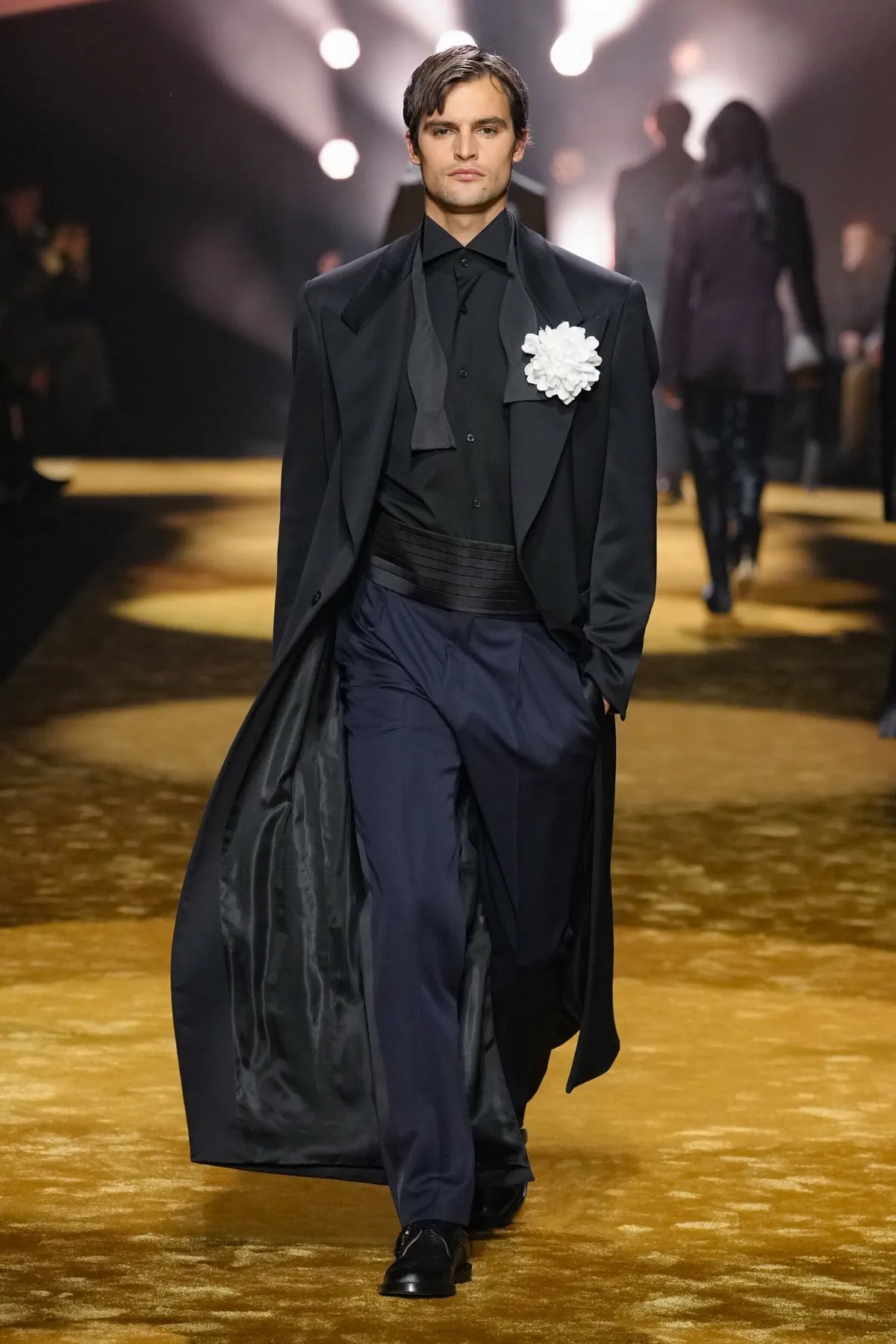
What emerged on the runway was personality-driven tailoring. Blazers featured slightly dropped, sculpted shoulders – a late-’80s silhouette – and higher-buttoning notch lapels that recalled the early ’90s. The waists were cinched and the proportions were elongated. For women, these blazers were paired with high-cuffed trousers that elongated the silhouette. For men, double-breasted jackets featured double flap pockets and a curvilinear cut at the back, which Falcioni described as emphasizing a sensual yet often overlooked part of the body. He was not wrong.
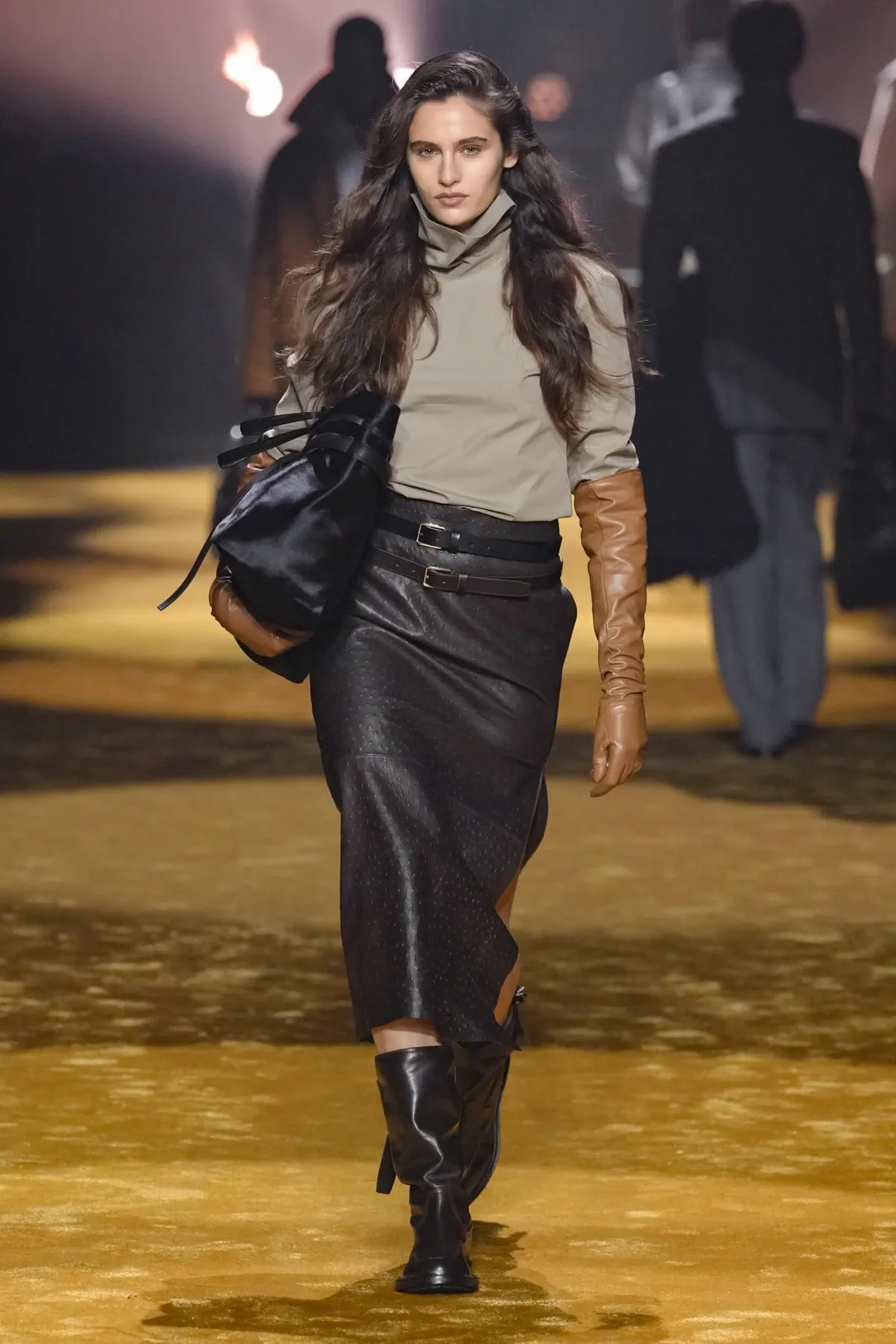
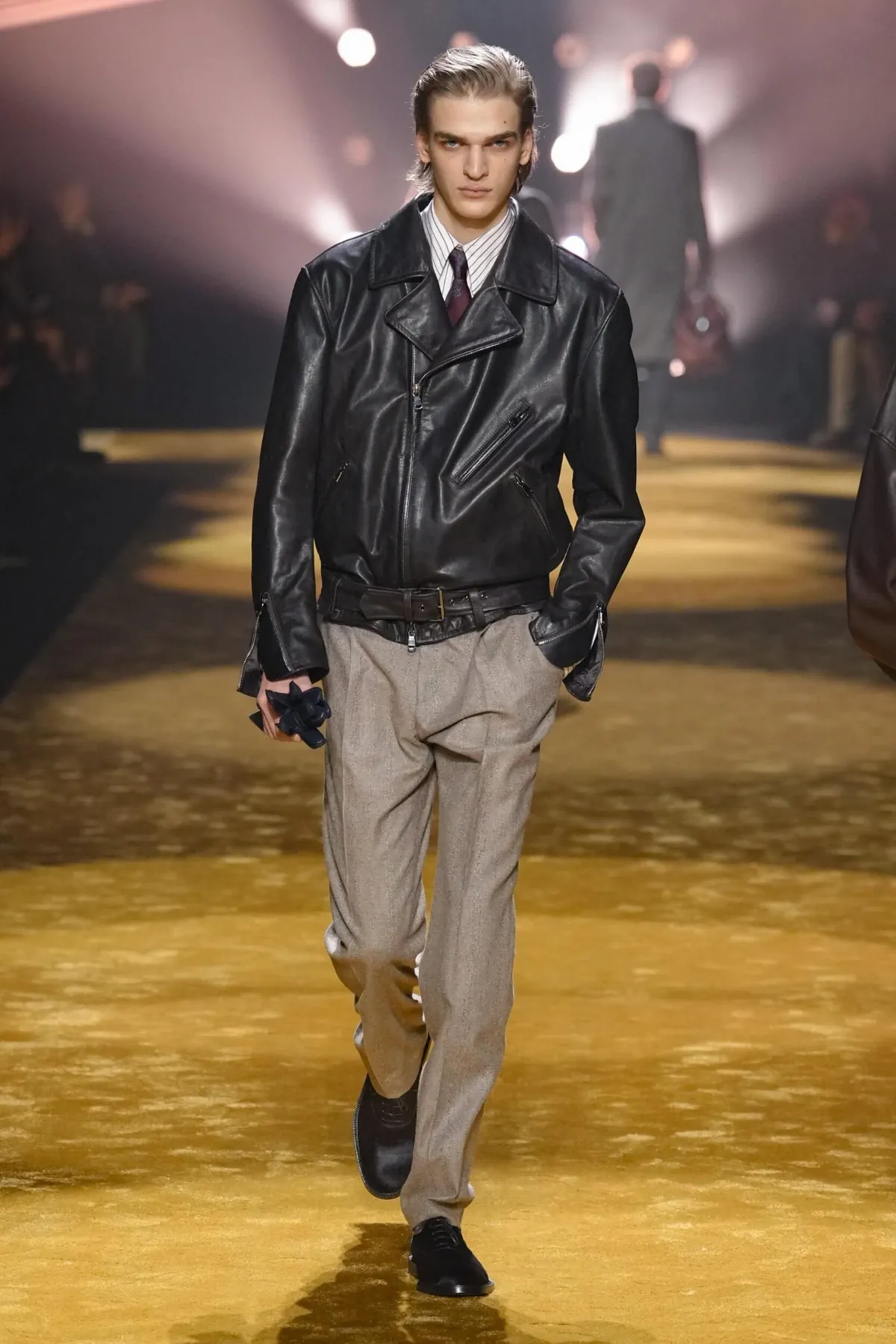
The layering for men was one of the more persuasive aspects of the show. Leather blousons and anoraks were thrown over shirt-and-tie combinations – a combination that sounds counterintuitive until you see it. The effect wasn’t exactly office-ready, but it wasn’t anti-office either. It existed in the in-between space that modern working life increasingly occupies. Some suits were styled with equestrian-inspired boots whose design was inspired by an archival men’s loafer. This further reinforced the idea of tailoring untethered from the cubicle.
The materials were serious yet not austere. Brushed alpaca, cashmere, ostrich-effect leather, and flannel gris fumé formed the backbone of the collection, with terracotta and golden ochre appearing as warm accents. Nylon trench coats with brushed alpaca lapels and leather coats lined with delicate cashmere represented the outerwear – hybrid pieces that borrowed from sportswear without surrendering any polish. The palette honored texture above all else.
Follow all the latest news from Fashionotography on Flipboard, or receive it directly in your inbox with Feeder.
You may also read
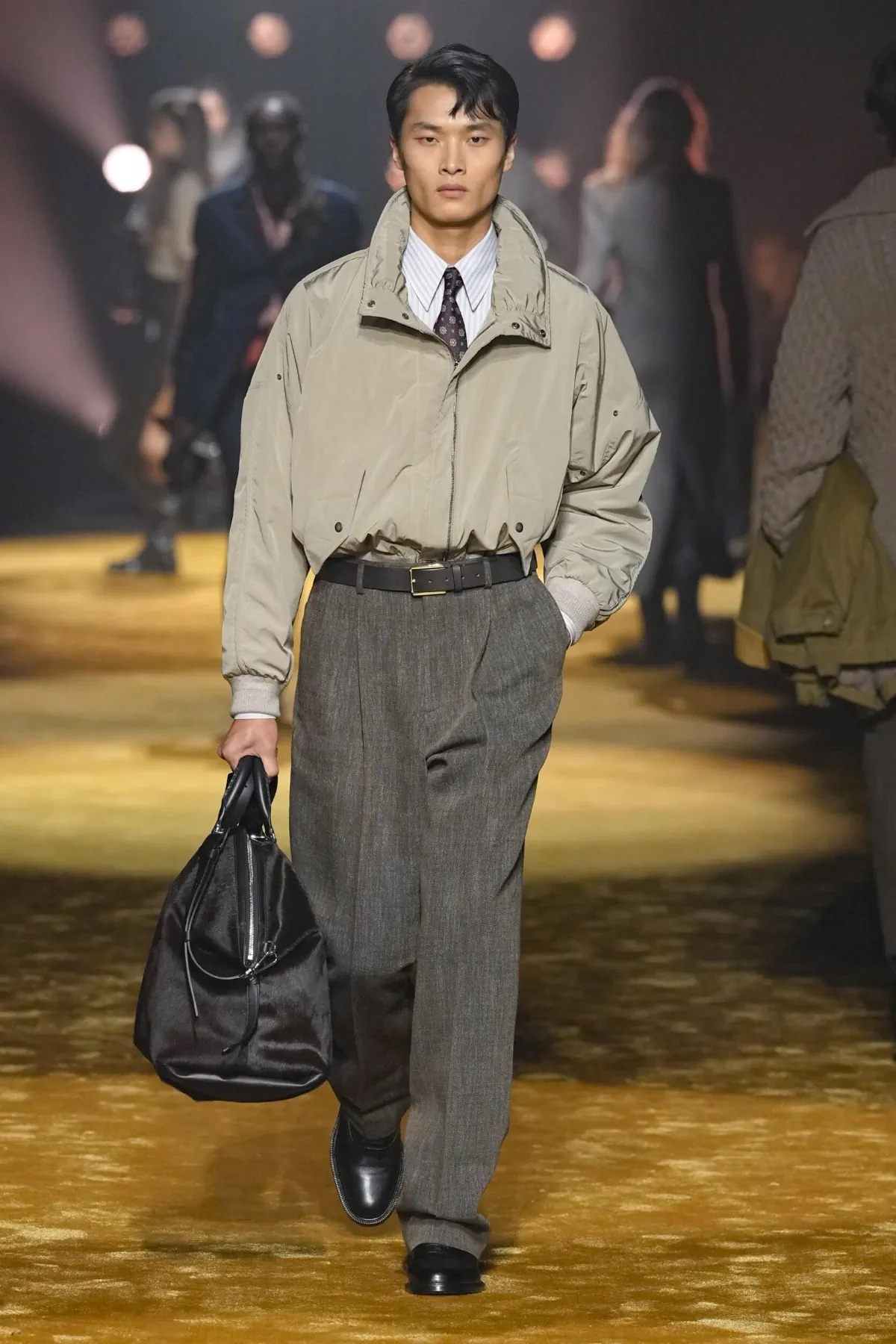
Archive details made their way through the collection with real purpose. Printed silks and jacquards, once limited to ties and pocket squares, were featured on more substantial pieces that were worn under structured jackets and coats throughout the day. The floral motifs referencing peonies and lilies felt neither retro nor forced. Falcioni folded silk scarves under top collars and fashioned ties into floral brooches. These gestures recalled a time when white-collar wardrobes had genuine wit.
The show itself was more intimate than recent BOSS spectacles, which has become something of a statement in itself. Held at Rubattino56 in Milan, the venue was transformed with strips of fabric suspended across the space, frozen mid-movement. The runway carpet echoed the ochre velvet of the collection. It was a setting that kept your eyes on the clothes. David Beckham and K-pop star S.Coups took their front-row seats moments before the show began, briefly shifting the room’s attention, but not for long.
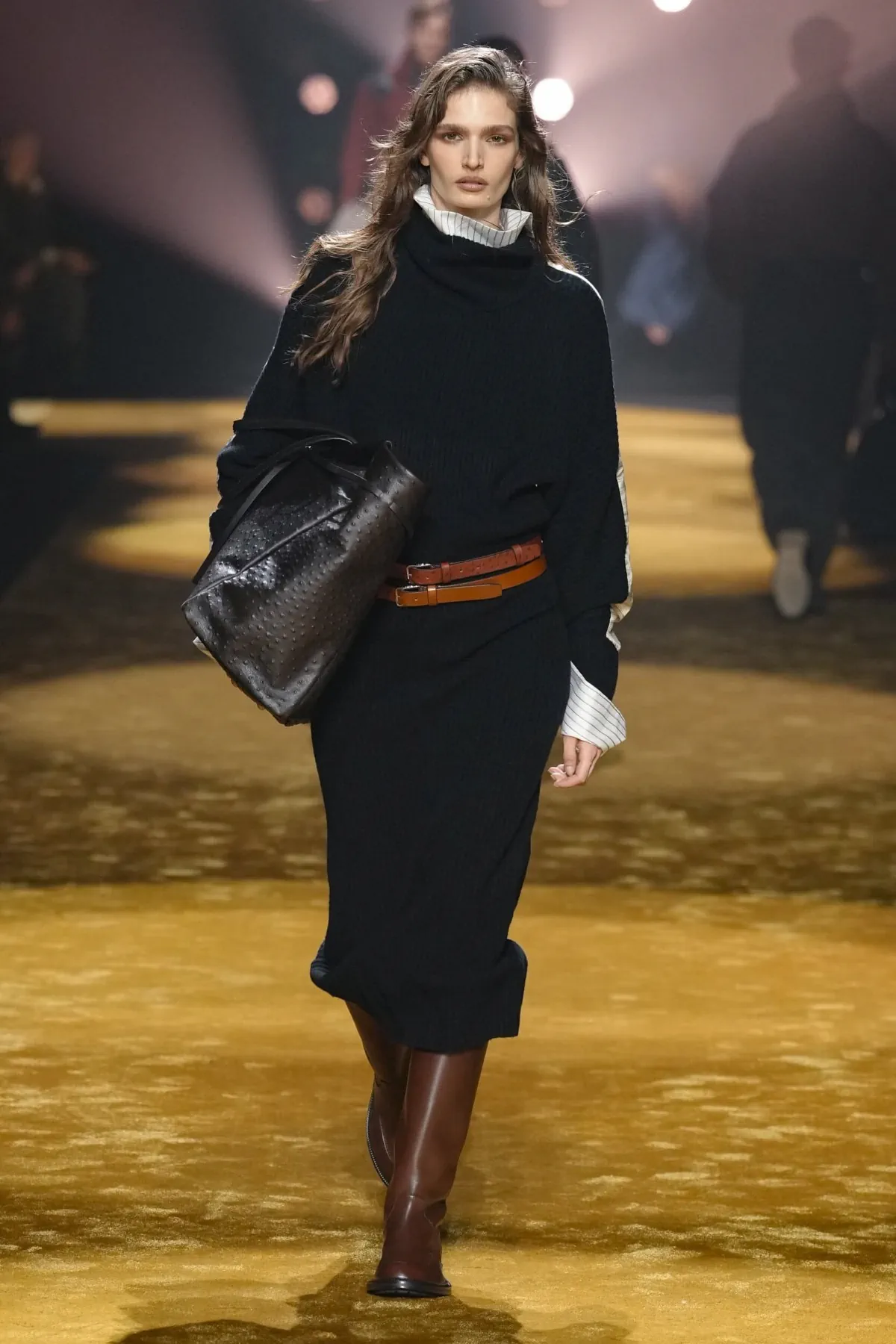
Falcioni’s ambition was clear and, for the most part, well-executed. He wants BOSS to mean more than just a reliable suit for a job interview. He wants the brand to occupy more of a person’s life: the weekend, evenings, and the hybrid situations that now define how most people live. Whether that repositioning takes hold depends less on what happened on the runway and more on what ends up in stores. But on Thursday in Milan, the argument was well made.