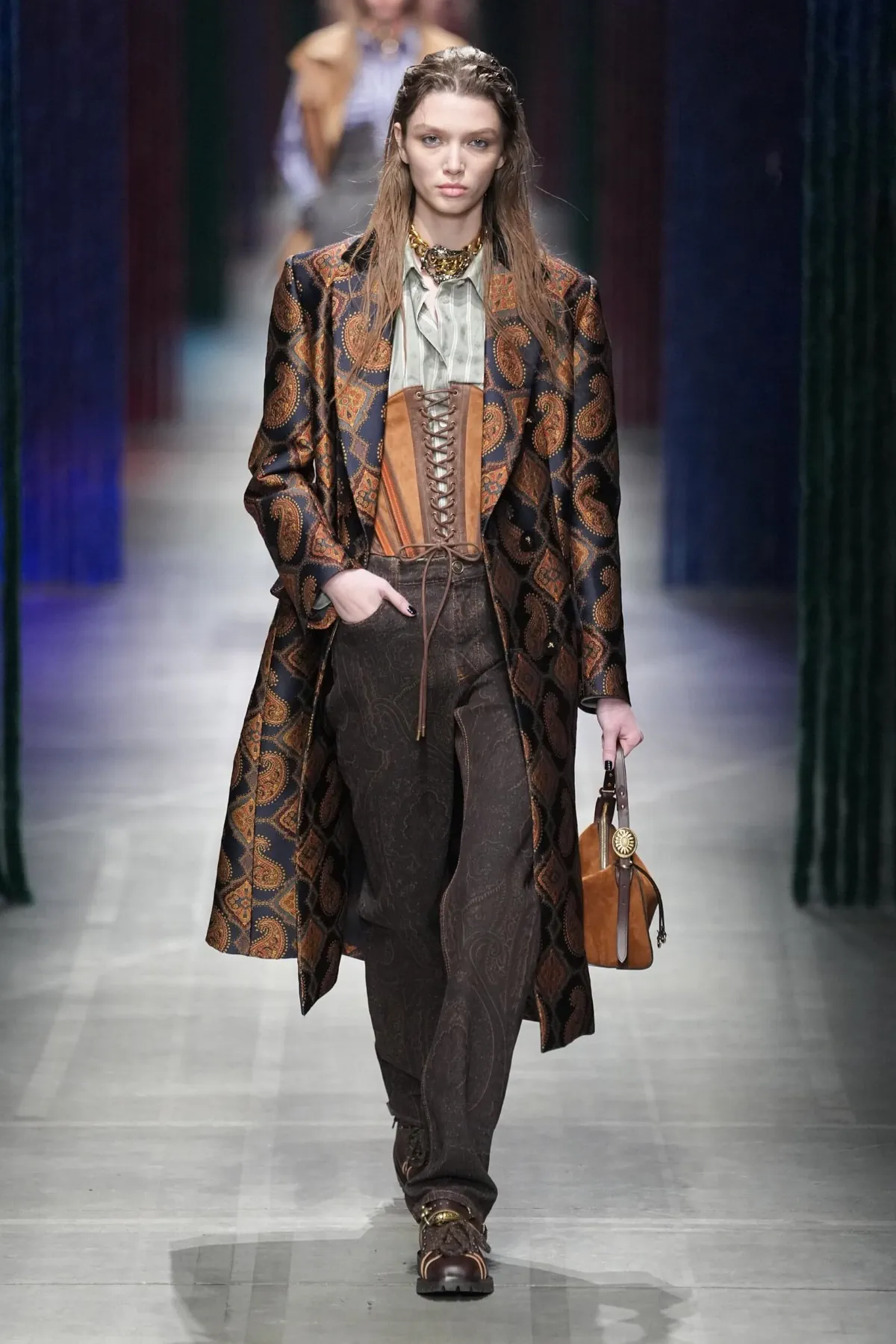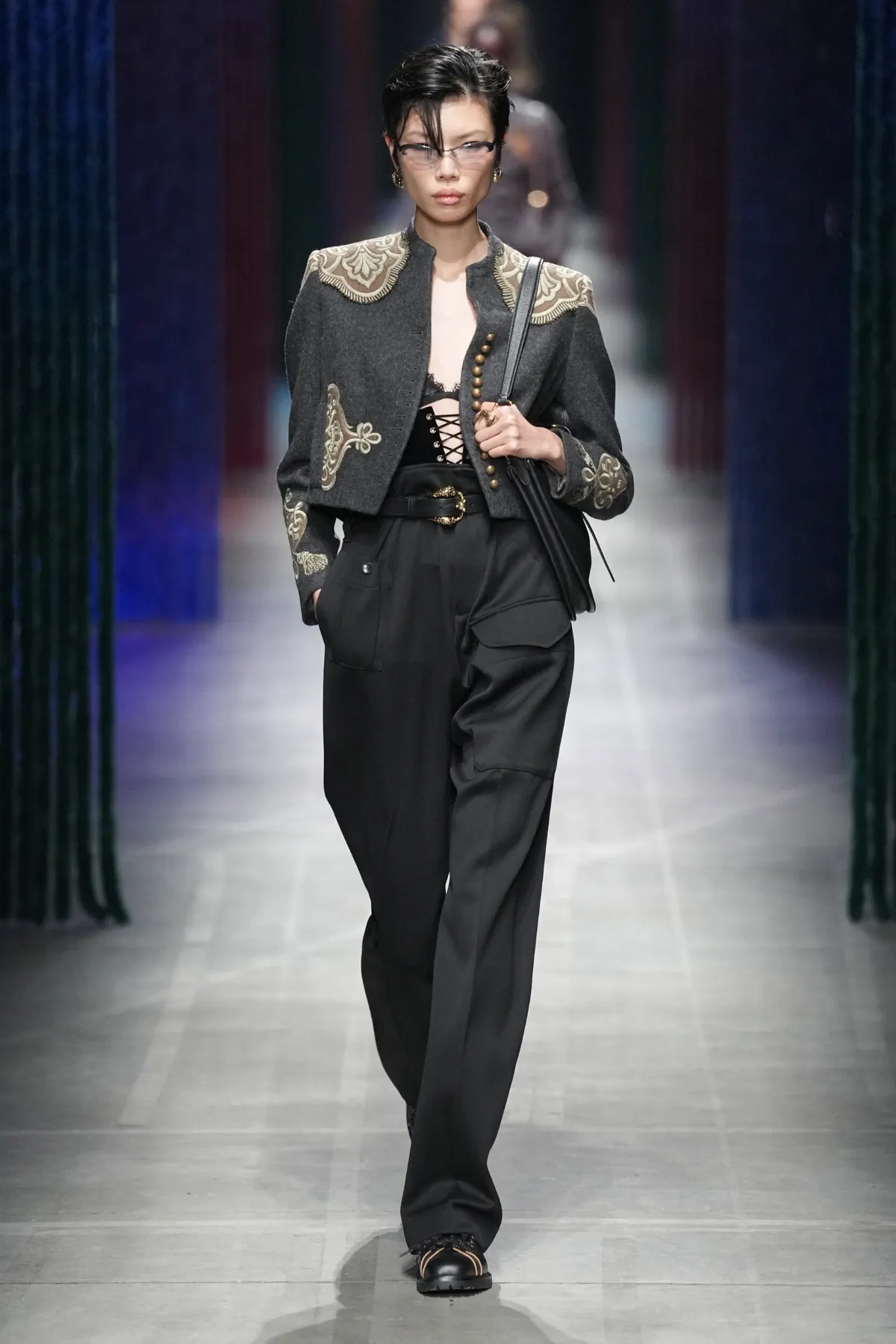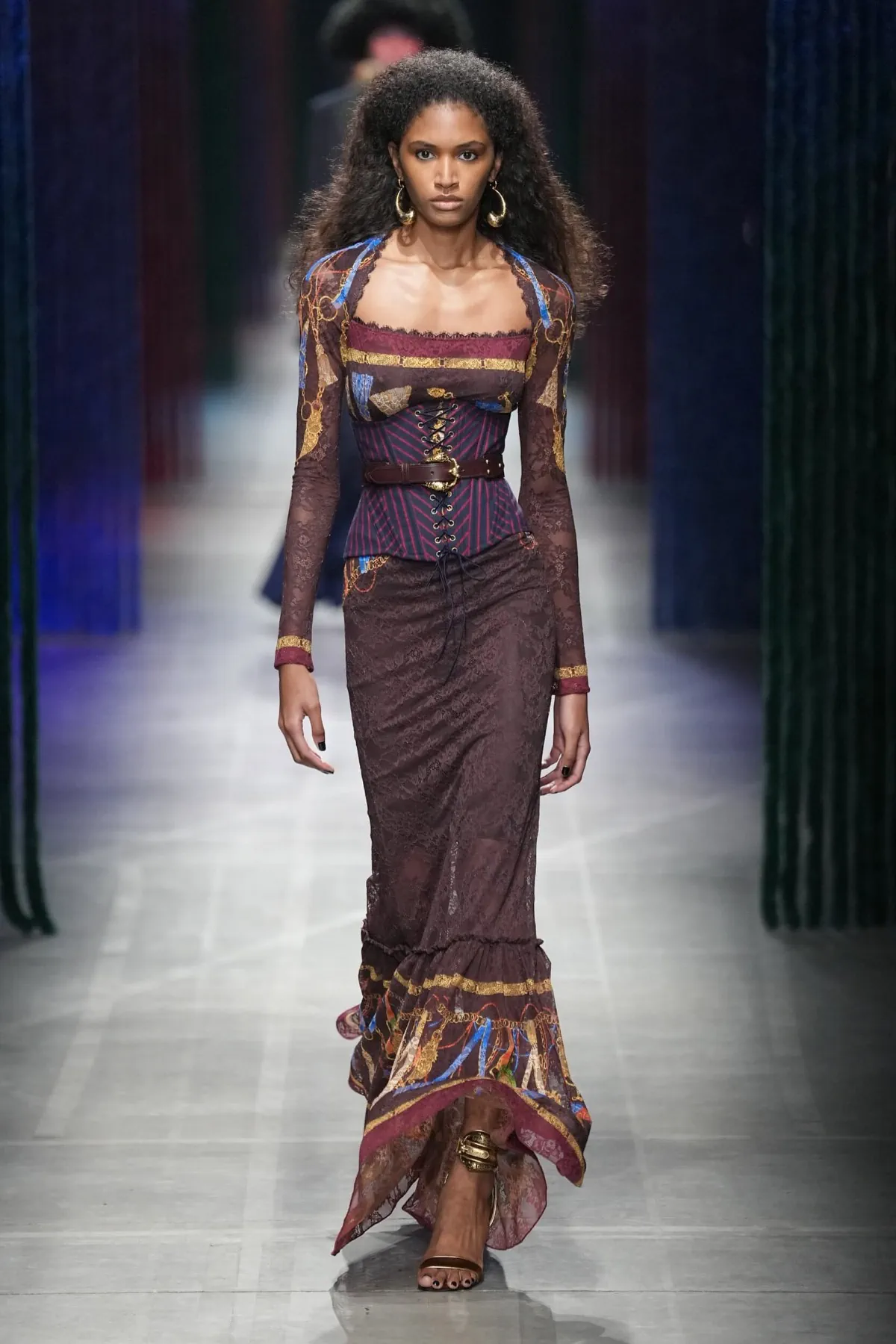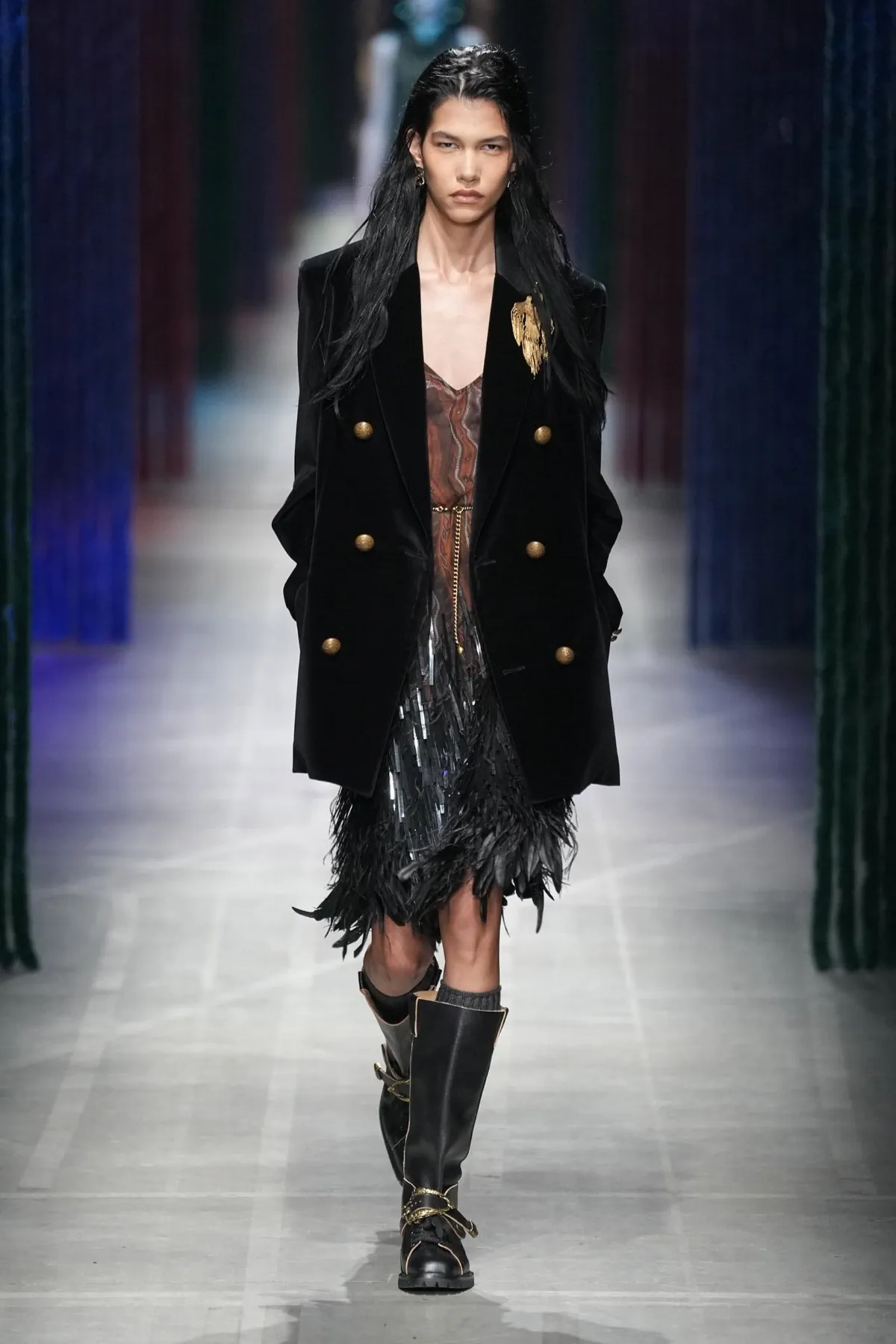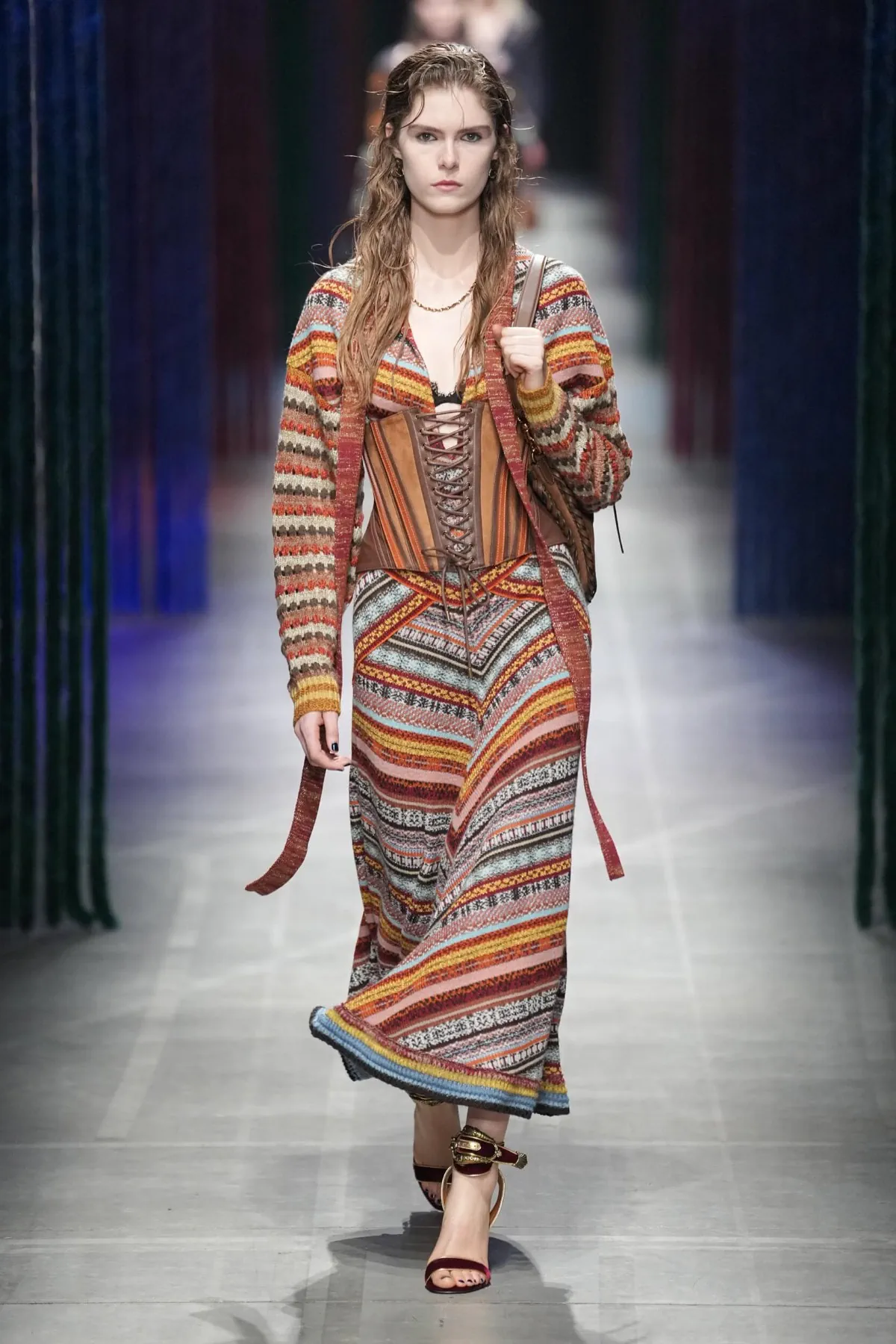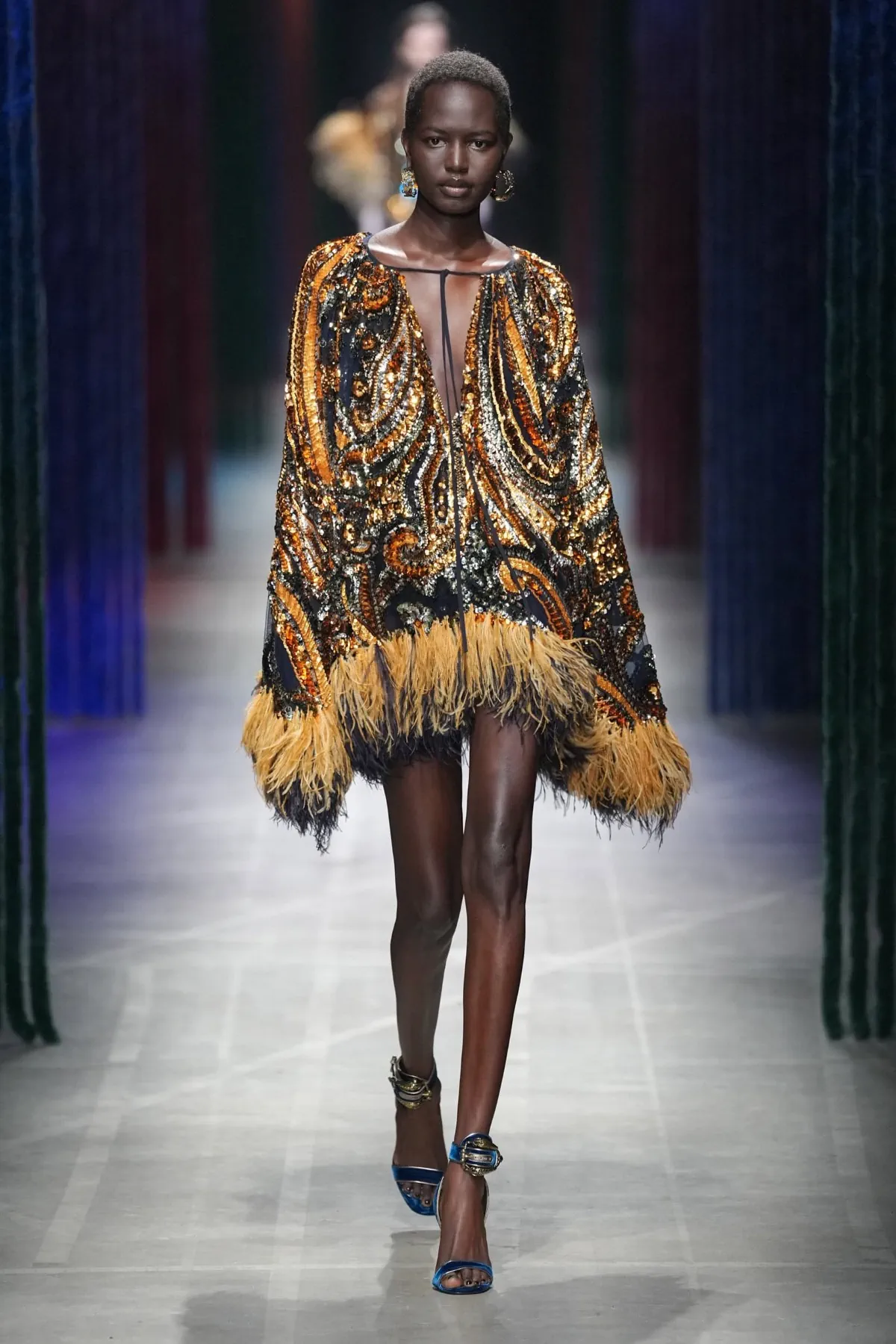

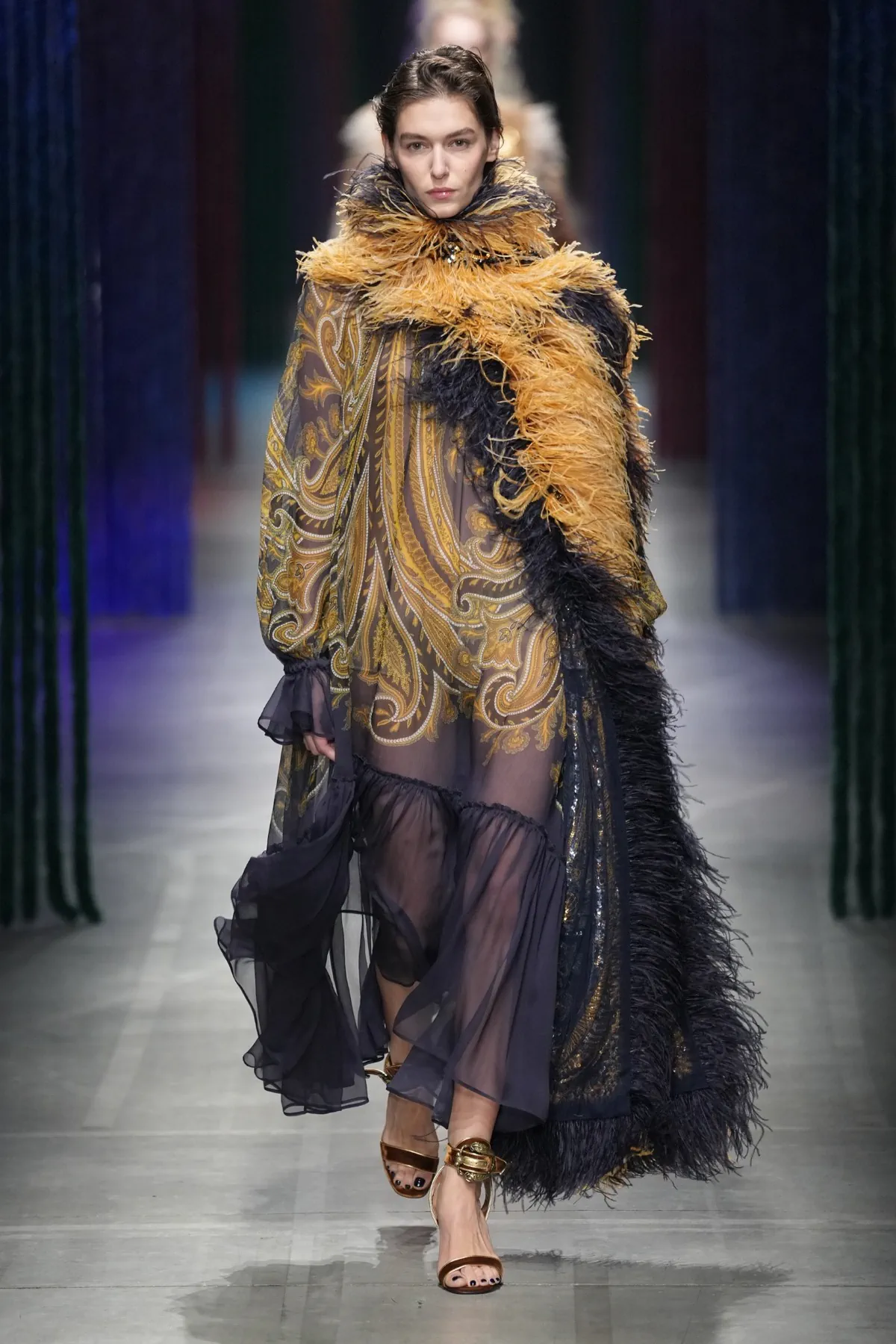
Marco de Vincenzo frames his creative vision for Etro Fall 2026 not as a reinvention, but as a natural point in an ongoing cycle. He describes his process as a loop – one where he drifts away from the house’s core identity only to circle back to it, each time with a fresh perspective. This season lands at a moment where Etro’s signature decorative spirit intersects with a new appetite for structure, proving that familiar elements can return in endlessly different forms.
| 📌 Key Facts |
|---|
| 🧵 Marco de Vincenzo structures Etro Fall 2026 around a “creative loop” concept 🧥 The show opens with British-inspired tailoring and military precision 🎨 A muted autumn palette sets a restrained early tone 🐑 Wool replaces fur through bold, tactile craftsmanship ✨ The finale erupts in crochet, sequins, fringe and 3D embellishments 👡 Accessories include velvet stilettos and a Birkenstock suede mule collaboration 🔁 The collection oscillates between minimal structure and maximalist exuberance |
The Milan runway made this cycle visible. Rather than presenting a fixed aesthetic, de Vincenzo laid out a progression – a wave moving from disciplined restraint to full-blown maximalism. This oscillation defines the Etro woman herself: someone who equally craves order and eclecticism, structure and wanderlust.
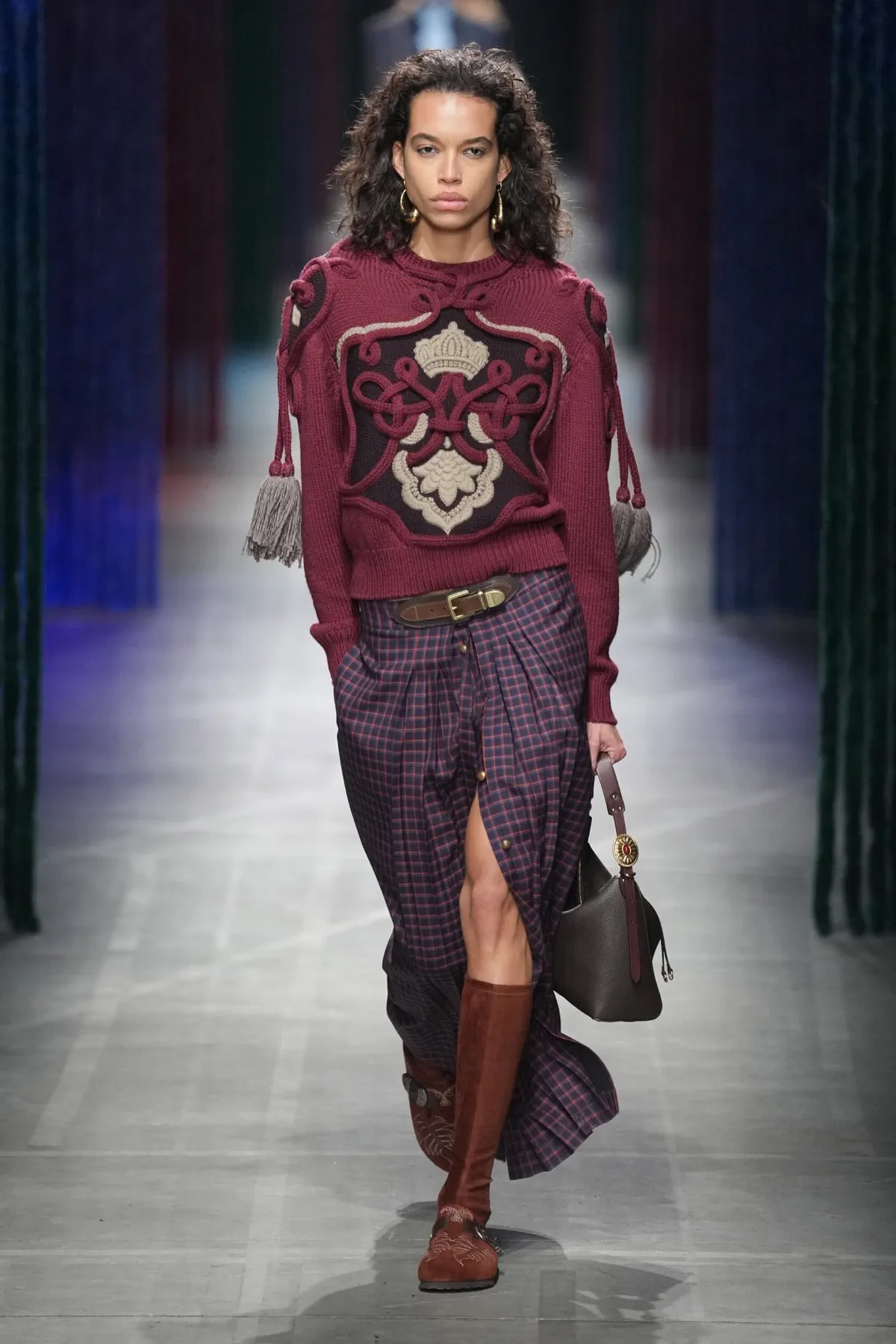
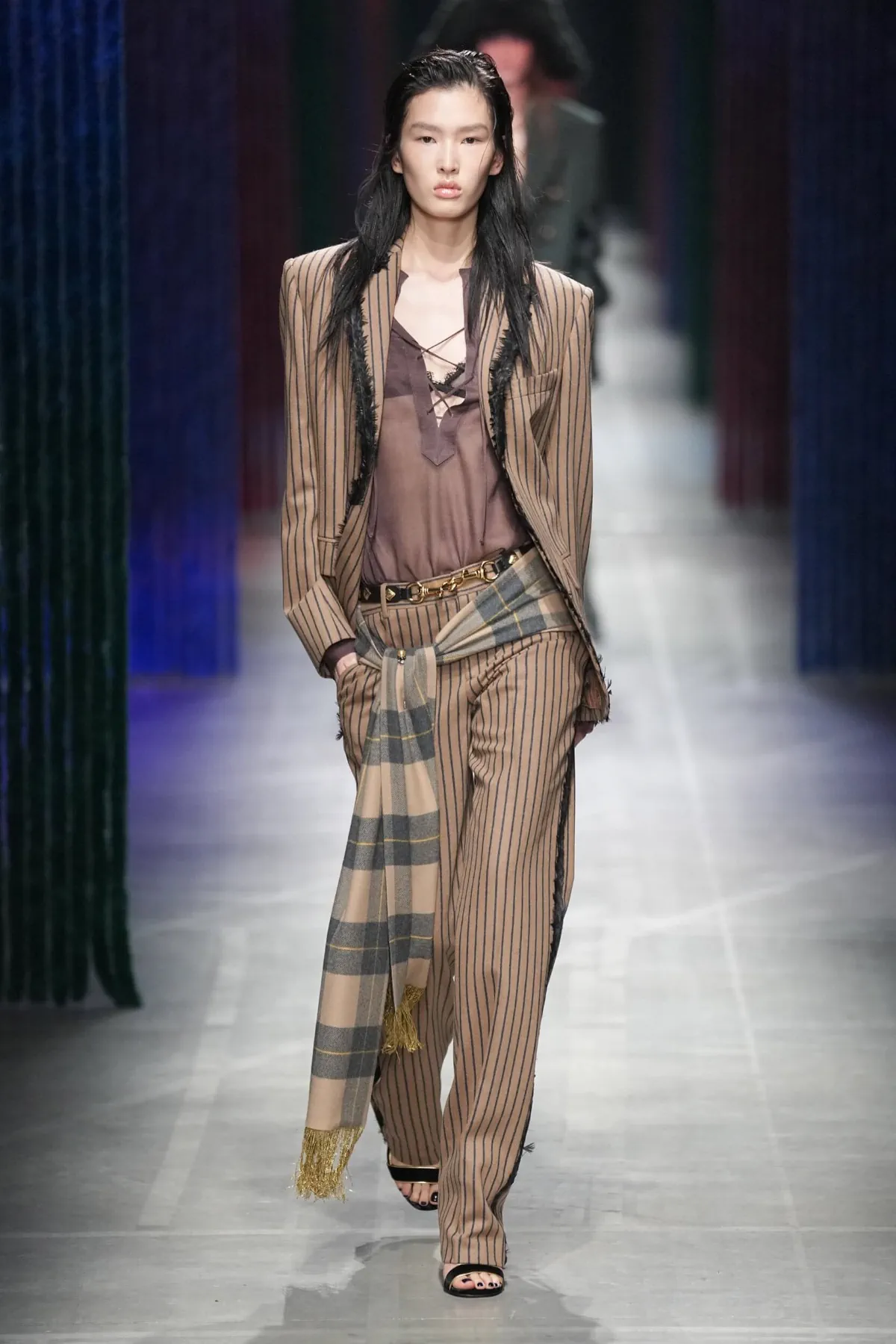
The show opened with a deliberate sense of composure that felt almost unexpected from a house known for bohemian extravagance. The early looks leaned into sharp masculine tailoring with a British edge – feather-trimmed suits, military-inspired coats, and precise silhouettes. de Vincenzo played with traditional forms through clever styling, weaving tartan scarves through jacket slits to form built-in belts, adding a quiet inventiveness to otherwise restrained pieces.
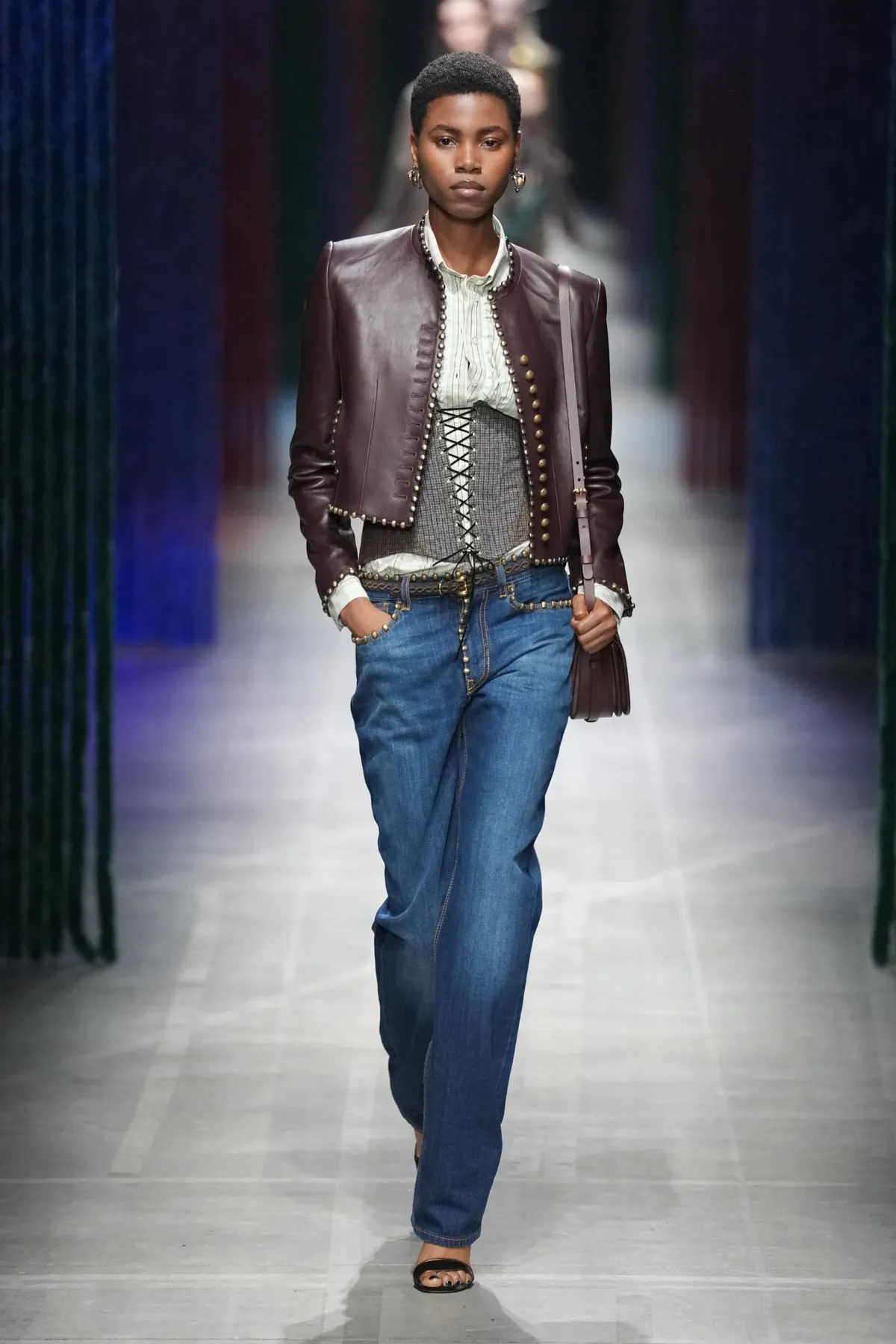
The color palette in this section was muted and dusty, conjuring a heavy autumnal mood. Peacoats were spliced with corset inserts, blending naval structure with a softer feminine shape, while checkered skirts paired with heraldic sweaters struck a tone that felt both academic and subtly rebellious. This opening chapter proved that Etro can speak the language of minimalism just as confidently as it speaks the language of excess.
As the collection progressed, that composure gradually loosened. Silhouettes grew closer to the body, and sheer fabrics replaced the heavier protective layers of the opening looks. The pivotal moment of this transition came through de Vincenzo’s treatment of texture – specifically, his unconventional use of wool to mimic, and then surpass, the effect of fur.
Follow all the latest news from Fashionotography on Flipboard, or receive it directly in your inbox with Feeder.
You may also read

Rather than imitating traditional pelage politely, the wool constructions aimed for something wilder and more subversive. The resulting coats and trims felt raw and tactile, adding a physical richness to the visual drama. This approach reflects a broader rethinking of luxury at Etro – one that favors artisanal craft over exotic materials.
The show’s closing chapter surrendered entirely to the brand’s maximalist roots. de Vincenzo likened this final stretch to the experience of travel – a journey that unlocks new facets of personality and emboldens a woman to embrace audacity. The looks erupted in color, print, and embellishment, featuring crochet dresses densely populated with three-dimensional exotic creatures, golden fringes, sequined surfaces, and feathery skirts that seemed to move with a life of their own.
The accessories mirrored this push and pull between worlds. Velvet stiletto sandals with bold metal buckles offered sharp glamour, while a collaboration with BIRKENSTOCK introduced practical suede mules for the grounded traveler. Together, these choices reinforced the collection’s central narrative – a woman equally at home in a crisp military coat or a cascade of sequins.
For de Vincenzo, the Etro universe has no fixed borders. It is defined by a perpetually regenerating loop of creativity that makes room for everything at once.