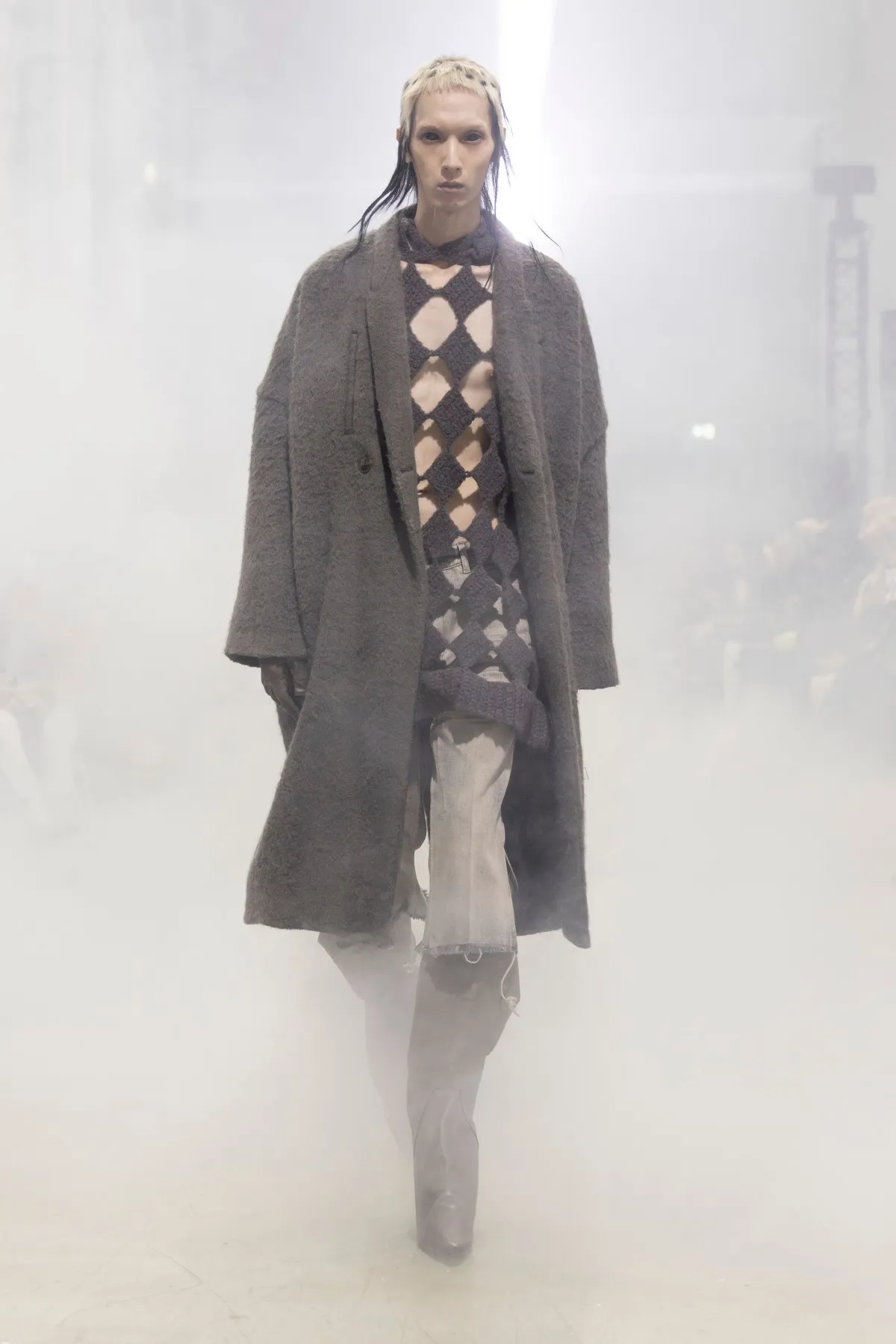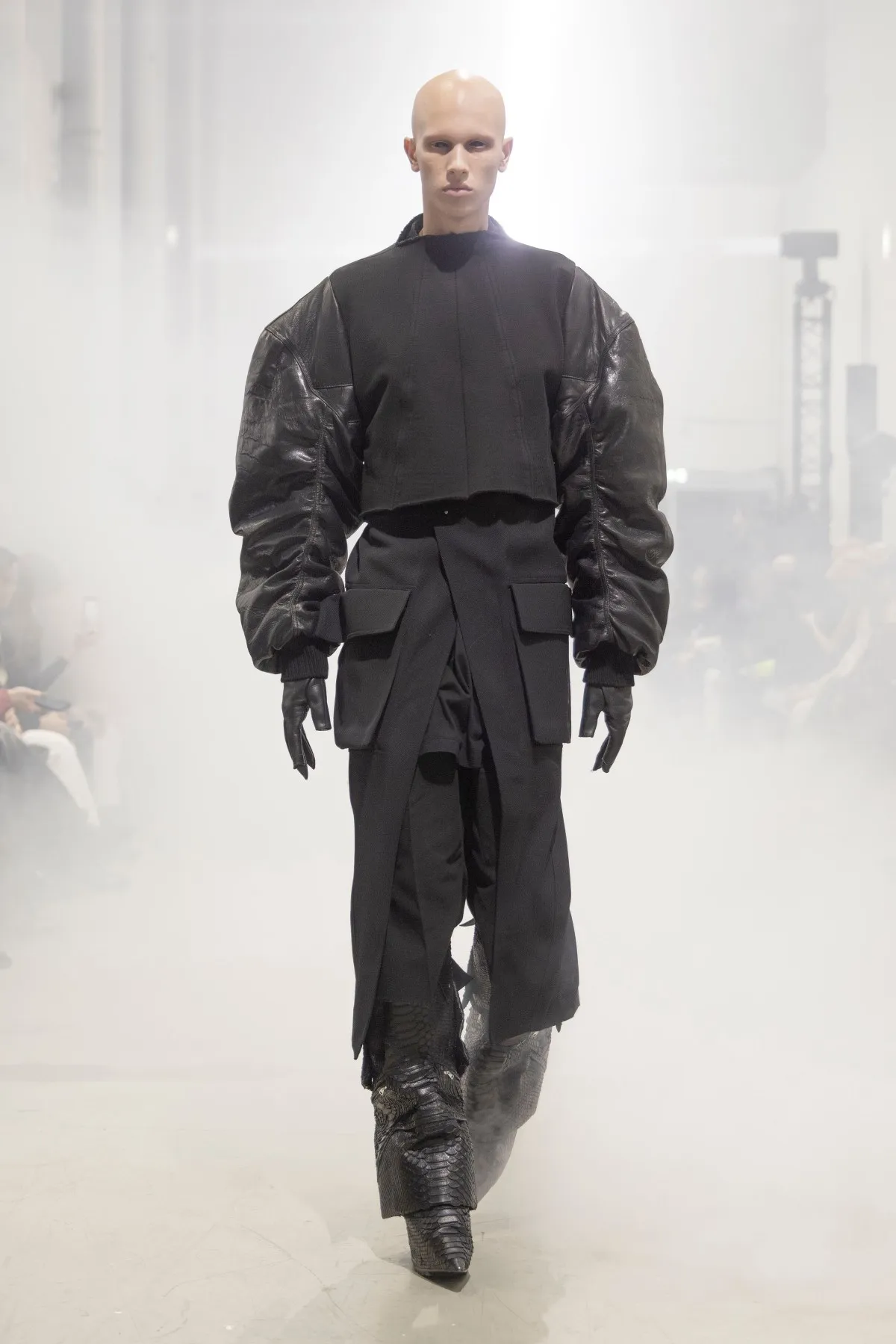

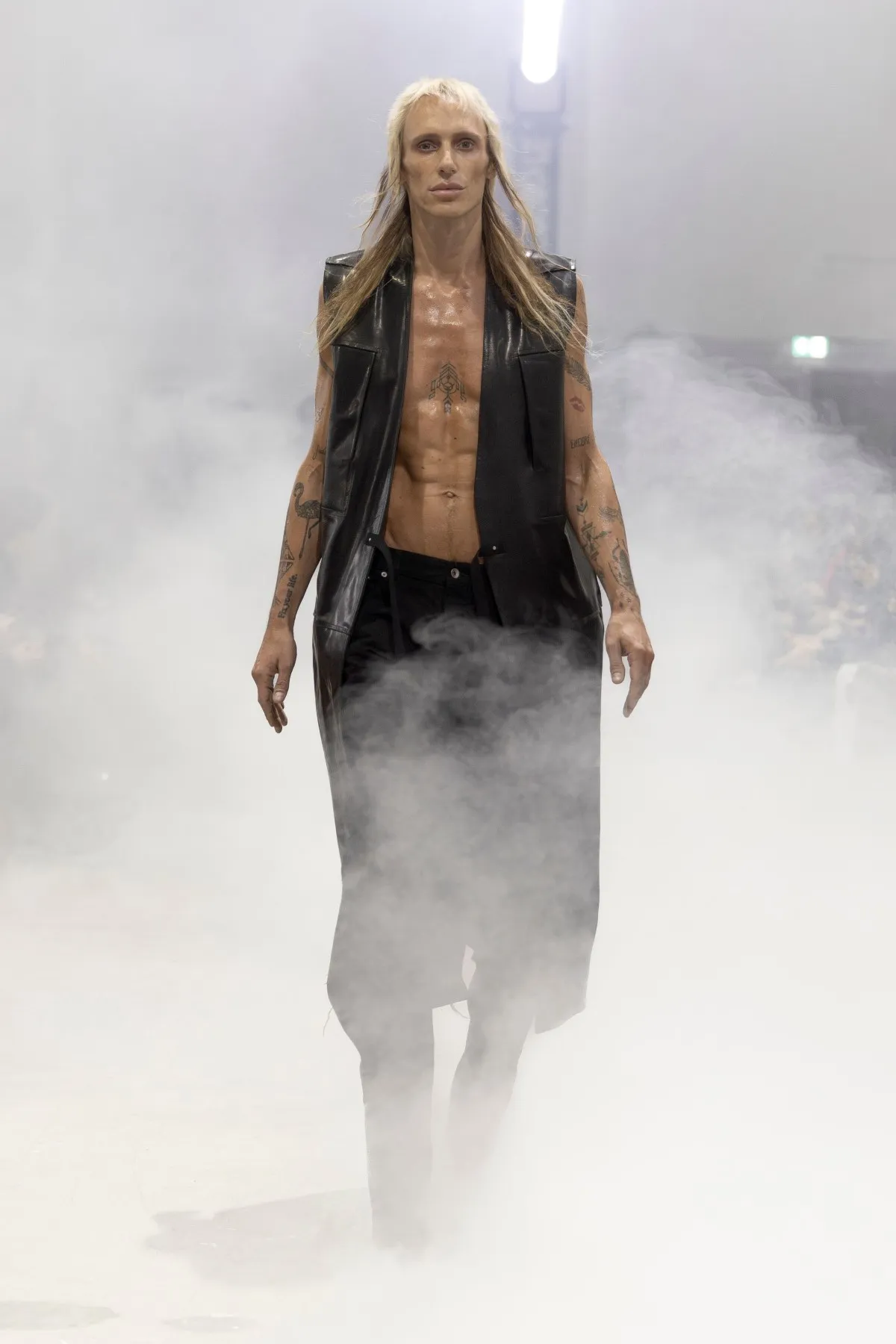
Standing on a chilly terrace with the Eiffel Tower looming in the distance, Rick Owens pulled on a cropped leather bomber from his Fall 2026 collection, demonstrating its sumptuous interior. Admiring the material’s quality, the American designer noted that such tactile pleasure defines true luxury for him. He pointed out that similar wool jackets with leather linings appeared in his leather-lined outerwear details in his recent runway presentation, which attendees likely recall for its thick clouds of scented fog. This atmospheric haze enveloped the venue, and an intense electronic noise created an oddly soothing mood despite its aggressive nature.
| 📌 Key Facts |
|---|
| 🛡️ Theme: Authority, protection and military symbolism 🌫️ Scenography: Fog, dry ice and electronic soundscape 🧵 Materials: Felt, alpaca, boiled wool, Kevlar, shearling 👢 Key Pieces: Grotesque police boots, high-collar coats, cropped cloaks 🌍 Craftsmanship: Artisans from Rajasthan, Himalayan wool production 🧠 Creative Vision: Fear mocked through exaggeration and ritual |
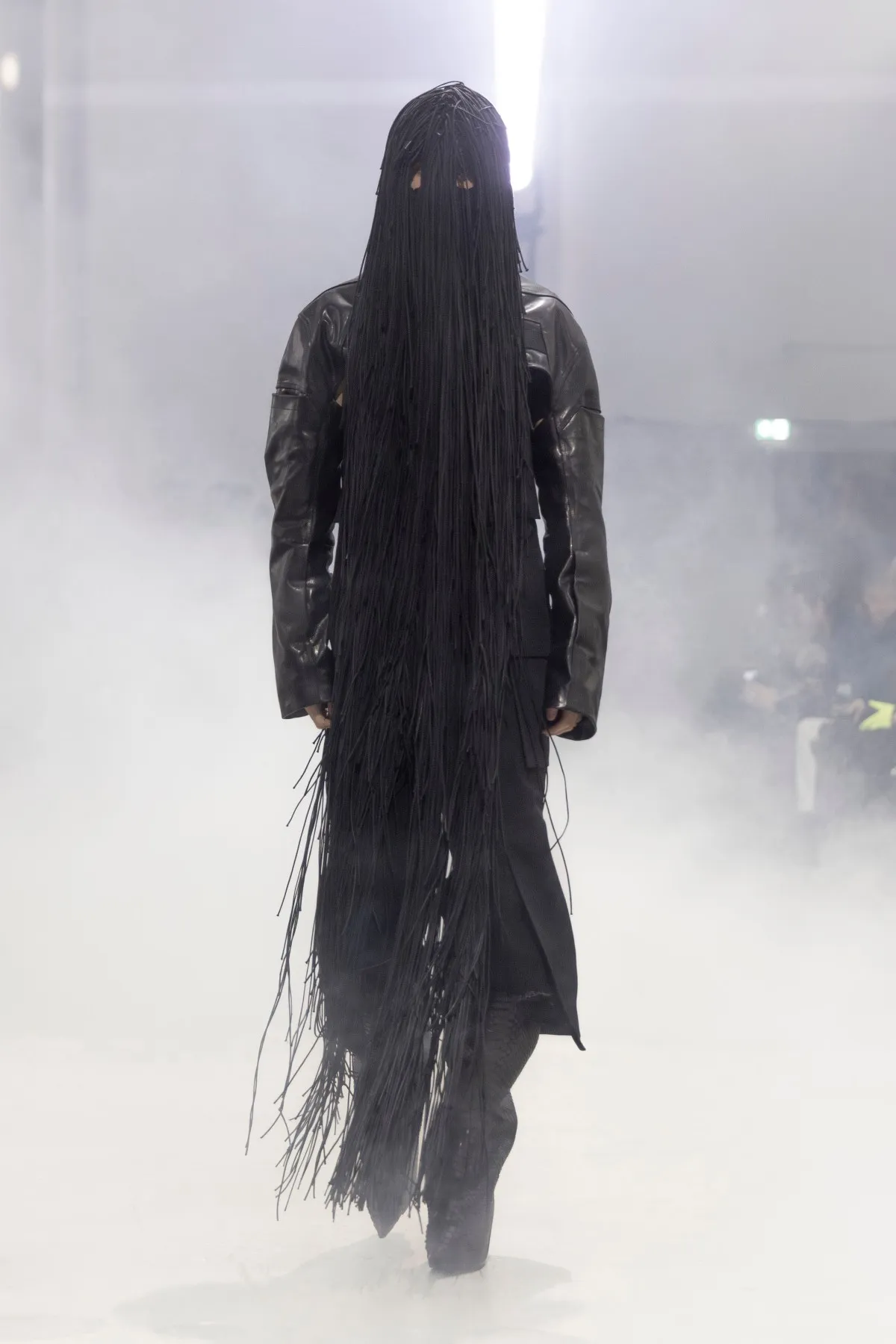
The show offered a different kind of social commentary on law enforcement that was impossible to ignore. Owens writes his own show notes, typically devoting most of the text to listing his materials, which his followers recognize as essential to his industrial aesthetic. This season, he used thick, handcrafted felt alongside washed alpaca and boiled wool. He introduced industrial canvas and shaggy shearling, experimenting with jutting capelets that resembled paper boats. Some models wore macramé masks that covered their faces entirely, and others sported shaggy tufts of hair spilling from their garments.
Outerwear provided some of the sleekest moments of the season. Owens brought back his signature high collars on boxy black car coats and designed other overcoats with a loose fit, using fluffy, brushed alpaca or padded gray nylon. He contrasted these voluminous shapes with slender lab coats in muted colors with deliberate creases. Stiff leather coats had a sinister edge, with jutting back vents and clasps resembling harnesses. These details expressed a military undercurrent that the designer refused to soften.
Follow all the latest news from Fashionotography on Flipboard, or receive it directly in your inbox with Feeder.
You might also read
Initially, he considered adding epaulettes to biker jackets, but he reconsidered when he realized their implications. Ultimately, the designer decided to embrace the discomfort because police enforcement has become an unavoidable presence in daily life. Owens believes that the best way to process fear is to mock its source. He designed police boots with exaggerated proportions that appeared grotesque in their bulk. These footwear options came in a severe black and a subversive mauve. He ultimately removed the epaulettes because they were too obvious. Instead, he fetishized the throat latches on collars to create a more abstract military aesthetic.
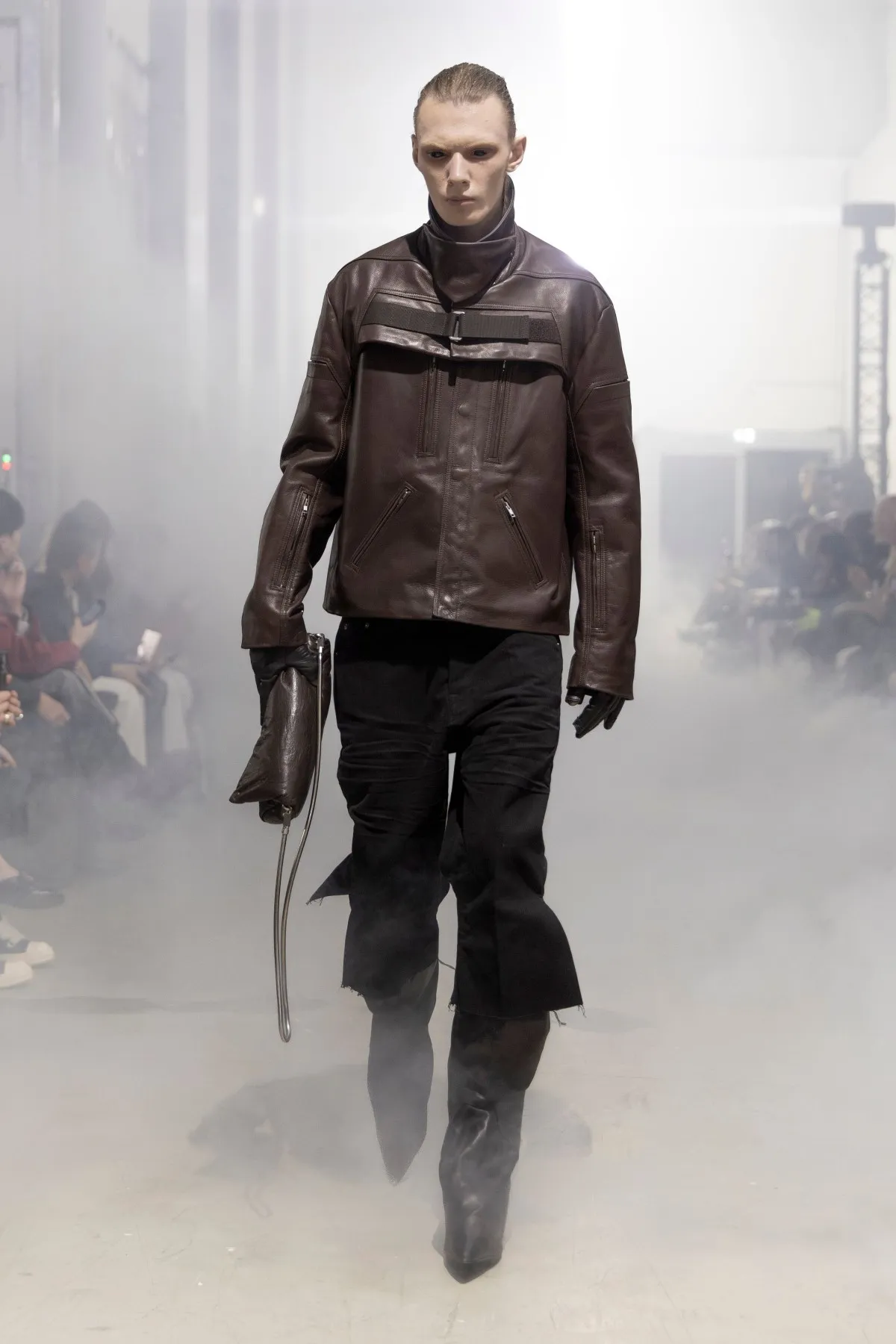
The fog on the runway suggested mystery and danger – echoing the uneasy, ritual-like staging of another recent Owens show. Although he admitted the gesture was theatrical, Owens insisted that he simply loves the aesthetic of fog. The haze may have frustrated photographers, but it failed to obscure the formidable cuts and construction. The silhouette remained skinny but gained substantial bulk through the addition of cropped cloaks and tactical hybrids. Some garments utilized Kevlar, a literal fabric of control. Owens replaced traditional shoulder insignia with grommeted webbing patches that looked simultaneously ridiculous and practical.
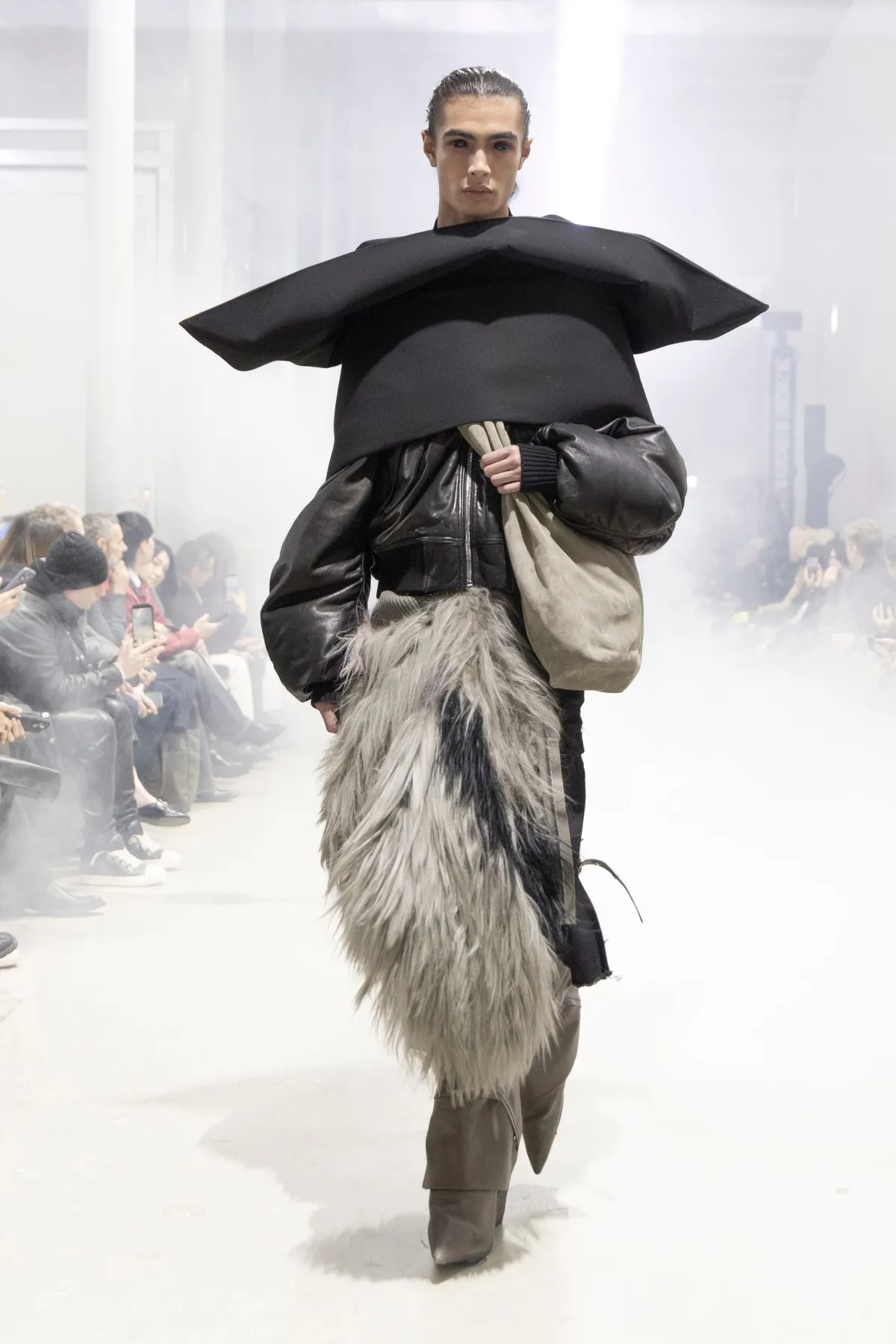
Models walked through the sage-scented, dry ice-filled space like moody spirits moving through tear gas. The lineup included wool and felt shirts cut with a semi-sinister utilitarianism. The designer remains the sole creative force behind his brand and refuses to delegate sketching or design duties to a team. He prefers to maintain his independence while collaborating with select individuals. He reached out to creatives he found on social media and credited them for their contributions to the line. An atelier in Rajasthan produced the fabric for the stiffened wool jackets using Himalayan wool. Other pieces included hand-knitted sweaters from an e-commerce model whom Owens spotted knitting during her free time. Engaging with outside talent has become his new system for expanding the brand universe.