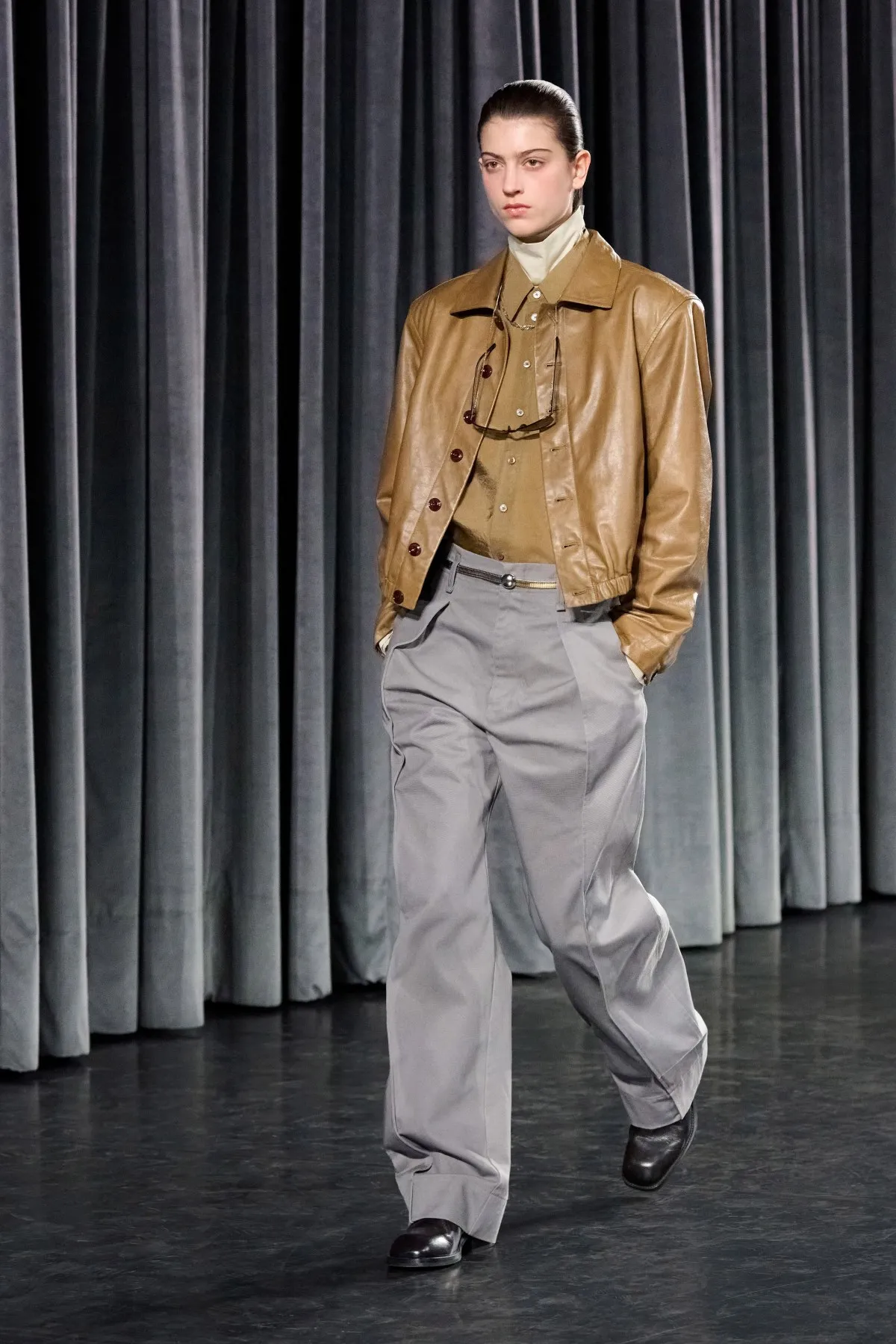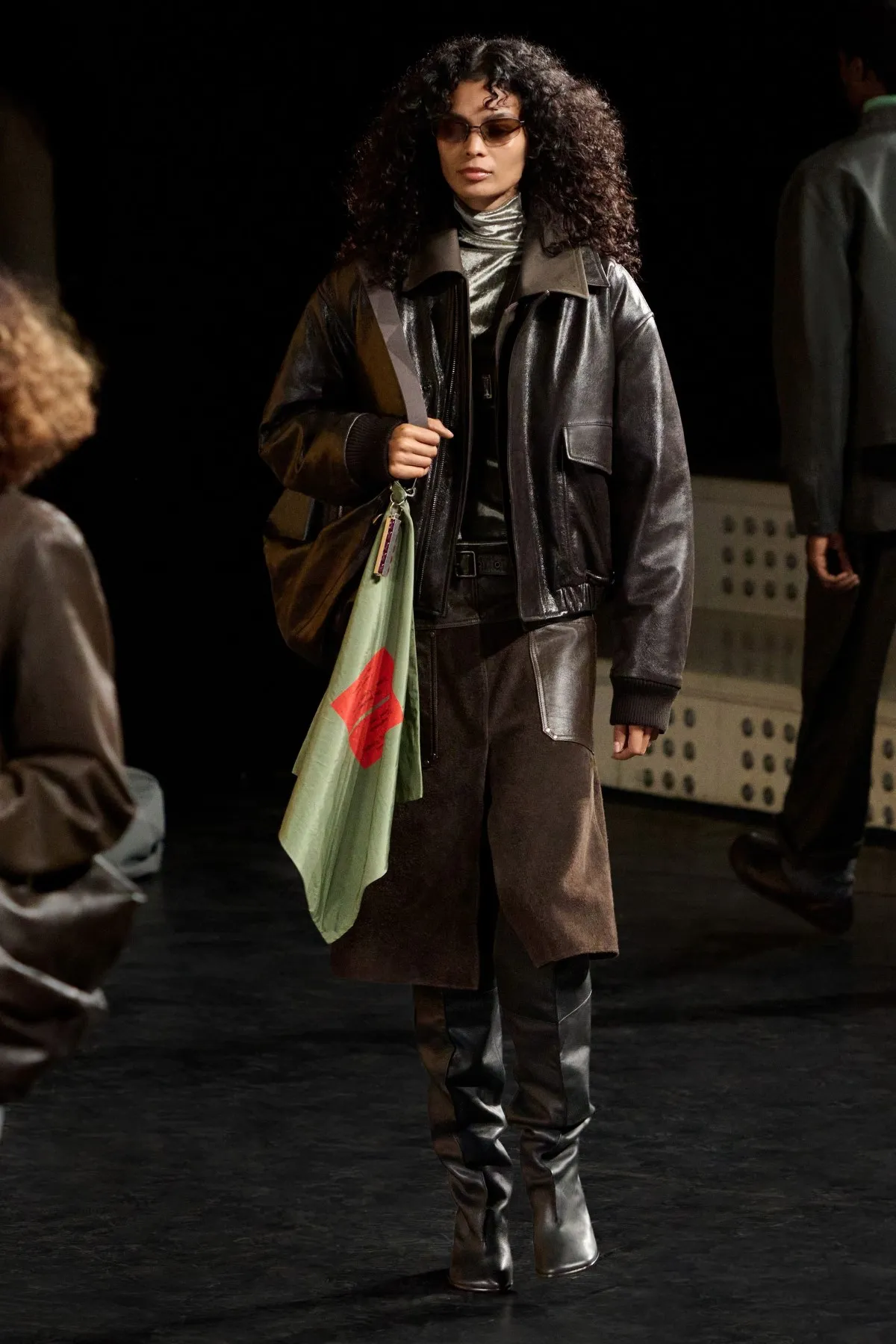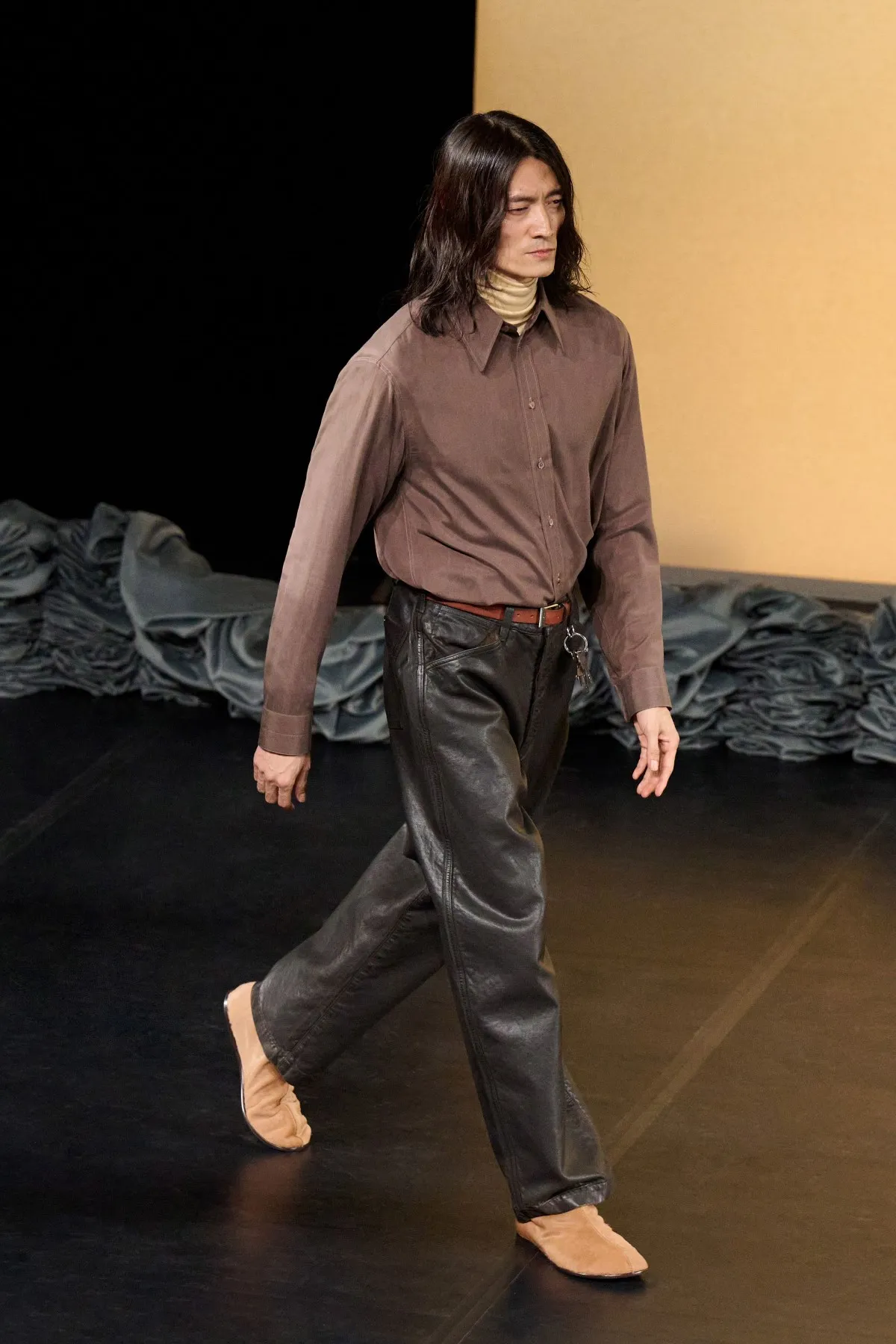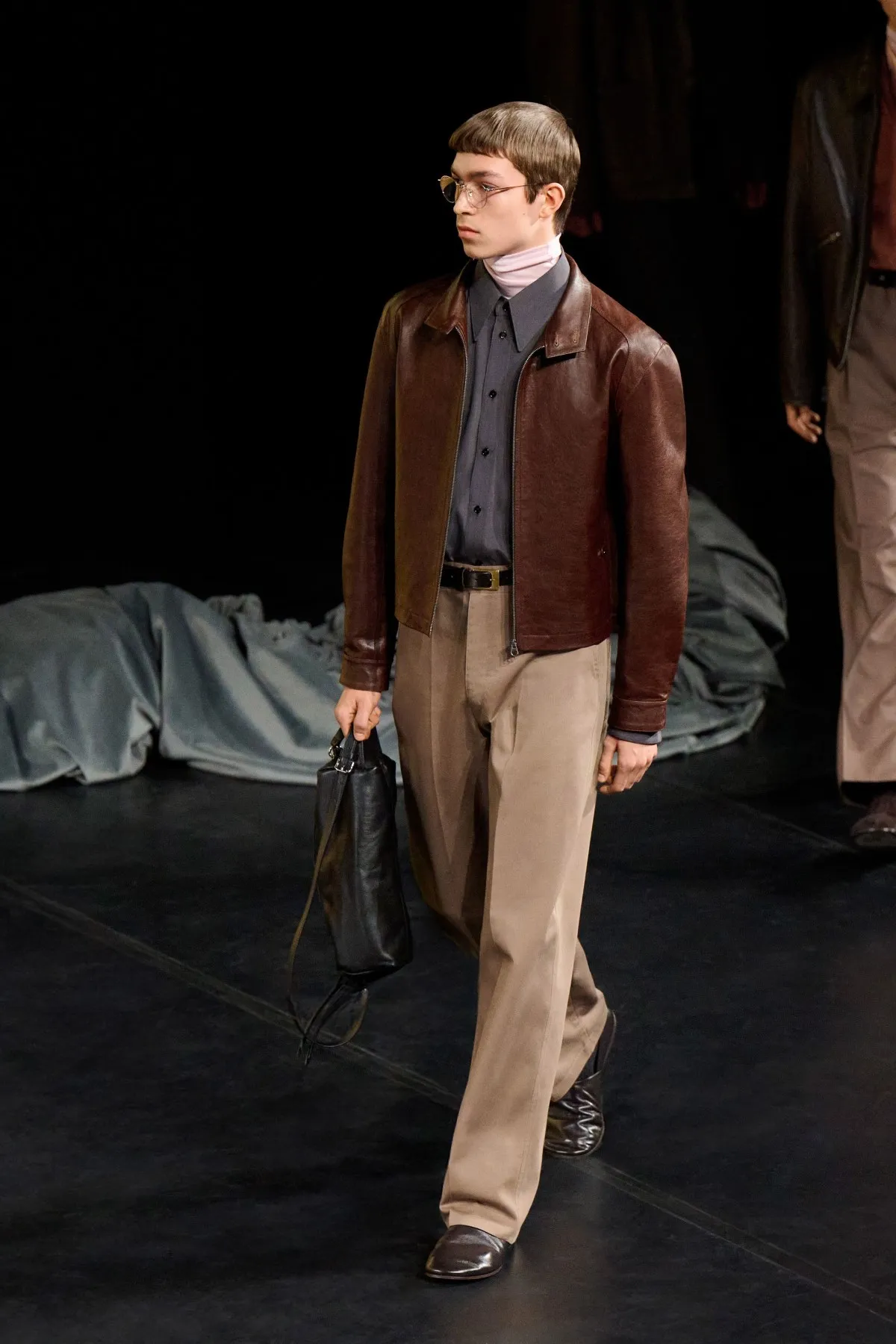

When does showing clothes stop being enough? For Christophe Lemaire and Sarah-Linh Tran, the answer came at the Opéra Bastille, where their Lemaire Fall 2026 collection was presented not on a traditional runway, but through a series of living tableaux. This presentation was a deliberate departure from established fashion protocols, raising questions about how designers can communicate their vision when traditional formats are inadequate.
| 📌 Key Facts |
|---|
| 🎭 Format: Theatrical tableaux instead of a traditional runway 🏛️ Location: Opéra Bastille, Paris 👗 Season: LEMAIRE Fall 2026 🧵 Focus: Optical fabrics, material illusion, fluid silhouettes 🎬 Collaborator: Scenographer Nathalie Béasse 🧠 Concept: Balancing everyday pragmatism with artistic expression 🌍 Casting: Performers and artists beyond professional fashion models 📜 Reference: Shakespeare’s Sonnet 43, Mine Eyes |
A theatrical runway that redefines fashion presentation
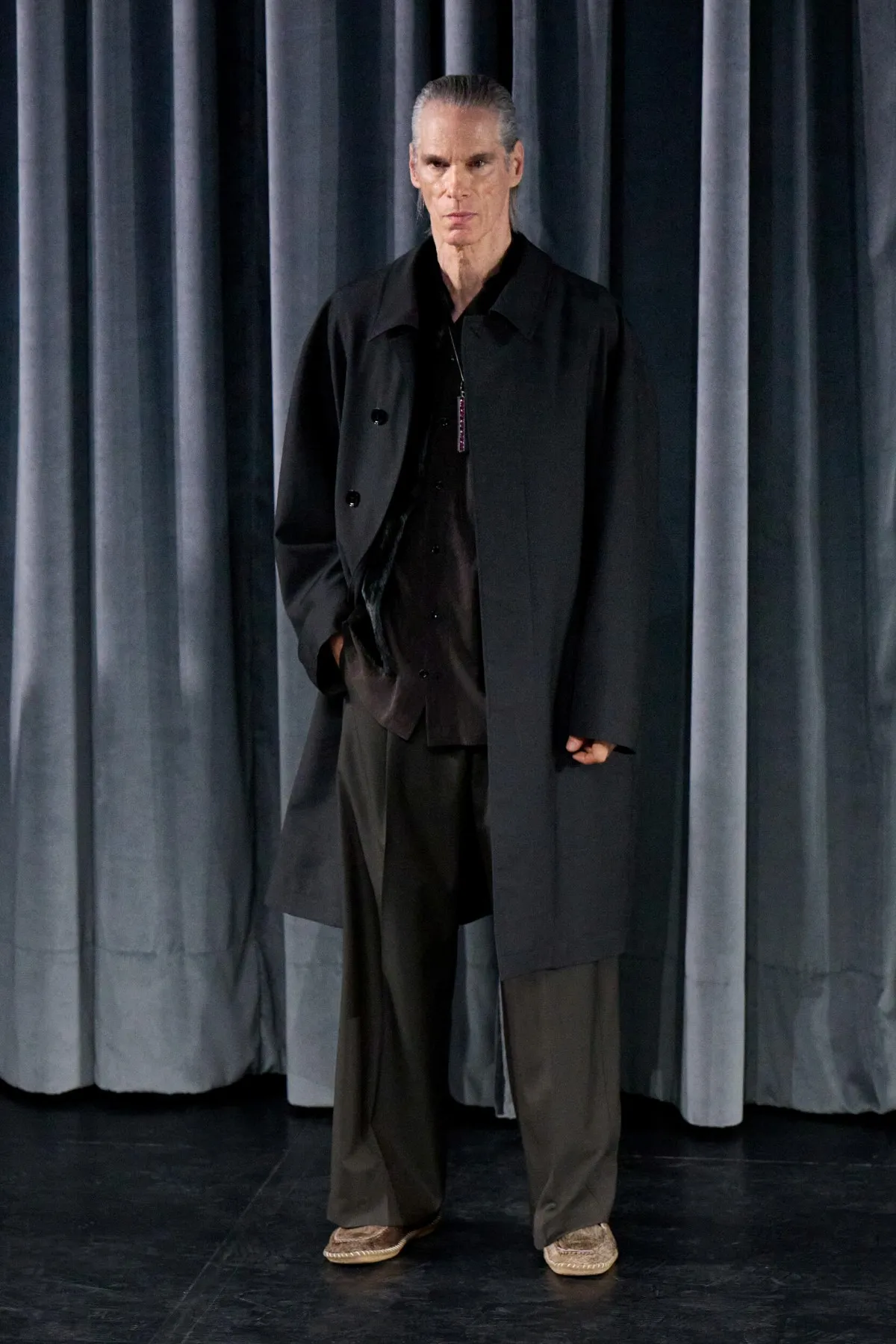
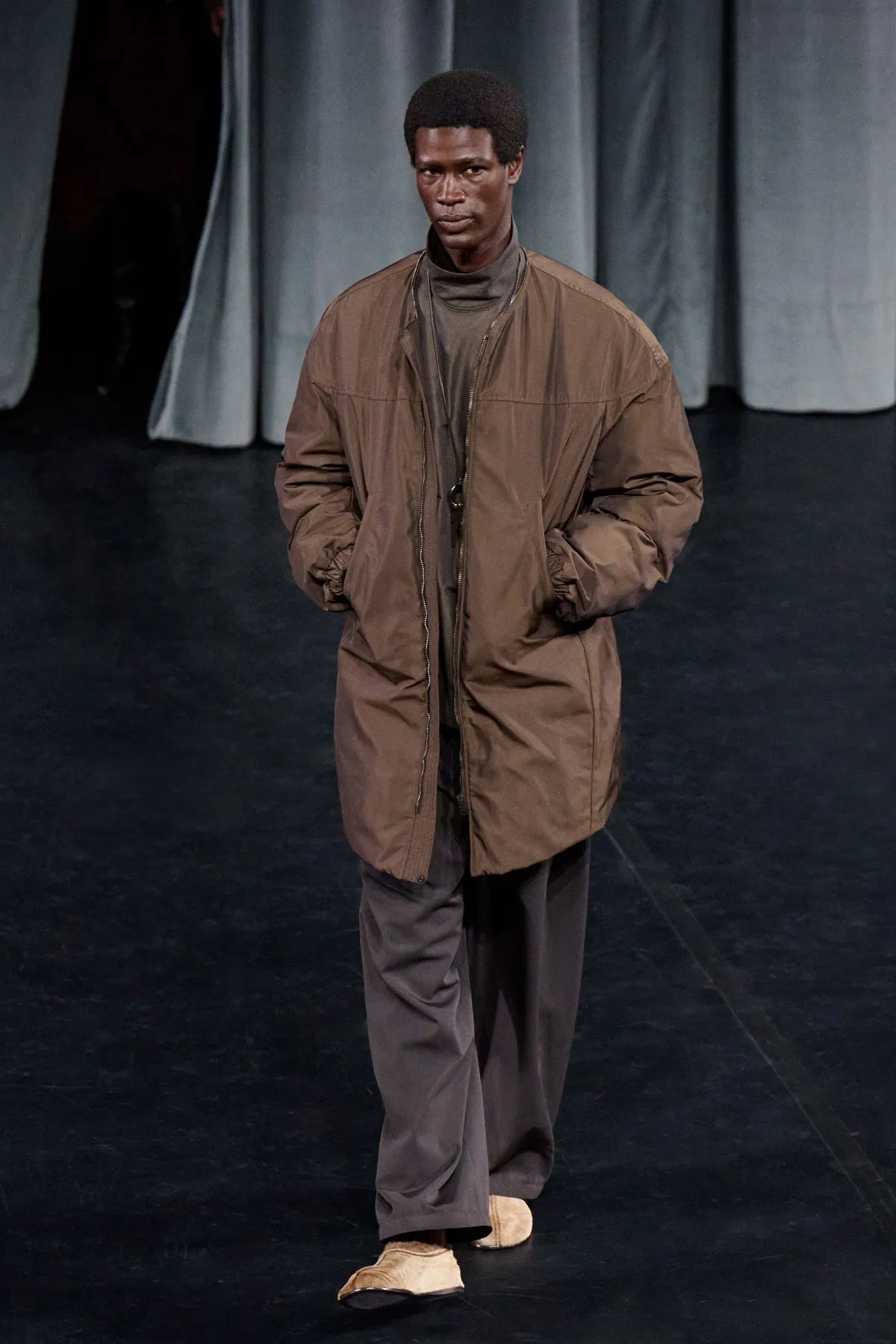
The duo collaborated with French scenographer Nathalie Béasse to transform their show into something closer to theater than fashion. Guests sat in a darkened auditorium facing a gray curtain that rippled with light and shadow. Models emerged in small groups – first seven men, then four women, then a few more men – representing distinct themes and attitudes across the collection. This fragmented approach allowed the designers to present a more didactic method for understanding proportions and color stories, as Tran described backstage.
The cast included South Korean actress Doona Bae, Japanese actor Kazuya Tanabe, and American dancer Julie Anne Stanzak of Tanztheater Wuppertal Pina Bausch. Their presence signaled something about the designers’ intentions. While fashion shows typically rely on professional models to showcase clothing, Lemaire and Tran seemed intent on demonstrating what they call “human depth and personality.” Stanzak leapt and twirled across the stage in a buttery yellow dress, clutching her block heels; her movements suggested joy rather than merchandising.
Optical fabrics and illusions as design language
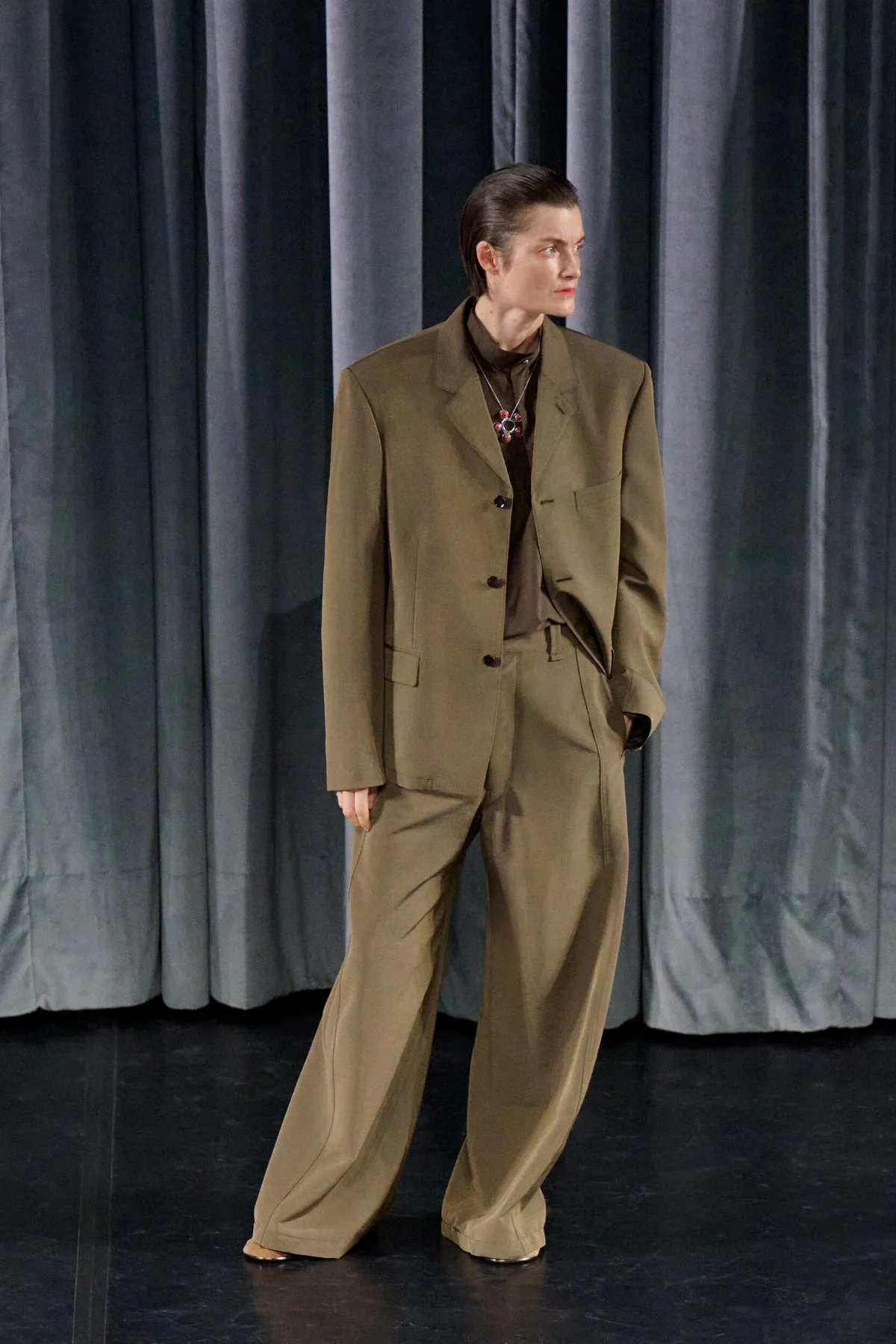
The collection employed optical illusions through fabric manipulation. Coated denims mimicked leather or aluminum. Crushed velvets achieved metallic sheens that caught the light as if they were liquid metal. The women’s silhouettes featured draping that functioned less as a technique and more as a visual language. Asymmetrical folds and pleated slits created layers of mystery against the body.
Men’s pieces anchored this vision through a dialogue between Western archetypes and Eastern fluidity – a folk spirit that isn’t literal. Classic trench coats and mohair suits appeared alongside reinvented Mandarin jackets crafted from soft calfskin. The tailoring remained sharp while incorporating what the designers called a “breeze from the Orient,” resulting in garments that could transition from sophisticated environments to domestic settings.
Follow all the latest news from Fashionotography on Flipboard, or receive it directly in your inbox with Feeder.
You might also read
Mine eyes: fashion, poetry and staged ambiguity
Titled Mine Eyes, after Shakespeare’s Sonnet 43, the presentation featured stage direction and choreography that created mini scenes with prompts that were both indecipherable and compelling. One model might reposition a chair while another walked into the audience. These movements suggested something beyond product demonstration. Whether this elevated or obscured the clothing, however, remained open to interpretation.
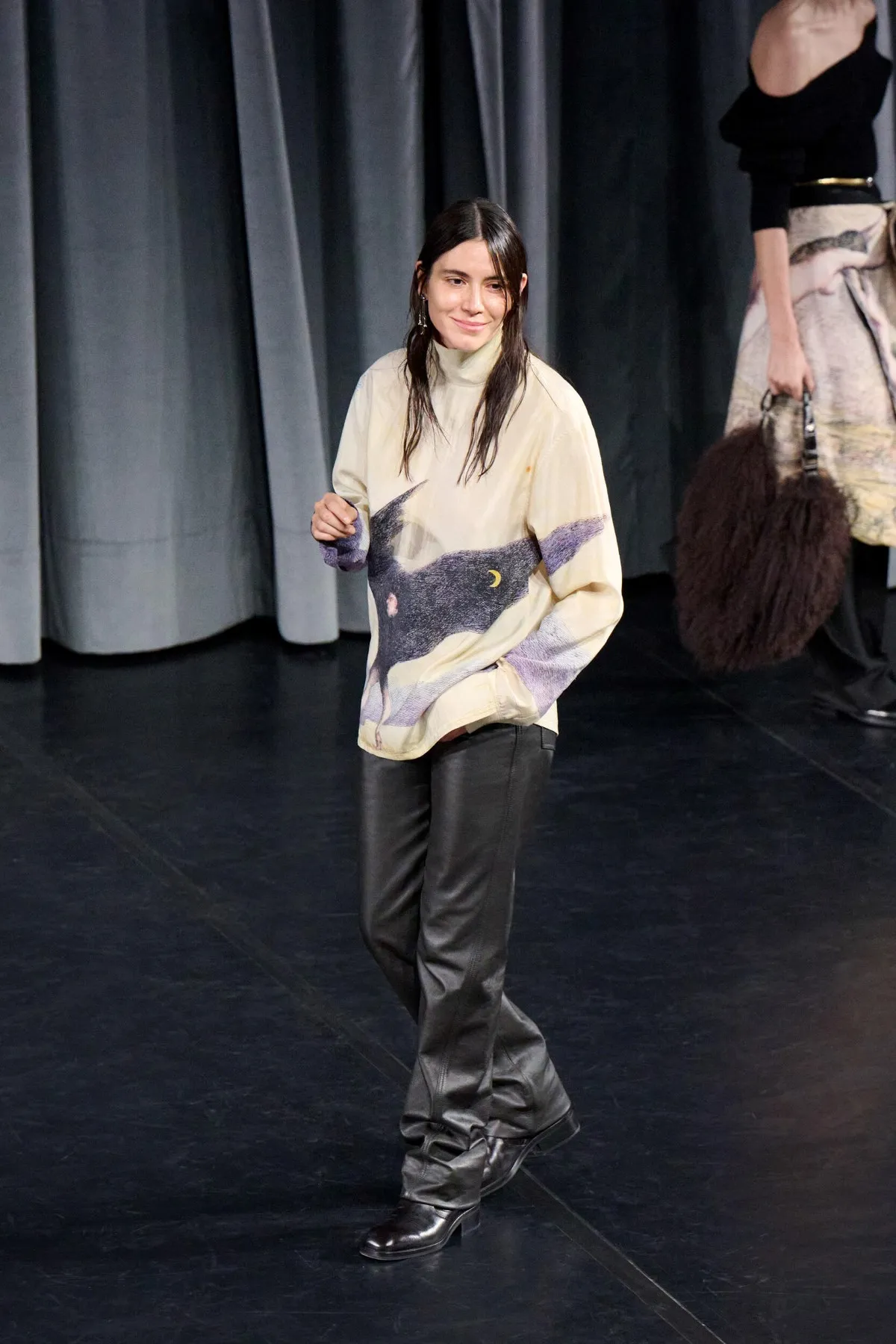
Accessories continued the surrealist theme, concealing functional secrets within utilitarian objects. Key-shaped pendants concealed corkscrews, and playful forms resembling seashells and starbursts punctuated silhouettes. The designs incorporated illustrations by Roland Topor, whose fierce and rebellious pencil strokes were translated into tactile grammar through dry silk threads and thorny reliefs.
At one point during the presentation, the curtain dropped to reveal an illuminated backdrop resembling a mild sunrise, and the music pulsed with greater energy. The cast moved silently, their iridescent surfaces directing attention across the stage. This setup gave some guests a bird’s-eye view of the proceedings, perhaps explaining why the show registered more as atmosphere than a detailed examination.
Between daily utility and artistic irrationality
Lemaire and Tran maintain what they call a pragmatic approach to clothing, focusing on daily utility and function – with a lineup of more assertive essentials. Yet, they also profess devotion to art, poetry, and mood. This contradiction lies at the heart of their work. The duo consistently references the approach blending cinema and the everyday as sources of inspiration for their seasonal designs. Their philosophy operates on two levels simultaneously: extremely down-to-earth yet somewhat irrational. Where these qualities intersect is where desirability emerges.