
Jonathan Anderson’s second act at Dior Men arrived with the kind of creative audacity fashion houses typically discourage. His Fall 2026 collection abandoned the safety of Christian Dior’s archives in pursuit of Paul Poiret, whose aesthetic philosophy contradicted everything the Avenue Montaigne fashion house represented.
| 📌 Key Facts |
|---|
| 🎨 Creative Director: Jonathan Anderson 🧵 Historical Reference: Paul Poiret (Belle Époque pioneer) 🏛️ Fashion House: Dior Men 📅 Season: Fall/Winter 2026 ✂️ Key Silhouettes: Cropped tailoring, elongated knits, distorted proportions 🌈 Color Palette: Psychedelic jacquards, bronze, neon accents 👢 Accessories: Cuban-heeled boots, Dior-buckled belts, ruff collars 💼 Commercial Strategy: Conceptual show balanced with retail-ready denim, knits and tweed |
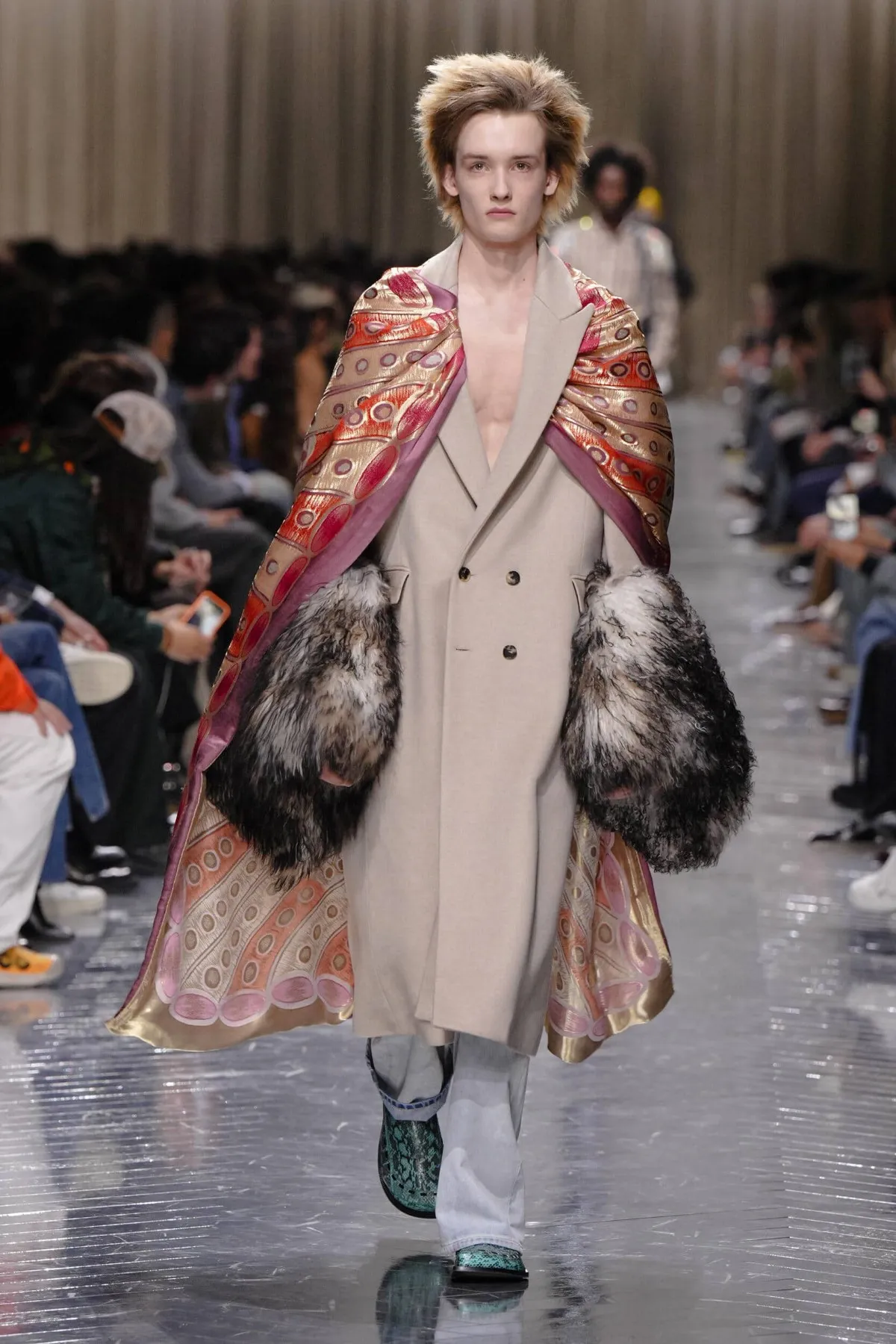
This wasn’t nostalgic homage. Anderson discovered Poiret through a brass plaque embedded in the pavement outside Dior’s headquarters, marking where the Belle Époque maverick once held court. This geographic coincidence sparked an intellectual collision between two designers separated by decades and divergent visions. Poiret liberated women from corsets with draped, sensual garments inspired by Orientalist fantasies. Dior, on the other hand, resurrected structure, celebrating the architectural precision that Poiret had methodically dismantled.
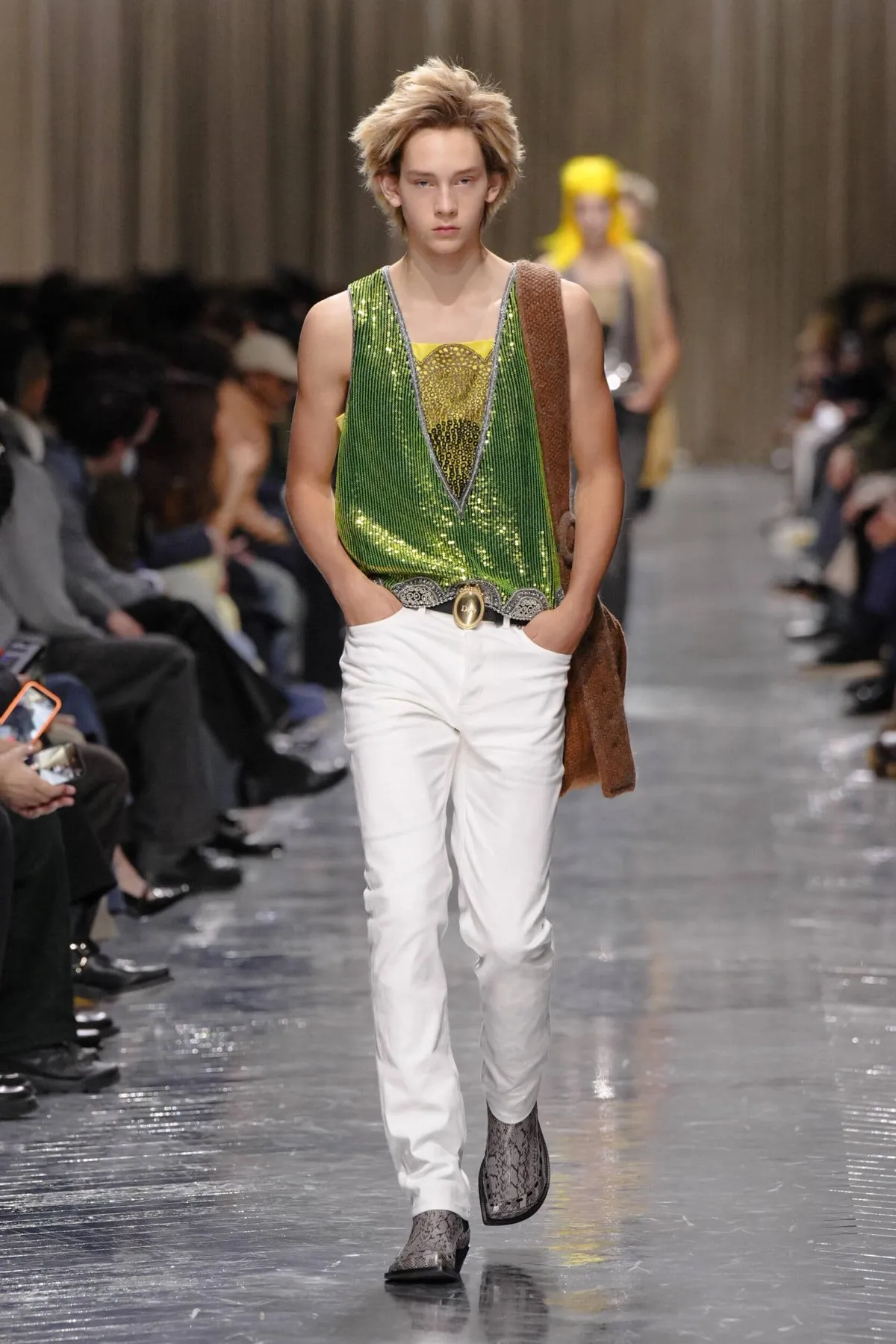
Anderson acquired an unworn Poiret dress from 1922 and presented it to Dior’s ateliers with a conceptual challenge: What happens when opposing forces meet? The result opened the show. Three models wore the dress’s upper portion, which had been reconstructed and embellished with sequins. They paired it with contemporary jeans secured by Dior-buckled belts. Cuban-heeled boots finished looks that deliberately confused temporal boundaries.
Jonathan Anderson deconstructs tailoring proportions
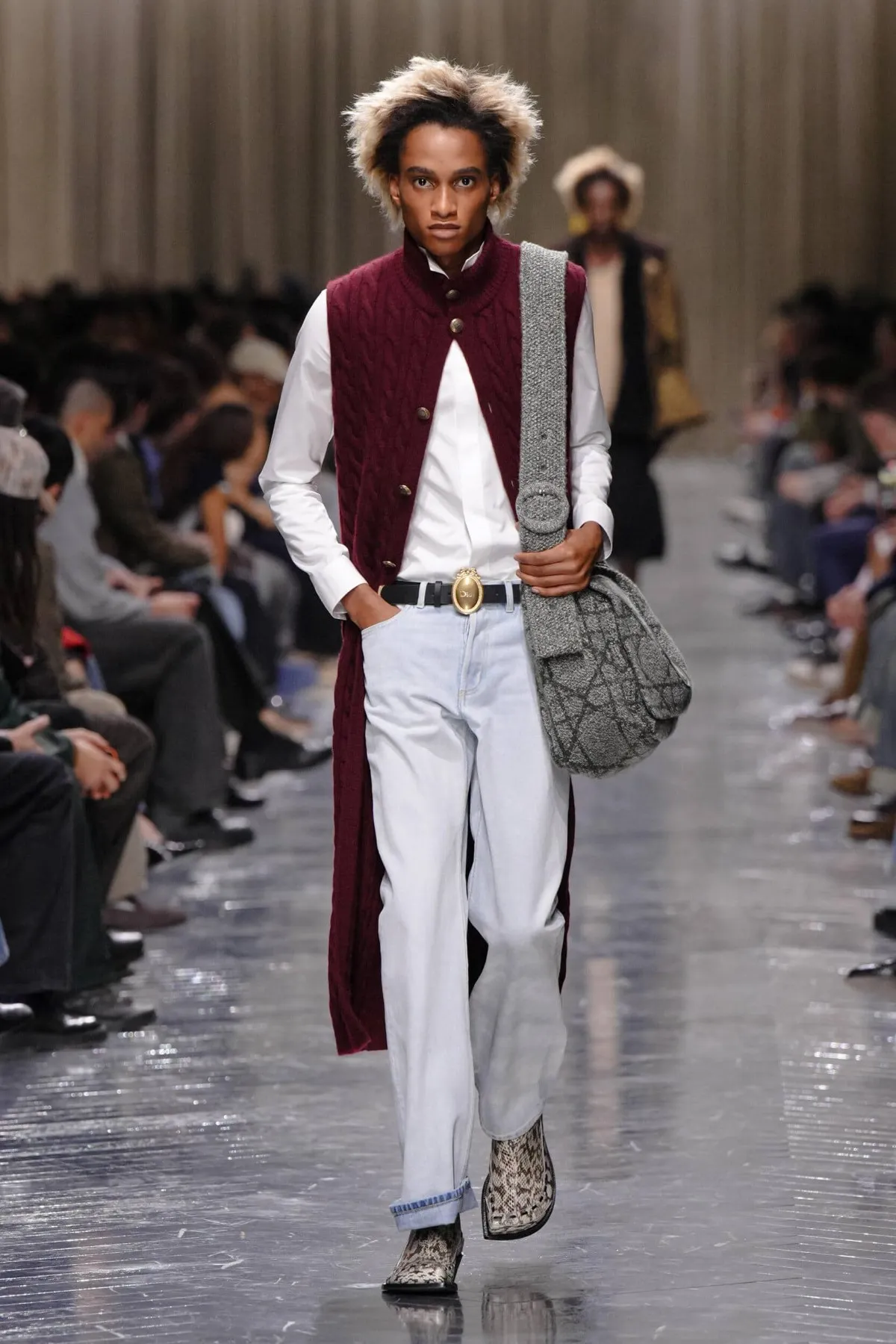
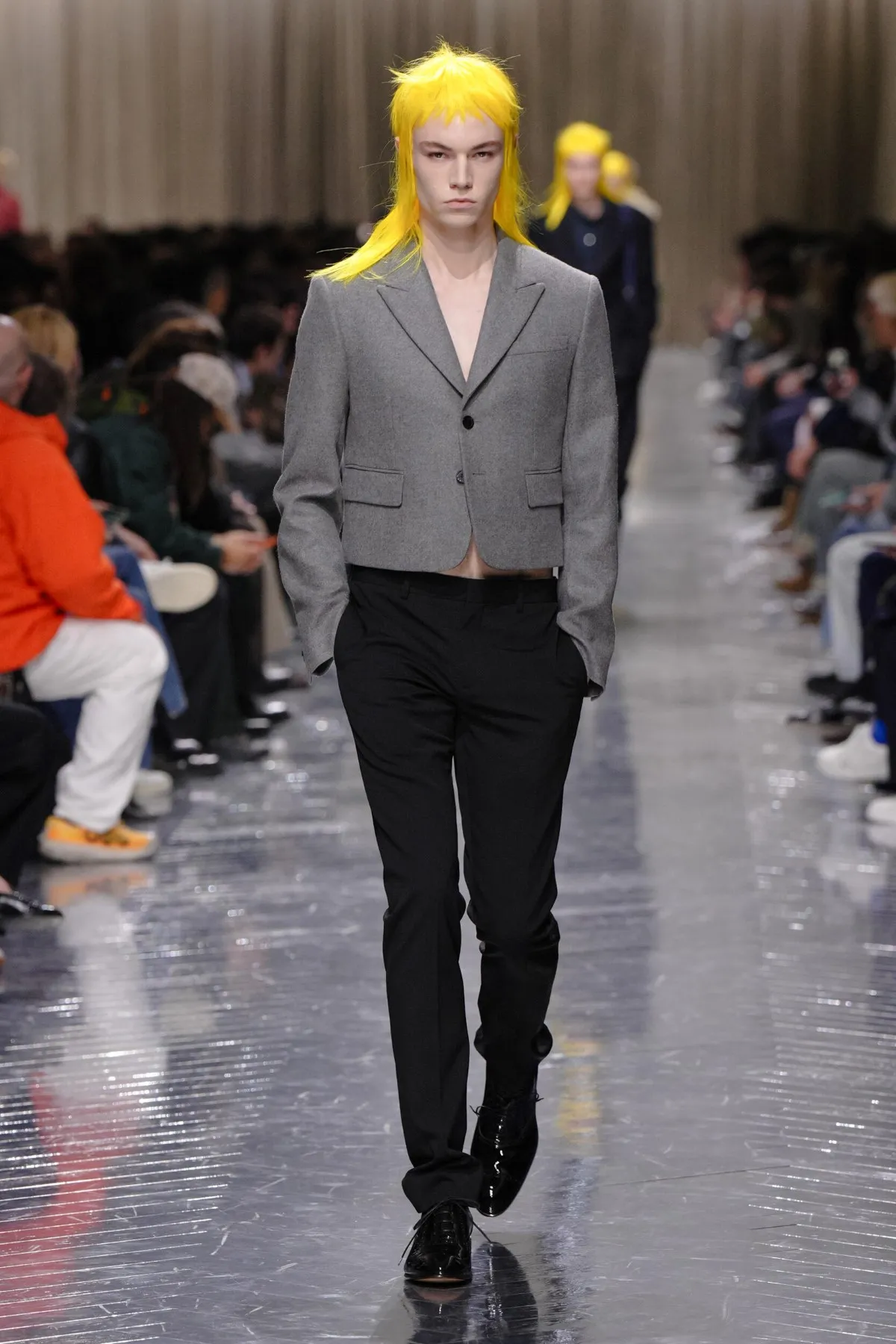
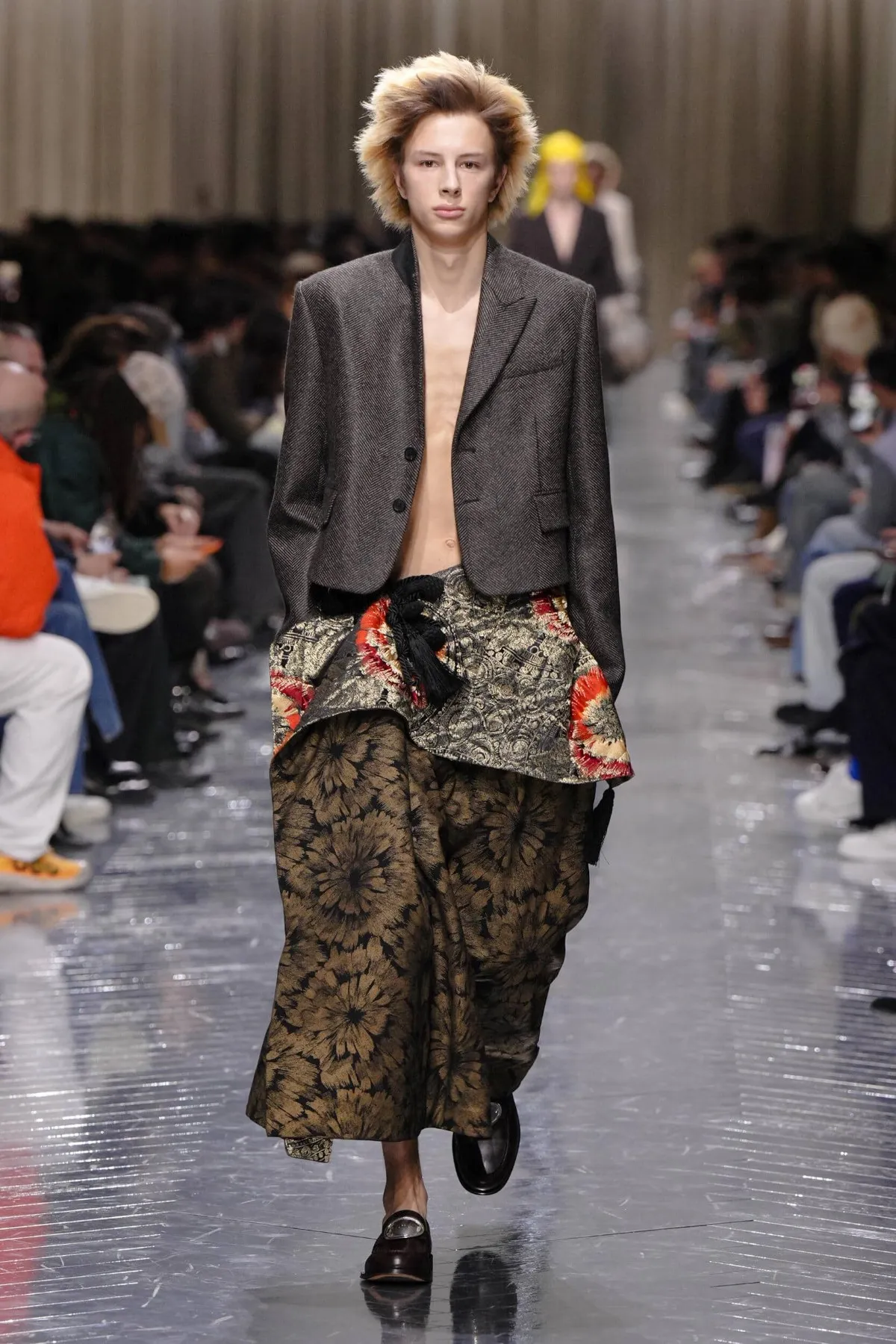
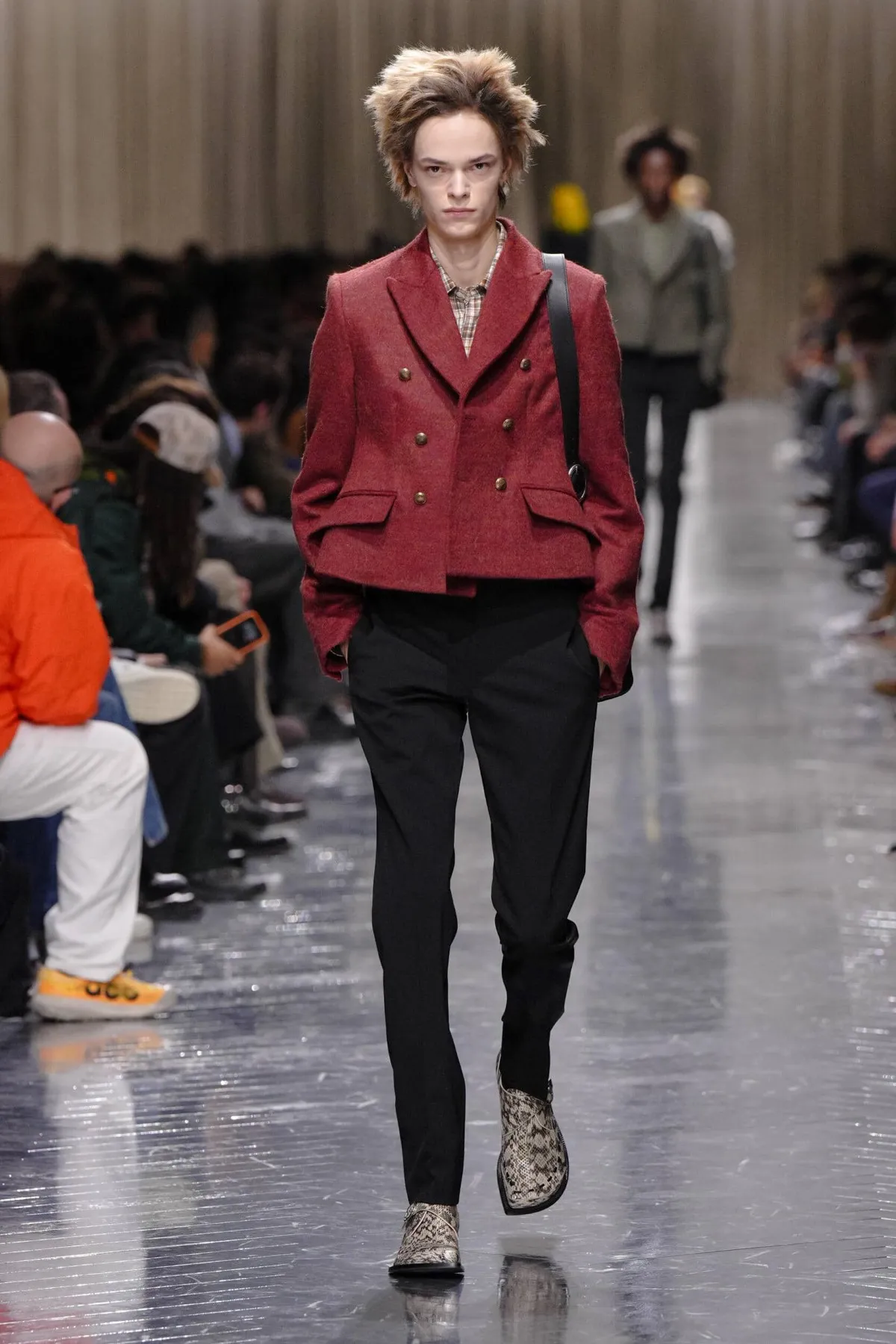
The collection explored tailoring through a distorted mirror. Anderson shrank classic silhouettes to disorienting dimensions. Houndstooth jackets referenced 1940s shoulders and bar-shaped hips, ending abruptly below the armpit. Single-breasted black jackets evoked the formality of the early 1960s, yet their hyper-abbreviated cuts exposed hipbones. Tailcoats were transformed into cable knits, and everyday sweaters were extended to ankle length, upending expectations through fabrication and scale.
This approach reflected Anderson’s resistance to repetition. He rejects the comfort of established house codes, preferring disruption over predictability. The designer examined pivotal moments when tailoring collapsed or transformed, translating historical turning points into contemporary menswear that questions rather than confirms.
Follow all the latest news from Fashionotography on Flipboard, or receive it directly in your inbox with Feeder.
You might also read
Paul Poiret’s influence on Jonathan Anderson’s Dior menswear
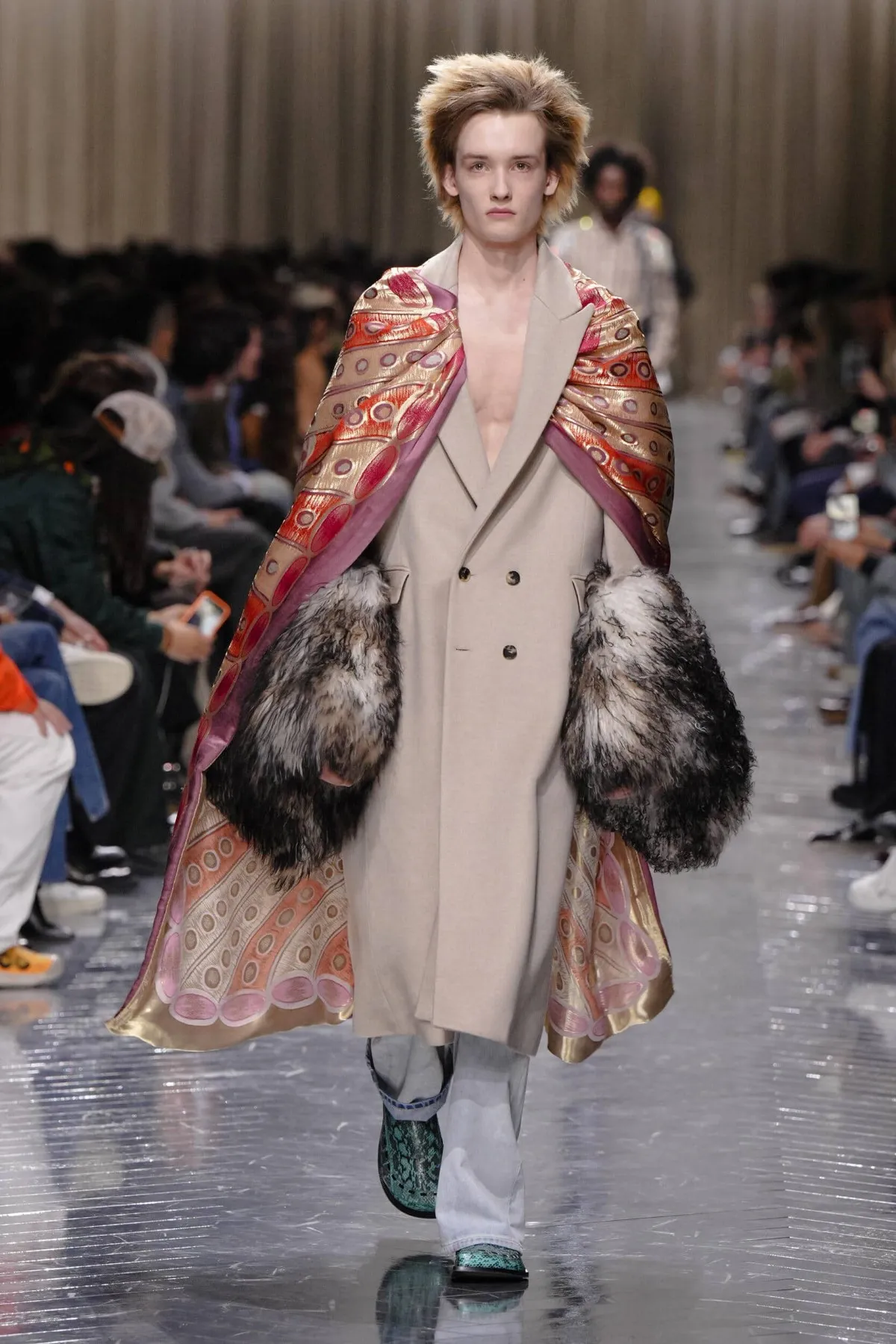
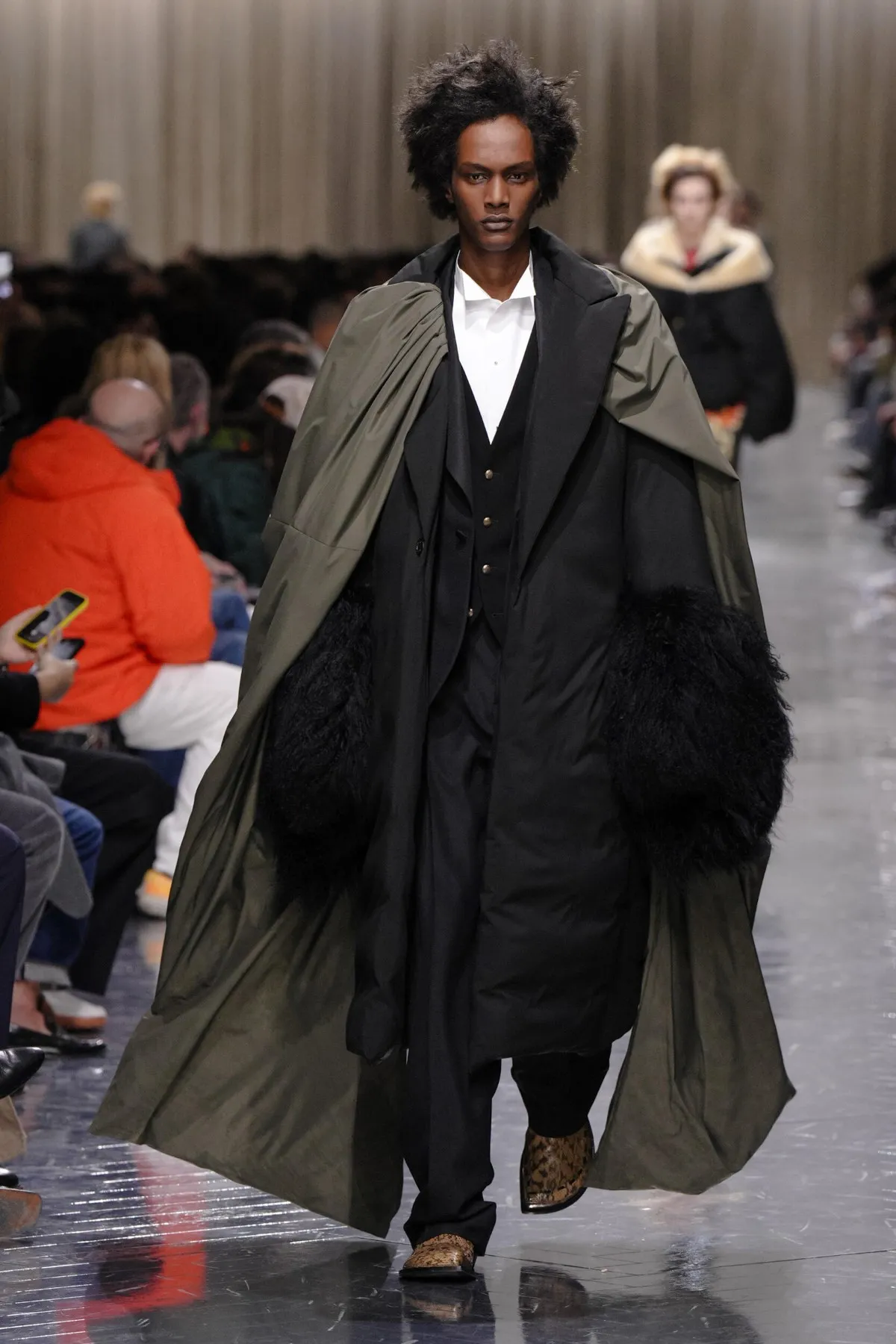
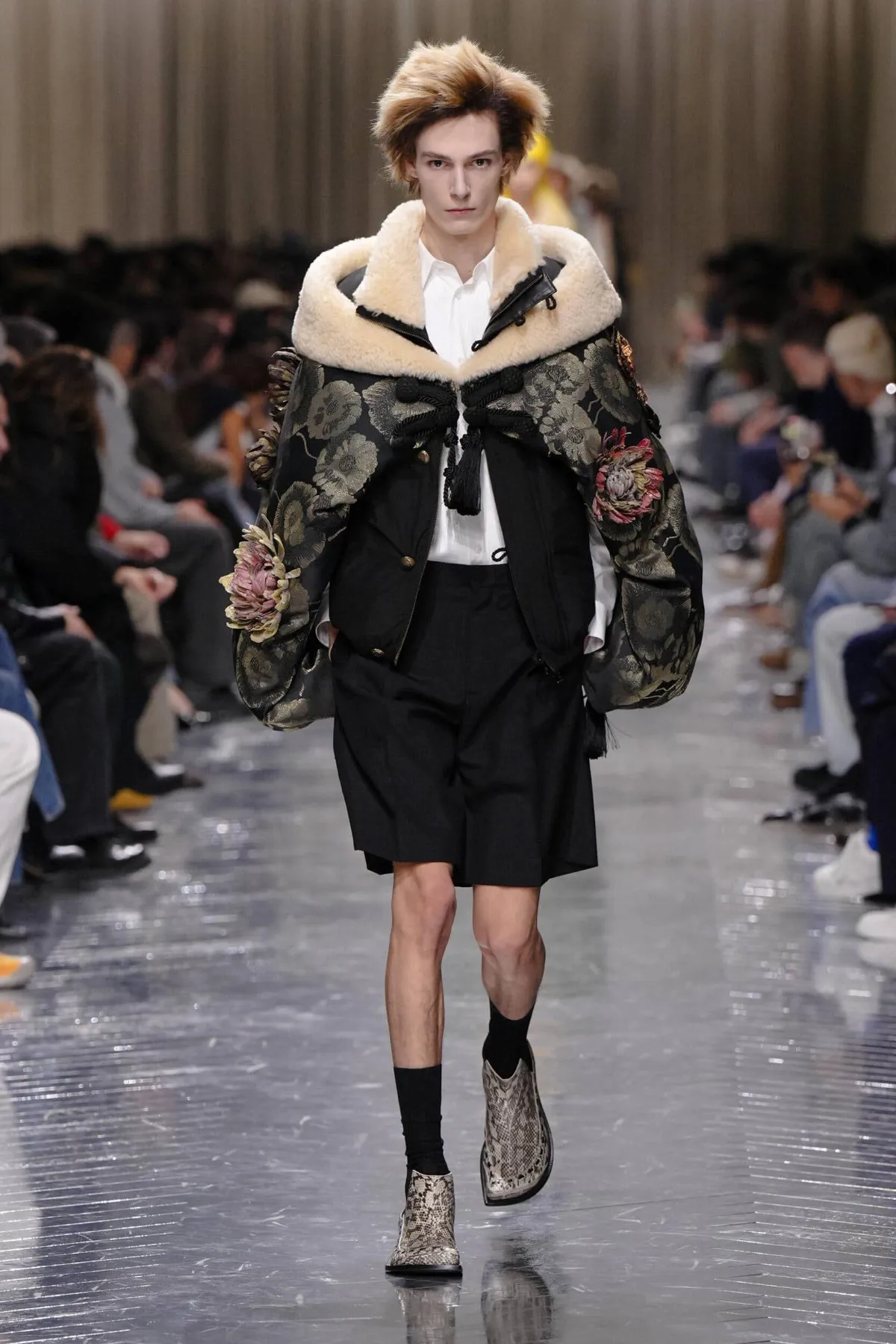
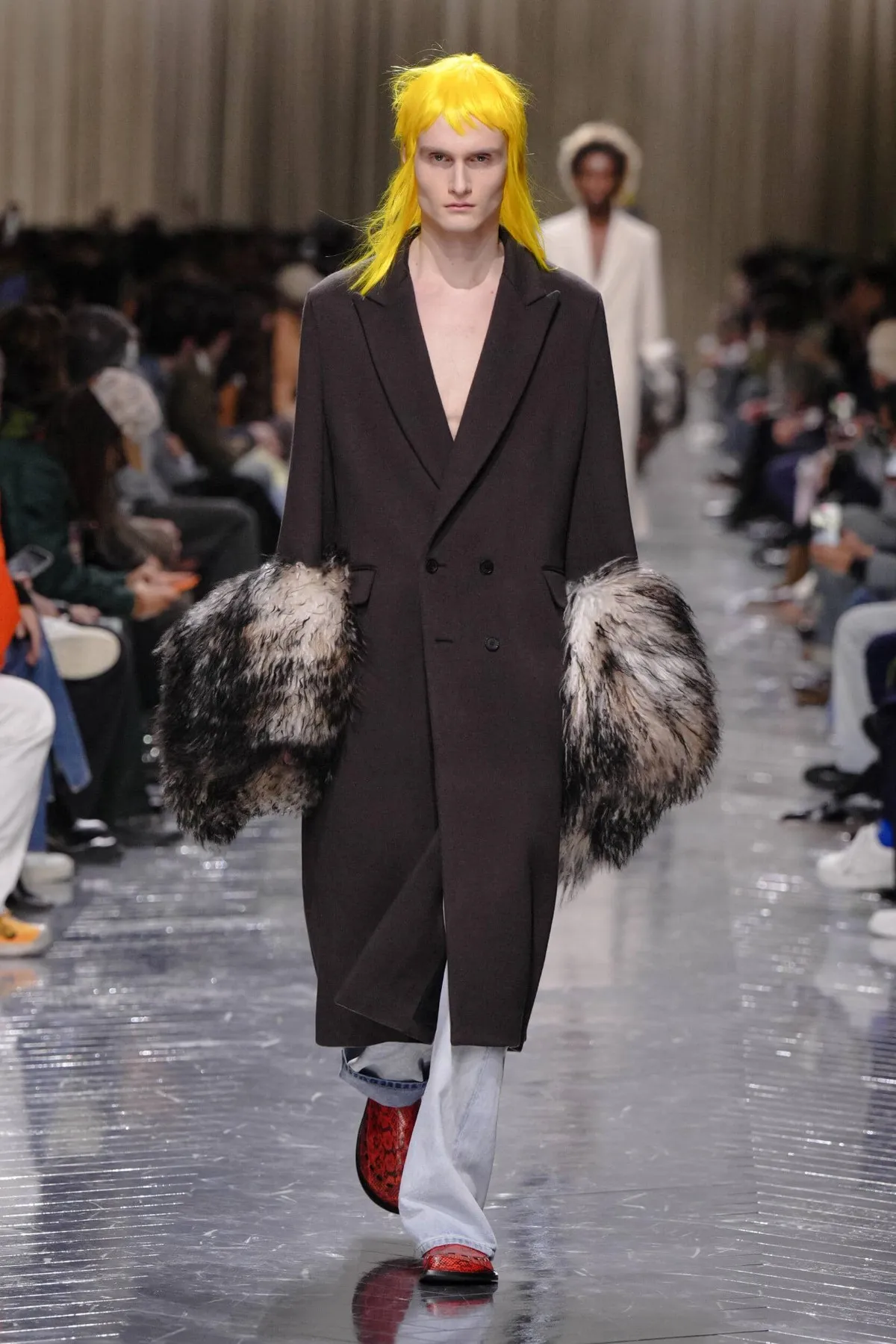
Anderson sourced fabrics from the Italian mills that originally supplied Poiret, weaving jacquard trousers in vibrant color combinations. Those same archival textiles became cape-like panels on parkas and topcoats, offset by oversized shearling cuffs that suggested rock-star excess rather than couture restraint. Cropped puffer jackets curved from the shoulders to the base of the spine in shapes that recalled Poiret’s affection for volume.
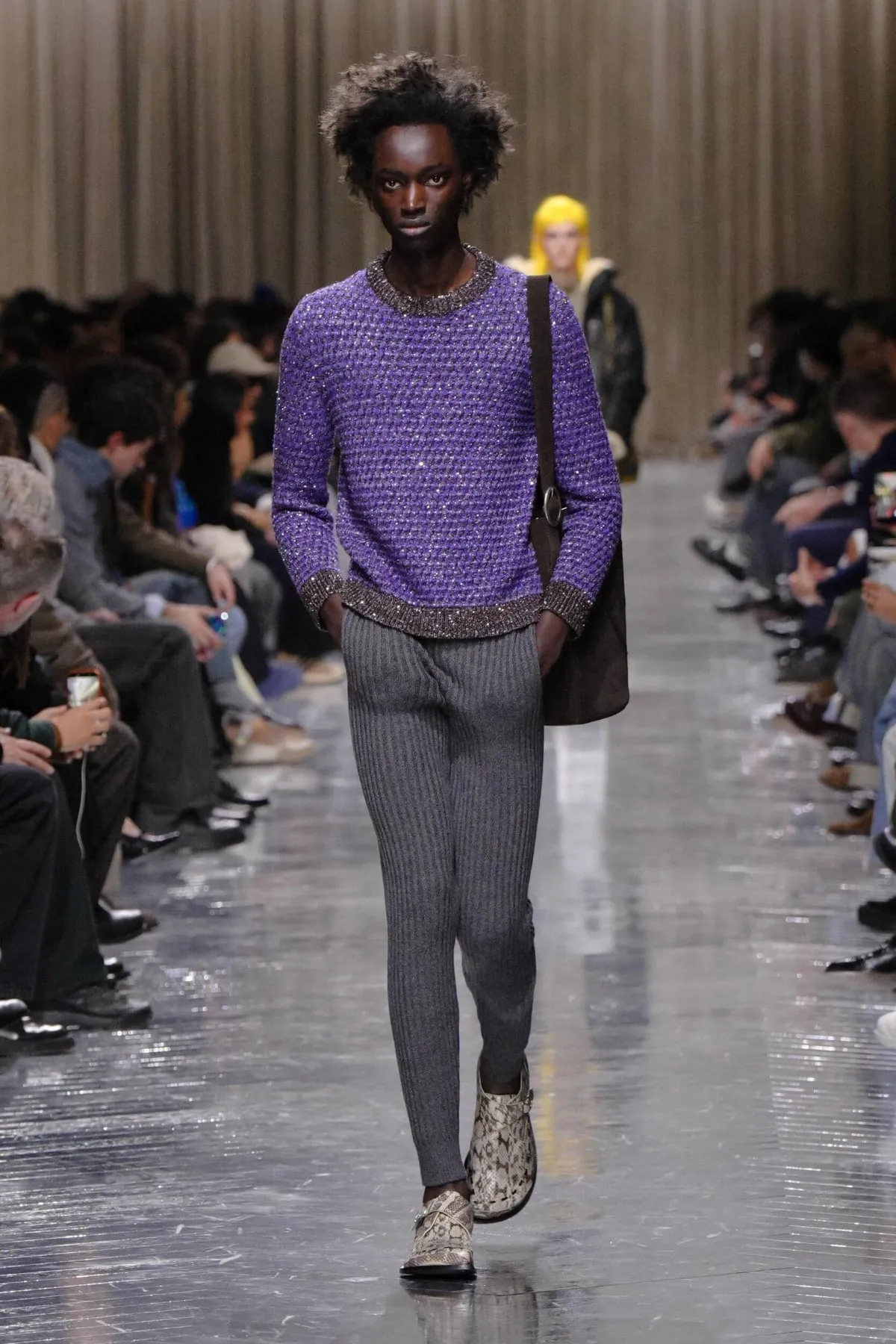
The color palette rejected Dior’s reputation for monochromatic designs. Bronze parkas sprouted three-dimensional flowers. Jacquard pants blazed in fluorescent color combinations. Sequined vests and glittering military epaulets on polo shirts introduced psychedelic undertones rarely associated with French luxury tailoring.
Fifty percent of the models wore neon yellow wigs created by hairstylist Guido Palau – a visual punctuation that emphasized Anderson’s theatrical intentions. Some guests received ruff collars with their invitations and wore them to the show, transforming archaic formality into something anarchic through deliberate misplacement.
Balancing concept and commerce at Dior Men under Jonathan Anderson
Anderson balanced experimentation with wearable pieces designed for retail success. Tweed suits featured subtly tilted shoulders. Glittery knits and loose-fitting jeans provided entry points for customers who were intimidated by the shrunken bar jackets made of distressed denim. Early sales figures from his debut collection, which was released in stores on January 2nd, reportedly satisfied executives.
The designer acknowledged his predecessor, John Galliano, who also referenced Poiret during his tenure at Dior. Yet Anderson’s approach differs fundamentally. While Galliano created phantasmagoric spectacles, Anderson constructs conceptual collages that explore fashion’s ability to express character and enable reinvention.
He rejects formulas, viewing fashion shows as vehicles for ideas rather than commercial catalogs. This philosophy carries risk for a house built on architectural precision and French tradition. However, Anderson’s willingness to destabilize expectations while maintaining commercial viability suggests that he understands luxury customers increasingly value disruption over refinement.