

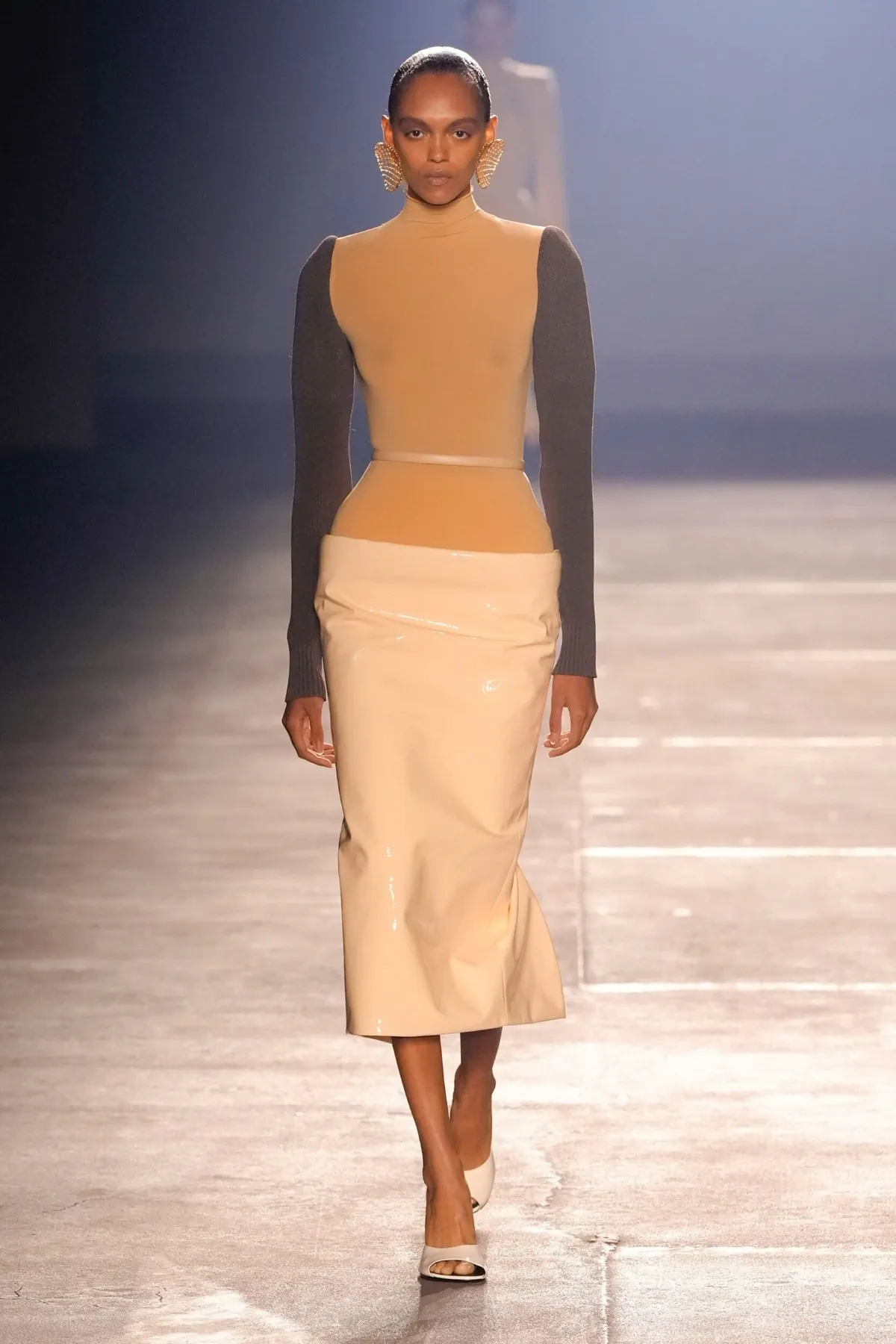
The Mugler Spring-Summer 2026 collection marked the highly anticipated debut of Miguel Castro Freitas as Creative director, a moment fashion enthusiasts have closely watched. For his first season at the house, Freitas revealed his vision in an underground Parisian parking garage, a stark setting that heightened the sharp contrasts of his designs.
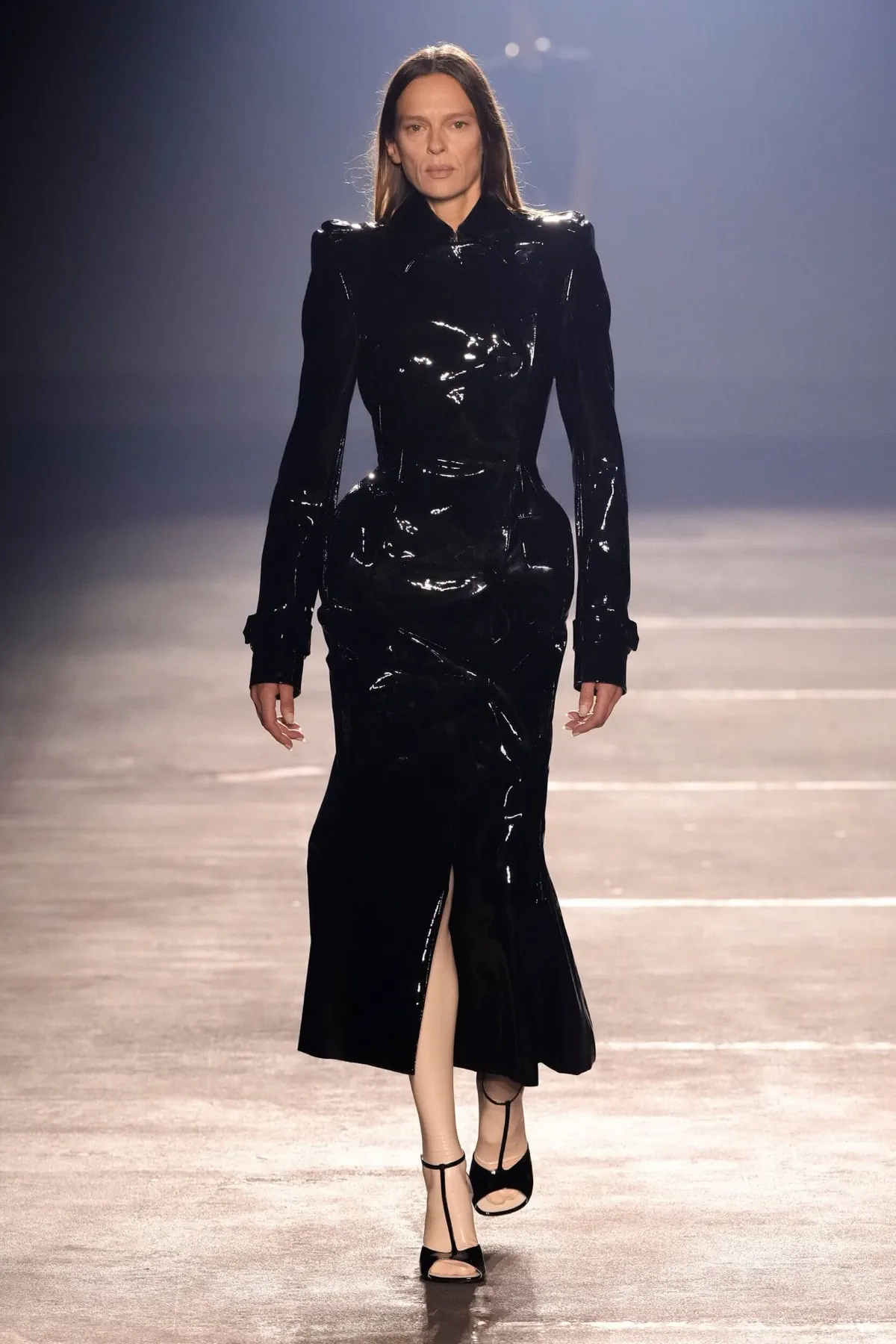
He made it clear that he intends to restore Mugler’s reputation for rigorous tailoring. The collection opened with precisely cut jackets in muted tones of camel and soft gray. Their sculpted shoulders and cinched waists nodded to the brand’s hourglass legacy. This tailoring heritage was enhanced with inventive details, such as padded waistbands on skirts and trousers that gave classic lines a new tension.
However, the Mugler Spring-Summer 2026 collection did not rely solely on discipline. Freitas added drama with sheer bodystockings that grounded the silhouettes and vinyl skirts that brought a slick, urban edge. The effect was less about spectacle than structure, yet it still carried a certain magnetism.
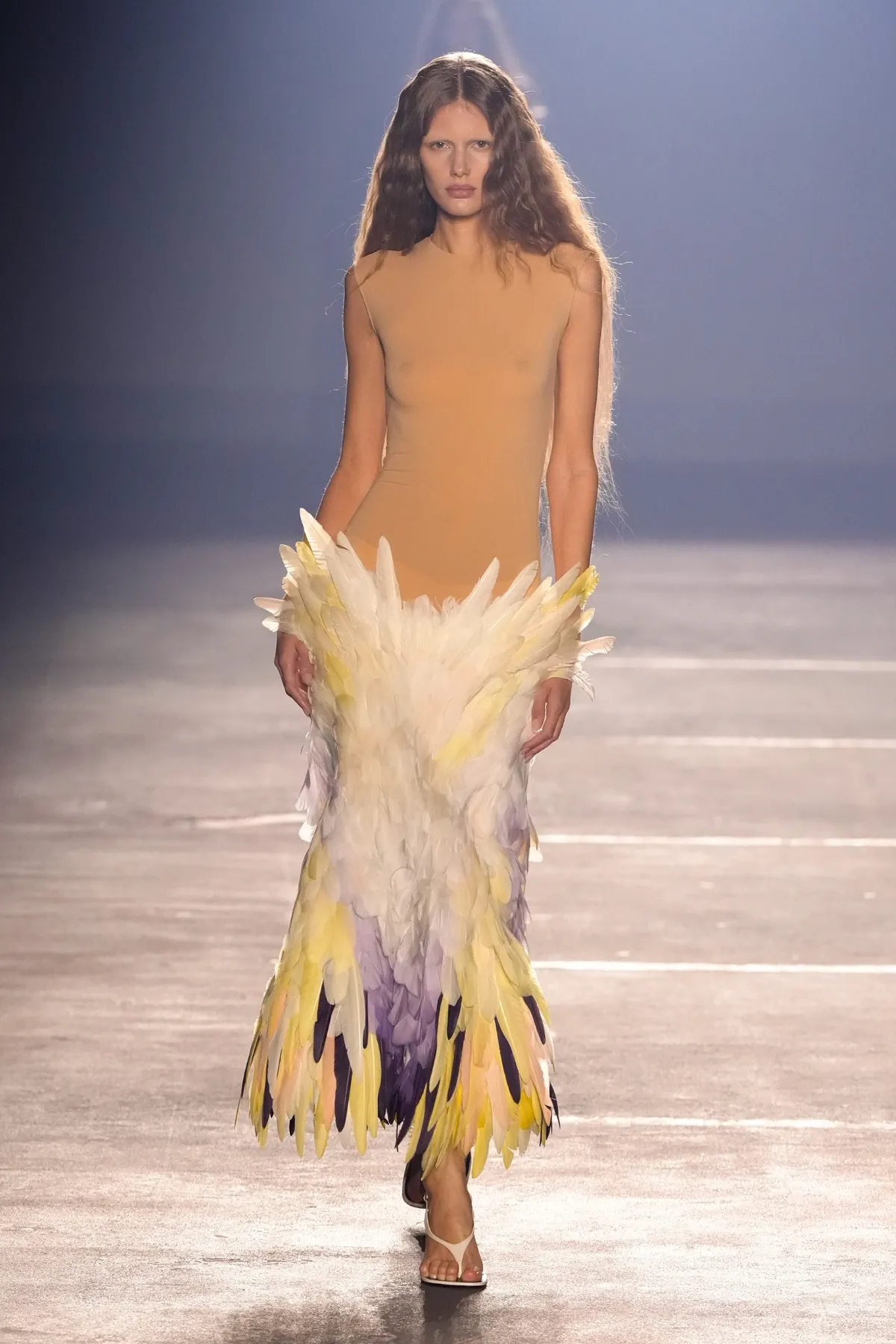
References to the golden age of Hollywood infused the show with nostalgia. Ostrich feathers trimmed the skirts in homage to Ginger Rogers, and a bold feather headdress evoked Linda Evangelista’s iconic moment in the music video for George Michael’s “Too Funky.” These flashes of campy style recalled founder Thierry Mugler’s love of theater without overwhelming Freitas’s more subdued aesthetic.
The presence of Elizabeth Berkley and Pamela Anderson among the guests emphasized the underlying showgirl theme of the evening. Yet, Freitas seemed less interested in pastiche and more determined to weave fantasy elements into a wardrobe grounded in construction.
Follow all the latest news from Fashionotography on Flipboard, or receive it directly in your inbox with Feeder.
You might also read
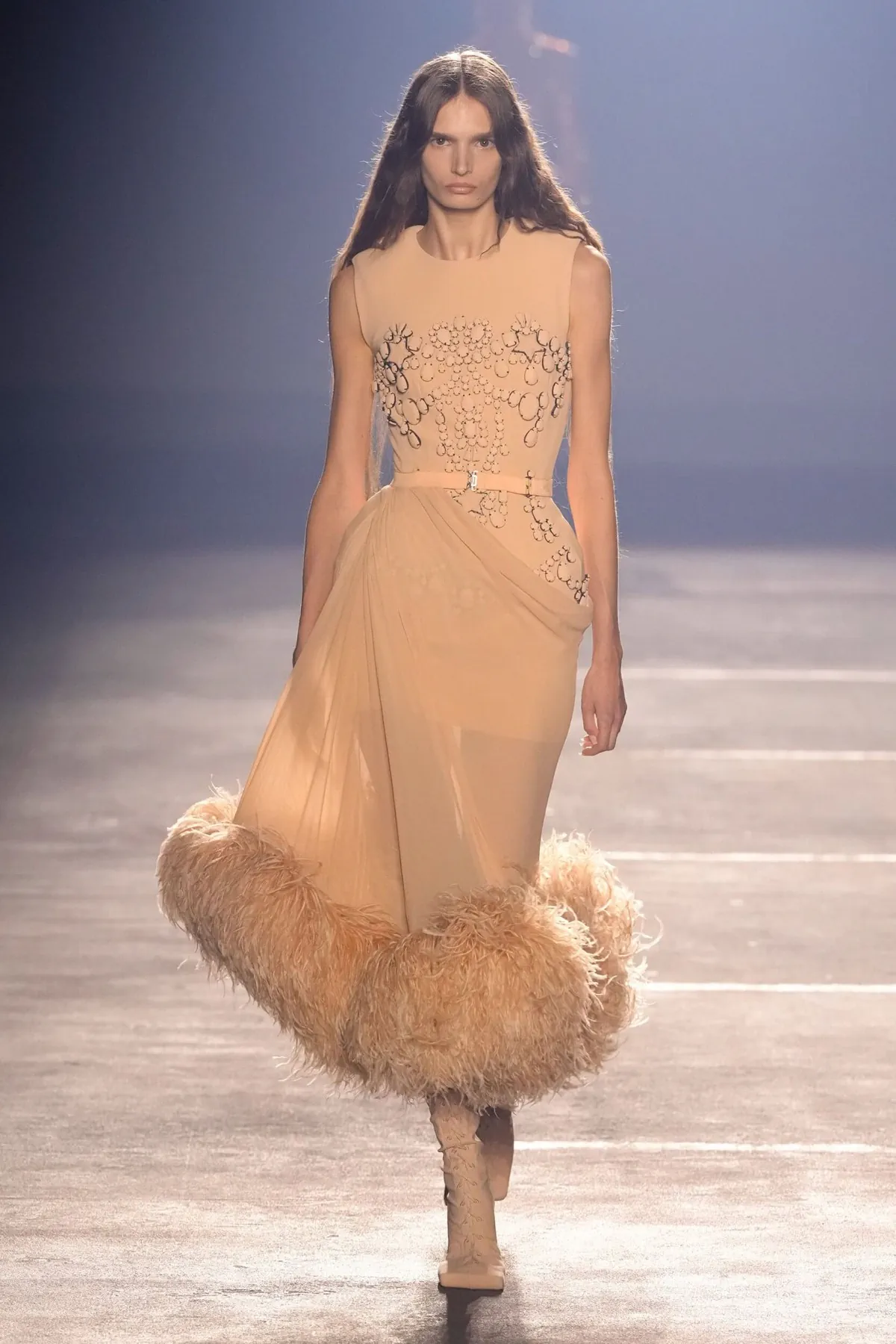
Some of the more provocative designs, such as fringe tops that revealed breasts and a gown suspended from nipple rings, added an edgier undertone. They suggested that the Mugler woman still exists at the intersection of allure and danger – a figure that is both glamorous and unsettling.
However, the new direction lacked the unabashed celebration of the female form that defined Thierry Mugler himself and the sensual exuberance that Casey Cadwallader brought in recent years. At least in this opening chapter, Freitas’s vision leaned toward restraint rather than exuberance.
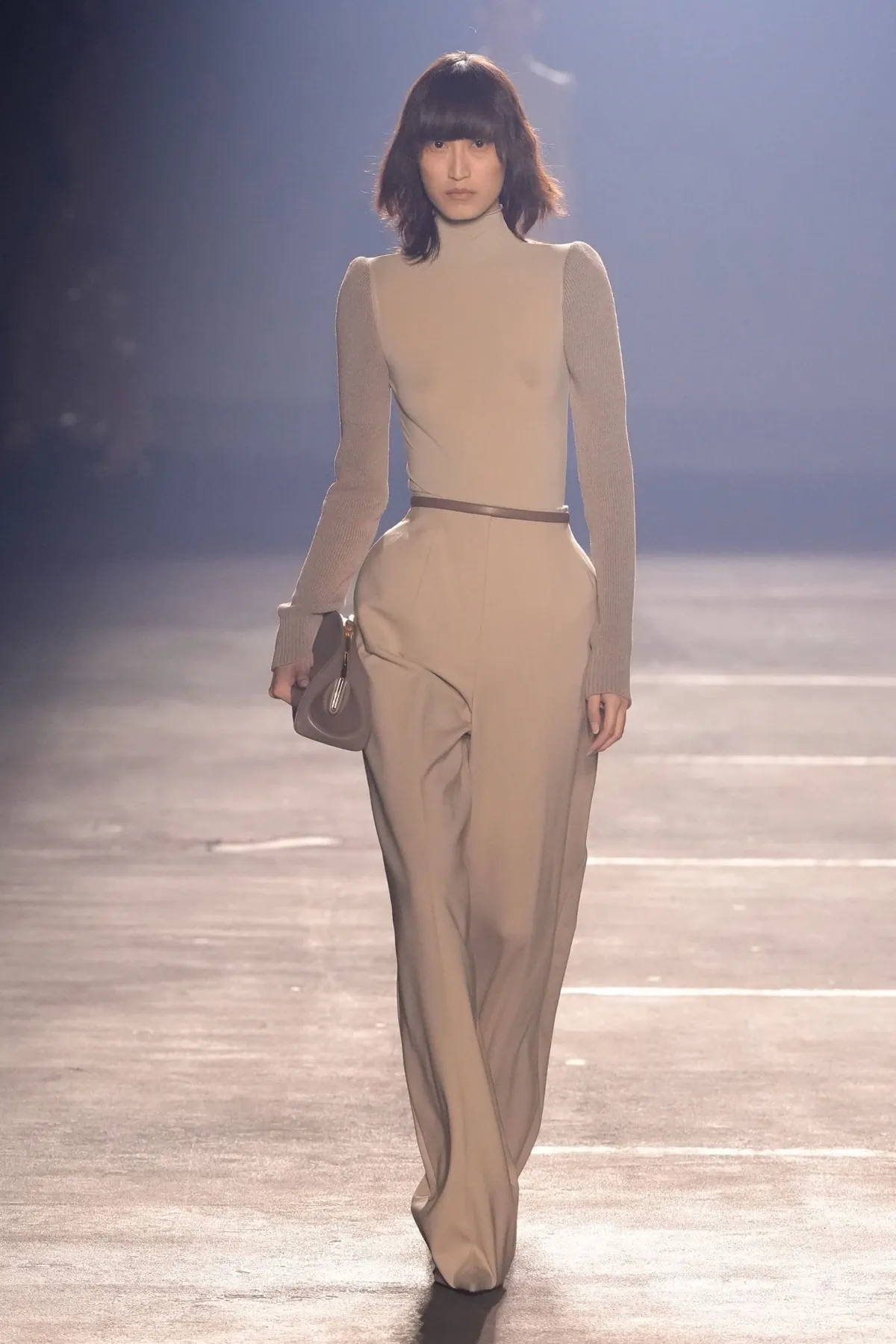
However, this discipline may prove to be his strength. The Mugler Spring-Summer 2026 collection suggested an eager designer who wants to respect the house’s codes while quietly reshaping them for today. The mix of precise tailoring, Hollywood glamour, and controlled provocation established Freitas as a designer ready to carry Mugler forward.
Future seasons will reveal whether he will loosen this rigor and allow more joy to return to the runway. For now, his debut stands as a clear statement: Mugler is returning to its roots with a designer who is willing to question how those roots can continue to grow.