


The Marie Antoinette exhibition opened on September 20th, 2025 at the Victoria and Albert Musuem, bringing together remarkable objects that trace the enduring influence of France’s most scrutinized queen. This marks the first time the UK has dedicated an entire exhibition to Marie Antoinette, whose style continues to captivate designers, filmmakers, and fashion lovers more than two centuries after her death.
Walking through the galleries at the V&A in South Kensington, visitors will encounter personal items that once belonged to the queen herself. Her silk slippers sit behind glass, their delicate construction intact after all these years. Jewels from her private collection sparkle under the museum’s lights. These objects have never left France before, so their journey from the Château de Versailles is particularly significant.

Personal belongings tell her story
The exhibition displays fragments of court dress embellished with intricate embroidery, showcasing the craftsmanship of 18th-century France. Her dinner service from the Petit Trianon is displayed alongside accessories and items from her toilette case. One particularly moving piece is the final note Marie Antoinette wrote before her execution; it is preserved on a blank page in her prayer book.
Sarah Grant, the curator behind this ambitious project, offers insight into why this figure remains so compelling. “The most fashionable, scrutinized, and controversial queen in history, Marie Antoinette’s name summons visions of both excess and great beauty in objects and interiors,” Grant explained. Grant emphasizes that the Austrian archduchess-turned-Queen of France had an enormous impact on European taste and fashion in her own time, creating a distinctive style that now has universal appeal.

The exhibition also addresses the mythology surrounding the queen, including the persistent “let them eat cake” legend. Recent research on early modern women, queenship, and celebrity informs this fresh interpretation. Grant describes Marie Antoinette’s power to fascinate as everlasting, noting how successive generations have retold and repurposed her story to suit their own ends.
Contemporary designers draw inspiration
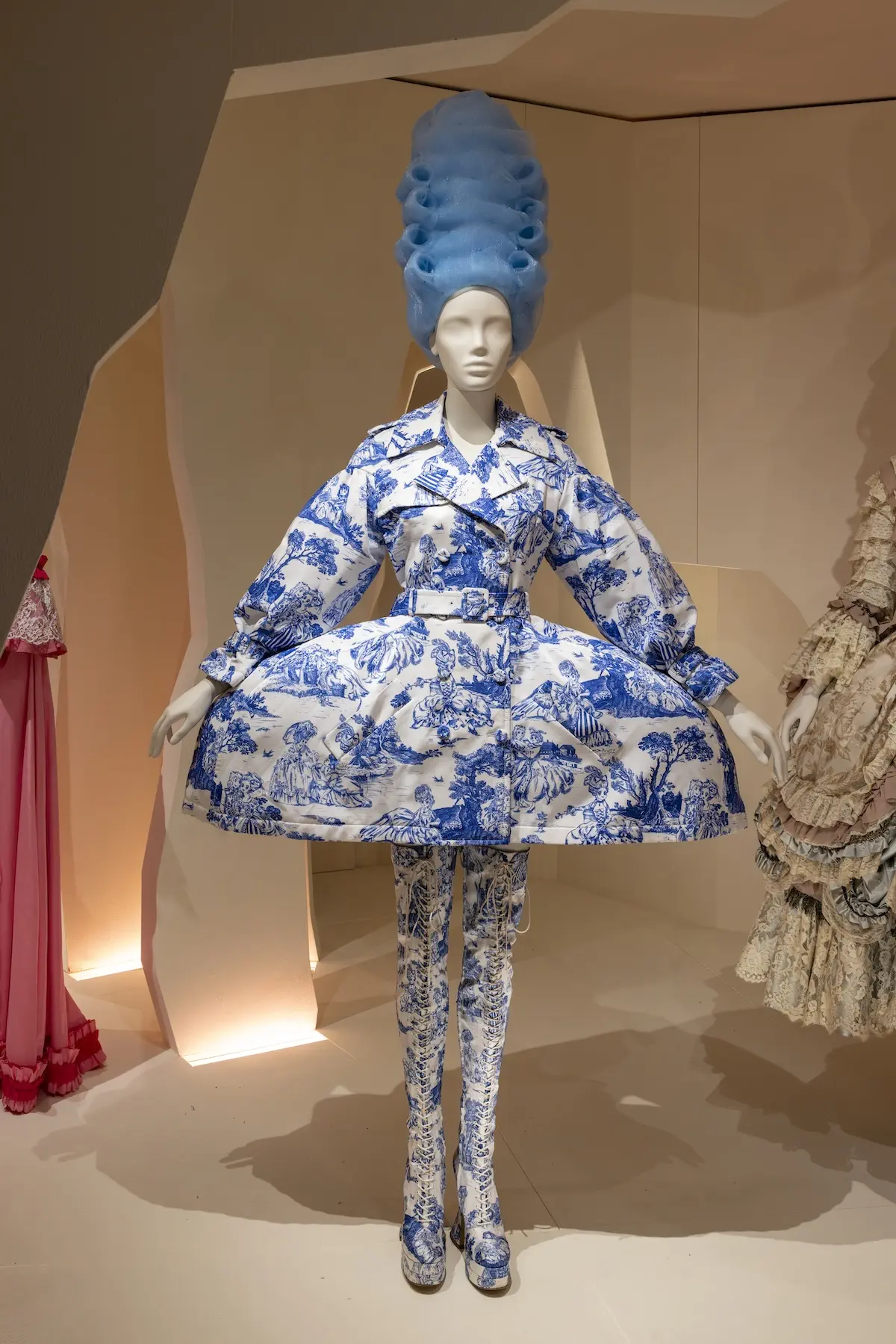
Fashion designers have long looked to Marie Antoinette for inspiration, as evidenced by this exhibition. Couture pieces by Moschino, Dior, Chanel, Erdem, Vivienne Westwood, and Valentino demonstrate how her aesthetic continues to influence contemporary fashion. The show includes costumes and shoes designed by Manolo Blahnik for Sofia Coppola’s Oscar-winning 2006 film about the queen.
Blahnik’s connection to Marie Antoinette runs deep. His mother read him Stefan Zweig’s biography of the queen at bedtime when he was young. This early introduction to her life and style shaped his design sensibility. For the exhibition’s opening, Blahnik created a limited-edition capsule collection of twelve new shoe designs reimagining the pieces he originally made for Coppola’s film.
“I wanted to translate the mood, the romance, and the delicate balance between frivolity and elegance,” Blahnik said of his Marie Antoinette–inspired designs. The collection features styles like the Montmedy pump and the Palissot sandal. Both are decorated with rosettes that recall the blue-and-white striped Mercy Artois heel featured in the film. The raspberry Valoisette pump and Fontettes ballet flat incorporate box pleats that reference court shoe styles from the queen’s era.
Follow all the latest news from Fashionotography on Flipboard, or receive it directly in your inbox with Feeder.
You might also read


Four sections chronicle her influence
The exhibition unfolds chronologically across four distinct sections. The first section, “Marie Antoinette: The Origins of a Style,” begins in 1770 and ends with her execution in 1793. Furniture, fashion, jewelry, porcelain, and musical instruments from her court reveal her roles and interests as queen consort. This section explores how she embraced certain aspects of Enlightenment thought through her approach to maternity and childhood and her support of new technologies.
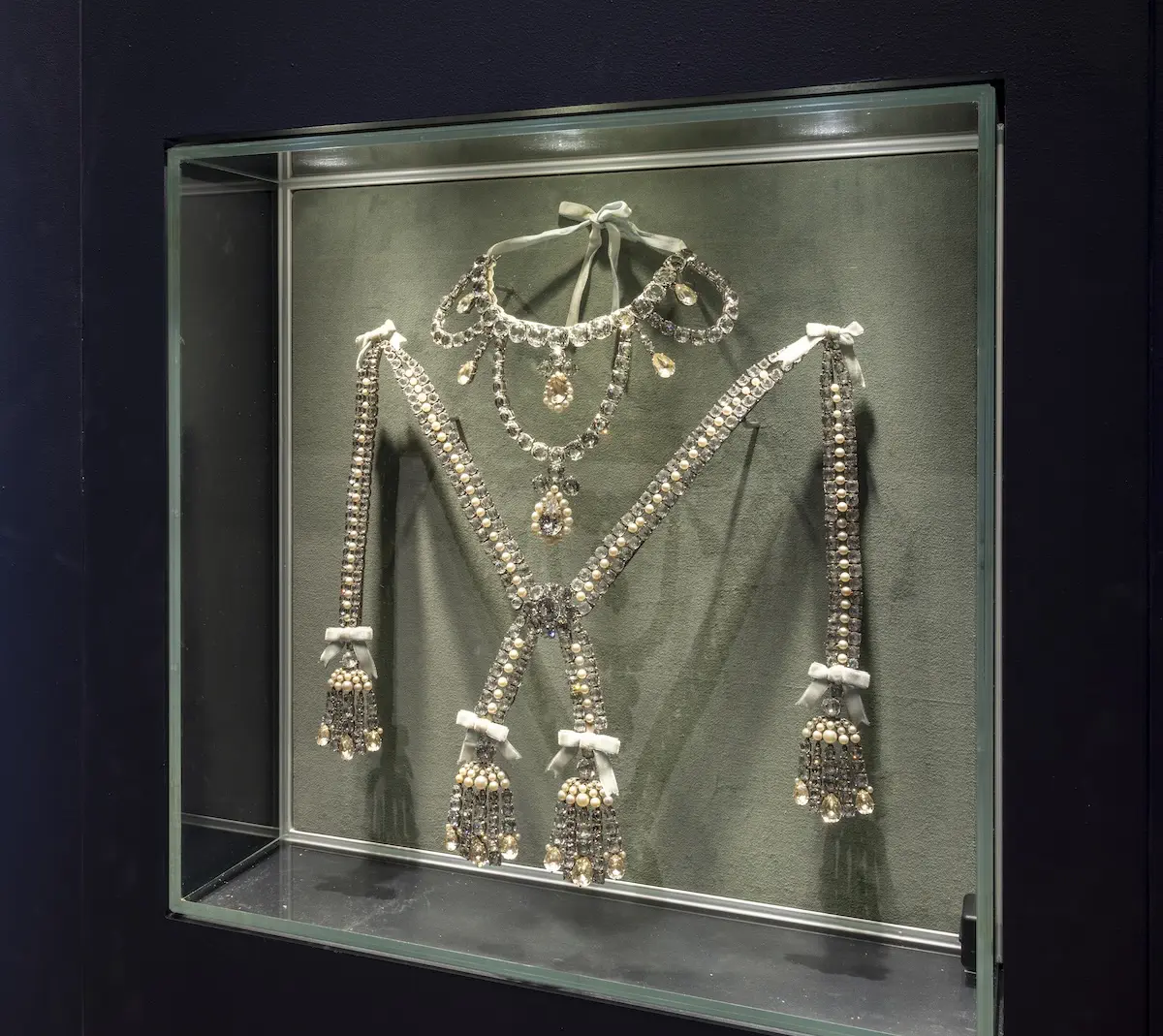
Highlights include a replica of the Böhmer and Bassenge diamond necklace from the 1784–85 scandal, displayed alongside the Sutherland diamond necklace from the V&A collection, which is believed to contain diamonds from the original. Another curious object is the “breast cup,” or jatte téton, from her Sèvres Rambouillet dairy service, delivered in 1787. Contrary to popular belief, the cup was not modeled on the queen’s breast; however, this myth has inspired modern reproductions.

The second section, “Marie Antoinette Memorialized: The Birth of a Style Cult” examines how Empress Eugénie revived the queen’s aesthetic in the mid-1800s. A romanticized and sentimental view took hold, and elements of Marie Antoinette’s style became known as the “French” or “French Revival” style. This style dominated Britain and North America for over fifty years. English collectors sought objects and furniture associated with the queen, forming significant collections of 18th-century French art. This section features fancy dress costumes by Worth and photographs by Eugène Atget and Francis Frith.
“Marie Antoinette: Enchantment and Illusion,” the third section, examines the late 19th century, when her style entered a fantasy- and magic-filled phase. The queen’s image came to embody escapism, beauty, decadence, and debauchery. This section features evening dress designs by couturiers such as Jeanne Lanvin and the Boué Soeurs, as well as watercolor illustrations by Erté, George Barbier, and Edmund Dulac.

The modern legacy lives on
The final section, “Marie Antoinette Re-Styled,” brings the story into the present day. Contemporary couture pieces demonstrate her ongoing influence on global fashion. Photographs by Tim Walker and Robert Polidori capture modern artists’ interpretations of her aesthetic. Film and stage costumes demonstrate her enduring presence in popular culture.
Artist Beth Katleman and designer Victor Glemaud present contemporary pieces inspired by elements of the queen’s timeless style. This exhibition proves that Marie Antoinette’s fashion legacy extends far beyond the 18th century. Her approach to dress and decoration continues to serve as a touchstone for contemporary designers.
The show incorporates sensory experiences that bring the period to life. A scent experience recreates the perfumes of the court, including the queen’s favorite fragrance. Audiovisual installations and immersive staging help visitors understand the excessive, lavish, and feminine style that defined her era.

Historical context meets modern design
Grant emphasizes that this exhibition explores the design legacy of an early modern celebrity. Marie Antoinette shaped the fashion, design, interiors, gardens, and decorative arts of her time and has continued to influence these fields for more than two and a half centuries. Her rare combination of glamour, spectacle, and tragedy remains as compelling today as it was in the 18th century.
The Victoria and Albert Museum is an ideal venue for examining her style and cultural impact. Its mission centers on championing design and creativity in all forms. The museum’s collection includes national holdings in art, design, fashion, photography, furniture, theater, performance, architecture, and ceramics. This breadth enables the Marie Antoinette exhibition to draw connections across multiple disciplines.

Manolo Blahnik is sponsoring the exhibition, with additional support from Kathryn Uhde. Blahnik’s decades-long fascination with the French queen and his belief that she would have commissioned shoes from him had they lived in the same era are reflected in the partnership. Sofia Coppola shared this sentiment when she chose Blahnik to design footwear for her film, saying she believed he was the designer Marie Antoinette would have chosen for her shoes.
“Marie Antoinette Style” runs through March 22, 2026, giving visitors months to explore how one woman’s approach to fashion created ripples that still influence design today. Tickets can be purchased through the V&A website.