
On Wednesday, Viktor Horsting and Rolf Snoeren returned to the stage at the Grand Palais Immersif for their Viktor & Rolf Haute Couture Spring 2026 presentation, titled “Diamond Kite.” The Dutch designers had sworn off performing after their 2016 “Wearable Art” presentation. Yet here they were again, standing before an audience to create something that required their physical presence. Sometimes ideas demand more than a runway. Sometimes they require human hands to construct beauty in real time.
| 📌 Key Facts |
|---|
| 🎭 Brand: Viktor & Rolf 🪁 Designers: Viktor Horsting & Rolf Snoeren 🏛️ Location: Grand Palais Immersif, Paris 🎭 Format: Live couture performance 👗 Looks: 15 black couture silhouettes transformed live 🌈 Materials: Duchesse satin, cloqué, colorful tulle 🎶 Cultural reference: Kate Bush’s iconic kite imagery 👠 Collaborations: Christian Louboutin (shoes), Elie Top (jewelry) 🧵 Theme: Freedom, transformation, and the dual nature of couture |
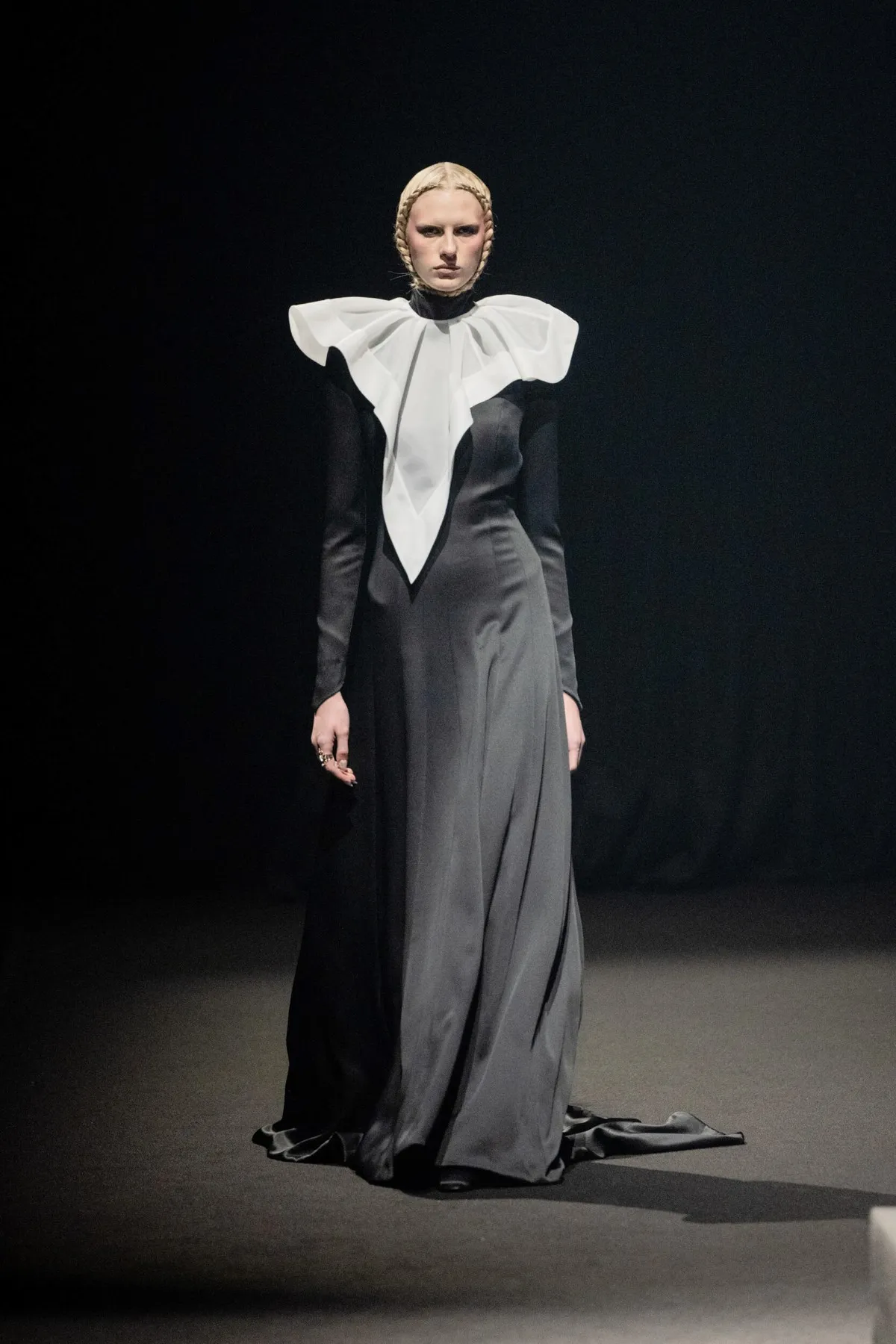
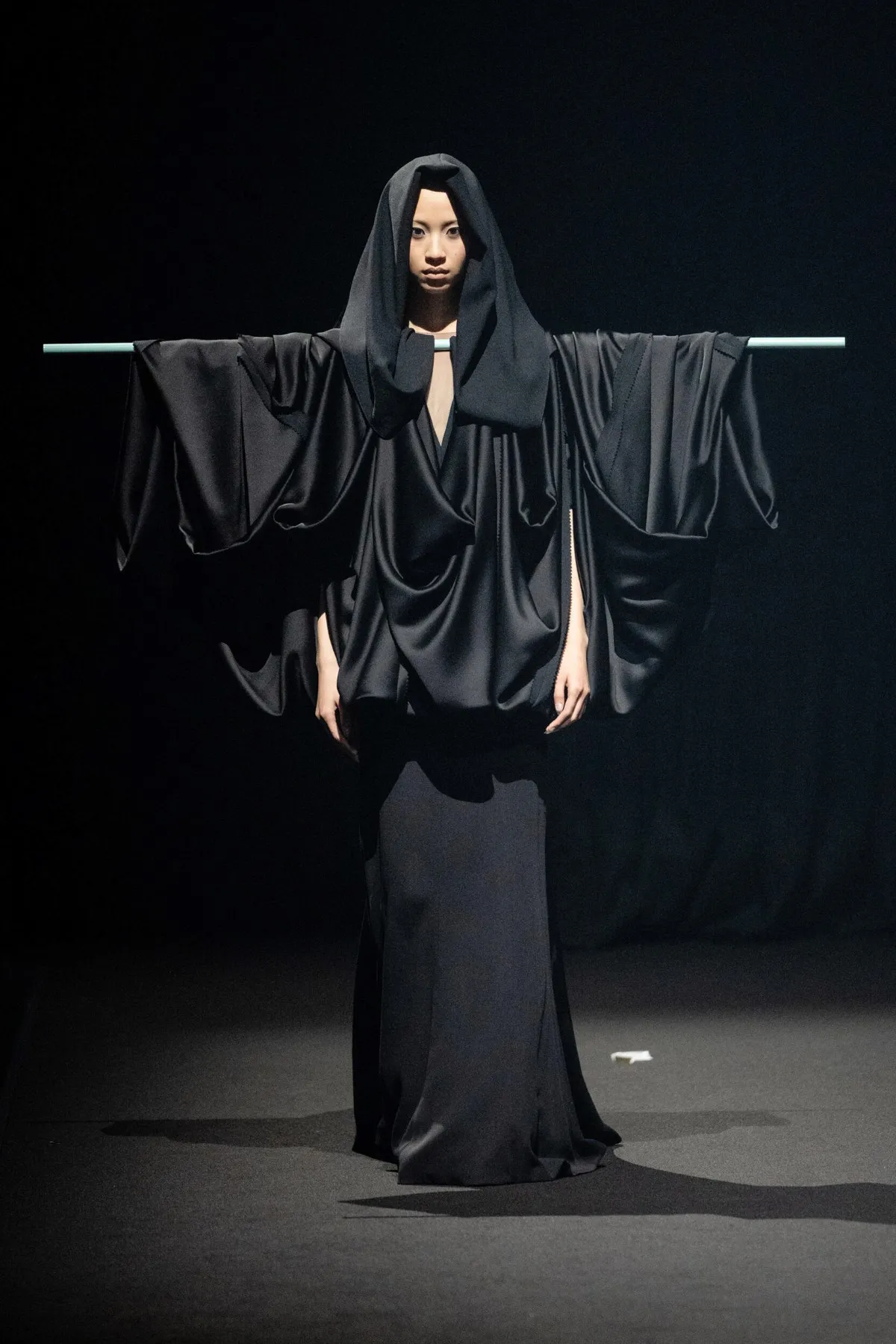
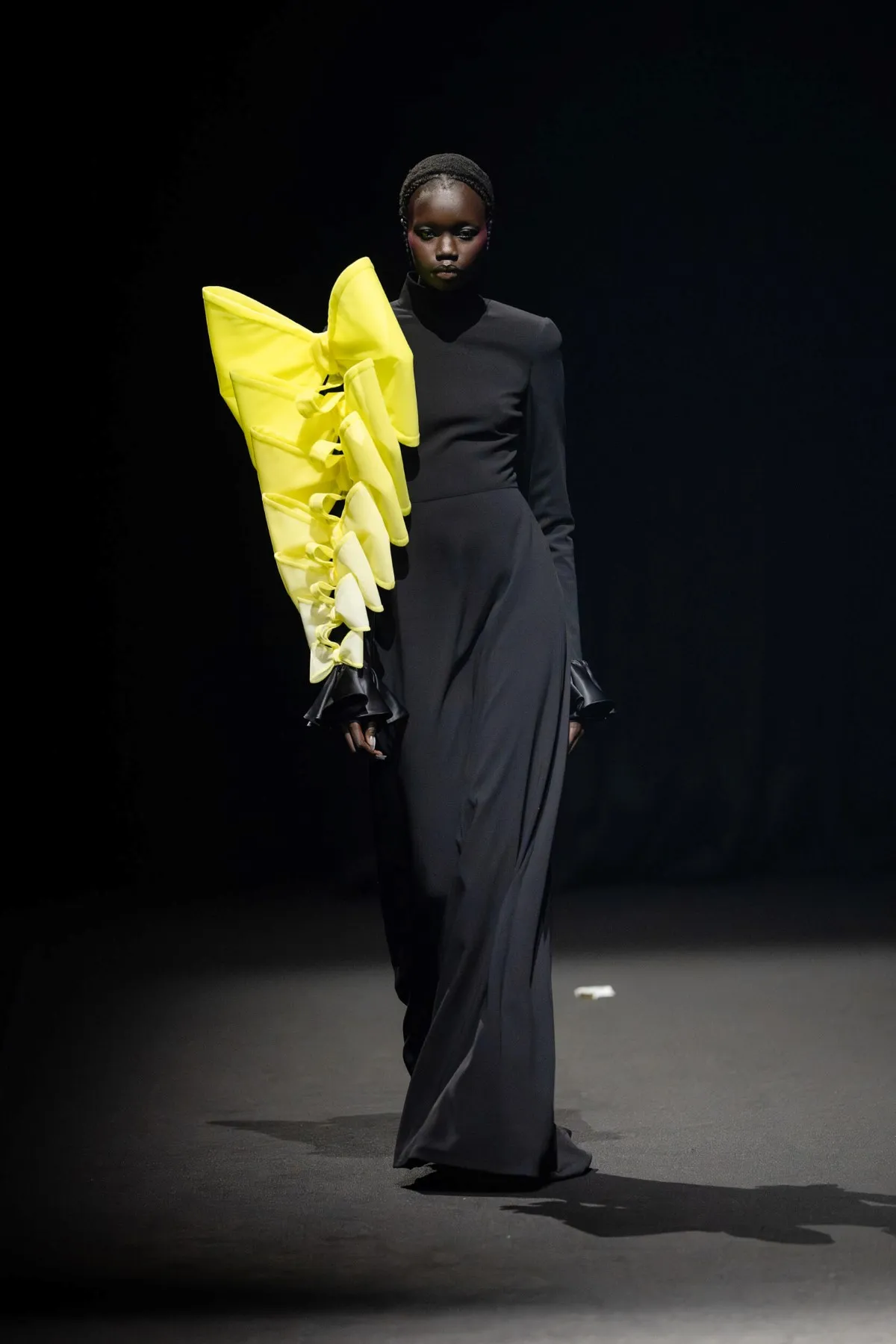
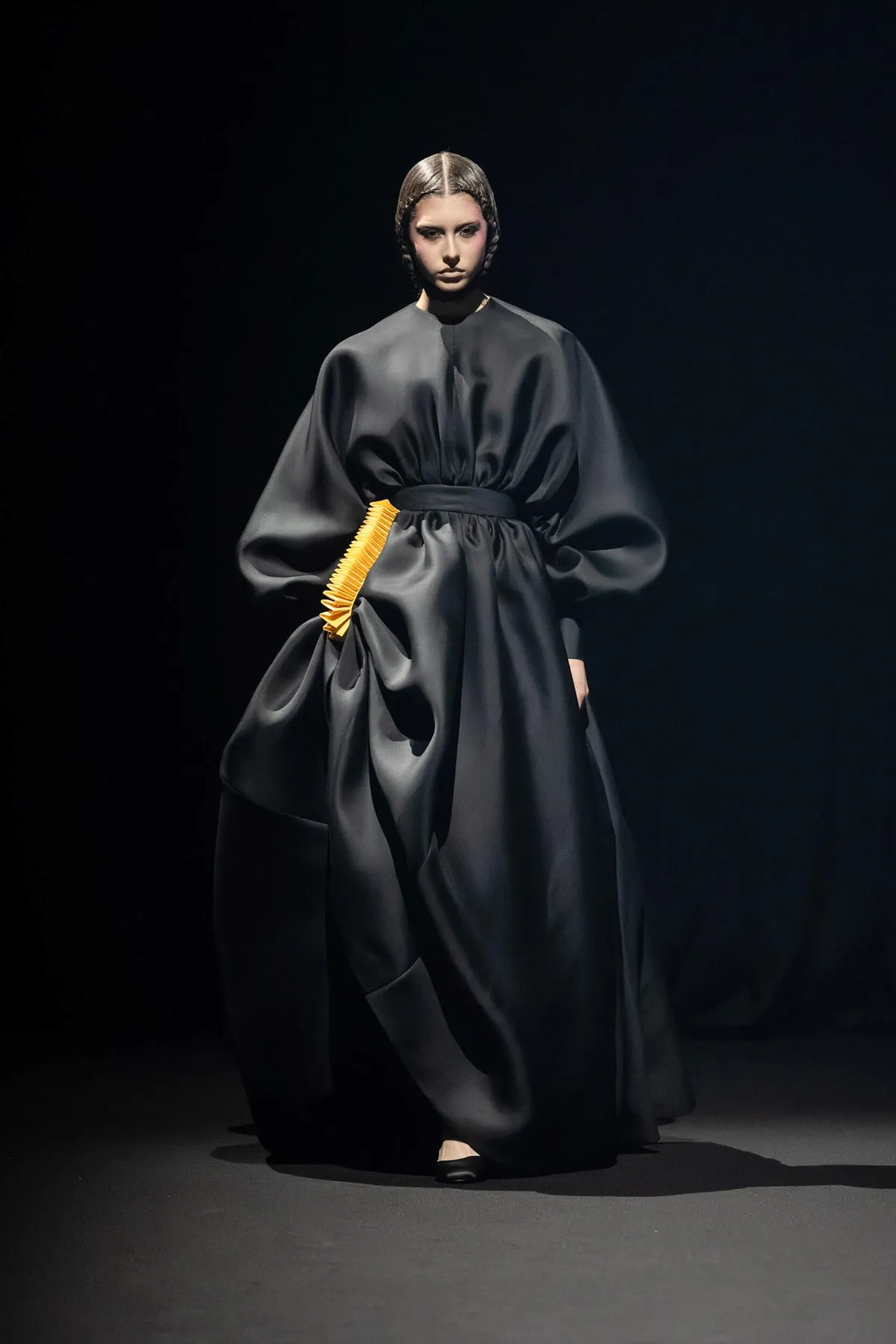
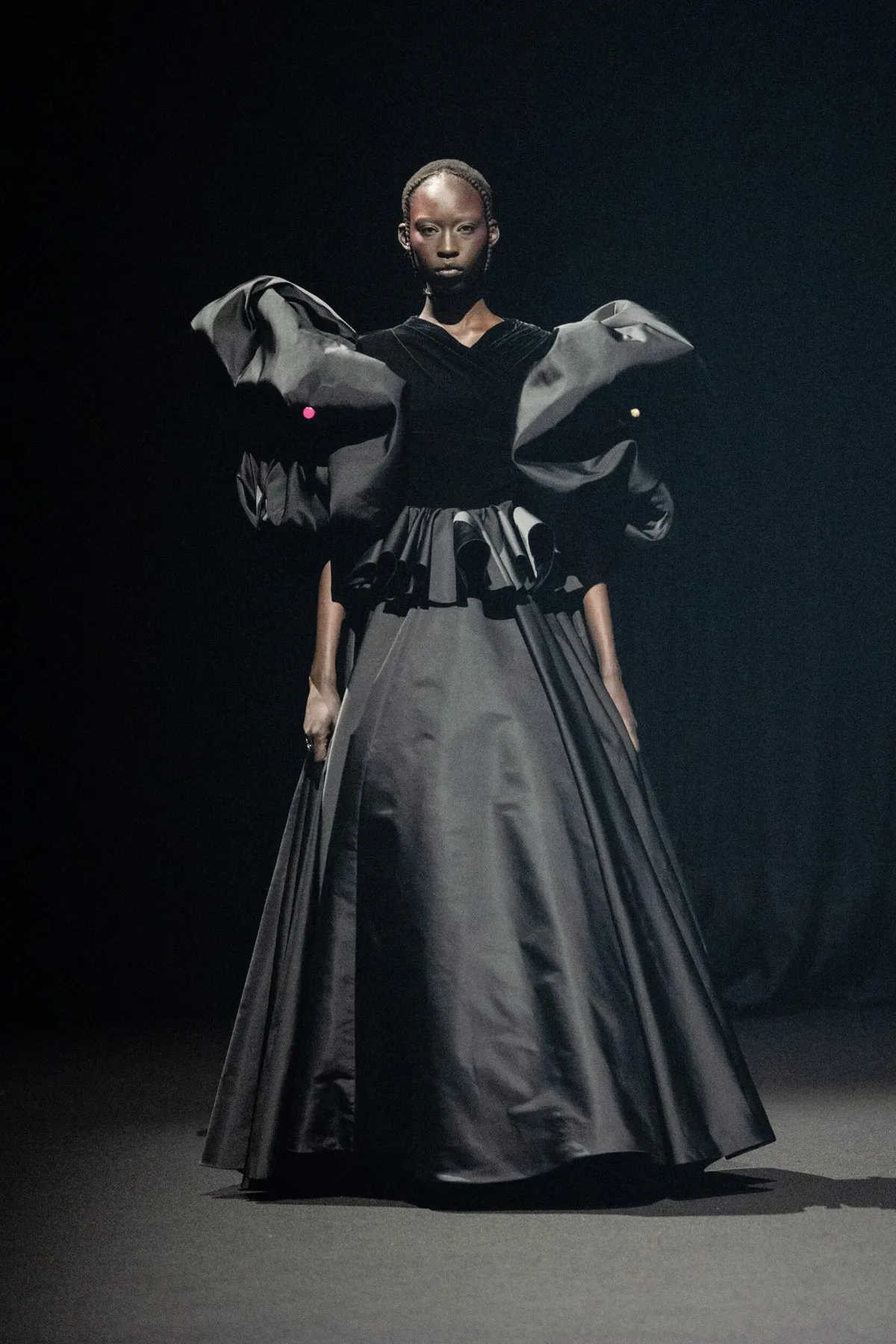
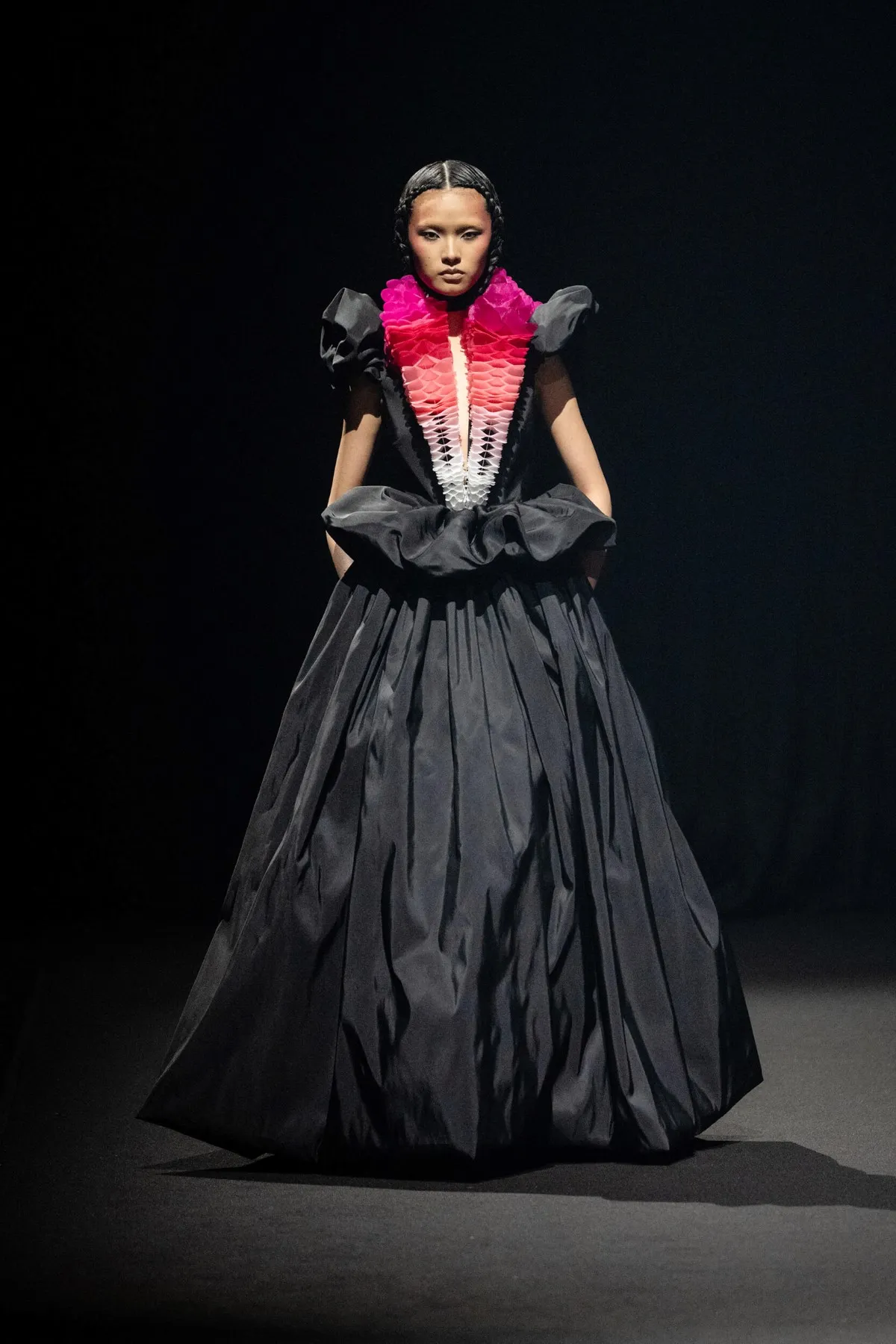
The collection centered on fifteen looks, all rendered in black materials such as duchesse satin and cloqué fabric. Model Elpida Voryas Georgiadi anchored the performance by standing on a plinth in a belted white minidress with a high collar, while other models circulated around her. These all-black silhouettes were distinguished by singular colorful elements fashioned from tulle, such as yellow accordion-pleated bands, tessellated bouffant sleeves, ruffled capes, and elaborate ruffs that fanned from elbow to ear.
The designers had been thinking about kites for years. Not the simple nylon versions flown at the beach, but proper diamond kites capable of lifting something heavier than fabric into the sky. They had been unable to execute the idea technically, and conceptually, the moment never felt right. Then this season arrived, and the world seemed to need something uplifting.
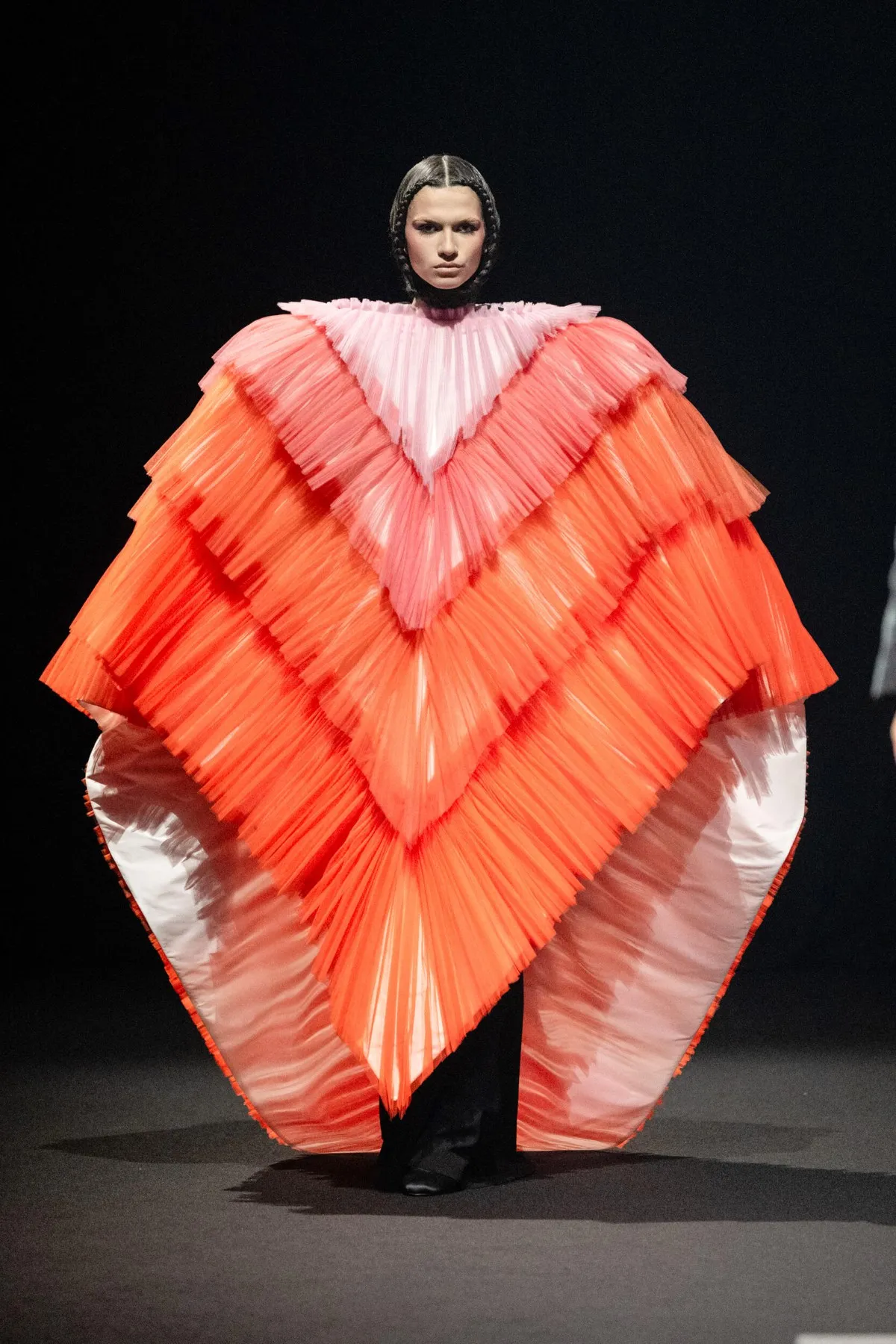
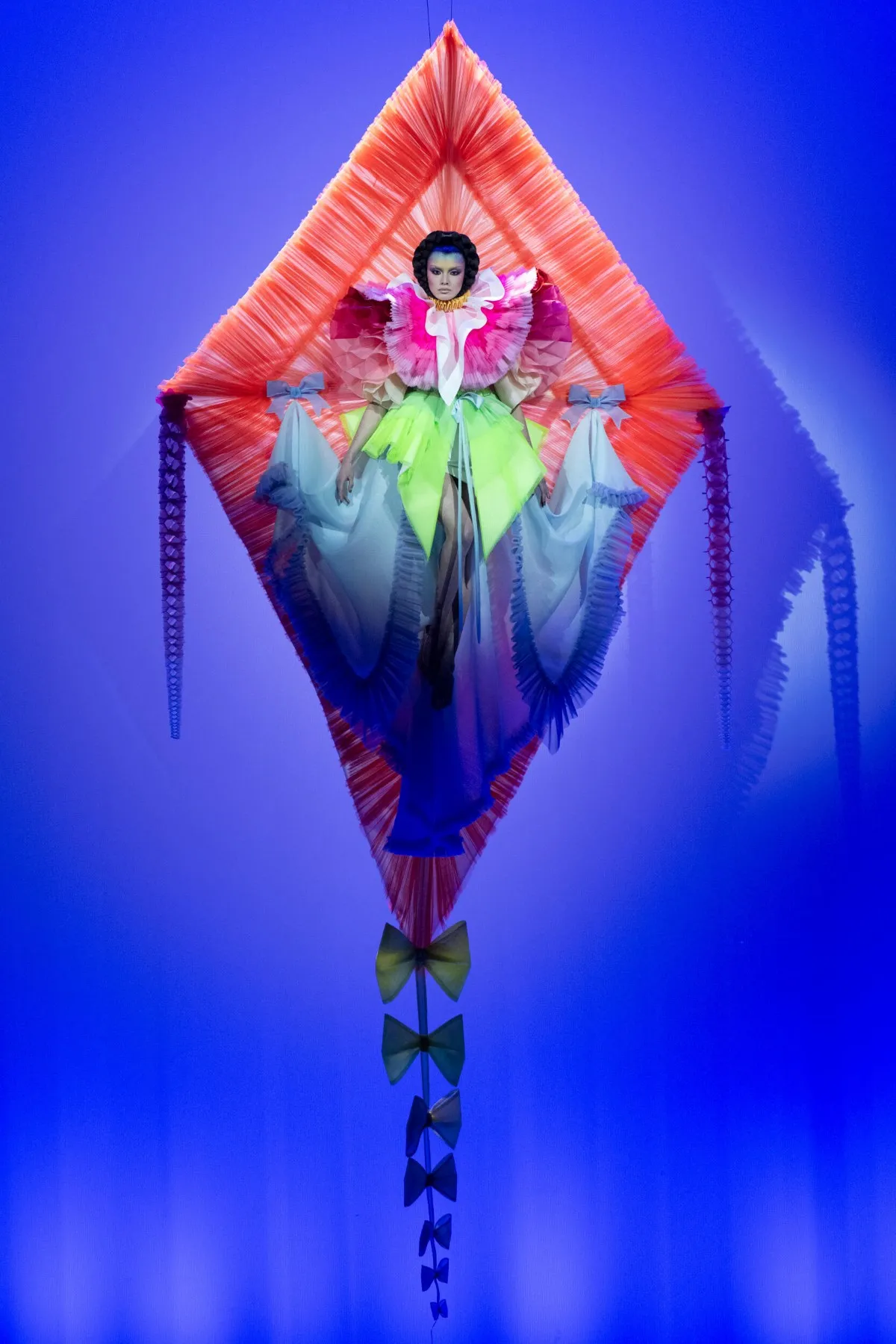
Horsting and Snoeren approached their concept like engineers solving a problem. With each step, they removed the colorful tulle elements from the black garments and attached them to Georgiadi. What began as discrete sculptural pieces became a growing accumulation. The construction was deliberate and almost methodical, yet the effect was increasingly whimsical. A yellow honeycomb garter that had held up one side of a blousy gown with poet sleeves found new purpose. They added a pastel, floor-length chiffon garment with a pleated hem that concealed a ruffle-necked sack dress to the growing structure.
Once stripped of their bright tulle additions, the black garments revealed themselves as wearable. They were structured, sculptural, and surprisingly practical without their fantastical attachments. The hooded figure, disquieting at first because of its colorful elements, became classically beautiful once reduced to its essence: a gown with a delicate row of buttons trailing down the back.
Follow all the latest news from Fashionotography on Flipboard, or receive it directly in your inbox with Feeder.
You may also read
The accumulation continued until Georgiadi was transformed into a living kite. Yellow bows formed a tail, and clever rigging systems hoisted her into the air for the finale. The reference was unmistakable: Kate Bush clinging to a painted dragon kite on the cover of her debut album, released at a time when couture meant something entirely different.
This theatrical moment represented more than showmanship. The designers had just spent the previous week at the Louvre unveiling a limited-edition Cinderella doll, created in partnership with Disney and Mattel for the character’s 75th anniversary. While that collaboration involved different creative processes, both projects shared a serious playfulness.
Hidden within the spectacle were contributions from Christian Louboutin, who designed the shoes, and Elie Top, who created the high jewelry that went largely unnoticed against the black-on-black palette. Yet their presence mattered. Couture relies on such collaborations and the combined expertise of multiple artisans working toward a shared vision.
The performance suggested that small changes could restore normalcy. Strip away one element, and a garment becomes something you could wear to dinner. Add enough elements, and the garment becomes capable of flight. Horsting and Snoeren understand that couture exists somewhere between these two states – grounded enough to be real and fantastic enough to matter.