

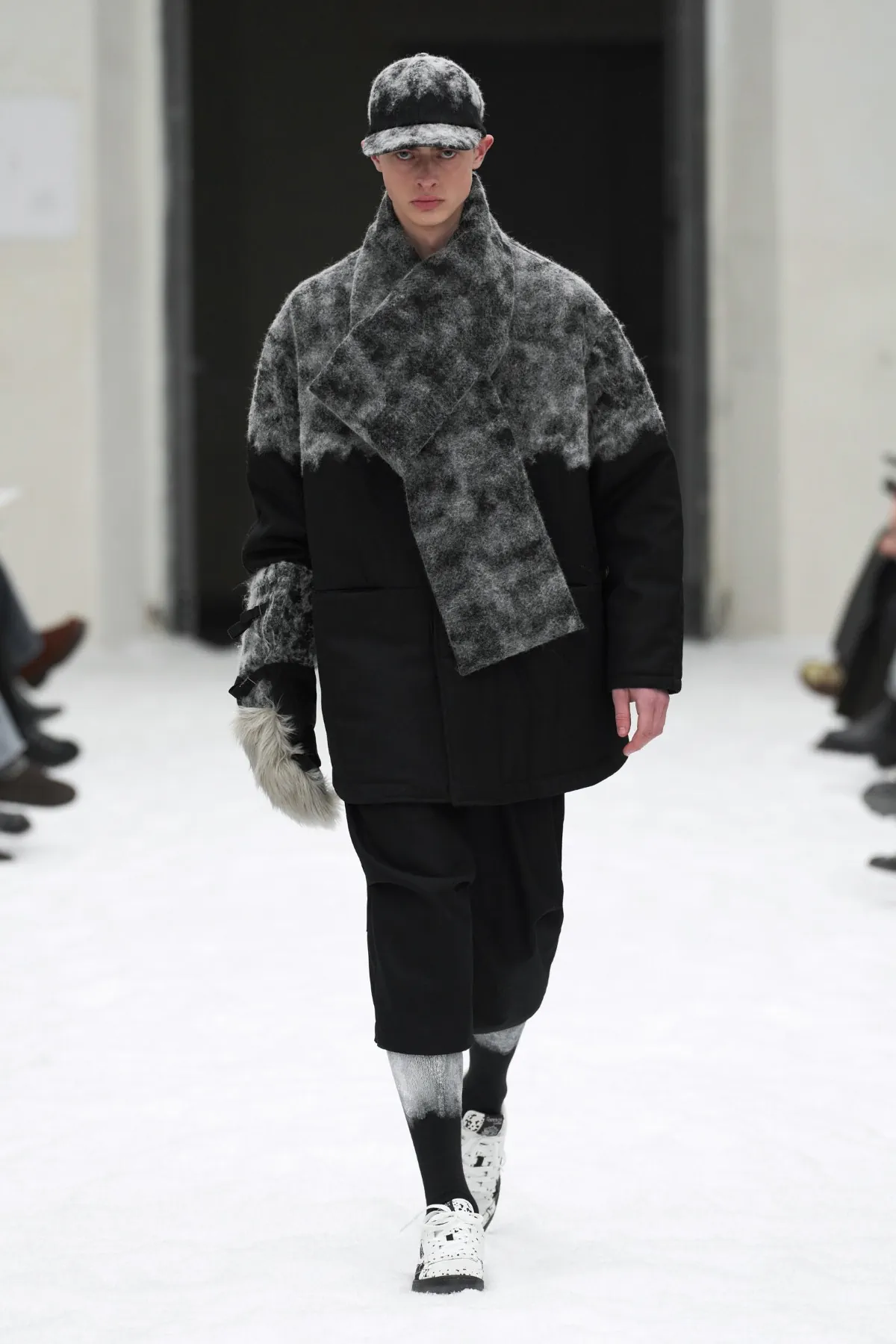











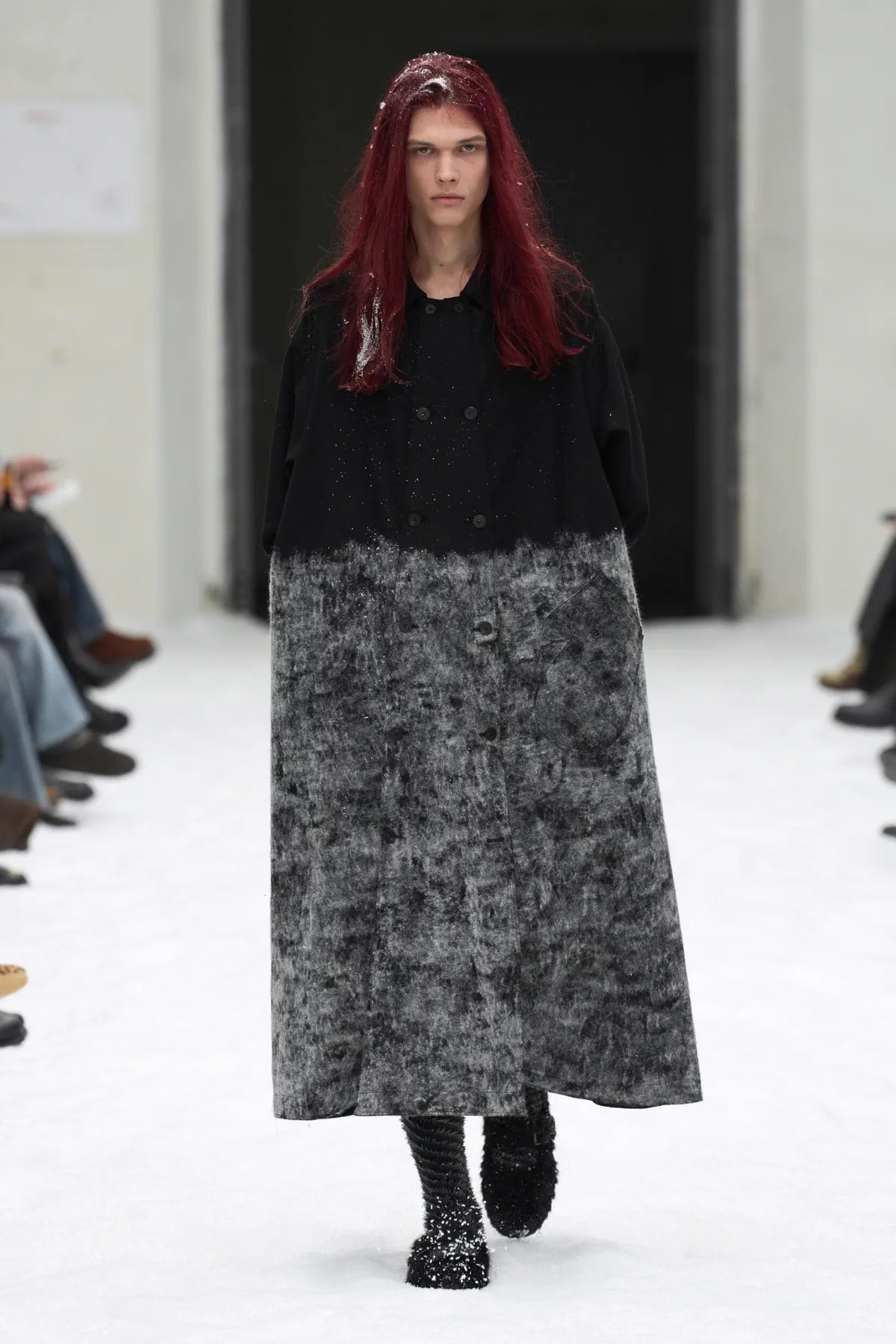
Shinya Kozuka made his European debut at Pitti Uomo 109 with an unusual calling card. The Tokyo-based designer transformed the Fortezza da Basso into a winter landscape, complete with artificial snow covering the floor and models with frost in their hair emerging from it. However, the SHINYAKOZUKA Fall 2026 collection was a calculated expansion for a designer who spent nine seasons building his reputation exclusively in Japan before stepping onto the international stage.
The question hanging over the Florence show was whether Kozuka’s vision would translate beyond his home market-especially as other Japanese houses explore a new relationship between wearer and clothes. Japanese designers have long grappled with how much to adapt their aesthetic for Western audiences. Some dilute their perspective. Others double down on cultural specificity. Kozuka chose a different path.
Shinya Kozuka’s European ambitions at Pitti Uomo
The setting itself telegraphed ambition. Pitti Uomo organizers revealed that the Fortezza da Basso had never hosted a fashion show before, making Kozuka’s presentation a historic moment for the centuries-old venue. The designer secured this platform by collaborating with the Japan Fashion Week Organization, which suggests institutional support for his international expansion.
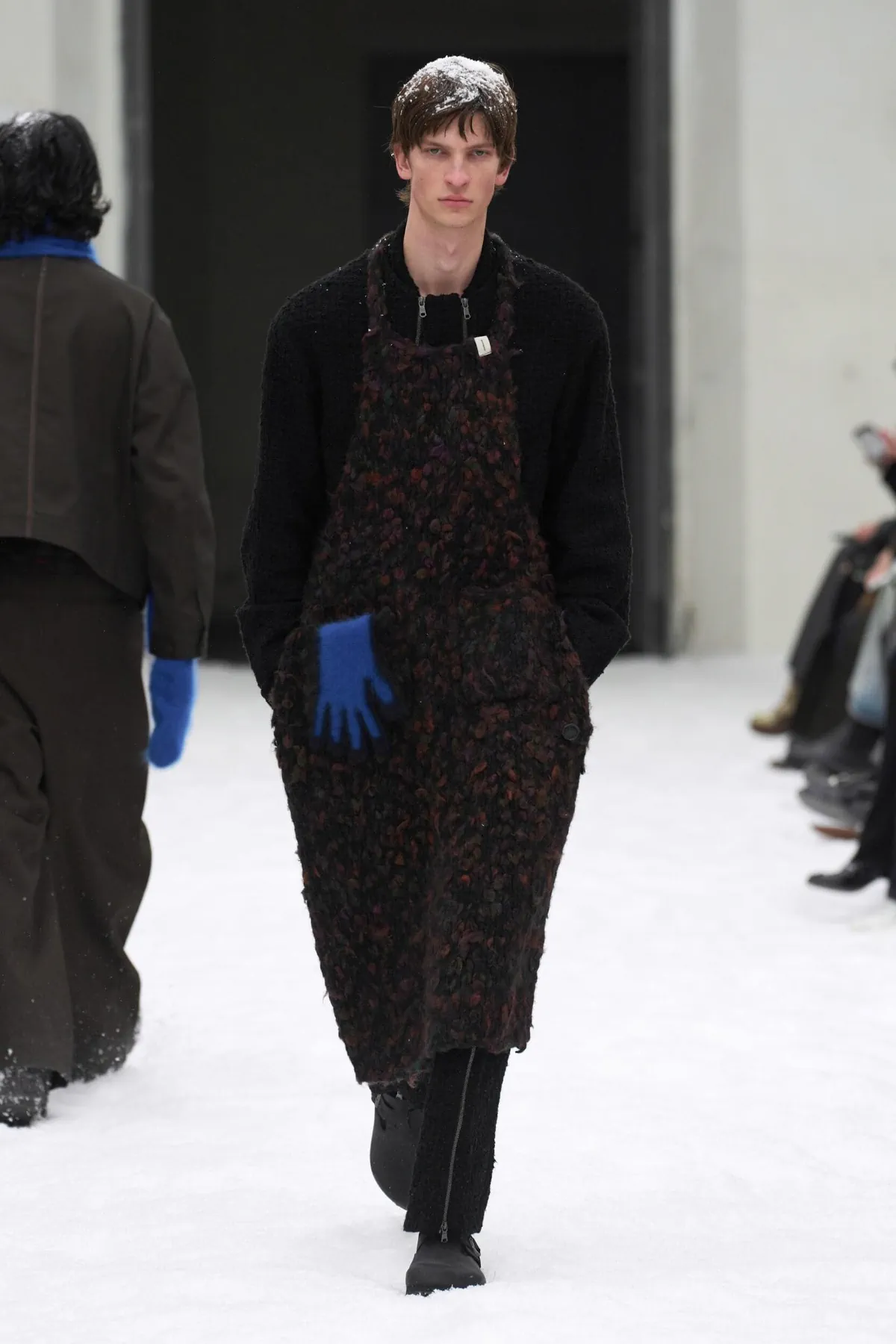
The runway reflected the designer’s nighttime walks through Tokyo with a beer in hand and his observations of urban details that most people overlook. Single gloves abandoned on sidewalks became his fixation for this collection. Rather than treating them as litter, Kozuka reimagined these lost items as markers of human passage, waypoints that guide people home.
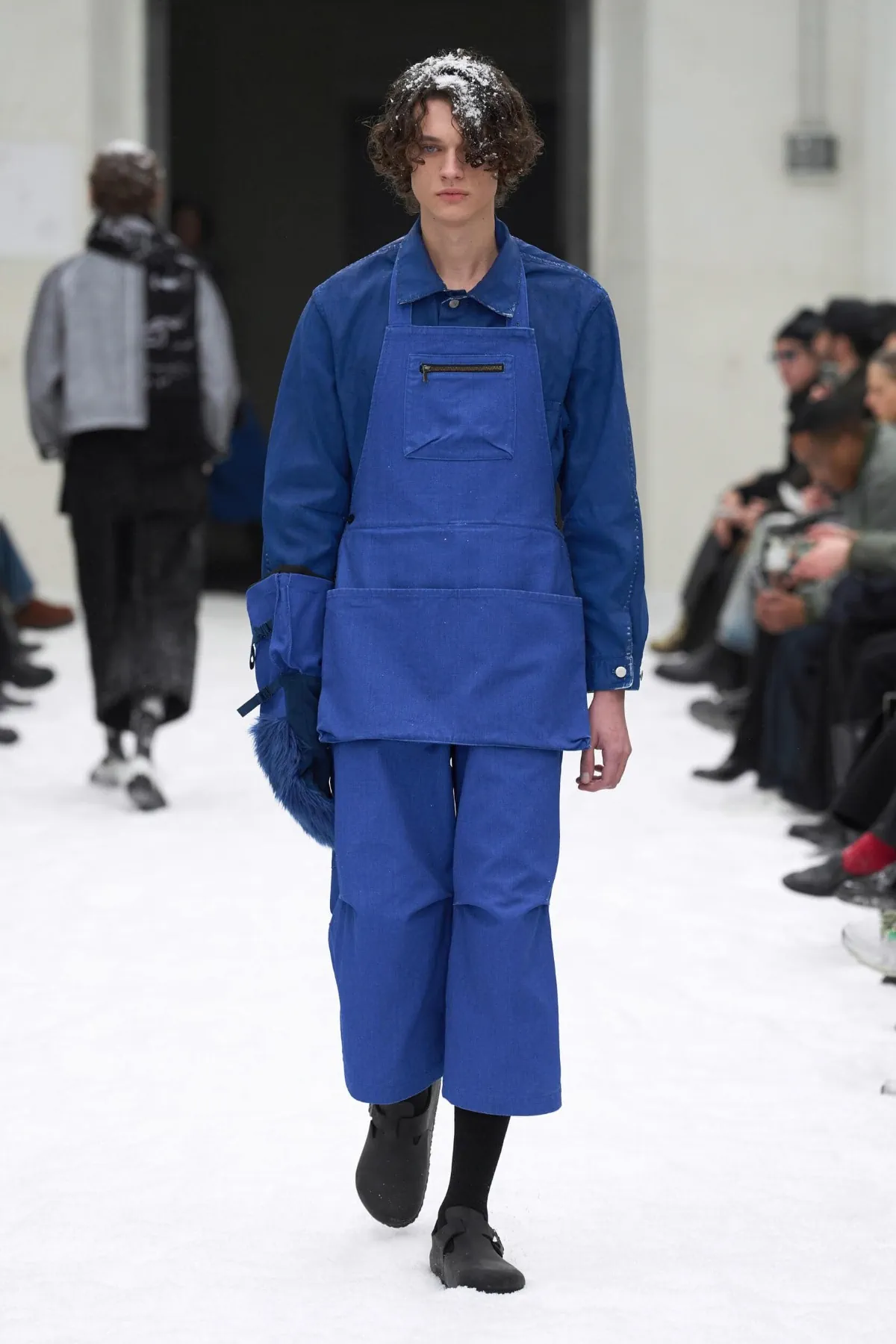
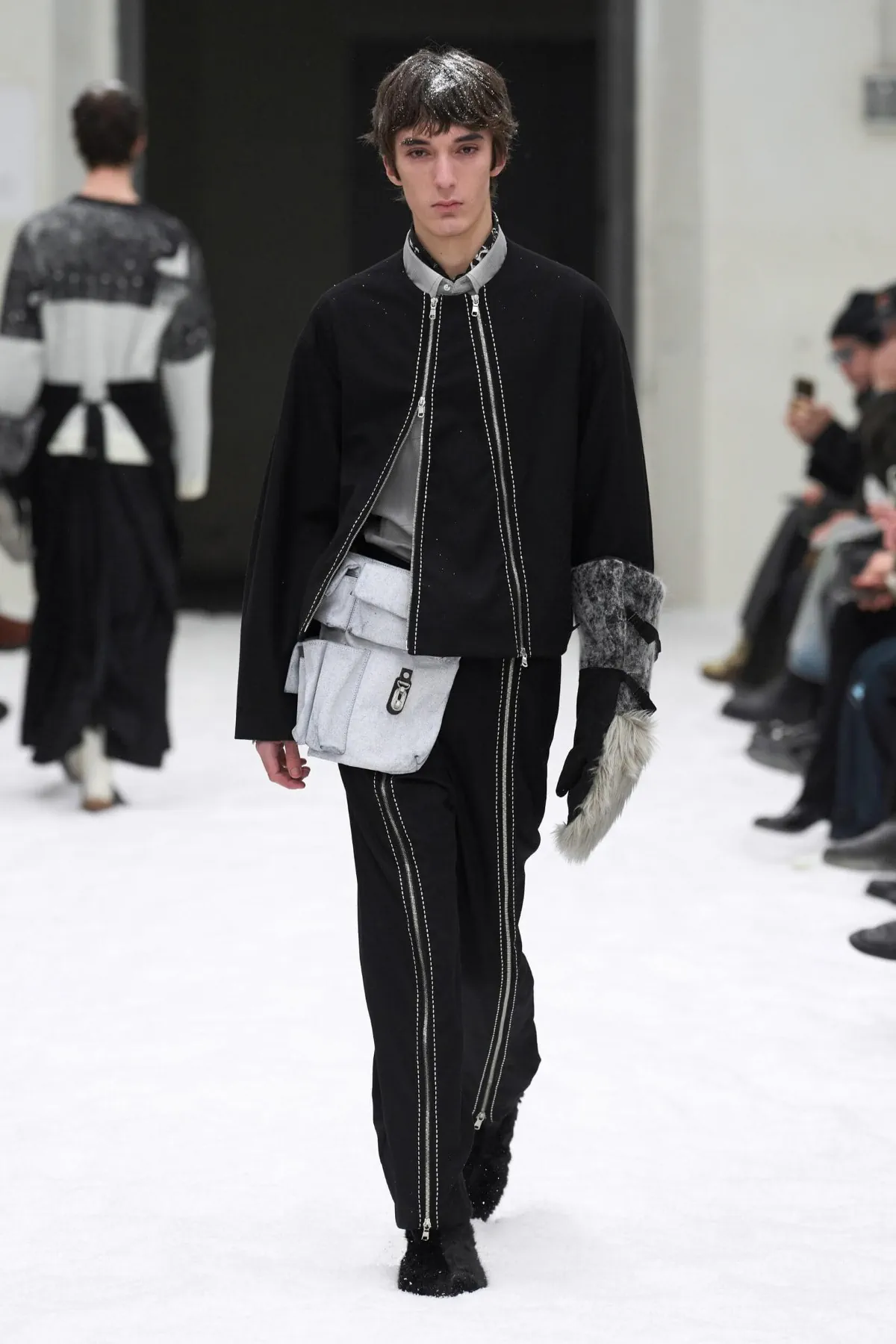
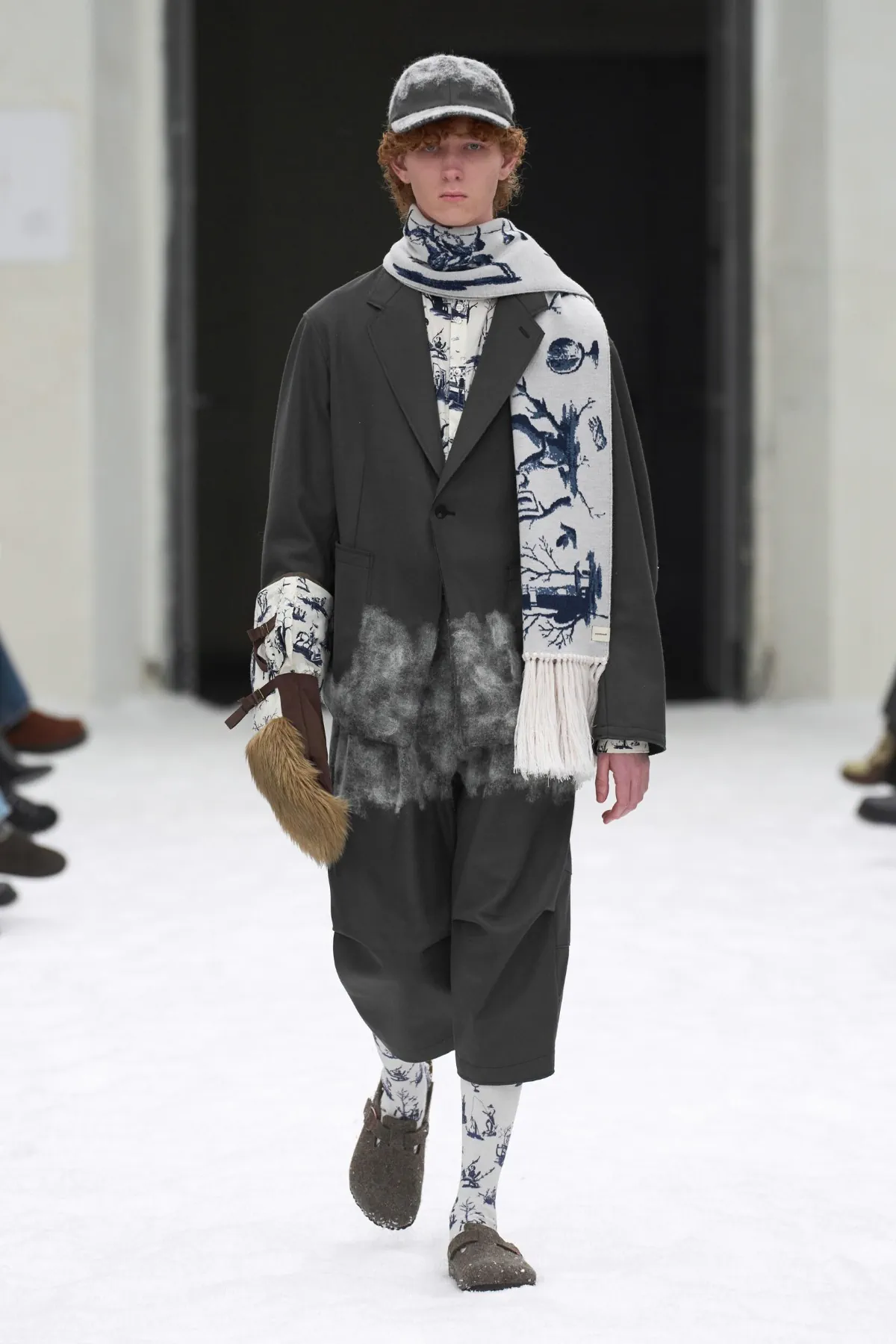
The metaphor manifested literally. Models wore solitary furry mittens. Cobalt blue glove shapes hung from knitted aprons. Wool jackets featured needle-punched glove motifs. The repetition could have veered into gimmickry, yet the execution remained restrained.
Japanese workwear reinterpreted for Fall 2026
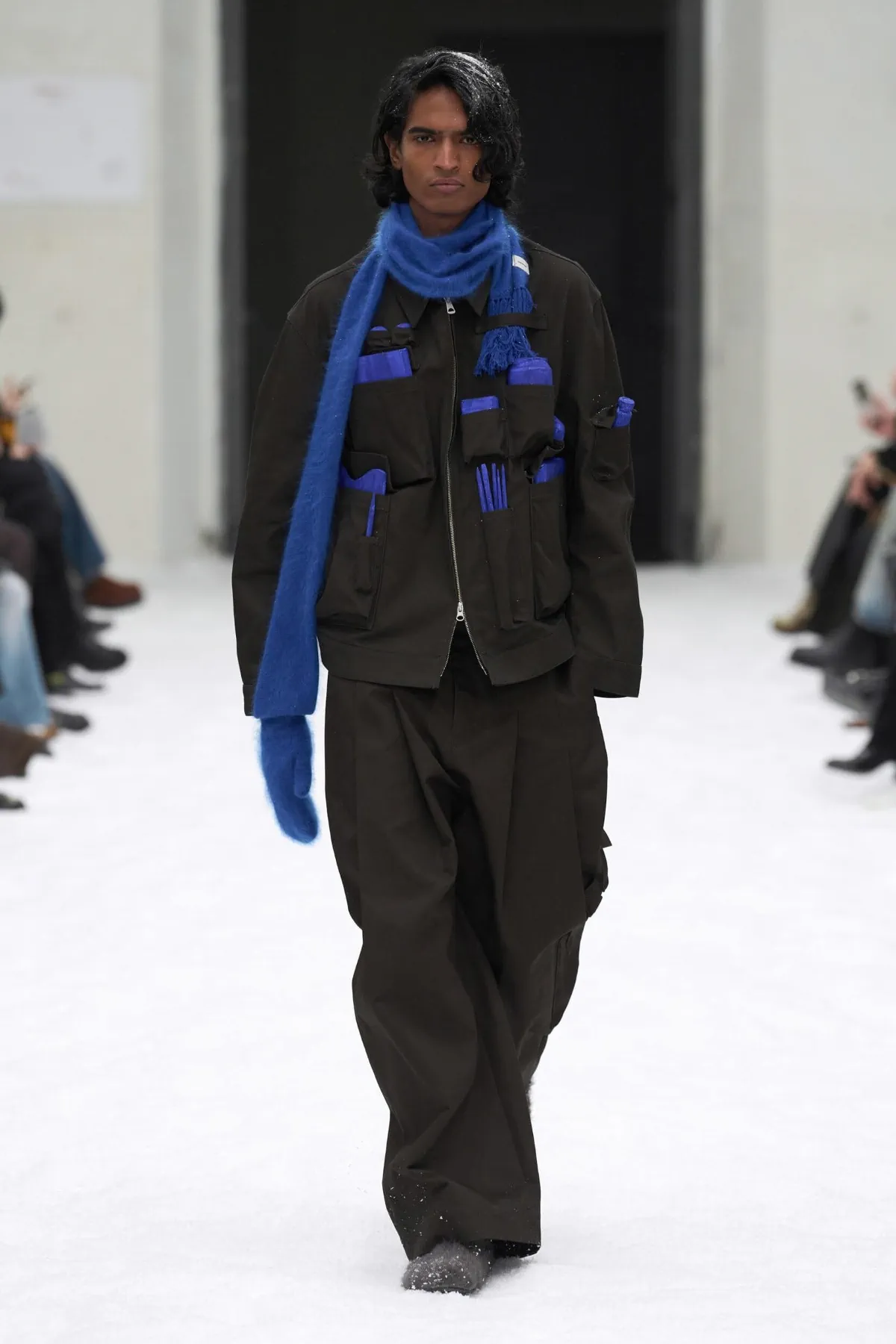
SHINYAKOZUKA built its reputation on deconstructing European workwear through a Tokyo lens-much like designers deconstructing tailoring codes on the Pitti stage. The Fall 2026 collection continued this approach with elongated blazers, multi-pocketed work jackets, and military-influenced bomber jackets, which were paired with matching trousers. Melton topcoats speckled with white paint, suggesting snowstorms, opened the show.
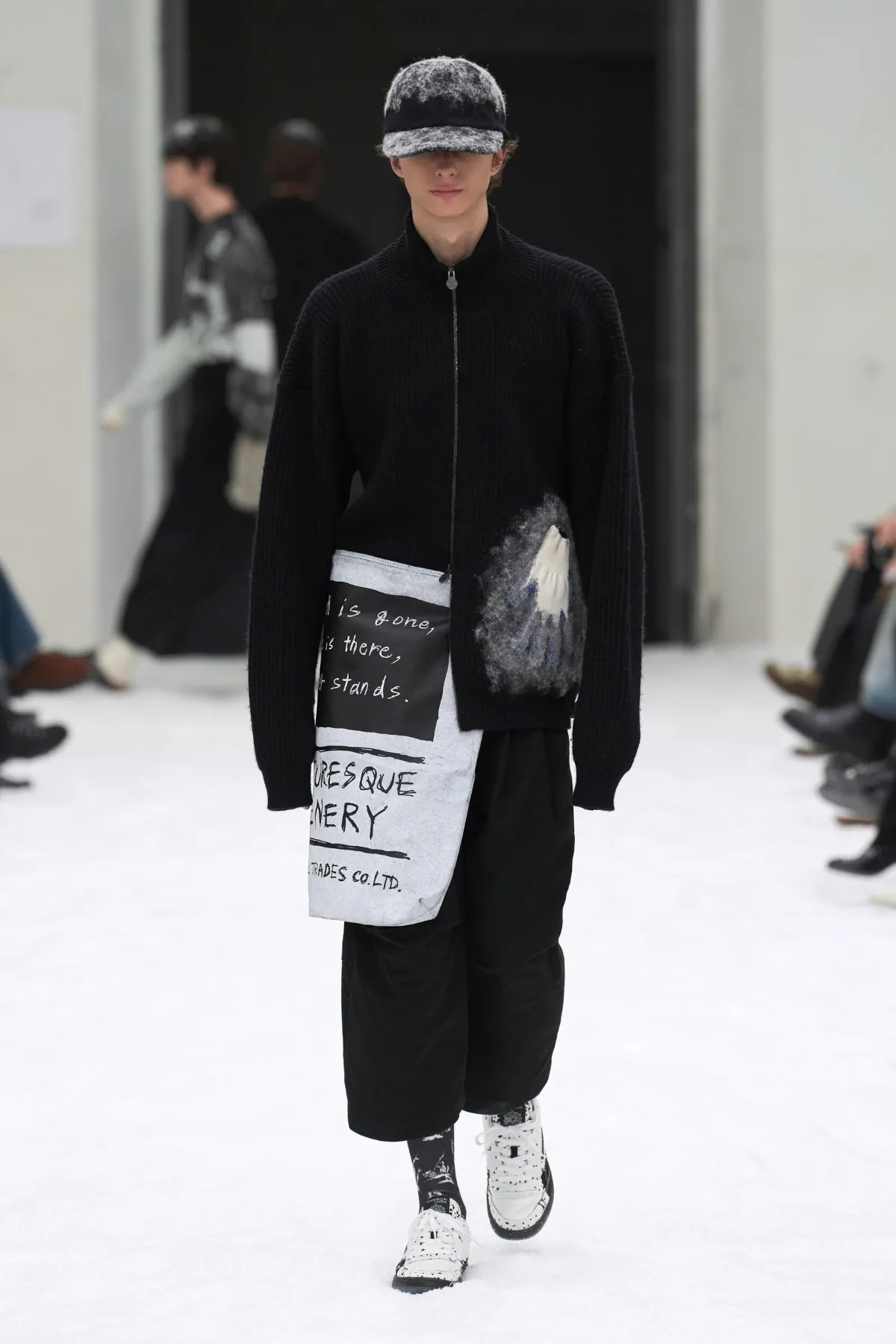
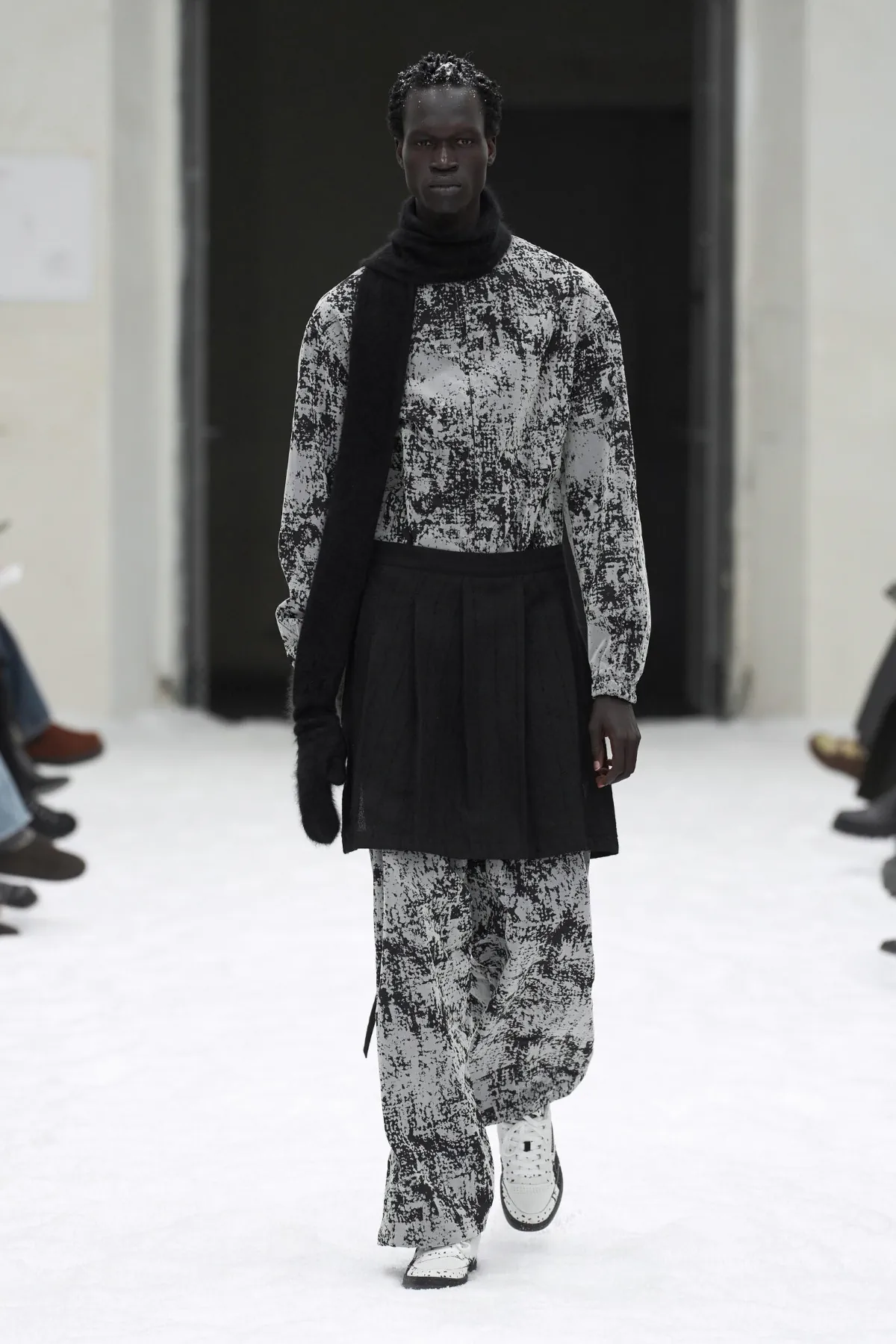
The designer’s signature baggy pants, which fuse Western workwear with Japanese hakama silhouettes, appeared in several iterations. Voluminous, pleated culottes consumed yards of heavy cotton. Simple shirts paired with half-aprons created lean, functional looks. Some aprons featured moody text, while others showcased inventive knitted designs.
The fabrication revealed serious craftsmanship. The materials primarily came from the Bishu and Bizen regions of Japan, where traditional techniques have earned international recognition. Most of the sewing was done domestically, with Tokyo artisans producing the footwear. This supply chain positioned Kozuka firmly within Japanese manufacturing traditions while presenting the brand to European buyers.
Follow all the latest news from Fashionotography on Flipboard, or receive it directly in your inbox with Feeder.
You might also read

Craftsmanship, symbolism and statement pieces
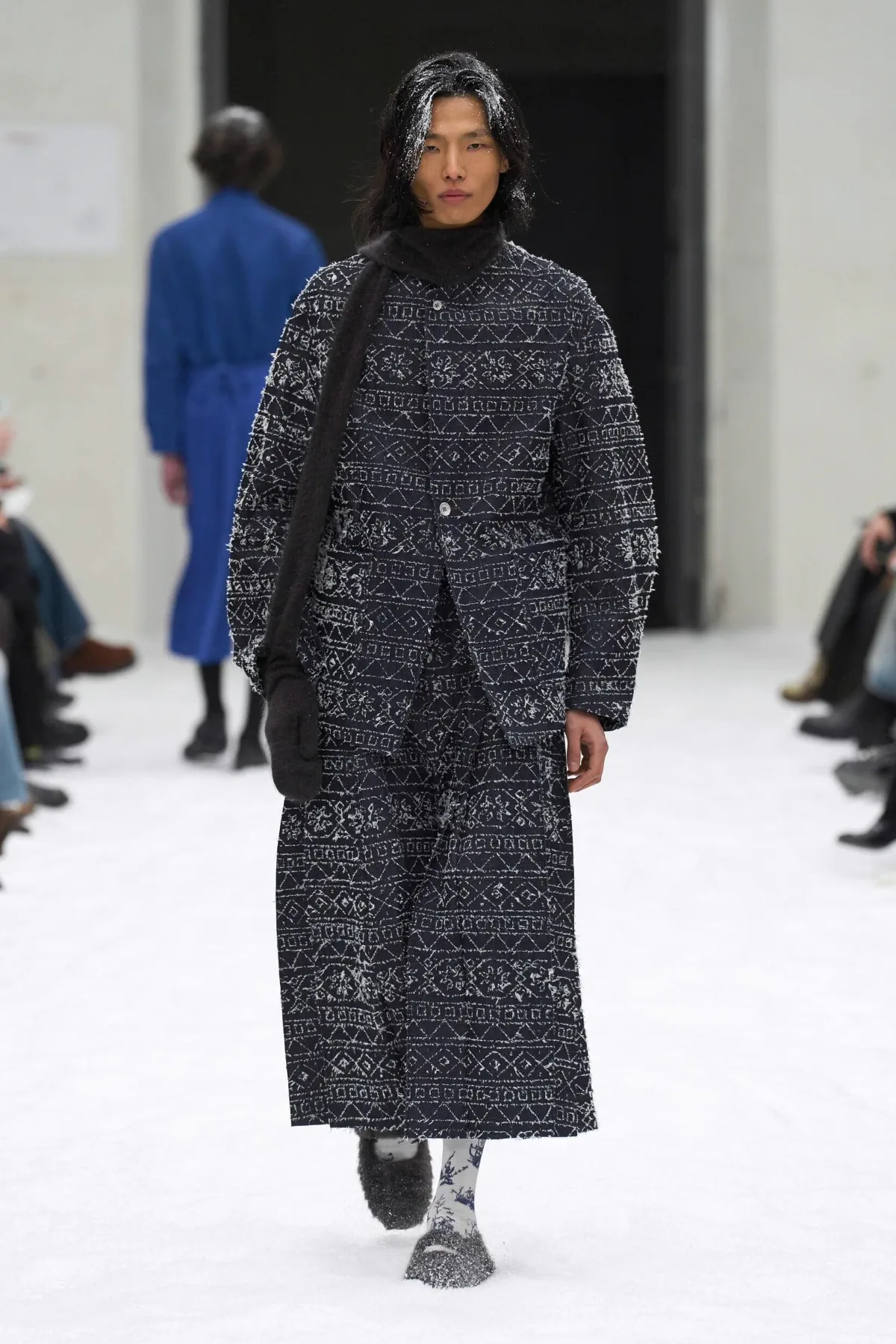
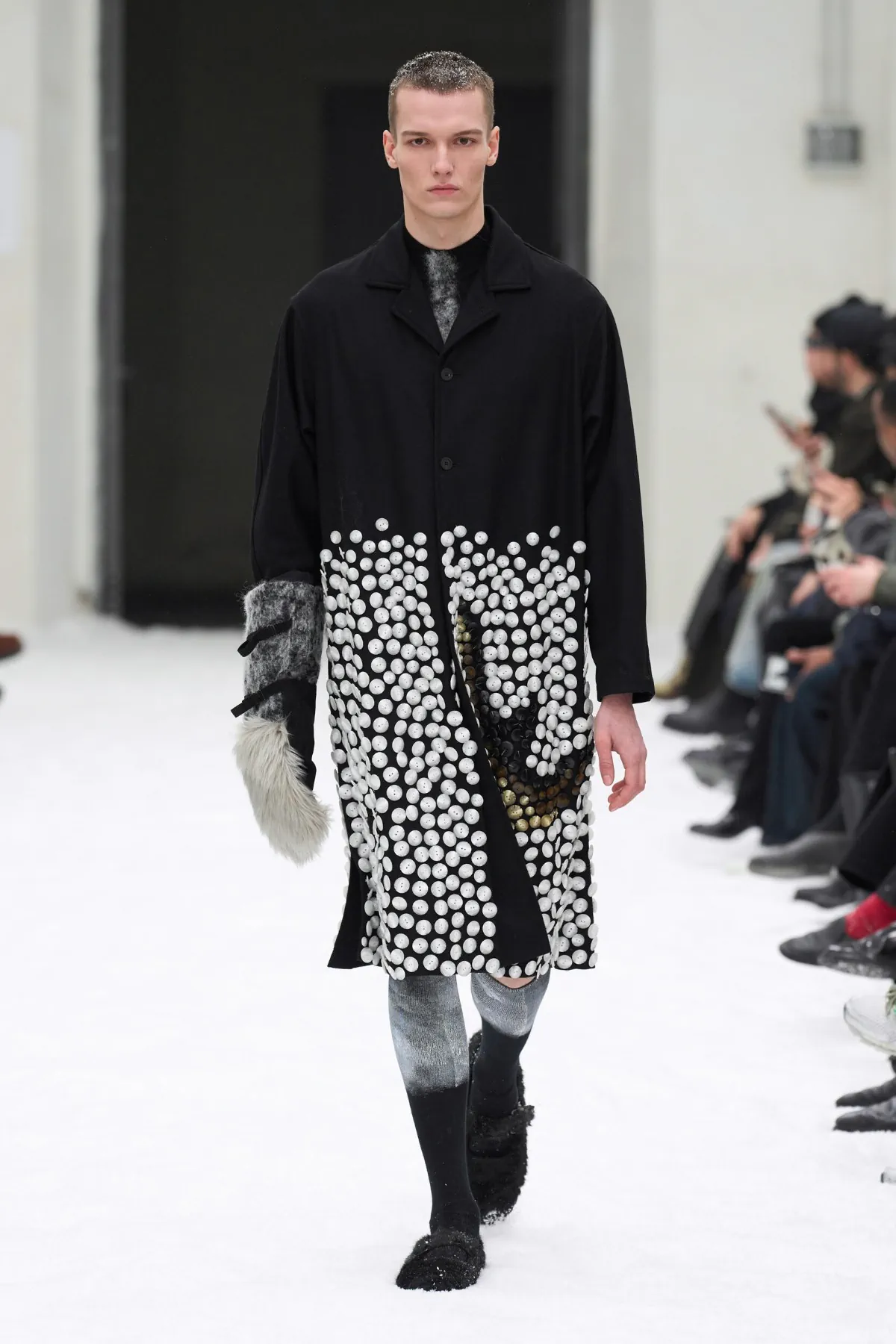
The penultimate look demonstrated technical ambition. A knee-length coat adorned with 1,300 buttons was arranged to depict a moon. The construction required a full week of labor from Kozuka’s team. Such pieces raise questions about commercial viability versus runway spectacle. Can a brand sustain itself on garments that require such intensive handiwork? Or do these showpieces elevate the perceived value of the entire collection?
Other details were more wearable. Toile de Jouy illustrations appeared on scarves. Folkish jacquards added texture to oversized shirts and culottes. Cobalt blue accented canvas aprons and work pants, which were developed in collaboration with Dickies. These partnerships suggest that Kozuka understands the contemporary fashion economy, in which brand alliances expand reach.
The atmospheric staging reinforced his concept of Picturesque Scenery, the umbrella philosophy that guides all SHINYAKOZUKA collections. While models moved at a contemplative pace, Ólafur Arnalds’s composition “For Now I Am Winter” played. The soundtrack choice mattered. Arnalds’s minimalist electronic compositions attract devoted followings in fashion circles and lend cultural credibility.
Kozuka’s approach differs from that of his compatriots who preceded him on the international runway. He brings conceptual depth rooted in personal observation rather than abstract philosophy. His work remains grounded in functional clothing categories while allowing room for poetic interpretation. Whether this balance will prove commercially sustainable remains an open question.