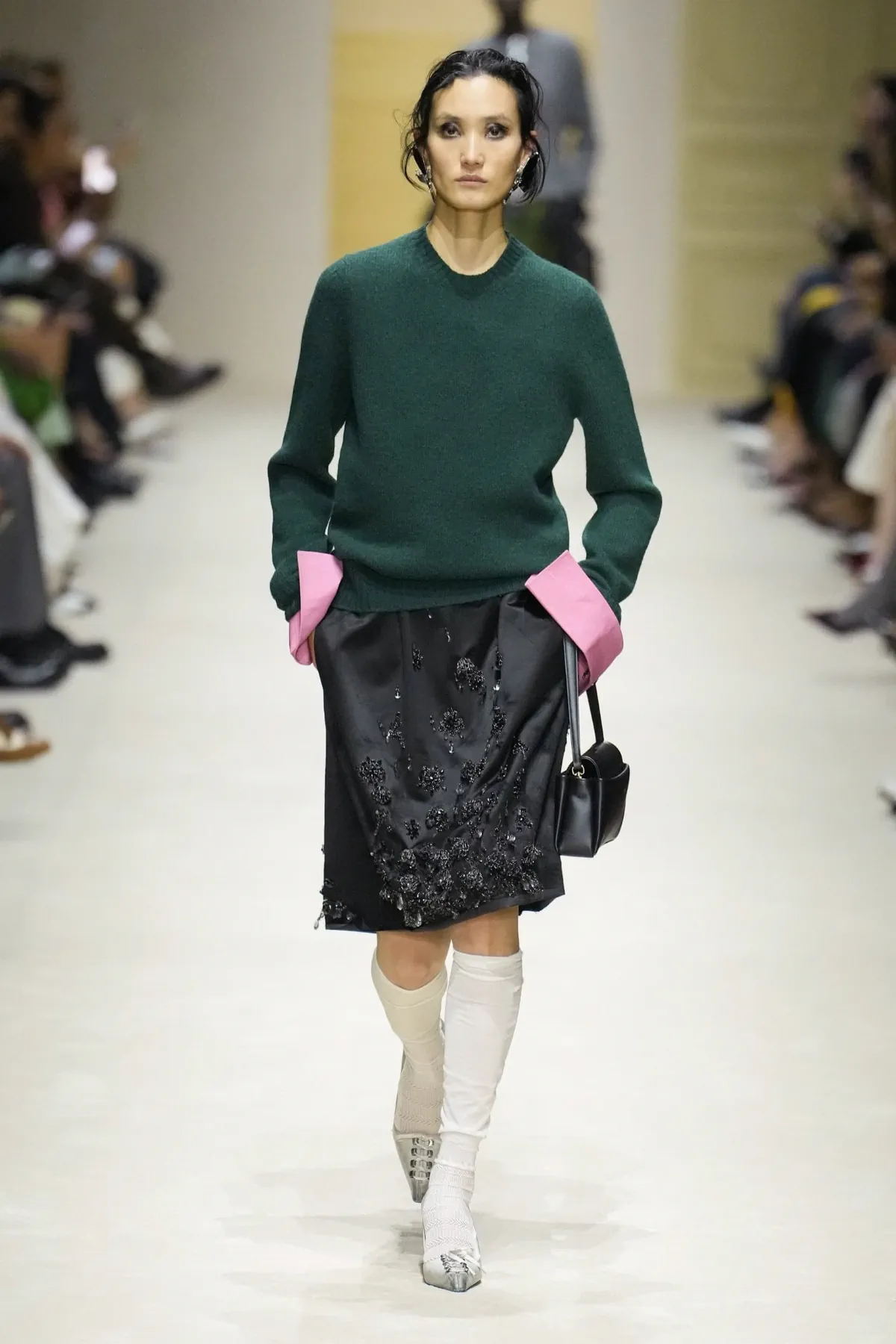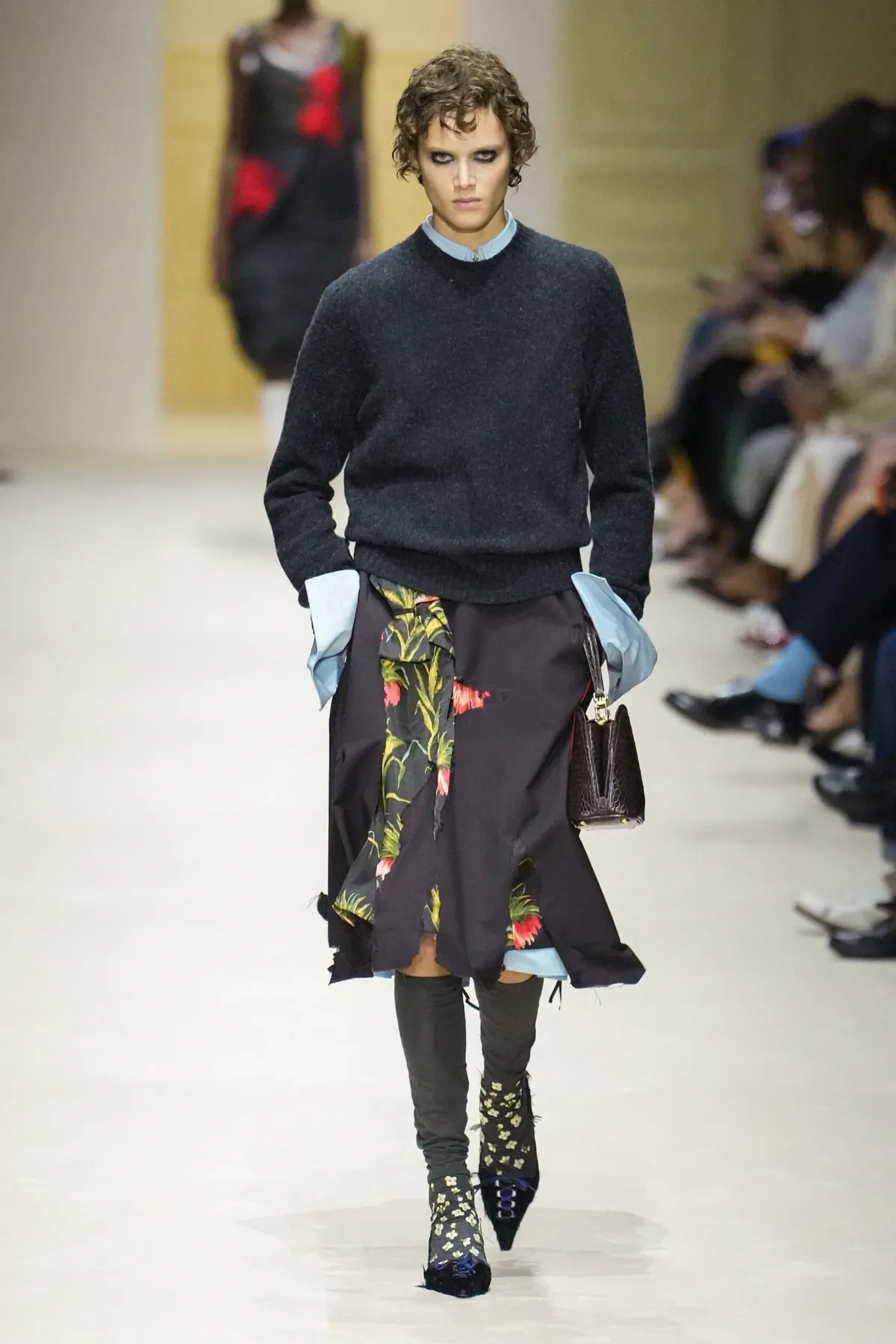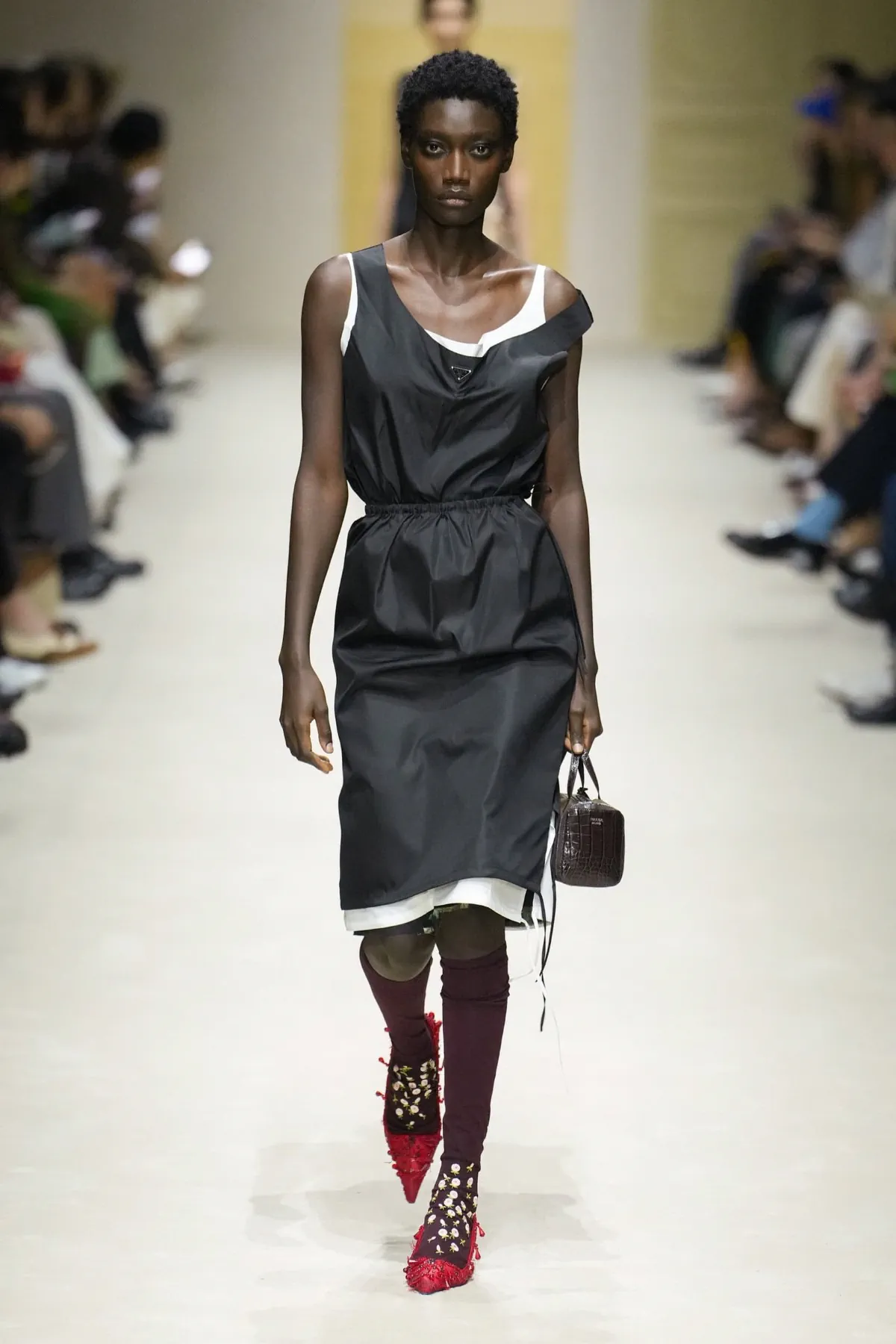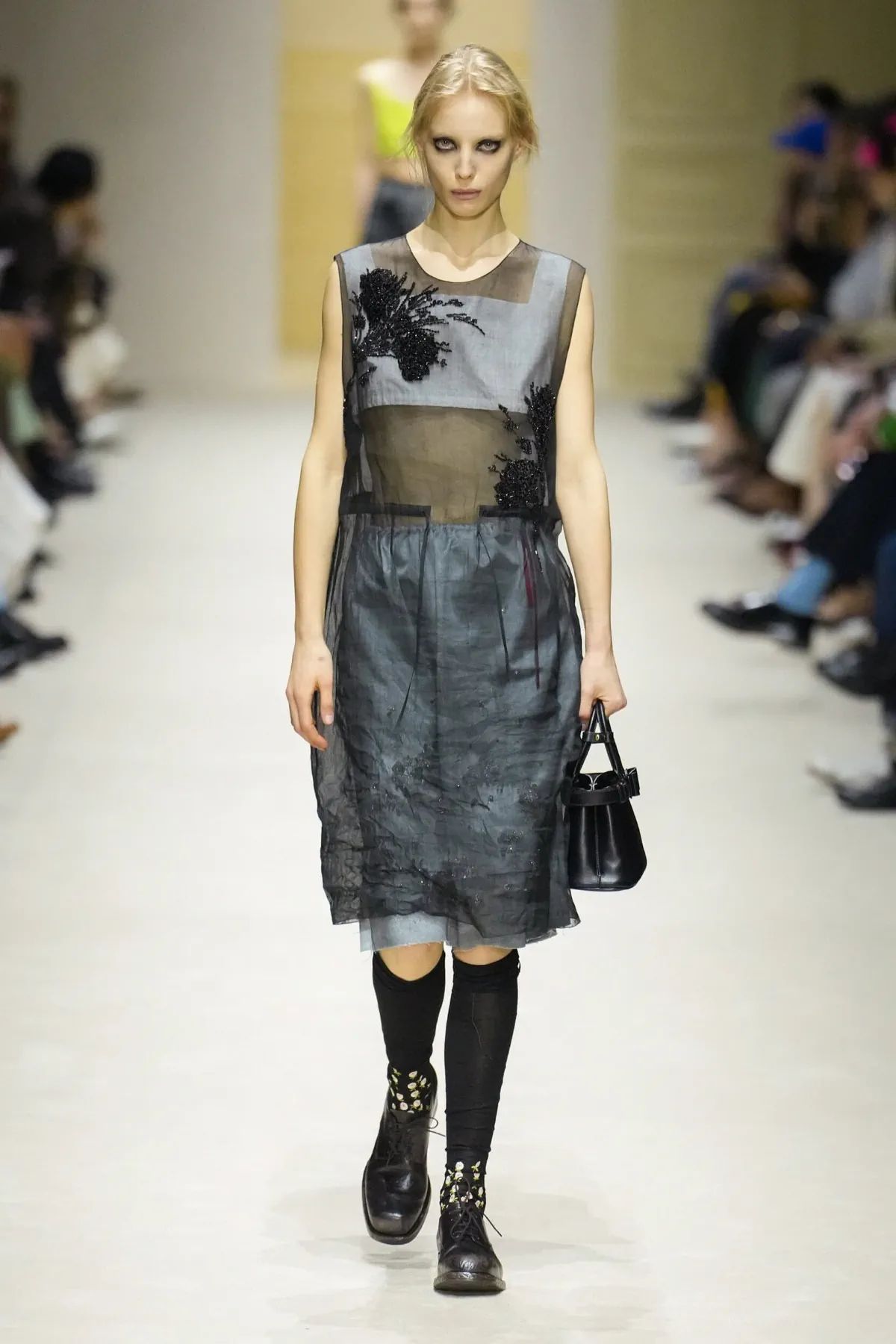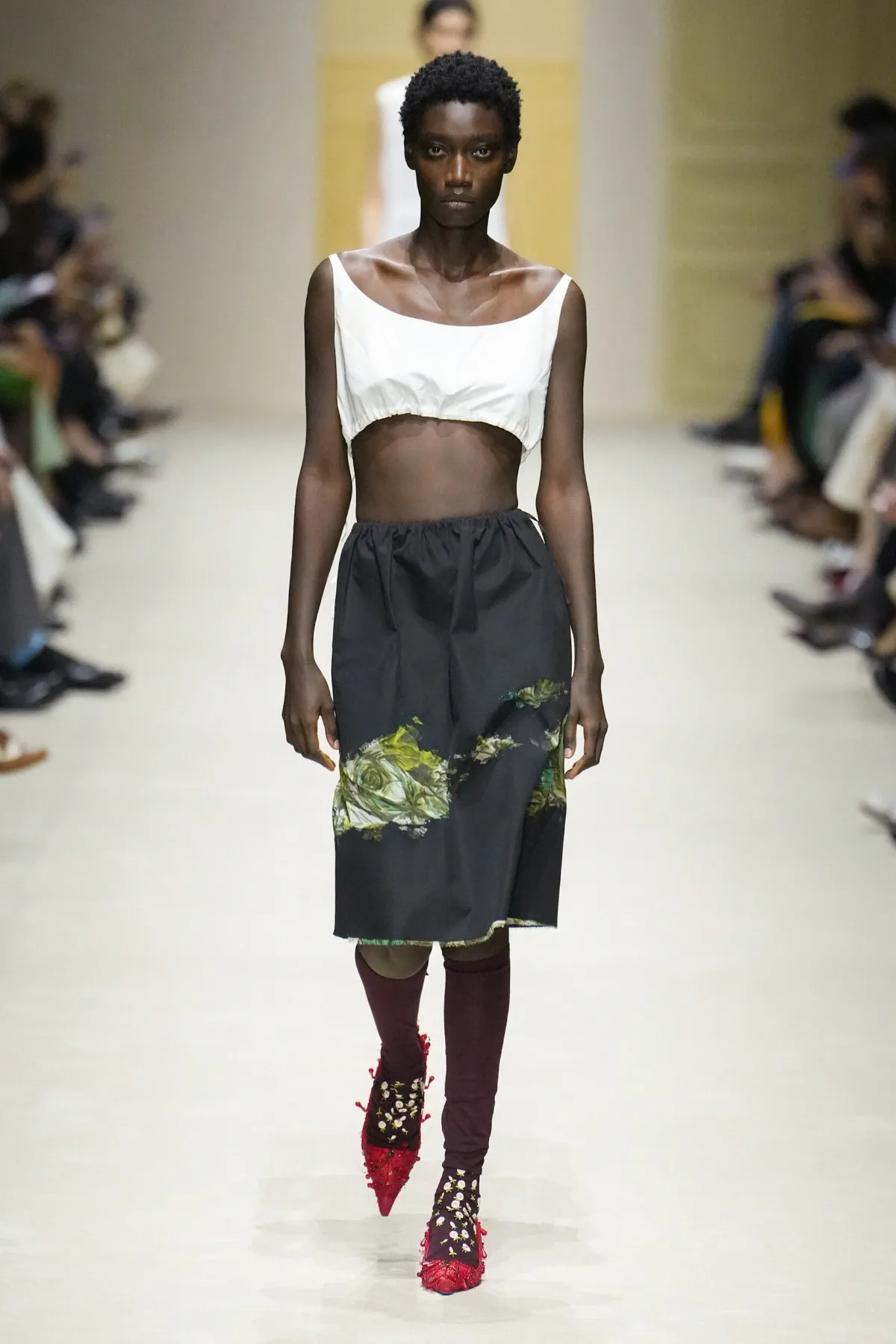

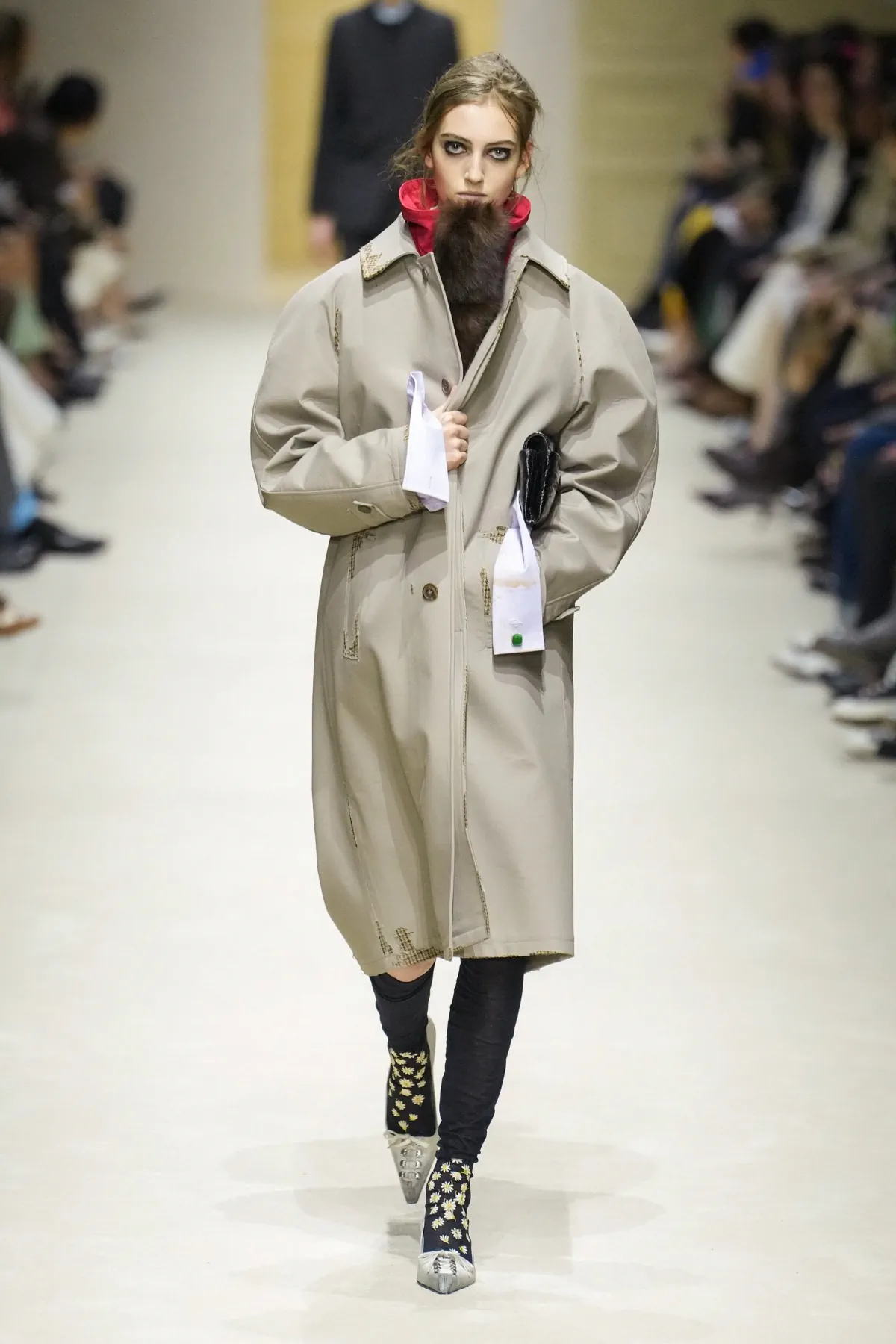
The Prada Fall 2026 collection arrived at the Fondazione Prada in Milan on Thursday with a bluntness that felt almost confrontational. It was not confrontational in a provocative, attention-seeking way, but rather in the manner of a designer who has observed women getting dressed for decades and has concluded that fashion’s tidy, seasonal prescriptions are no longer relevant. Fifteen models walked the vast space four times each, removing or revealing layers with each pass. By the end, sixty looks had materialized from what started as fifteen. The audience realized they had witnessed not so much a runway show as a master class in wardrobe strategy.
| 📌 Key Facts |
|---|
| 🧥 15 looks transformed into 60 through progressive layering 🧵 Raw hems, wax coatings, and frayed cuffs embraced visible wear 👠 Pastel kitten heels paired with embellished socks 🎨 Archival Prada motifs reworked rather than revived 💎 Bejeweled skirts inserted as counterpoints to undone tailoring 🏛 Presented at Fondazione Prada in Milan |
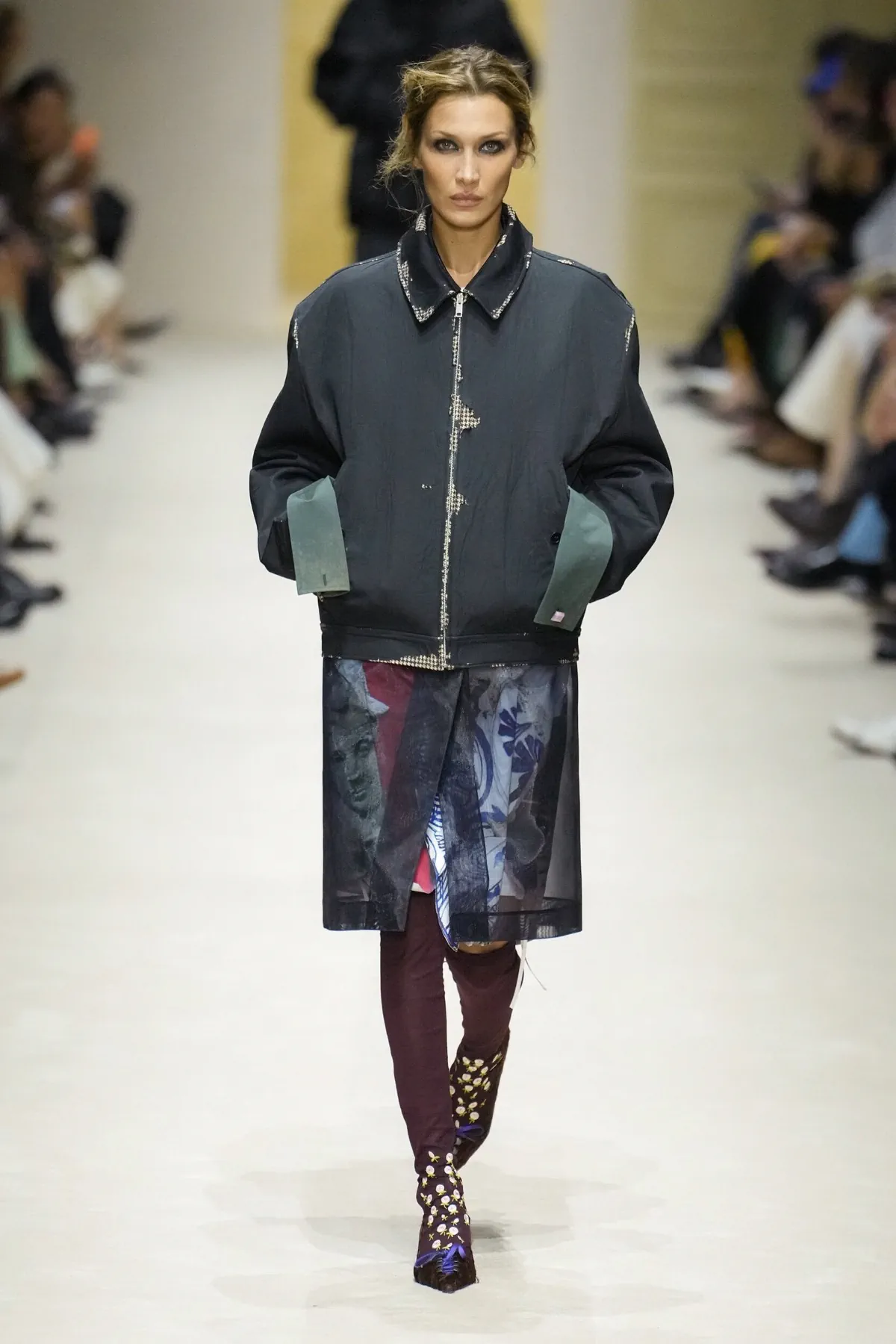
Since they started working together, Miuccia Prada and Raf Simons have been quietly rerouting fashion’s conversation, and this season, they made their most plainspoken argument yet. Where designers once handed down seasonal dictates – bold shoulders here, shorter hemlines there – Prada and Simons framed the entire collection around a question women ask themselves daily: What do you wear with what, and can you do it another way? A coat was removed to reveal a heavy-knit sweater, which was then removed to show that the skirt underneath was actually a dress. Beneath the dress, a diaphanous slip and modest underpinnings completed the ensemble. The point was not cleverness for its own sake. Rather, the point was that a woman’s wardrobe is a fluid conversation with herself, not a fixed set of instructions.
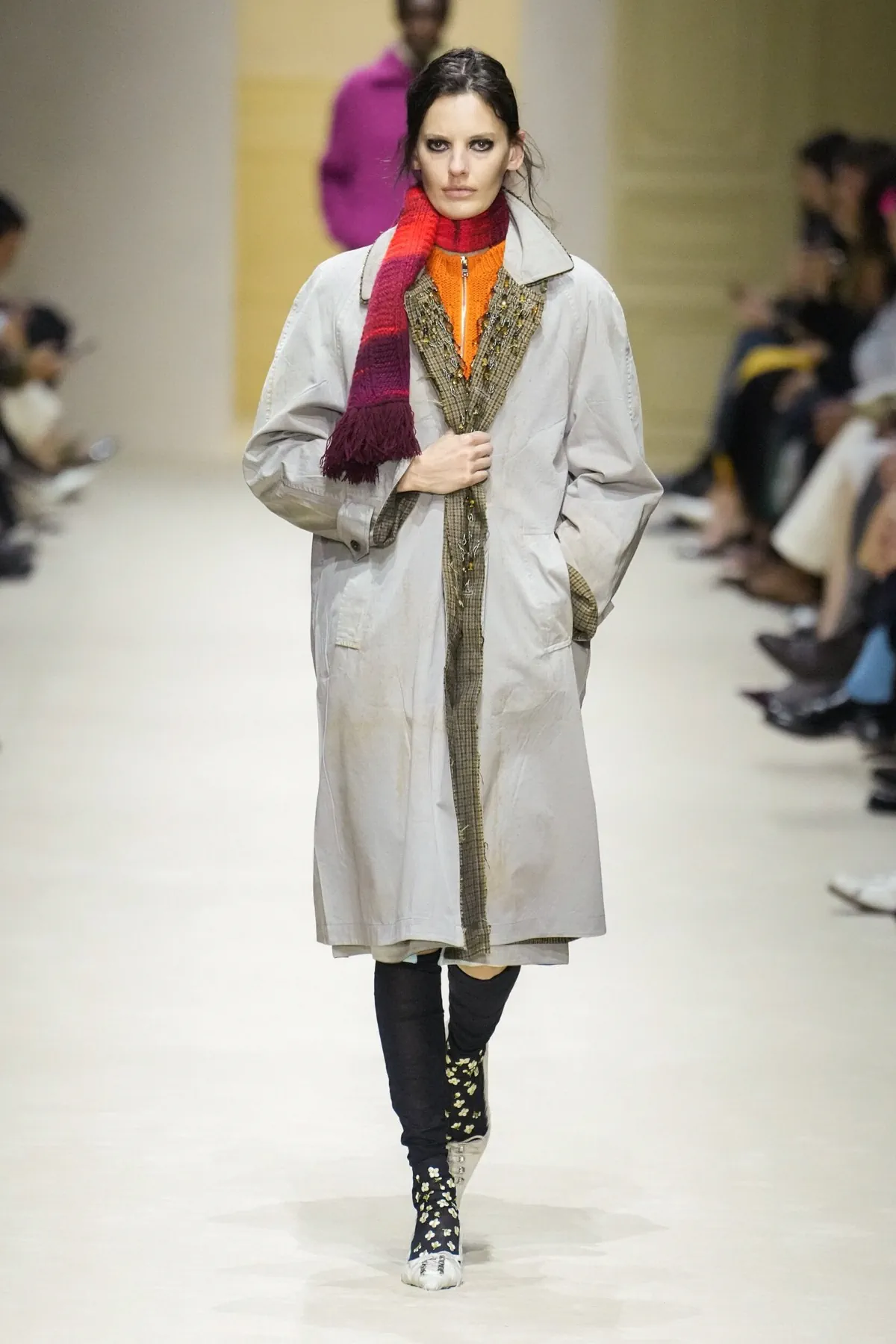
The show opened with tailored, slightly shrunken coats accessorized with multicolored scarves and oversized cuffs. One coat was topped with a bright yellow, cropped, parka-style cape that struck a balance between the practical and the absurd – the kind of thing that looks wrong on paper but right on a body. Pastel kitten heels dripping with miniature chandelier crystals were worn alongside embellished socks to match. Many of the models held their coats closed with one hand, an unmistakable gesture associated with Miuccia Prada herself.
Several garments were designed to look pre-worn, with raw cuffs, frayed hems, and fabrics with a waxy coating that peeled away to expose houndstooth underneath. Corroded black wool gave way to blurred floral prints. Excess fabric trailed from hemlines. None of it felt like sabotage. For years, the secondhand market has proven that consumers respond well to signs of wear and that imperfection can register as desirability rather than damage. Prada made that argument quietly and without apology.
Follow all the latest news from Fashionotography on Flipboard, or receive it directly in your inbox with Feeder.
You may also read

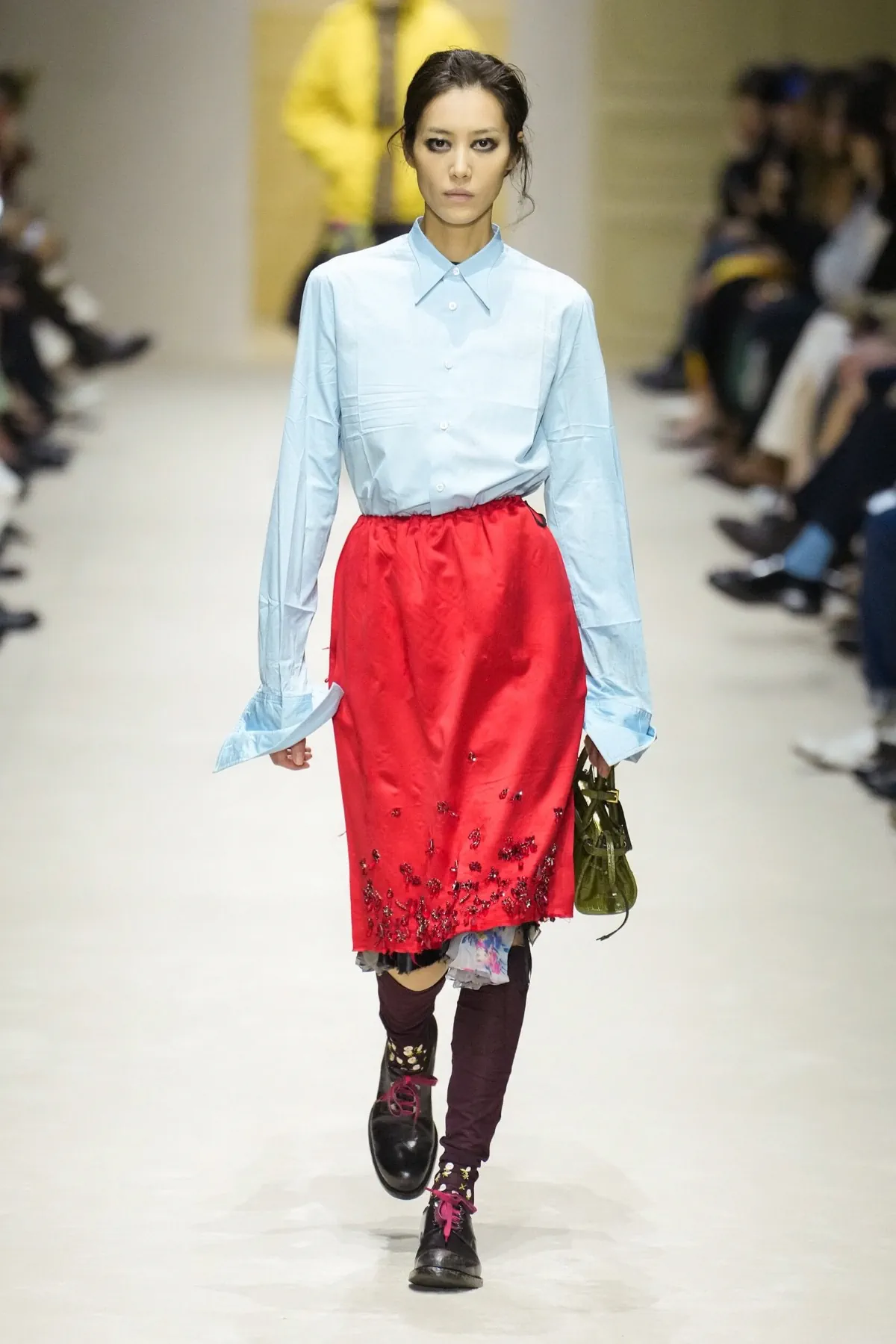
Archival references surfaced intentionally. A particular shade of pink, a floral print from an earlier season, and the slouchy, embroidered socks that have appeared across multiple Prada collections are details that reward close looking. The house’s history functions less as nostalgia and more as raw material to be reworked rather than preserved. A strict jacket is softened by aged embroidery. A utilitarian knit is disrupted by a satin sheen. These juxtapositions capture the contradictions of modern womanhood more effectively than most designers manage with entire collections.
Against the deliberately undone aspects of the Fall 2026 collection, Prada inserted unexpected moments of concentrated luxury that landed with greater force. Bejeweled beadwork skirts. Embroidered satin dresses nestled inside minimal outer layers. There was a hot pink pencil dress that slipped at the shoulders with what appeared to be calculated carelessness and a rough-textured scarf that was still wrapped at the neck, undercutting any move toward conventional glamour. These were not accessories added to a look. They were counterarguments woven into the fabric.
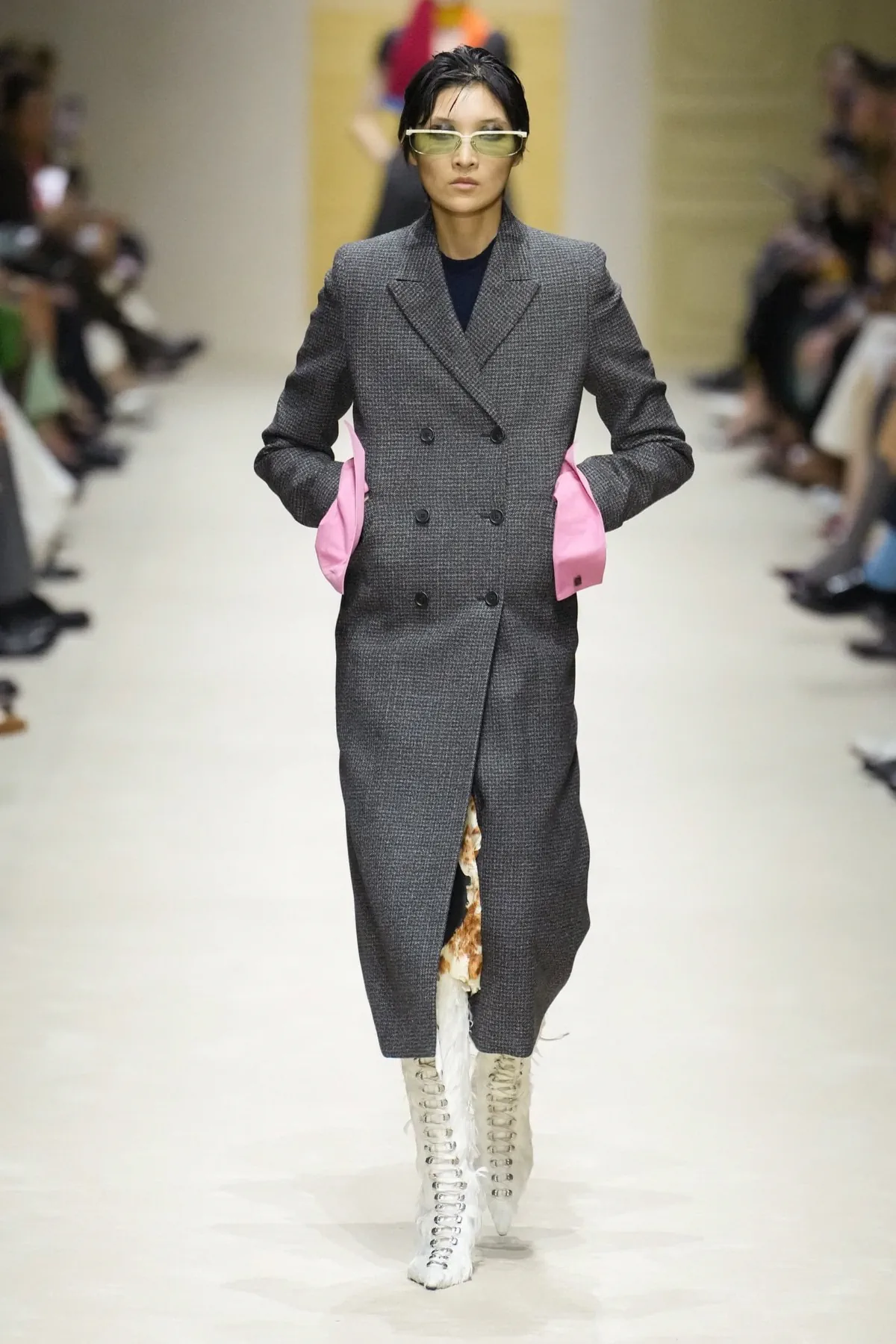
The show space at the Fondazione Prada reinforced the message of the clothes. Paintings and furniture from five centuries shared the room with the models, compressing time the way a well-layered outfit compresses a wardrobe. History was neither celebrated nor abandoned. It simply remained in the room the way a well-worn coat from twenty years ago remains in a closet.
Prada and Simons described themselves as inspired by “a fascination with the process of layering and transforming throughout the day through your clothes.” This is an accurate summary, but it understates the practical generosity of their presentation. Fashion houses often speak of empowering women while producing unwearable or unintelligible clothes. This collection was different not because it was simple but because its complexity mirrored what women do every morning in front of the mirror. The Fall 2026 Prada show did not provide answers. It recognized the questions women were already asking and met them there.