


The Louis Vuitton Spring/Summer 2026 collection opened its doors to something rare in fashion: a focus on elegant comfort. Ghesquière, known for his futuristic designs and bold experimentation, chose intimacy as his guiding theme. He described it as “dressing for yourself first,” a notion that feels both timely and timeless. The result was a wardrobe that looked luxurious without being ostentatious, offering women clothing that is as personal as it is refined.
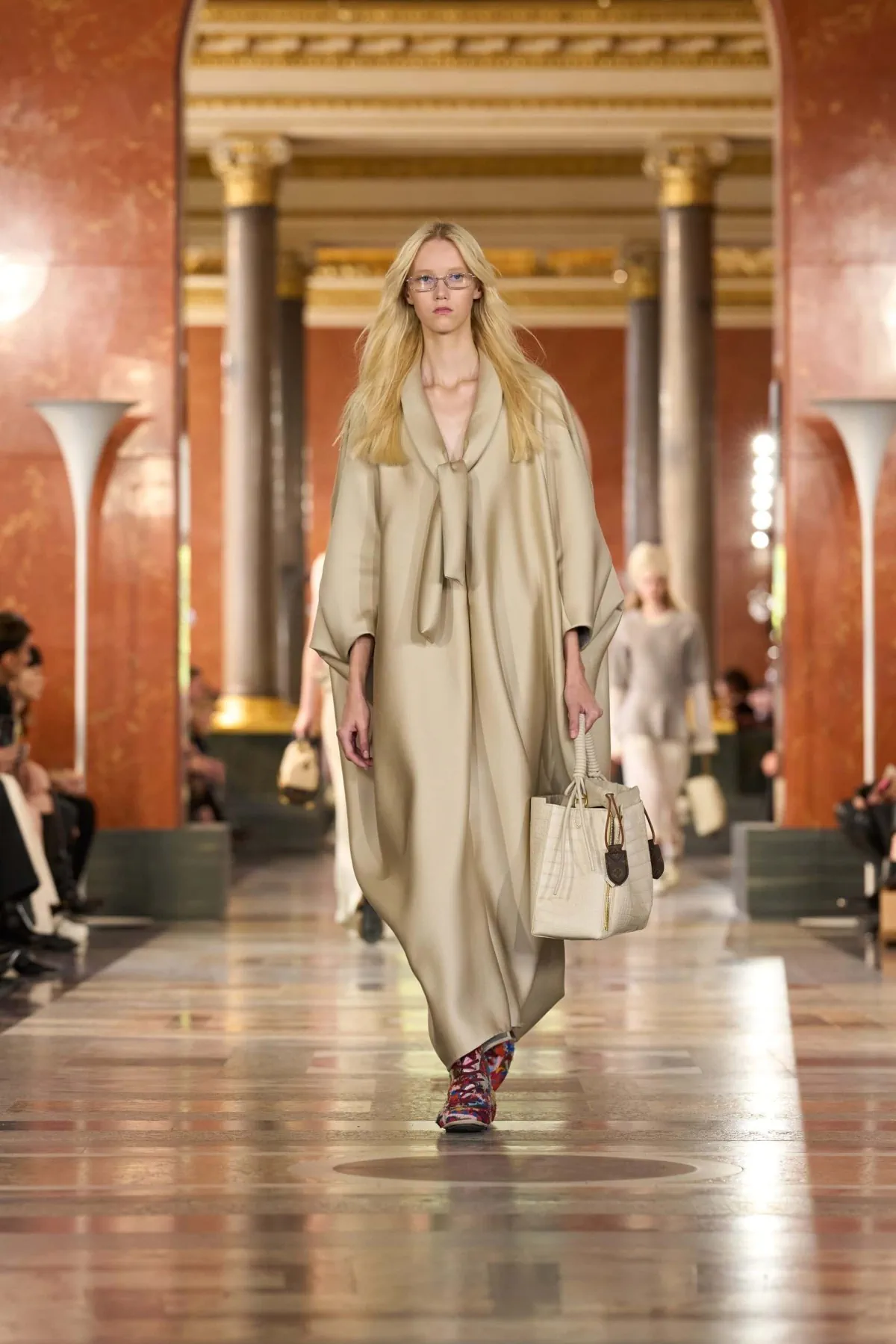
Held inside the restored summer apartments of Anne of Austria at the Louvre, the show juxtaposed history with modern craftsmanship. The rooms themselves, with their frescoed ceilings, marble floors, and gilded details, provided a backdrop of grandeur. Yet, Ghesquière drew inspiration not from regal costumes, but from interiors, textures, and the ease of home. This choice reinforced his message that fashion can be magnificent without leaving one’s personal sphere.
The first looks reflected this softer tone. A sheer camisole paired with trousers and a robe hinted at loungewear yet exuded sophistication. Next came a berry-pink silk dress with a shearling-lined neckline, recalling luxury in a subtle form. Prints resembled wallpaper patterns, and some garments incorporated wooden discs along the seams — a detail that was as surprising as it was tactile. These touches grounded the collection in domesticity while maintaining Vuitton’s signature flair.
Follow all the latest news from Fashionotography on Flipboard, or receive it directly in your inbox with Feeder.
You might also read

Innovation remained at the heart of the work. A camel-colored romper disguised as a coat and a vest that looked like fur but was made of brushed silk showed Ghesquière’s ongoing curiosity. Fringe pieces closed the presentation, their beading arranged like a blurred Impressionist garden. The intricacy of these designs did not diminish their softness. Rather, they maintained a sense of ease, proving that embellishment can feel inviting instead of rigid.
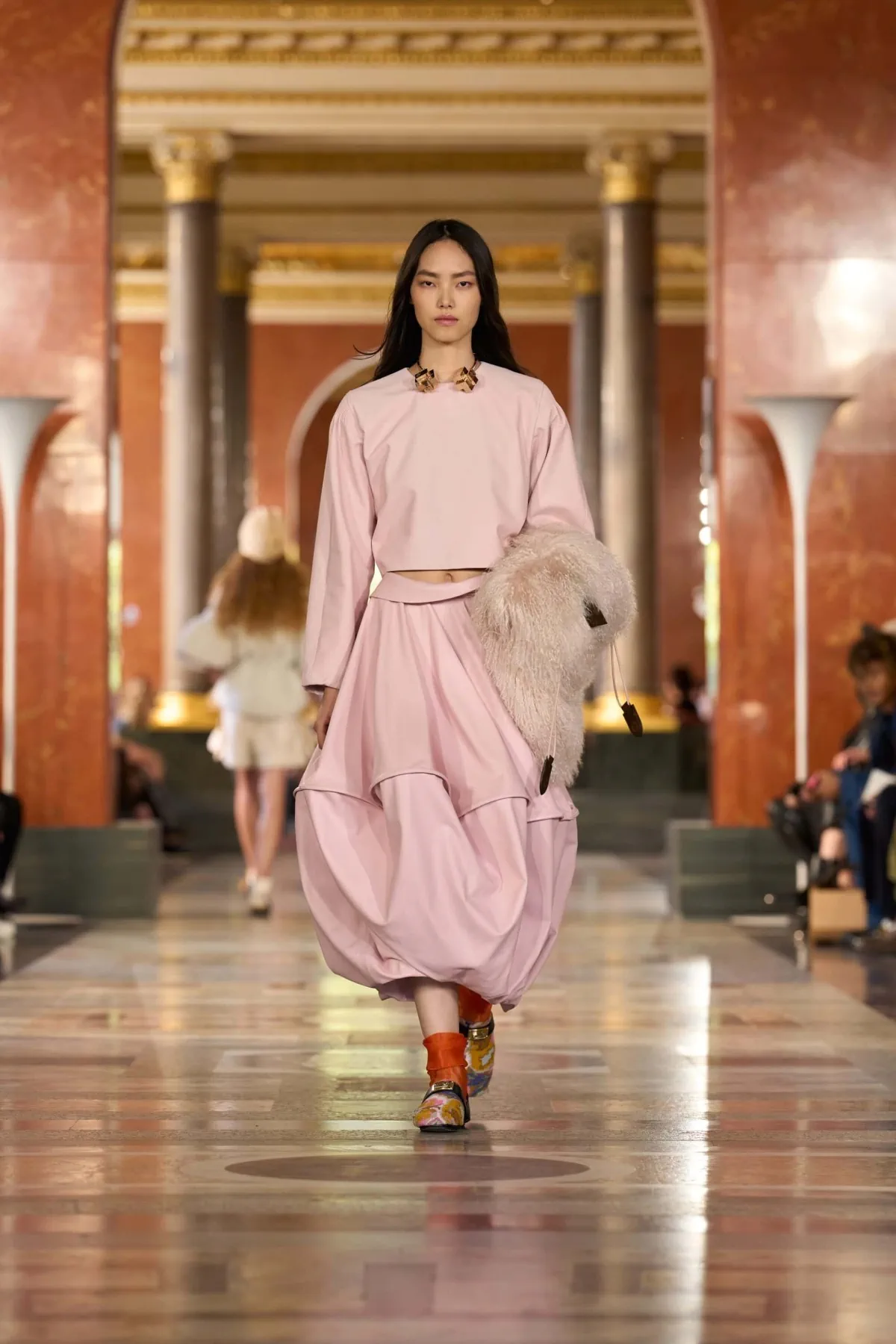
Accessories carried the same spirit. Socks appeared, but not ordinary ones — these were crafted in glossy brocade and worn with sandals. The footwear included needlepoint flats, another nod to the comforts of home. These choices showed that domestic details, when reimagined, can reach the level of high fashion.
Atmosphere played a key role. The audience walked through the Louvre on a closed day, encountering treasures like the Winged Victory of Samothrace without interruption. Inside the apartments, scenographer Marie-Anne Derville curated pieces spanning centuries, from 18th-century cabinets to Art Deco seating. Together, these pieces created a setting that reinforced the show’s emphasis on rare experiences and private luxury.

Sound added another layer. Cate Blanchett’s voice filled the space as she read lyrics from Talking Heads’ “This Must Be the Place,” accompanied by music composed by Tanguy Destable. The words, “Home is where I want to be,” echoed Ghesquière’s vision of fashion for the inner world. They served as a reminder that luxury often begins where one feels most at ease.
The collection reflects a wider shift in fashion. Many women are seeking garments that honor individuality while offering calm and comfort. Ghesquière captured this mood precisely, creating clothing that feels both extravagant and approachable. His work reaffirmed that style isn’t limited to grand entrances, but also exists in the quiet moments of daily life.
