

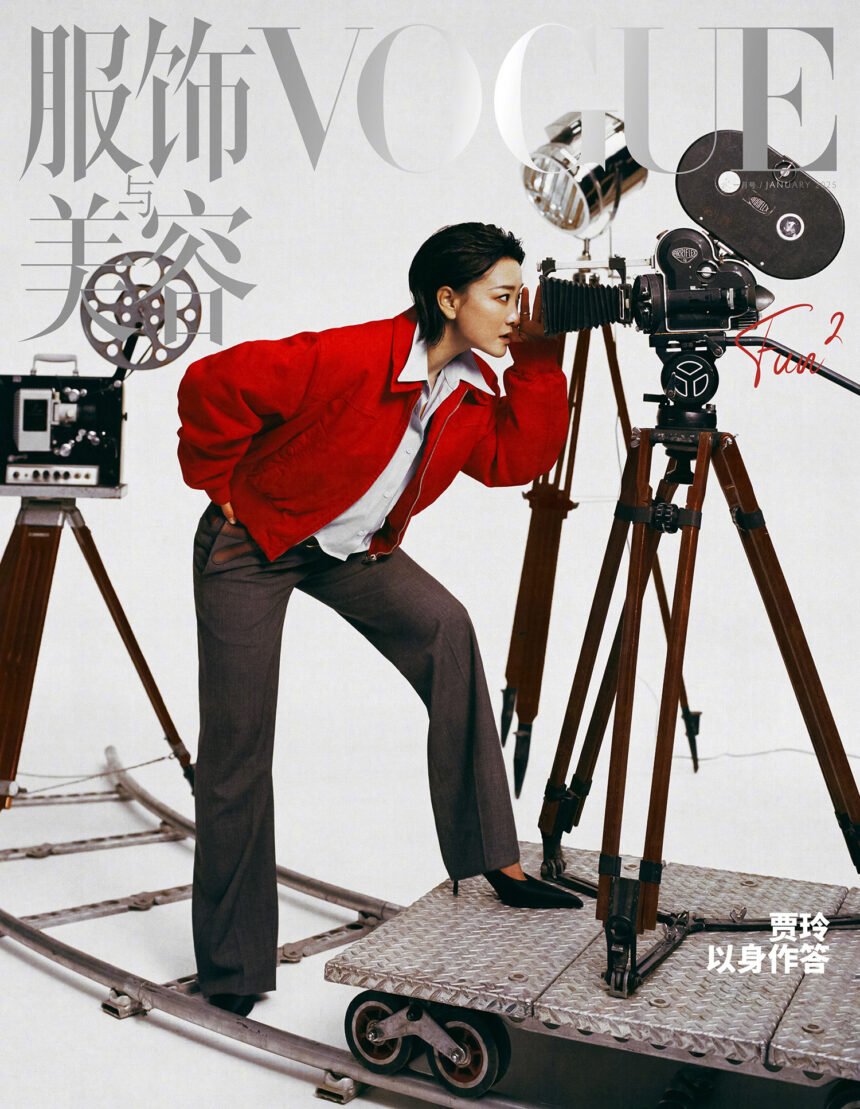
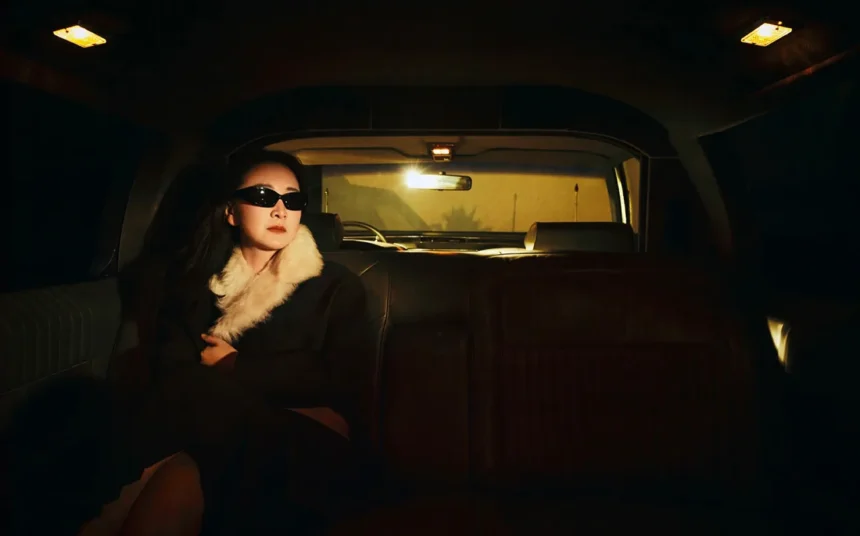
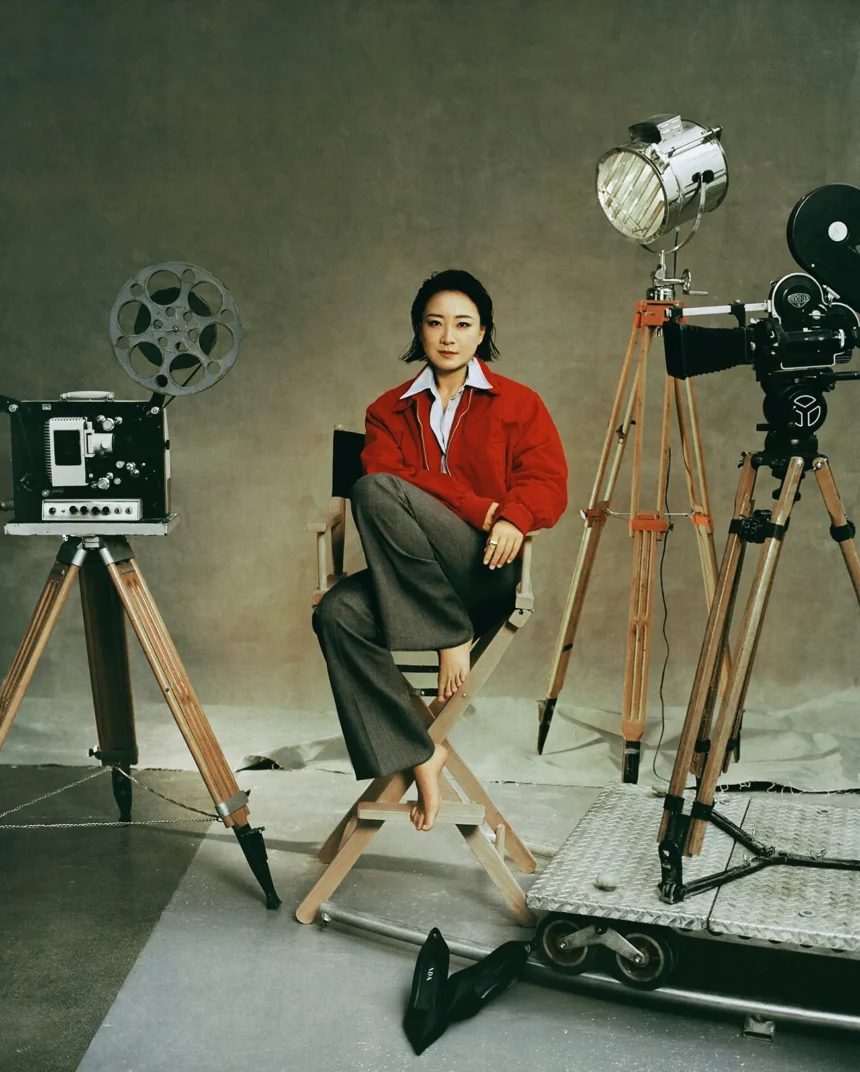
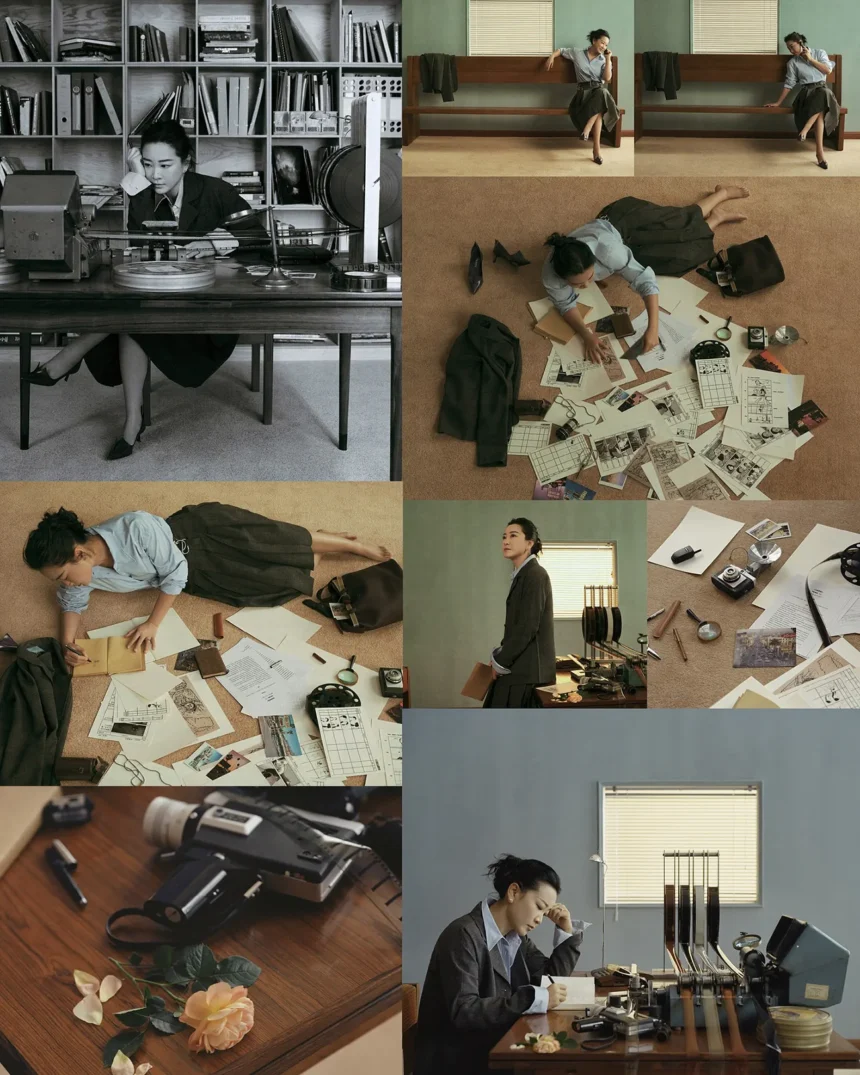
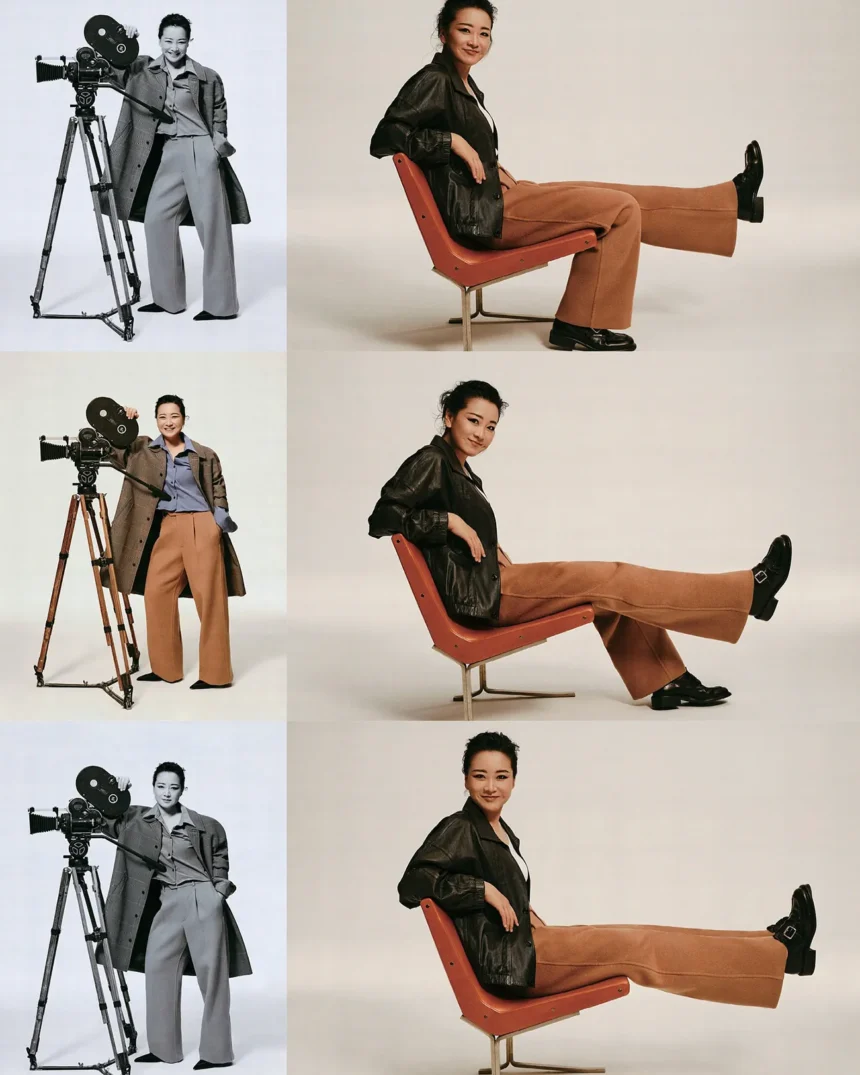
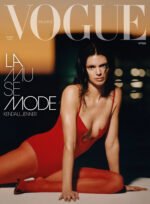
When Vogue China chose Chinese director, actress, and comedian Jia Ling for its January 2025 cover, the decision represented more than a celebrity profile—it signaled a cultural recalibration of who commands authority in the visual language of high fashion. Photographed by Leslie Zhang with styling by Vivienne Sun, the cover story presents Jia Ling not as a performer seeking fashion’s validation, but as a creative force who has already earned it on her own terms.
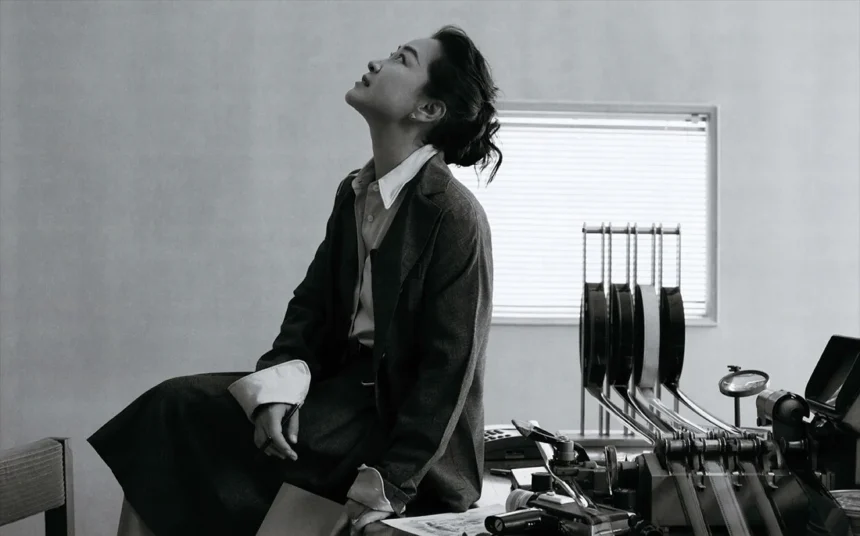
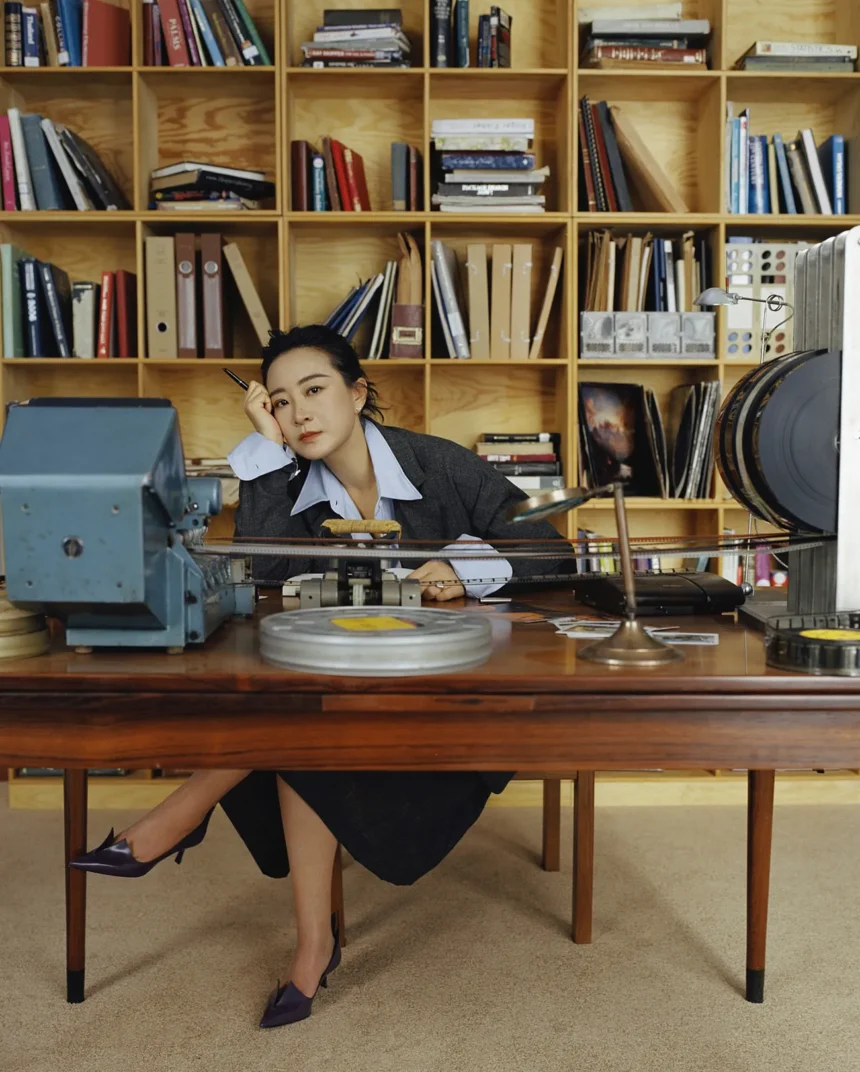
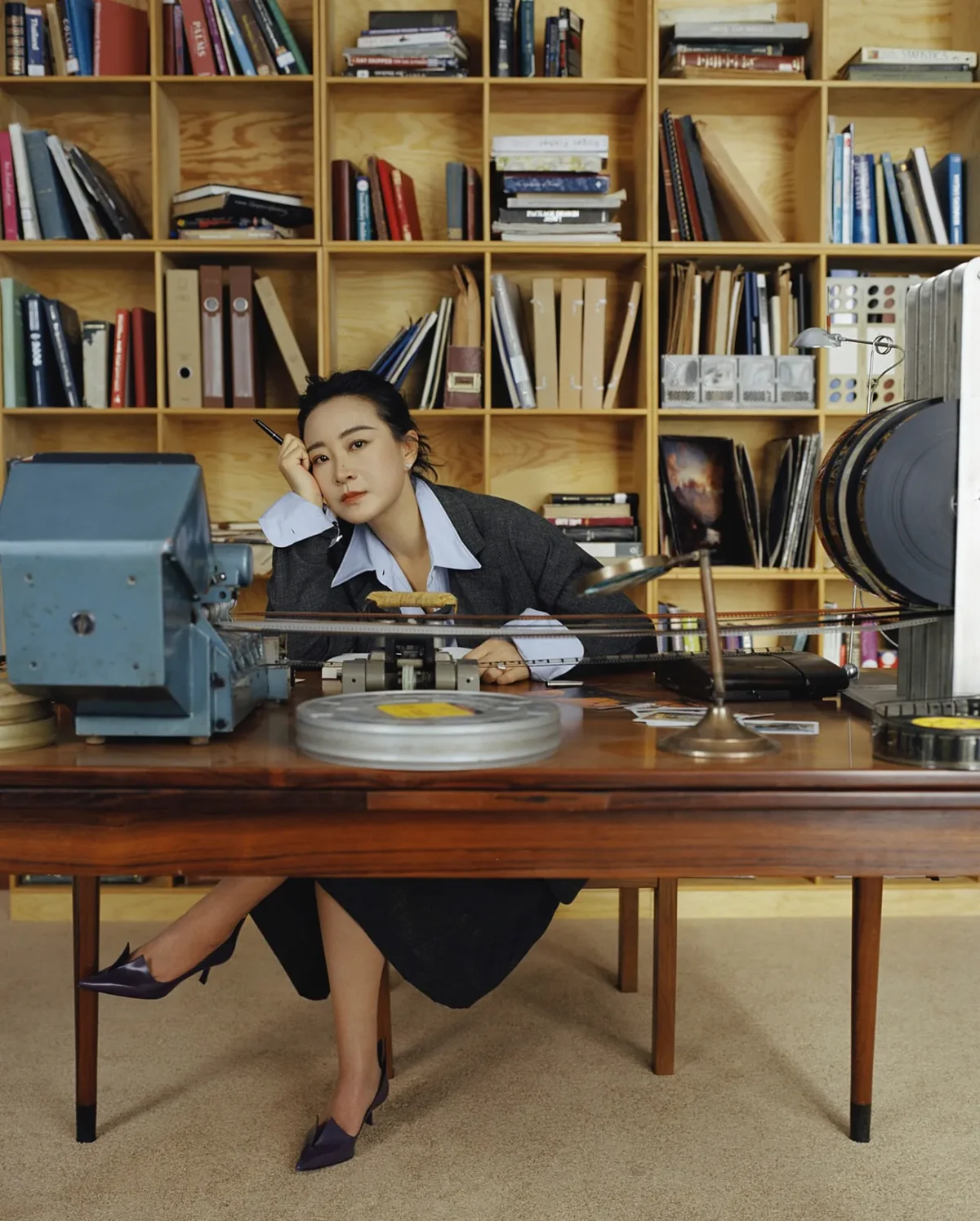
The editorial, lensed with cinematic restraint, unfolds across settings that privilege intellect and craft over conventional glamour. In one image, Jia Ling sits behind a vintage wooden desk, surrounded by books and records, her posture suggesting both contemplation and control. The tableau evokes a director’s study rather than a dressing room—a deliberate repositioning of where creative power resides. Fashion, in this context, becomes a language spoken by those who shape culture, not simply those who wear it.
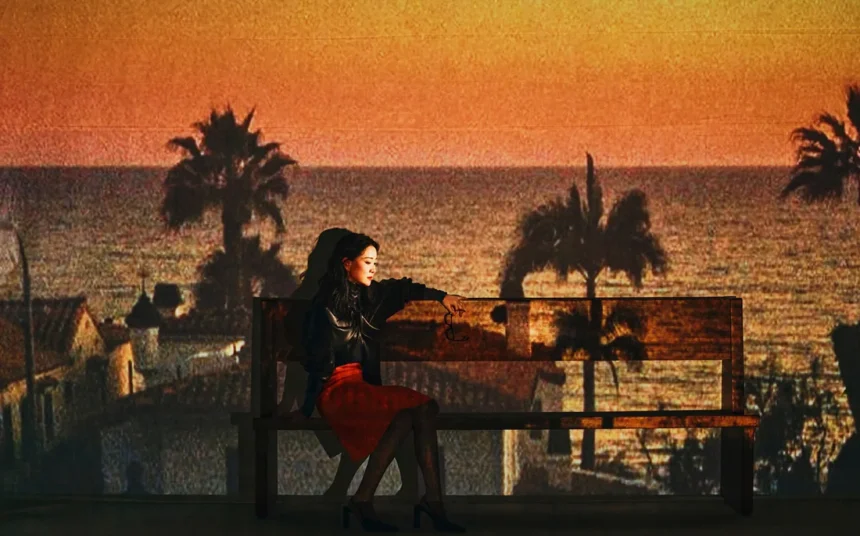
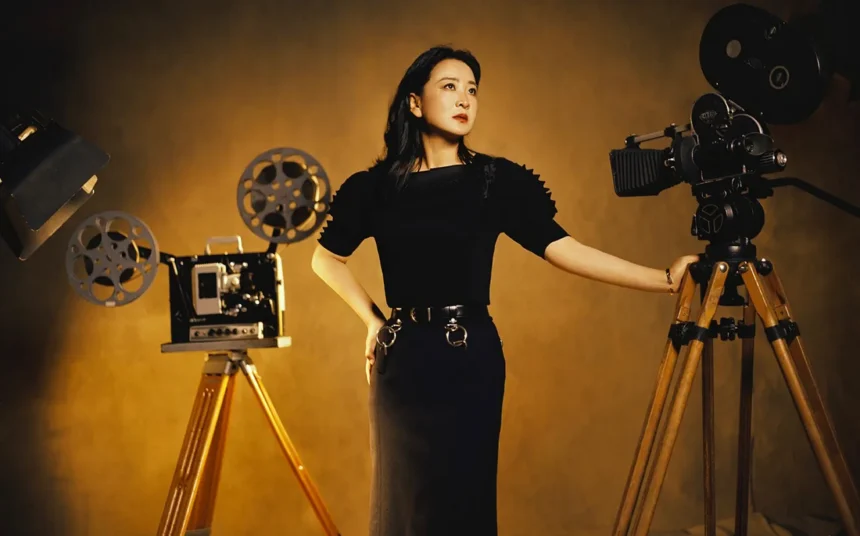
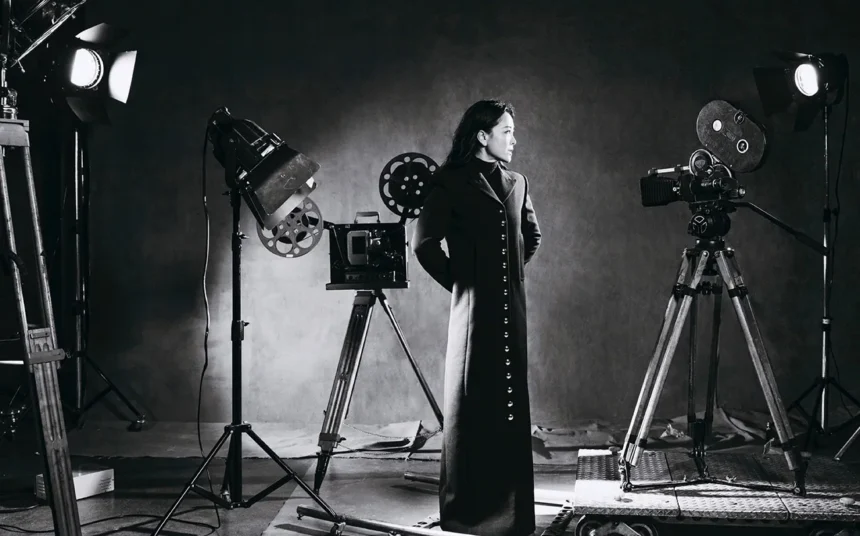
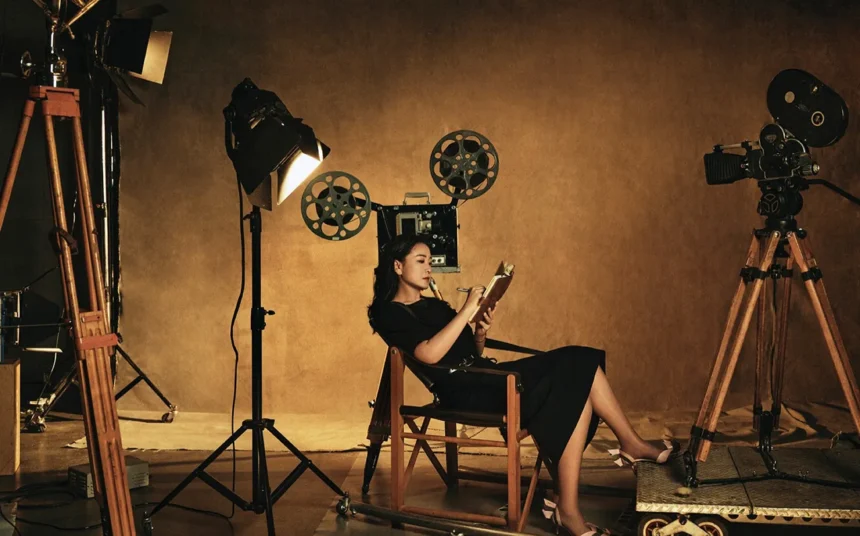
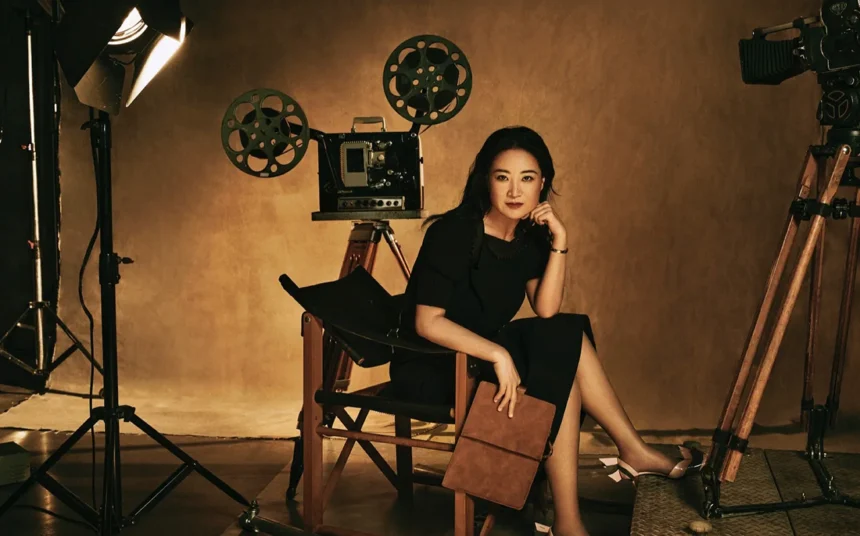
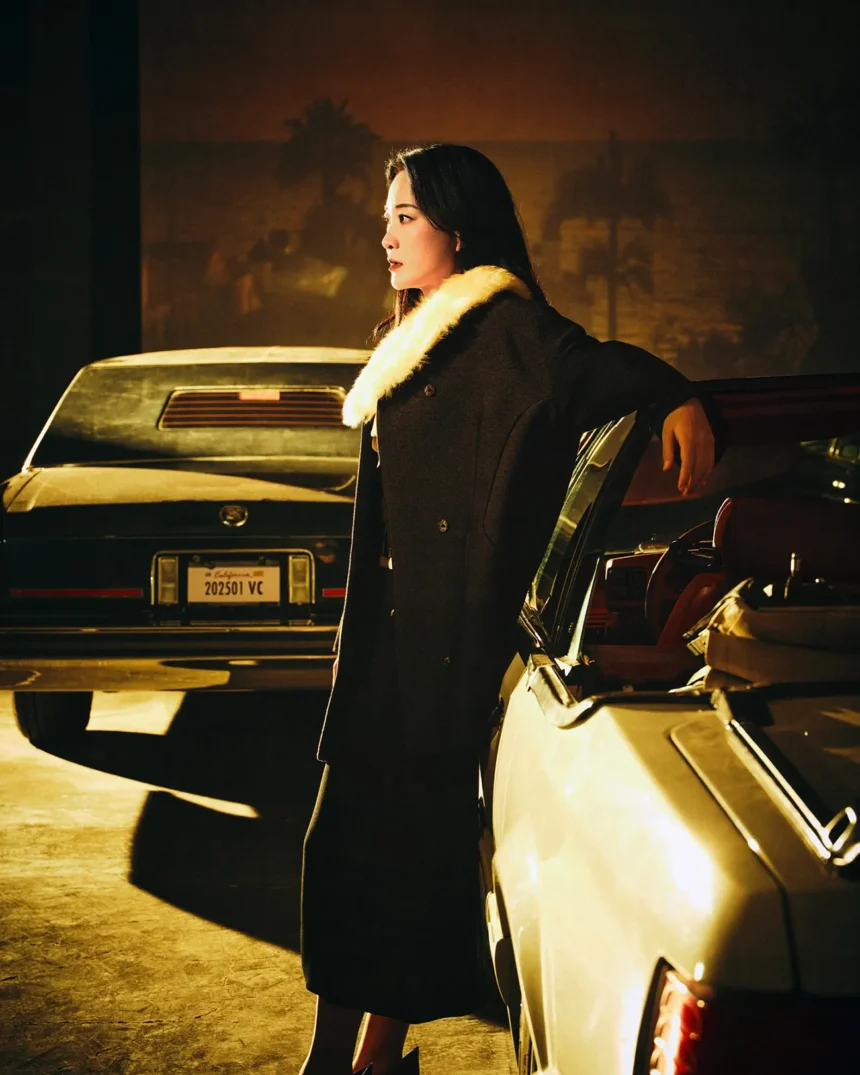
Photographer Leslie Zhang‘s visual narrative rejects the familiar tropes of celebrity fashion photography. There are no wind machines, no contrived poses of ecstasy or ennui. Instead, Zhang captures Jia Ling in moments that feel stolen from a larger creative process: near film equipment against a desert sunset, in a library that suggests serious literary pursuits, at a workspace cluttered with the tools of cultural production. The styling by Vivienne Sun reinforces this intellectual positioning, favoring structured tailoring and refined pieces that communicate professional authority rather than decorative femininity.
What makes this cover story culturally significant is its implicit argument about who gets to occupy fashion’s most prestigious real estate. Jia Ling built her career on comedy and filmmaking, navigating an industry that has historically marginalized women directors while simultaneously demanding that female celebrities conform to narrow beauty standards. Her presence on Vogue China’s cover—presented not as a makeover subject but as an artist in full command of her creative domain—challenges the transactional relationship between fashion media and celebrity.
The hair by Lucas Liu and makeup by Jin Zjzj follow the editorial’s broader aesthetic philosophy: enhancement without transformation, polish without erasure. Jia Ling’s face remains her own, her expression suggesting someone accustomed to operating behind the camera rather than in front of it. This restraint speaks to a maturing relationship between Chinese fashion media and its subjects, one less interested in importing Western beauty ideals and more focused on celebrating local definitions of creative success.
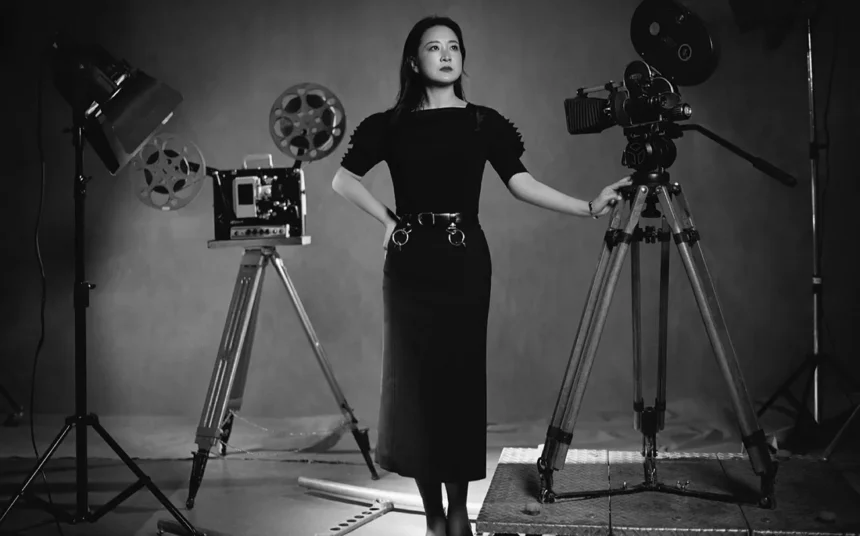
In the images set against golden-hour desert landscapes, Jia Ling appears in dialogue with cinematic equipment—cameras, tripods, the apparatus of image-making itself. The symbolism is elegant in its directness: here is a woman who understands both sides of the lens, who has earned her place in fashion’s visual economy not through conventional beauty but through the authority of authorship. The red accents that punctuate several shots—a vivid coat, strategic color blocking—function as visual declarations of presence, refusing the muted palette often imposed on women in positions of intellectual or creative leadership.
Suivez toute l’actualité d’Essential Homme sur Google Actualités, sur notre chaîne WhatsApp, ou recevoir directement dans votre boîte mail avec Feeder.
You may also like
The styling choices throughout the editorial privilege structure and silhouette over ornamentation. Tailored separates, architectural shapes, and considered layering create a wardrobe vocabulary aligned with boardrooms and film sets rather than red carpets. This is fashion as professional uniform, clothing that signals participation in the serious business of culture-making. Vivienne Sun’s styling resists the impulse to soften or feminize, instead presenting Jia Ling as someone whose relationship to fashion is instrumental rather than ornamental.
What emerges from this cover story is a portrait of contemporary Chinese creativity that refuses to compartmentalize. Jia Ling inhabits these images as director, comedian, actress, and now fashion subject—roles that flow into one another rather than existing in isolation. The editorial’s visual strategy suggests that fashion, when wielded by those who understand image-making from the production side, becomes another tool for articulating identity and authority rather than a separate sphere requiring special expertise or deference.
This positioning matters in a media landscape still grappling with how to represent women whose primary achievements lie outside traditional fashion and beauty categories. By photographing Jia Ling in environments associated with intellectual and creative labor, Leslie Zhang and the Vogue China team sidestep the usual celebrity fashion narrative—the transformation, the reveal, the before-and-after—in favor of something more substantive: recognition of achievement that exists independent of fashion’s approval.
The January 2025 cover story ultimately functions as a meditation on creative authority in contemporary China. Jia Ling’s presence in these pages, styled and photographed with the same gravitas typically reserved for established fashion industry figures, suggests an evolution in how prestige is understood and conferred. Fashion, in this framework, becomes a language available to all who have earned cultural authority through their work, rather than a closed system requiring initiation through conventional beauty or industry pedigree. The images don’t ask us to see Jia Ling differently; they ask us to recognize what was already there.