

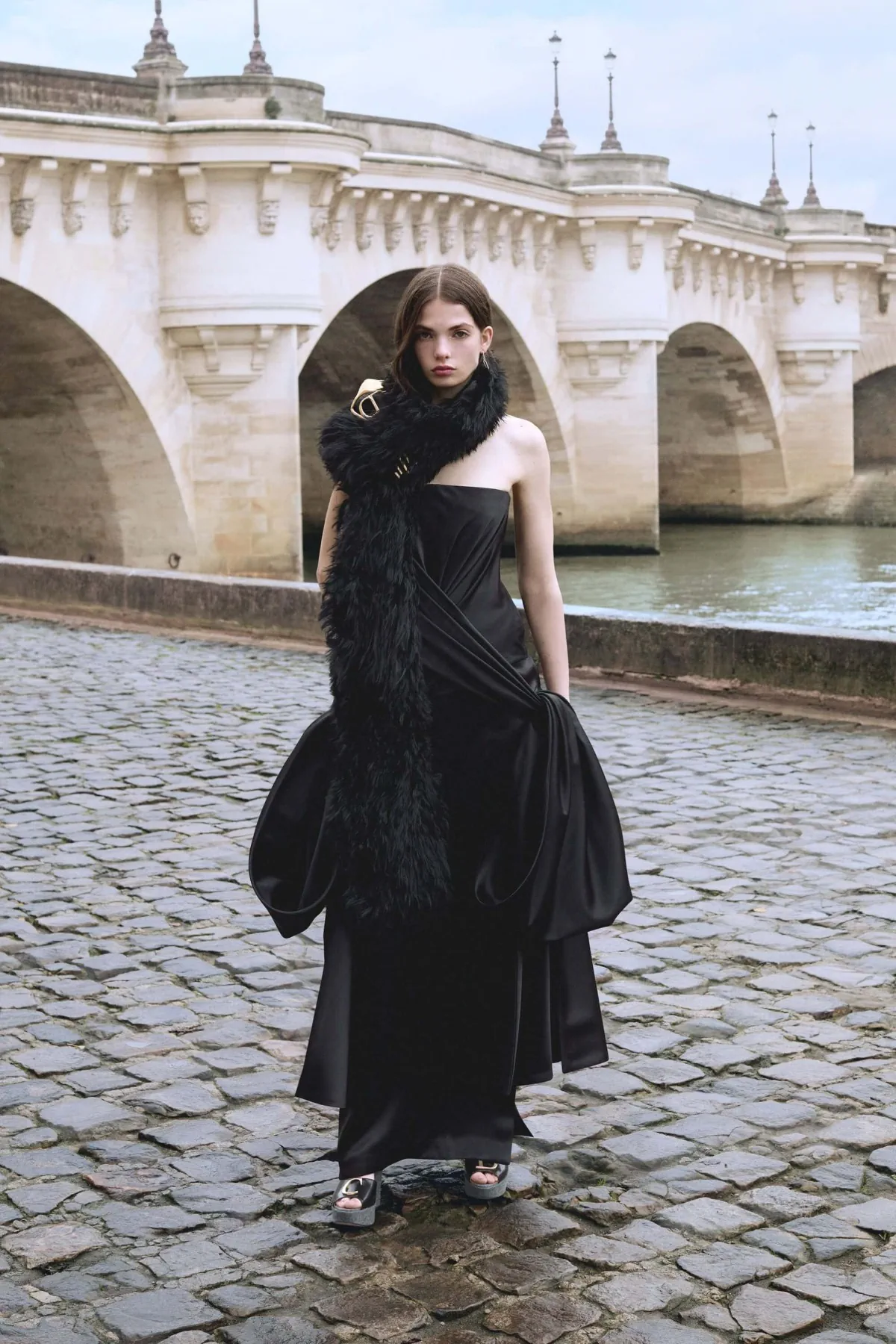
With Dior Pre-Fall 2026, Jonathan Anderson continues his methodical takeover of the house, transforming denim into couture, deconstructing heritage silhouettes, and quietly expanding Dior’s idea of modern femininity.
The standout pieces come in an unexpected form: jeans. Anderson developed ultra-lightweight denim that flows like pleated skirts; their proportions are pushed to theatrical dimensions. These aren’t standard pants. They’re constructions that borrow couture techniques and apply volume to familiar silhouettes until they become something entirely different. The designer paired these oversized trousers with multiple versions of the Bar jacket, Dior’s signature piece, which he modifies by cropping, elongating, texturing, and stretching it into coats. This approach speaks to Gen Z’s preference for exaggerated proportions while maintaining the codes that define the Dior brand.
Anderson acknowledges that his vision requires time to unfold. Rather than chasing seasonal trends, he’s building a wardrobe, expanding his roster of key pieces without forcing a singular aesthetic. The collection demonstrates his belief that Dior can accommodate different types of women by offering options for various tastes and lifestyles.
The 1948 Arizona trapeze coat served as inspiration, though Anderson deconstructed it beyond recognition. A chocolate brown jacket features a loosely draped shawl collar, and double-faced striped blanket coats fasten with hat pins. These pieces reference history without copying it — a technique that enables Anderson to honor the house’s legacy while pushing it forward.
His comfort zone clearly lies in craft-intensive designs—a signature sharpened during his Loewe era. A Bar jacket woven from multicolored ribbons appears alongside folded balloon pants, appealing to those who appreciate his cerebral work at Loewe. Knits include a ribbed blue cardigan shaped like a tailcoat that strikes the necessary balance between creativity and commercial viability.
Anderson continues to find his footing with romantic, feminine designs—the category that fueled Dior’s rapid growth under Maria Grazia Chiuri. His draped silk scarf dress features laser-cut floral motifs that demand close examination. Slip dresses underlaid with stiff tulle offer simple femininity, though his red carpet designs remain more controversial.
The designer doubled down on voluminous, side-knotted evening wear, including a pistachio-green version of the bustier gown that brand ambassador Mia Goth wore to the Governors Awards. Dresses with pointy cleavage that sweep into side bows represent his edgy interpretation of moiré silk, a throwback fabric from the 1950s.
Anderson acknowledges that working with Dior’s workshops challenges him in productive ways, especially when preparing for his first haute couture collection. This experience differs markedly from his previous position, as it requires him to explore construction methods he wouldn’t naturally gravitate toward. He wants garments that feel weightless despite their complexity — an exercise in technical refinement that expands his design vocabulary.
Follow all the latest news from Fashionotography on Flipboard, or receive it directly in your inbox with Feeder.
You might also read
The pressure mounts quickly. His designs are already on display at La Galerie Dior, the permanent exhibition at the brand’s historic Paris flagship, alongside work from all his predecessors. Anderson called this “very scary, very intimidating,” revealing the weight of expectation that accompanies the position.
He can dress women in avant-garde, ribbon-whipped jackets or simple black blazers worn over untucked shirts and regular, patched-knee jeans. His designs range from deconstructed evening wear to cocktail dresses and tailored coats and trenches, creating a comprehensive wardrobe rather than a narrow seasonal statement.
Anderson previously designed denim for his own label, LOEWE, and for UNIQLO. He brings years of experience to Dior’s technical resources. He’s now taking the fabric to new territories, including richly embroidered, 18th-century-style tailcoats and waistcoats for men’s and women’s collections—echoing his Dior Men Pre-Fall 2026 direction. This reinforces his vision of shared wardrobes that transcend traditional gender boundaries.