


Under the abandoned Bowery subway station, Matthieu Blazy unveiled his first Chanel Métiers d’Art collection, a bold shift that replaced uptown polish with raw New York electricity. The result was a cinematic, cross-cultural dialogue between French craftsmanship and the city’s archetypes, expressed through inventive tweeds, reimagined silhouettes and atmospheric staging that turned the underground into high-fashion choreography.

The location itself demanded attention. Below 168 Bowery, at the decommissioned platform where Tom Ford once staged his Spring/Summer 2020 show, Chanel transformed the neglected station into a functioning set. Pay phones hung on the walls. Train sounds rumbled through the speakers. When the lights dimmed, an MTA train pulled in, and 80 models emerged, creating what Blazy called “happy chaos.“
Guests braved pouring rain above ground and navigated multiple security checkpoints before descending into the platform. The front row included A$AP Rocky, Margaret Qualley, Tilda Swinton, Kristen Stewart, Linda Evangelista, and Jon Bon Jovi. Jenny Slate, dressed in tweed and khakis, joked that she had arrived at the “Chanel stop.“
Blazy built the collection around New York archetypes. One model wore what appeared to be denim, but it was actually silk created using a 1920s technique by Lesage, one of the specialty ateliers at Le 19M. A society woman swept past in a billowing black opera cape. The designer referenced a “journalist from the ’70s” and an “’80s businesswoman who’s going to rule the world.”
The references ran deeper. Blazy drew inspiration from Gabrielle Chanel’s 1931 trip to America, during which she designed costumes for films and observed downtown women who had adopted her style without purchasing her clothing. That discovery reignited her creative energy. Blazy drew inspiration from this period, using what he called “the artifice of a cinematic lens” to exaggerate and loosen the silhouettes while maintaining their wearability.
The Métiers d’Art 2026 collection showcases Chanel‘s specialty ateliers, from Rue Cambon to le19M. Feather workers, flower makers, goldsmiths, shoemakers, embroiderers, and tanners contributed their expertise. The results were exceptional. Hand-woven leopard motifs appeared in tweed jackets and skirt sets thanks to a new technique. Silks mimicked Gabrielle Chanel’s admiration for Astrakhan fur.

One coat featured the 1931 film poster for Tonight or Never woven into the tweed fabric. A fringed skirt sparkled with upside-down Empire State Buildings. Blazy even included his own “Clark Kent” moment with a blue, red, and yellow graphic sweater worn under a strong-shouldered plaid blazer. A shimmering evening suit displayed dog faces because, as Blazy explained, “in New York, you have two accessories: a dog and a coffee cup.” Coffee cup–accented handbags completed the look.
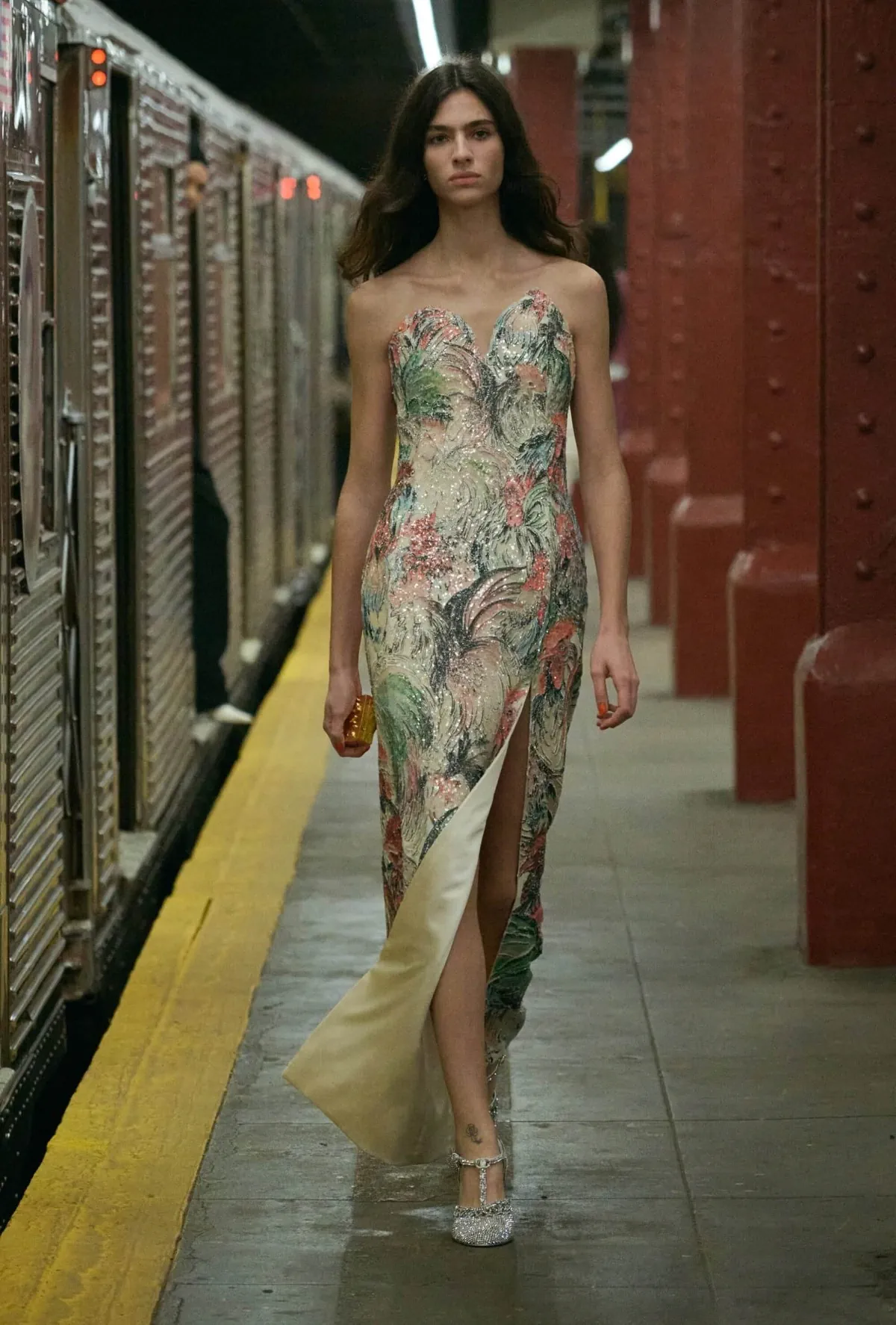
Lesage’s beadwork and Lemarié’s feathers brought what Vogue called “buzzy vitality” to the presentation. Blazy emphasized lightness throughout, particularly in the airy tweeds he designed. Occasionwear expanded to include shimmering ombré dresses and floating ball gown skirts crafted from giant, frayed “petals,” which were worn with turtlenecks.
Follow all the latest news from Fashionotography on Flipboard, or receive it directly in your inbox with Feeder.
You might also read
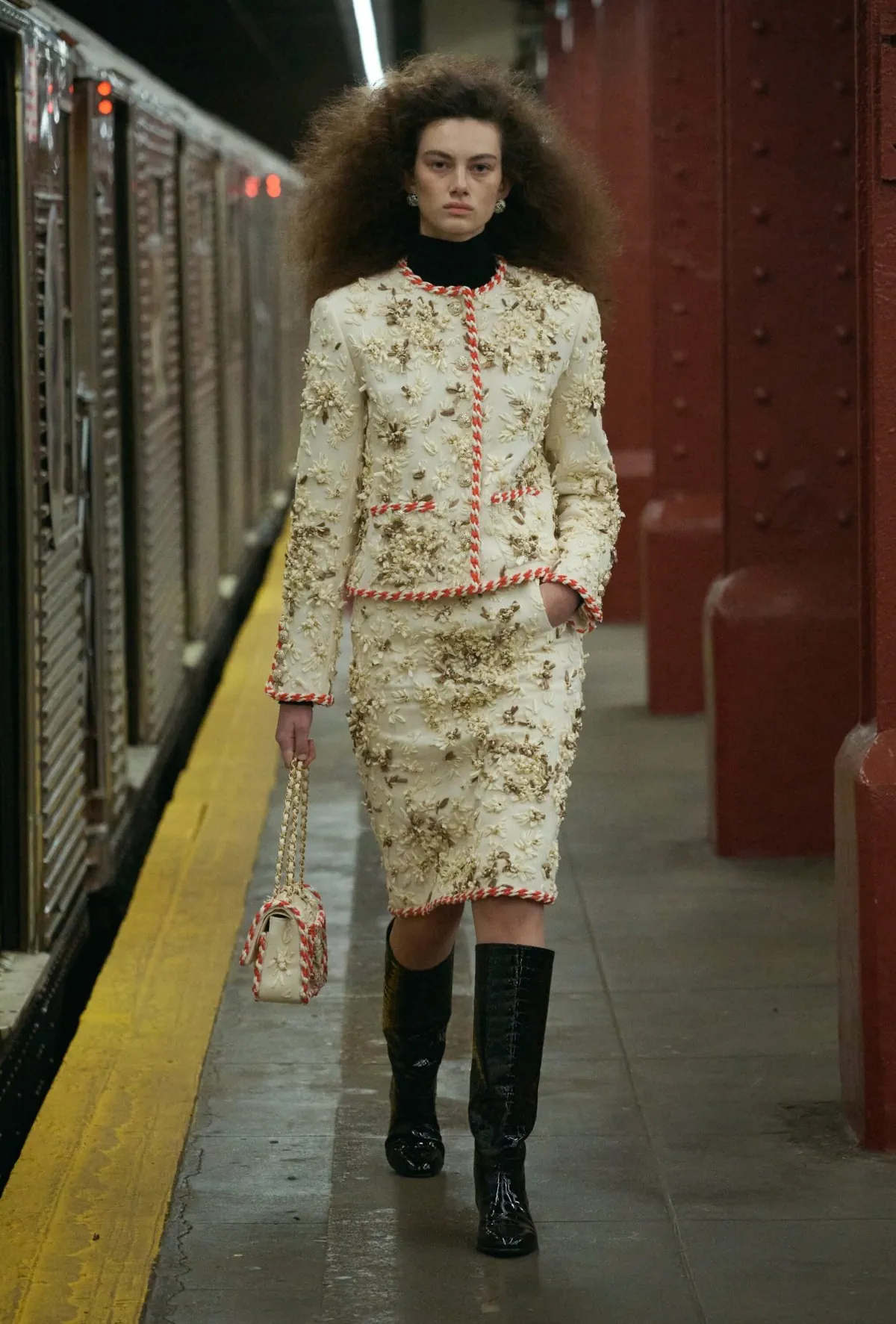
New bouclé check flannels featured chains on the hemlines. Blazy described them as “the story of Pendleton in America—what that would be like as a version of Gabrielle.” This flannel, which was actually bouclé, demonstrated his interest in subverting expectations. American sportswear and luxurious knits appeared throughout.
Animal prints dominated, inspired by Gabrielle Chanel’s wardrobe. The collection spanned eras, from 1920s beehive hairstyles to 1980s power suits. Emily Ratajkowski took note of a translucent raincoat over a sequined cheetah-print ensemble at her first Chanel show. A taxicab-yellow, animal-spot suit paid homage to Coco herself.
Bruno Pavlovsky, Chanel’s president of fashion, emphasized the difference between this show and the 2018 presentation. “With Matthieu, it’s the beginning,” he said, noting that the shift from the Upper East Side to the Lower East Side represented opposing energies within New York.
The timing mattered. Chanel recently opened a new boutique at Bloomingdale’s flagship store, but Pavlovsky said the show was “so much bigger than that.” The brand wanted to understand its ambassadors’ vision and connect with clients where they live. Given the strong performance of the U.S. market, particularly in ready-to-wear and bags, the investment made sense.
Pavlovsky noted that price resistance disappears when collections strengthen. “What makes the difference is the perceived quality,” he explained. The work behind the product must be evident in the final result.
Margaret Qualley, who appeared alongside A$AP Rocky in Michel Gondry’s romantic comedy-tinged short film teaser, called the subway setting “so glamorous, so New York, and gorgeous.” The custom “La Gazette” newspaper, featuring Blazy interviews and artisan profiles, was part of the invitation suite.

Blazy chose the subway because it is the only place in the world where every sector of society interacts without hierarchy. “I wanted to create a sense of happenstance-what we see every morning on our way to work, when you don’t know what you’ll find around the corner,” he said. The show delivered on that promise. Models crossed paths randomly on the platform, creating genuine spontaneity.
Blazy has swiftly moved Chanel away from logo-heavy regalia toward a more varied yet recognizable aesthetic. The collection balanced chic restraint with aspirational dressing and playful moments, incorporating dramatic feathers and vibrant colors. Guests left with a “contact high,” in the words of one observer.