

The New-York Historical Society has formally acquired the complete Bill Cunningham Archive, a landmark collection from one of photography’s most dedicated figures. For years, the fate of the extensive work of the late New York Times photographer was uncertain. Cunningham, who documented the city’s life from his bicycle while wearing his signature blue jacket, was famously private about his collection. He once said that he would rather see his life’s work consumed by fire than have it fall into the wrong hands.

This makes the recent announcement particularly noteworthy. The archive contains tens of thousands of photographs, negatives, slides, and personal items and now has a permanent home. This ends a long period of uncertainty following Cunningham’s death in 2016 at the age of 87. Managed for years by his niece and co-executor, Patricia Simonson, the collection was stored in his studio above Carnegie Hall. It is now set to be a cornerstone of the Tang Wing for American Democracy, which is scheduled to open next year. There, it will be accessible to scholars and researchers.
Simonson explained her decision, saying, “With nearly nine years having passed since Bill’s death, I felt it was time to find a suitable home for the archive, a place that would digitize his work and make it accessible to the public.” She considered the New York Historical Society an ideal repository for the archive, noting its location “right on Central Park West in Manhattan, where much of his work took place.” This acquisition joins a significant group of Cunningham’s personal effects already held by the institution, including his bicycle, first camera, and a “Bill Cunningham Corner” street sign.
Follow all the latest news from Fashionotography on Flipboard, receive it directly in your inbox with Feeder.
You may also read

Louise Mirrer, the president of the New-York Historical Society, emphasized the collection’s cultural significance. “Bill turned fashion into cultural anthropology,” she said. Mirrer pointed out the breadth of his subjects: “He found the pulse of the city in every nook and cranny, photographing the glitzy, the wealthy, and the crème de la crème. He also made stops along the way to photograph other things that intrigued him, such as the grunge scene or a party downtown.” Mirrer believes this body of work represents “a kind of history of New York City that does not exist anywhere else.”

Despite his public persona and being named a living landmark in 2009, Cunningham was intensely private and protective of his work. He turned down a retrospective at the Metropolitan Museum of Art, telling the curator it would be a “diversion” from his job. His focus was always on the present moment and the work at hand. In a 2014 interview with fashion consultant Fern Mallis, he said, “Who thinks about a legacy? I’m a worker in a factory. All we think about there is what we’re doing today.”
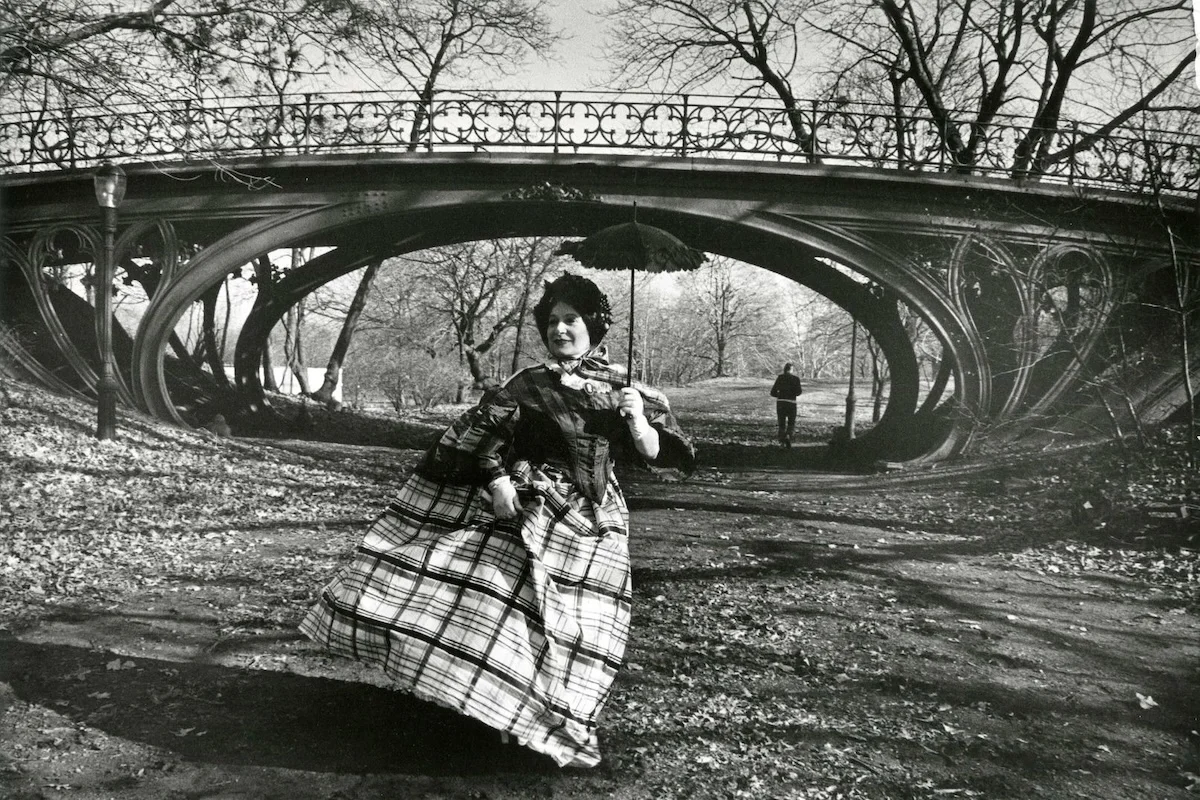
His reluctance was not born of modesty, but rather of what he called a “terror” that his images, some of which were less than flattering, could be misused. Nevertheless, there are reasons to believe he would have approved of this final arrangement. Cunningham had an existing relationship with the New York Historical Society, having donated his “Facades” photo essay to the institution years ago. The photo series, which features models in period attire against historic New York backdrops, was exhibited there in 2014. “I really do think Bill would see this as home,” Mirrer suggested.
The archive itself is immense, spanning approximately 600 linear feet of materials from the late 1960s to the 2010s. It includes his iconic “On the Street” photos, three decades of Met Gala coverage, and images from fashion shows in New York and Paris. Beyond the photographs are his personalized notebooks containing sketches, documents from his early career as a milliner under the name William J., textile swatches, and scrapbooks. The collection offers an unparalleled look into his process and his era.
To celebrate the acquisition, the museum plans to exhibit Cunningham’s “Evening Hours” later this year. These photographs document the city’s charitable galas and philanthropic society. Mirrer described the exhibition as a preview of a larger, more comprehensive show of the photographer’s work that will be displayed in the new wing. This ensures that the man who spent his life observing the city will be remembered and studied for generations to come, and that his unique vision will be preserved.