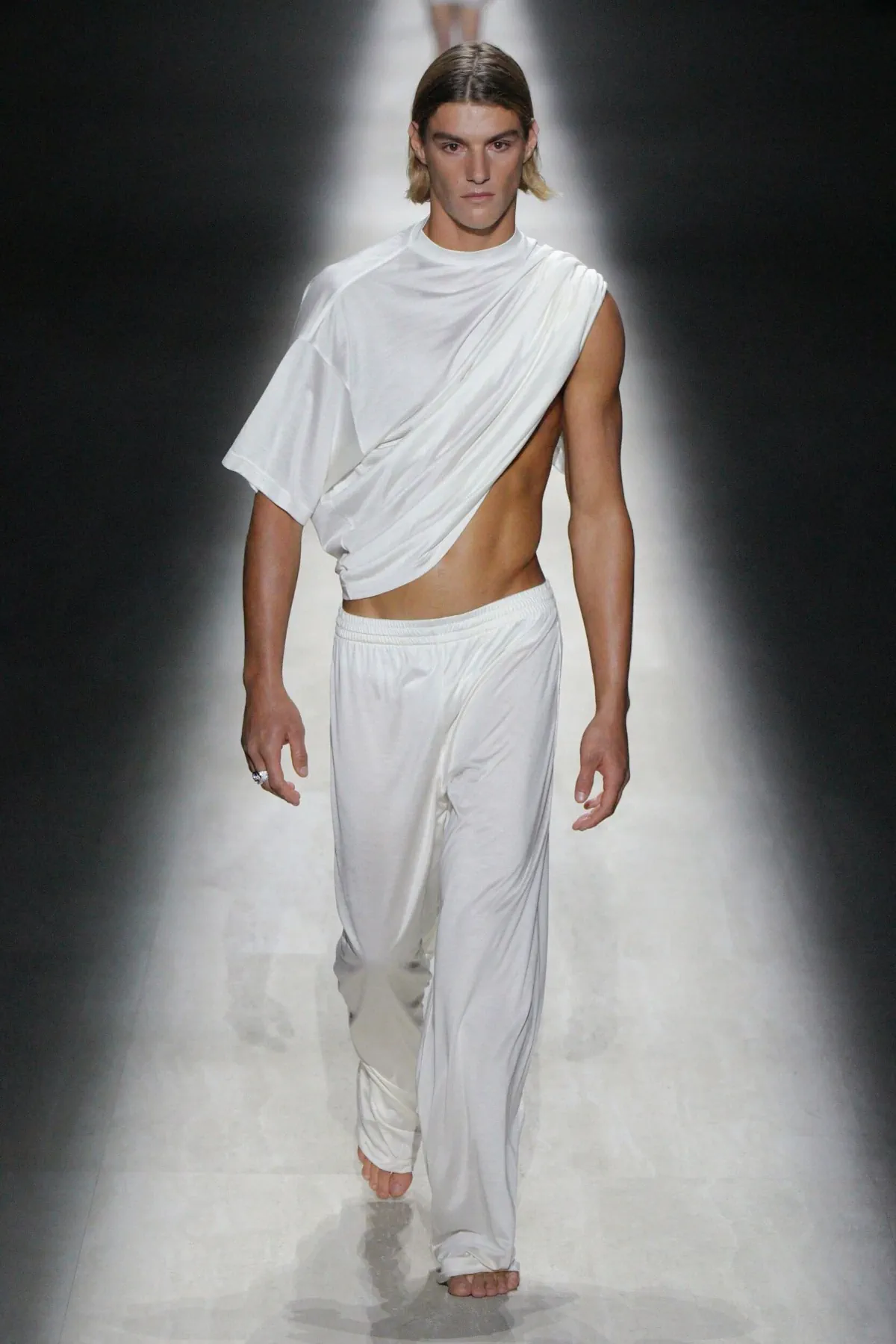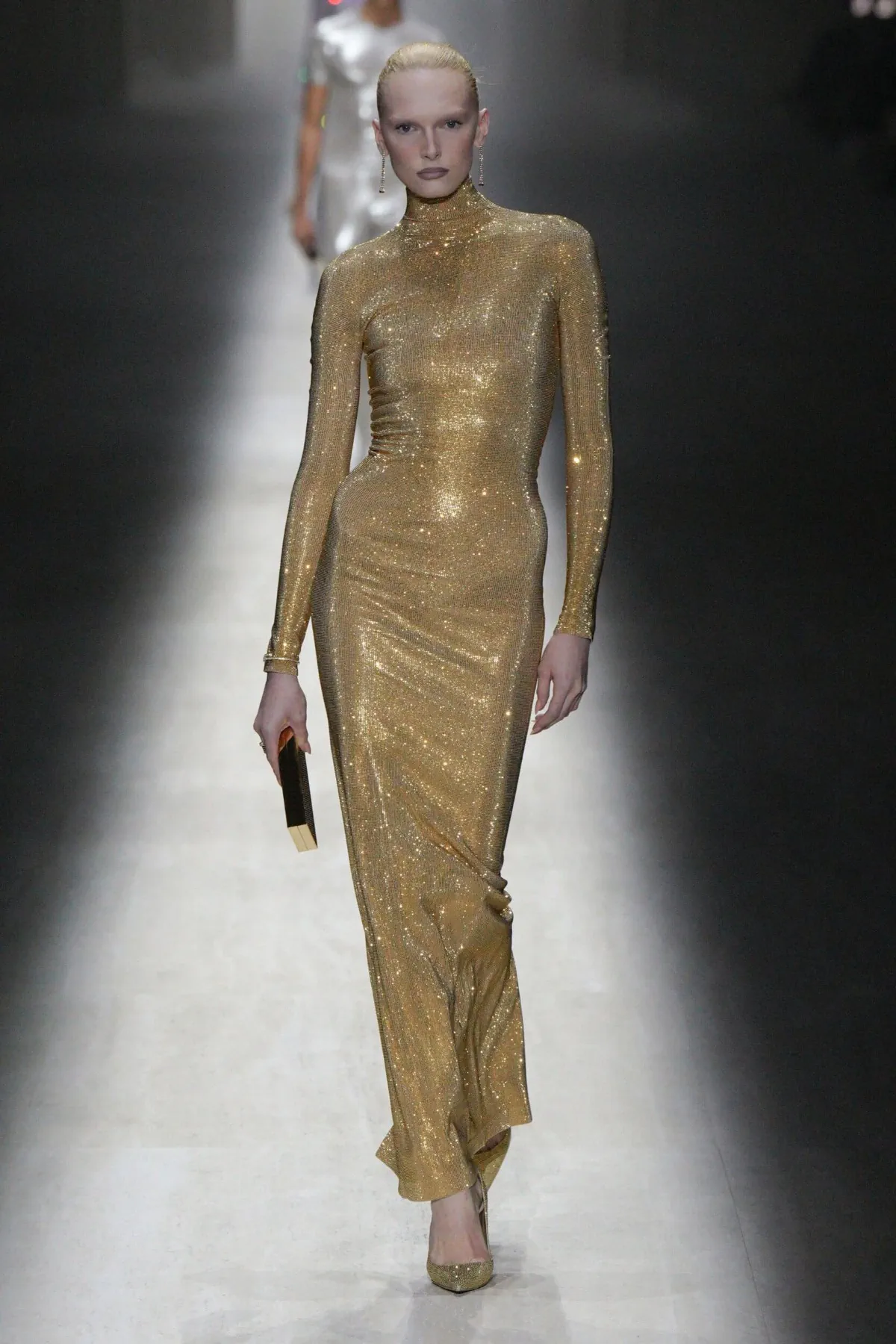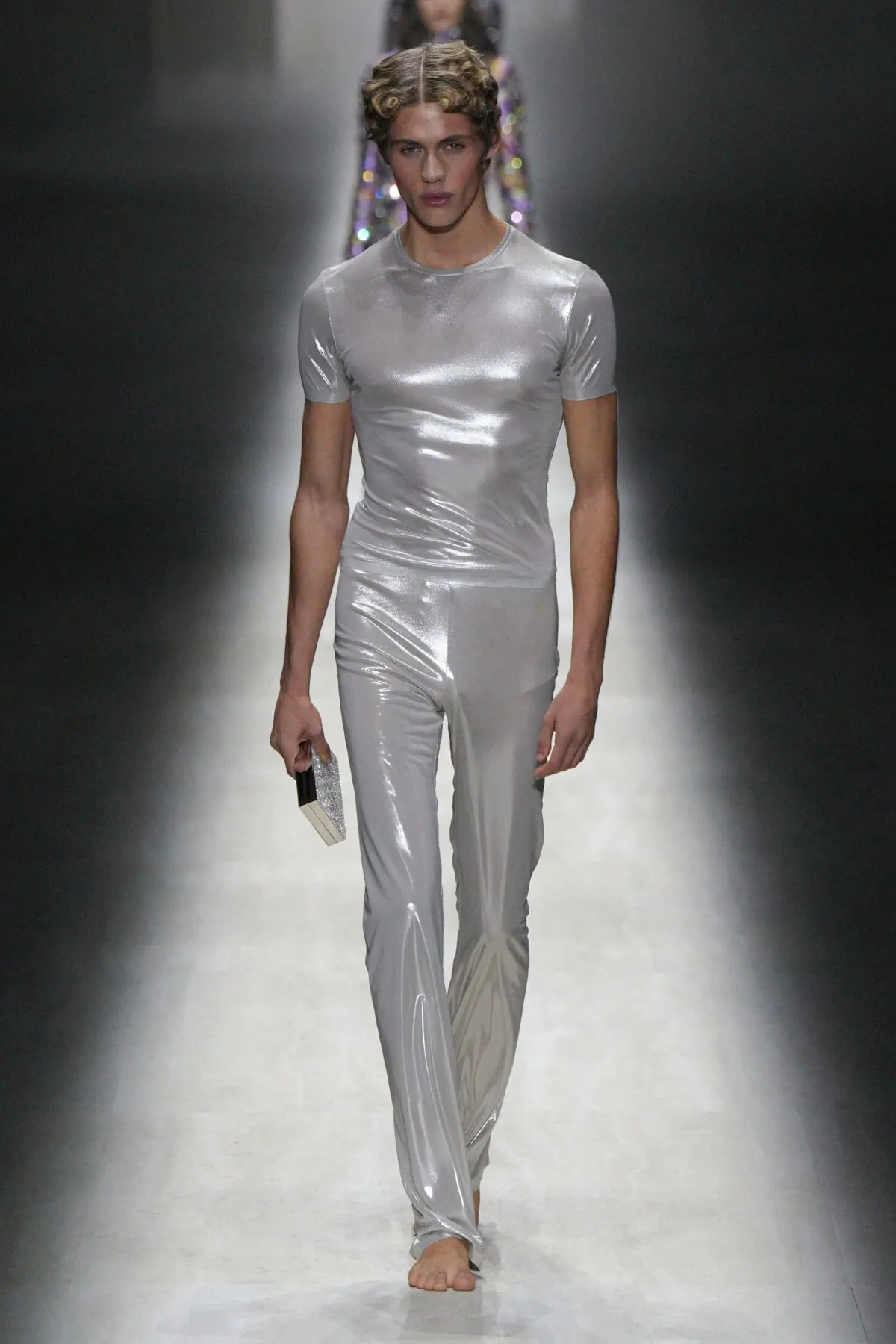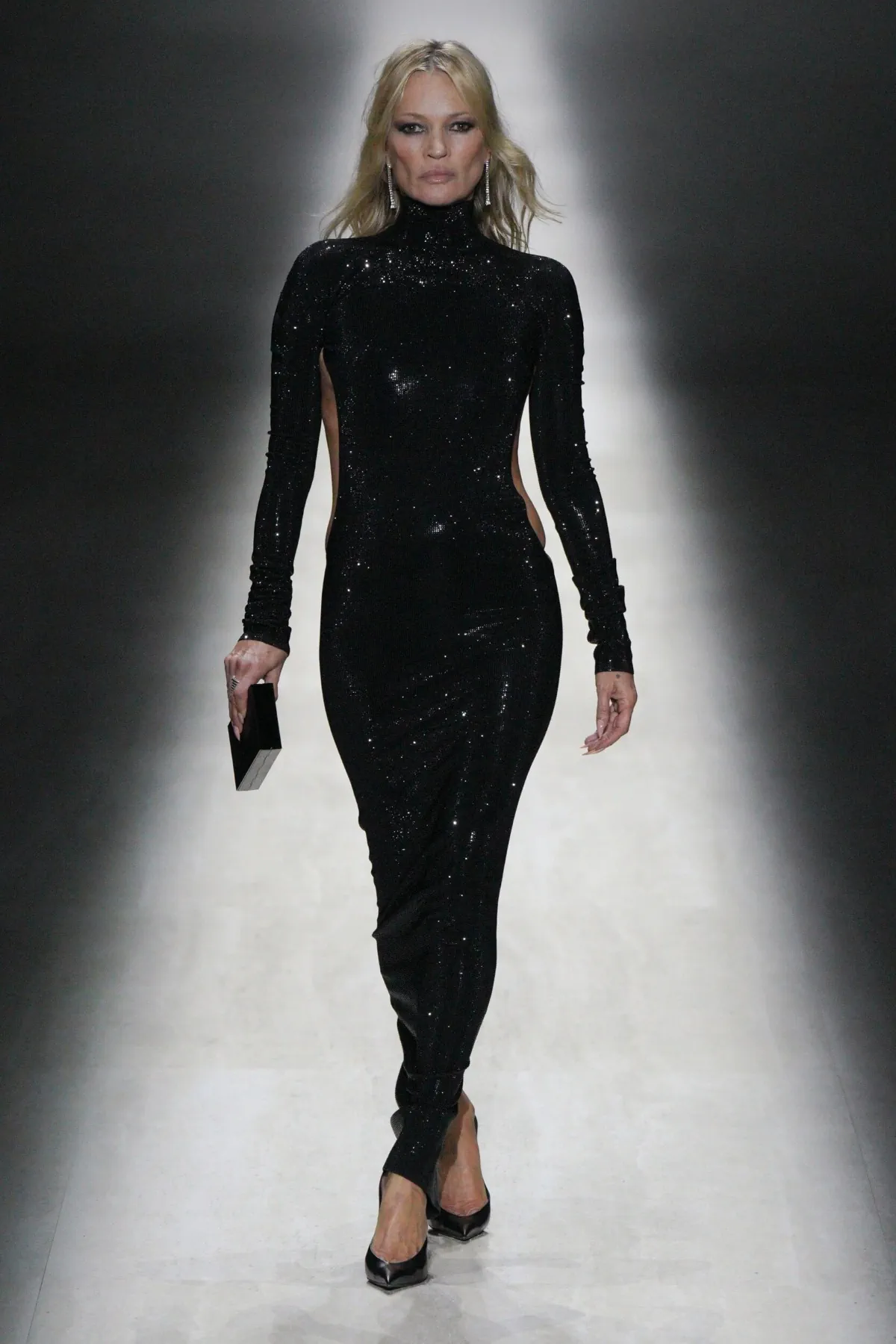

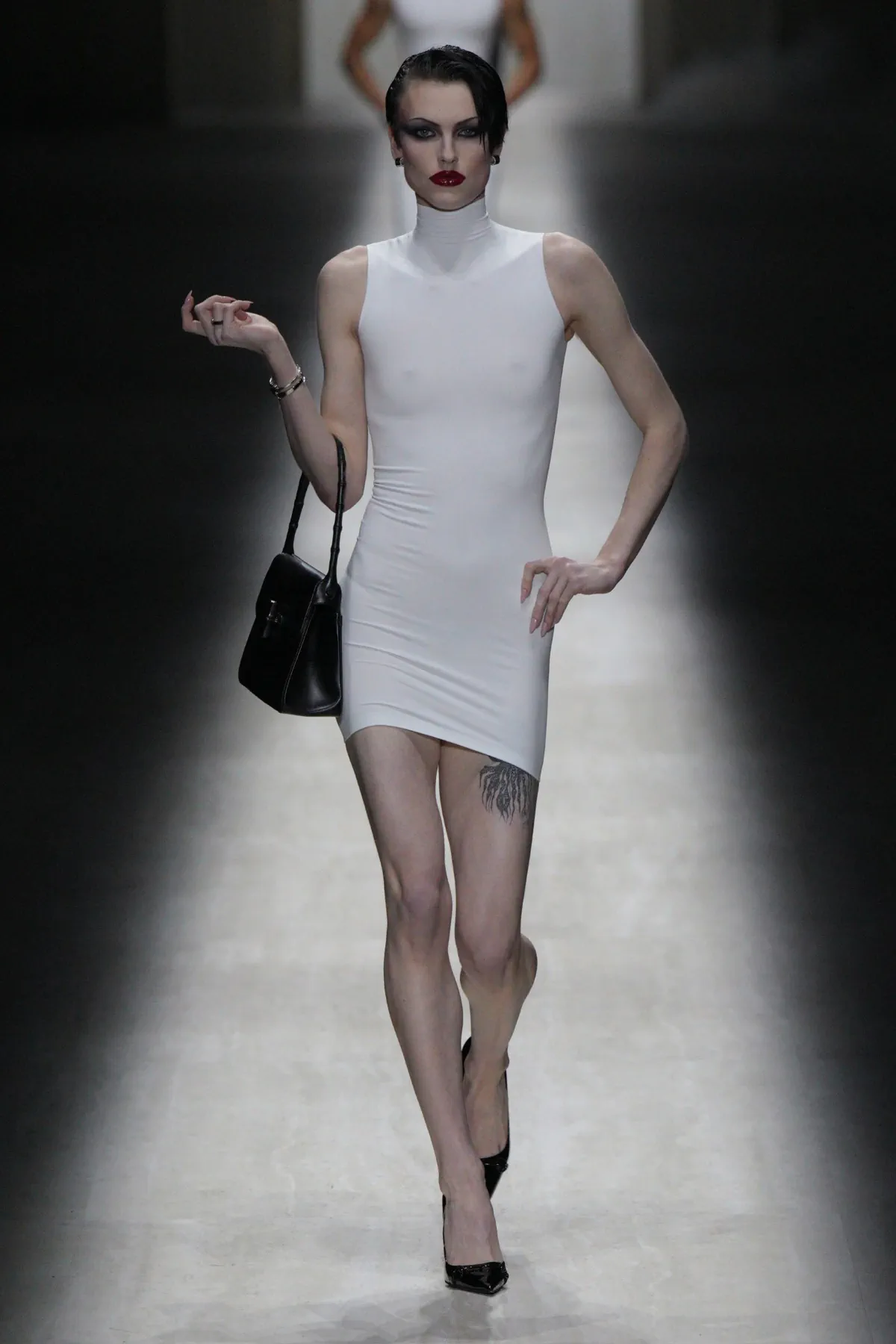
Gucci introduced its Fall 2026 collection with the kind of confidence that comes from knowing the audience will pay attention. Demna’s first runway show for Gucci carried the weight of a reset. It was not a loud reinvention but rather a deliberate attempt to make the brand feel current without denying its past.
| 📌 Key Facts |
|---|
| 🧵 Gucci Fall 2026 is Demna’s first runway statement for the house 🏛 The set references Florence and the Uffizi to reinforce Italian heritage 🔥 Silhouettes are body-conscious, close-fitting, and deliberately sensual 👜 Accessories remain central with updated, more practical bag designs 👔 Glossy fluid tailoring signals a return to structured elegance 💎 Late-1990s sex appeal reappears in stilettos and daring eveningwear 📱 Casting and styling target digitally fluent younger consumers 🎯 Strategic aim is cultural relevance, not theatrical reinvention |
The setting did much of the early talking. Guests entered a hall arranged like a temporary museum, complete with classical statuary references nodding toward Florence and the Uffizi. It was a pointed reminder that Gucci sells products, but it also trades on cultural proximity. The décor could be interpreted as an attempt to reconnect the label with Italian heritage rather than leaving it adrift in the cycle of trends and quarterly reports.
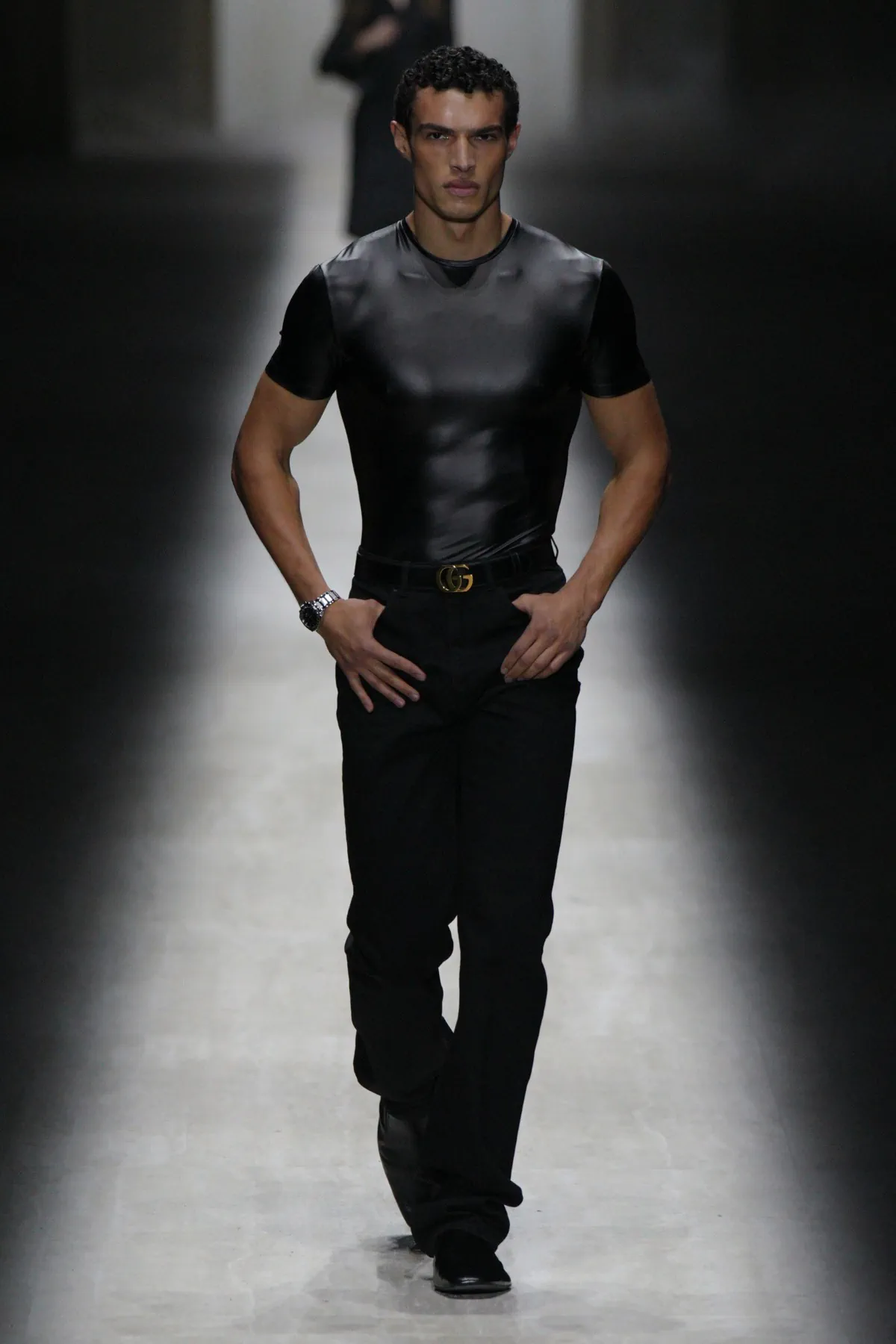
Then the clothes arrived, and the message became clearer. The silhouettes clung closely to the body, often startlingly so. Dresses clung like hosiery. Tops hugged torsos with the pressure of athletic gear. The men’s collection featured compression polos and sleeveless tees that displayed biceps and good posture. The effect was simple: sensuality presented as discipline and nightclub energy presented as gym logic. If you care about fashion as a reflection of how people live, this tension felt accurate.
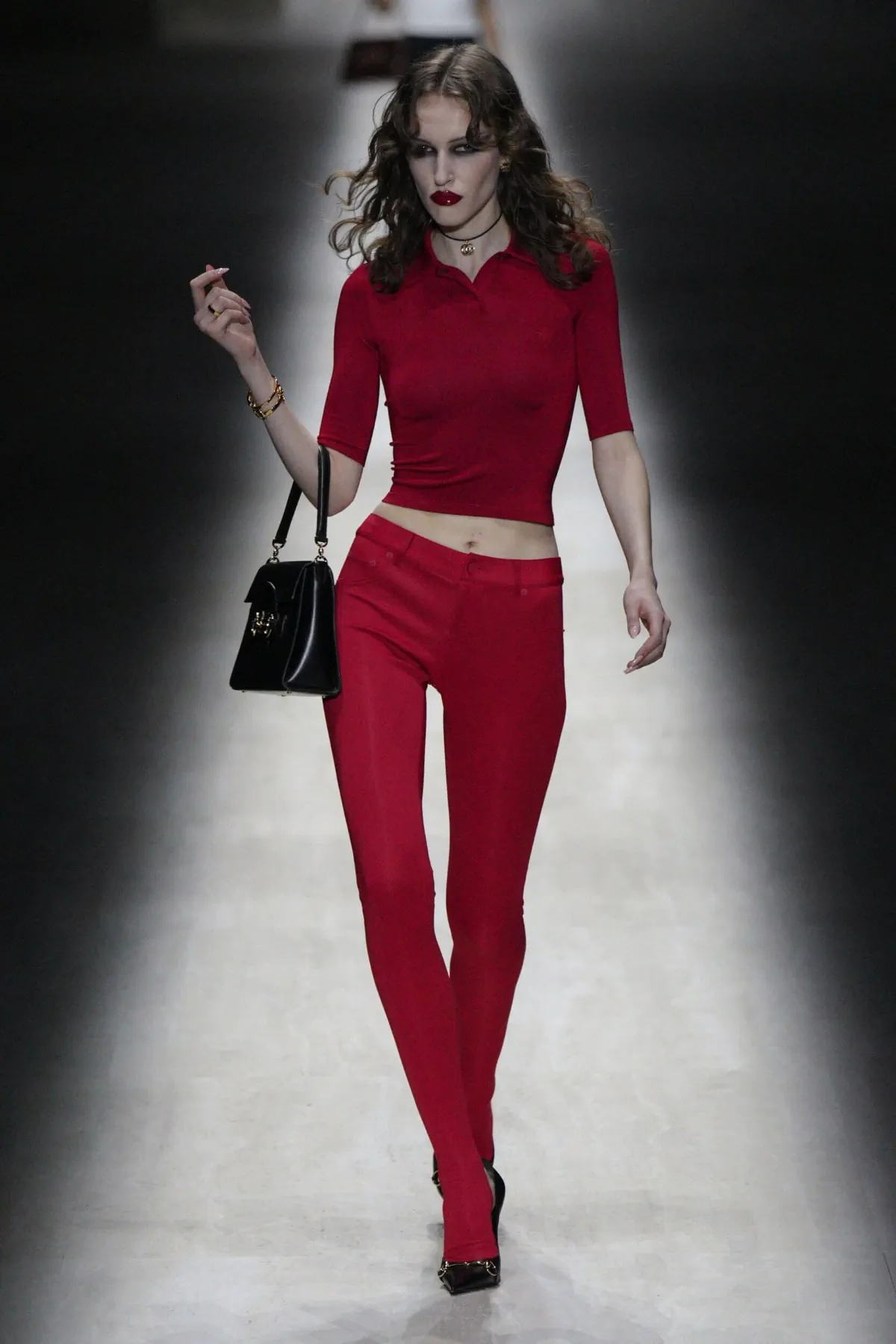
Demna has spent years proving that he can transform a garment into an argument. At Gucci, however, he seemed less interested in showing off his cleverness and more interested in making the wearer feel seen. This shift was evident in the straightforwardness of the collection. A woman in a stretch tube dress reads the room quickly. A man in tight jeans and a fitted T-shirt does the same. The clothes didn’t require decoding; they asked if you dared to wear them.
The collection also made clear that Gucci’s business remains anchored in accessories. Bags were a constant feature, not a decorative afterthought. House signatures appeared with a lighter touch: shapes looked less stiff, leather seemed more pliable, and hardware felt more purposeful than ceremonial. Some classics were updated to be easier to carry and more practical, which matters when a bag is meant to travel from work to dinner to a last-minute flight.
Tailoring provided a calm center. Fluid suits in glossy fabrics exuded an ease that suggested the designer understands what customers want when they tire of performance dressing. Jackets dipped lower and trousers sat with a languid line. The overall impression was that the suit had returned to the conversation naturally, without irony. For those who had missed Gucci’s grown-up polish, these looks offered reassurance.
References to the house’s late-1990s heyday were impossible to miss, though they were handled with a firmer grip. High stilettos, sharp flashes of skin, and eveningwear that treated the back as the main event signaled a return to overt sex appeal. Yet the casting and styling kept it from feeling costume-like. The runway welcomed a wide range of ages and body types, which mattered because body-conscious clothes often come with narrow ideas about who deserves them.
Follow all the latest news from Fashionotography on Flipboard, or receive it directly in your inbox with Feeder.
You may also read

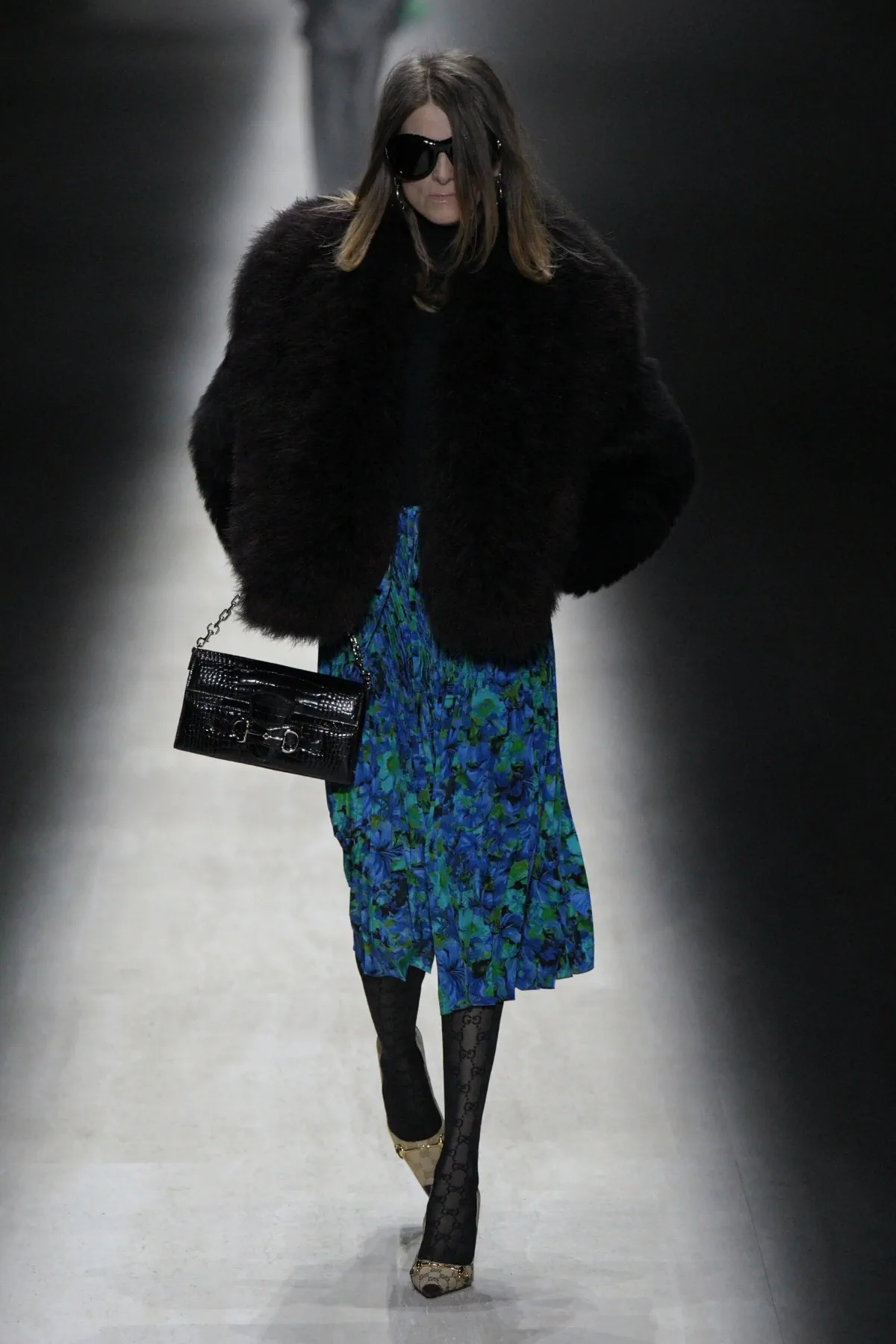
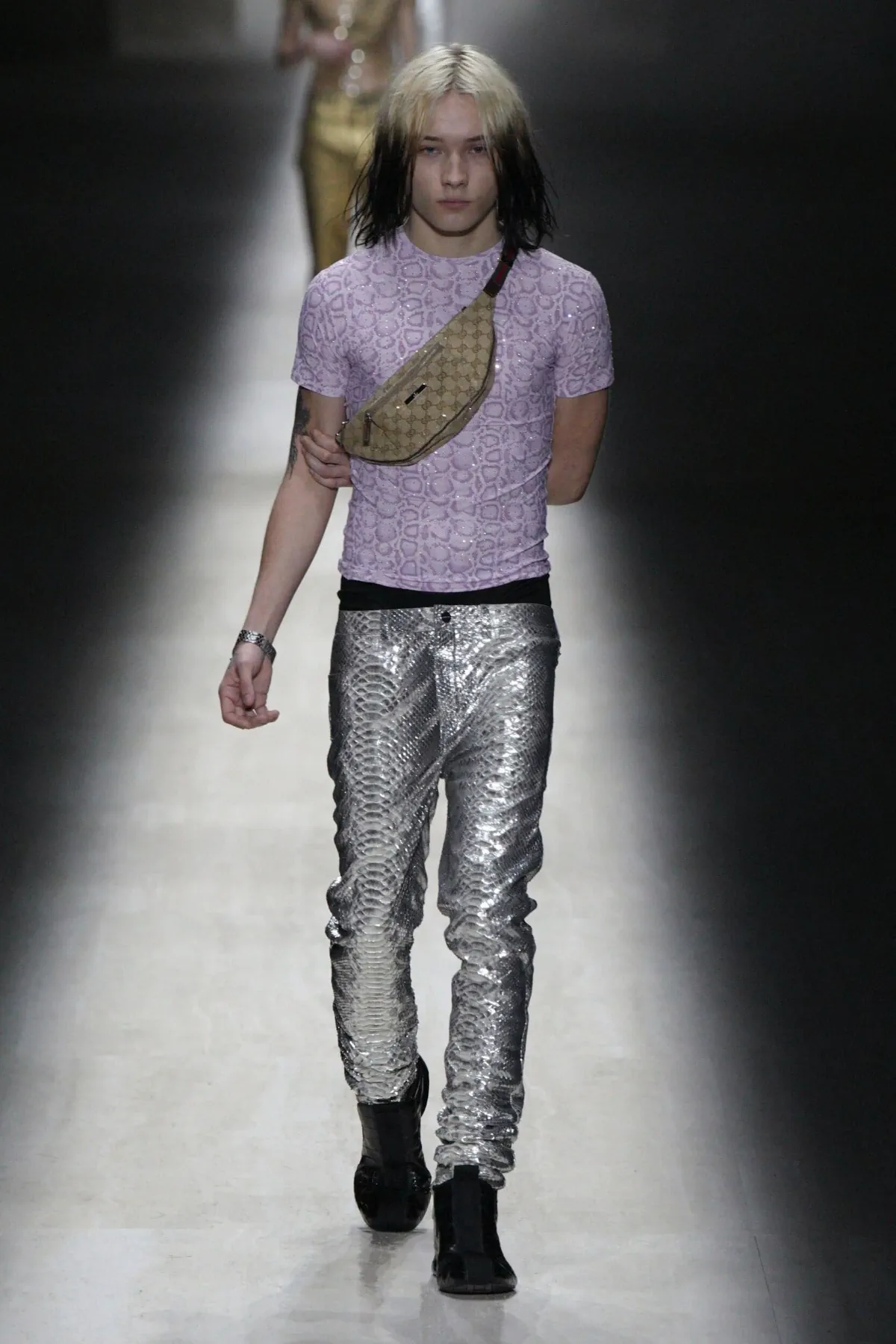
There was also a visible effort to speak directly to younger consumers who treat luxury less like a trophy and more like a social language. The show leaned into immediacy with recognizable faces from digital culture, athletic types, and club-adjacent styling, building a picture of Gucci as clothing you wear to go out, be noticed, and take up space. This may sound obvious, but it is a strategic shift for a brand that has recently oscillated between maximal whimsy and corporate caution.
Evening looks pushed the point further. Embellished gowns featured daring slits, and some men wore sparkling, pajama-like outfits with bare feet, which read as intimate rather than formal. This served as a reminder that modern glamour often rejects old rules about propriety while still craving craftsmanship and sparkle.
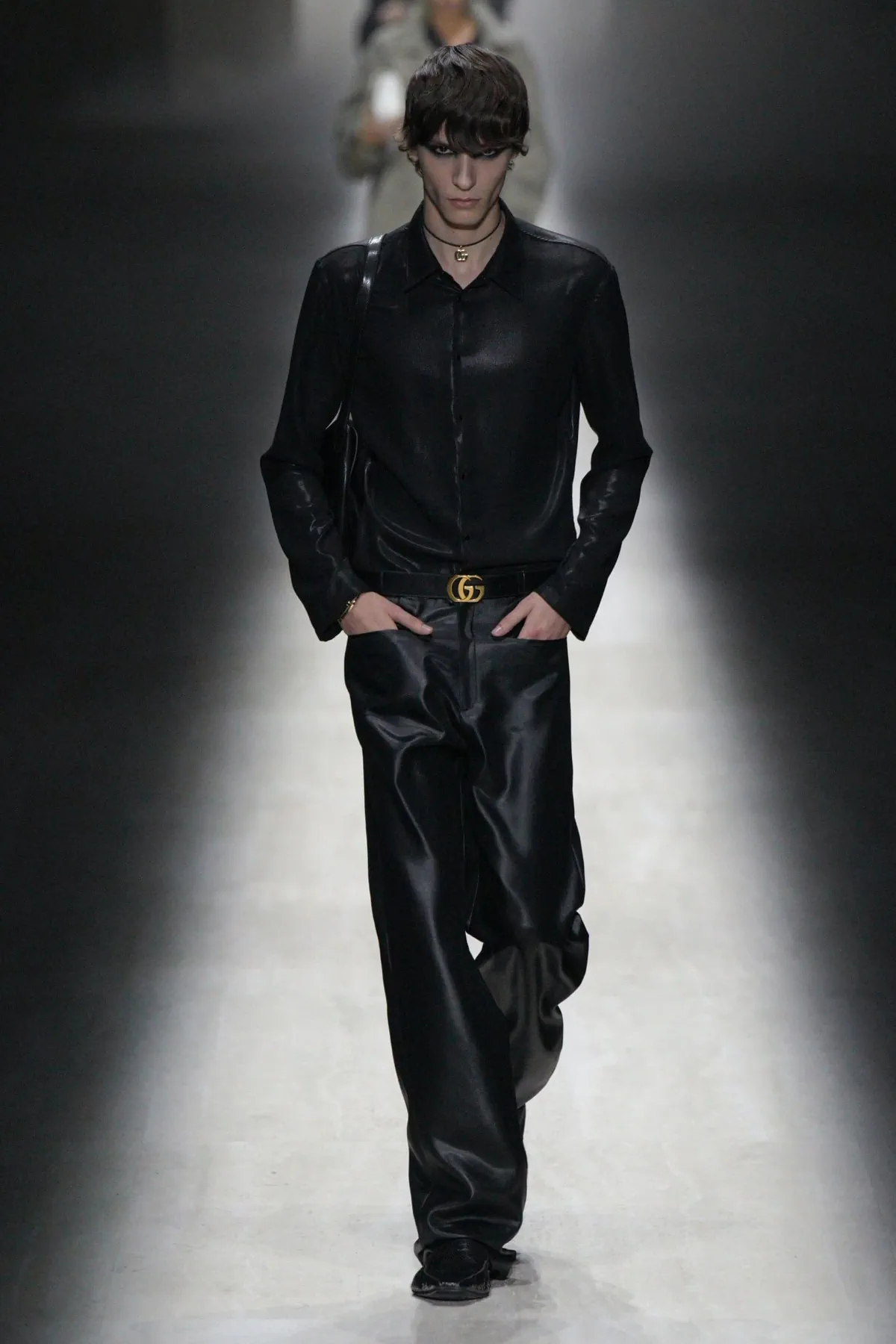
This Fall 2026 collection asked you to consider Gucci less as a shrine and more as a toolkit: clothes for the gym, the street, the party, and the morning after, plus the bags and shoes that keep the machine running. Demna did not need to shout. He simply demonstrated that seduction, utility, and heritage can coexist in the same look, provided the wearer believes they belong there.