
Some designers spend seasons finding their footing, while others simply decide to plant it somewhere along the way. Matteo Tamburini appears to have made that decision. His Tod’s Fall 2026 collection, recently shown in Milan and titled “Italian Signature,” is the most self-assured work he has produced for the house. It was experimental without being erratic and had the kind of internal logic that makes a collection feel genuinely considered rather than assembled.
| 📌 Key Facts |
|---|
| 👜 Tod’s Fall 2026 was presented in Milan under the title “Italian Signature” 🧵 Leather remained central, with intarsia, patchwork, and printed treatments 🎨 Artistic references included Sterling Ruby and Daido Moriyama 🧥 Silhouettes balanced cocooning volume and defined waists 👝 The Wave Bag, T Timeless Bag, and Di Bag appeared in new iterations 🔠 Personalization featured metal initials on belts and accessories 🇮🇹 The collection reinforces Tod’s Italian craftsmanship positioning |
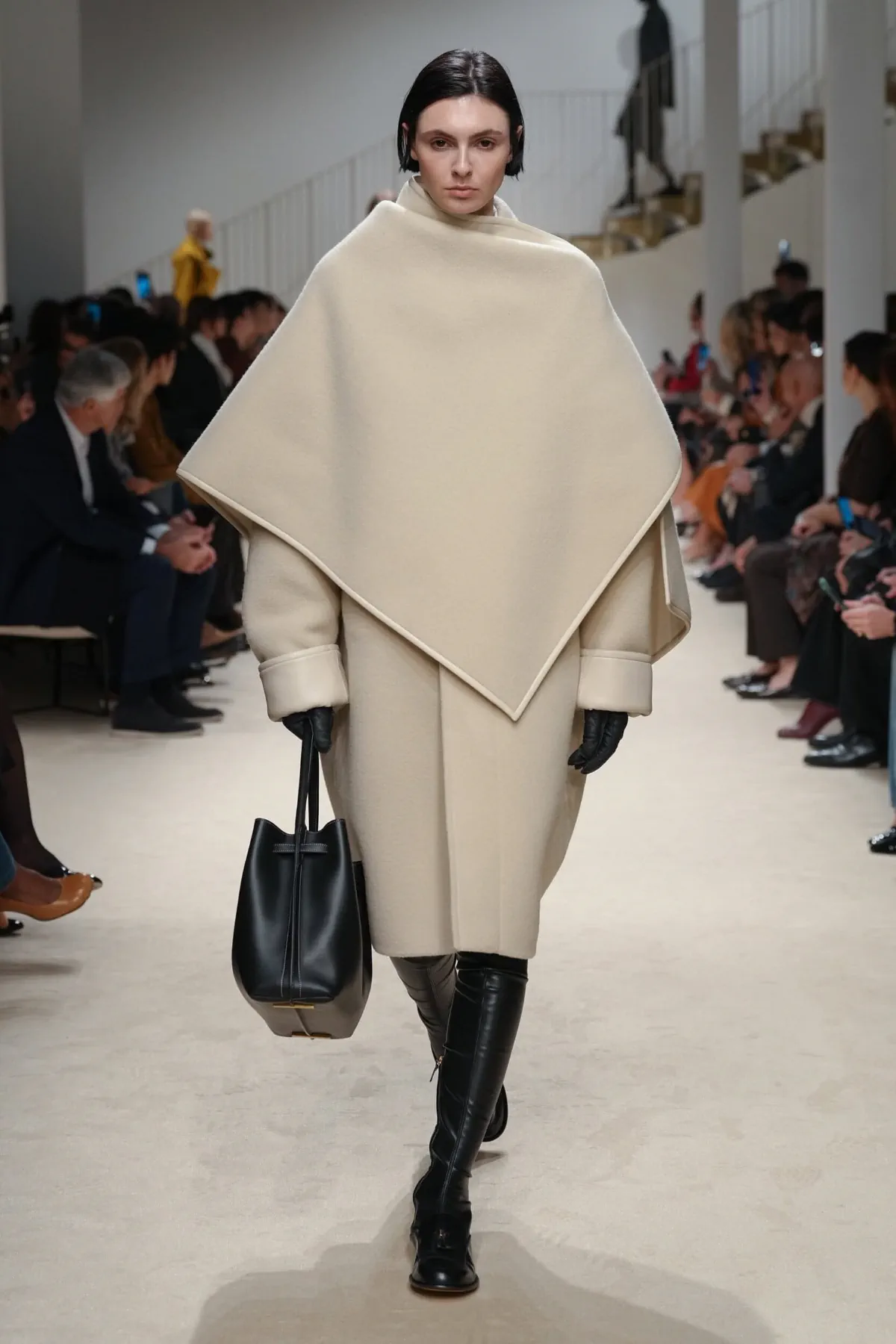
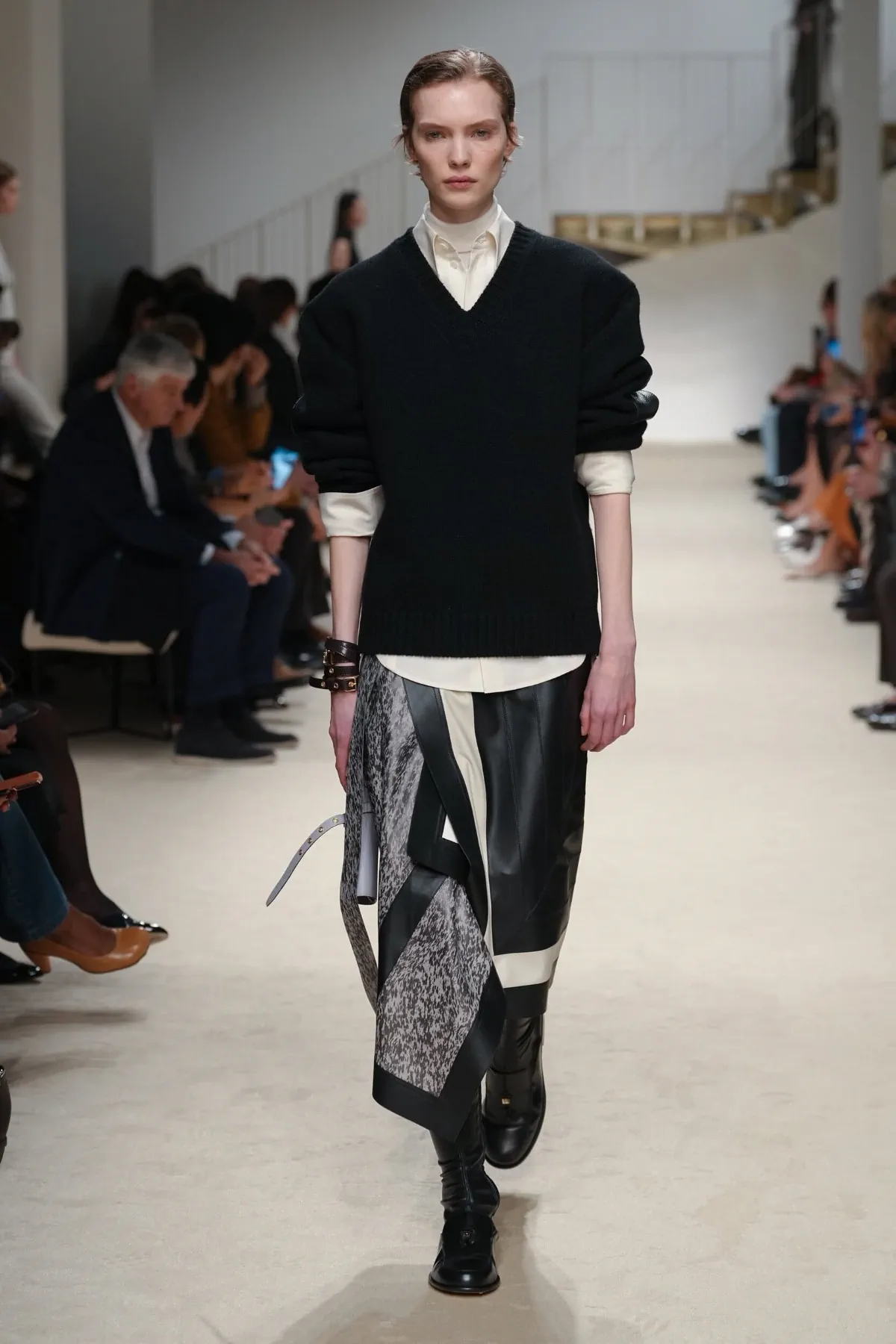
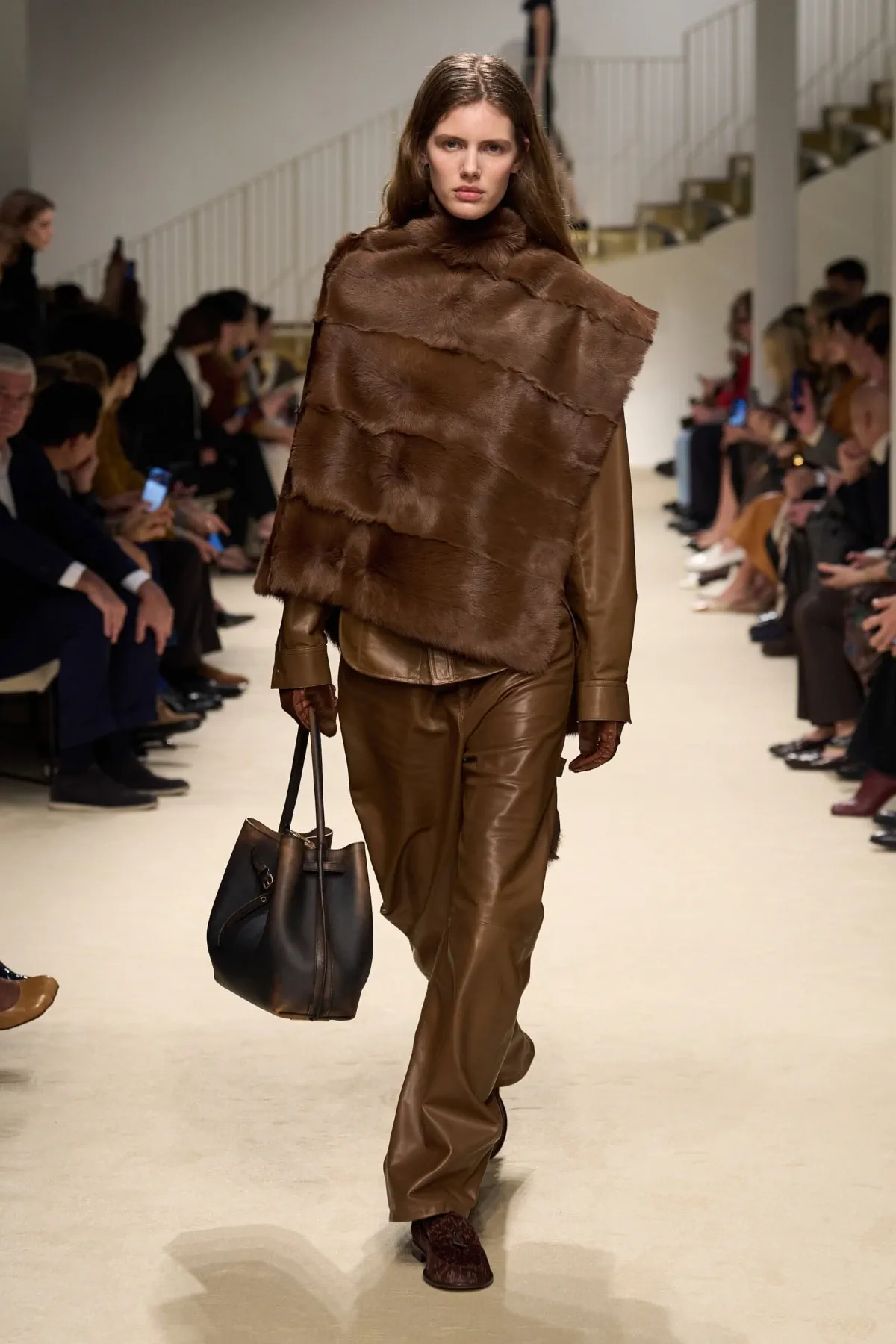
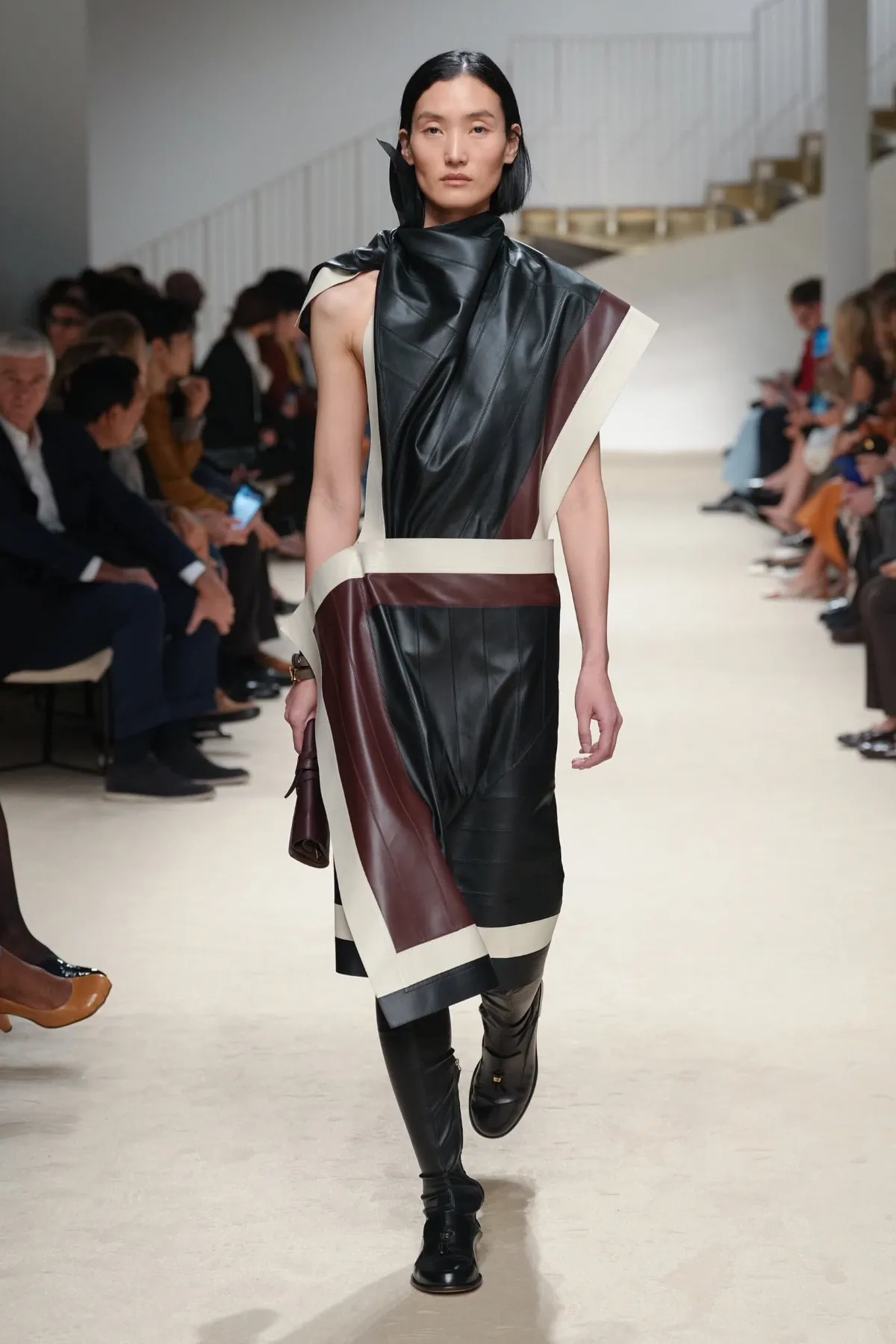
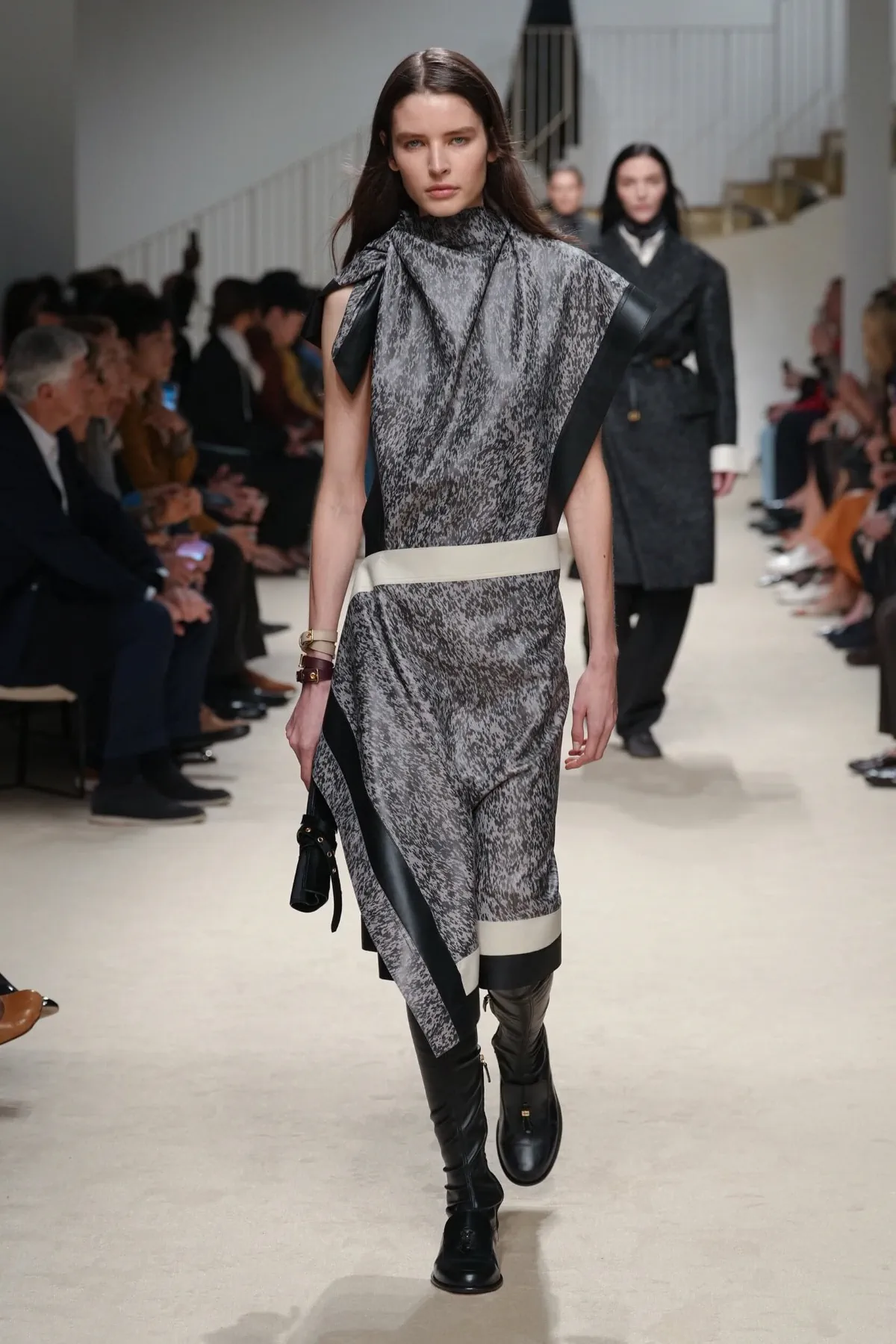
Leather, long central to Tod’s identity, remained the dominant material. However, Tamburini took it further than expected. He presented foulard dresses with intarsia and graphic patchwork, inspired by the murals of artist Sterling Ruby. Other pieces featured the atmospheric black-and-white photography of Japanese artist Daido Moriyama printed across their surfaces: snowstorms rendered on leather and ponyskin drifting over slender dresses and tube skirts. References to sculptors Henry Moore and Marta Pan were also evident: soft leather was asymmetrically wrapped around the body to produce garments that felt protective yet open.
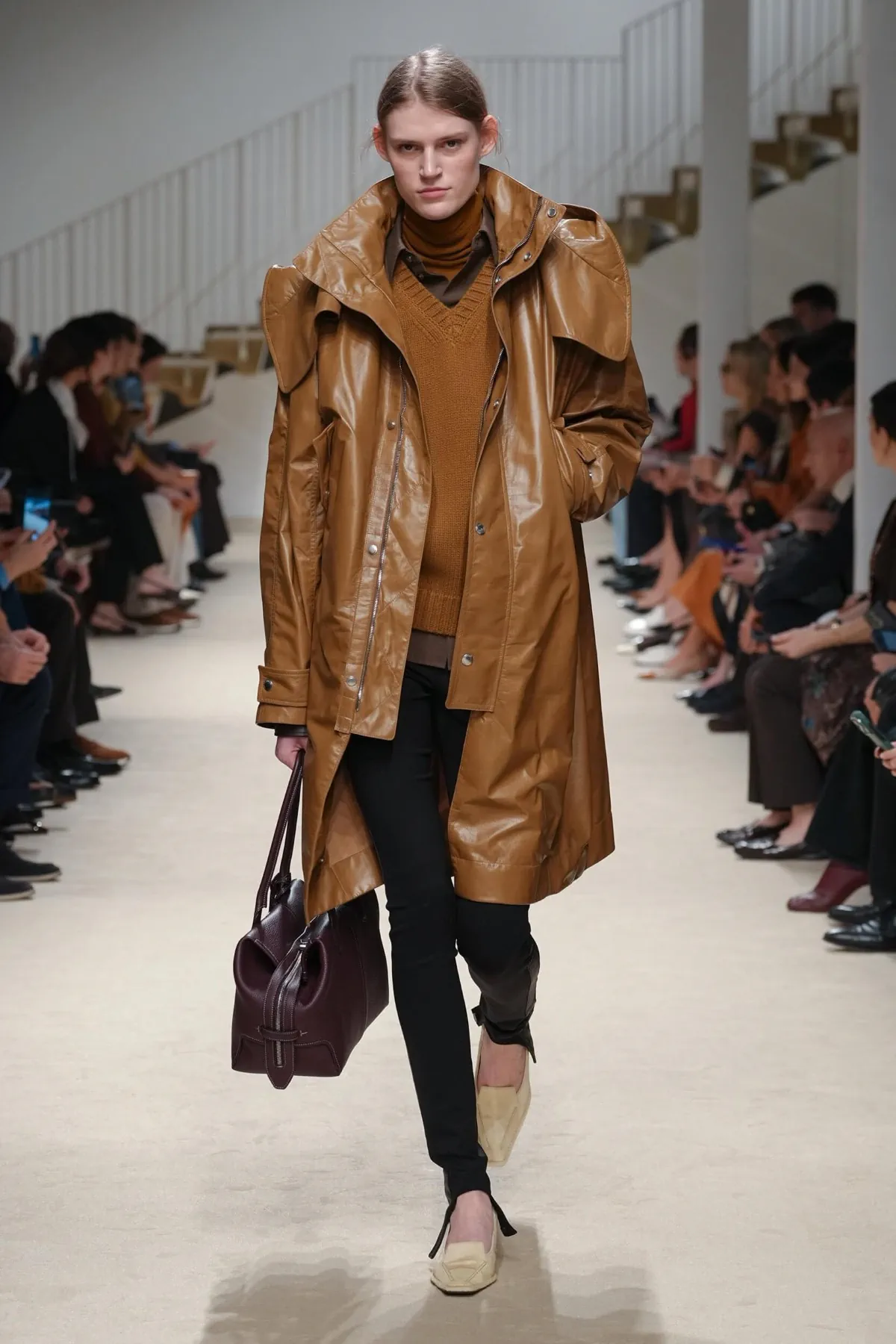
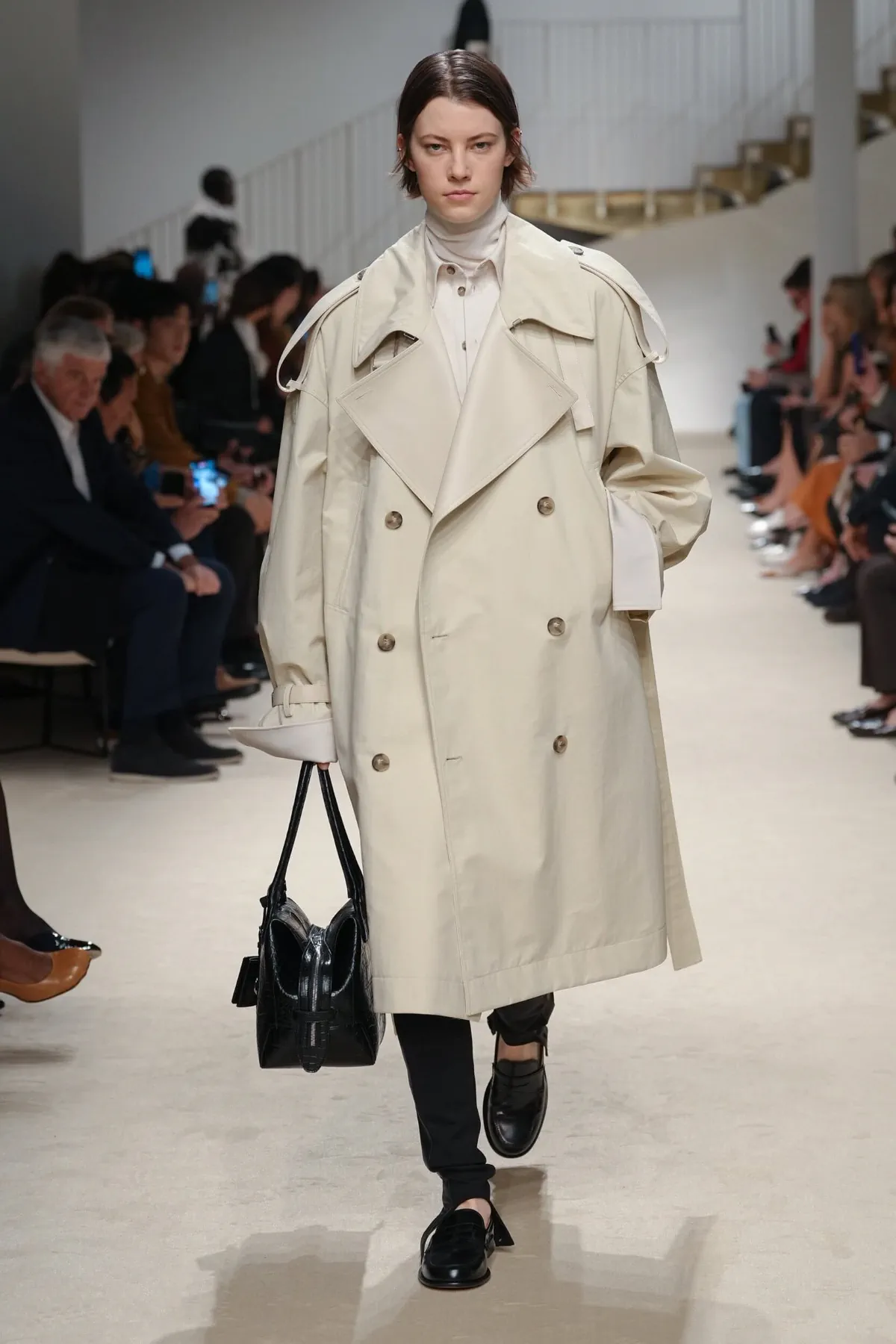
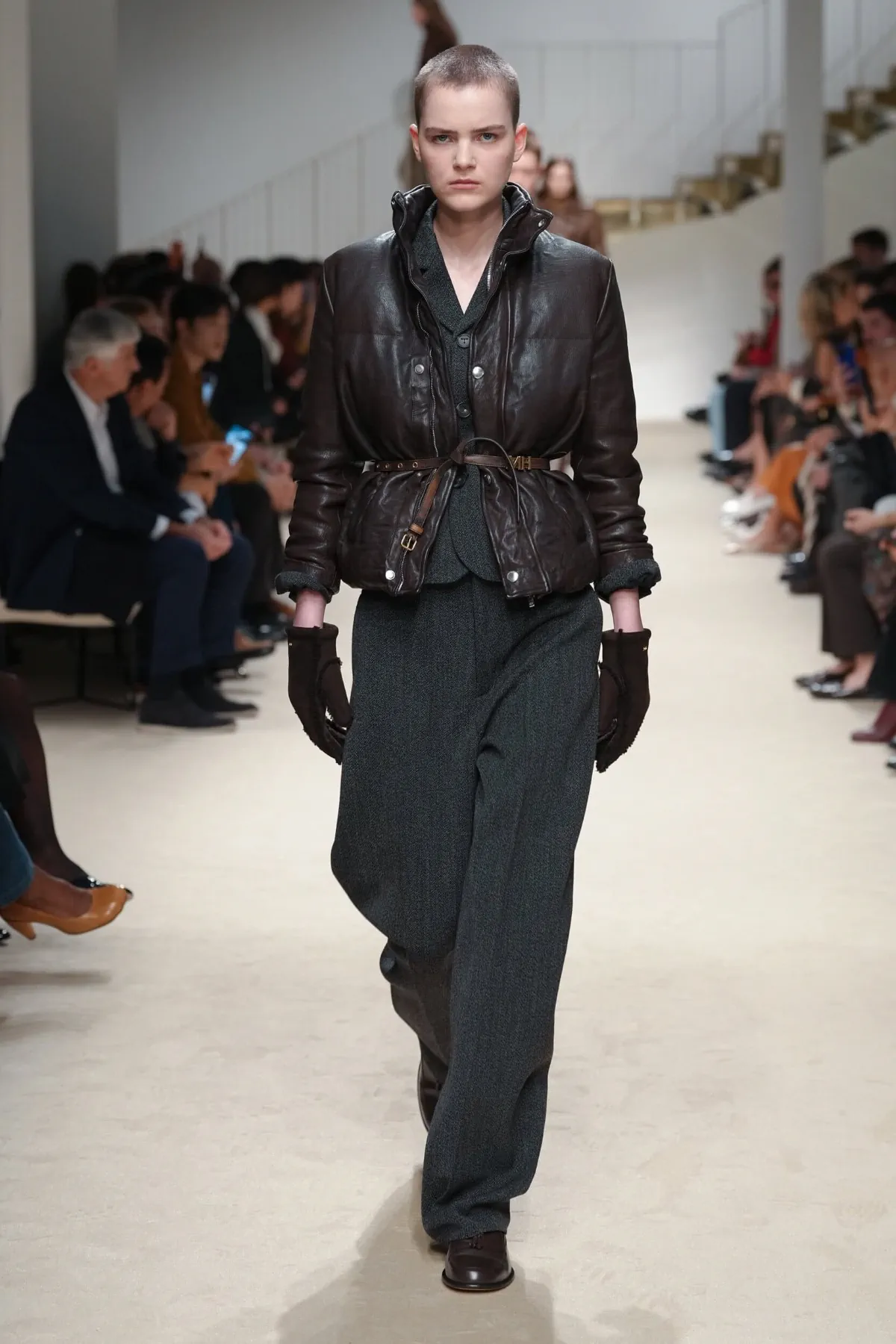
The cocooning impulse ran through much of the lineup. Oversized trench coats were worn over form-fitting wool pants that recalled the functional precision of skiwear. Quilted bombers appeared in aged calfskin. One jacket looked deliberately washed and crinkled – worn, but not worn out – a distinction that matters enormously in a collection where lived-in texture was a deliberate choice, not an afterthought.
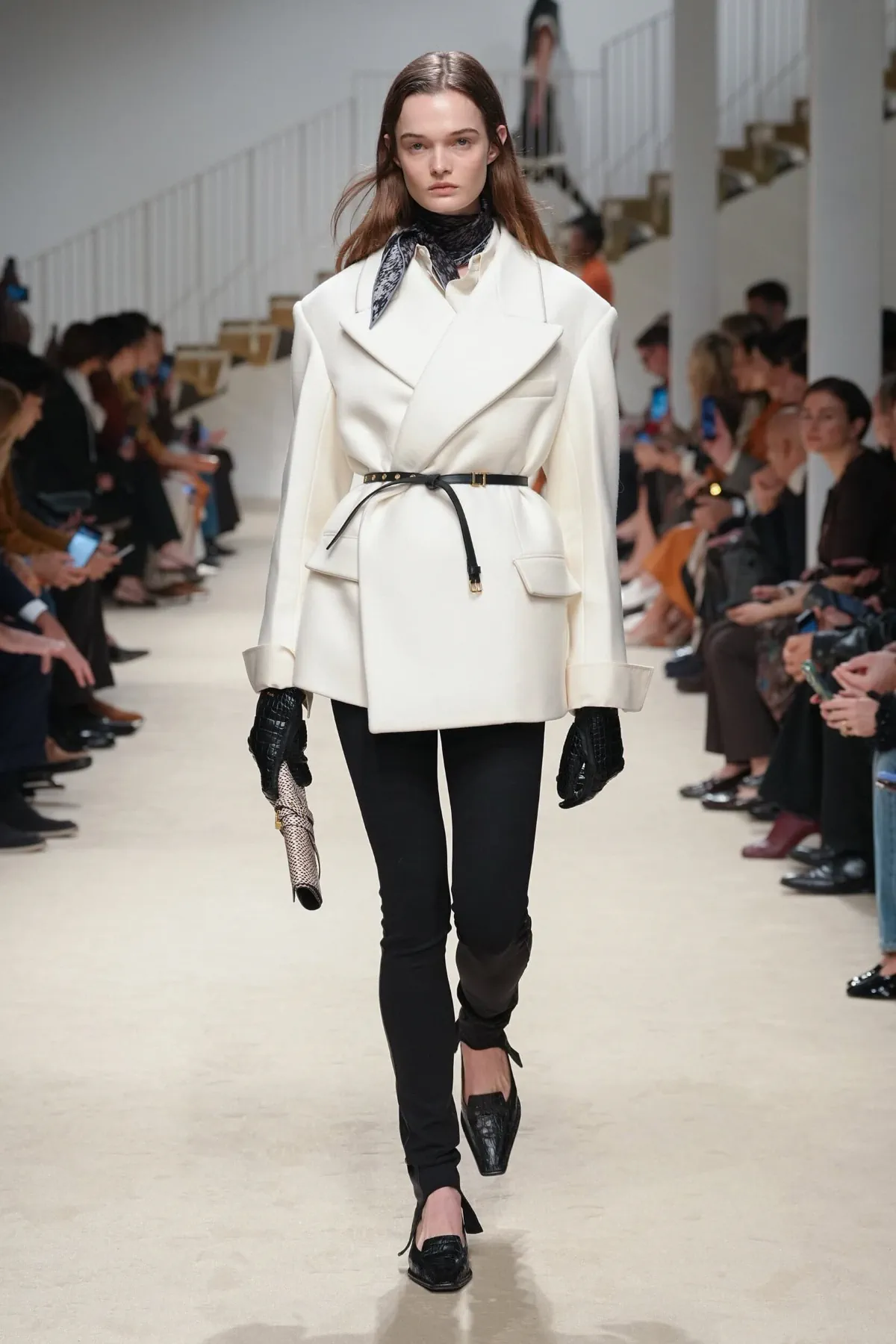
Tamburini carefully worked the contrast between voluminous and fitted pieces. Shortened sleeves and defined waists appeared on knits and tailored pieces alike, creating silhouettes that suggested garments that had been grown into rather than newly acquired. Blazers with softly sloped shoulders were cinched at the waist with slender leather cords. Pony hair, which has made a broader comeback on Milan runways this season, appeared on angular capes, peacoats, and the house’s Gommino sneakers. Power dresses with exquisite tailoring nodded to the 1990s without excess nostalgia.
Follow all the latest news from Fashionotography on Flipboard, or receive it directly in your inbox with Feeder.
You may also read

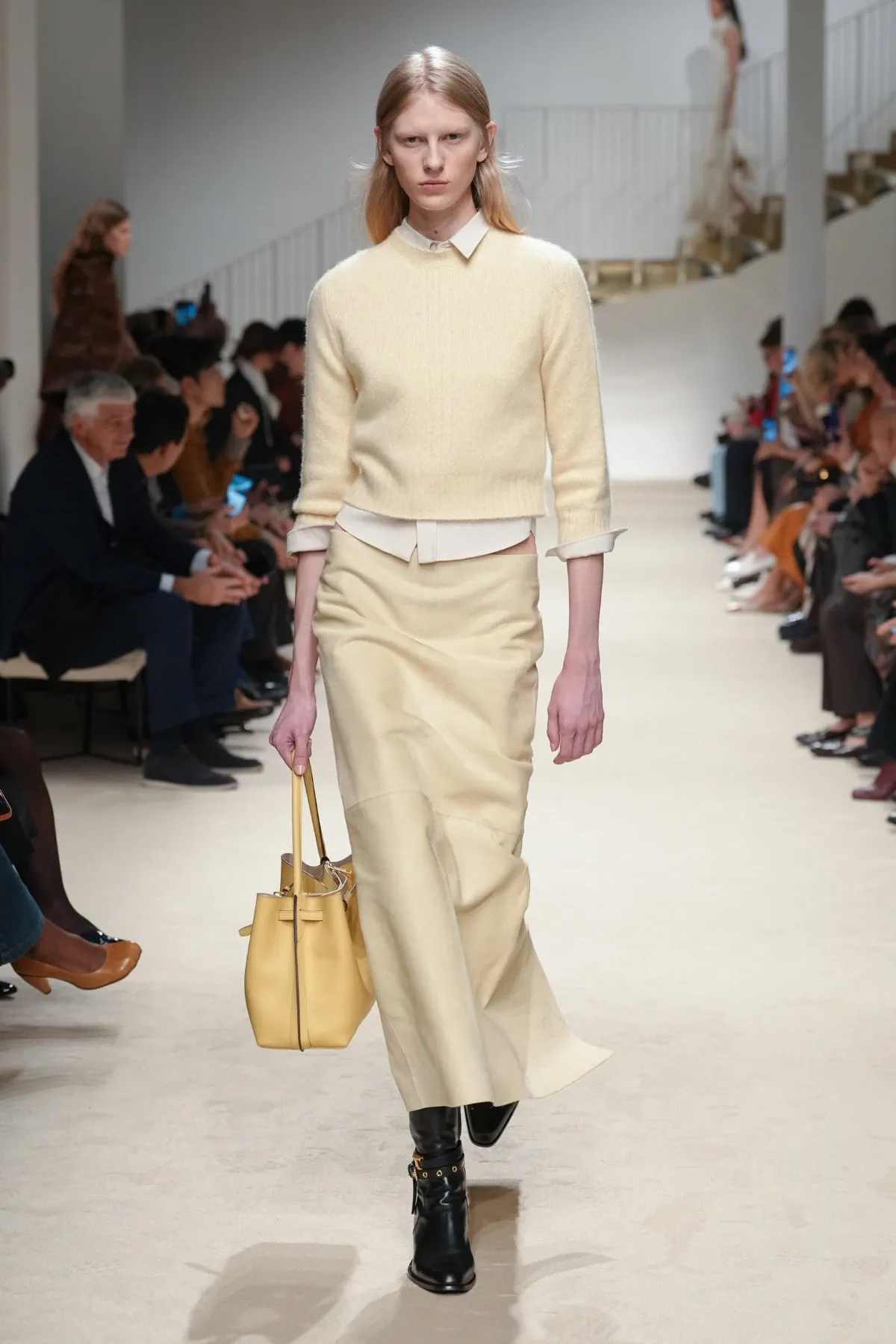
The color palette held together well. Burnt caramel, ginger, chocolate, and black-and-white graphic accents formed a cohesive, warm, and grounded range with enough contrast to give the collection visual clarity.
Accessories were plentiful. The Tod’s Wave Bag featured saddlery topstitching. The T Timeless Bag appeared in napa, aged calfskin, and pony versions. The Di Bag returned in a new bowling silhouette. Throughout the collection, the house’s commitment to craftsmanship was evident and unhurried.
The most striking detail, however, was the simplest. Slim belts cinched trenches and jackets, each stamped with a metal initial. This personalization element extended to lapel details and the wrist bracelets worn by the models at the show. Seated in the front row were guests Minnie Driver and Lily James, both wearing personalized pieces. Chairman Diego Della Valle has spoken about customization as a way to stand apart from the homogenizing effect of digital culture. The logic is sound, and the execution was restrained enough to feel personal rather than promotional.
What Tamburini is building at Tod’s becomes clearer over time. His references never feel merely theoretical. They reach the clothes. That is rarer than it sounds.