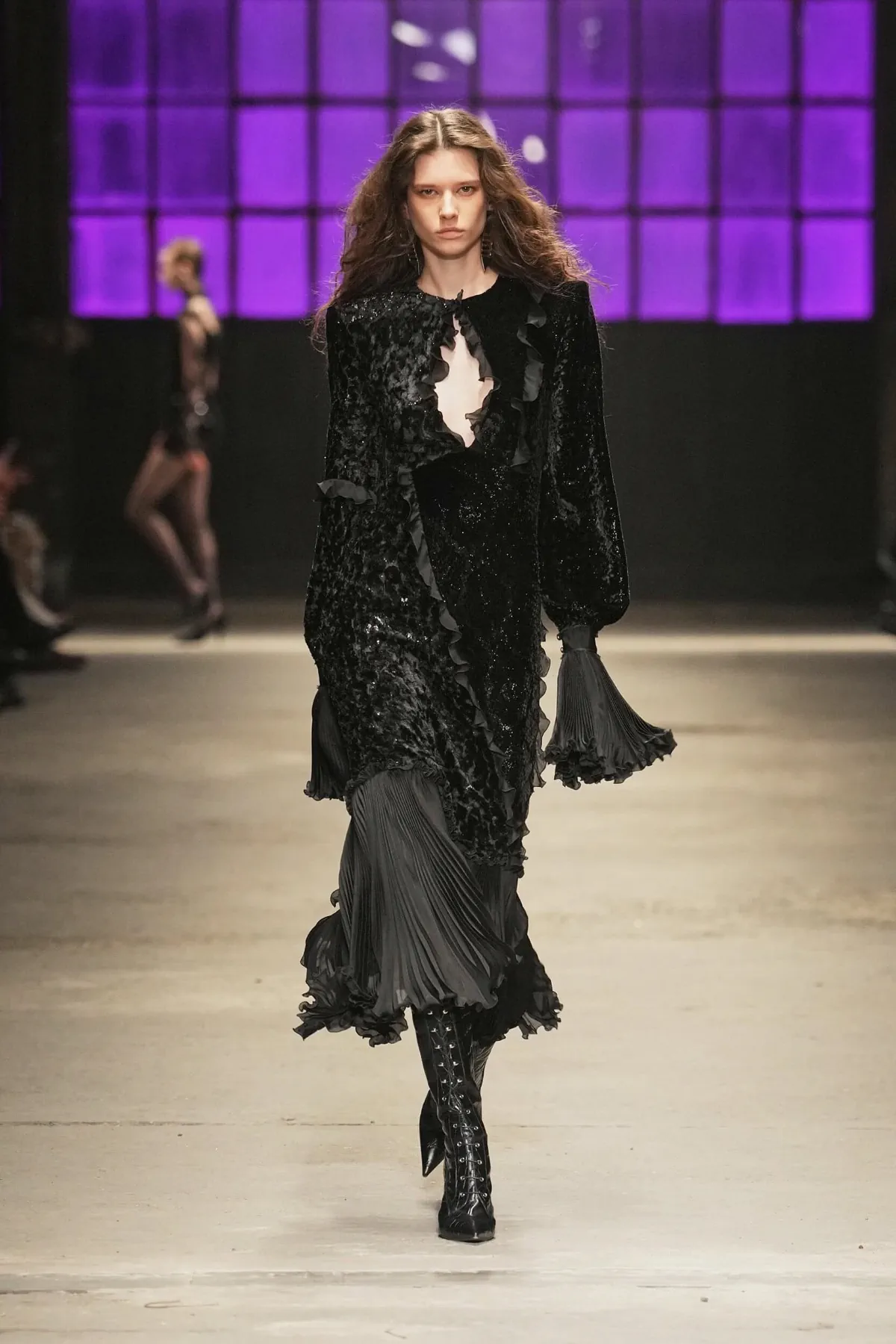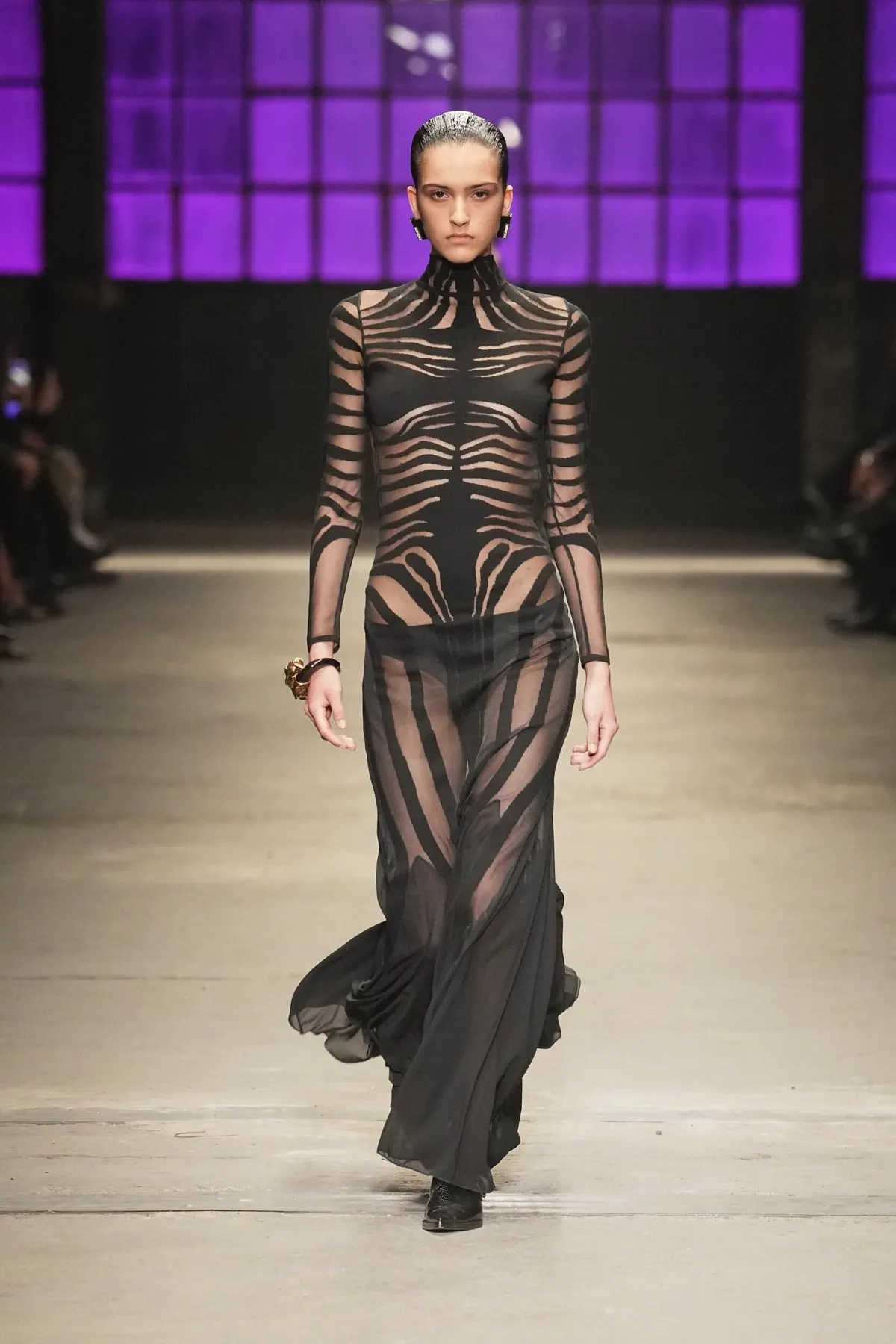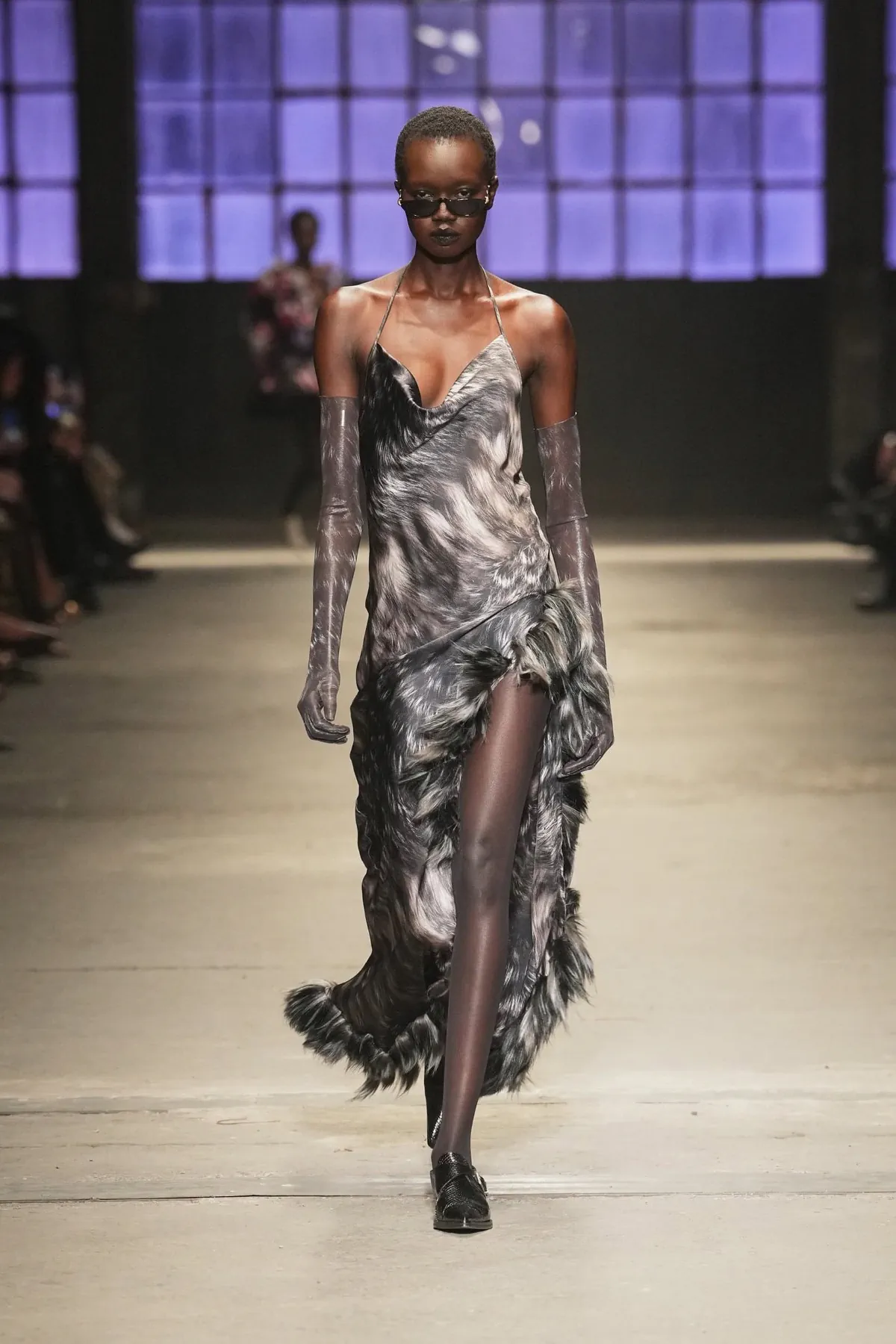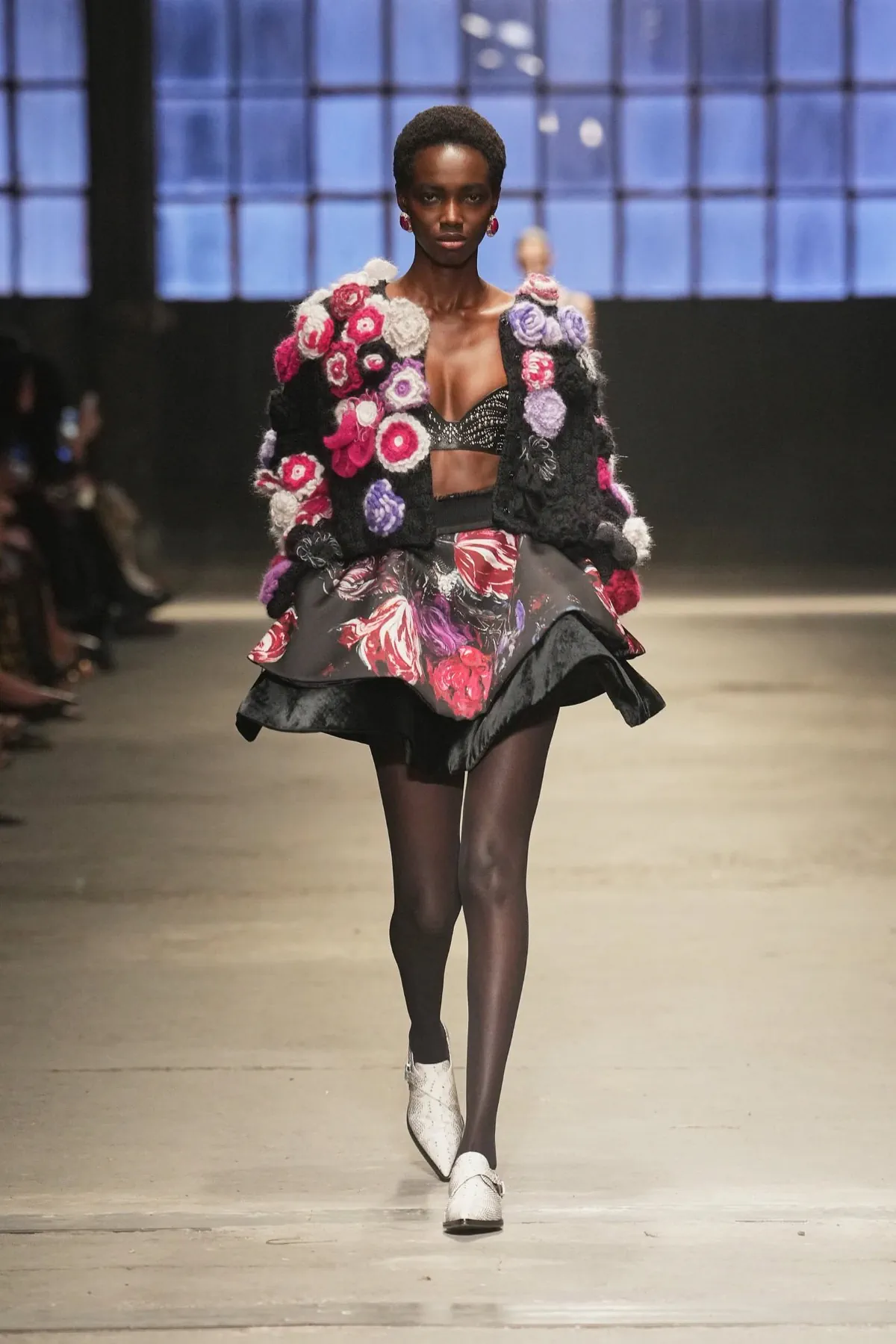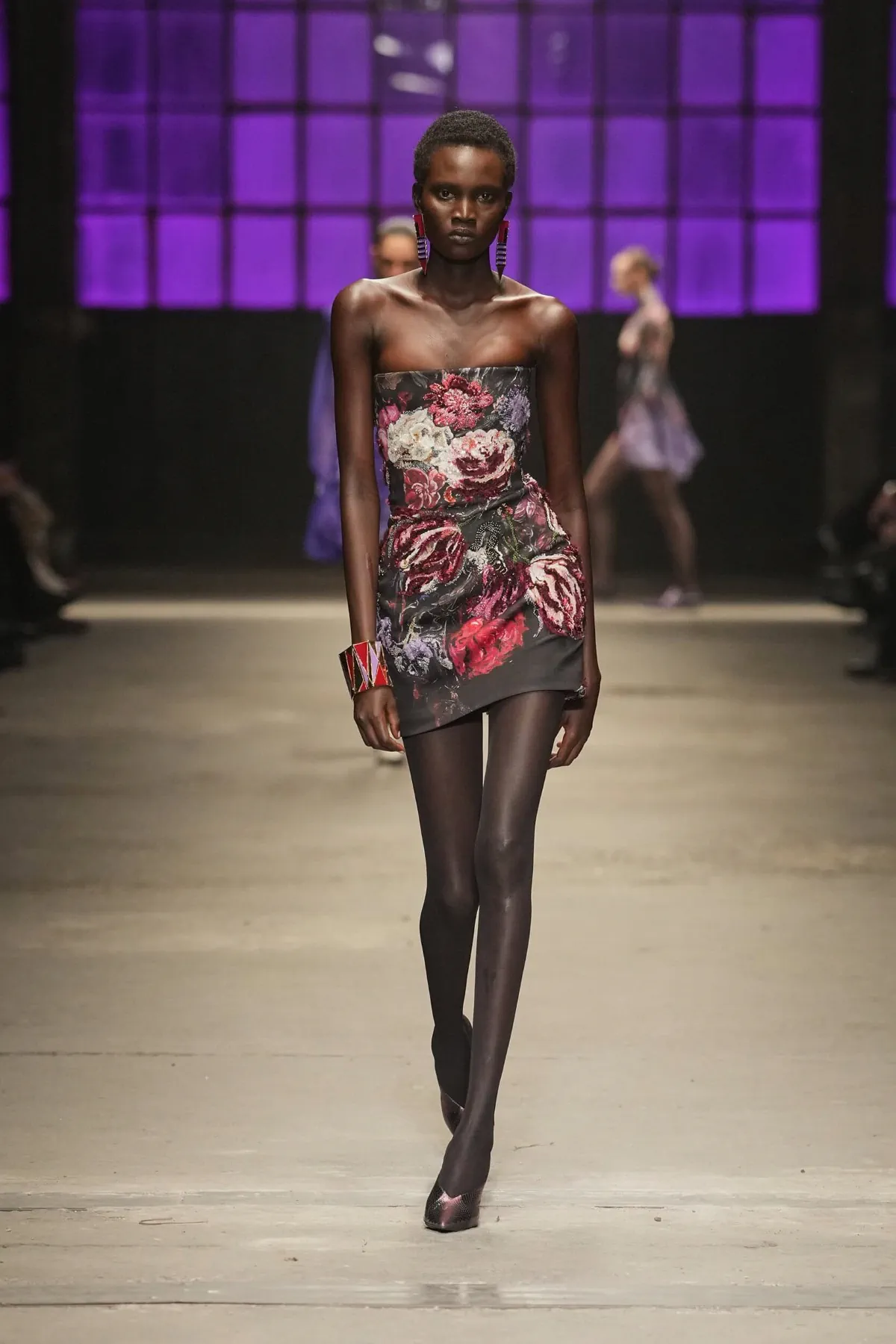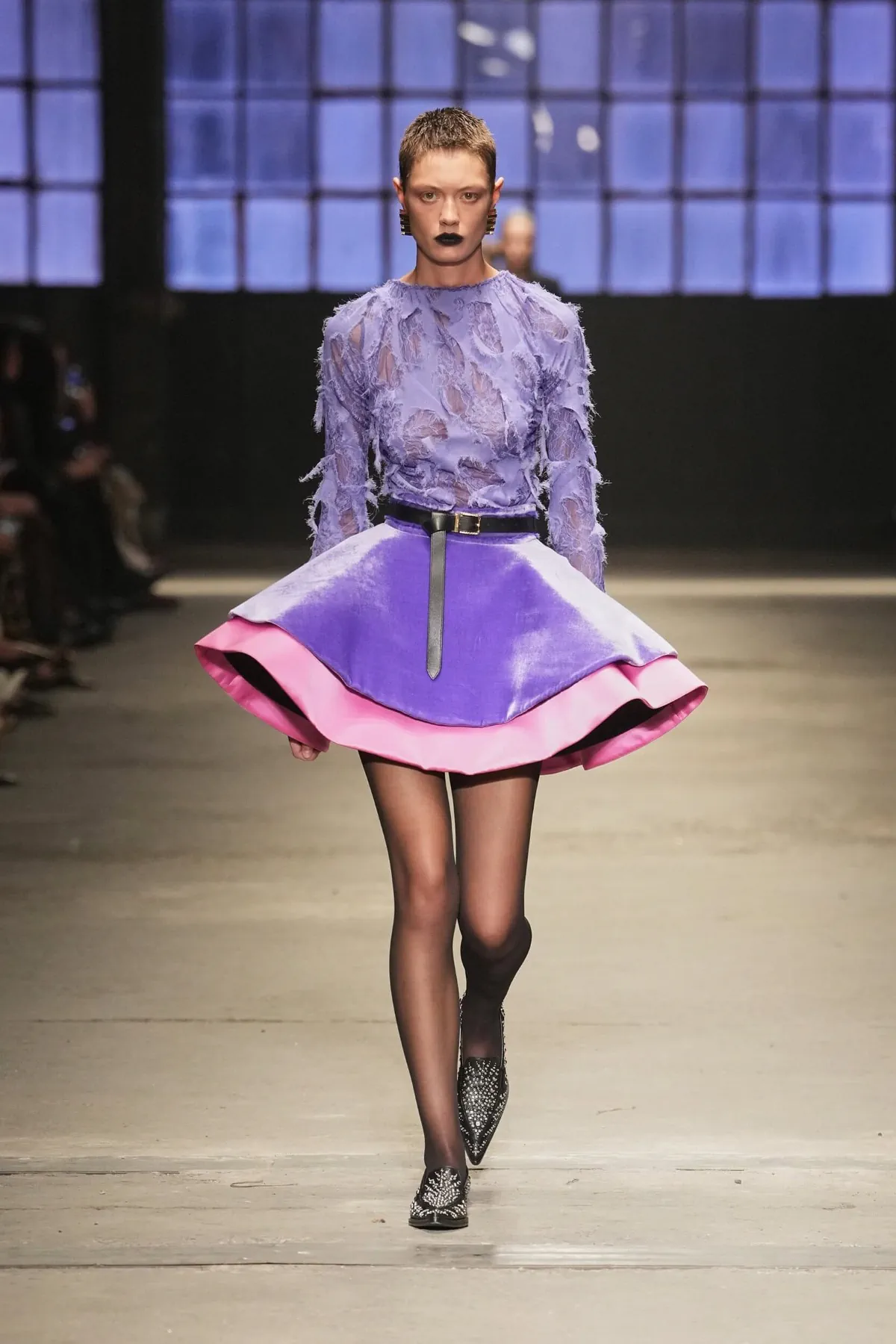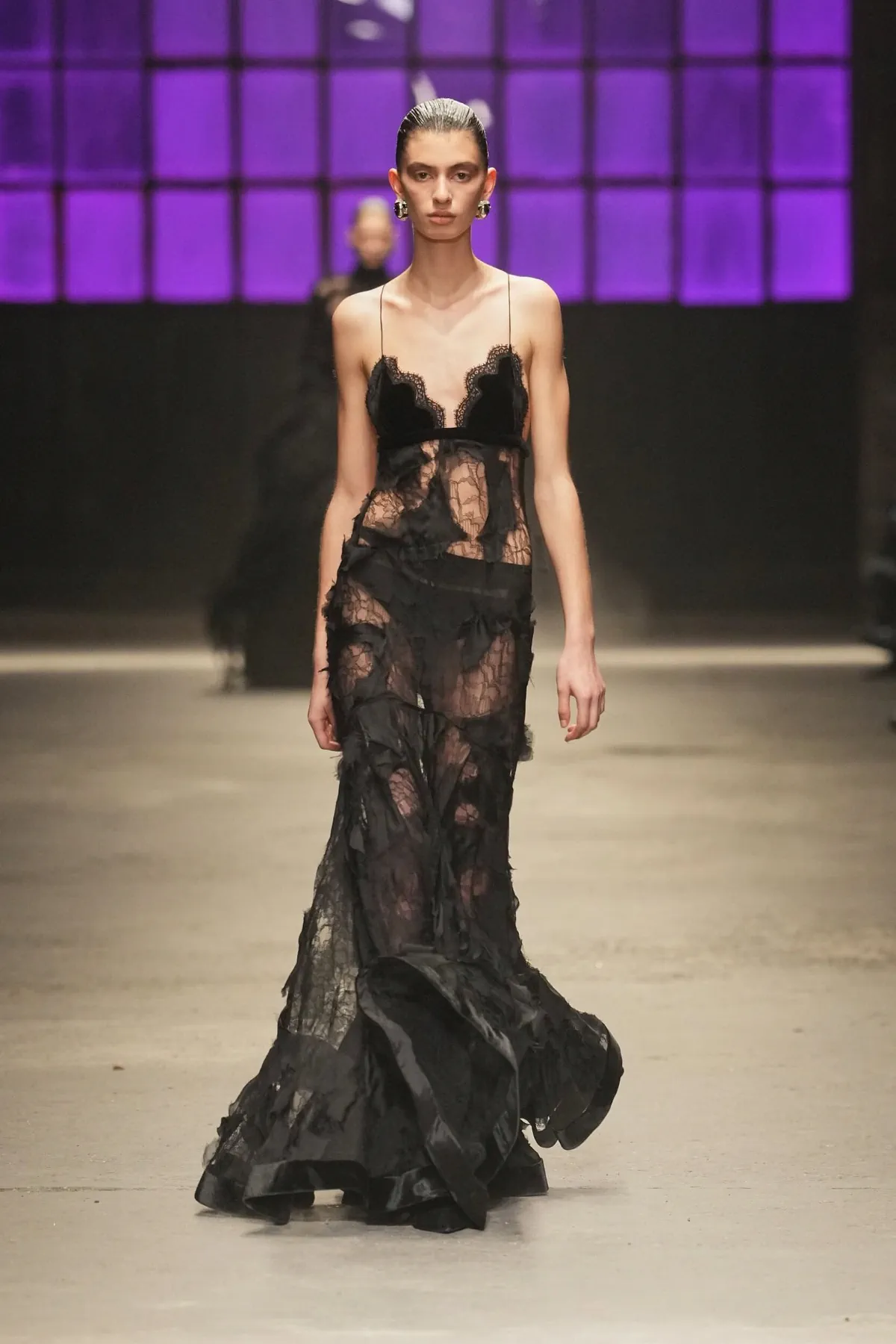

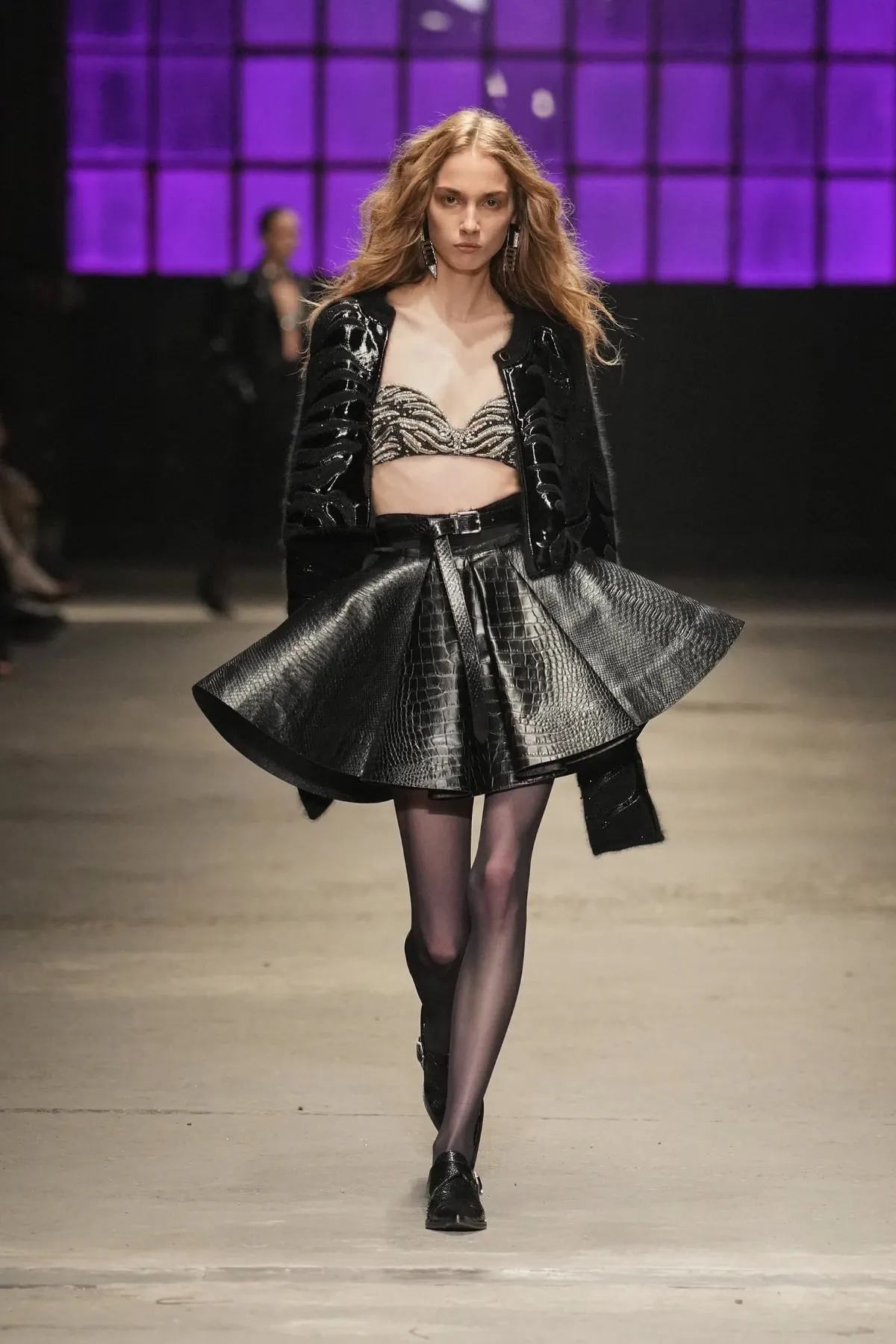
Roberto Cavalli has always been synonymous with bold, unapologetic color. So, when Fausto Puglisi unveiled the Fall 2026 collection under the title “Nero Carnale,” the fashion crowd sat up and took notice. Black, not the house’s signature riot of animal prints, anchored virtually the entire show. Yet, the collection still felt unmistakably Cavalli.
| 📌 Key Facts |
|---|
| 🖤 Roberto Cavalli Fall 2026 centers on an all-black runway titled Nero Carnale. 🎨 Periwinkle, pink and cyclamen appear as controlled shock accents. 🐆 Animal prints remain, but filtered through texture and nocturnal tones. 🏛 Prints reference Caravaggesque still lifes with dramatic shadow contrast. 👠 Accessories channel 1980s energy with cone heels and bold geometry. 👜 The Serpentine bag returns in a more aggressive, gladiator-studded version. 🔥 The collection positions black as a strategic reset, not a retreat. |
Puglisi’s choice of black was deliberate and considered. He described the direction as New Romantic and festive, with a toughness that amplifies, rather than contradicts, femininity. The darkness here isn’t mournful. It has electricity to it. The Cavalli instinct is evident in every texture and silhouette; it simply operates under a different light.
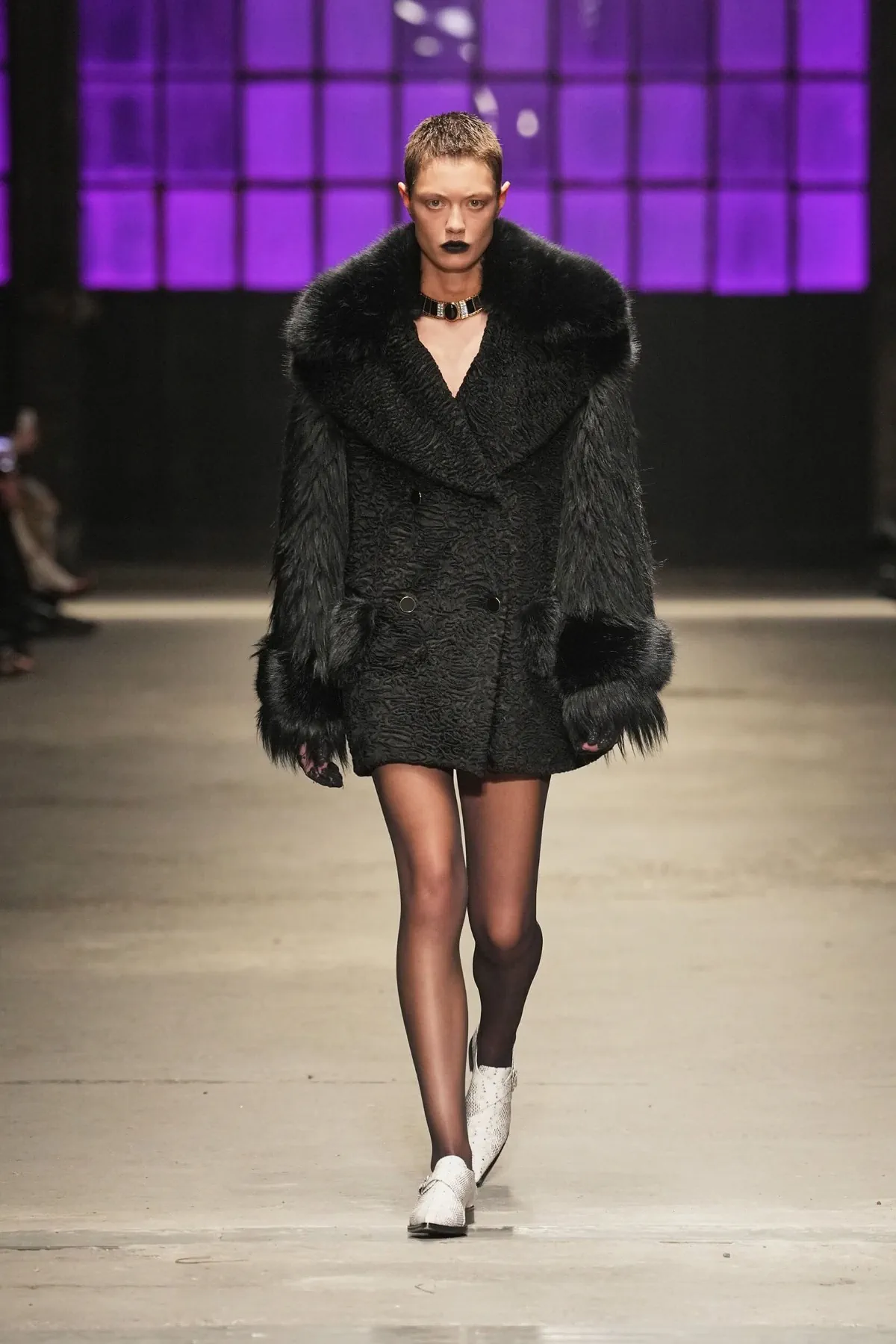
The collection opened with a parade of black that showcased genuine range. Cropped leather jackets with a crocodile pattern were followed by glossy, wide-legged trousers. Crinoline-structured A-line skirts pushed the silhouette outward with architectural confidence. Gladiator-style dresses cut close to the body spoke the language of power rather than decoration. Certain gowns had extra-long sleeves that covered the hands entirely—a theatrical gesture that felt deliberately gothic without crossing into costume.
Knitwear entered the picture with its own set of tensions. Soft mohair was interrupted by vinyl-textured zebra inserts. Chenille and lurex embroidery traced bold jaguar motifs across surfaces. Faux astrakhan added an almost operatic richness to a collection that already had plenty of drama. The house’s animalier instincts were present throughout, filtered through a deep, nocturnal lens rather than the usual full-spectrum brightness.
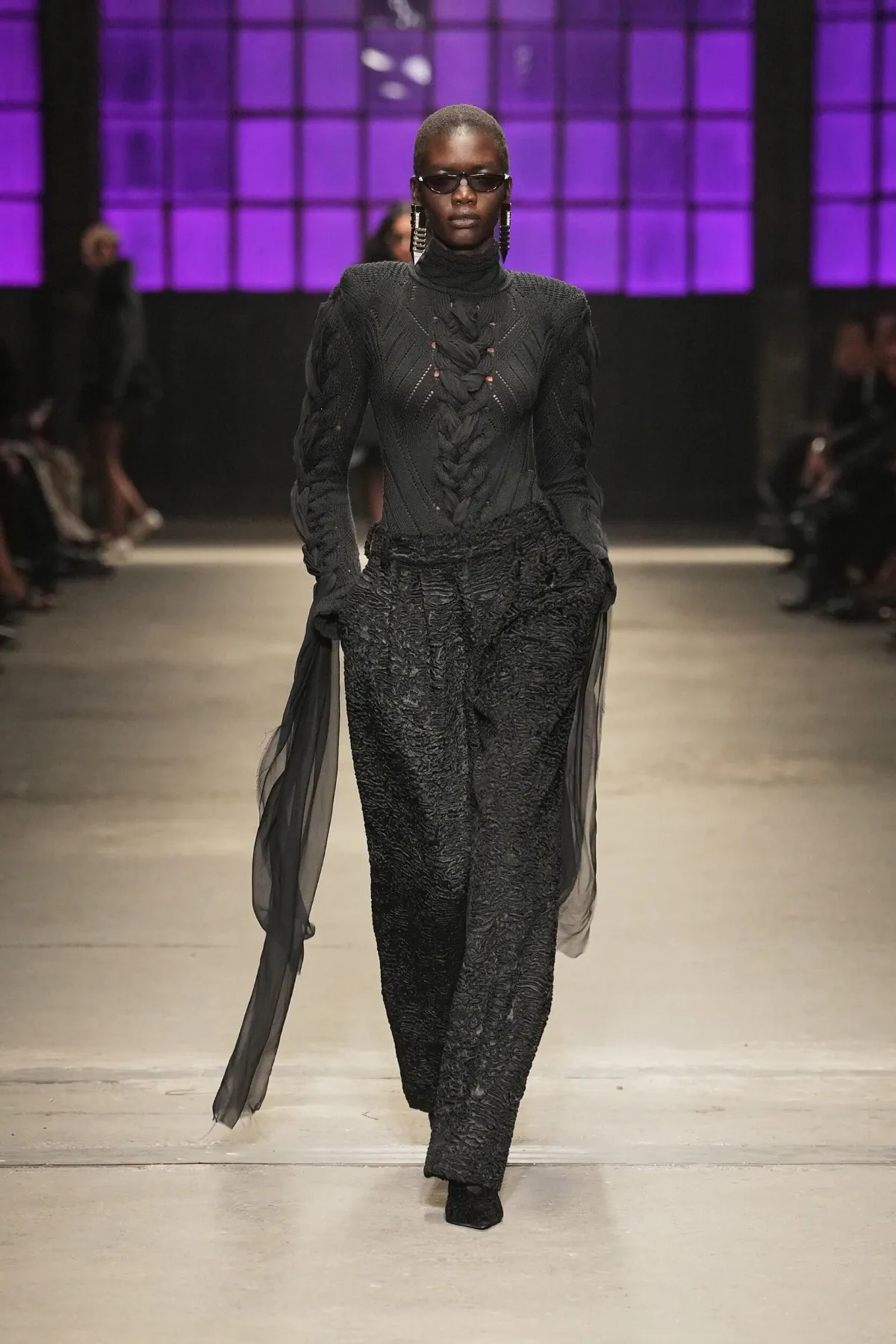
Sequin-encrusted minidresses that were skimpy yet architectural sat alongside sheer lace pieces with intricate spaghetti-strap backs. A matte leather biker jacket backed with printed silk twill captured the push and pull between rigidity and fluidity that ran through the entire show. Silk twill shirtdresses animated by a photographic silver fox print offered a quiet surprise. Chiffon, printed and deliberately distressed, disrupted denim in a punk way.
And then the color came. When it finally arrived, it landed like a shock of light in a dark room. Periwinkle, vibrant pink, and cyclamen appeared not as a departure from black, but as a complement to it. Color was used to pierce the darkness, not replace it. The prints drew inspiration from Caravaggesque still lifes, with chromatic accents radiating from deep, shadowed backgrounds. The combination of Old Master painting sensibility and Cavalli maximalism was striking.
Follow all the latest news from Fashionotography on Flipboard, or receive it directly in your inbox with Feeder.
You may also read
Accessories completed the picture with their own pointed attitude. Monk straps and pointed loafers shared the runway with cone-heeled pumps that exuded an unmistakable 1980s energy. Lace-up boots moved through the space with conviction. The Serpentine bag reappeared in new forms, including a gladiator-studded version that appeared more aggressive than in previous seasons. Jewelry took on a geometric and sculptural style, nodding toward Art Deco architecture with a contemporary edge.
Fashion houses often retreat into monochrome when they want to reset. Black can be a crutch or a canvas. Puglisi made it the latter. By limiting the palette, he forced every other element to carry more weight: the texture, the cut, and the surface detail. The collection convincingly argued that the Cavalli DNA is not confined to color, but also resides in the way the house approaches the body, silhouette, and sensuality.
By the time the show ended, it was clear that Puglisi had not abandoned the essence of Cavalli. He had simply taken it in a new direction.