
Not the kind with a sword attached. It’s the kind that becomes more beautiful the longer you wear it, absorbing the years, the weather, and the weight of decisions made in difficult rooms while holding its shape. That is the thinking behind the Max Mara Fall 2026 collection, an idea Griffiths has been turning over since a visit to Sutton Hoo, an Anglo-Saxon burial site near his weekend cottage in Suffolk, England. There, rusted helmets and weathered metal objects sat in glass cases, glowing with an unlikely beauty.
| 📌 Key Facts |
|---|
| 🧥 Max Mara Fall 2026 centers on durability and long-term wear 🏰 The collection draws inspiration from medieval craftsmanship 👑 Matilde di Canossa serves as the symbolic muse 🧵 The 101801 coat is reinterpreted, not reinvented 🧶 Layered tweeds, cashmere and suede define the silhouette |
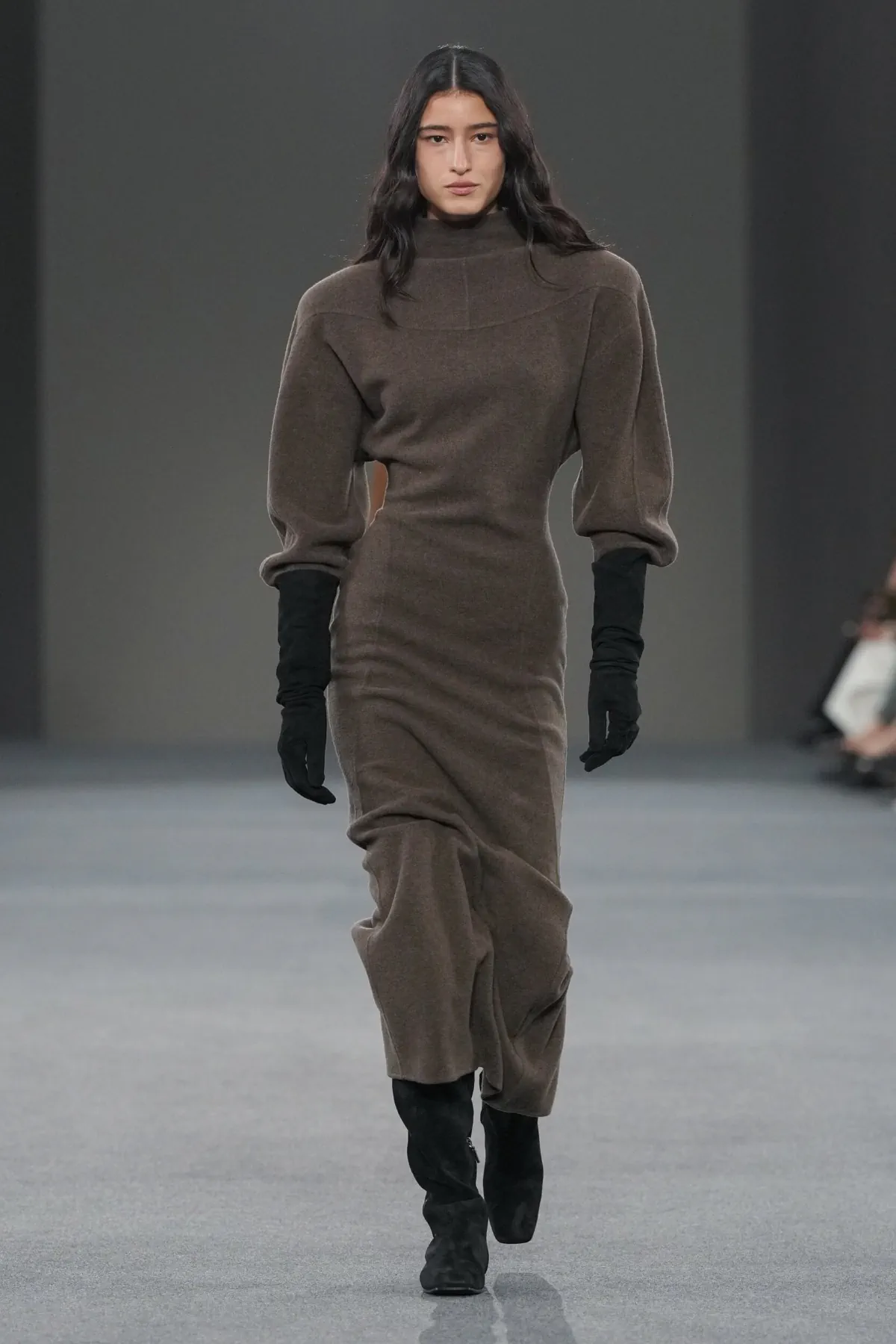
The Max Mara Fall 2026 collection debuted during Milan Fashion Week, prompting many to describe it as “medieval.” That is understandable but incomplete. Griffiths was reaching for something more specific: the material culture of an era that history has largely underestimated. The so-called Dark Ages, he argues, were not especially dark. There was craft. There was ingenuity. There was also extraordinary durability, a quality he values above all others.
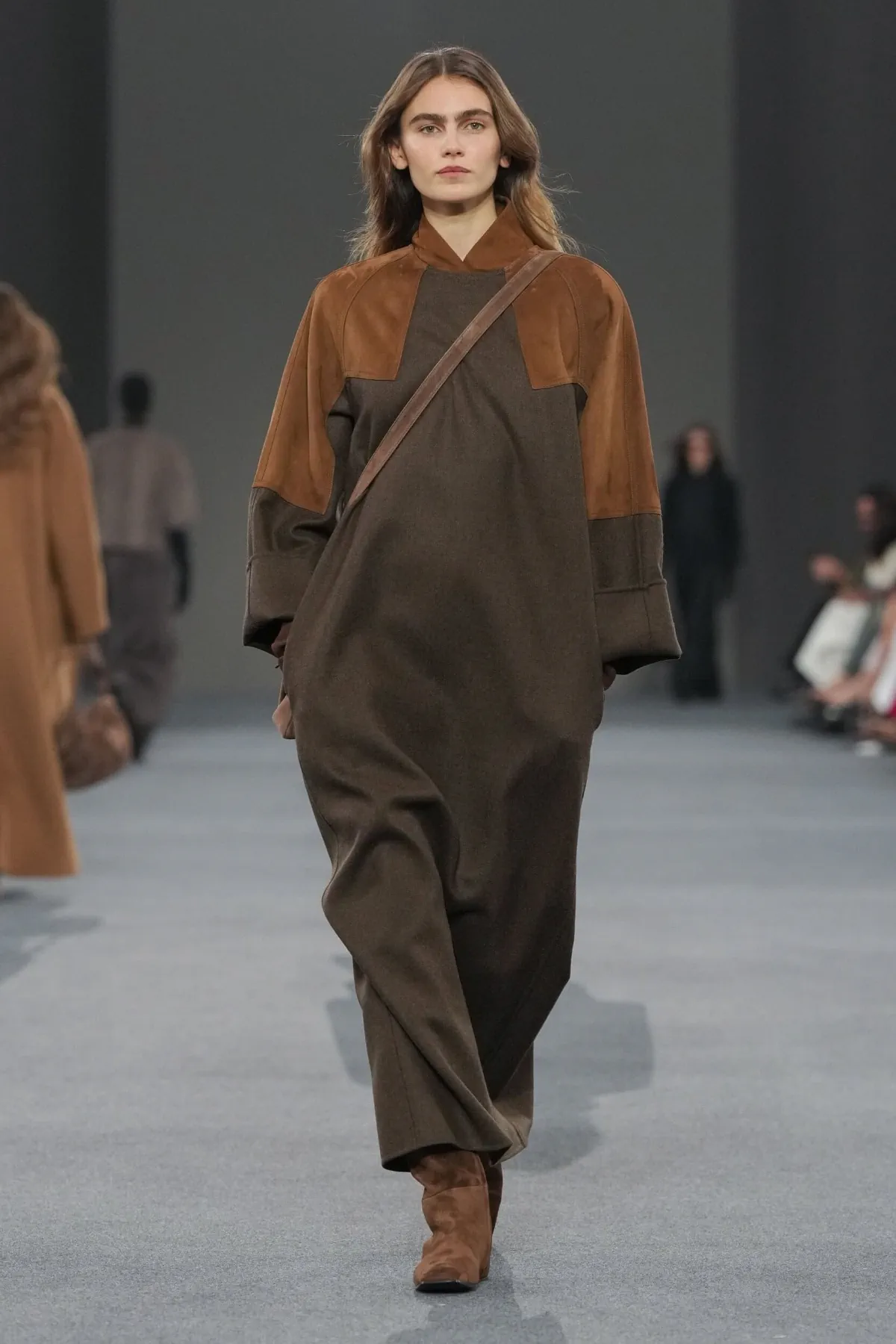
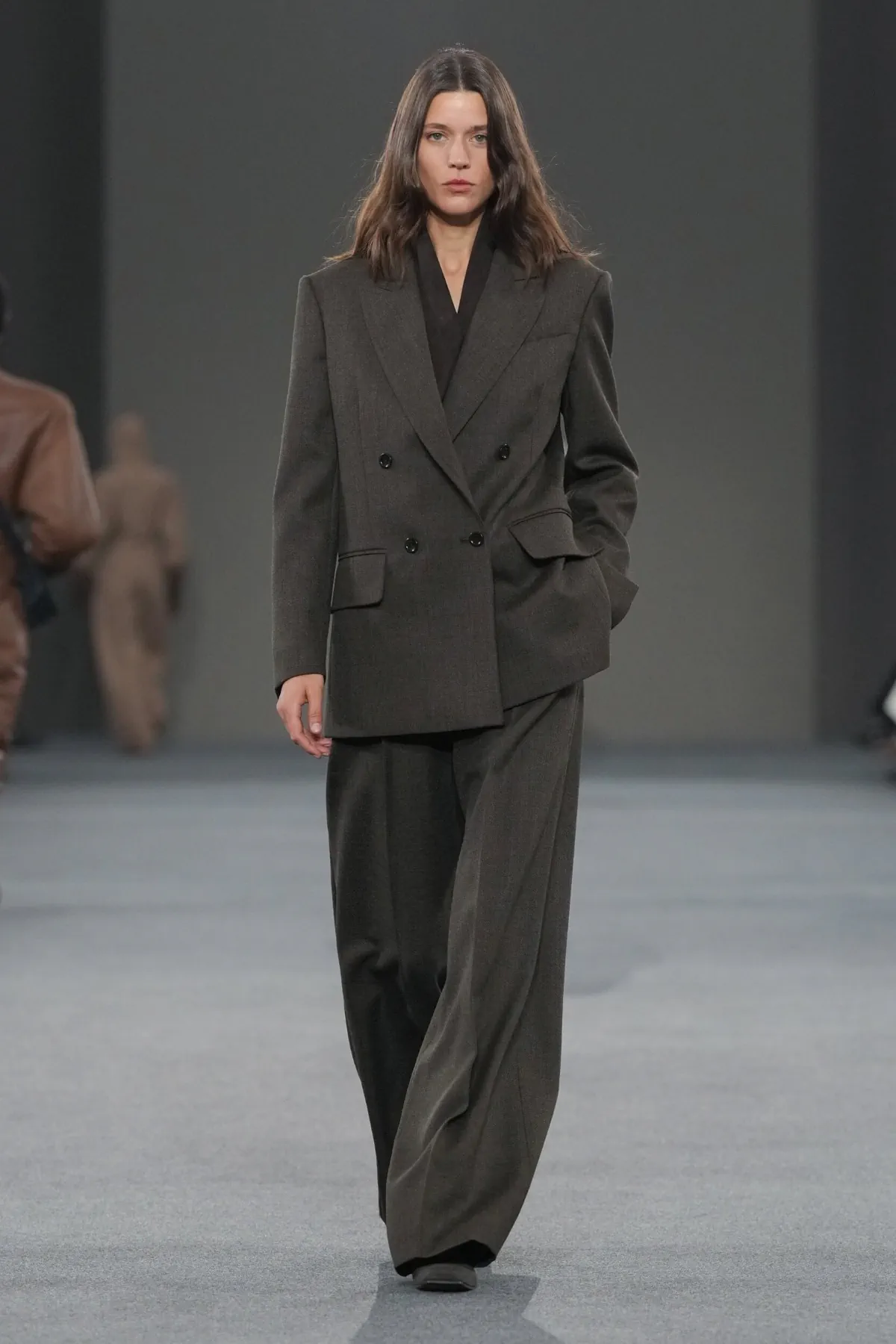
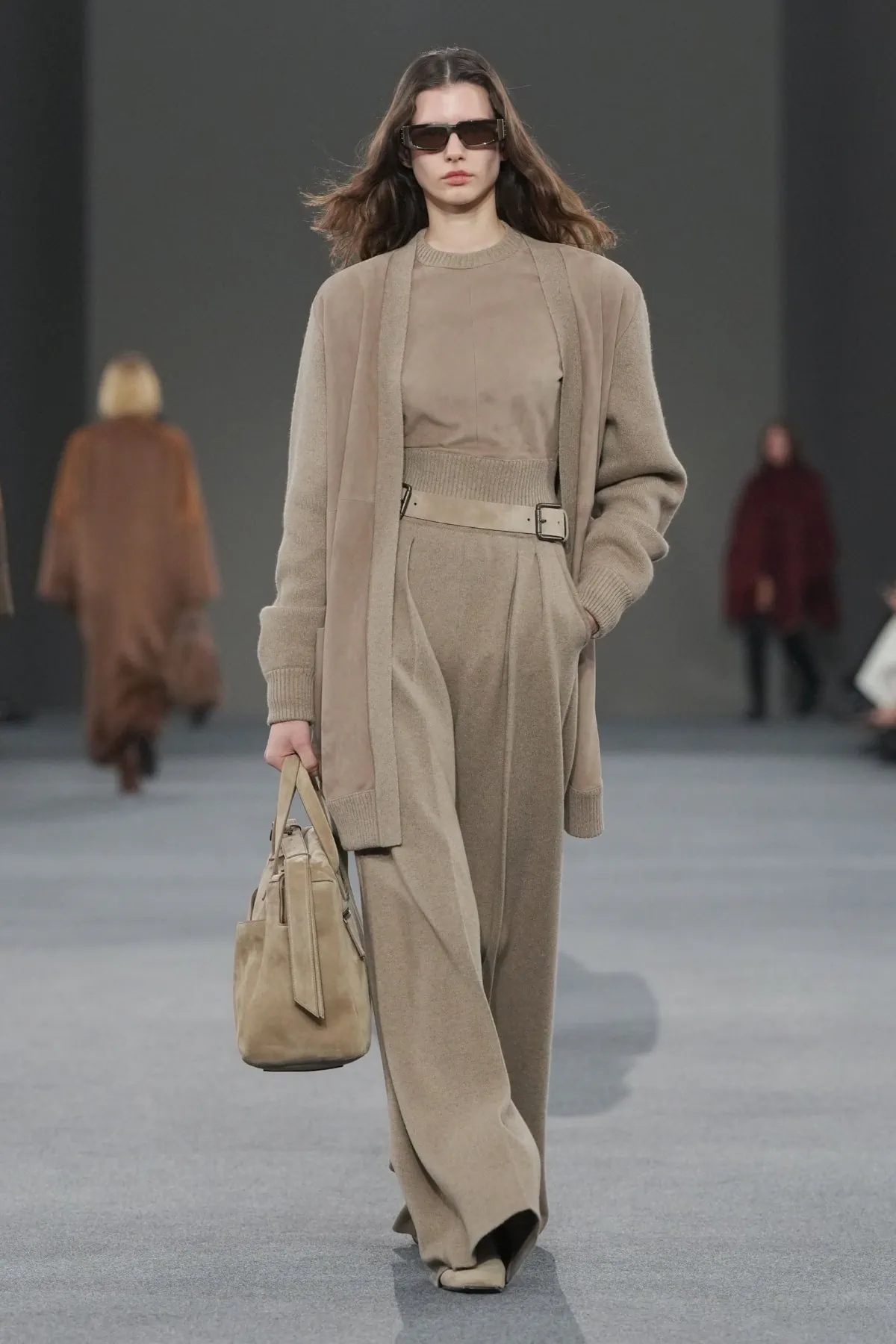
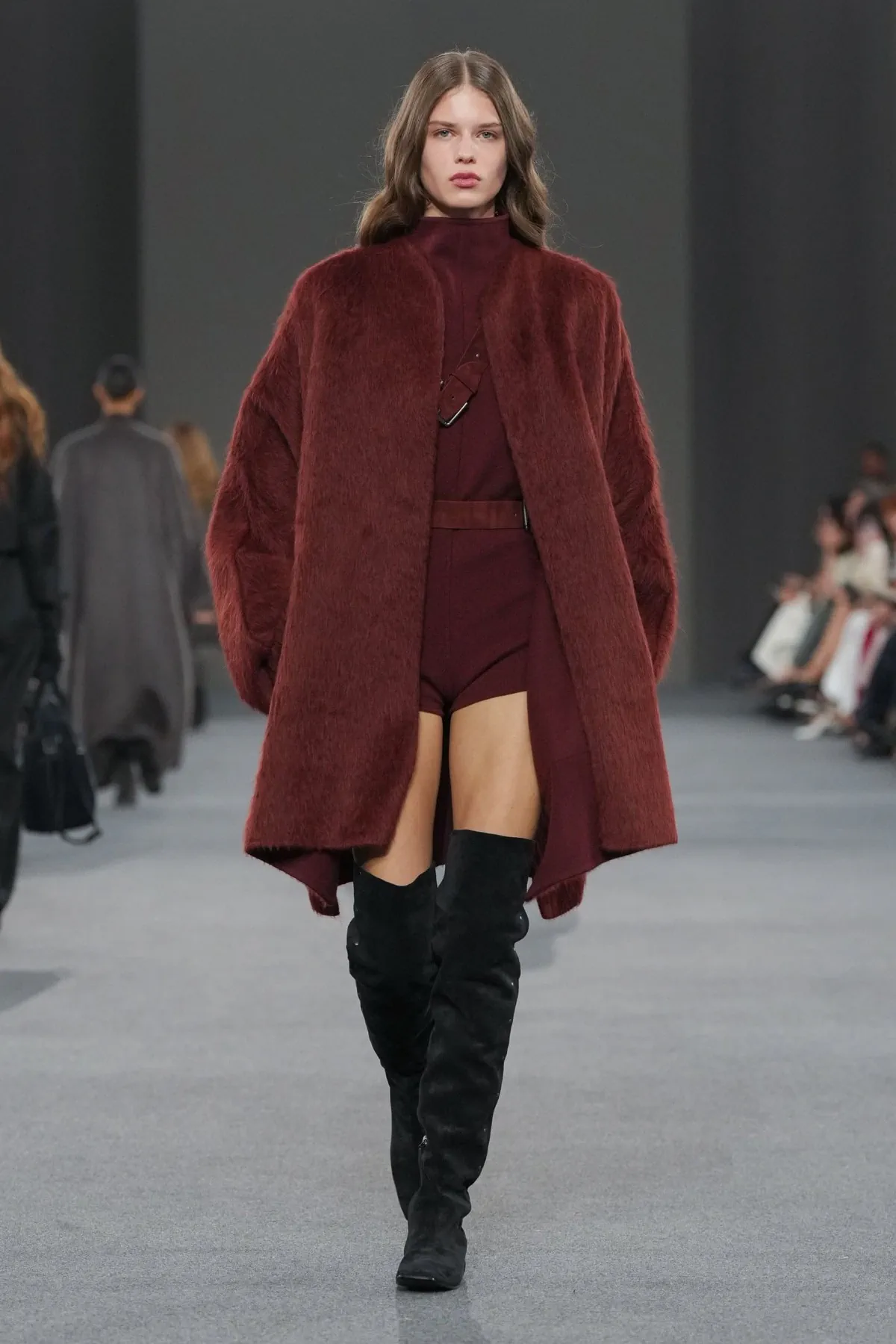
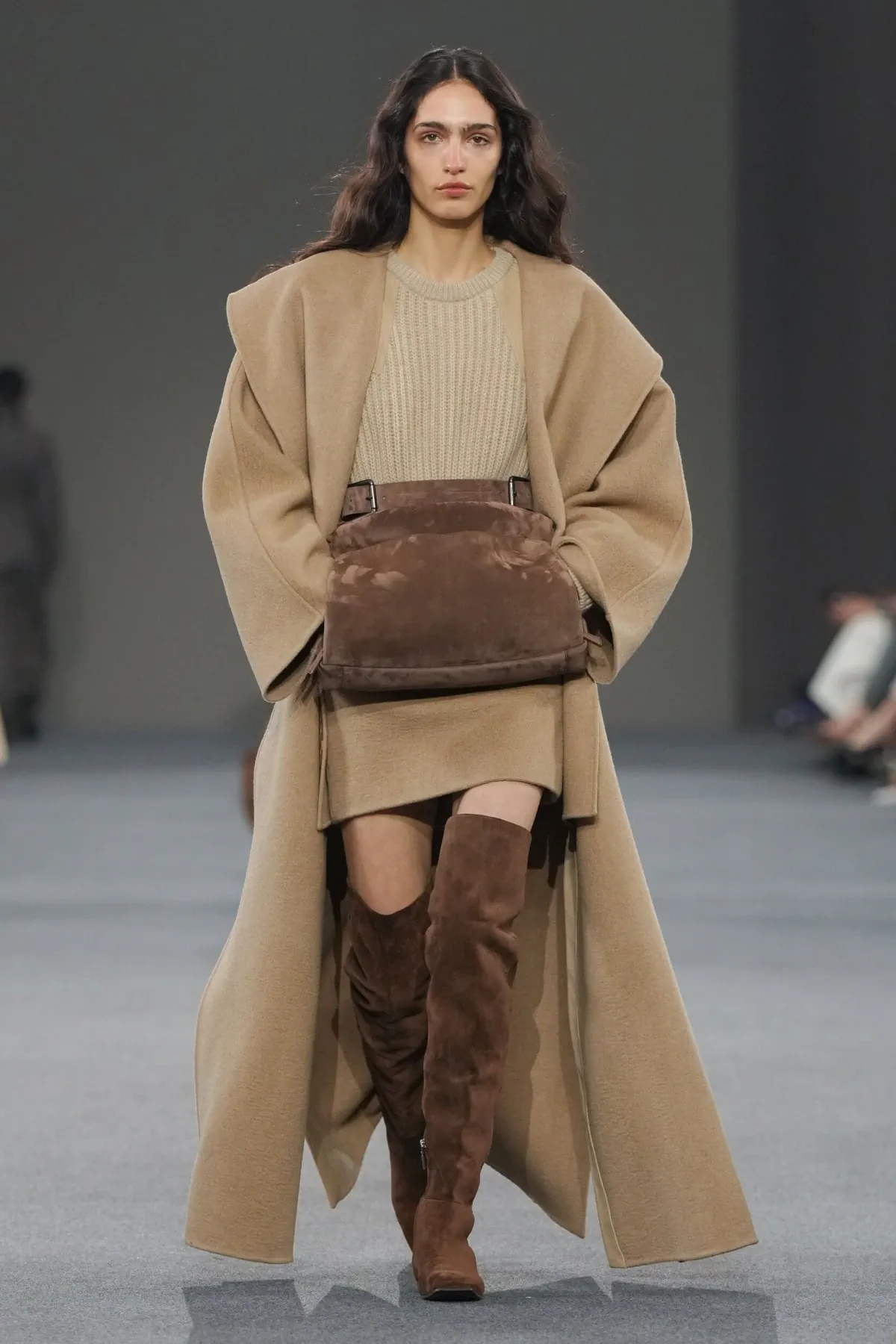
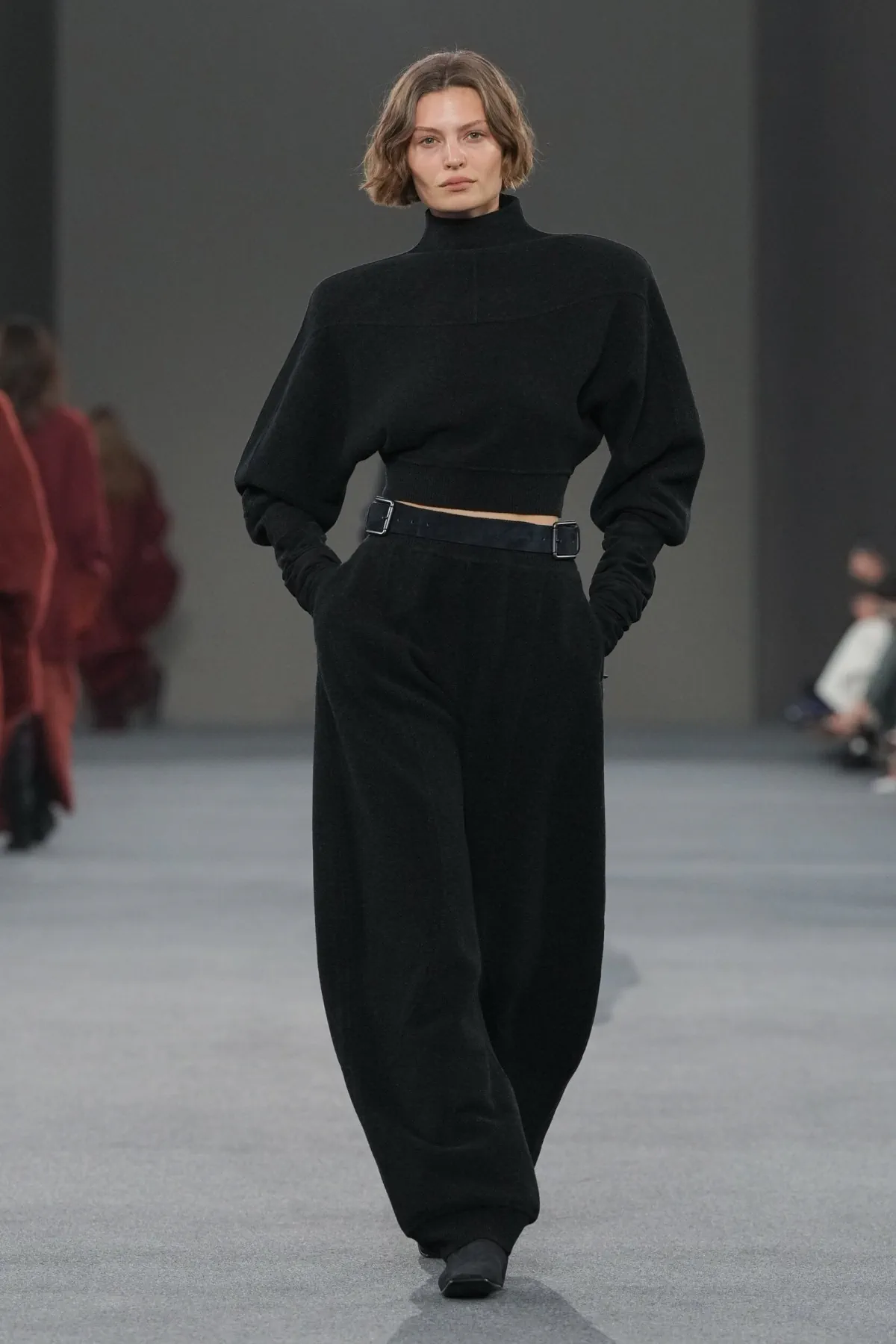
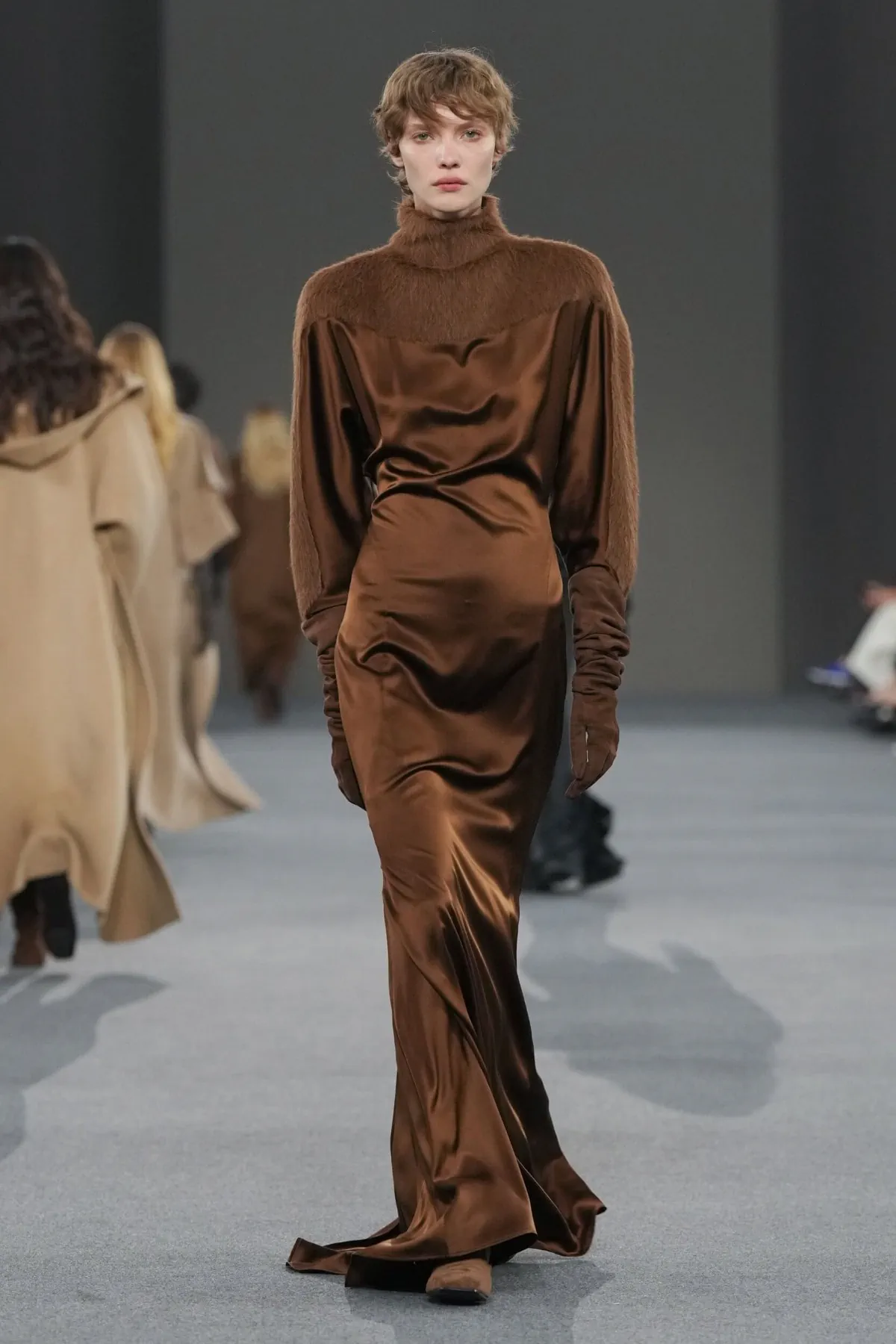
The collection opened with coats that read like architectural propositions: robe-like shapes cut from earthy tweeds and cashmere in tawny browns and deep anthracite grays with suede accents on the shoulders and clavicles, suggesting the plating of a medieval tunic. Tall boots rose above the knee in rippling folds of supple suede ringed with metal rivets. Many of the looks featured long suede gauntlets that extended the silhouette downward and lent the wearer a quiet authority.
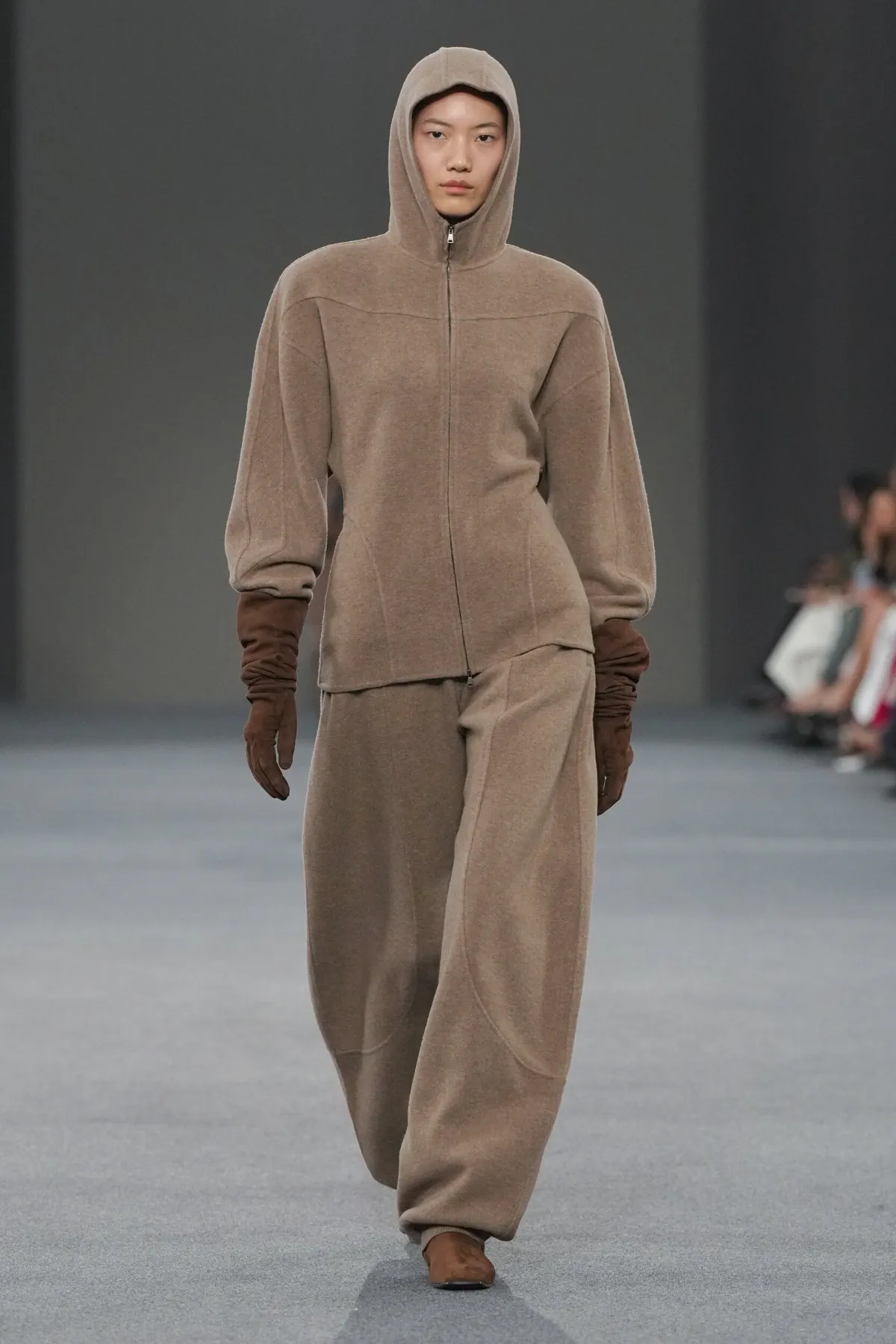
The precision of the fabrication is what made these clothes feel current rather than costumey. Max Mara has been producing garments of this quality for decades, and Griffiths has led its creative team since 1987. That longevity matters here. The medieval references were applied not as decoration, but as structural logic: heavy materials worn in layers; closures made of leather straps and fastenings rather than zippers; and textures that suggested something hewn rather than processed. A floor-length brown cashmere coat patched with suede at the shoulder had the weight and presence of something you could someday hand down to a daughter without apology.
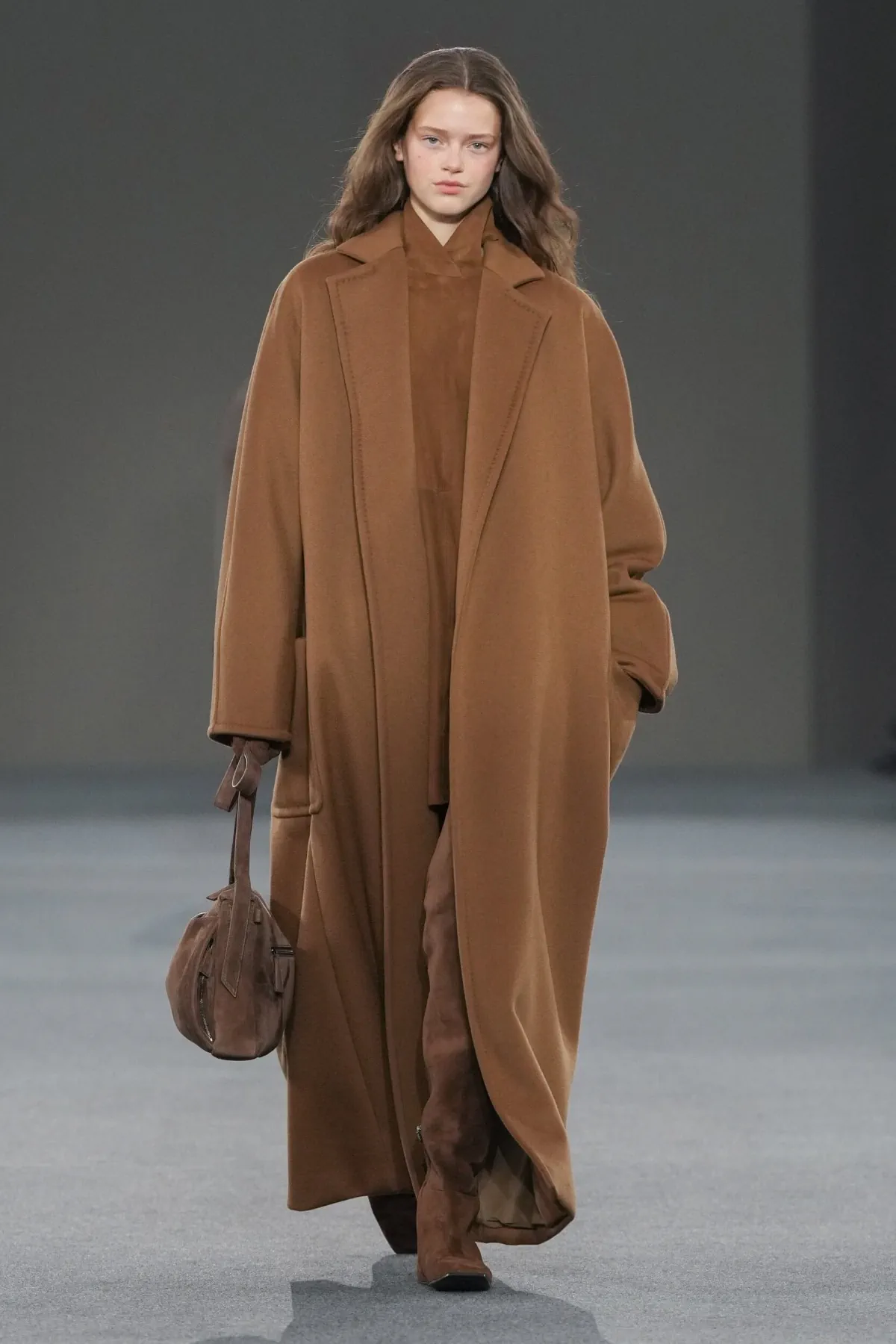
Griffiths also revisited the 101801, Max Mara’s most enduring coat. It was originally designed by French stylist Anne-Marie Beretta and launched in 1981. The number itself seemed to hum with a kind of cosmic rightness backstage. Matilde di Canossa, the medieval Italian noblewoman whose power and autonomy served as the collection’s central muse, had her defining year in 1081. Max Mara had its defining year in 1981. Apparently, history rhymes in round numbers.
Follow all the latest news from Fashionotography on Flipboard, or receive it directly in your inbox with Feeder.
You may also read

Several variations of the 101801 appeared on the runway: a hooded parka in charcoal cashmere and a beltless rendition in camel. Each one was adjusted but never altered beyond recognition. The trucker jacket received new fabrics. Double-breasted suiting was reworked. Fitted sheath dresses appeared in a ribbed, Lurex-touched knit that caught the light subtly. These were not novelties. They were refinements offered to women who know what they want and are skeptical of anything promising to change their lives by next season.
Griffiths made no political statements. He rarely does. However, he acknowledged with a certain dry humor that the choice to look to the Middle Ages – a period often characterized by upheaval and uncertainty – was not entirely disconnected from the present. He left the connection for the audience to complete.