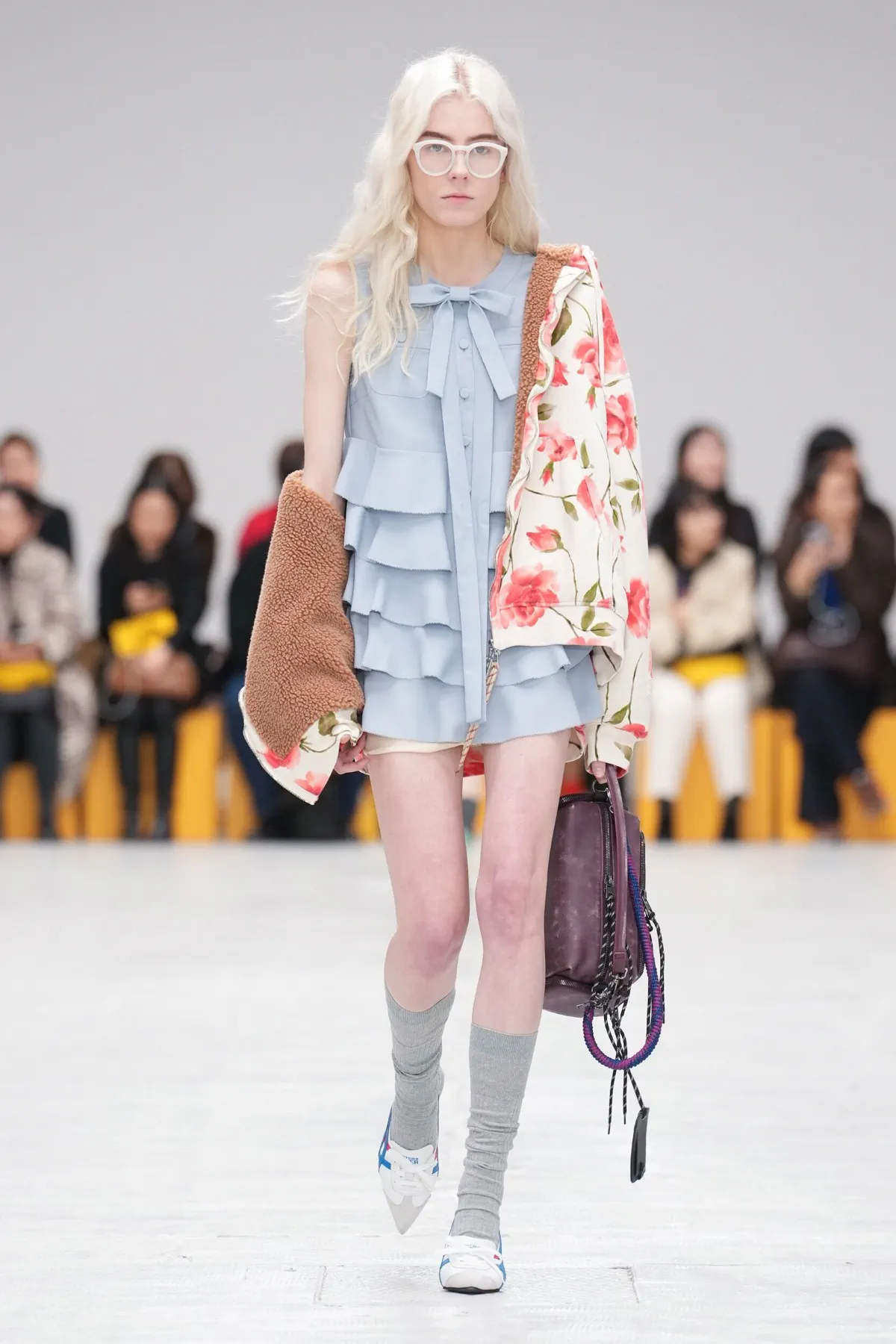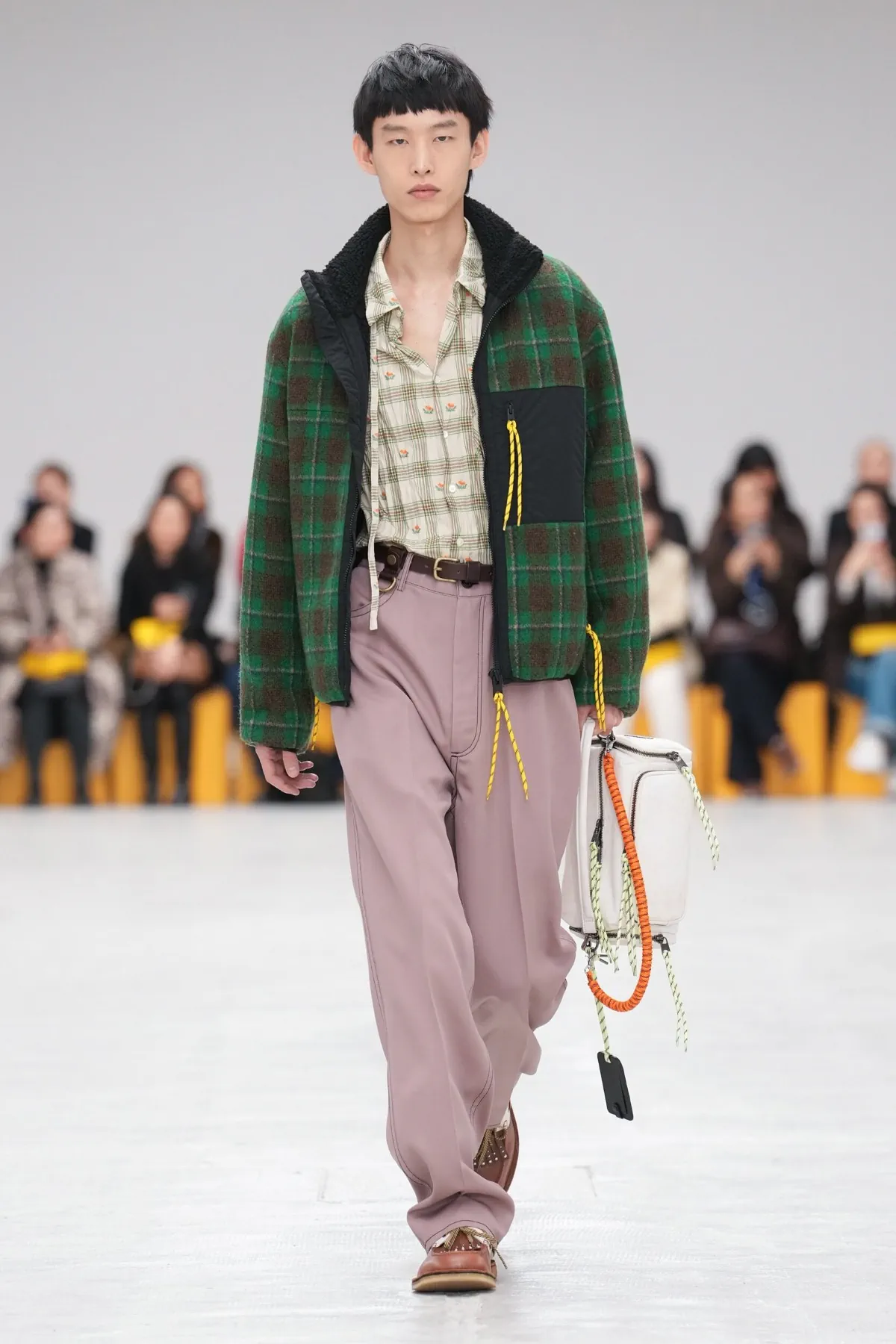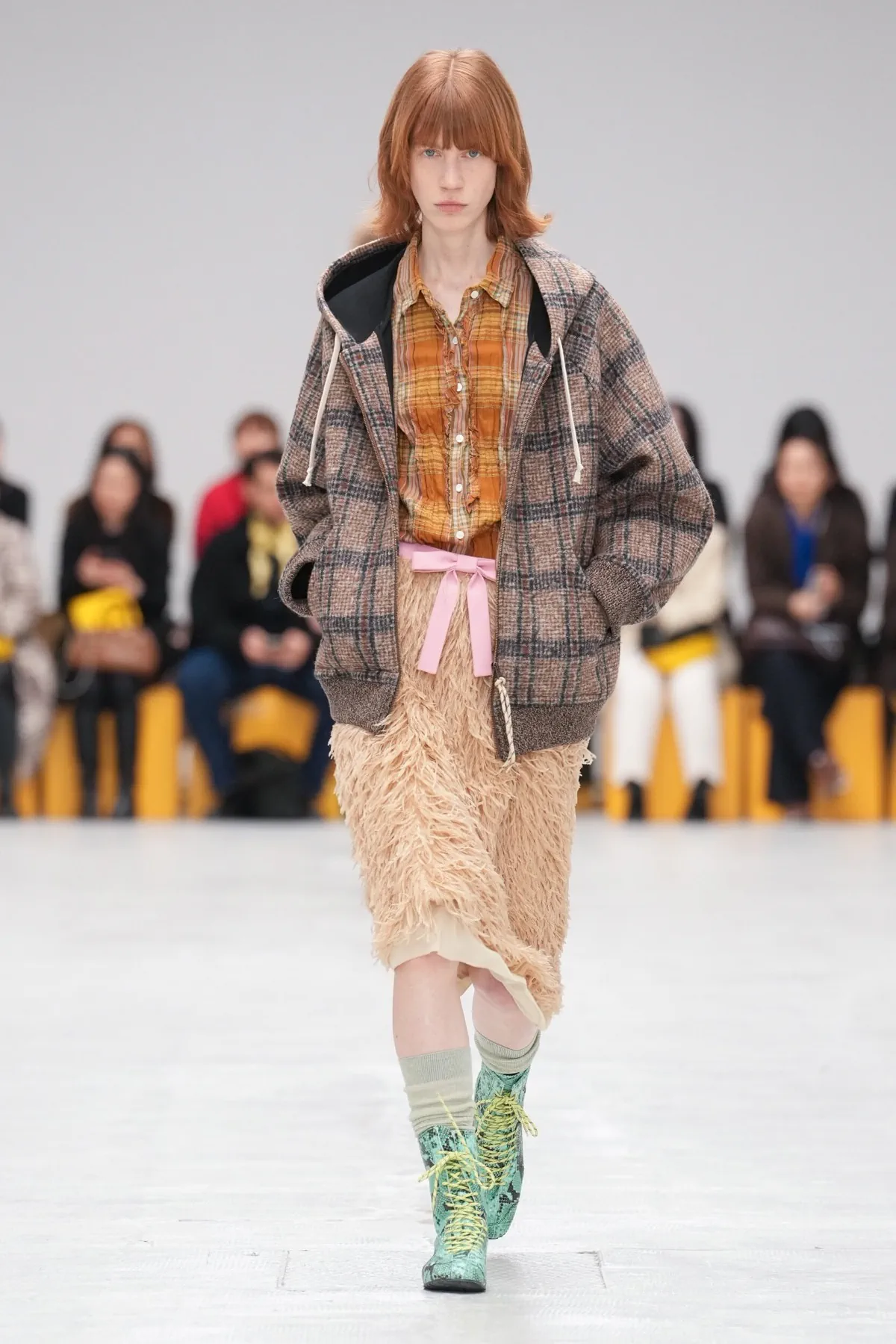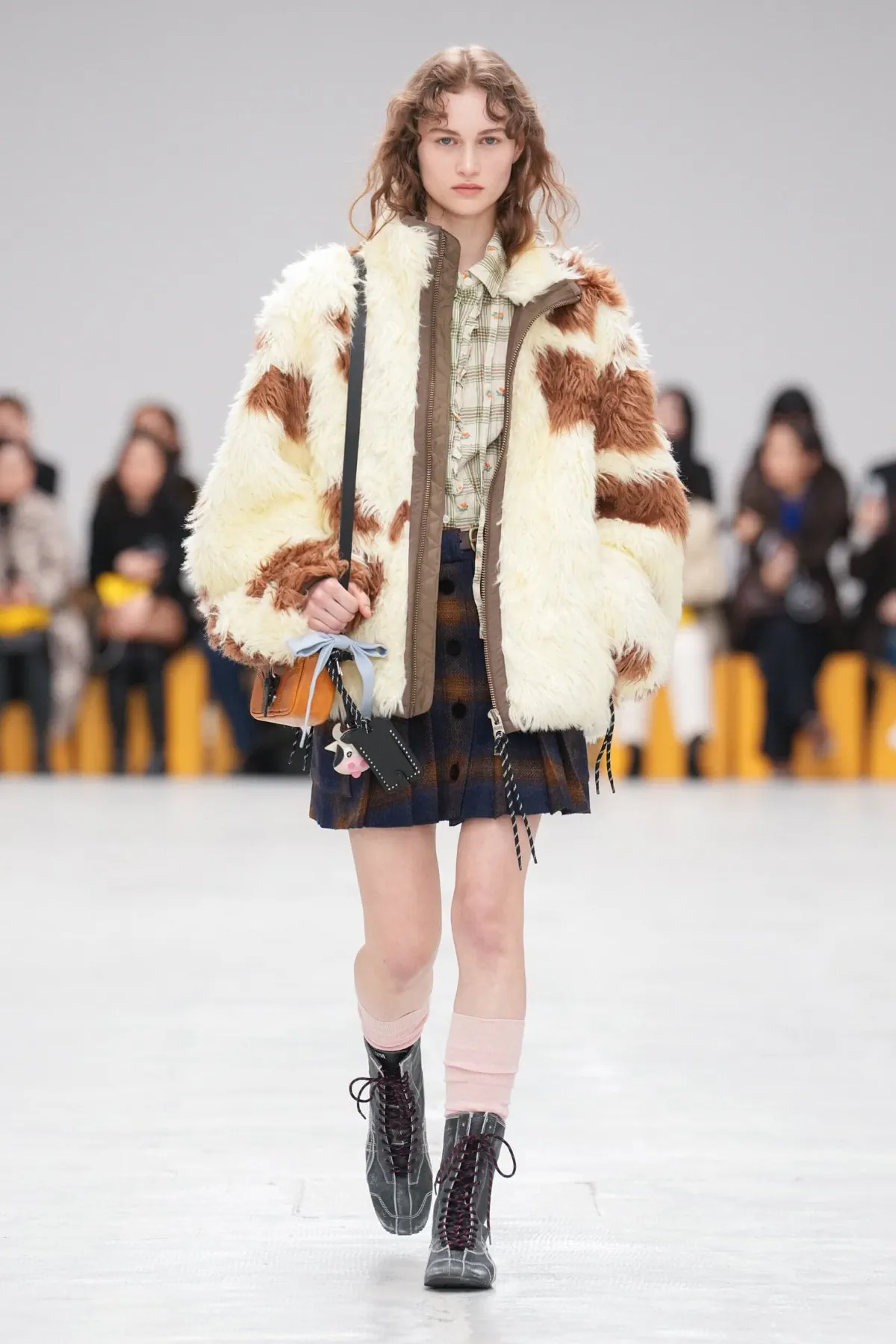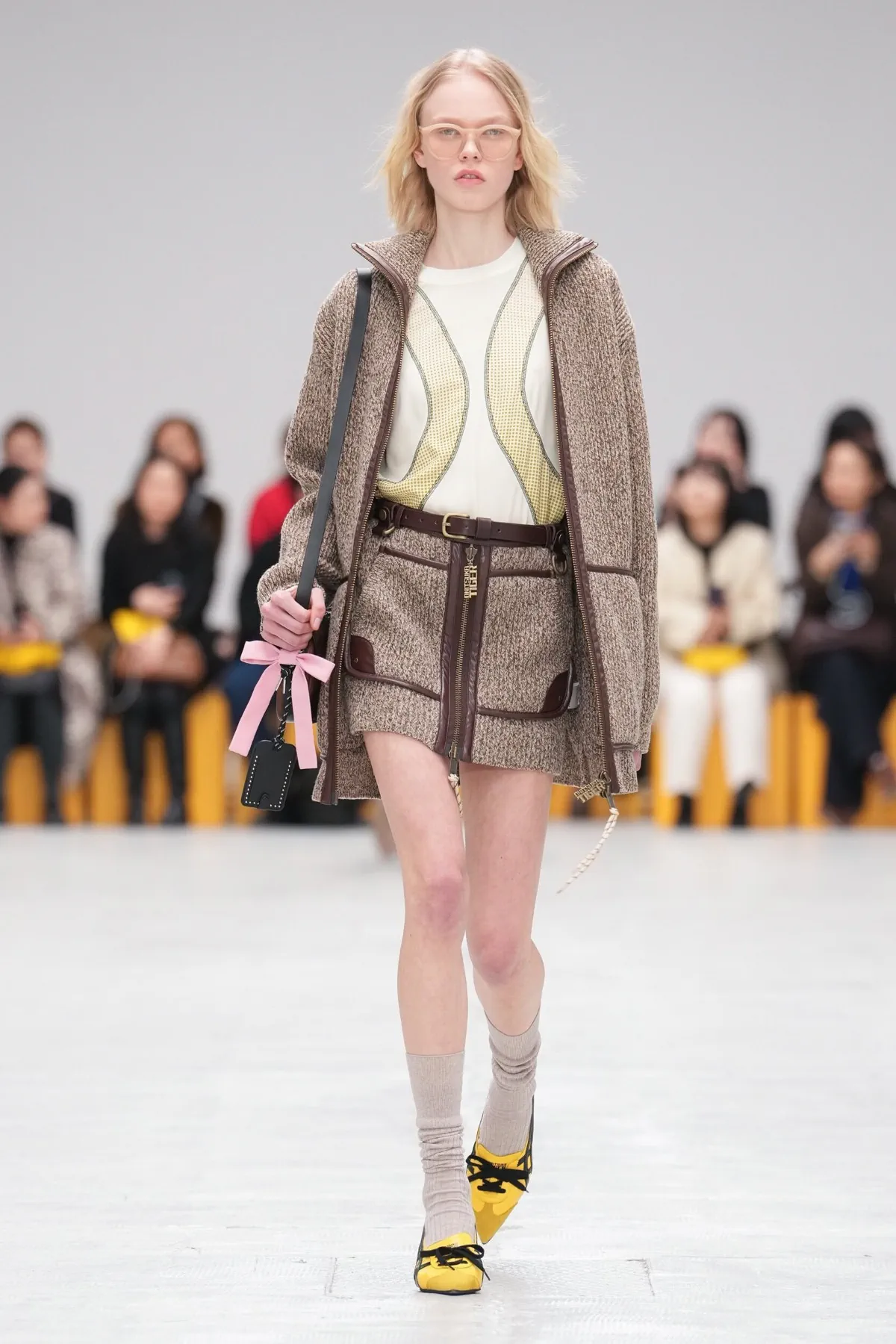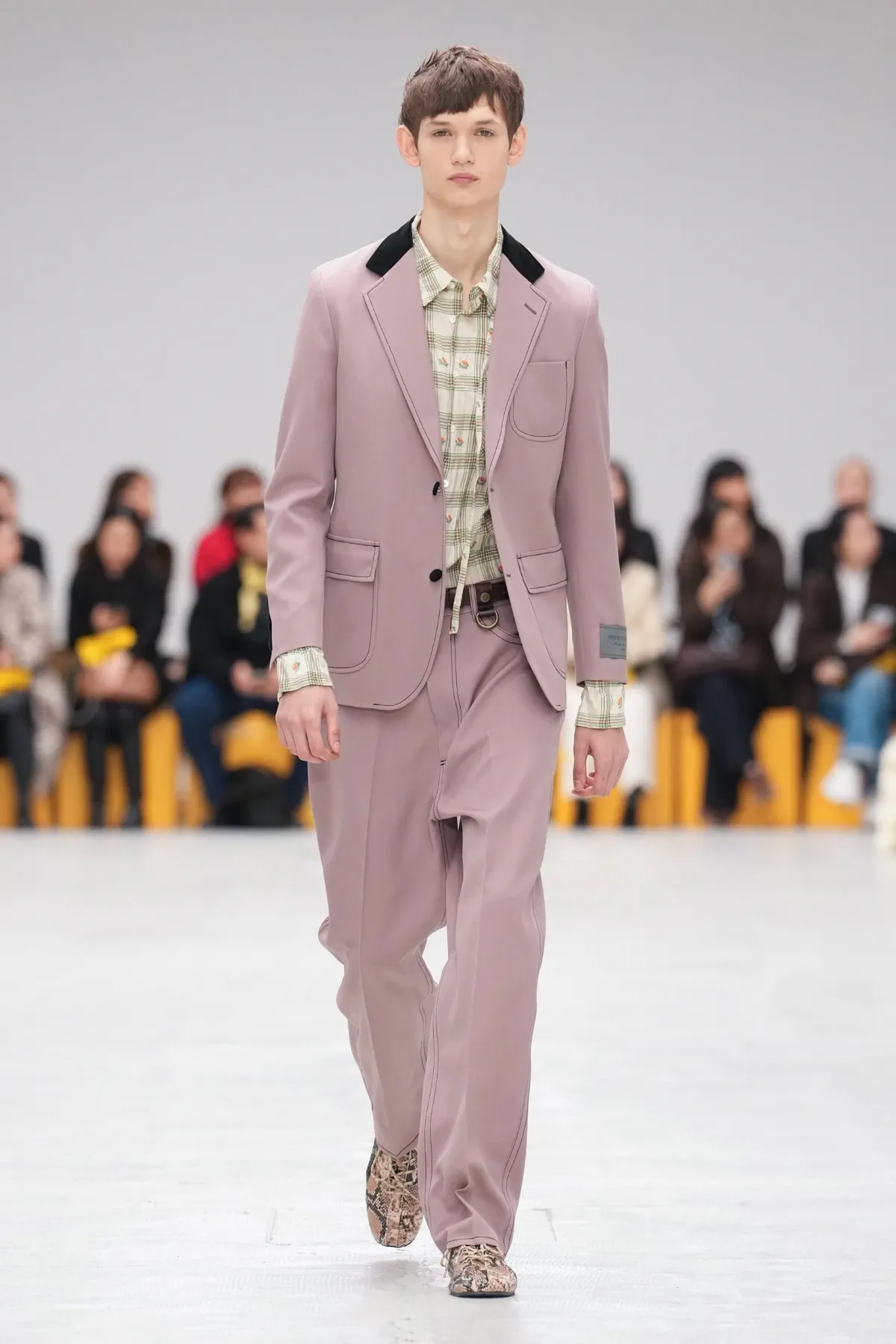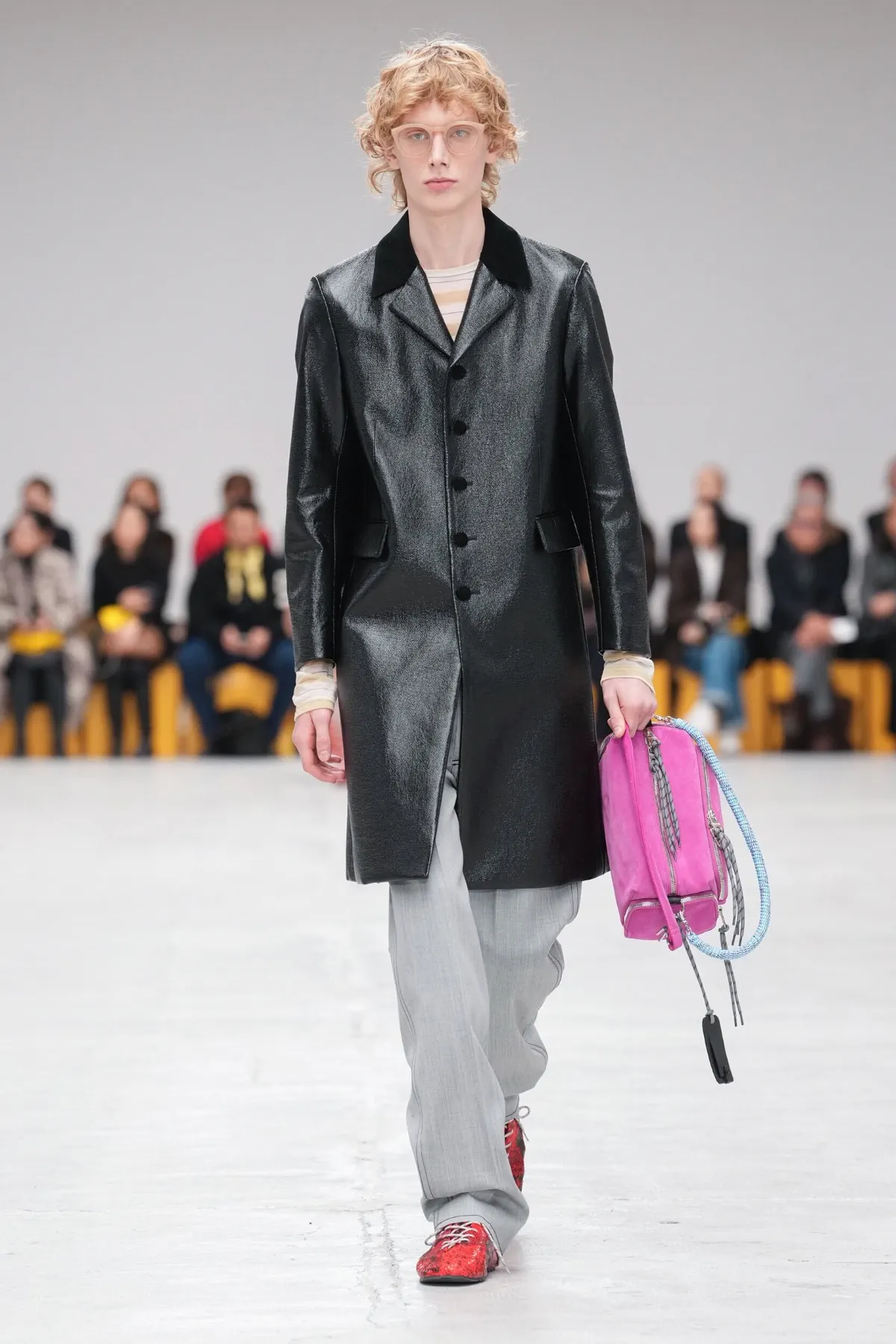

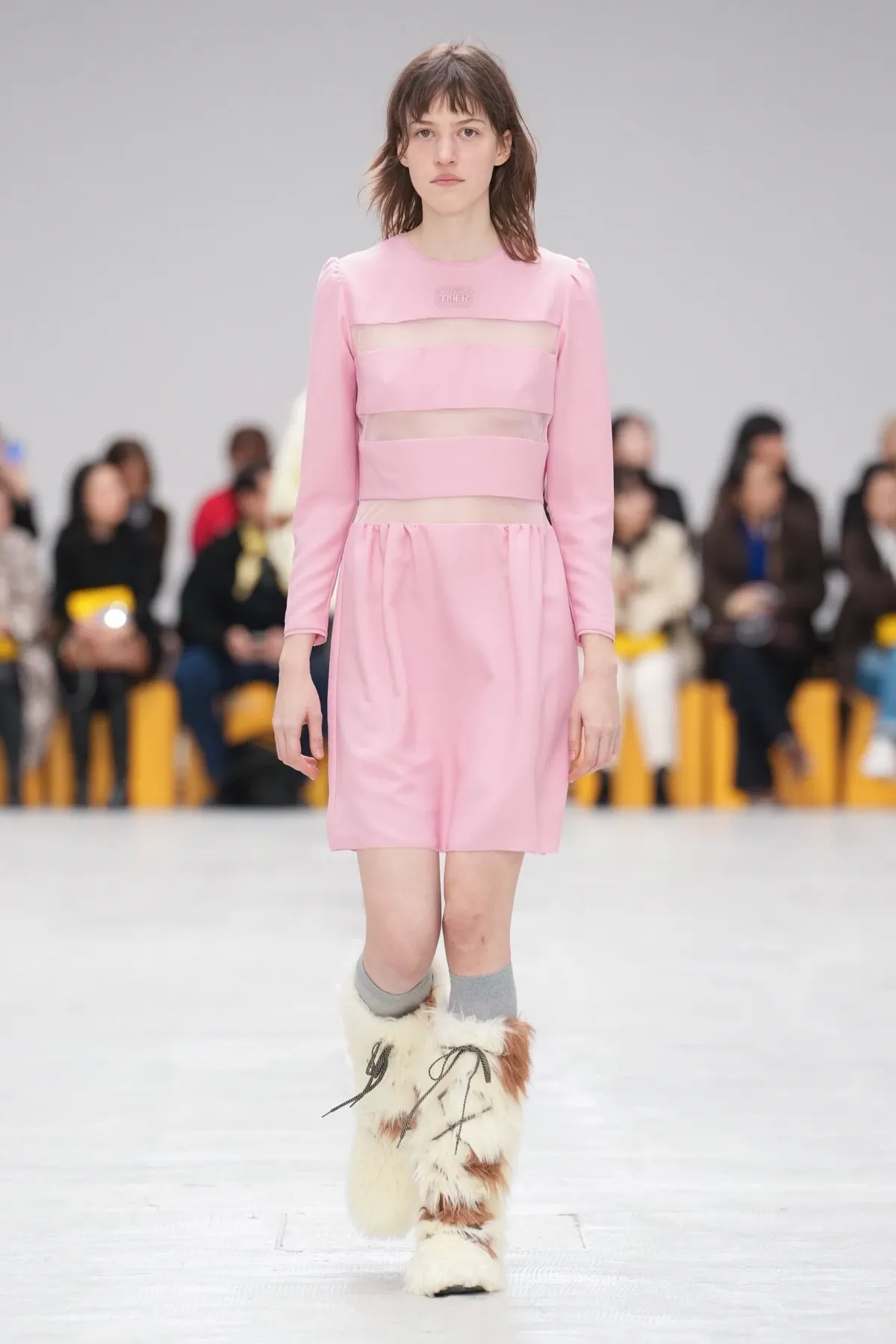
Creative director Andrea Pompilio did not need to search far for his references this season for Onitsuka Tiger. He looked to Tokyo for inspiration, specifically the neon-lit streets, the vivid contrasts of the city’s youth culture, and the graphic boldness of manga. He decided this aesthetic belonged at the center of a collection that had to remain faithful to the brand’s archives above all else. The result was a show that balanced two cultures without sacrificing the integrity of either.
| 📌 Key Facts |
|---|
| 👟 Mexico 66 Square introduces a square-toe update of the iconic sneaker 🎨 Tokyo pop and manga aesthetics shape the collection’s visual codes 🎓 School uniforms inspire structured silhouettes and pleated skirts 🧵 Italian tailoring refines pastel suits and wide trousers 🌸 Floral embroidery and bows soften the graphic energy ✨ Velvet dresses and feather-effect gowns close the show in elevated style |
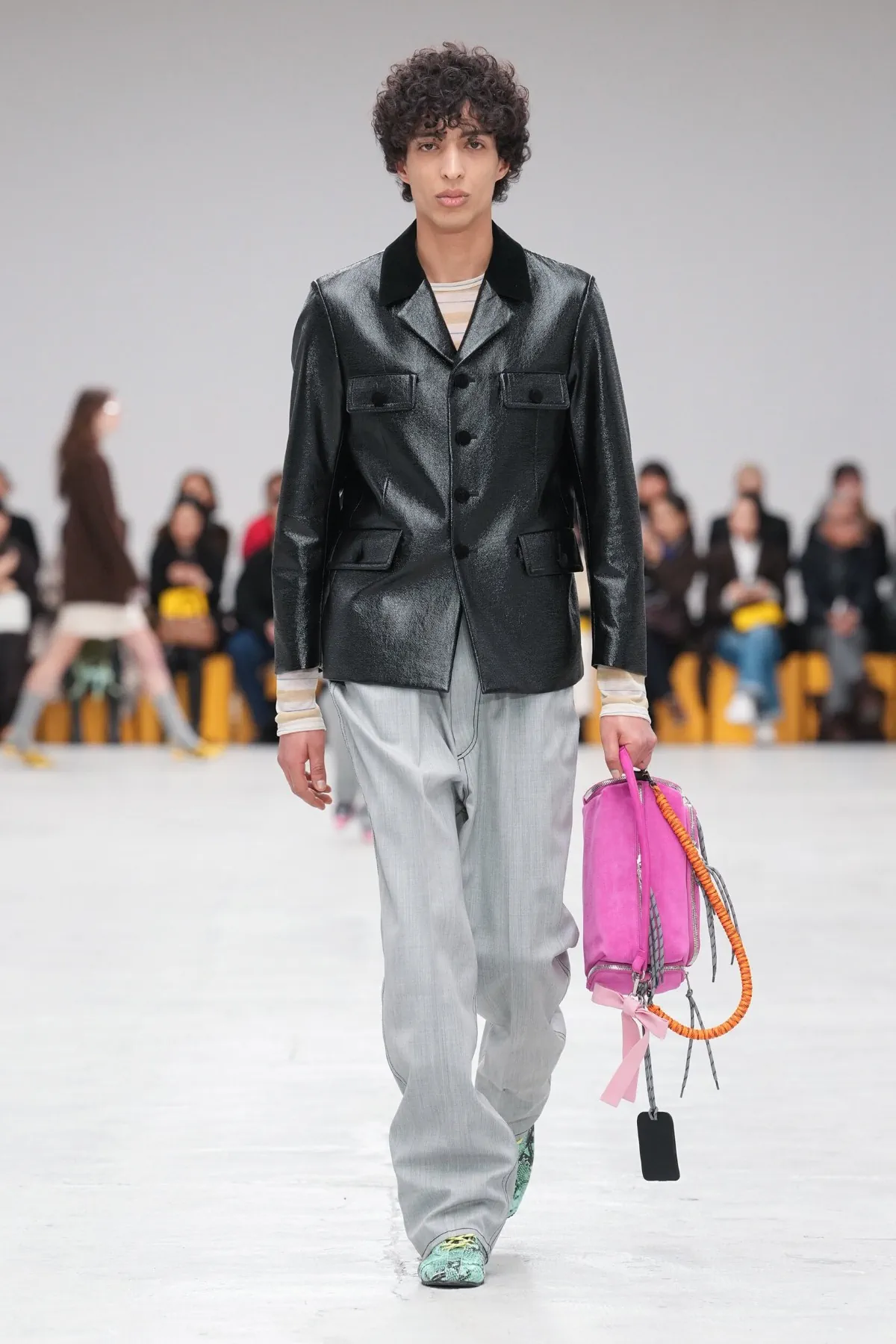
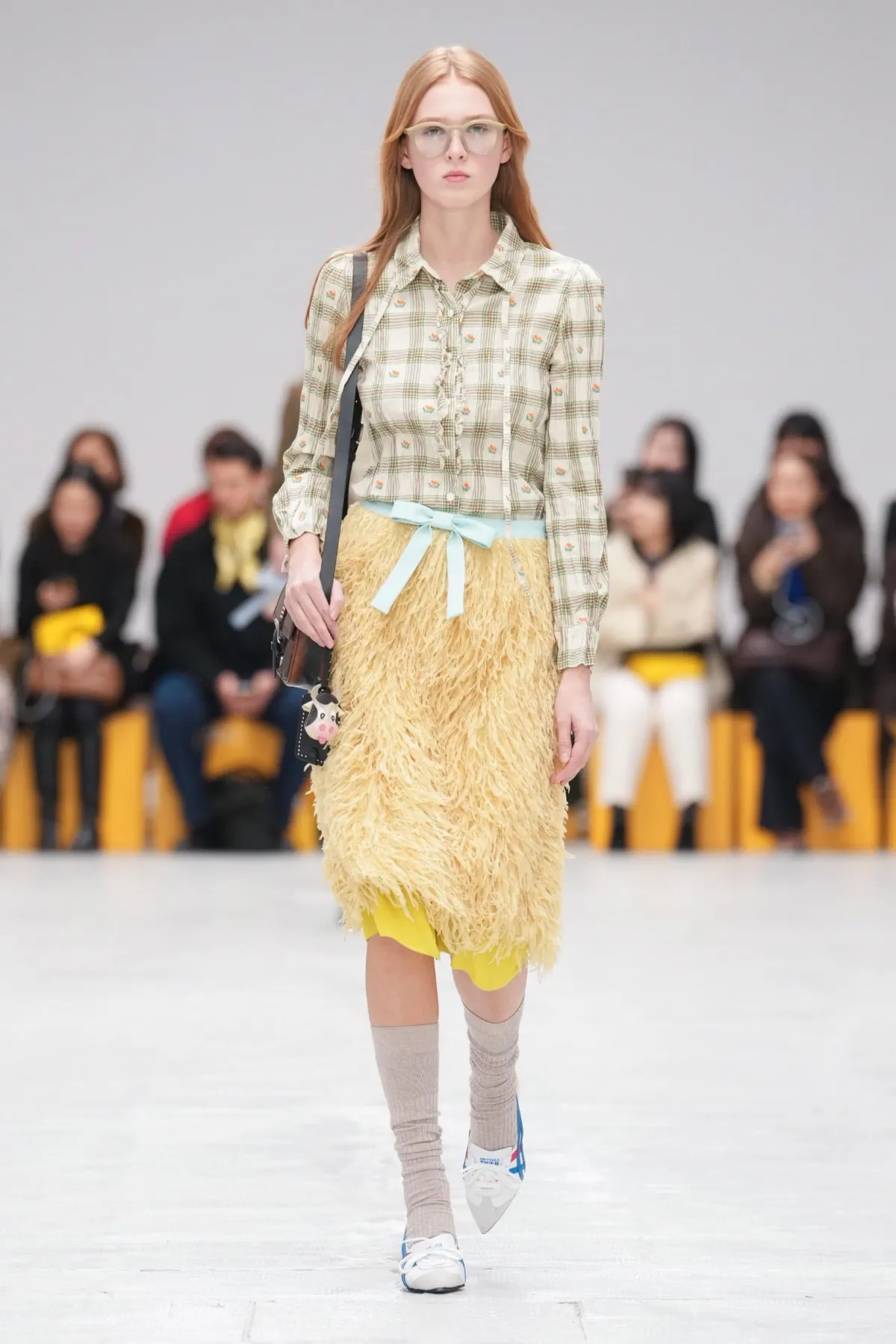
Pompilio’s setting was essentially a fictional school campus populated by characters drawn from recognizable Japanese cultural archetypes: the sharp-blazered student, the oversized-fleece skater, and the impeccably late professor. School uniforms, which carry strong symbolic weight in Japanese pop culture, formed the foundation of the collection’s structure. Mini pleated skirts were paired with matching blazers or lightweight striped T-shirts and vintage-cut jackets that referenced the 1970s without becoming pastiche. Knee-high rib-knit socks and pointy-toed, kitten-heeled versions of the brand’s iconic Mexico 66 sneakers completed the opening looks, which arrived with a particular kind of cartoon-approved wit.
Formalwear for men was thoughtfully developed this season. Wide, well-cut trousers in pastel tones – sage, mauve, and mustard – offered a soft counterweight to the more exuberant pieces elsewhere in the show. Five-pocket pants with contrasting stitching and structured pastel suits, worn by both men and women, grounded the collection in wearable clothing. Small puffer jackets with silhouettes pulled directly from the Onitsuka Tiger archives nodded to the 1970s without becoming costume-like.
Japan surfaced repeatedly throughout the collection in quieter ways. Flower motifs appeared as embroideries on fleece jackets and as micro inserts on creased, checkered shirts. Maxi floral patterns ran across oversized blousons and wide-leg trousers. Pastel bows were seemingly casually applied across garments: on the necks of minidresses, around the necks of georgette blouses, or simply clipped onto a new crossbody bag. This soft, recurring visual thread pulled the manga aesthetic back into focus without announcing itself too loudly. Tiger-themed lipstick holders, cow-shaped charms, and decorative boondoggles added a playful touch that fit well with Pompilio’s sense of humor.
Follow all the latest news from Fashionotography on Flipboard, or receive it directly in your inbox with Feeder.
You may also read
Footwear remained central to Onitsuka Tiger’s identity, and Pompilio used it to conclude the collection. The Mexico 66 Square sneaker, a variation with a square toe of the brand’s most recognized silhouette, appeared throughout the show in vivid colors, exotic lizard textures, and floral prints. A slingback version of the same shoe, with a pointed toe, closed out the more formal looks. The collection’s final stretch moved toward dressed-up territory with creased velvet frocks adorned with beaded embroidery and gowns made from a feather-effect fabric that subtly caught the light. These closing pieces demonstrated that Pompilio’s vision for the brand extends beyond streetwear into something more refined and enduring.