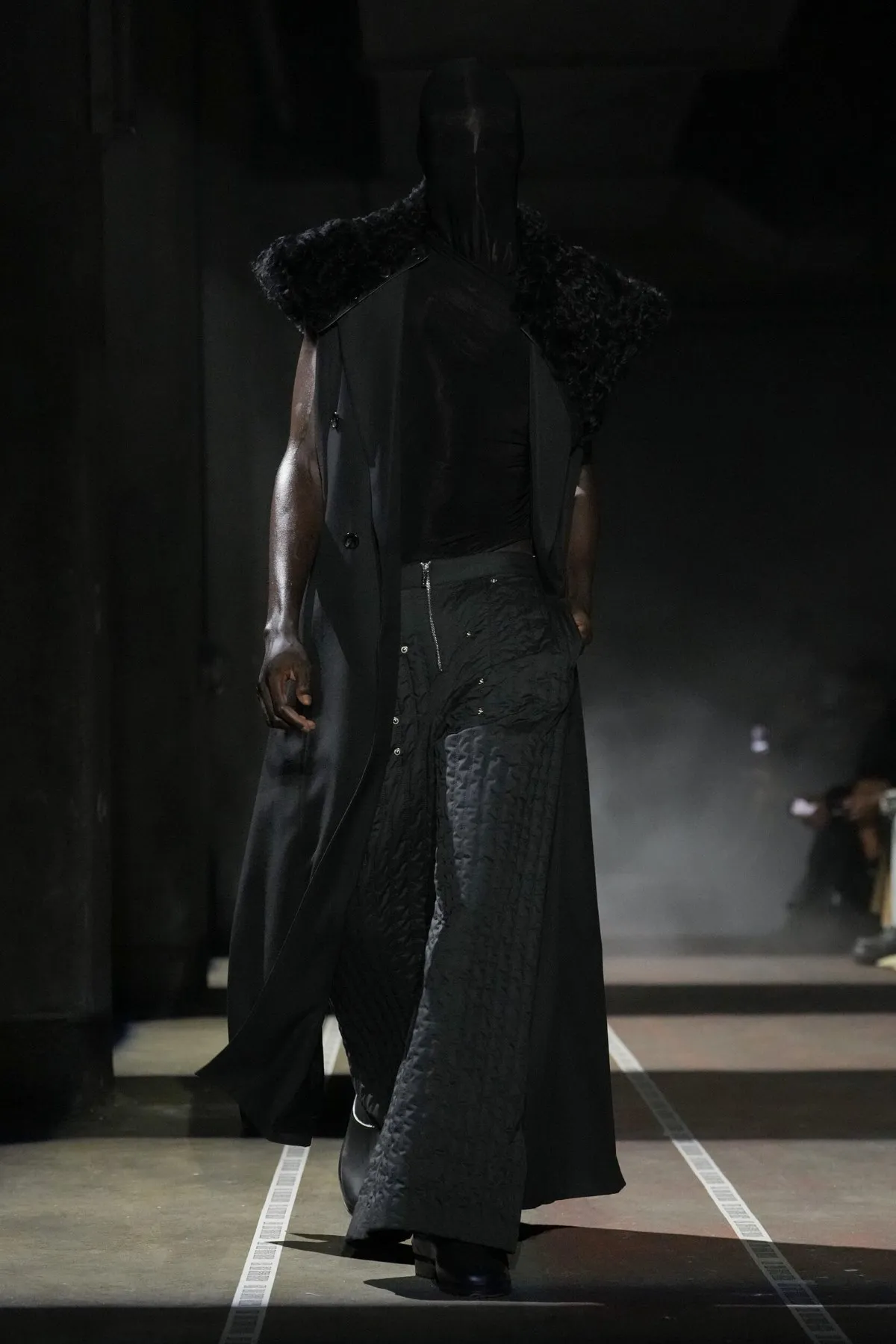

Louis-Gabriel Nouchi, the winner of the 2023 ANDAM award, based his Fall 2026 collection on memories he could only hear. Forbidden from watching Ridley Scott’s Alien as a child, the designer absorbed muffled screams through his bedroom walls. These phantom sounds became formative fears that now fuel his creative vision at LGN Louis-Gabriel Nouchi, where attraction and dread coexist.
| 🏛️ Brand: LGN Louis-Gabriel Nouchi 👁️ Designer: Louis Gabriel Nouchi 🛸 Collection: Fall/Winter 2026 🧬 Inspiration: Alien, H.R. Giger, childhood fear 🪡 Key Elements: Elongated tailoring, membrane fabrics, biomechanical motifs 🧠 Themes: Body politics, inclusivity, eroticism, political language 📍 Show Location: Underground parking garage, Le Marais, Paris 🌐 Special Project: OnlyFans used as editorial and intellectual platform 👗 Positioning: Provocative fashion designed for real-world wearability |
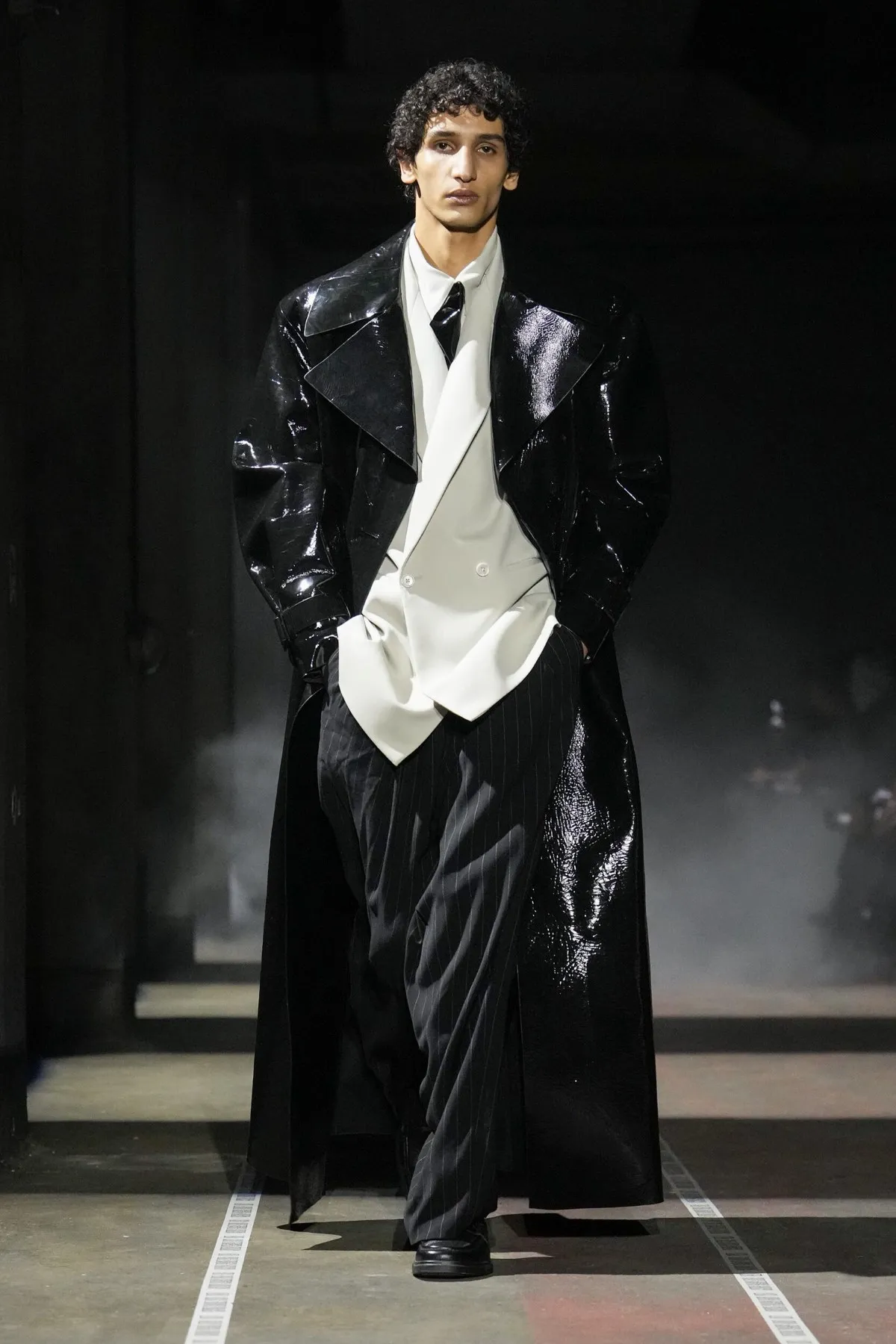
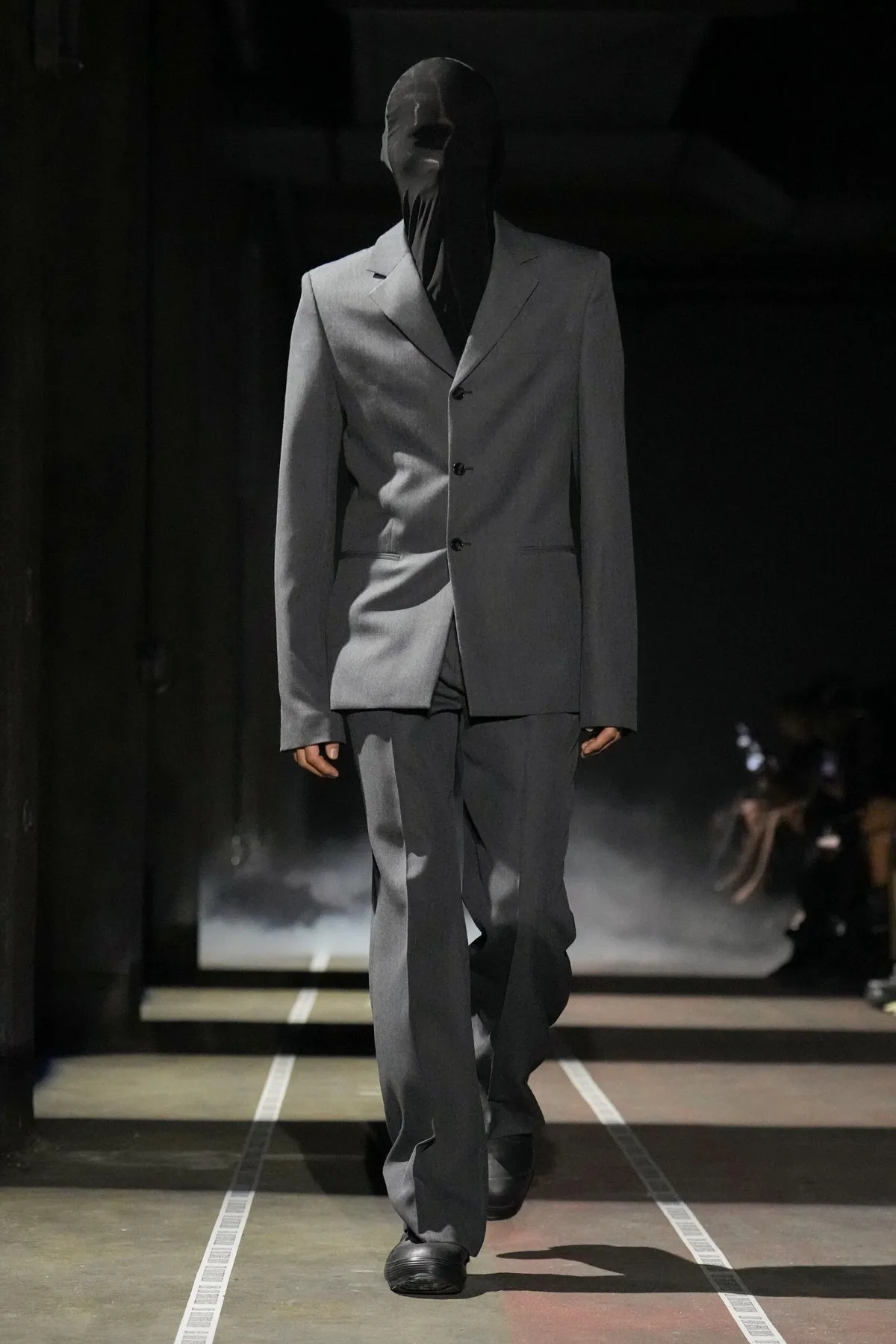
On Friday night, guests descended into a dilapidated underground parking garage in Le Marais. They settled into the dim light while techno music pulsed overhead. Models emerged from the shadows wearing elongated tailoring that made them appear nearly statuesque. Tuxedo jackets featured pleating concentrated at the navel – a subtle nod to cinematic horror familiar to fans of xenomorph anatomy.
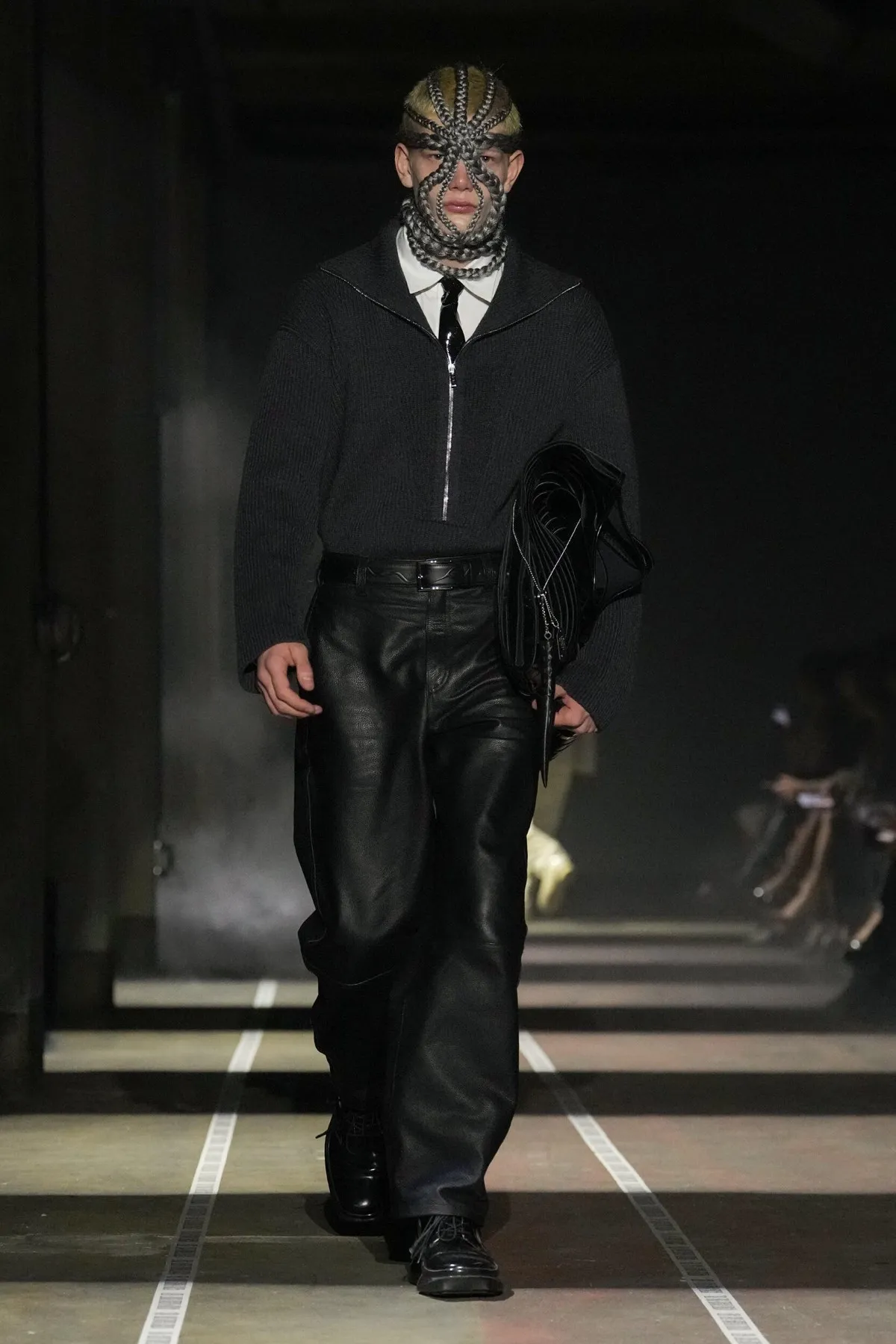
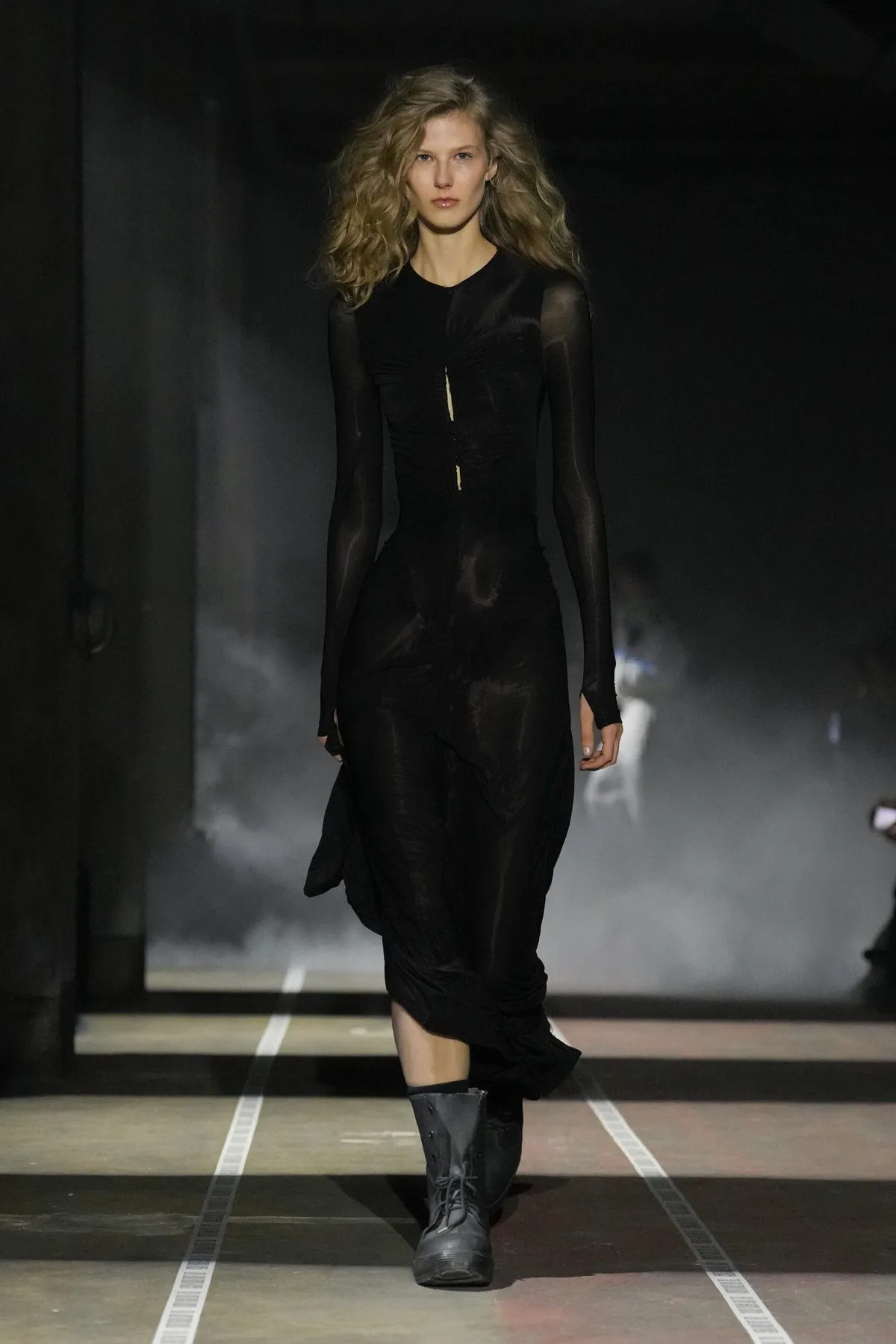
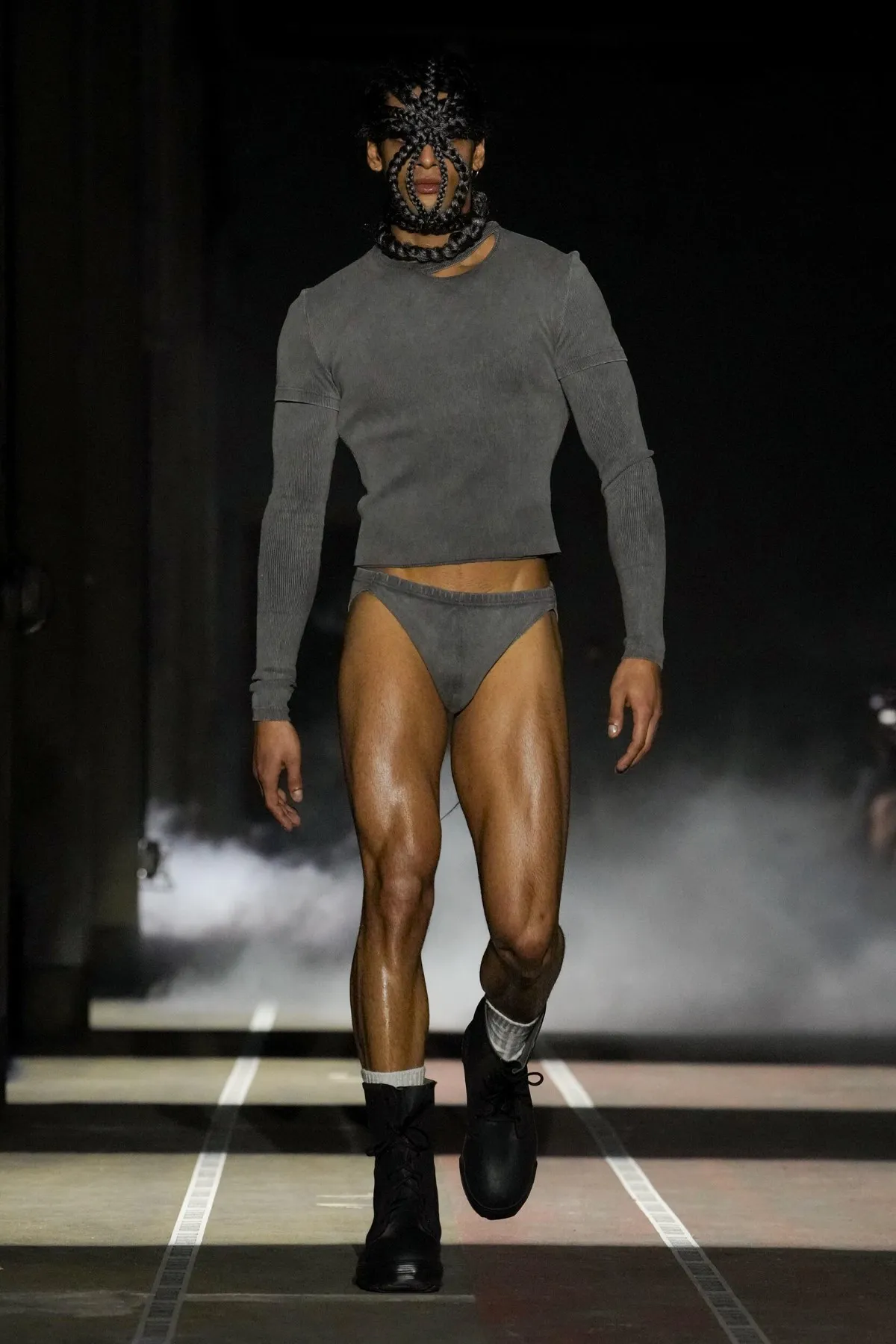
The 38-year-old designer translated his visceral childhood nightmares into garments that are both threatening and seductive. Filmy cupro draped across bodies like organic membranes and trailed toward the concrete floor. Charlie Le Mindu contributed braided hair face-huggers that clung to the models’ features without any parasitic implications. Elastic veils suggested heads rupturing through fabric, creating unsettling silhouettes against the dim garage lighting.
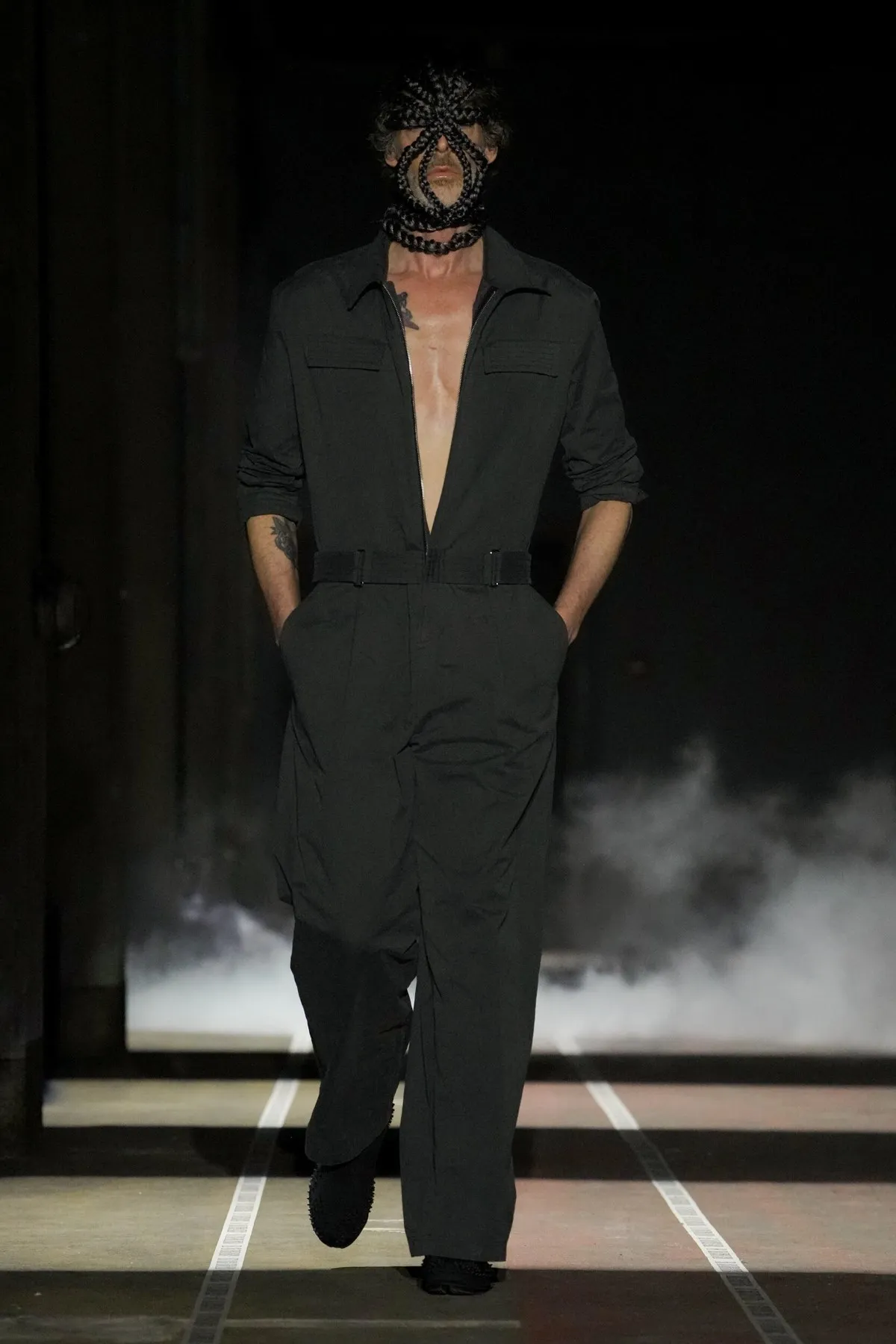
Cocooning outerwear and half-zip anoraks paired with cargo pants reinterpreted utilitarian boiler suits, breaking new ground. Clean spacecraft aesthetics emerged through crisp nylons and putty-toned wools. Meanwhile, padded cottons and plush fleeces suggested sterile environments before contamination. Black-rinsed denim and jacquards bearing oil-like motifs nodded toward H. R. Giger’s biomechanical landscapes and the yonic designs that made the original film’s production design so distinctly uncomfortable.
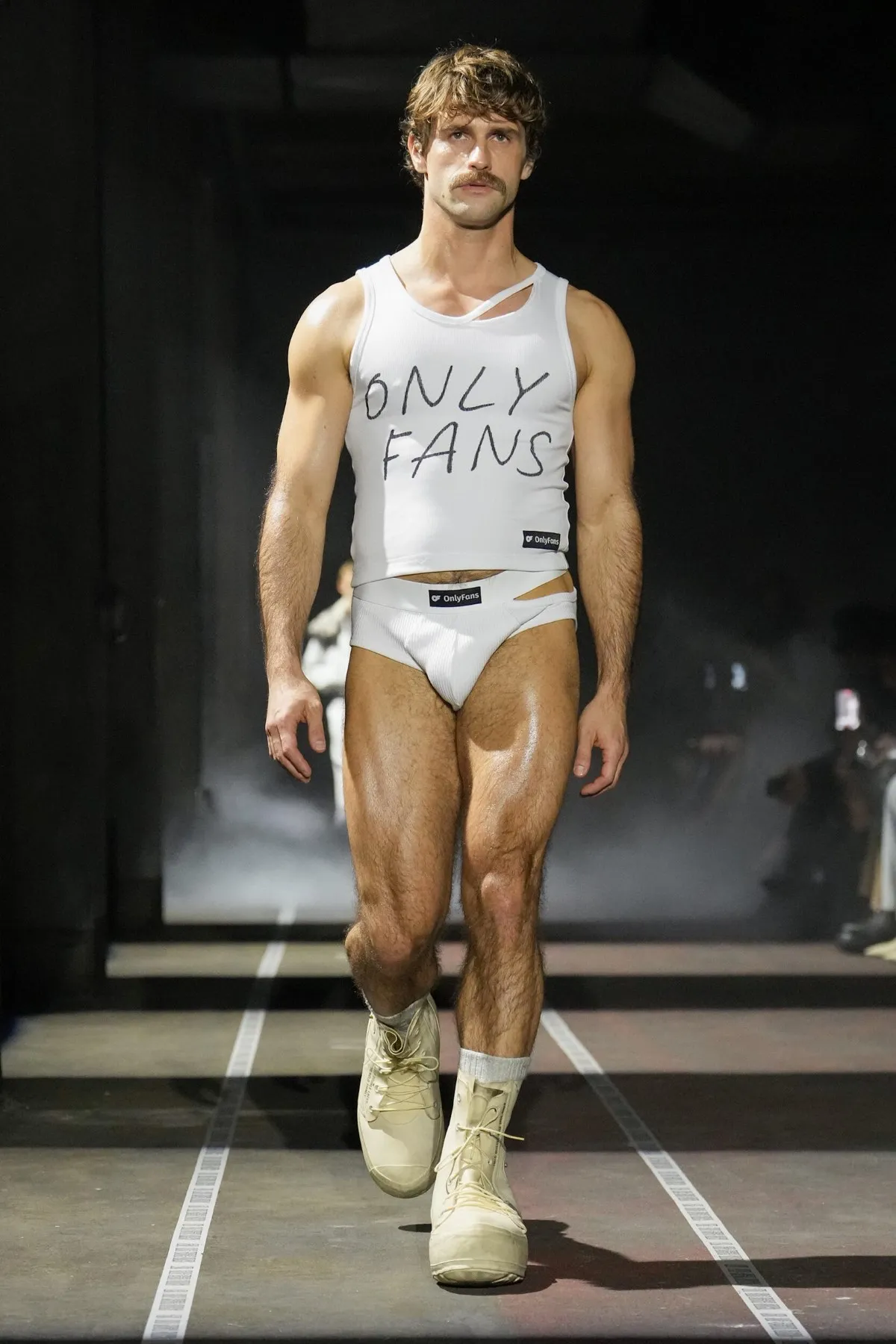
Nouchi placed a white tank top and briefs combination on the runway as a direct homage to Sigourney Weaver’s memorable costume from the franchise. The words “OnlyFans” sprawled across the chest announced a collaboration with the platform, though not for the reasons casual observers might assume. The designer opened an account to share behind-the-scenes content that addresses body politics, sensuality, and inclusivity. He prefers this method of communication to traditional social media.
Follow all the latest news from Fashionotography on Flipboard, or receive it directly in your inbox with Feeder.
You may also read

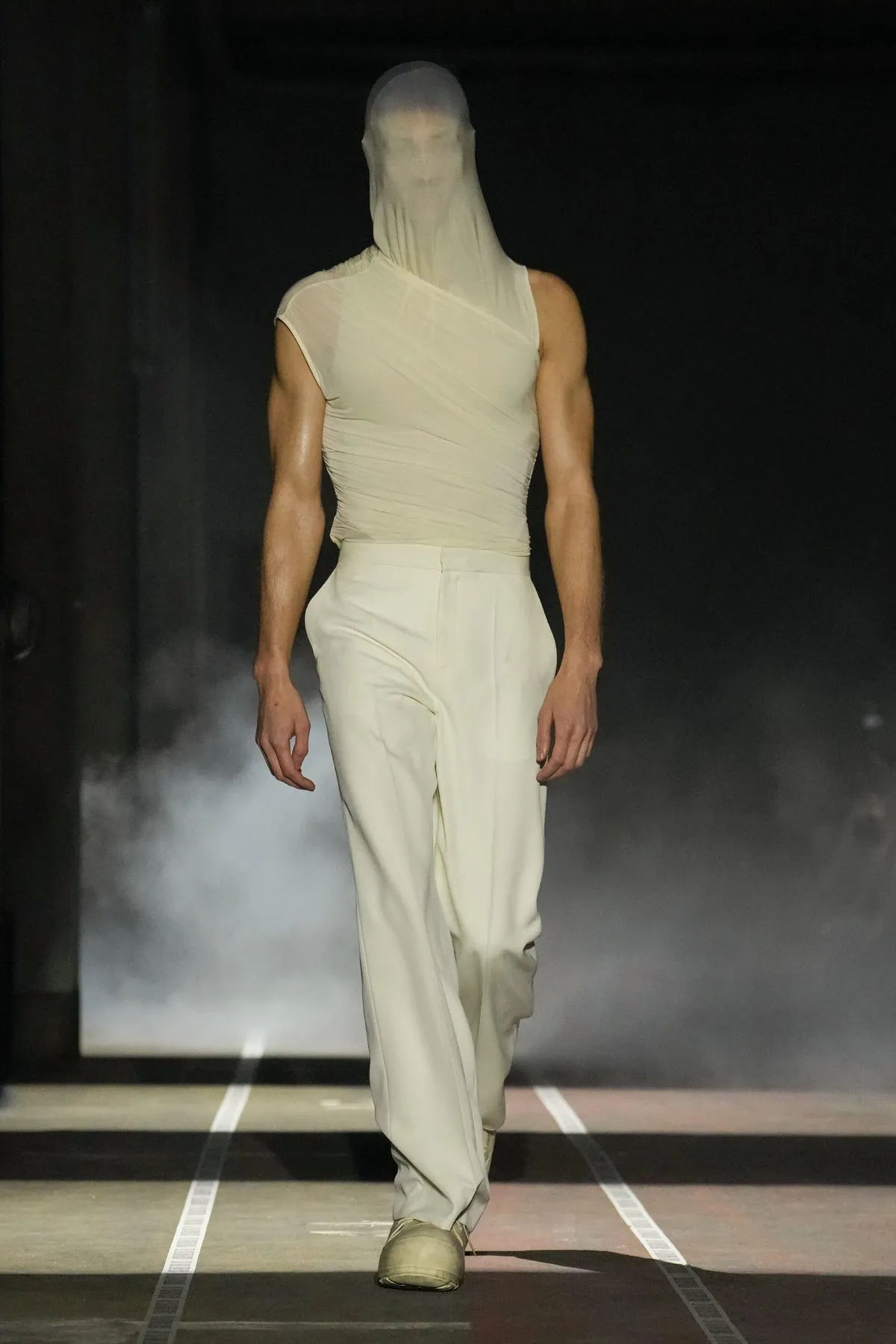
“People pay for magazines to access specific content,” Nouchi explained. “This operates identically. Privacy does not automatically equal pornography.” The account features erotic readings and ASMR content, offering an intellectual examination of sexuality that transcends the conventional gay cultural conditioning of what constitutes an acceptable body and behavior.
Beyond cosmic eroticism, Nouchi explores how language weaponizes the term “alien” to dehumanize marginalized communities. Recent immigration enforcement actions targeting children influenced his perspective on how science fiction vocabulary migrates into political rhetoric. The European designer expressed shock at how American discourse uses “alien” as a derogatory classification rather than a neutral descriptor.
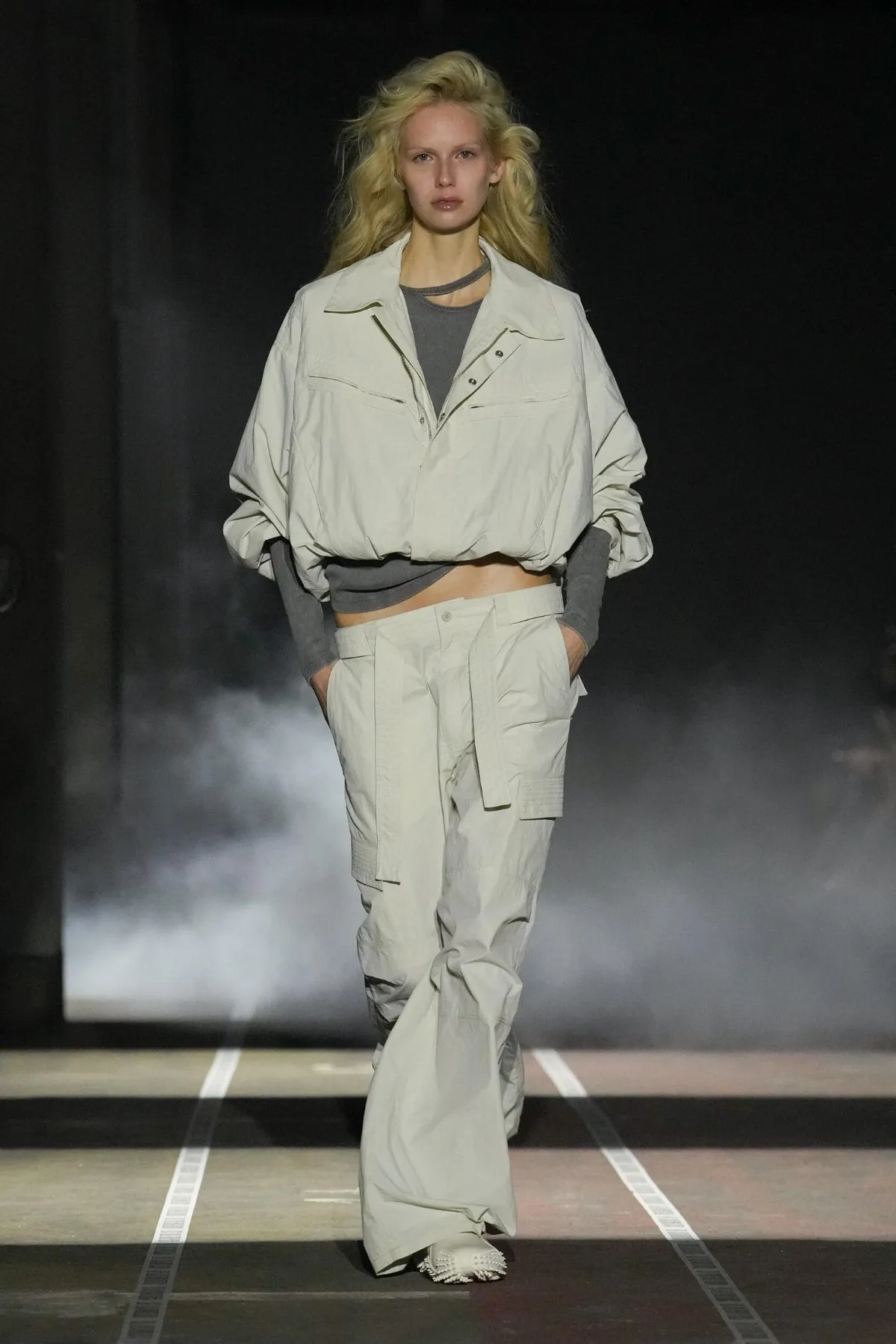
Anthracite tailoring and swooping, vampiric coats with shearling shoulders suggest Nouchi’s ability to produce subversive fashion that functions within heteronormative contexts while maintaining a provocative edge. Body-hugging black t-shirt dresses and bodysuits featured barely perceptible ruched slits down the center of the torso, channeling Giger’s unsettling biological forms once again. Space-crew jumpsuits appeared on a diverse cast of models, suggesting utility without sacrificing the collection’s erotic undercurrent.
What distinguishes this work from typical designer theatrics is Nouchi’s commitment to wearability alongside provocation. The garments function as actual clothing, not just conceptual gestures. They are grounded in comfort and effortless construction. Vampiric shoulders and membrane-like fabrics become practical choices when proportions are thoughtfully considered.