

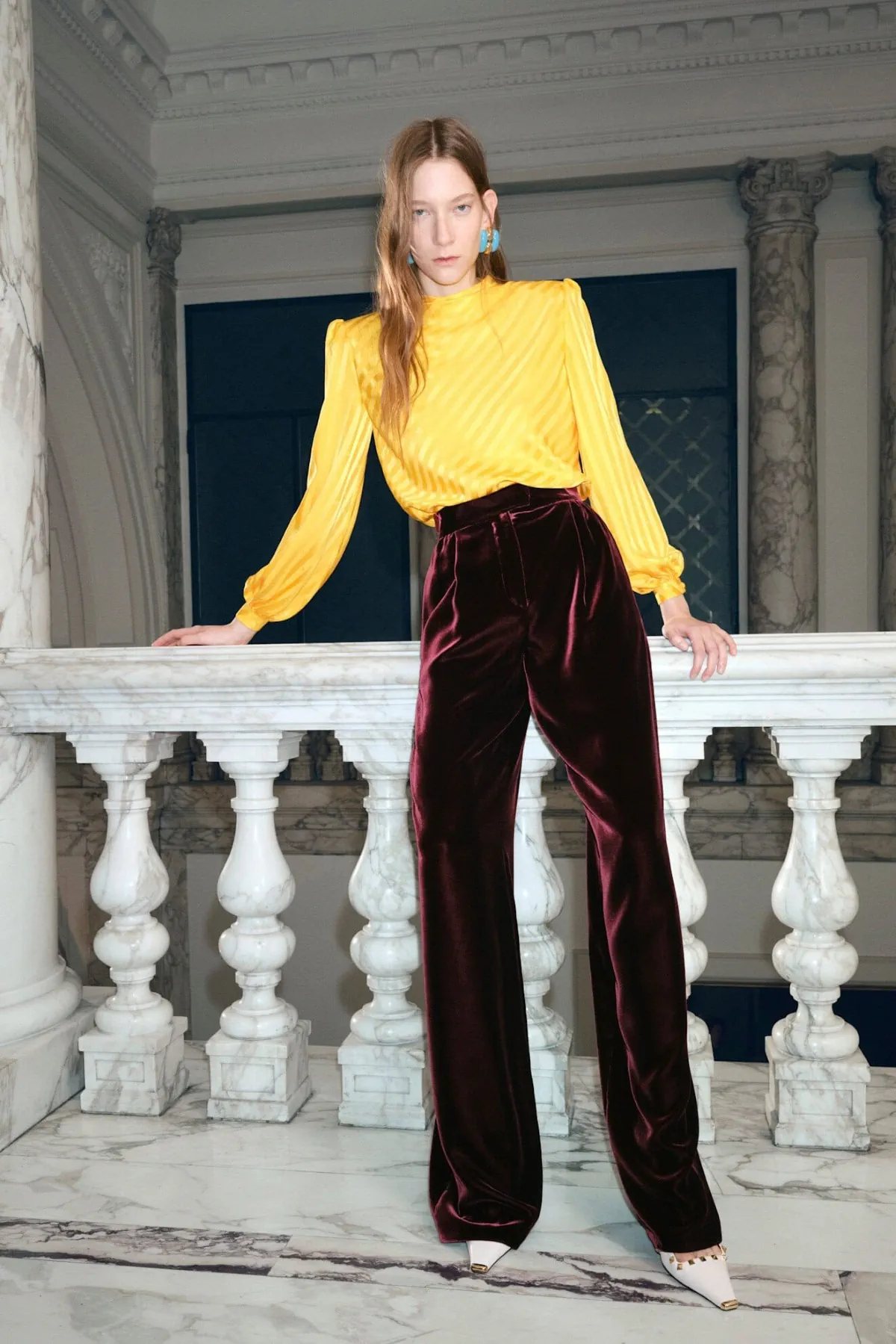
For Valentino Pre-Fall 2026, Alessandro Michele does the unthinkable: he subtracts. Trading baroque excess for sharp restraint, the designer explores absence as ornament, revives the Rockstud, and redefines his vision for the Roman house. The result is a collection that feels quieter, sharper, and far more radical than expected.
This shift represents more than a seasonal pivot. Michele describes his current creative phase at Valentino as an exploration of absence, treating empty space as a form of decoration. For a designer who spent years adding rather than subtracting, this change feels seismic. Yet, the collection proves that he can work within constraints without losing his distinct point of view.
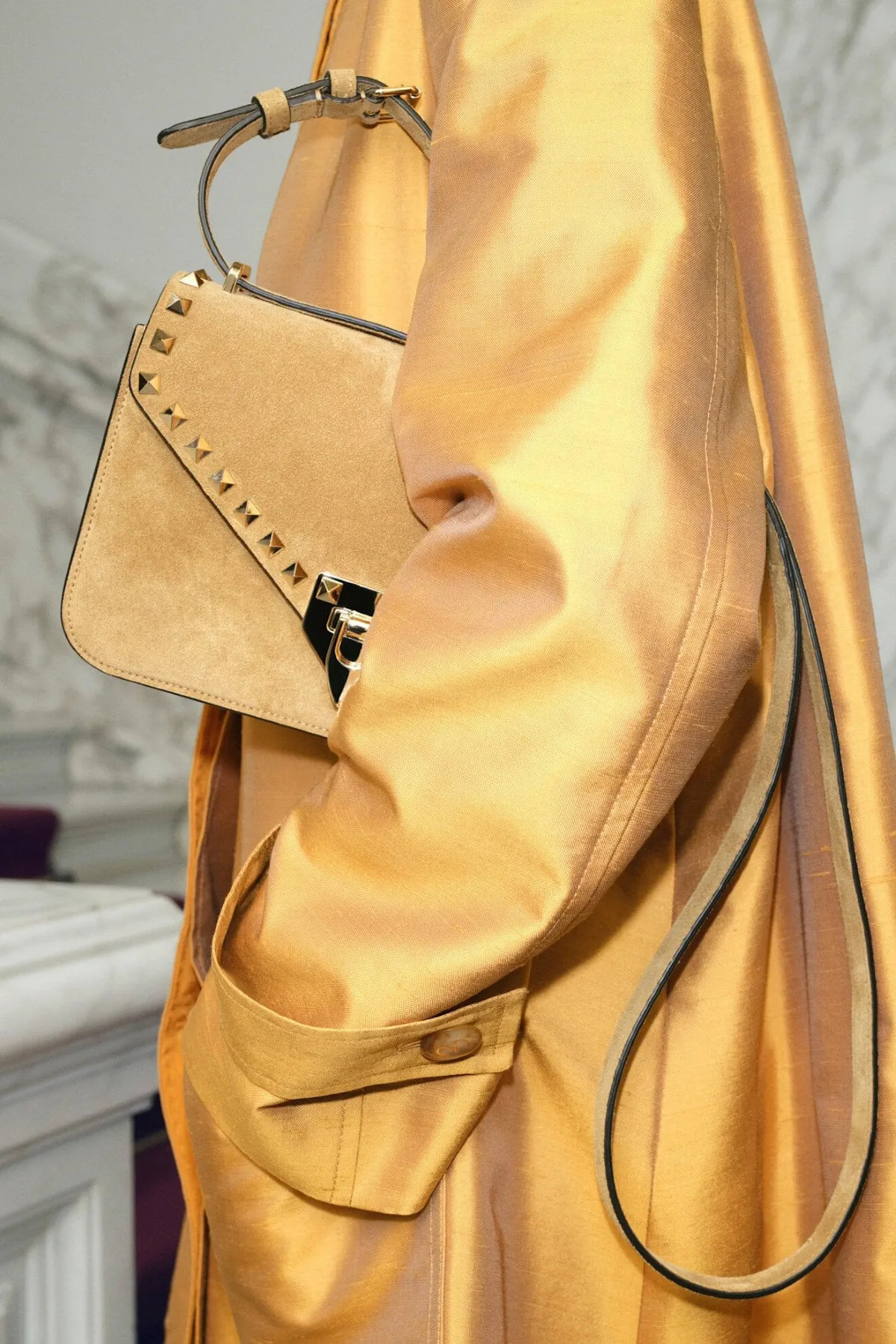
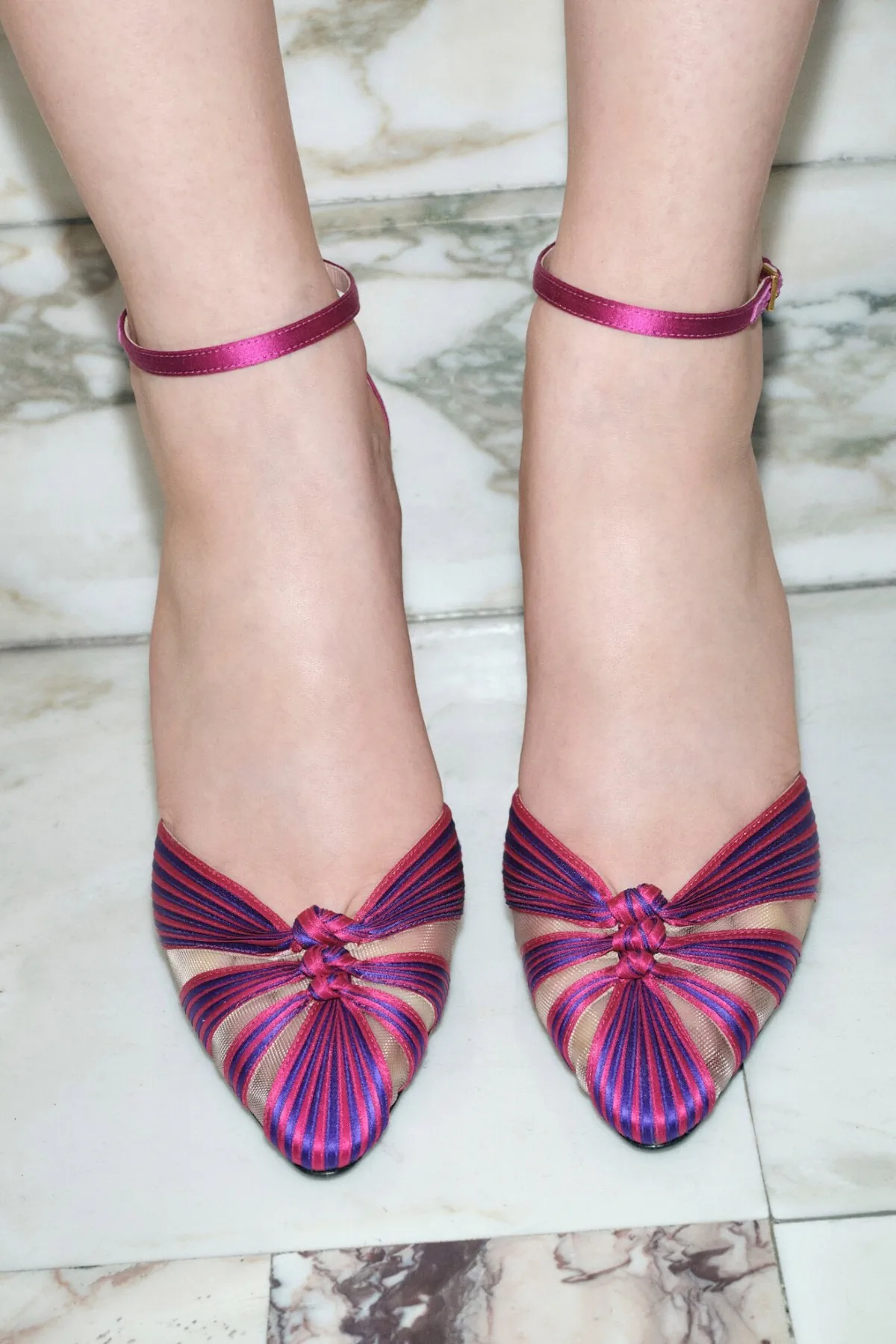
The iconic Rockstud motif has reemerged, though not immediately upon his arrival at the Roman fashion house. He needed time to understand this signature element, originally introduced by his predecessors, Pierpaolo Piccioli and Maria Grazia Chiuri, before reimagining it through his own lens. The result is high-heeled shoes with tapered, squared toes reinforced with metal caps that appear sharper and more architectural than their predecessors’.
Michele connected the studded theme back to Rome itself, noting how similar details appear on historic buildings in the city. This connection to place is important for a brand so deeply tied to Italian heritage. The timing proved fortuitous when the trailer for the sequel to The Devil Wears Prada featured Meryl Streep wearing vintage Valentino Rockstuds just before Michele’s updated version was set to debut. Michele kept his designs in the lookbook regardless, claiming ownership of his vision despite the coincidence.
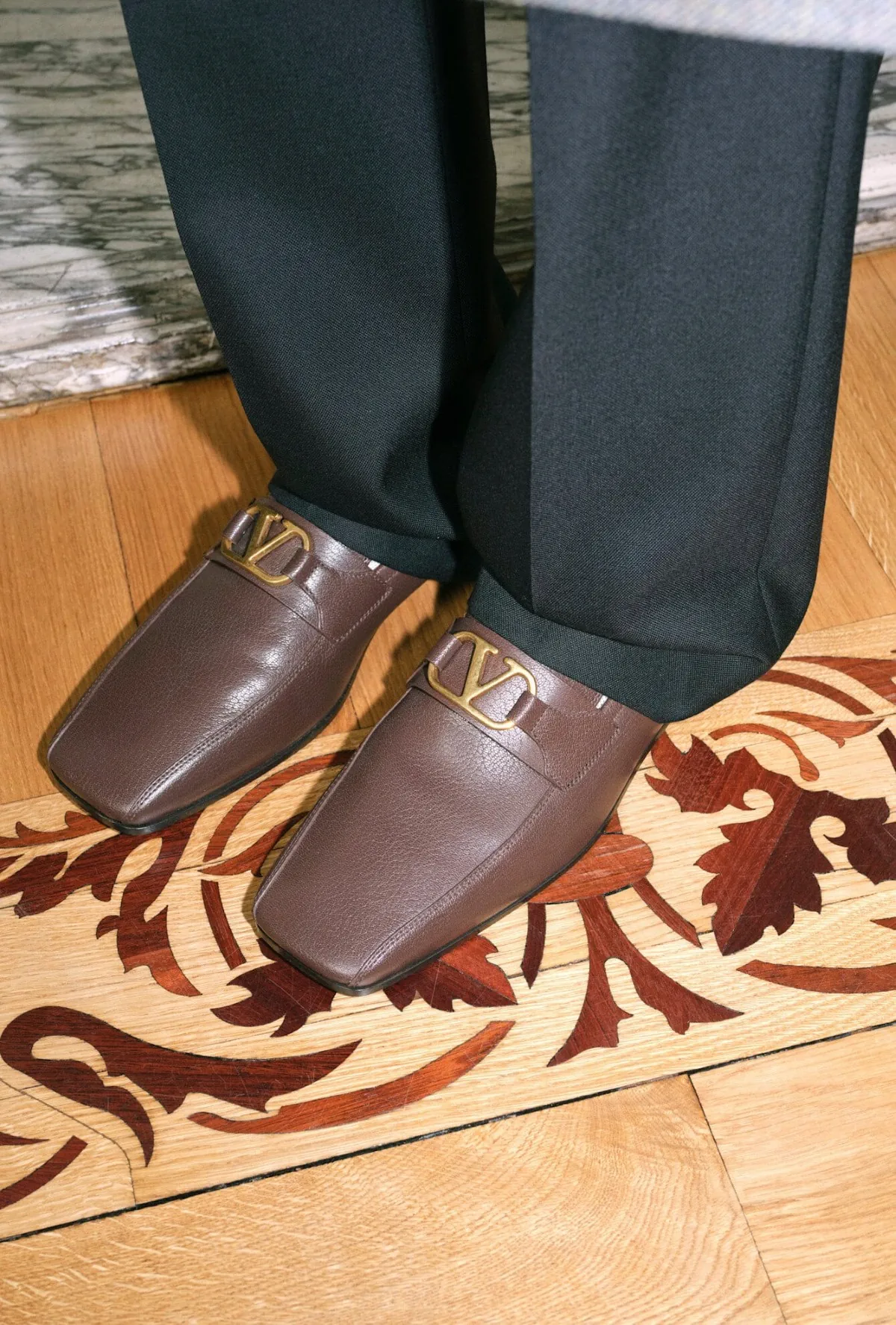
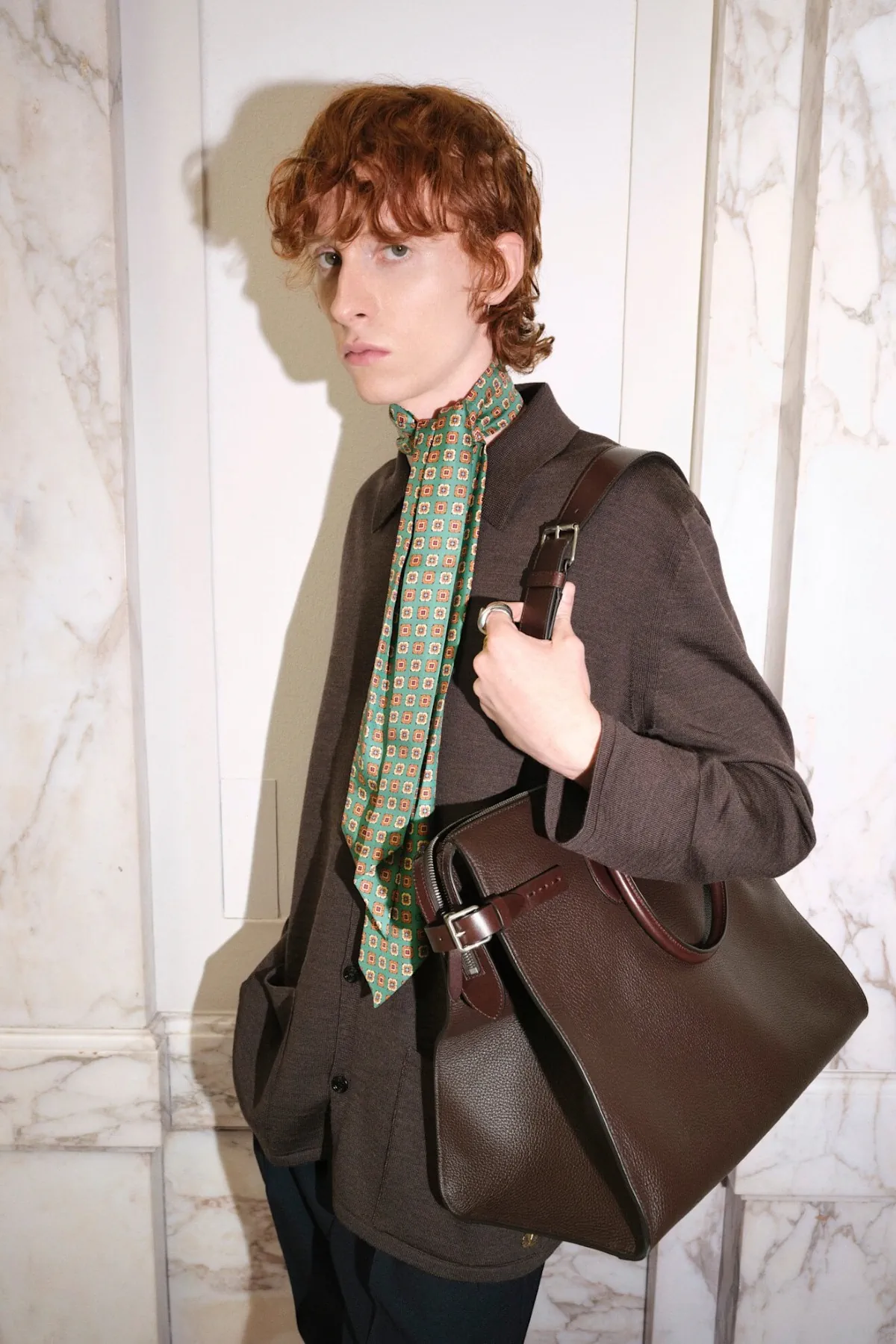
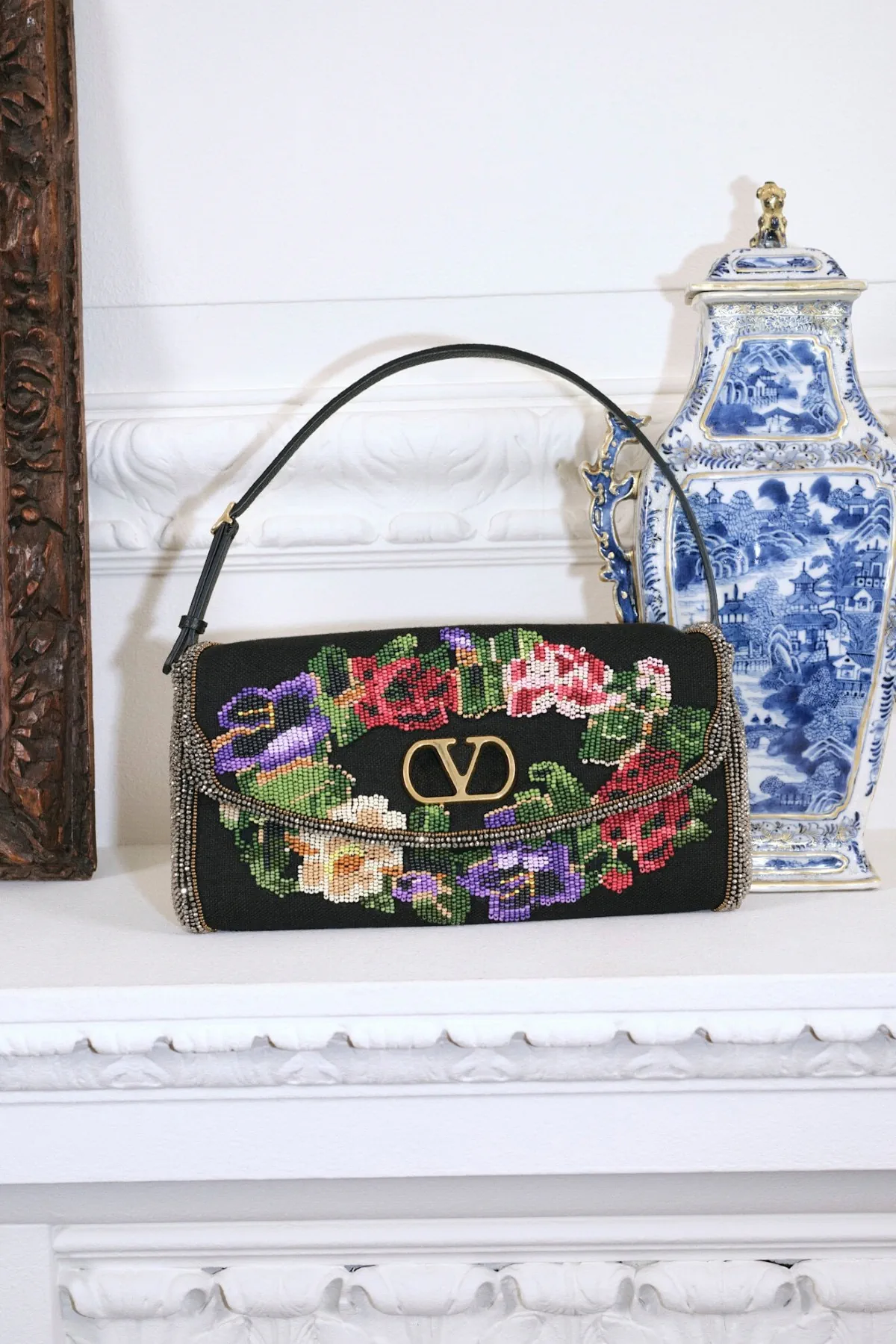
The Pre-Fall 2026 images reveal a deliberate emphasis on accessories, suggesting a strategic move toward more affordable price points. Michele developed nearly 50 variations of a new DeVain shoulder bag, demonstrating that his flamboyant tendencies find their fullest expression in these smaller designs. The bags allow him to indulge his decorative instincts, while the ready-to-wear collection takes a more subdued approach.
Follow all the latest news from Fashionotography on Flipboard, or receive it directly in your inbox with Feeder.
You might also read
This approach makes commercial sense. Accessories drive the profitability of luxury brands and serve as entry points for younger consumers. Michele understands this dynamic well from his time at Gucci, where bags and shoes often generated more buzz than the clothing itself. He applies that knowledge at Valentino, recognizing where the house can grow its customer base without compromising its positioning.
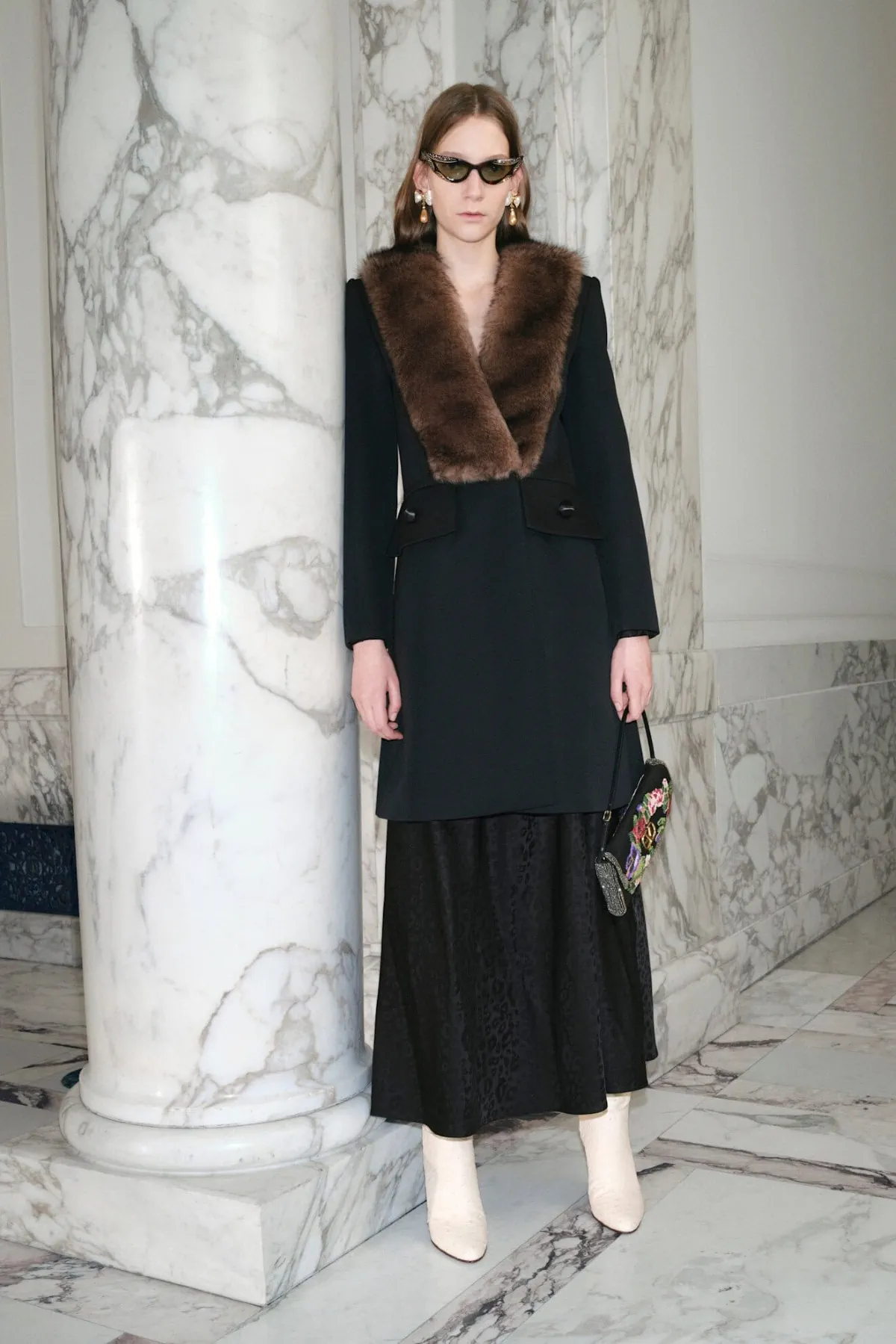
The clothing mines Valentino’s 1980s and 1990s archives, featuring boxy shoulders, bold color blocking, and sleek minidresses. Michele cuts essential shapes from lightweight materials, such as black-and-white tweed for cropped jackets, poplin for striped chemisier minidresses, and linen for tailored pieces with scalloped trims outlined in contrasting piping. Taffeta appears in Vichy-patterned skirt suits embellished with pleated details on the front.
Throughout the collection, the designer plays with contrasting weights, frequently pairing lingerie-inspired pieces with substantial leather jackets and shearling coats. Lace undergarments peek deliberately from beneath plush bombers and slender shearling outerwear with V-shaped, fluffy collars. Micro miniskirts, worn over built-in knickers, appear under razor-sharp, cropped Spencer jackets, which are topped with contrasting pussy bows. Michele calls this method “manipulation,” and it represents his way of injecting irreverence into bourgeois daywear codes.
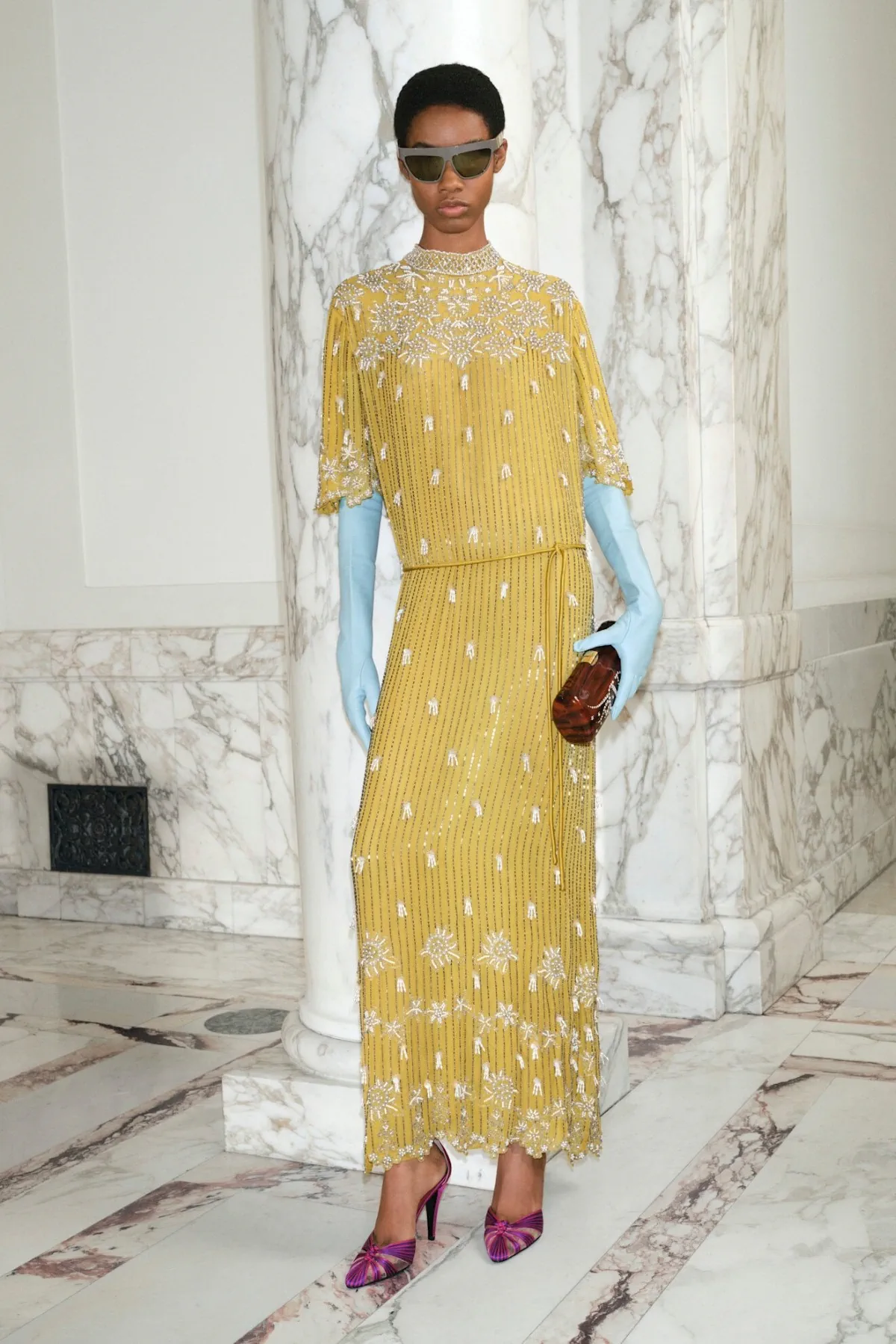
Eveningwear is an exception to his stripped-down philosophy. Here, he allows himself tulle, embroidery, sequins, and elaborate embellishments that showcase Valentino’s couture capabilities and craftsmanship. The contrast between these ornate pieces and the more restrained daywear creates tension within the collection, suggesting that Michele has not entirely abandoned his decorative impulses, but rather channels them more selectively.
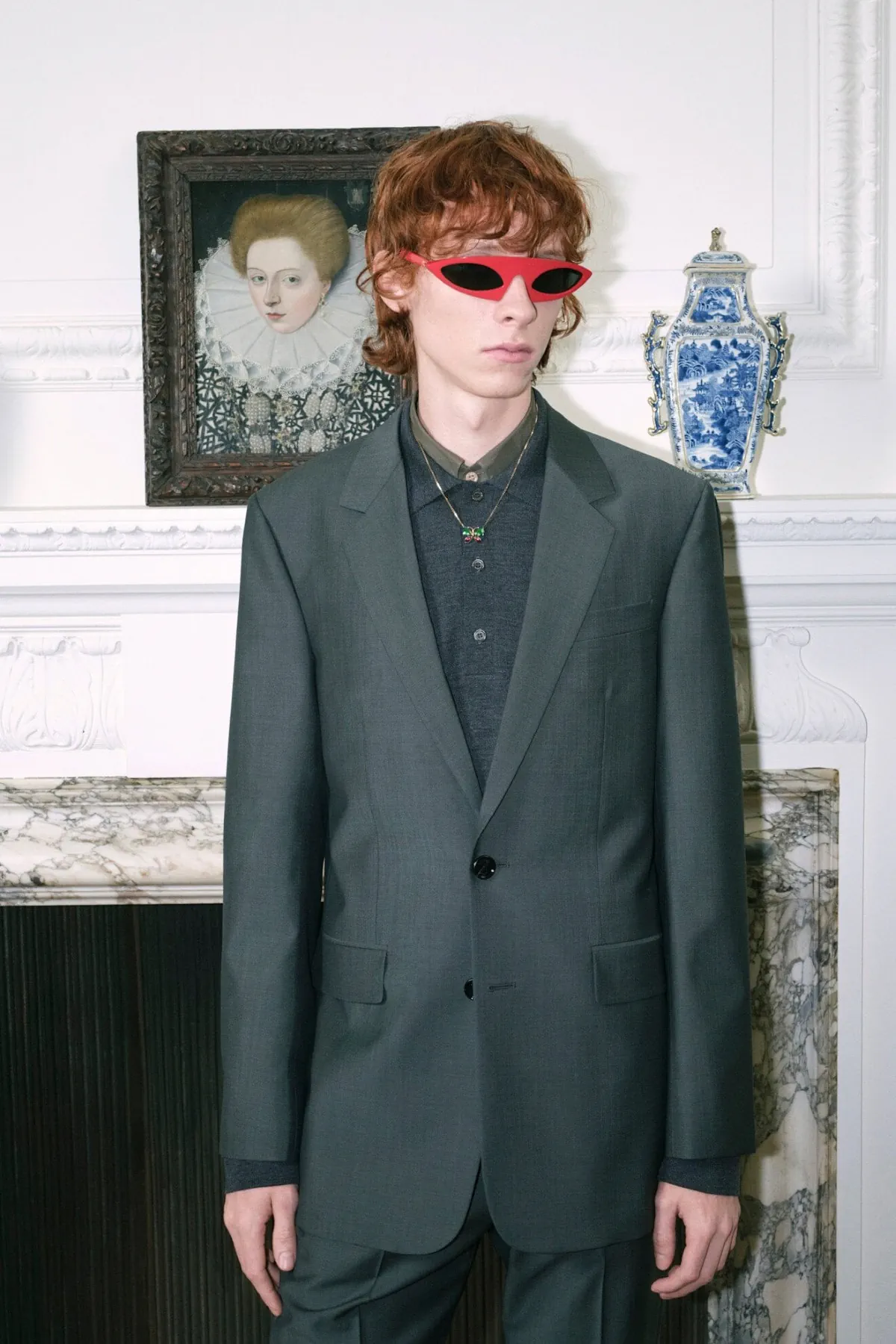
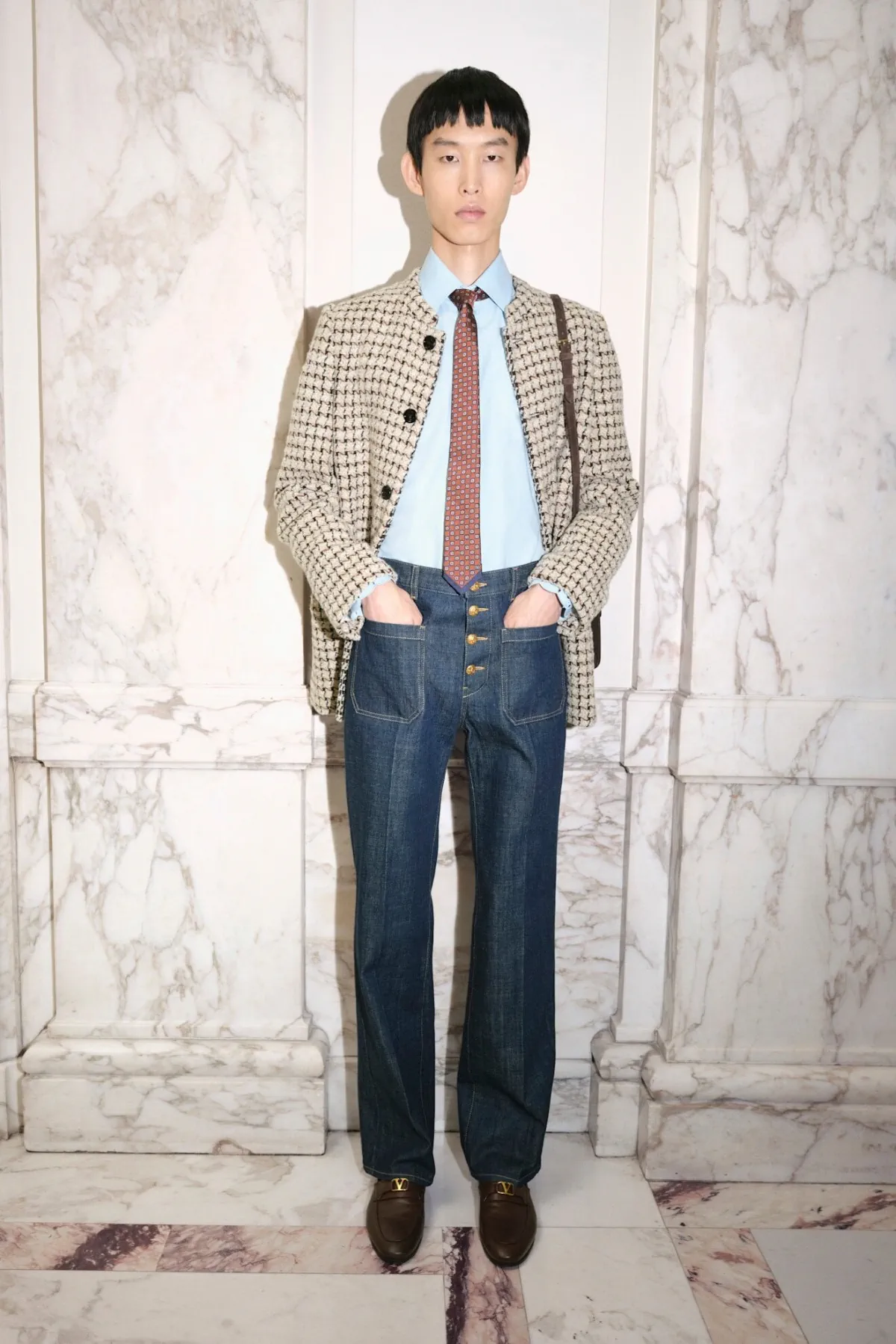
The men’s collection shows an even more pronounced turn toward minimalism. Clean, relaxed-fit sartorial pieces in earthy tones dominate, with soft-tailored, narrow suits in muted colors channeling a Roman Dolce Vita sensibility. The proportions feel fluid rather than rigid, and the overall effect is one of refined restraint rather than Michele’s typical baroque excess.
Occasional flourishes appear in the form of embroidered details or unexpected layering with tracksuits. Examples include a robe jacket here and a diamanté brooch on a neatly tailored gray wool cape there, plus black Rockstud flip-flops worn as an irreverent footnote. These moments feel earned rather than gratuitous – punctuation marks rather than run-on sentences.
Michele describes Valentino as a very complex and challenging house, requiring him to constantly question what belongs to his vision versus what he inherits from his predecessors. After leaving Gucci, he returned to reading poetry and became fascinated by sparse words floating on an empty page. This experience informs his design philosophy, where absence functions as ornamentation and repeated shapes feel baroque.
The designer admits that he could not have worked this way when he first arrived at Valentino. His initial collections showed more of his established style, which he valued but recognized as limiting. Now, he approaches the design process differently. He removes elements to see more clearly what remains and what those pieces communicate. He describes this process as a cleansing of his relationship with the brand, an irreverent disrespect measured carefully enough to let Valentino breathe.